I found this place in a travel guide. One line, something like: "outdoor sculpture museum in Hakone, worth a look." That undersells it by about a factor of ten. The Hakone Open-Air Museum is one of the most surprising places I visited in Japan, and I say that as someone who doesn't spend a lot of time in art museums.
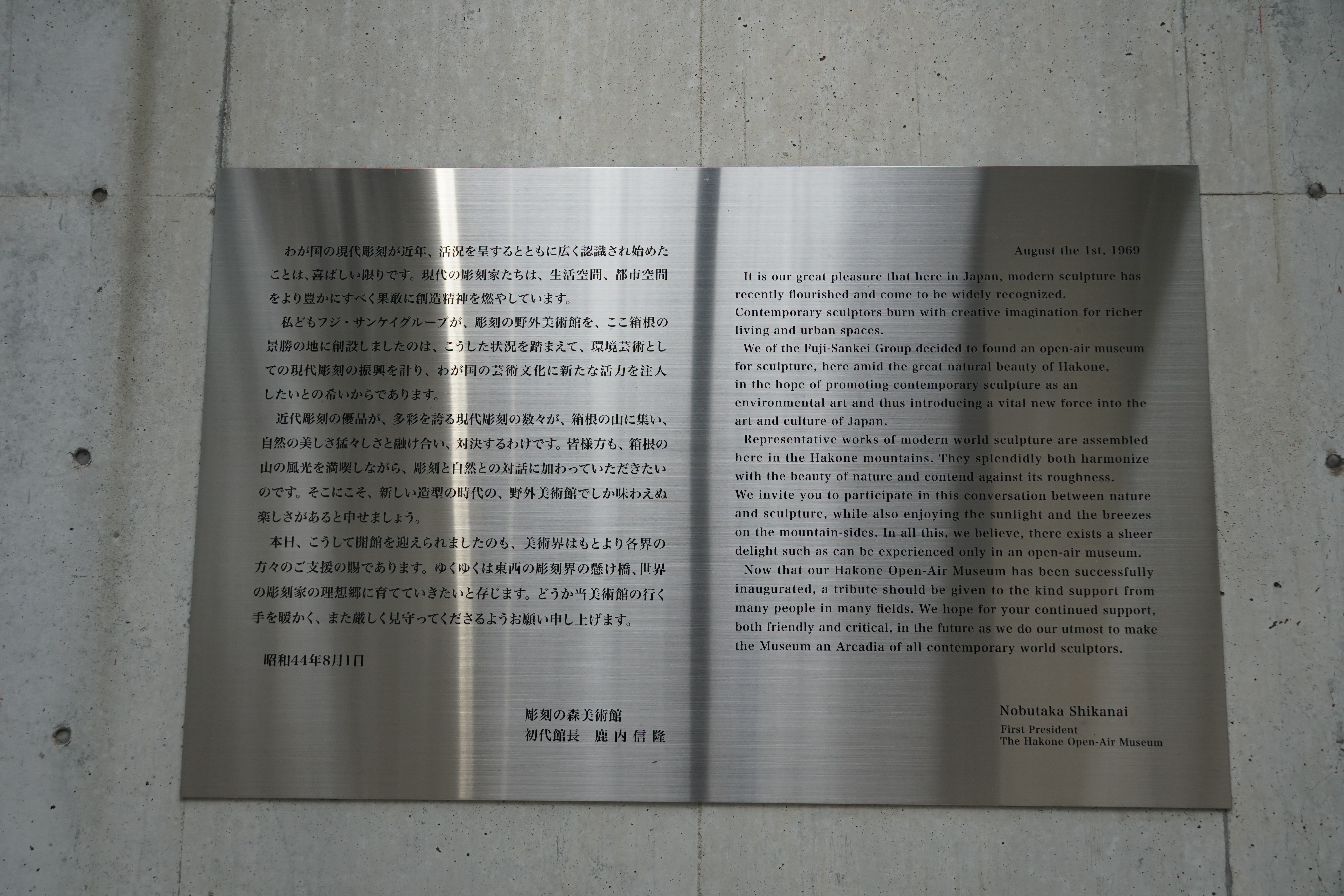
Opened in 1969, it was the first open-air museum in Japan. The idea was simple: take contemporary sculpture out of white-walled galleries and put it on green mountain lawns, surrounded by the volcanic peaks of Hakone. Let people walk through it like a park. Let the weather touch the art. Let the mountains be part of the exhibition.
Walking In
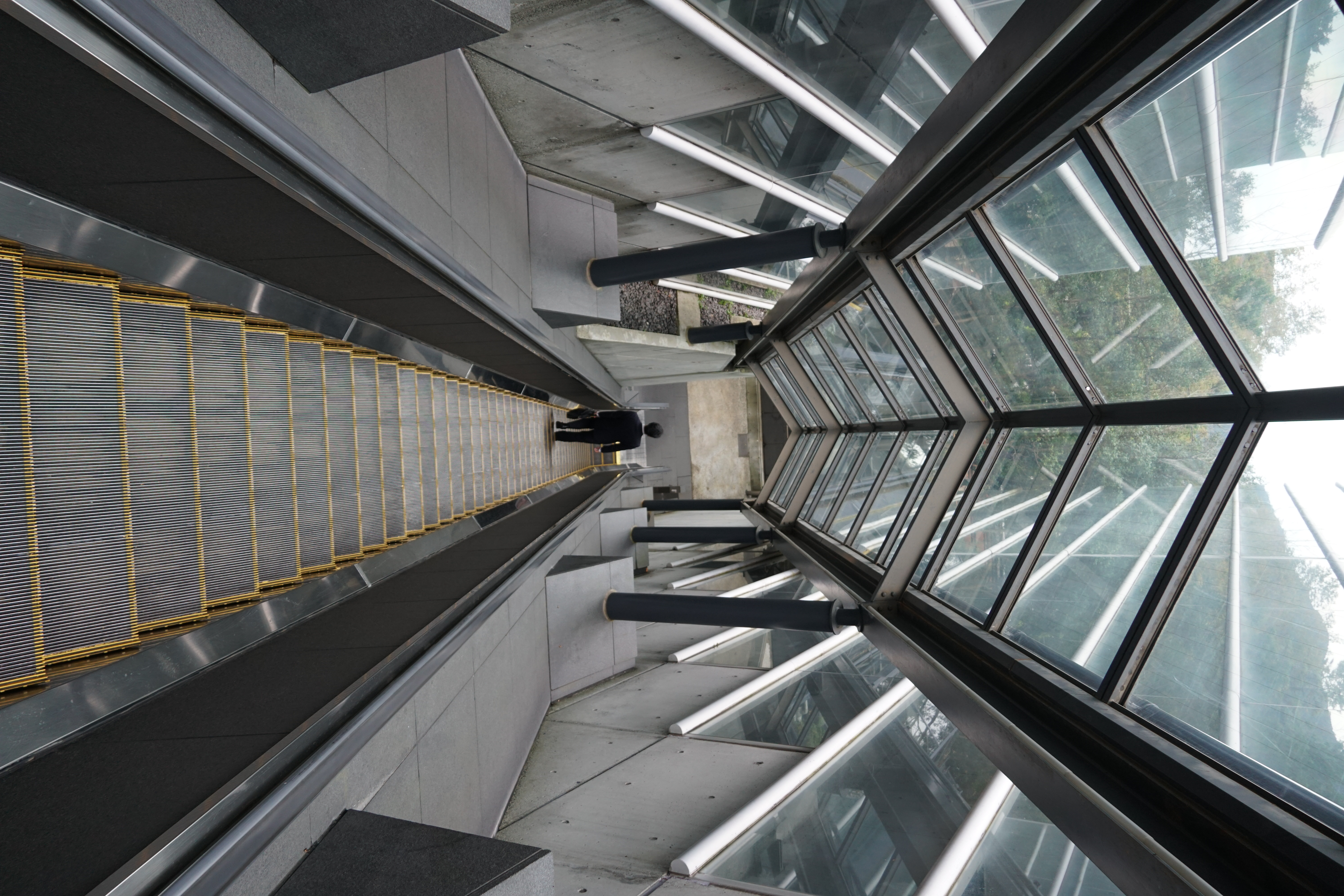
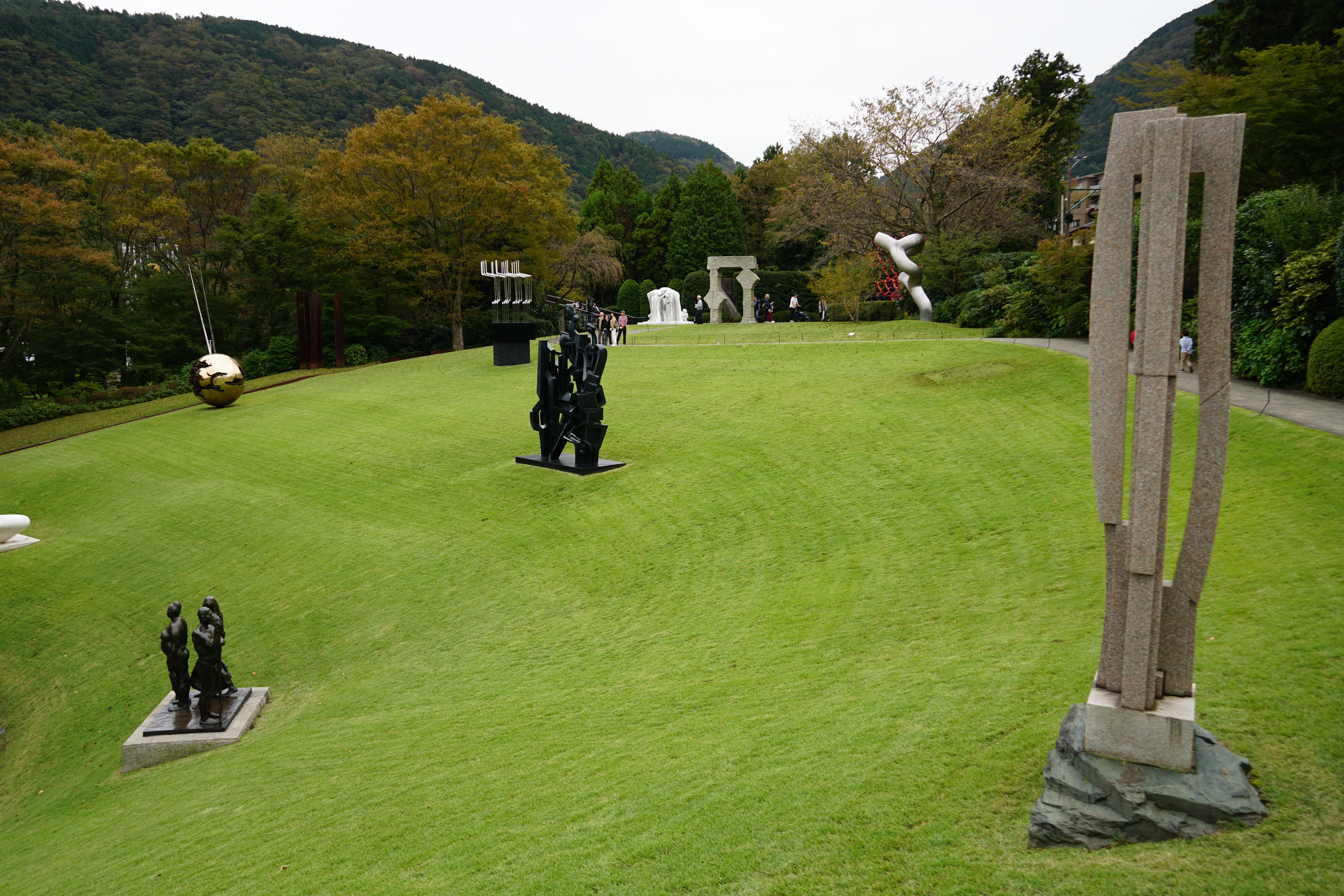
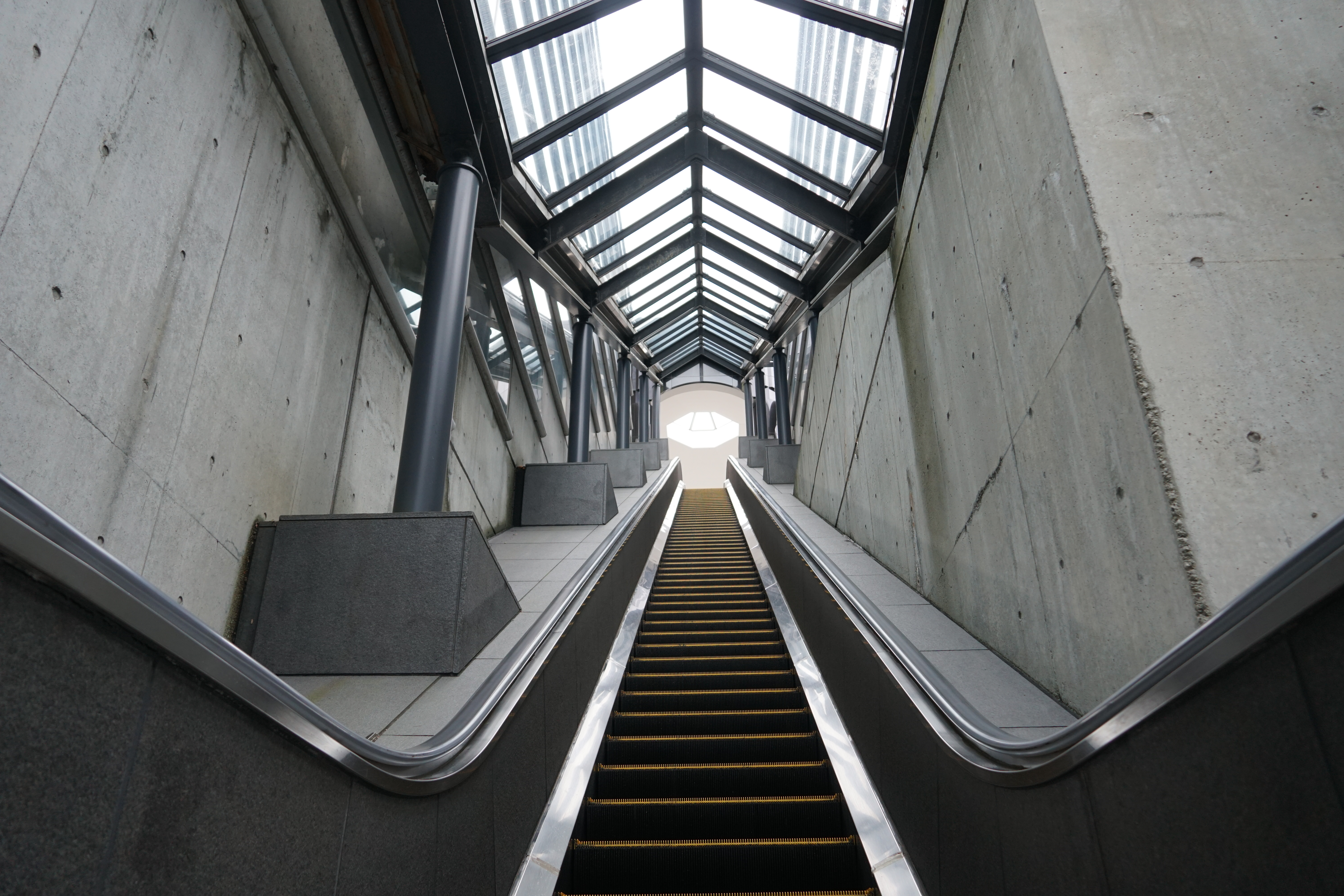
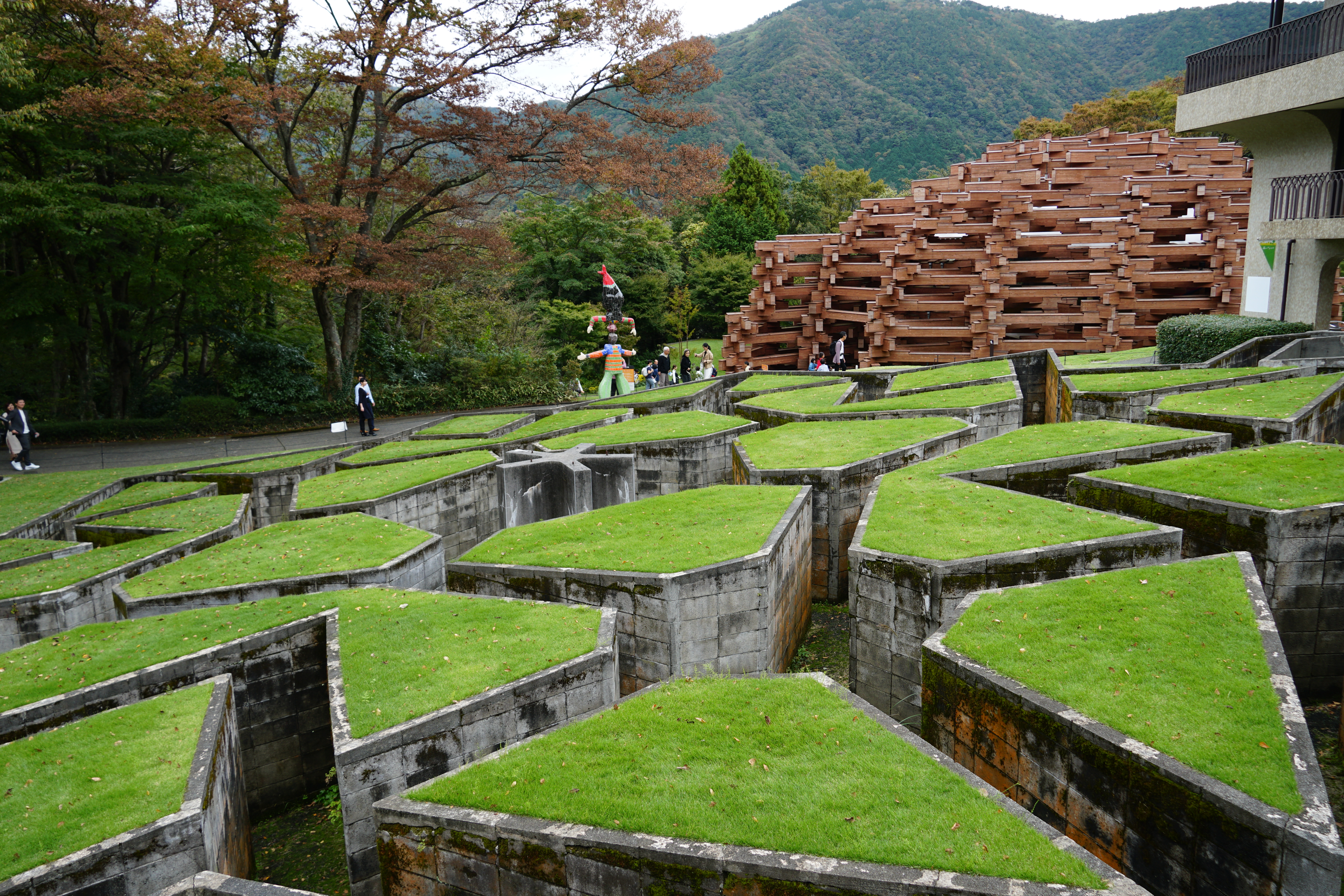
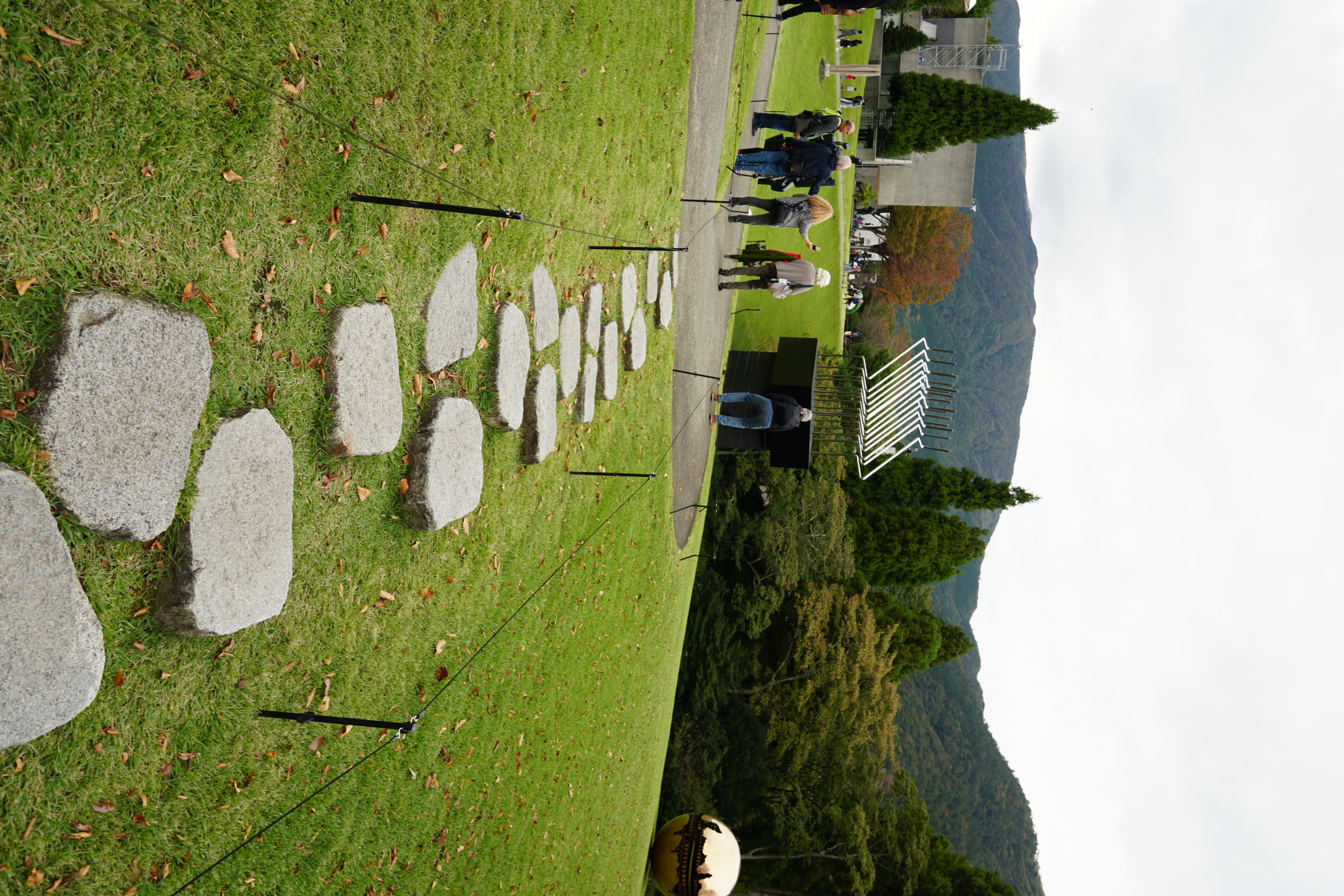
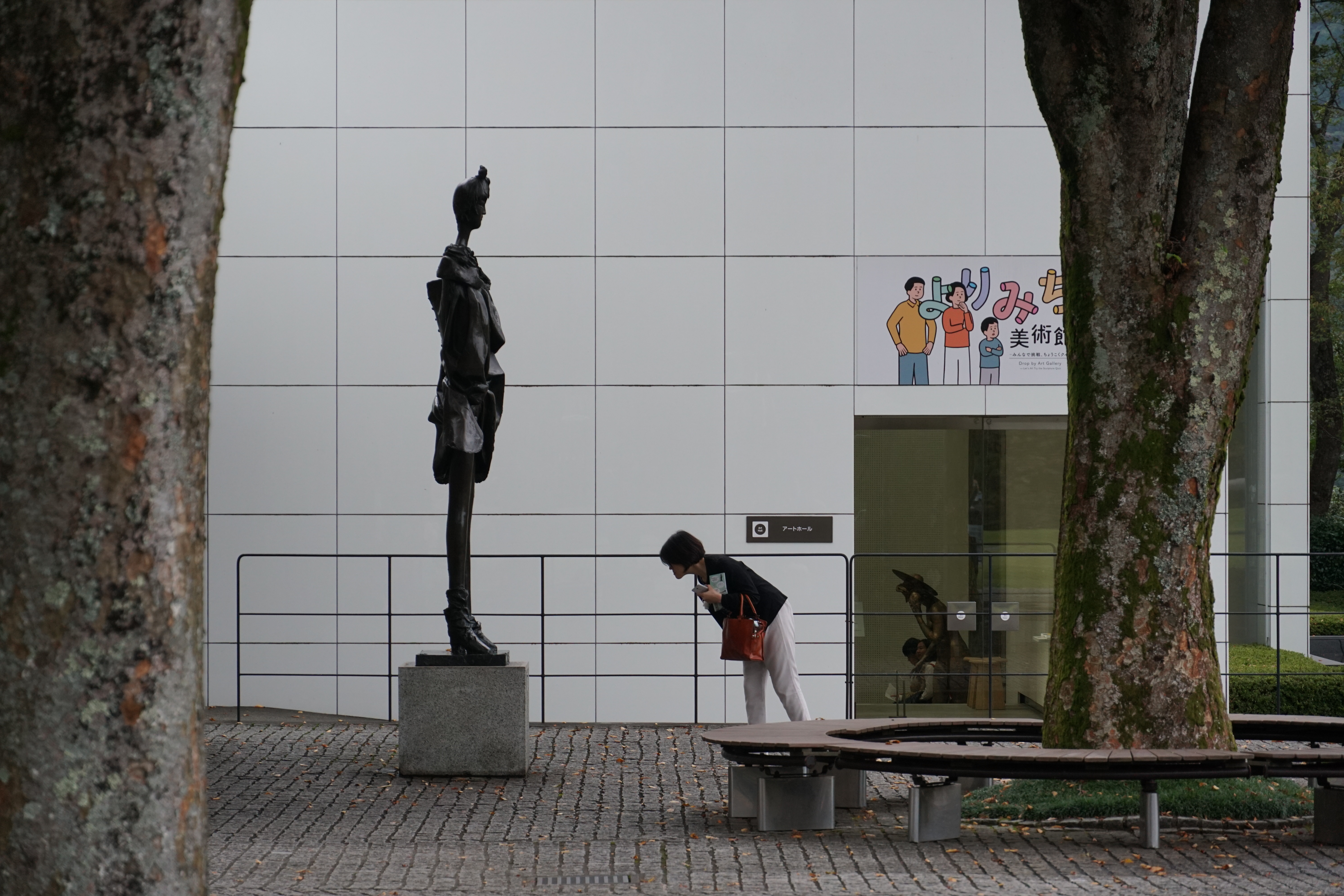
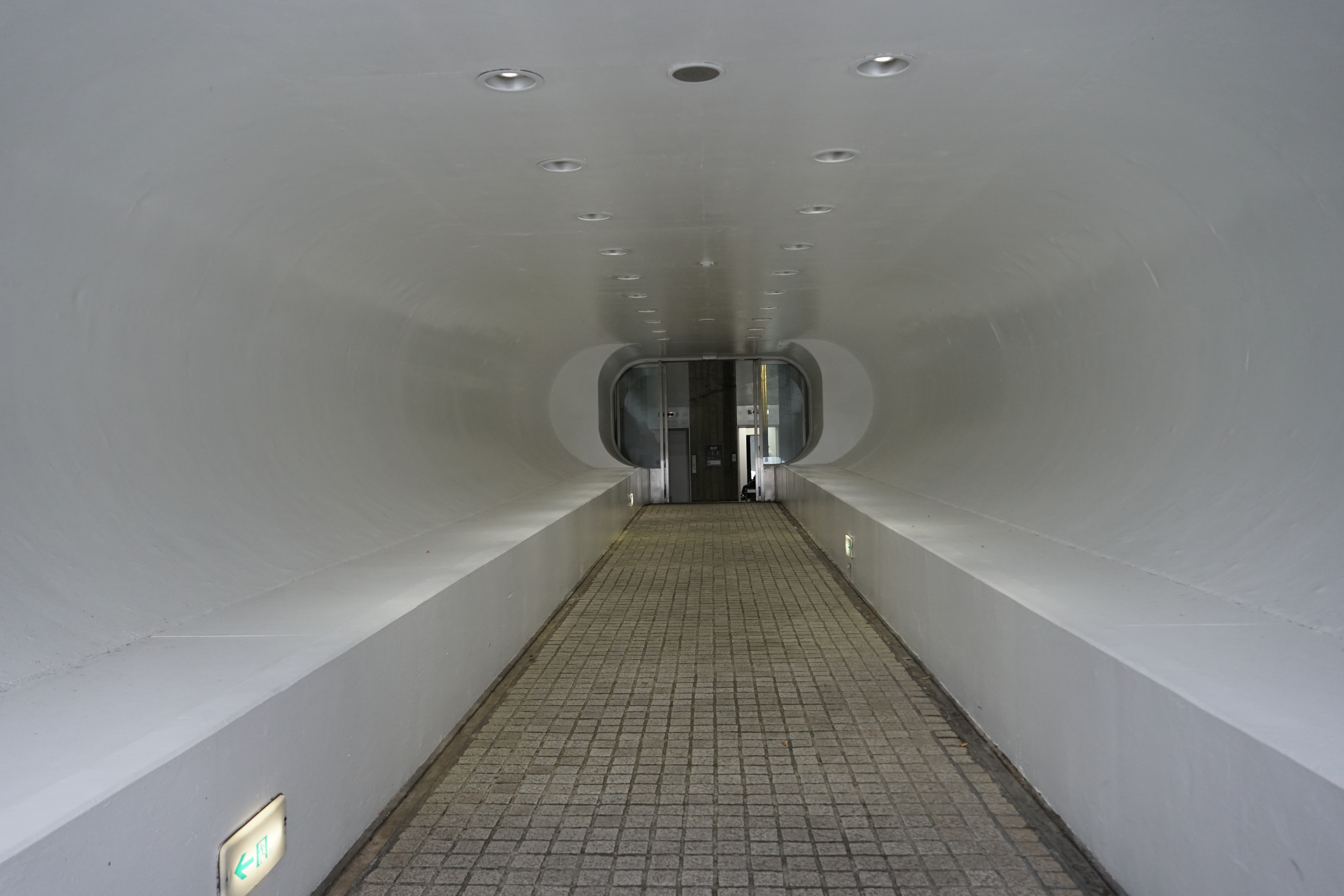
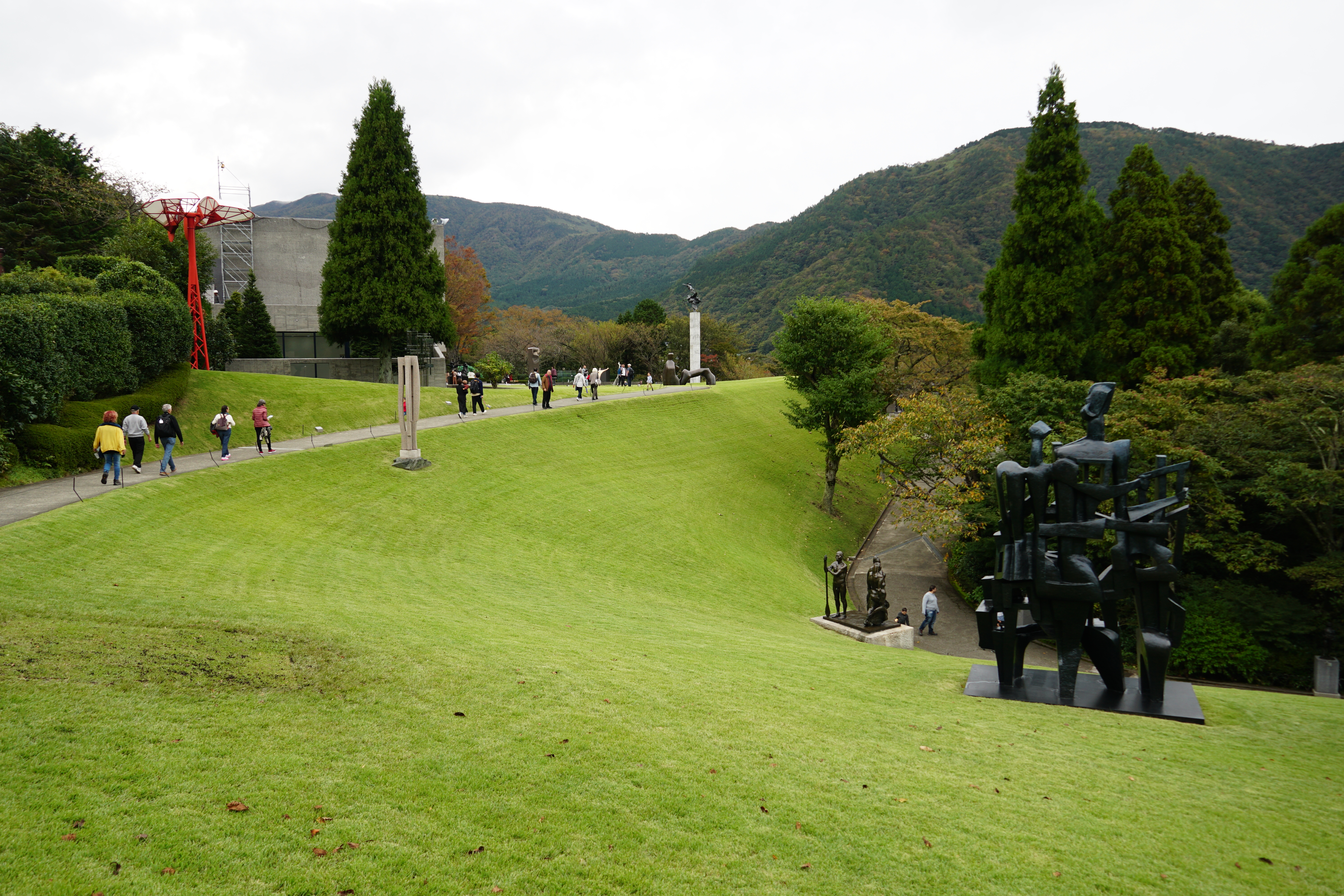
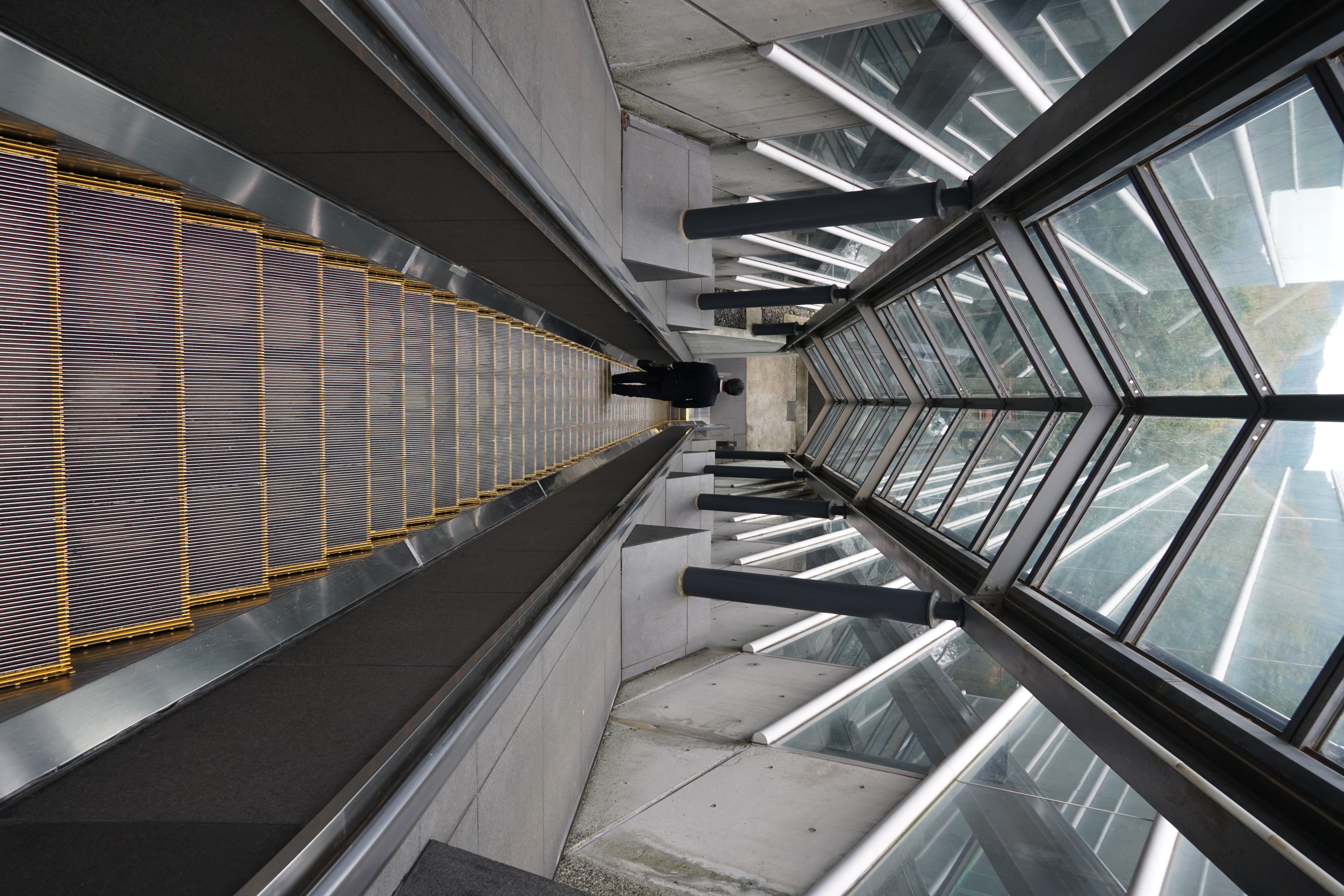
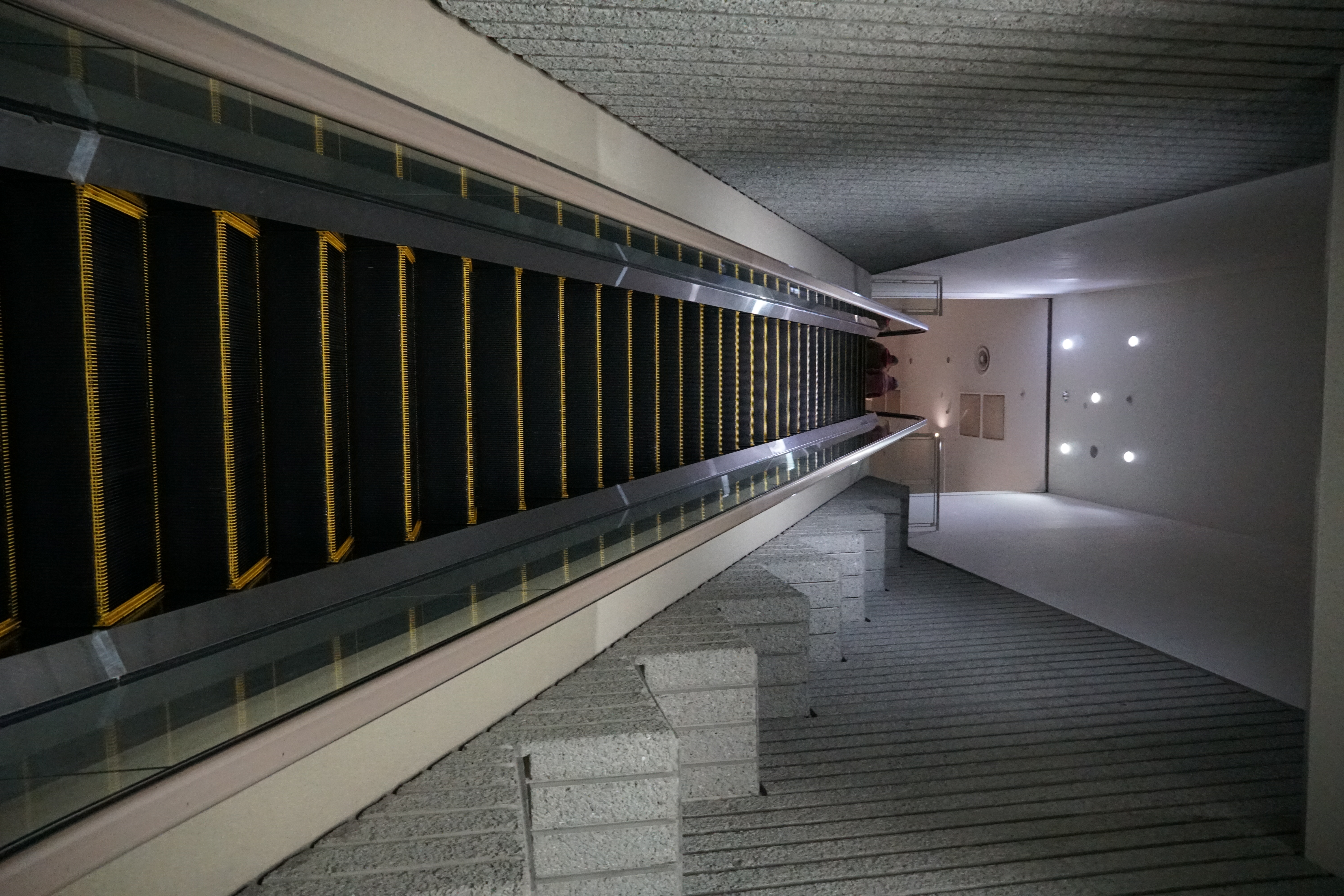
You enter through a modern building with escalators and angular corridors, all concrete and glass and steel. It feels like a proper museum. Then you step outside, and it opens up into something else entirely: a landscape of rolling green hills with sculptures placed across it, some massive, some easy to miss, all framed by the Hakone mountains in every direction.
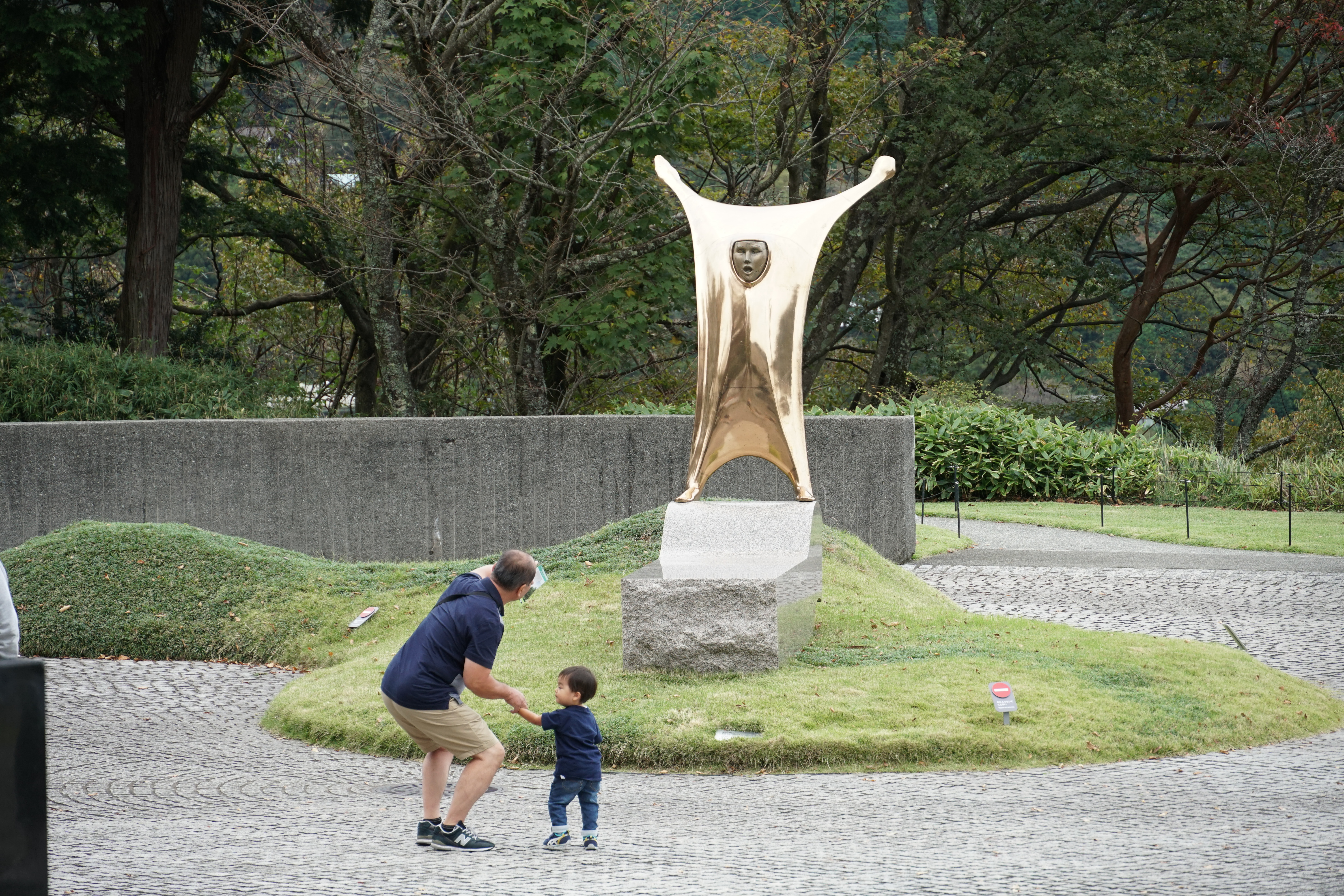
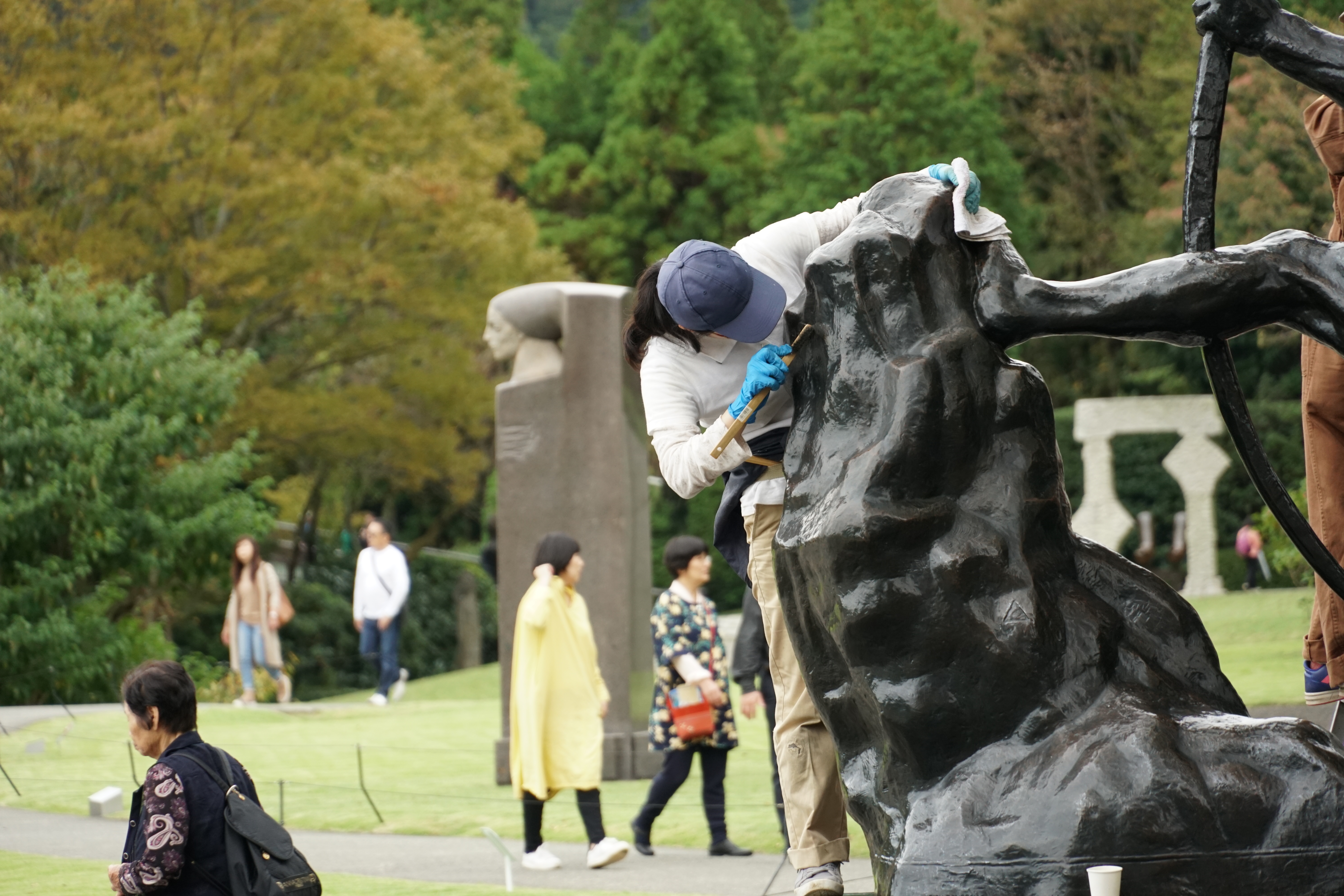
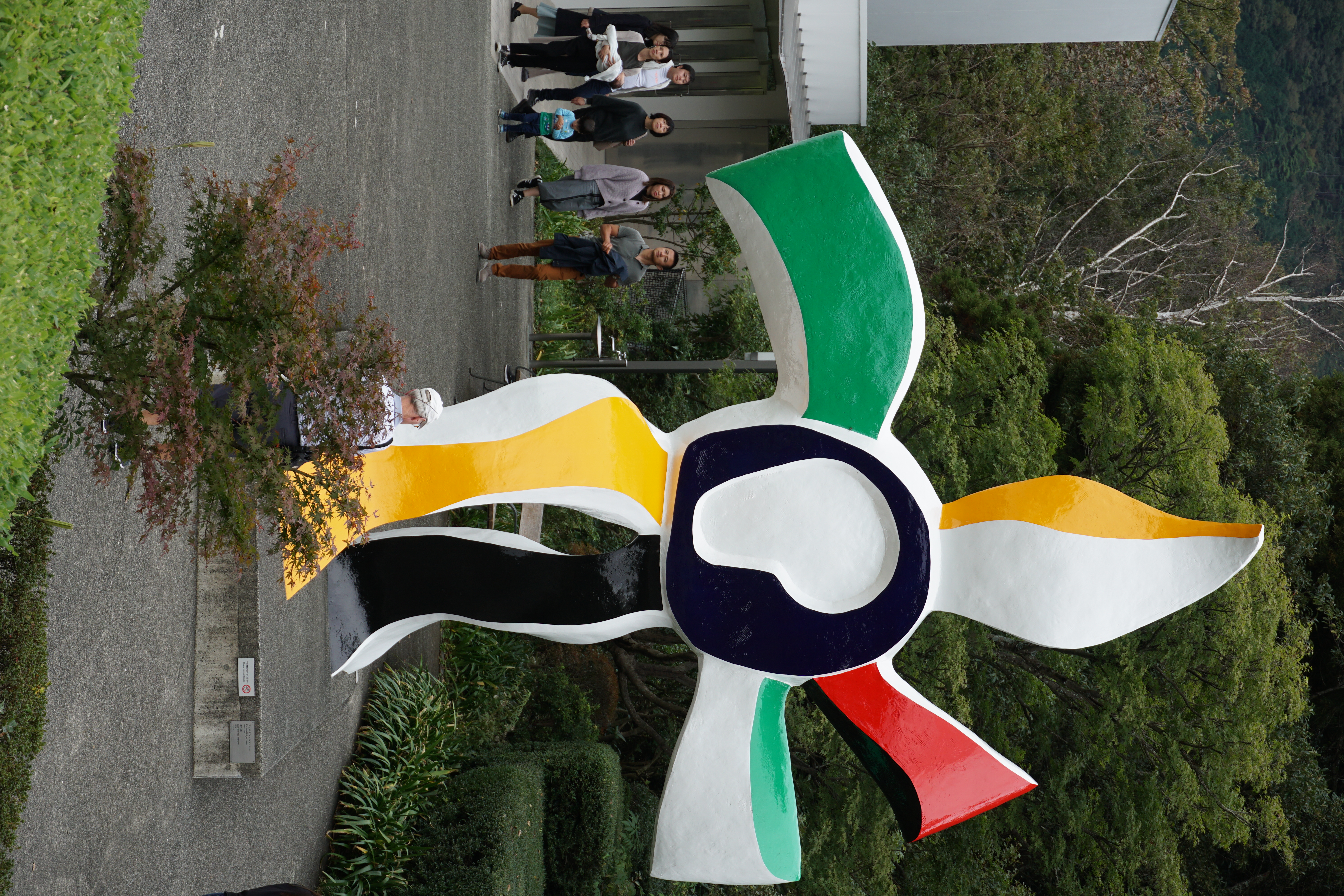
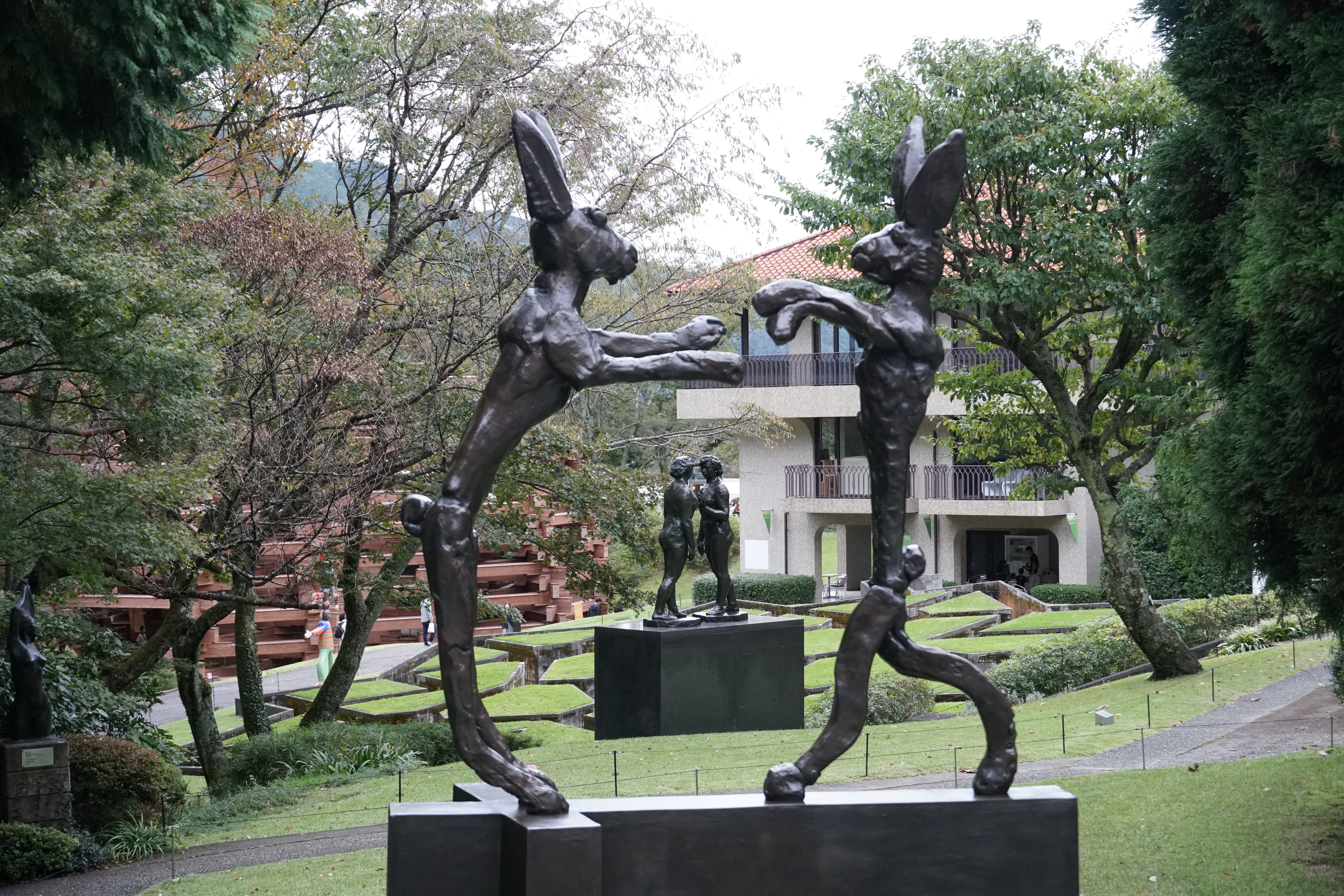
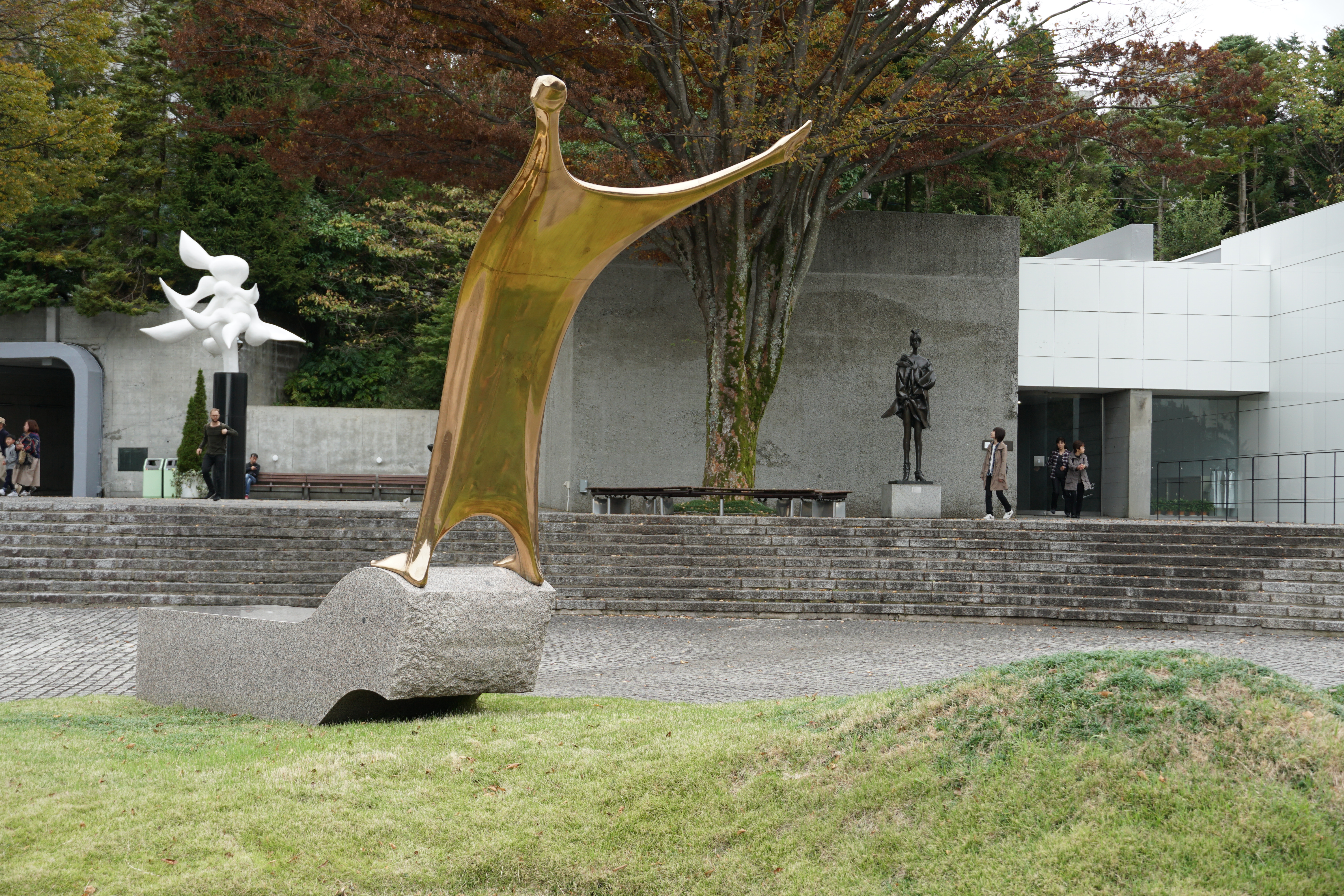
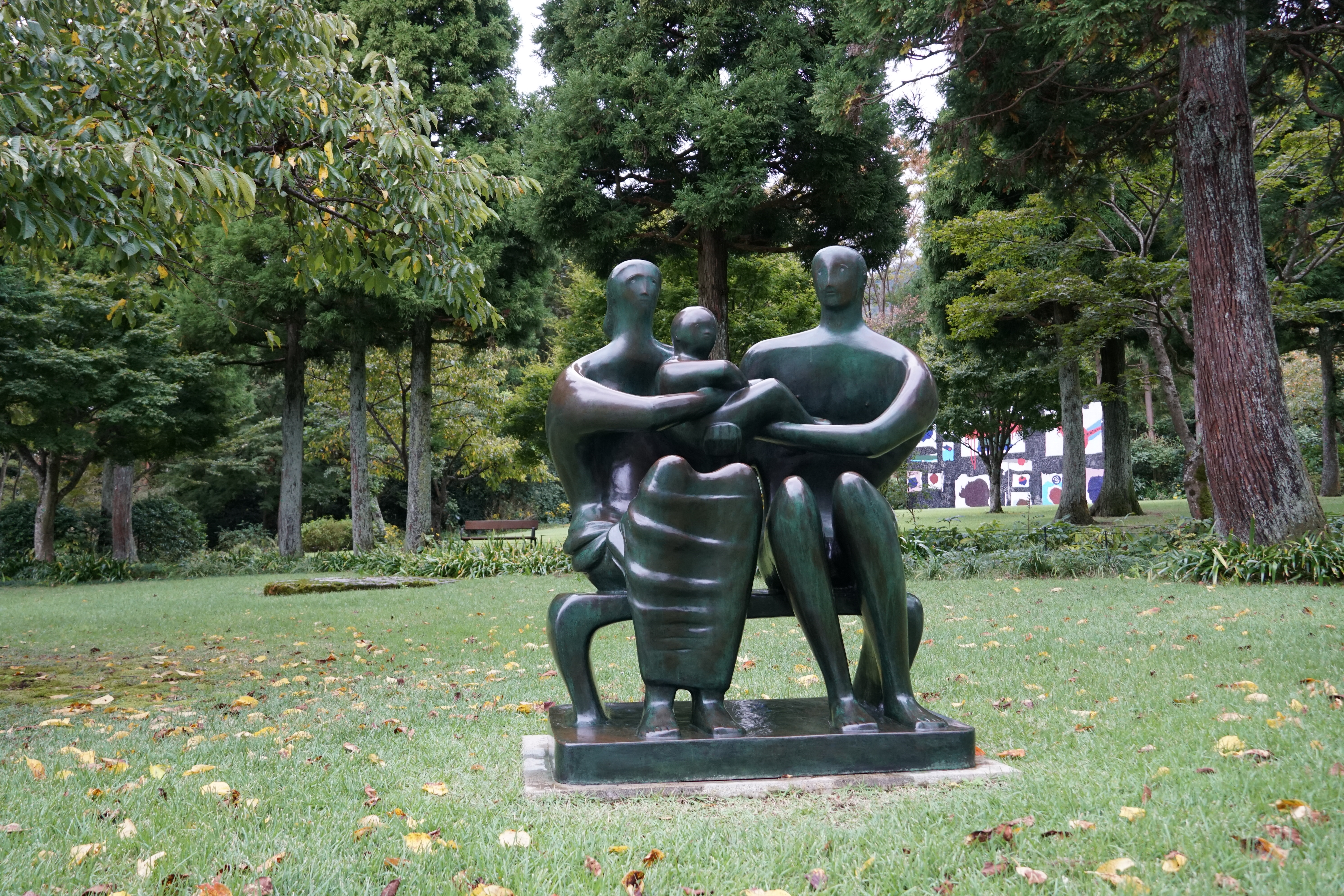
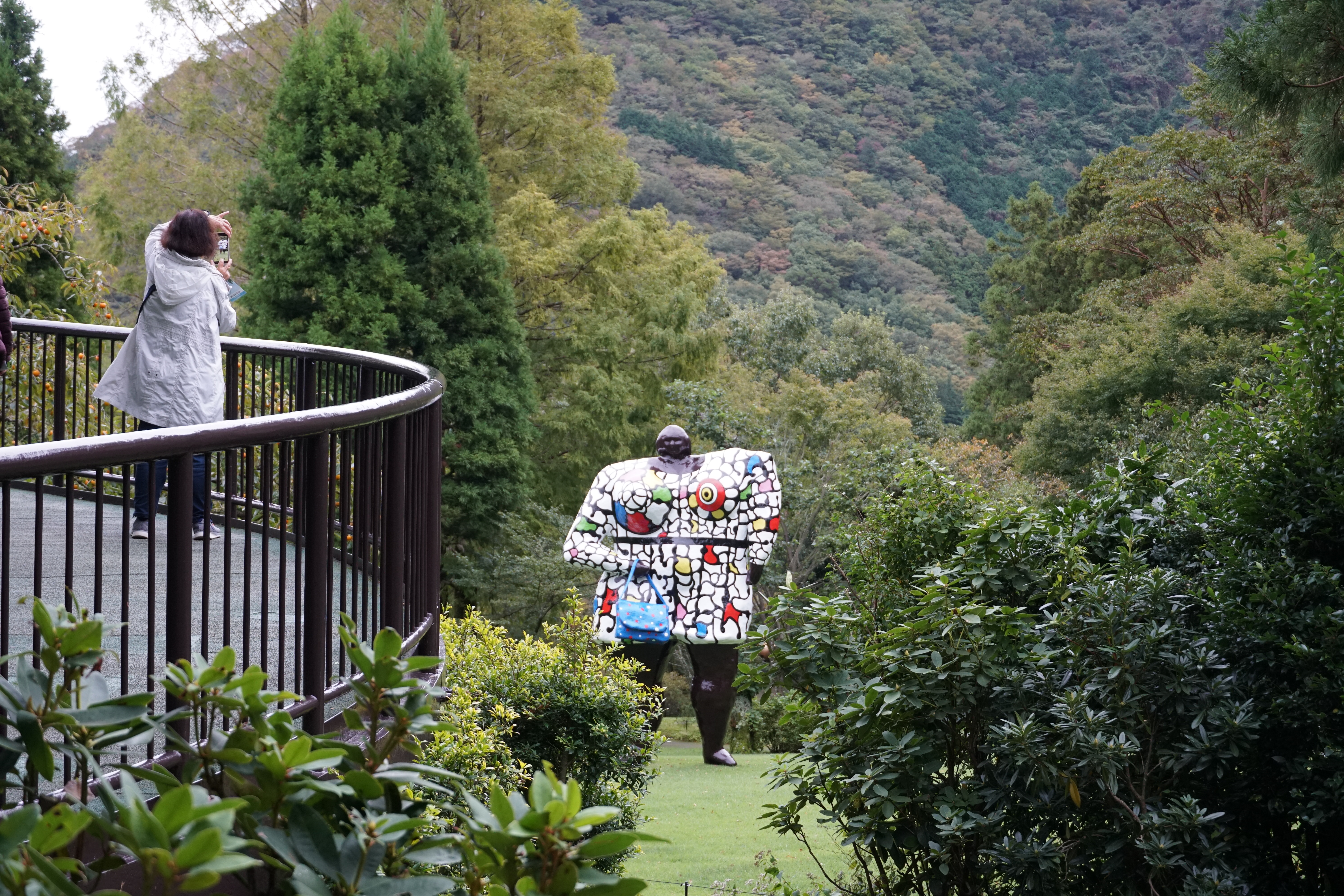
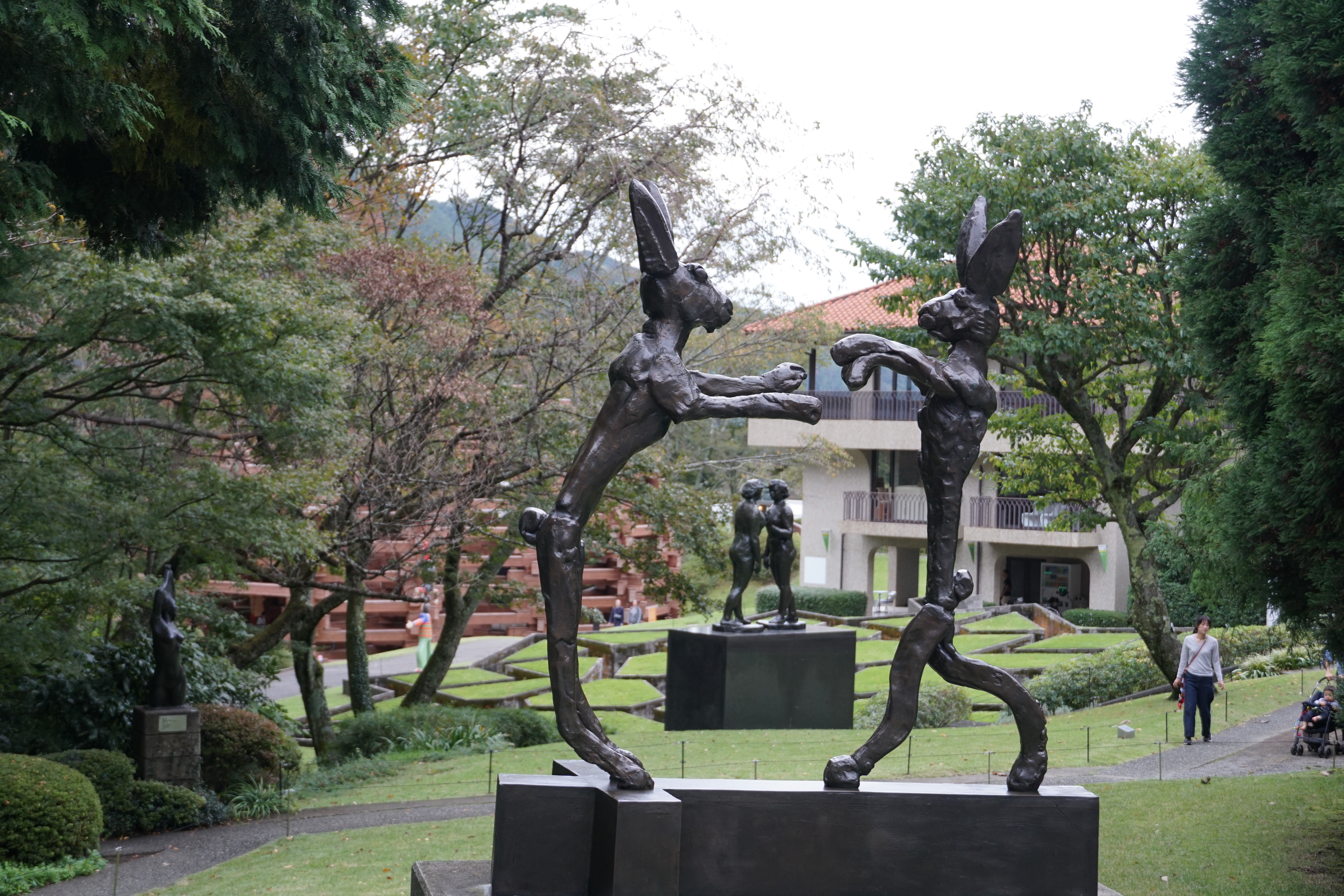
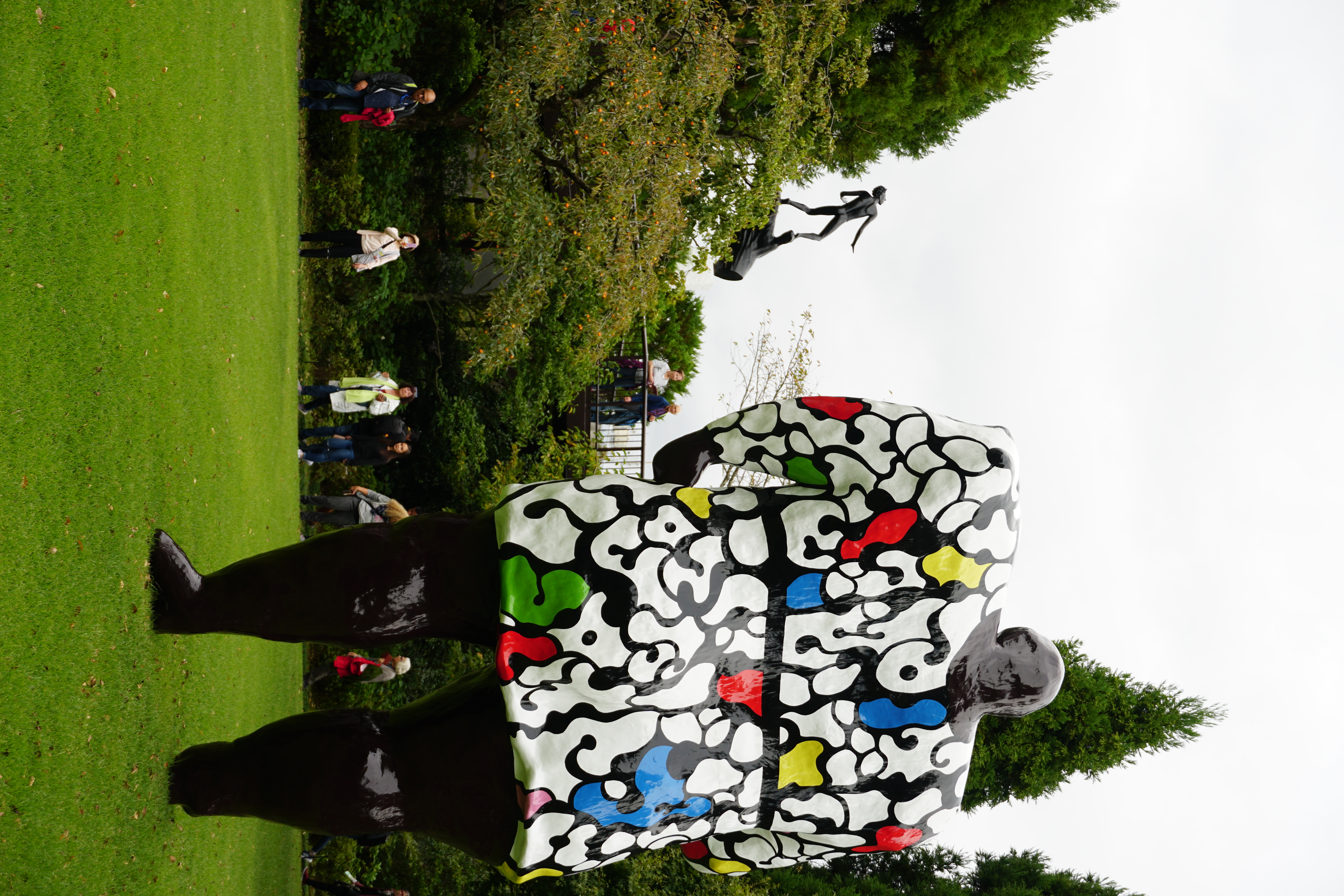
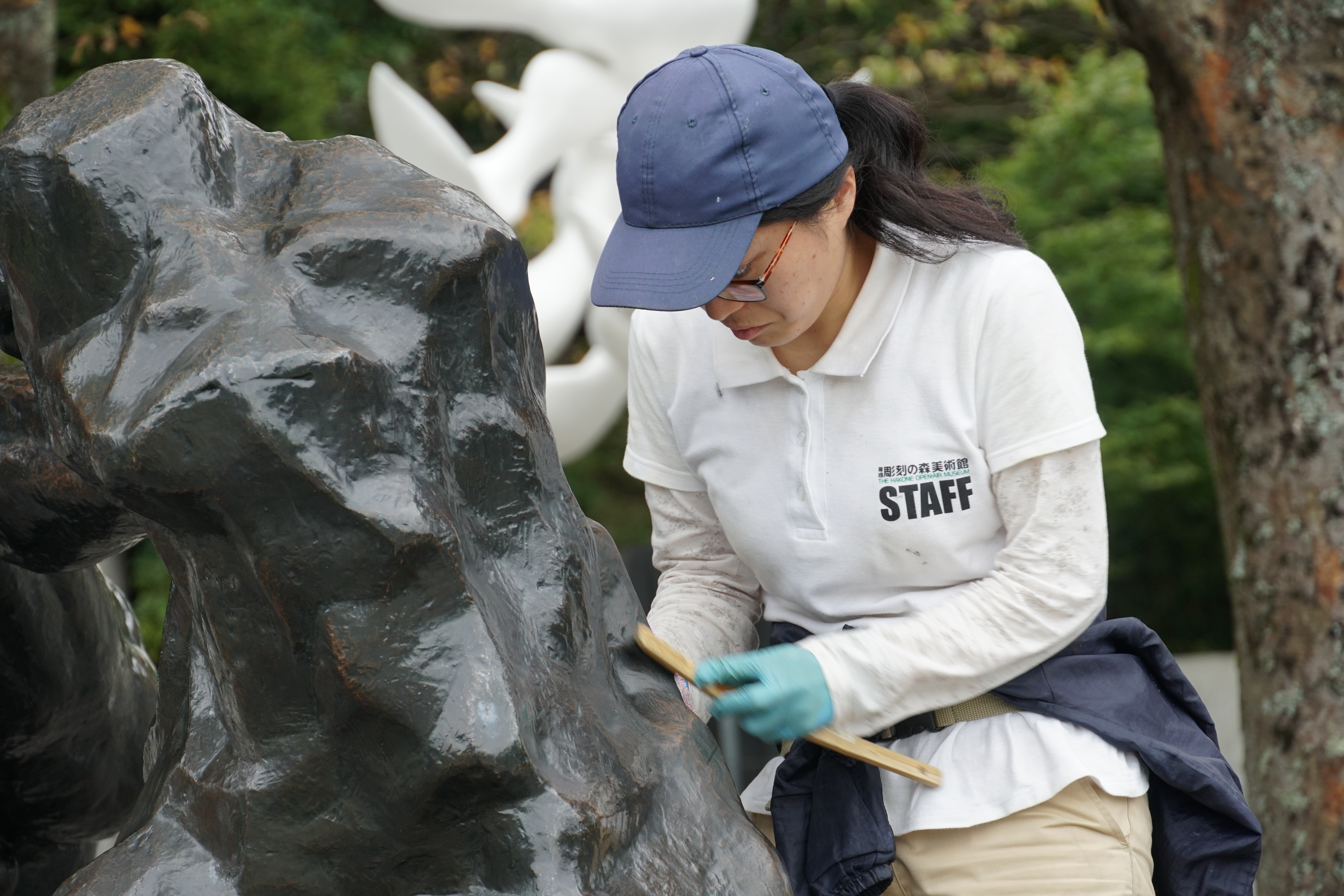
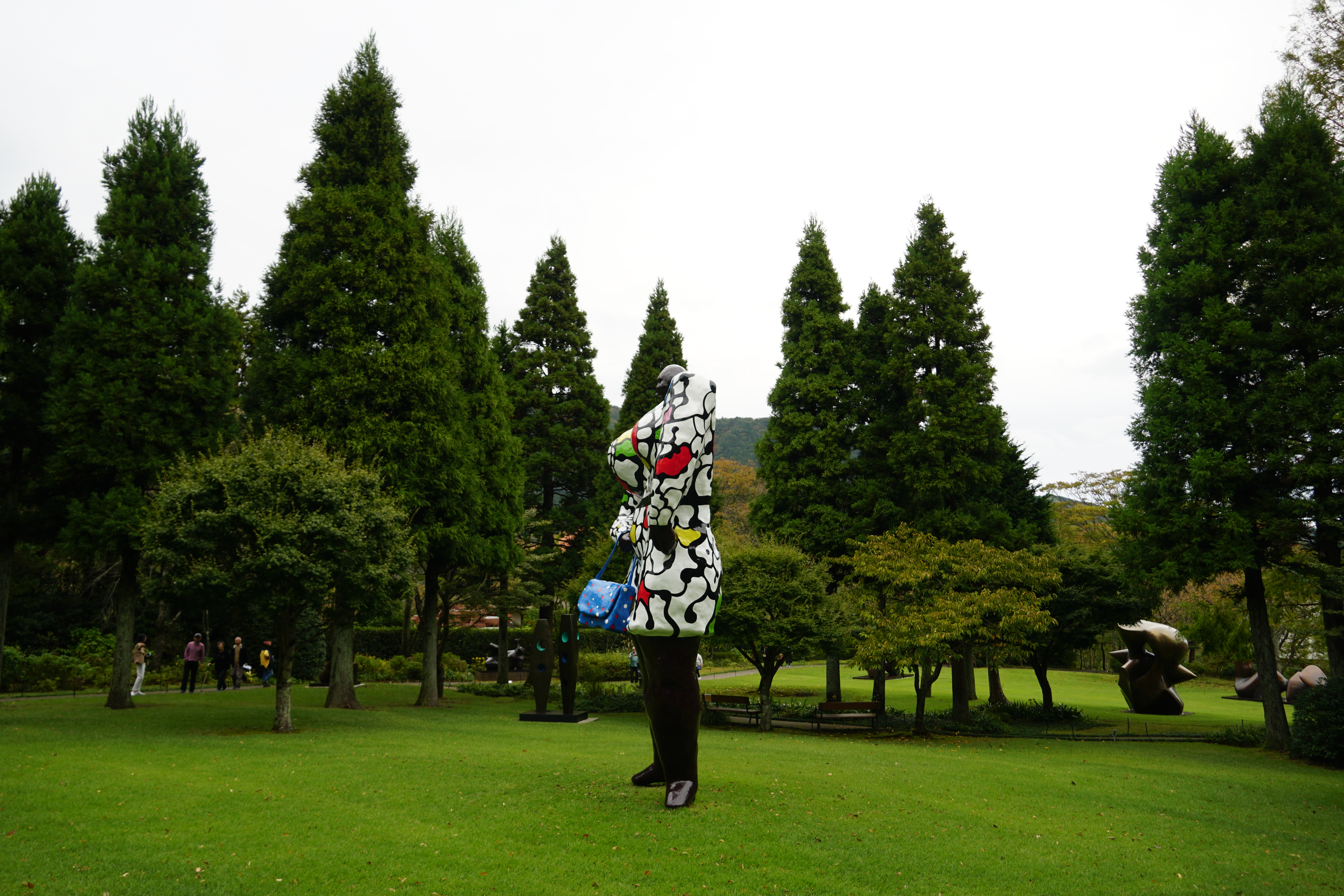
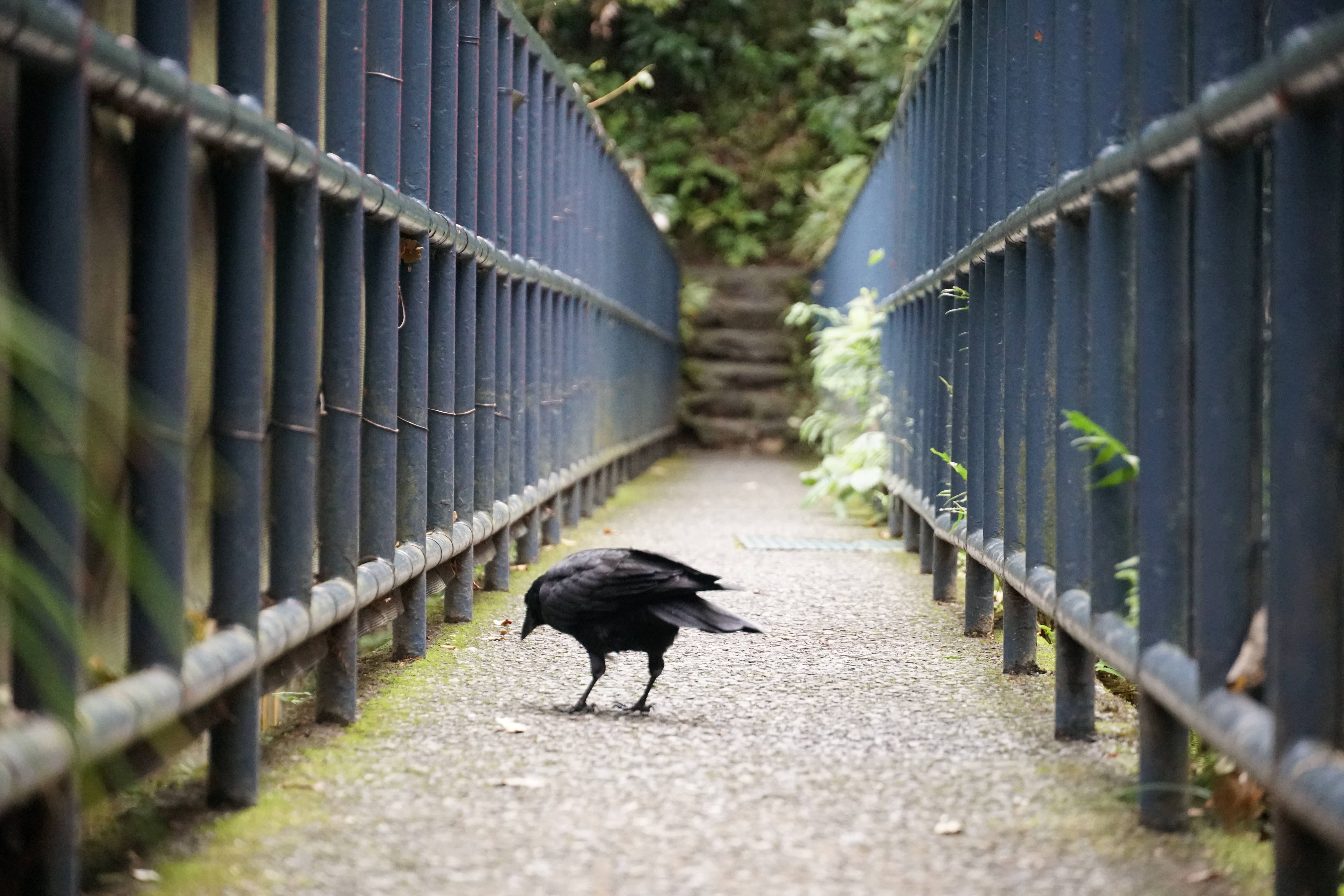
There's no prescribed path. You wander. Down a slope, past a bronze group of figures frozen in mid-movement. Along a gravel path where a staff member is carefully cleaning a sculpture with a small brush, the kind of quiet dedication you see everywhere in Japan. Around a corner to find a giant colorful figure standing alone on a perfect lawn, looking like it belongs to a different planet.
The Sculptures
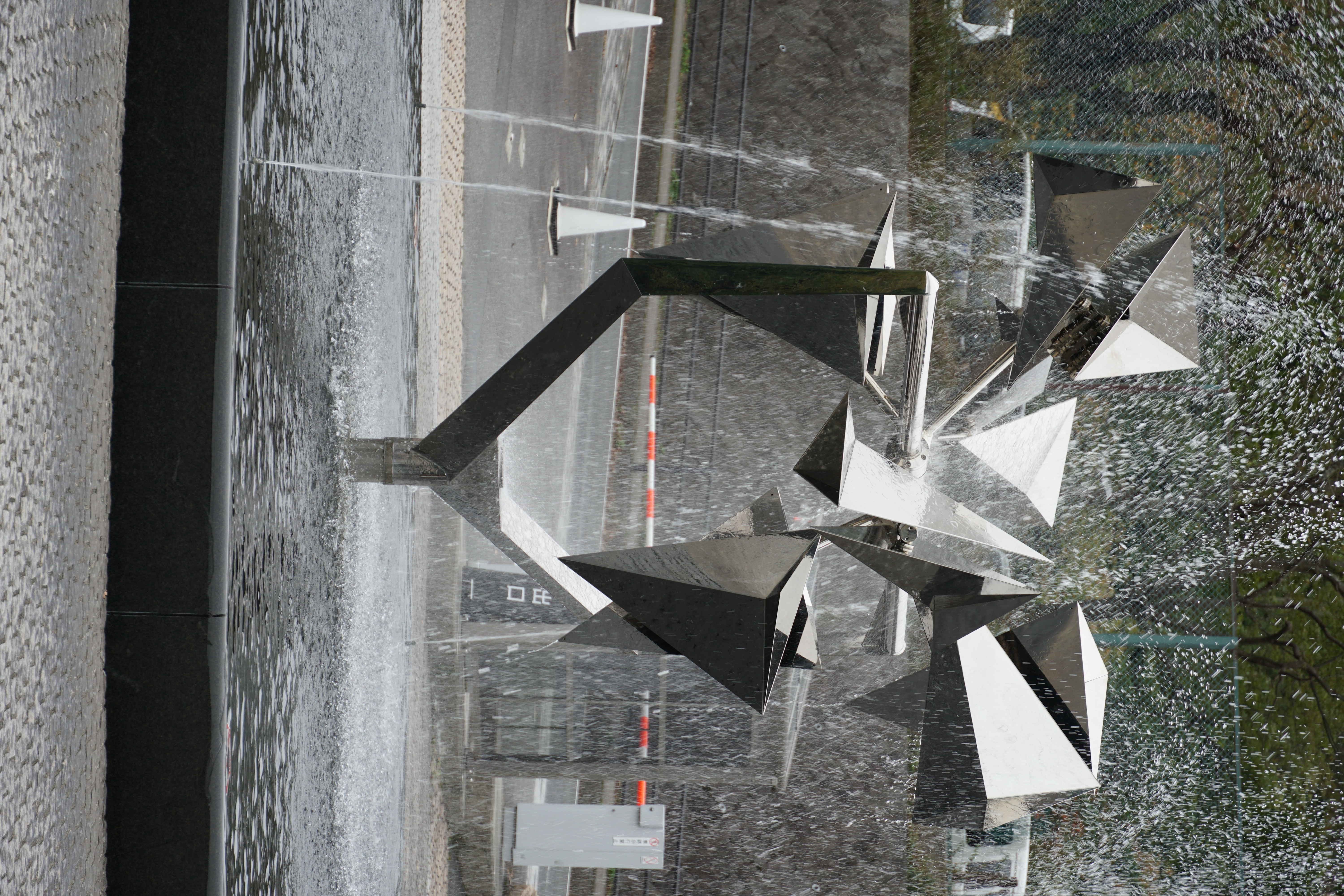
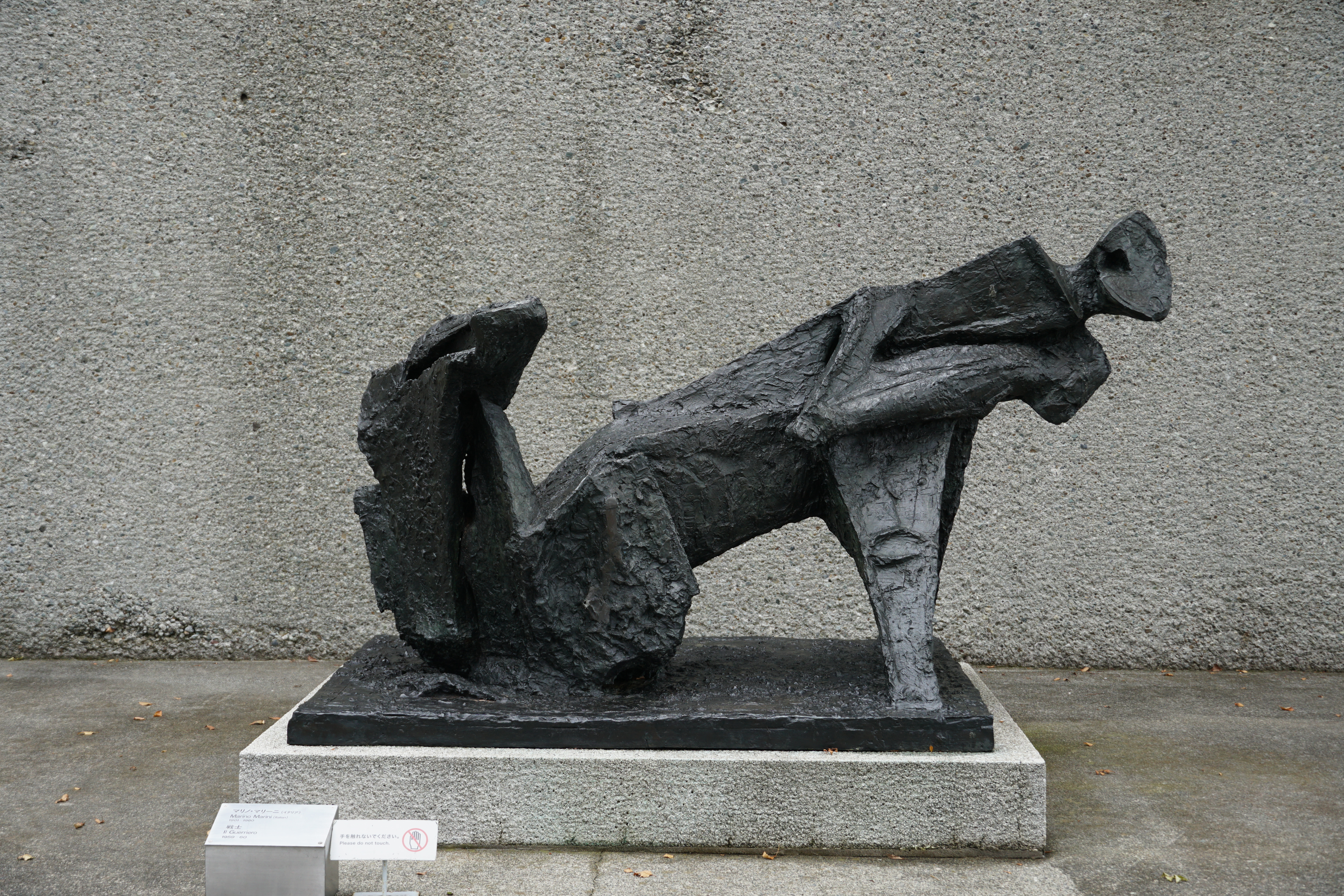
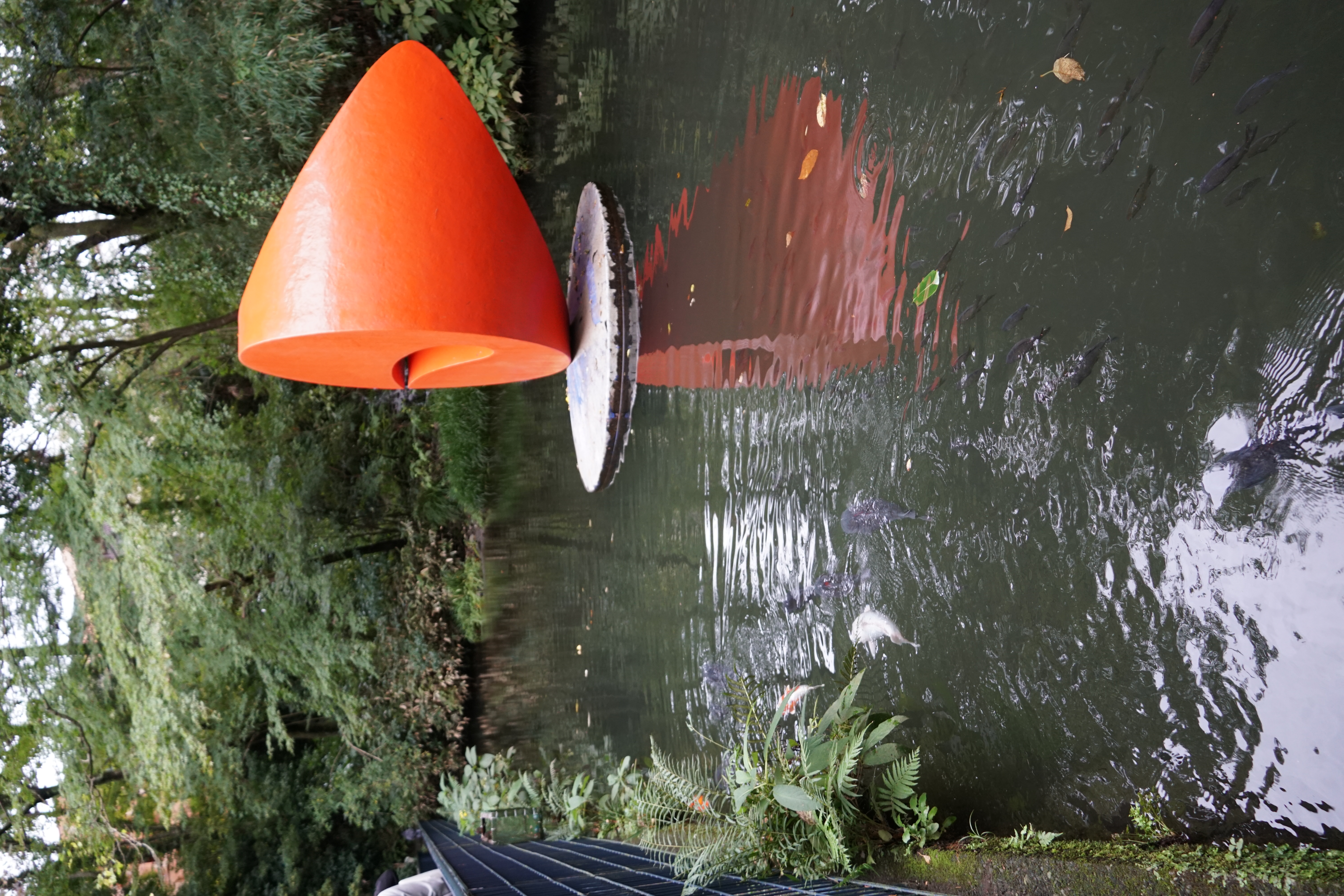
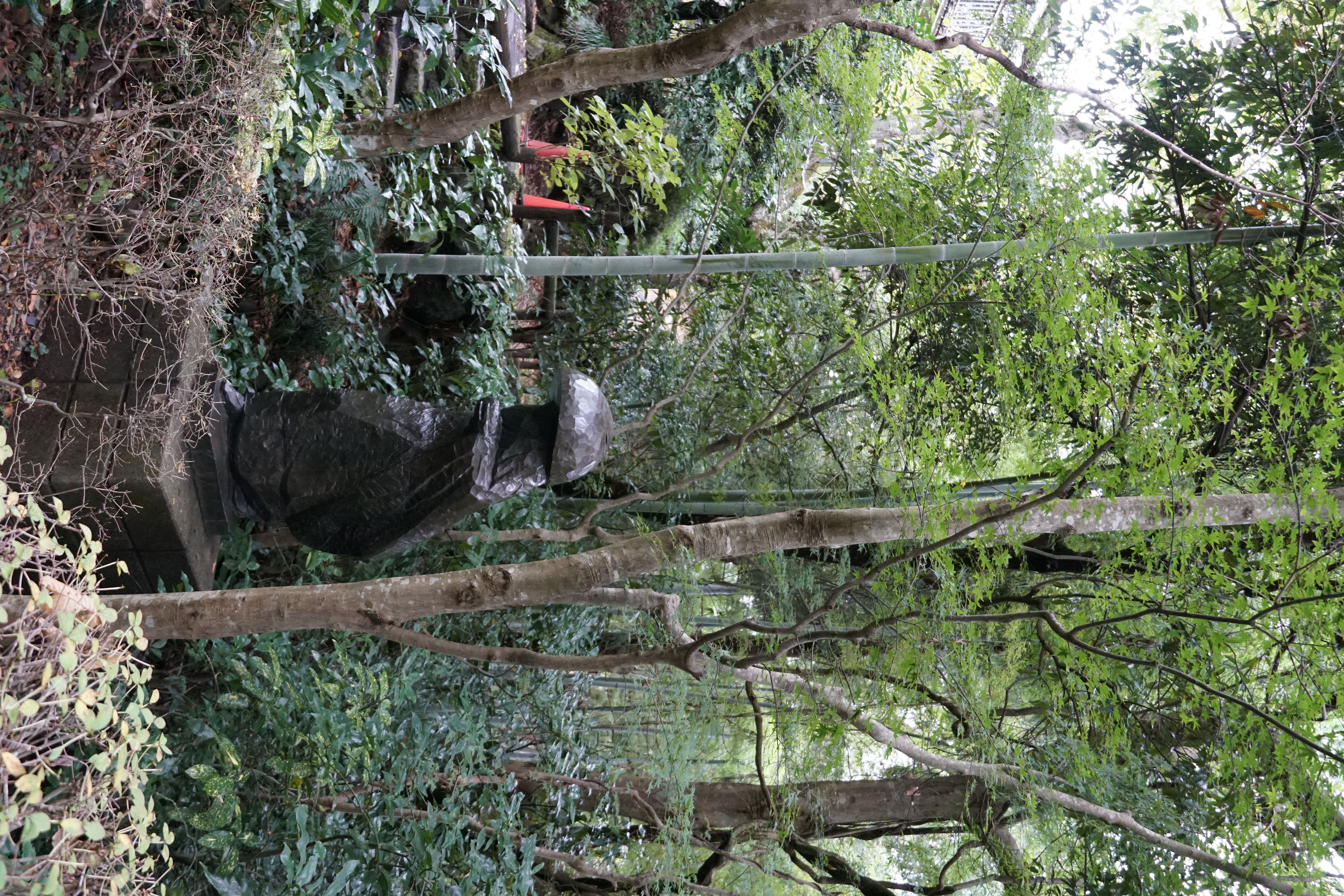
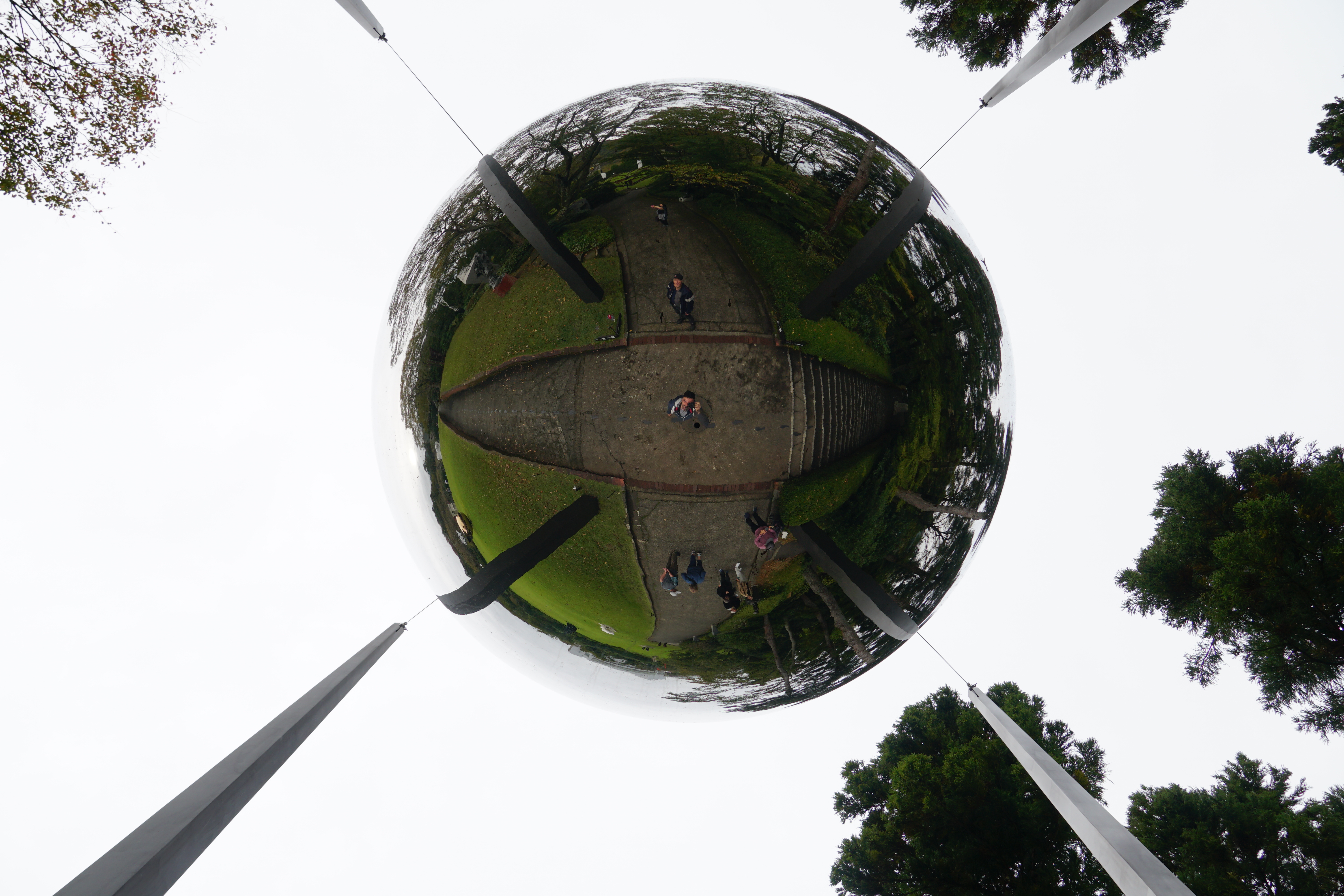
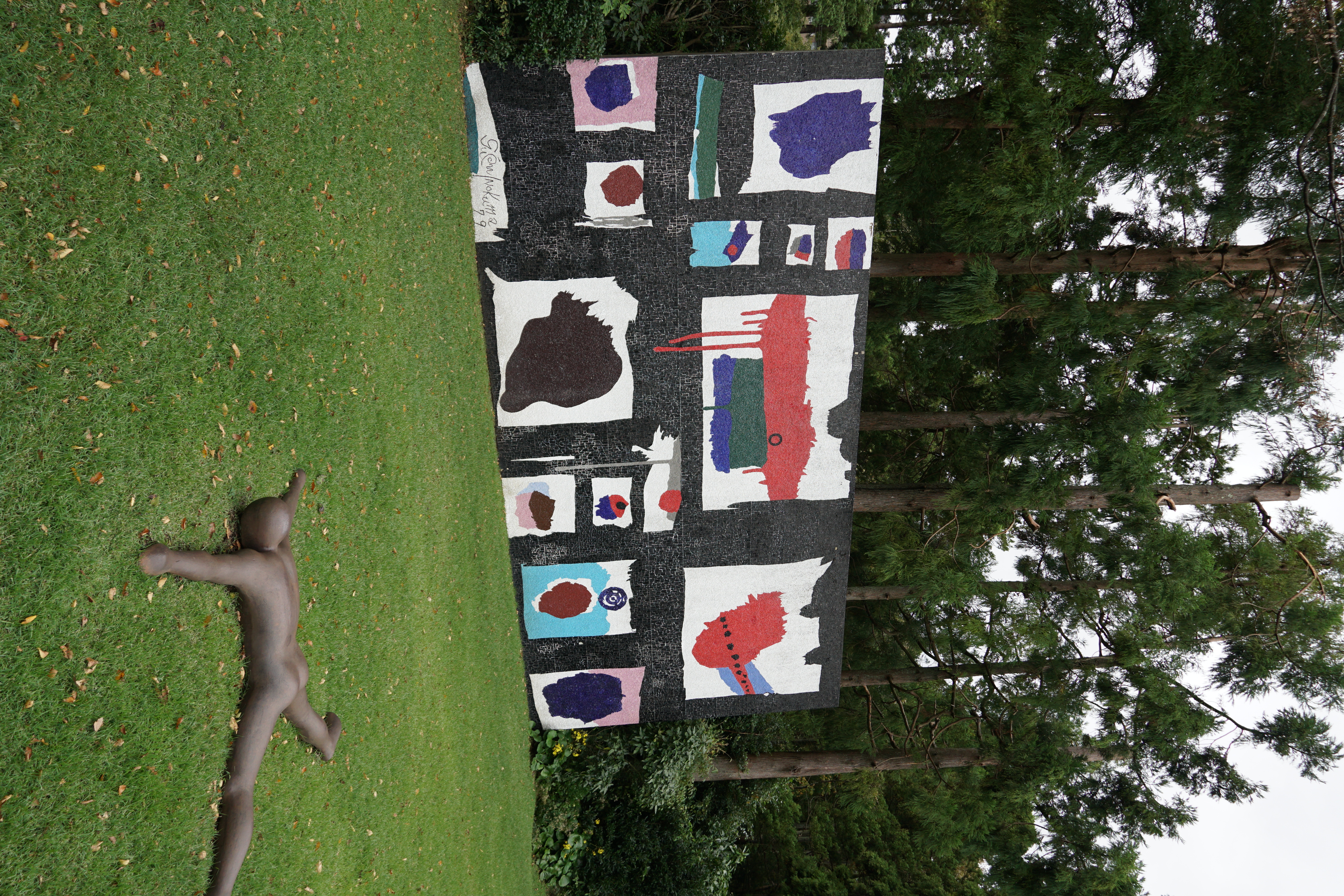
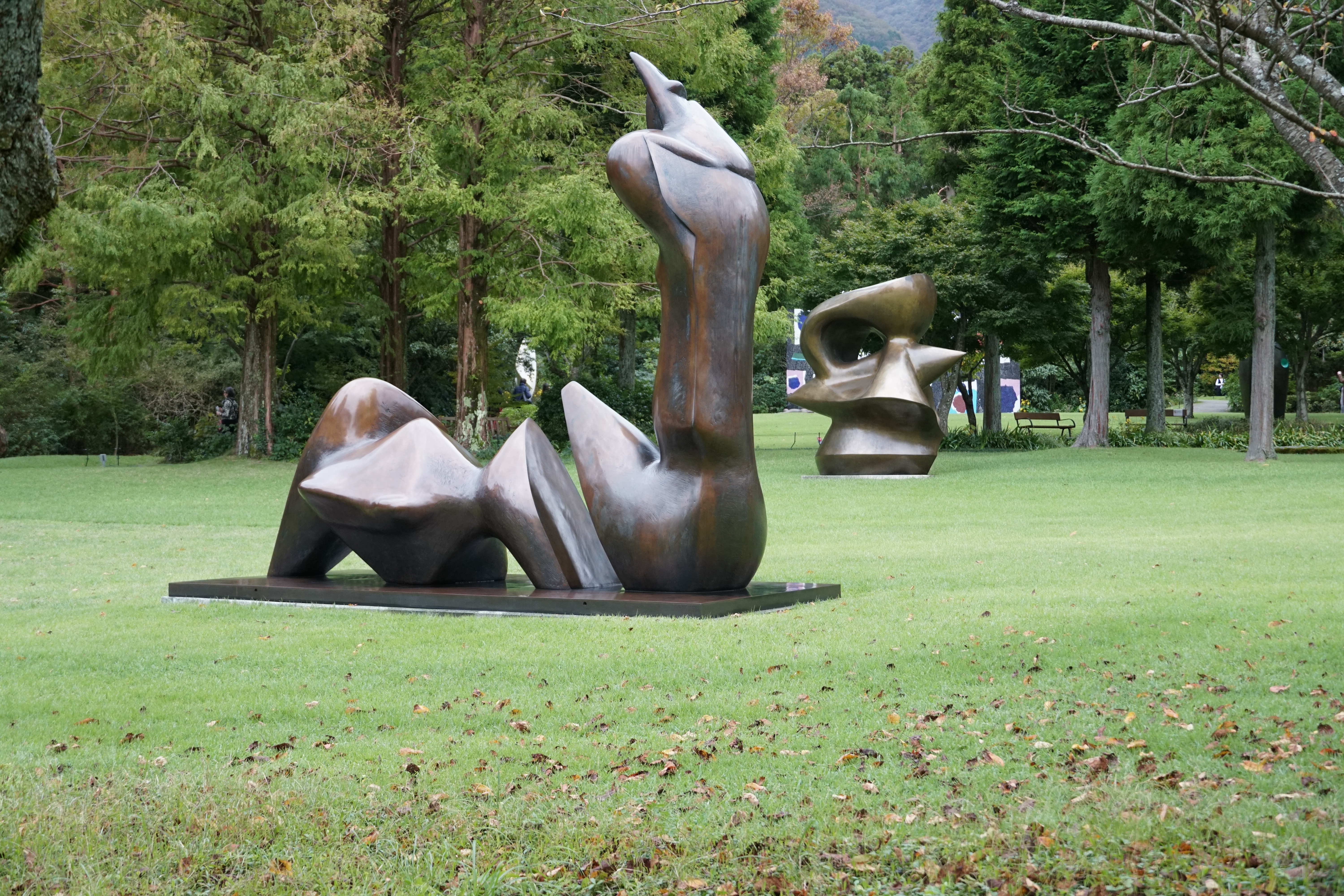
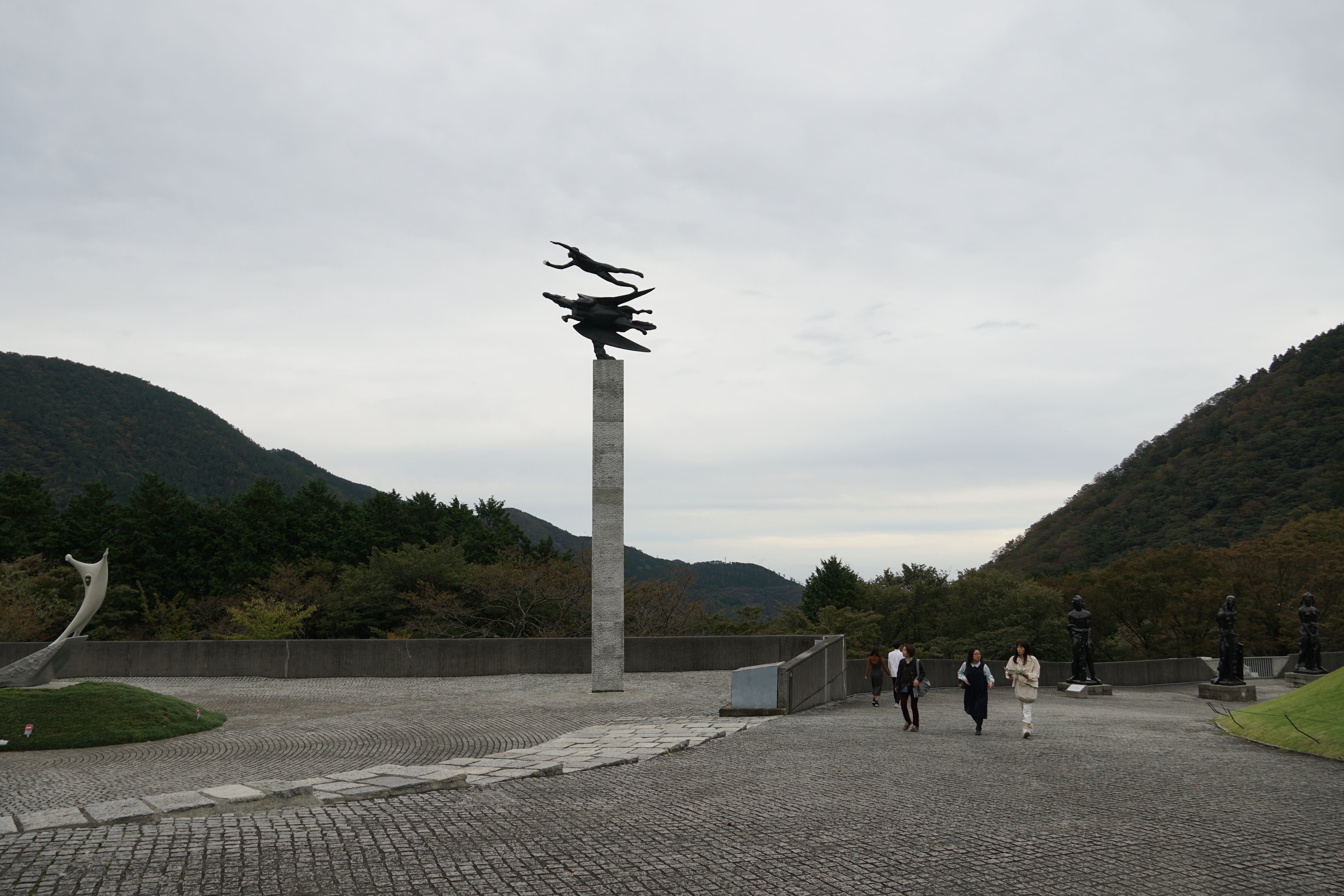
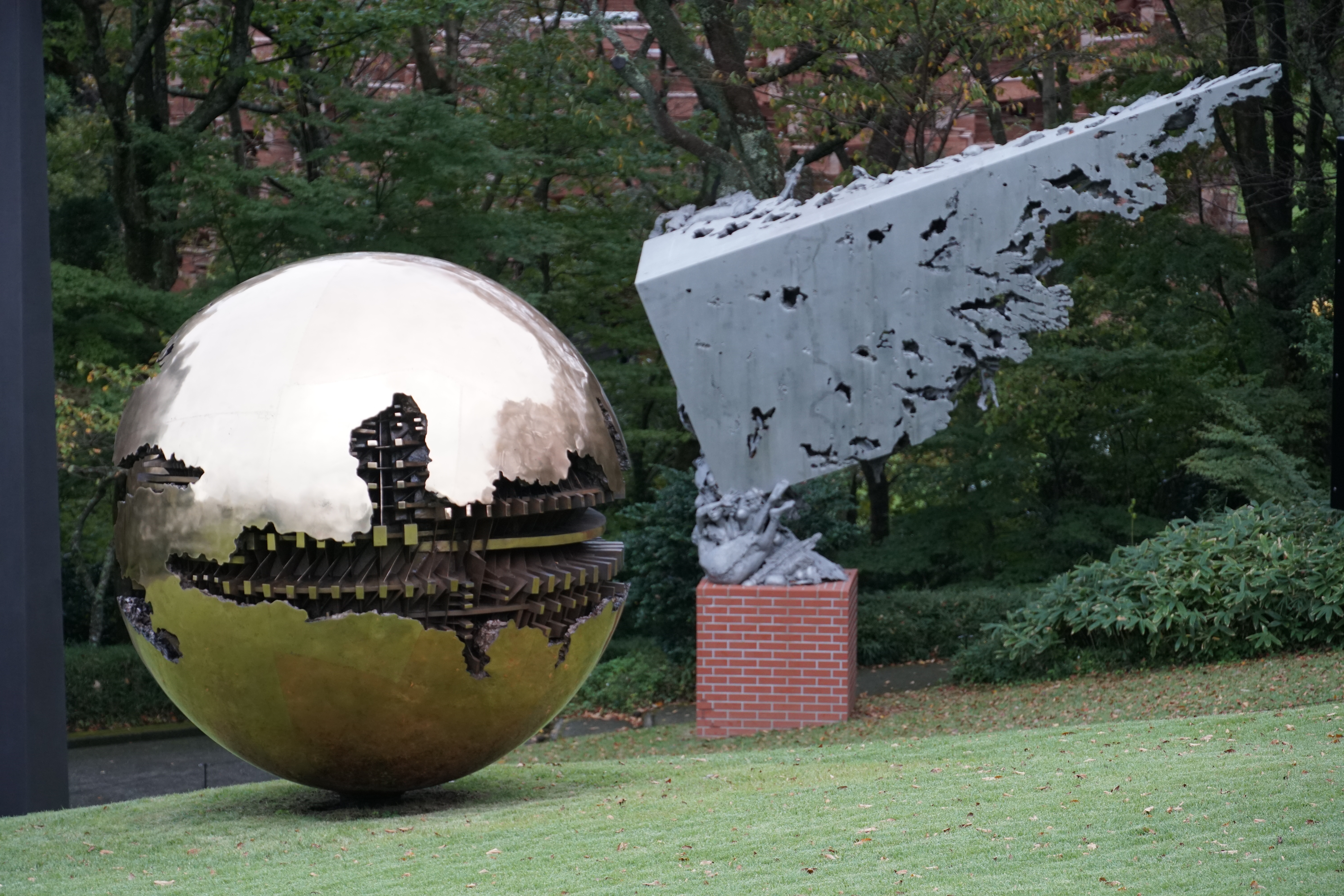
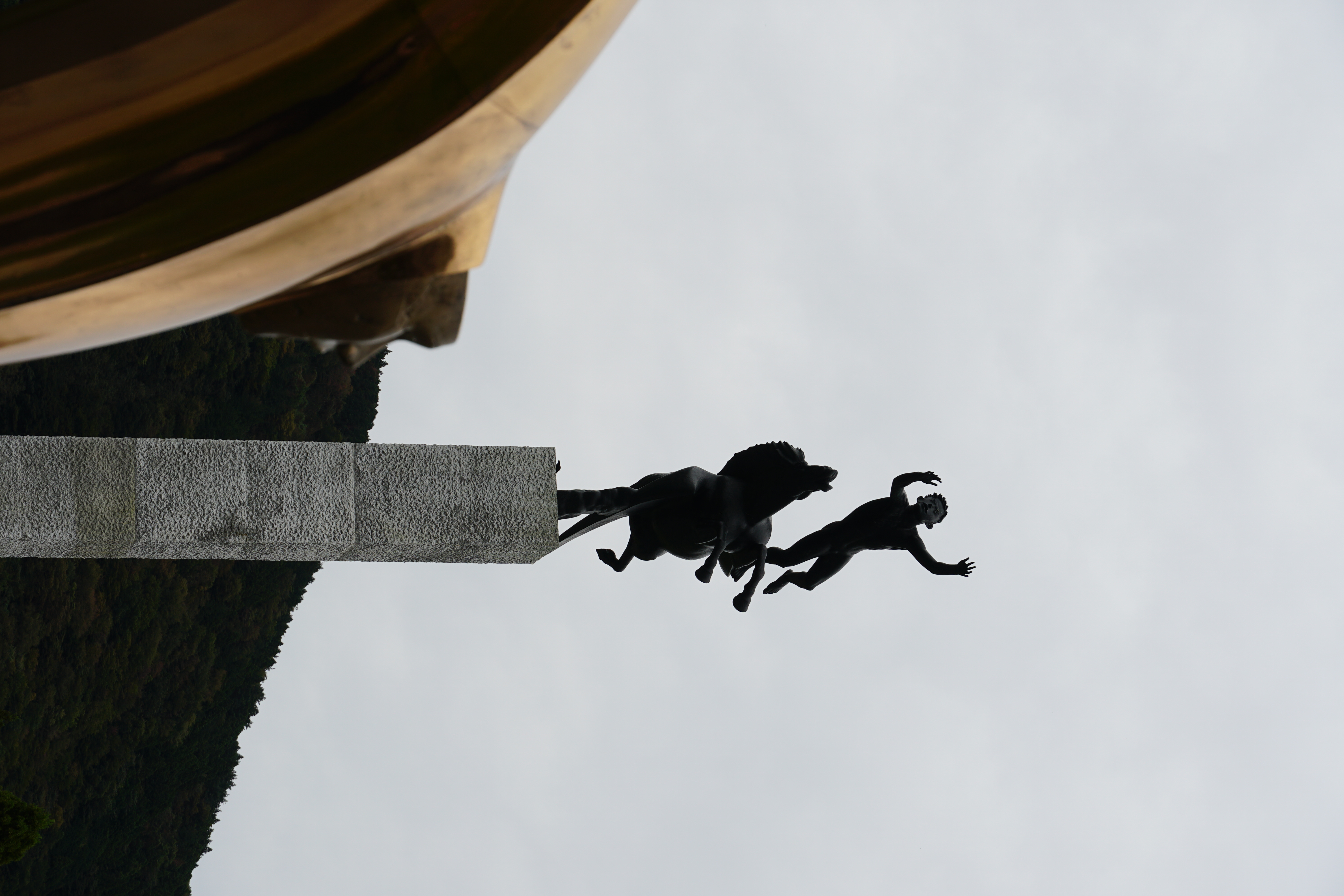
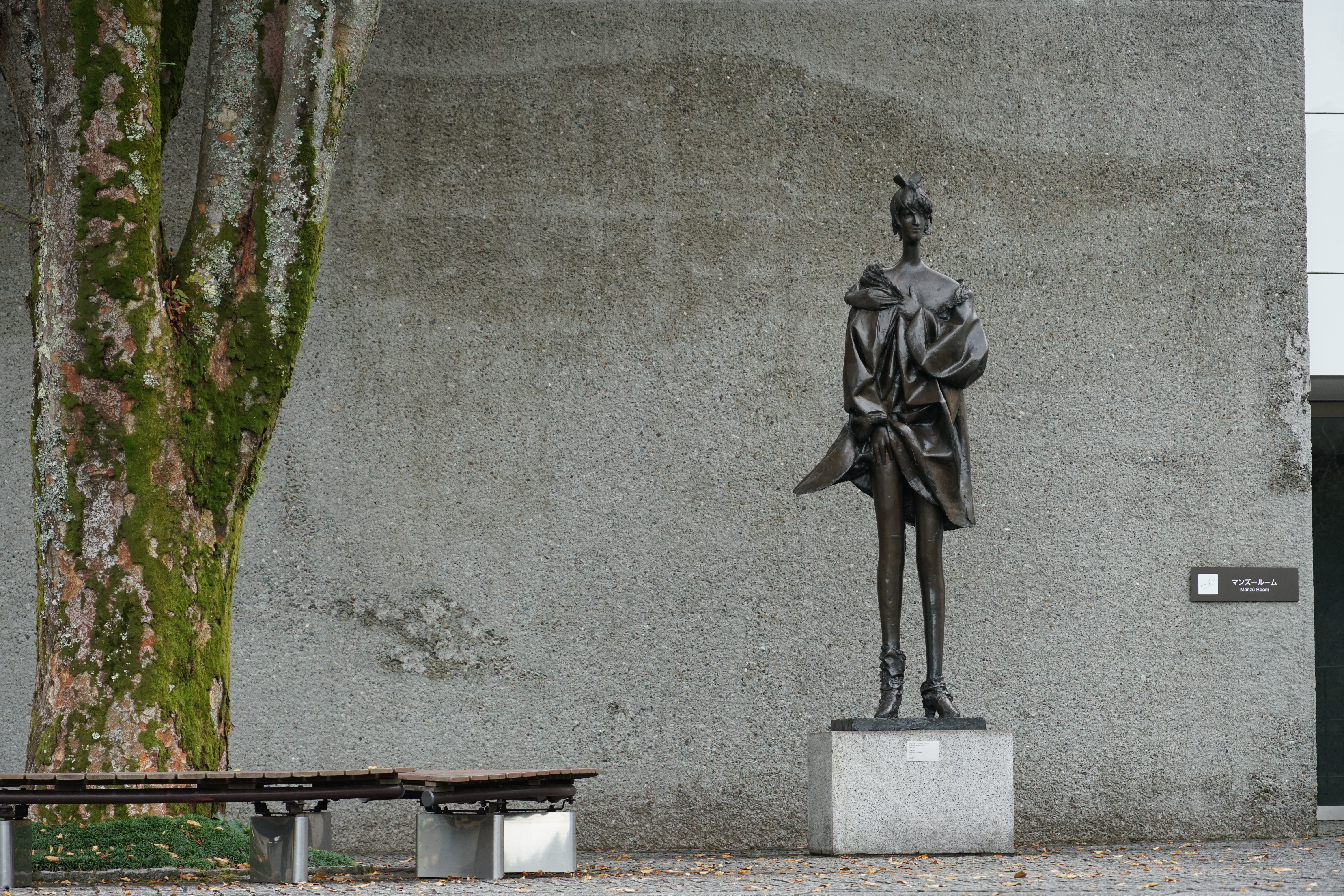
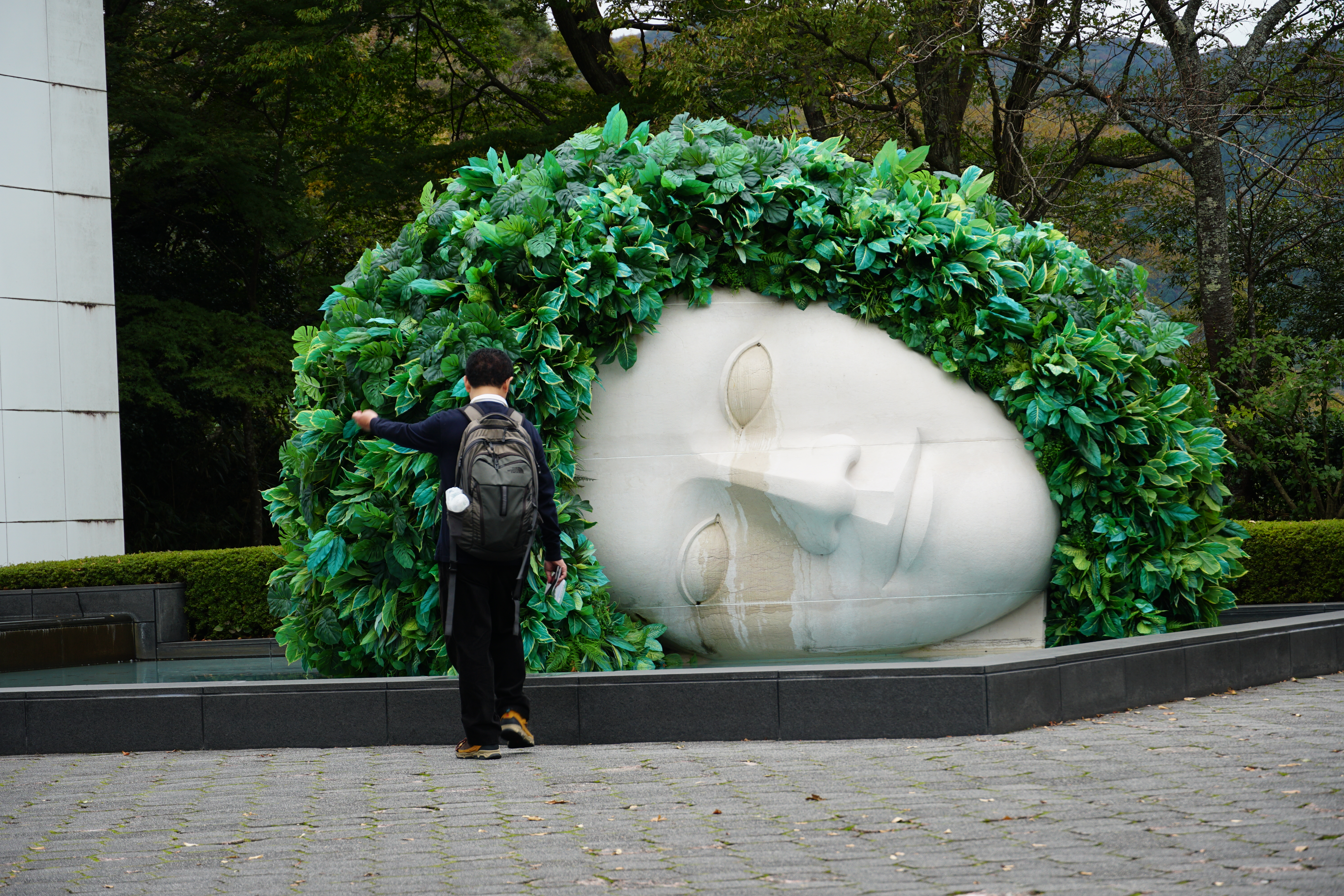
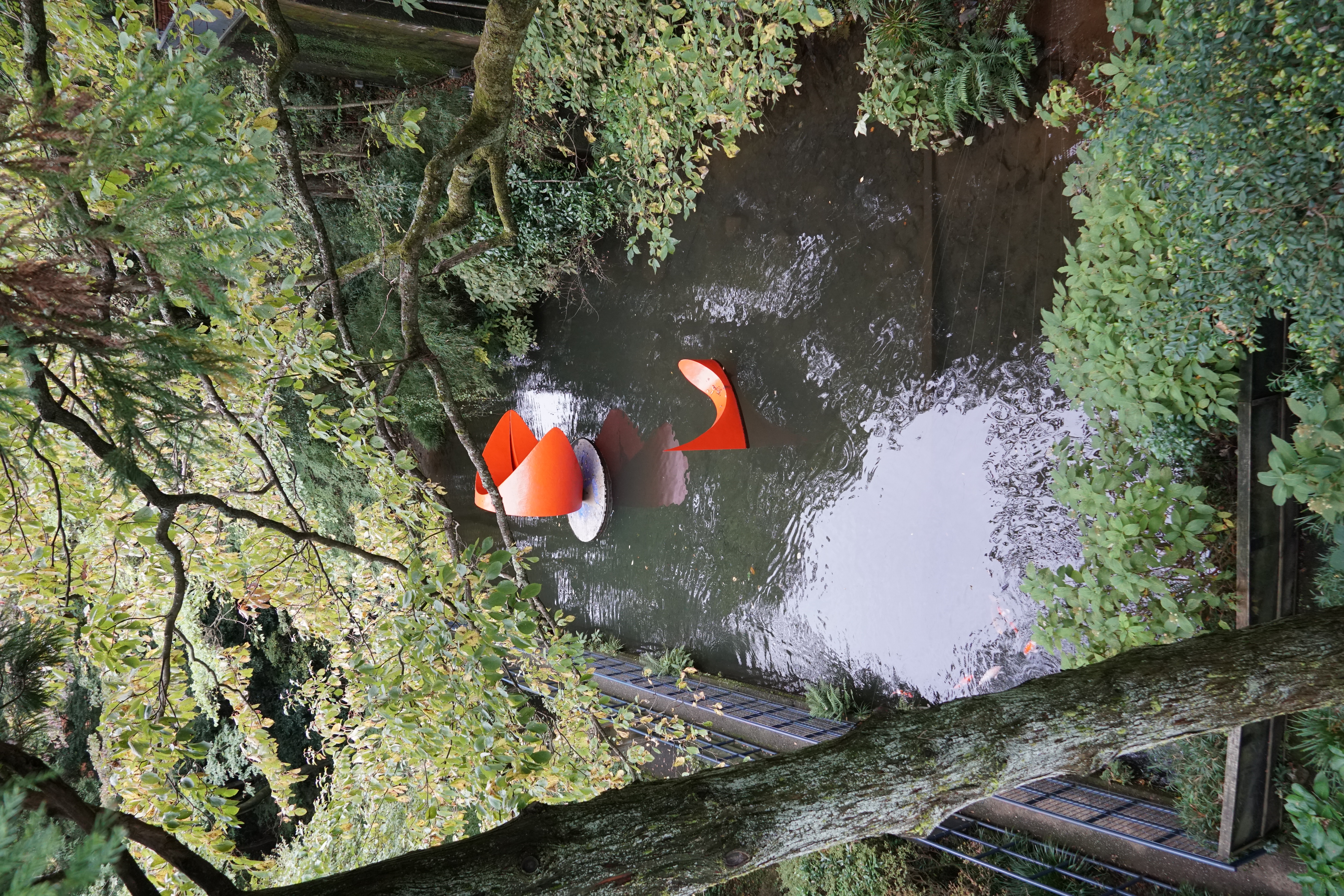
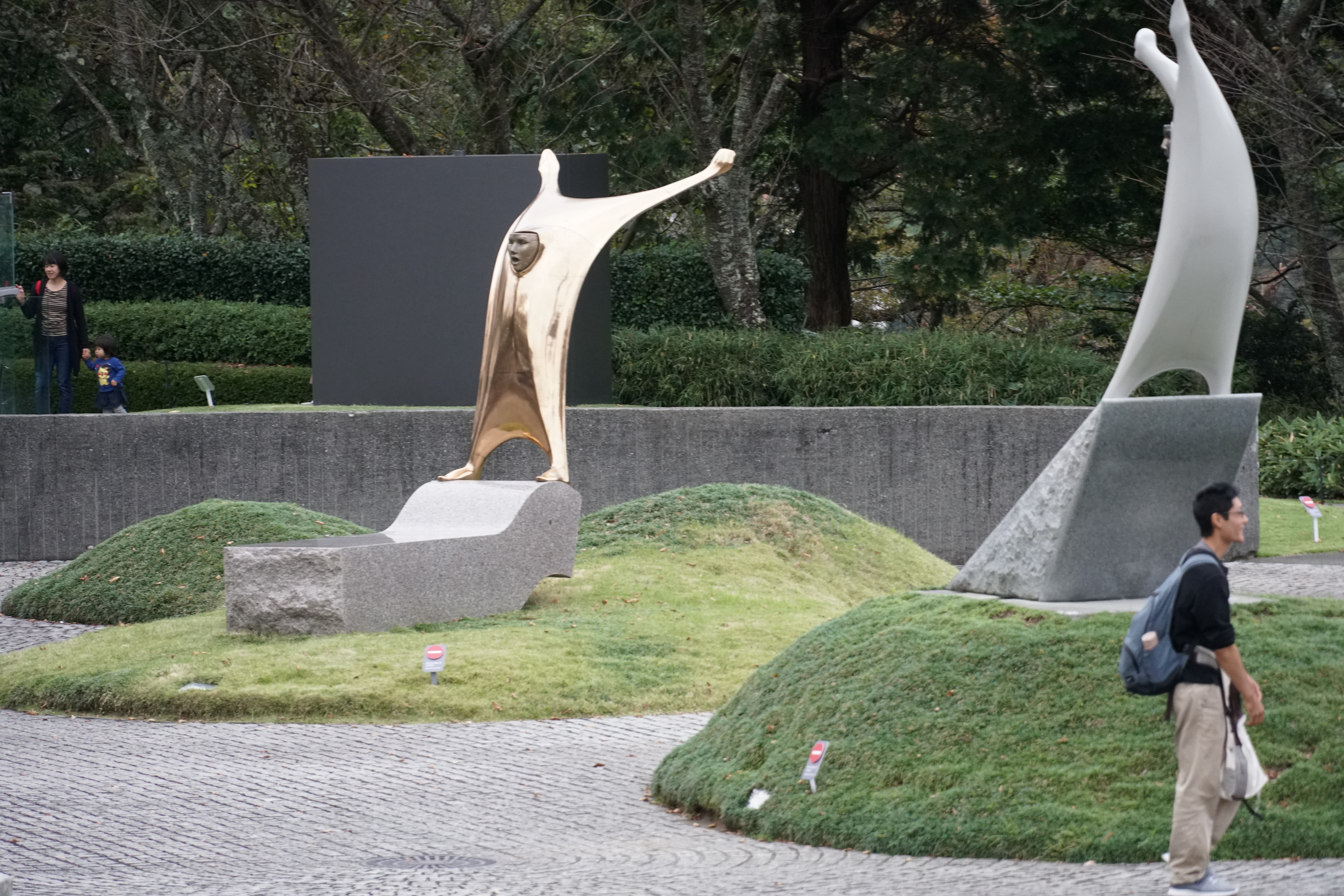
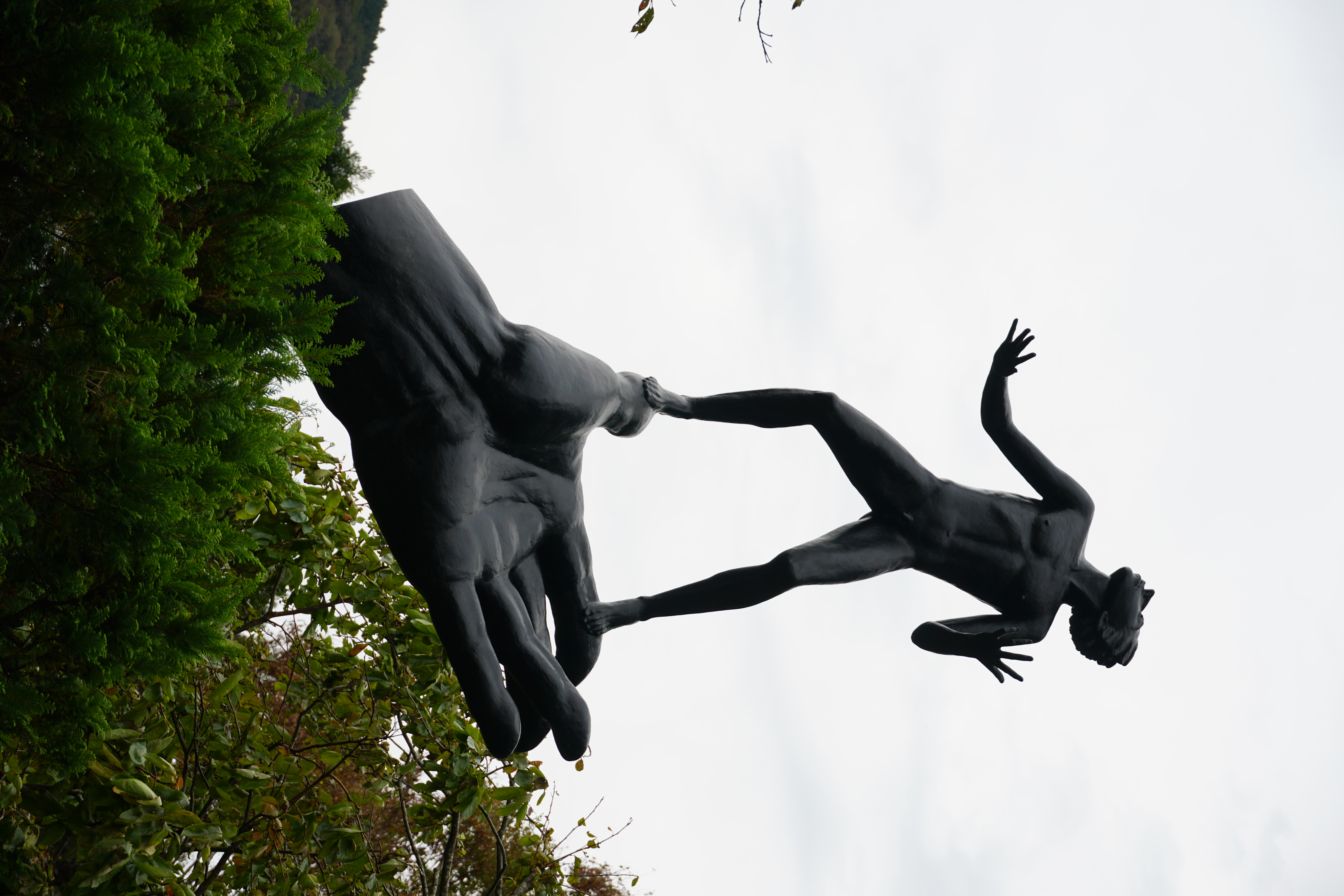
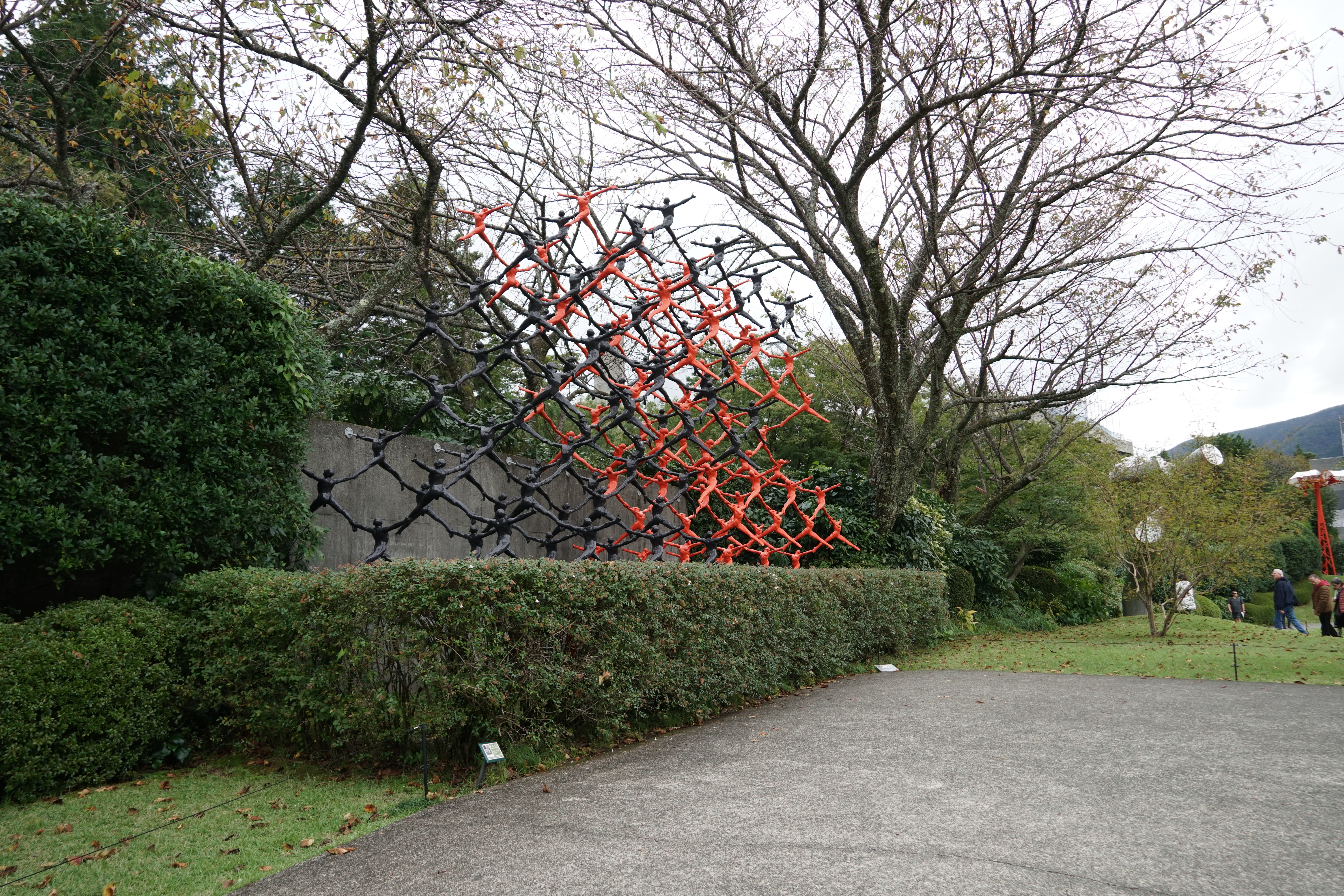
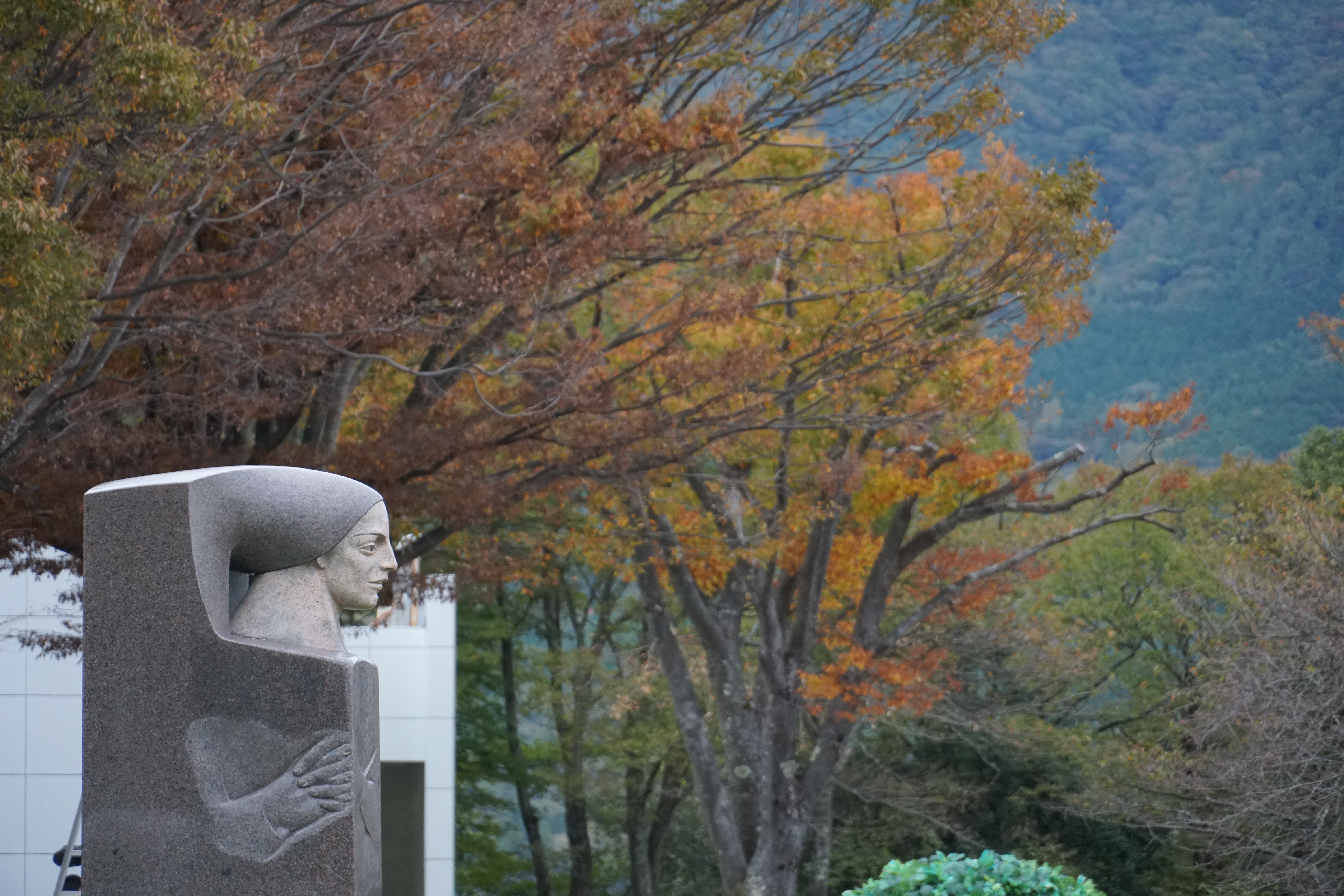
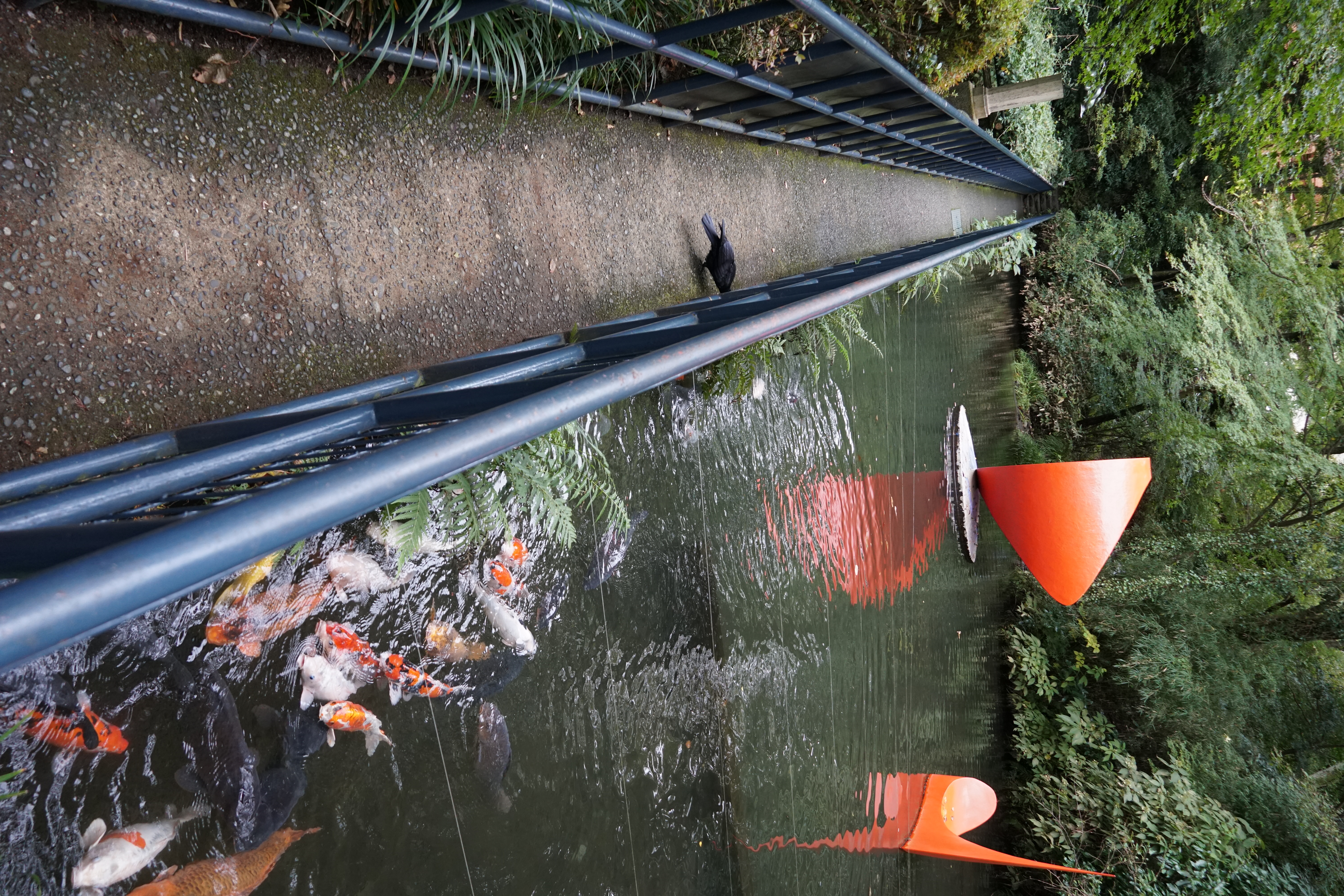
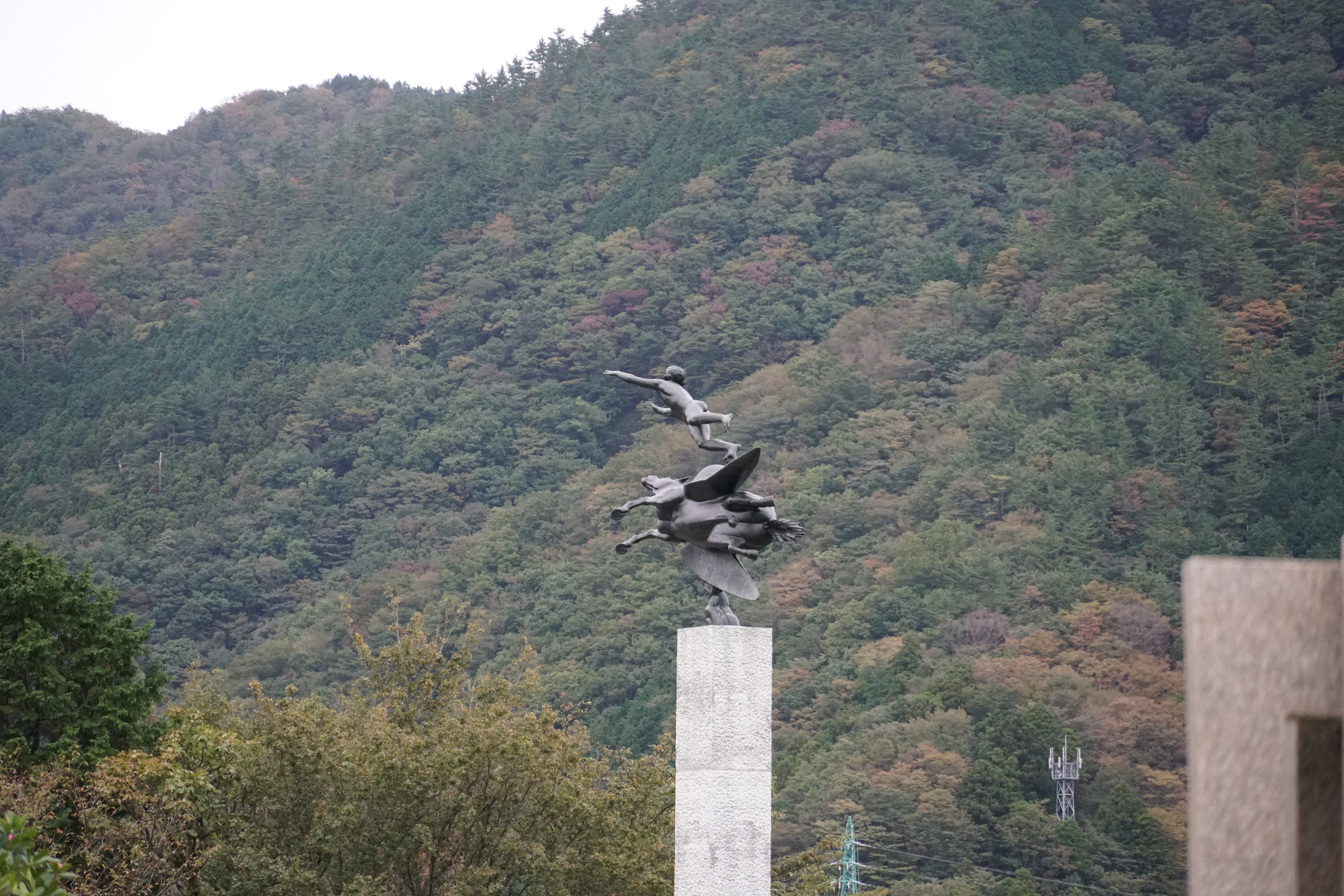
What makes this museum work is the range. You walk from abstract bronze figures to a giant hand dropping a human body from the sky. From a golden sphere cracked open like an egg to a lattice of red and black geometric shapes climbing over a hedge. From weathered stone faces framed by autumn leaves to white minimalist forms on sculpted mounds of earth. None of it feels curated for a specific taste. It's all just there, like a conversation between artists who never met each other, mediated by the landscape.
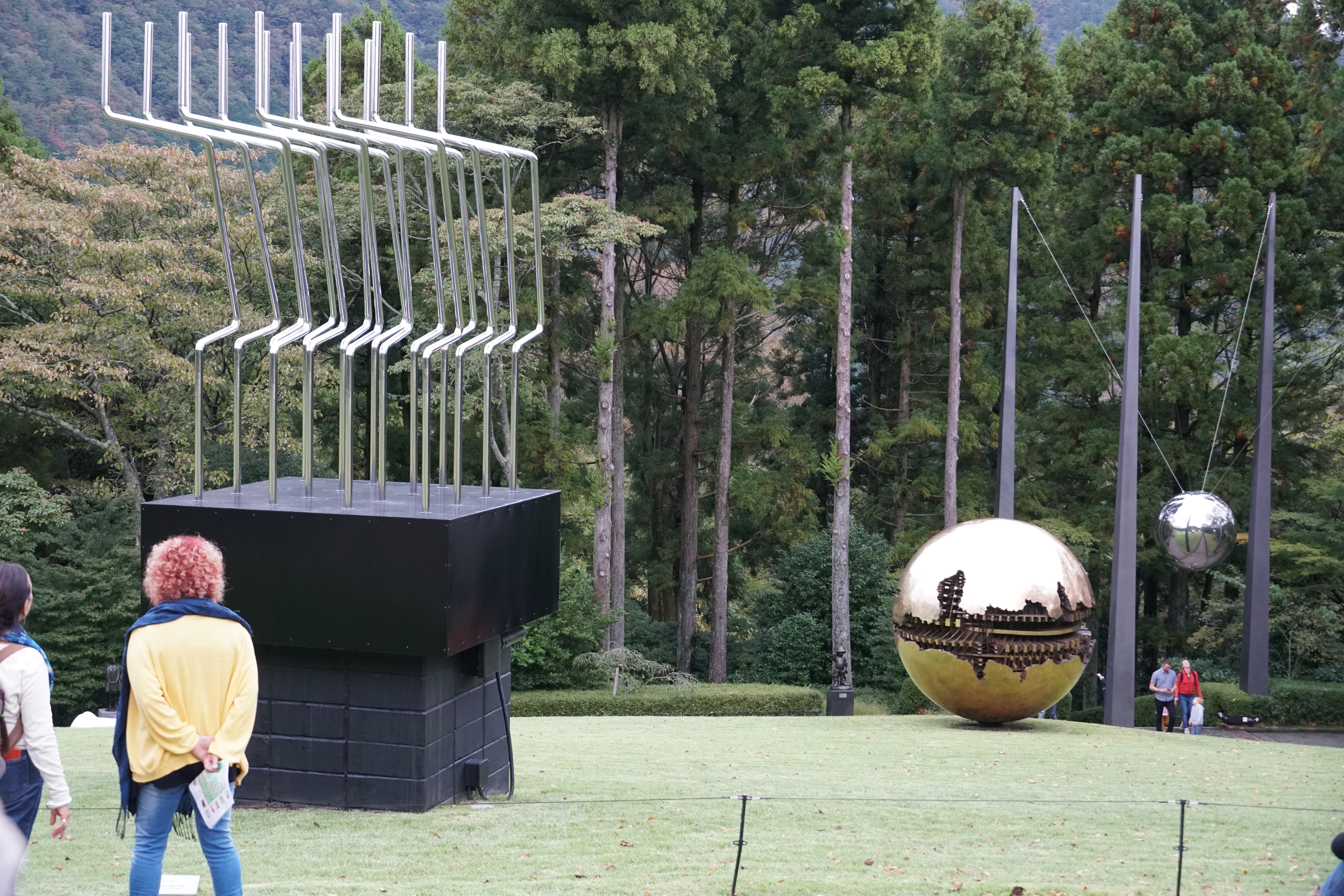
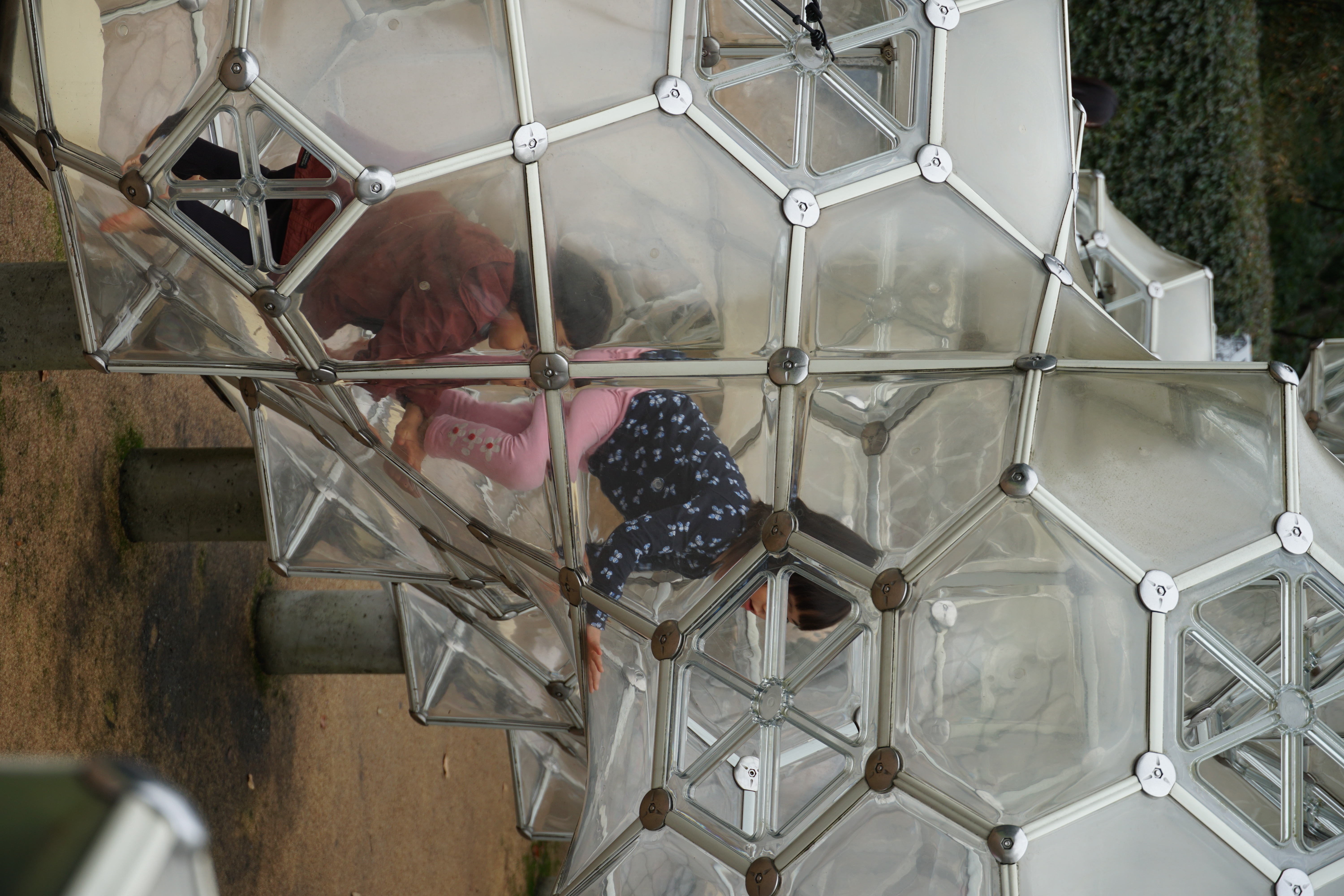
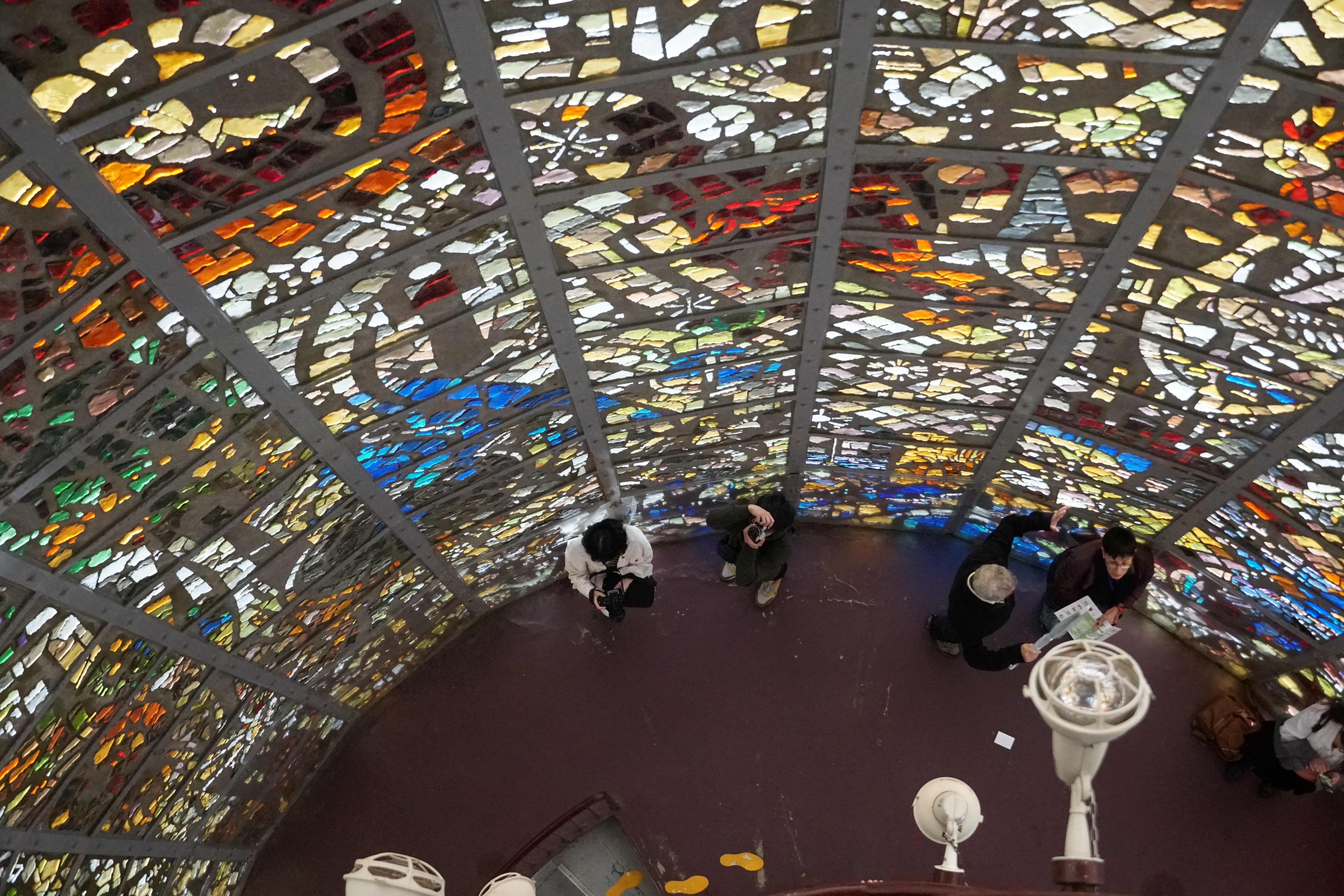
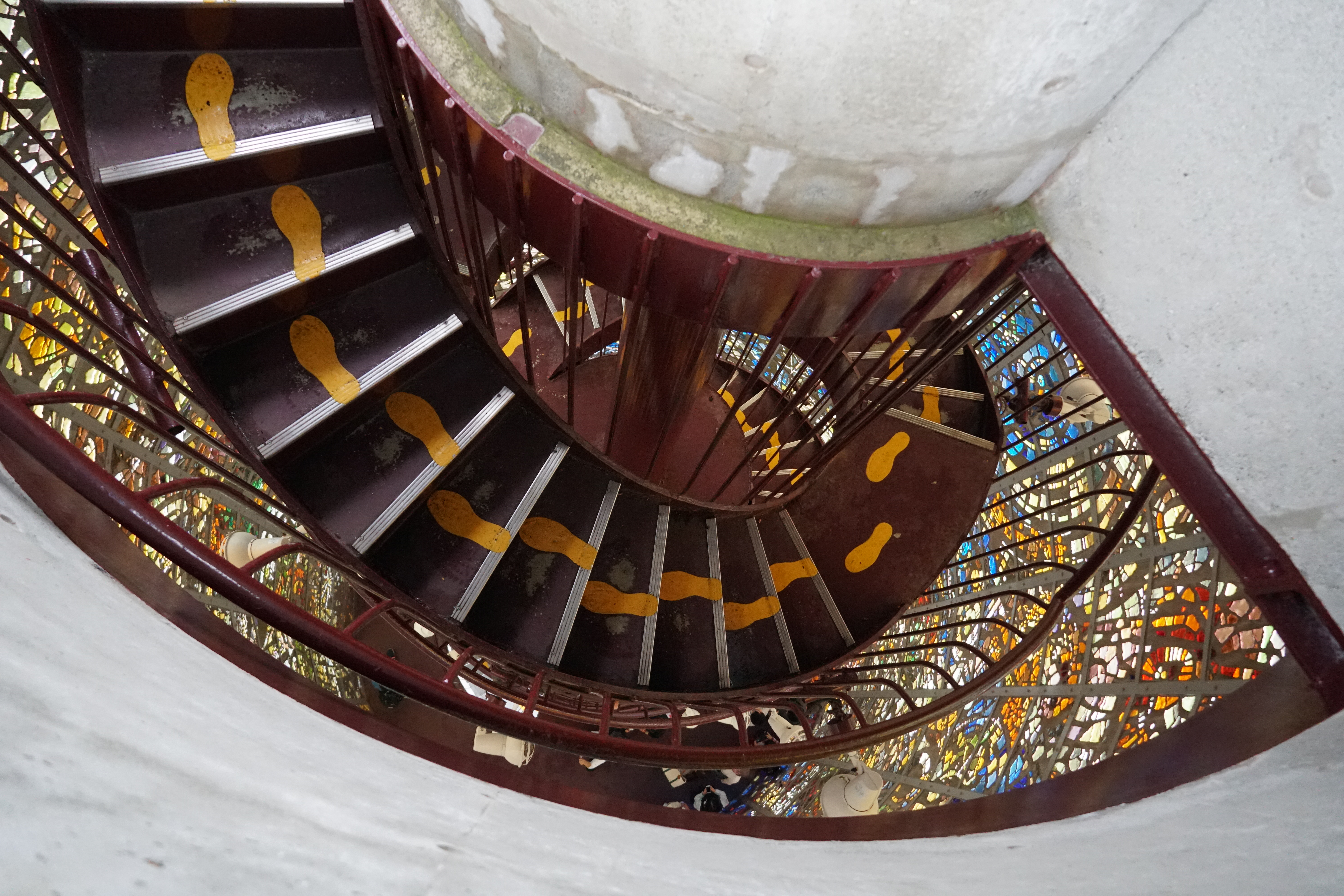
Some of it is playful. The geometric domes you can walk through, all hexagonal patterns and colored glass, feel like stepping inside a kaleidoscope. Kids love them. Some of it is heavy. There are bronze figures that carry a weight you feel before you read the plaque. And some of it is just beautiful in the way that art can be when it has room to breathe. A piece that would feel cramped in a gallery looks completely different when it has a mountain ridge behind it and nothing else for a hundred meters in any direction.
The Picasso Pavilion
Inside the grounds, there's a dedicated Picasso pavilion. Not paintings, but ceramics. Hundreds of pieces: plates, vases, pitchers, tiles, all with Picasso's unmistakable hand. It's a side of his work that most people don't associate with him, and seeing it in this quantity, in this setting, gives it a weight that a single piece in a city museum wouldn't have. The pavilion alone would justify the trip for anyone with even a passing interest in art.
The Footbath
And then, because this is Japan, there's a footbath. Right there on the museum grounds, fed by natural hot spring water. You've been walking for two hours, you've looked at a hundred sculptures, your feet are tired, and then you sit down, take off your shoes, and soak your feet in onsen water while looking at modern art. It's one of those things that only Japan would think to include, and it makes perfect sense once you experience it.
Worth It
I spent most of an afternoon here and could have stayed longer. It's the kind of place where you don't need to be an art person. The sculpture park is beautiful even if you ignore the art entirely and just walk through a mountain landscape with interesting objects in it. And if you do care about art, there's enough here to keep you thinking for days. The combination of outdoor sculpture, the Picasso collection, and the natural setting makes it one of the most Instagrammable spots in the Hakone area, and one of the most genuinely enjoyable.
The Hakone Open-Air Museum is on the Izu Peninsula loop, an easy stop alongside Choan-ji Temple and Heda Harbour. From here, the Izu west coast and its quiet fishing villages are just an hour's drive south.
Practical Info
Location: Ninotaira, Hakone, Kanagawa Prefecture. About 1.5 hours from Tokyo by train (Romancecar to Hakone-Yumoto, then Hakone Tozan Railway to Chokoku-no-Mori station, 2-minute walk). By car from Tokyo, about 1.5 hours via Odawara. View on Google Maps
Hours: 9:00 to 17:00, open year-round. Last admission 16:30.
Admission: 1,600 yen for adults, 800 yen for students. Hakone Free Pass holders get a 200 yen discount.
Time needed: 2 to 3 hours minimum. You can easily spend a half day if you linger.
Footbath: Free with admission. Bring a small towel, or buy one at the gift shop.
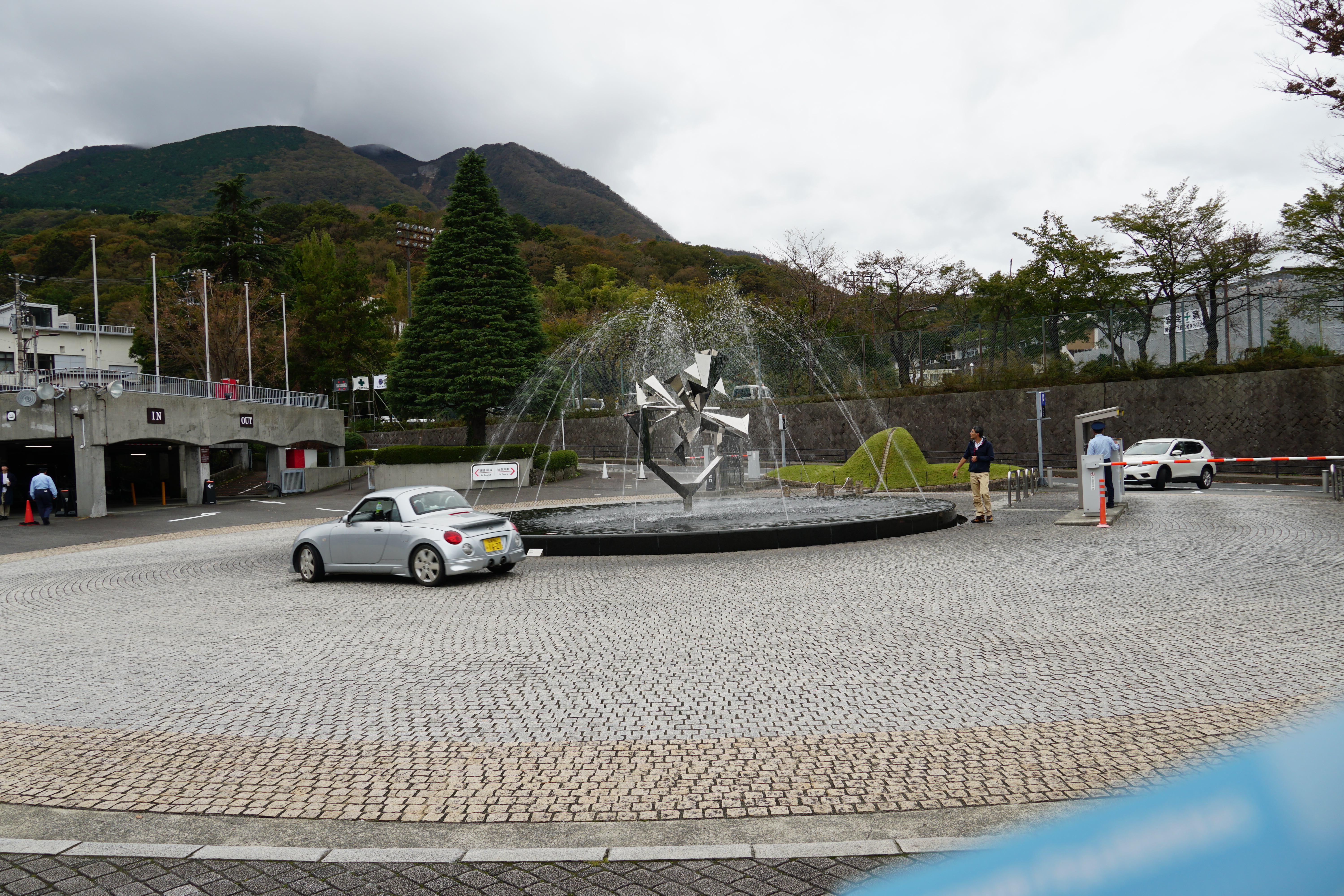
Parking: Available on-site. By van, the parking lot is easy to access. From here, you can continue south into the Izu Peninsula or loop back toward Lake Ashi.
Combination: Pairs well with Choan-ji Temple in Sengokuhara (15 minutes away) and Heda Harbour on the Izu west coast (about 1 hour south).