Somewhere in the mountains of Hakone, down a road you'd drive past without a second thought, there's a temple where hundreds of stone figures live in the forest. They sit among the ferns, lean against cedar trees, wade through ponds, and stare at the sky with expressions ranging from deep meditation to uncontrollable laughter. Nobody is entirely sure who made them all. They just keep appearing.
Chōan-ji is not famous. It doesn't appear in most guidebooks, and it's nowhere near the well-trodden tourist routes of Hakone or Atami. But once you've seen a photo of this place, it stays with you. It certainly stayed with me.
Arrival
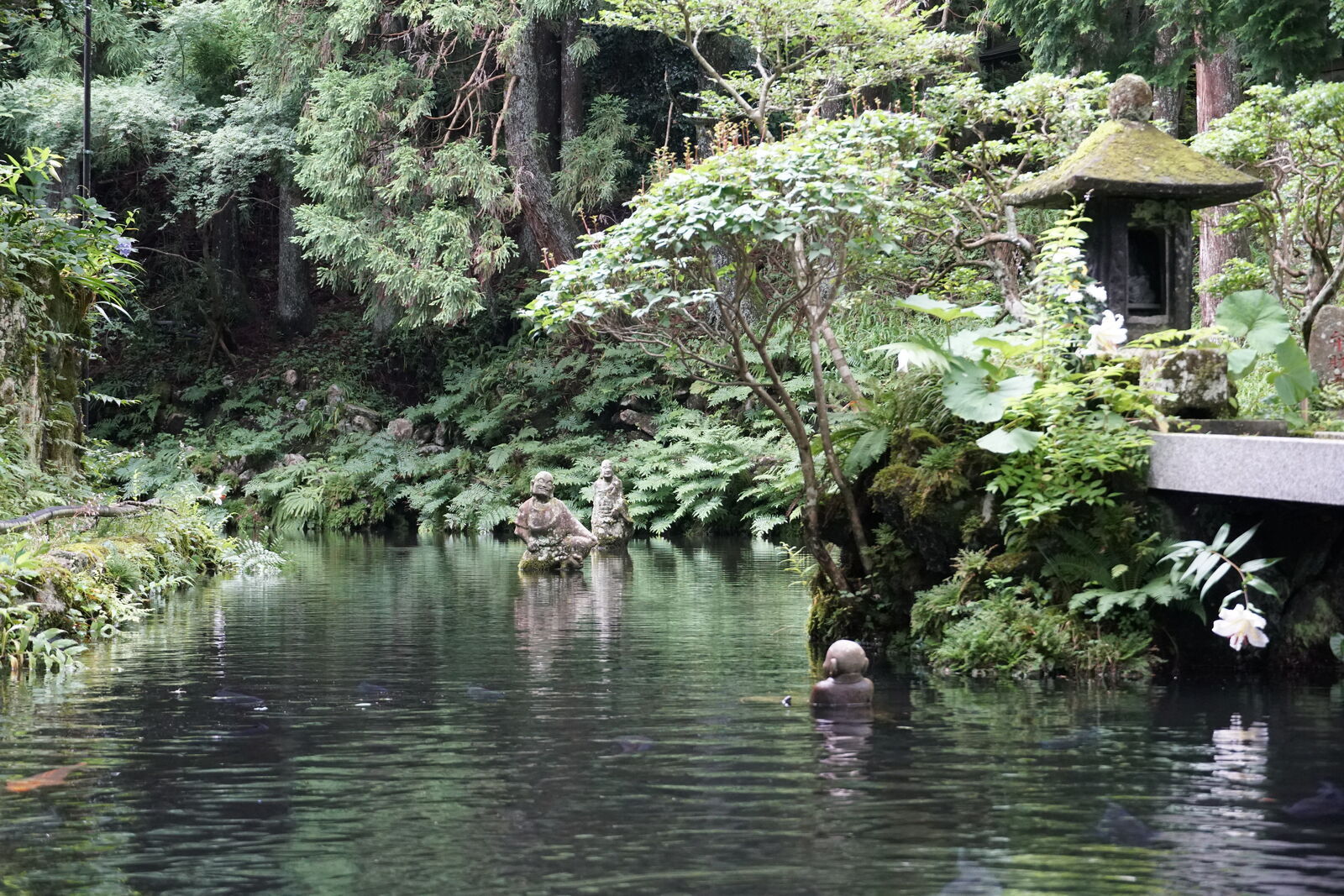
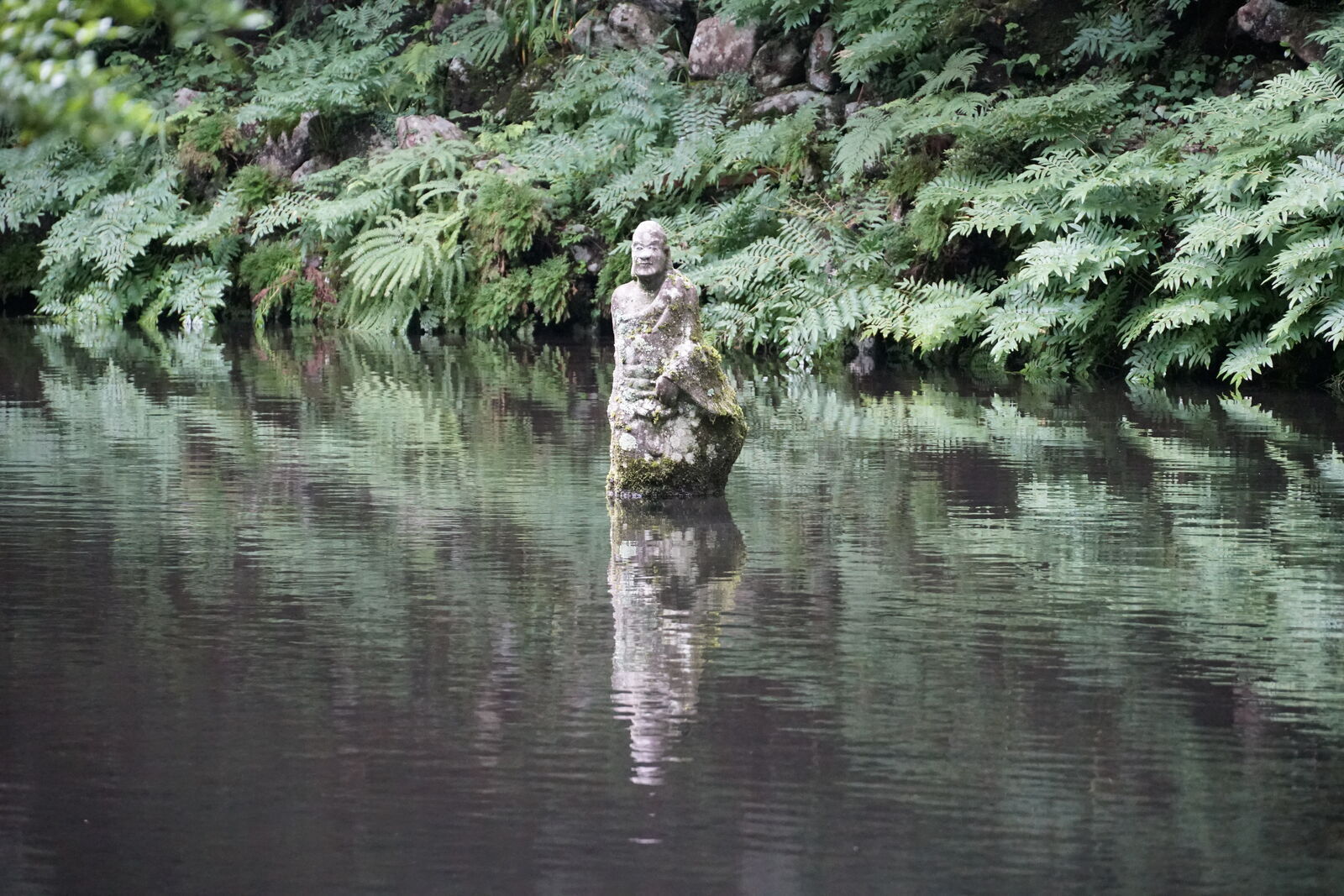
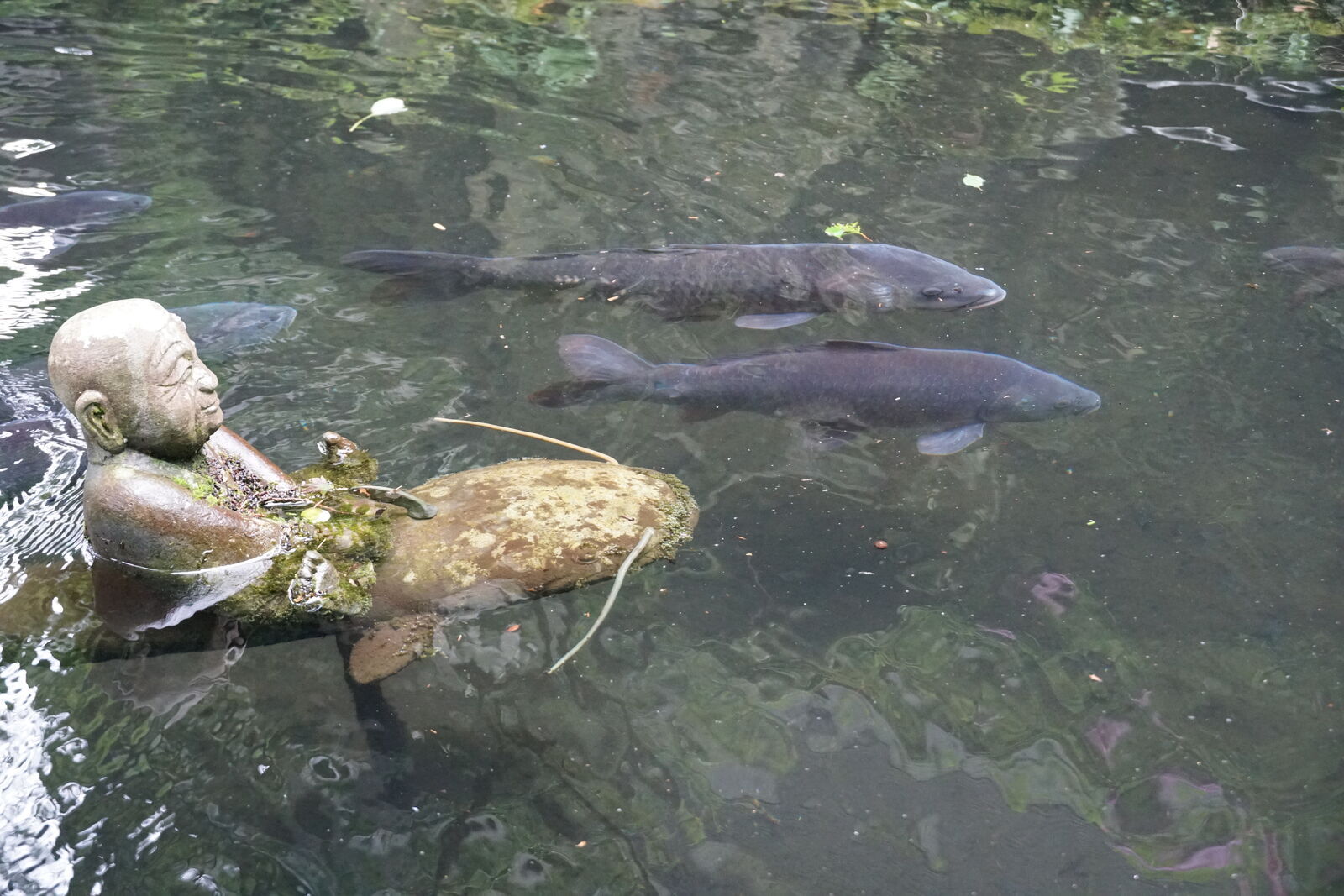
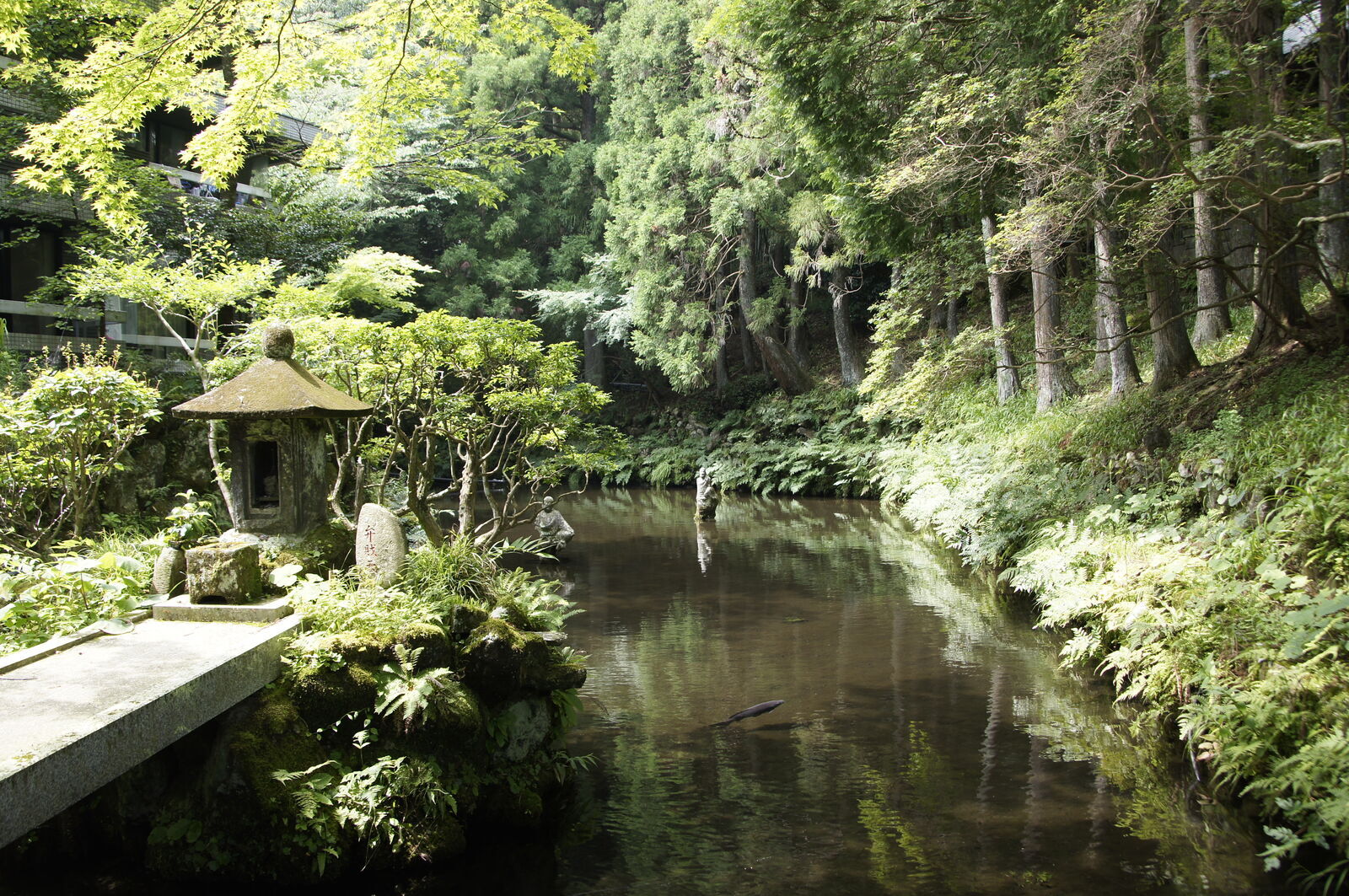
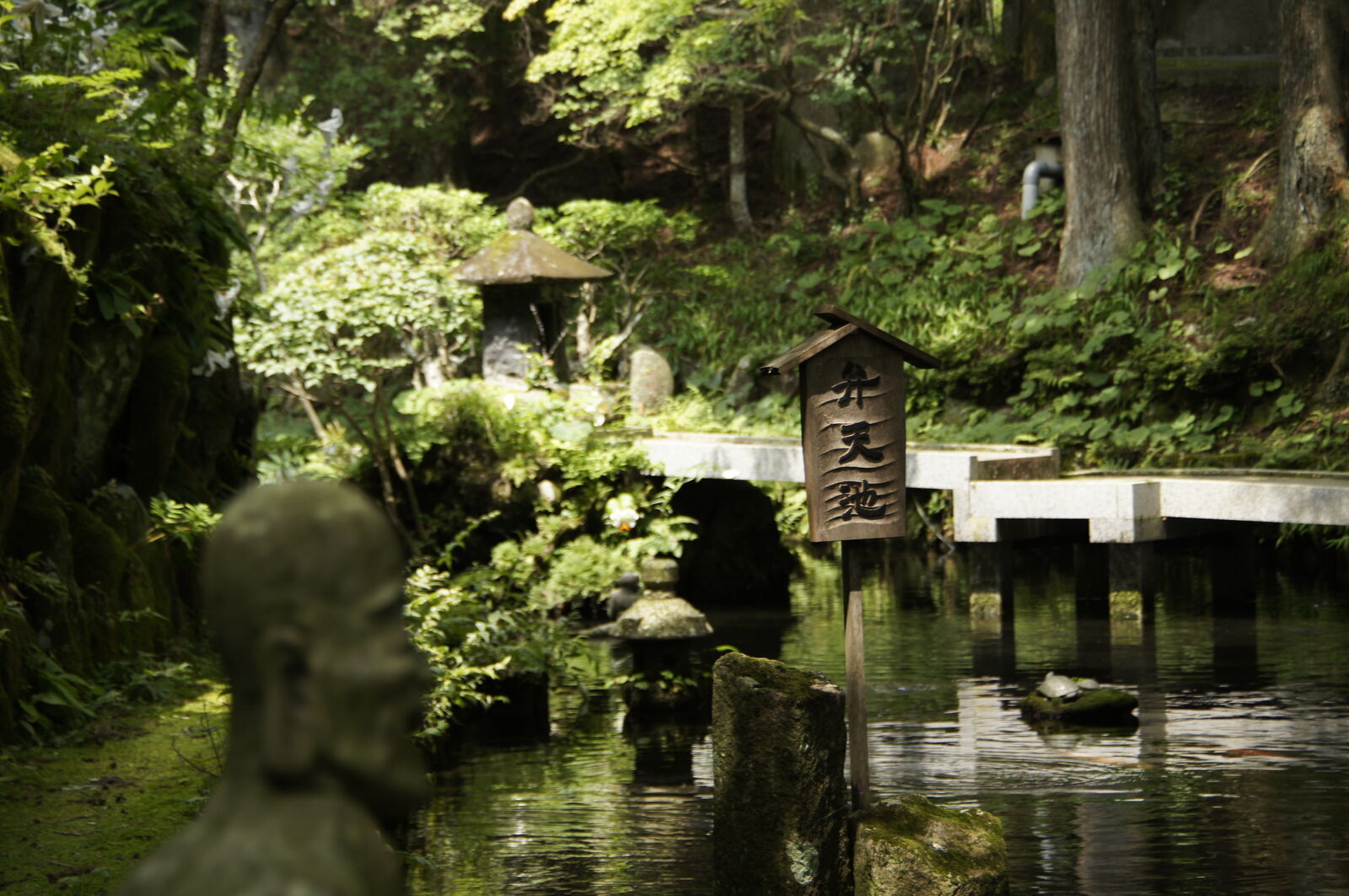
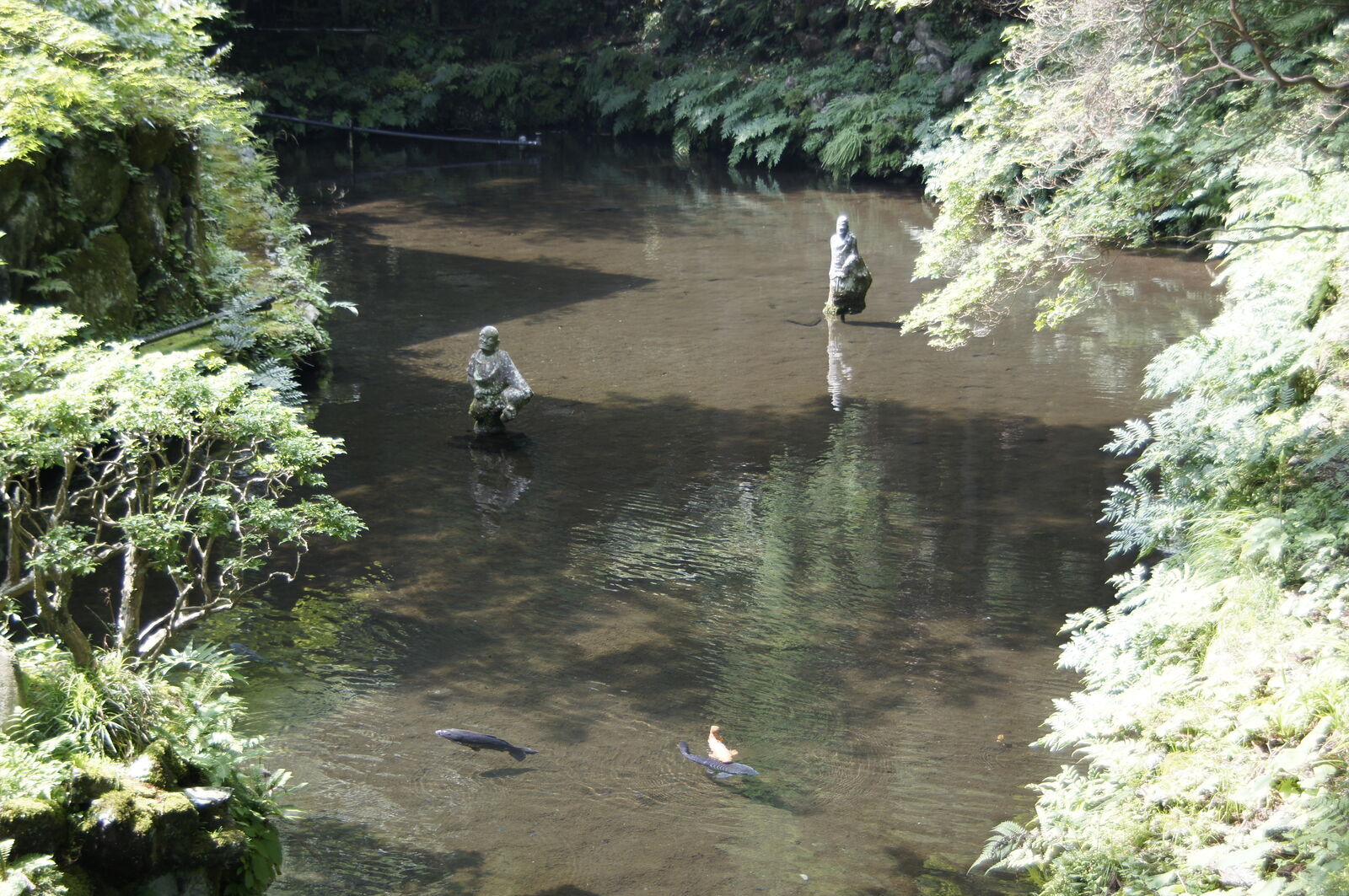
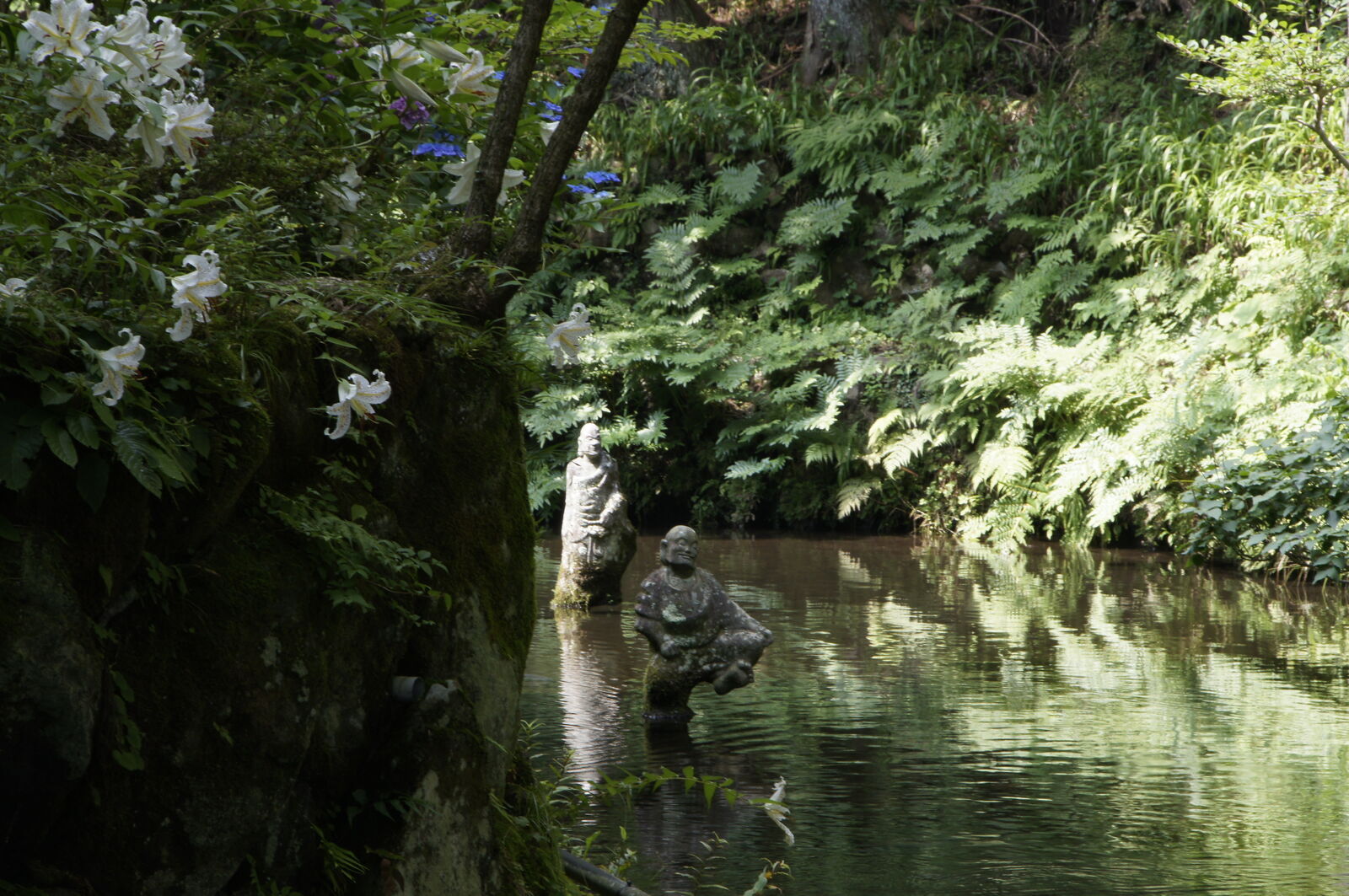
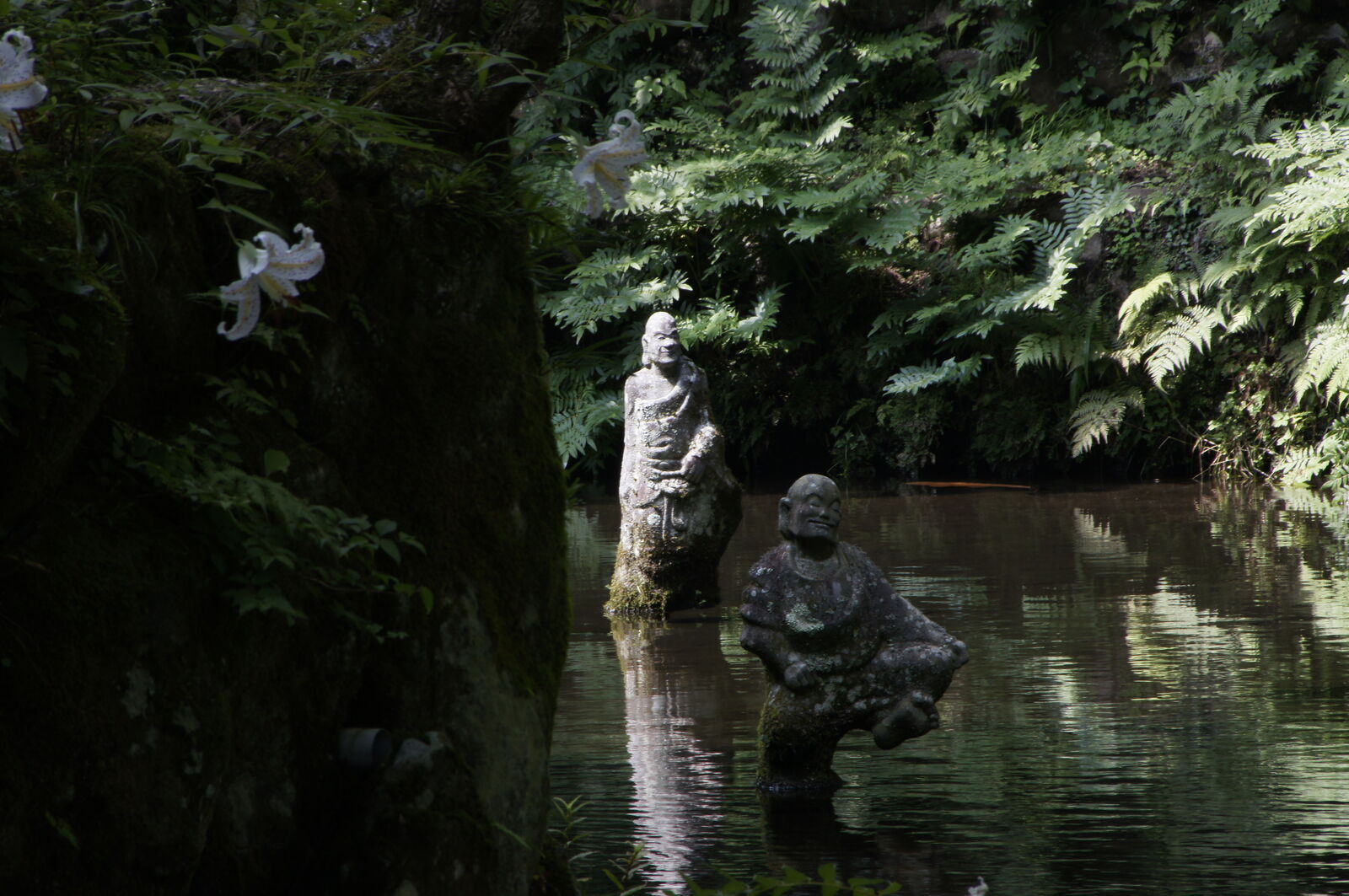
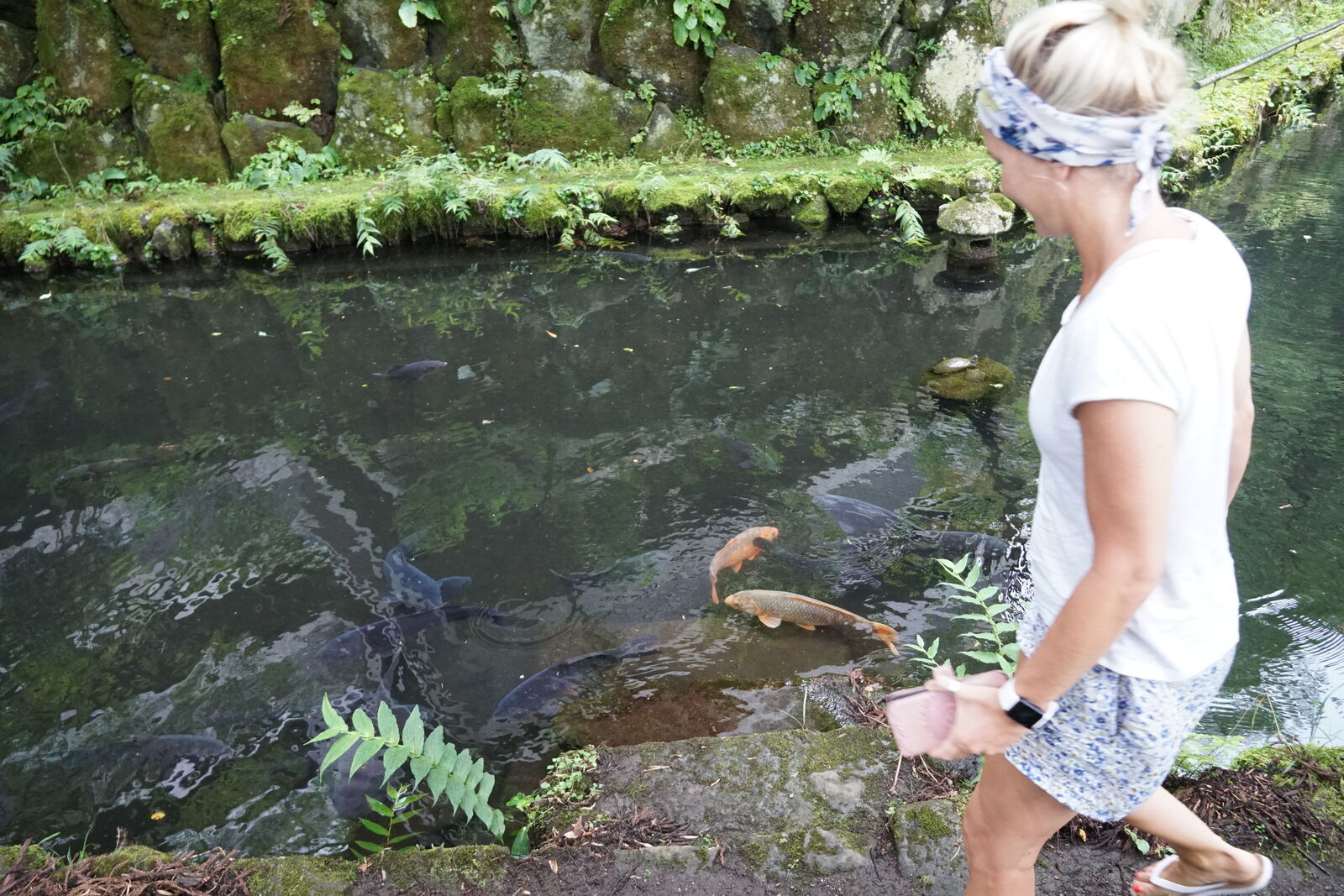
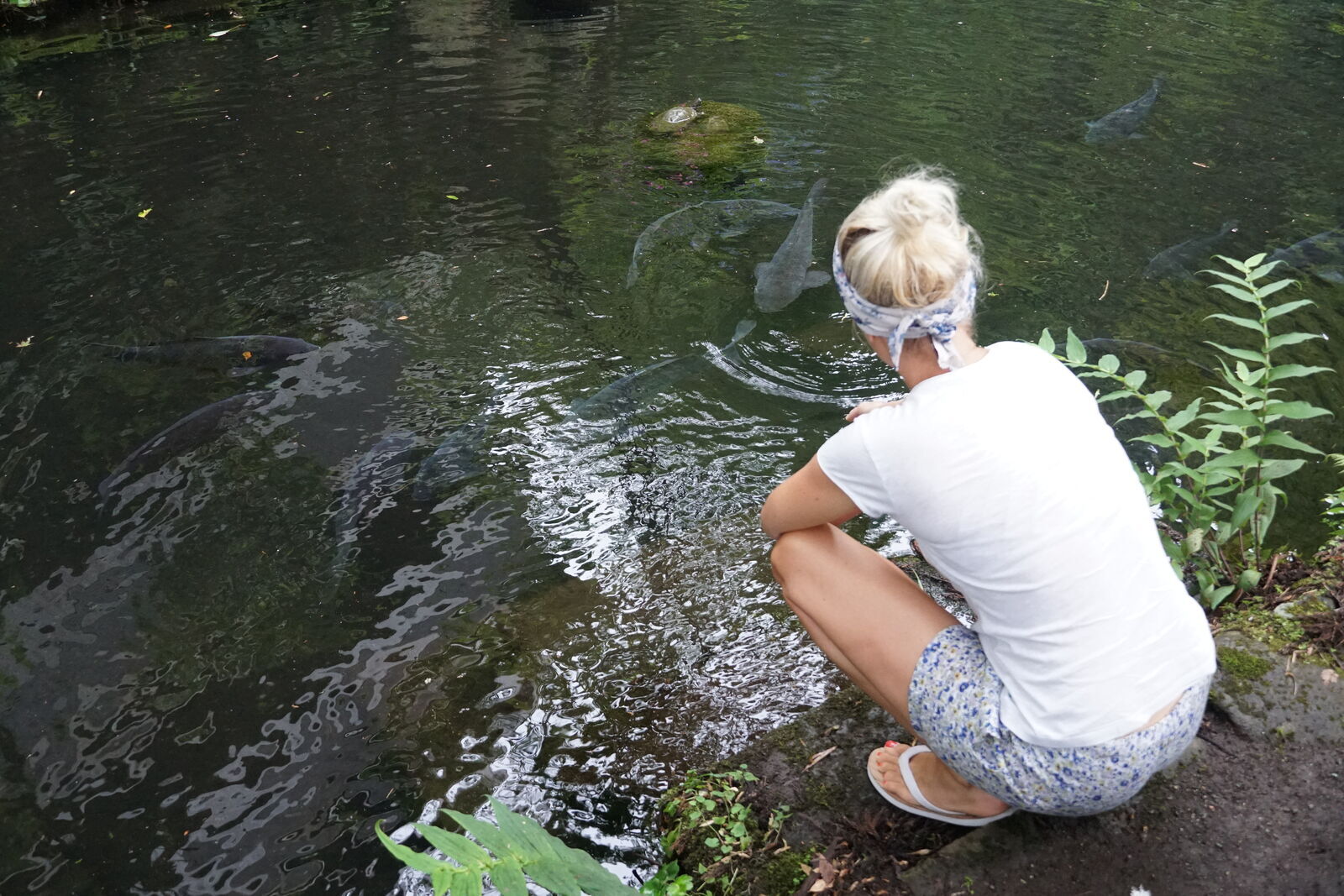
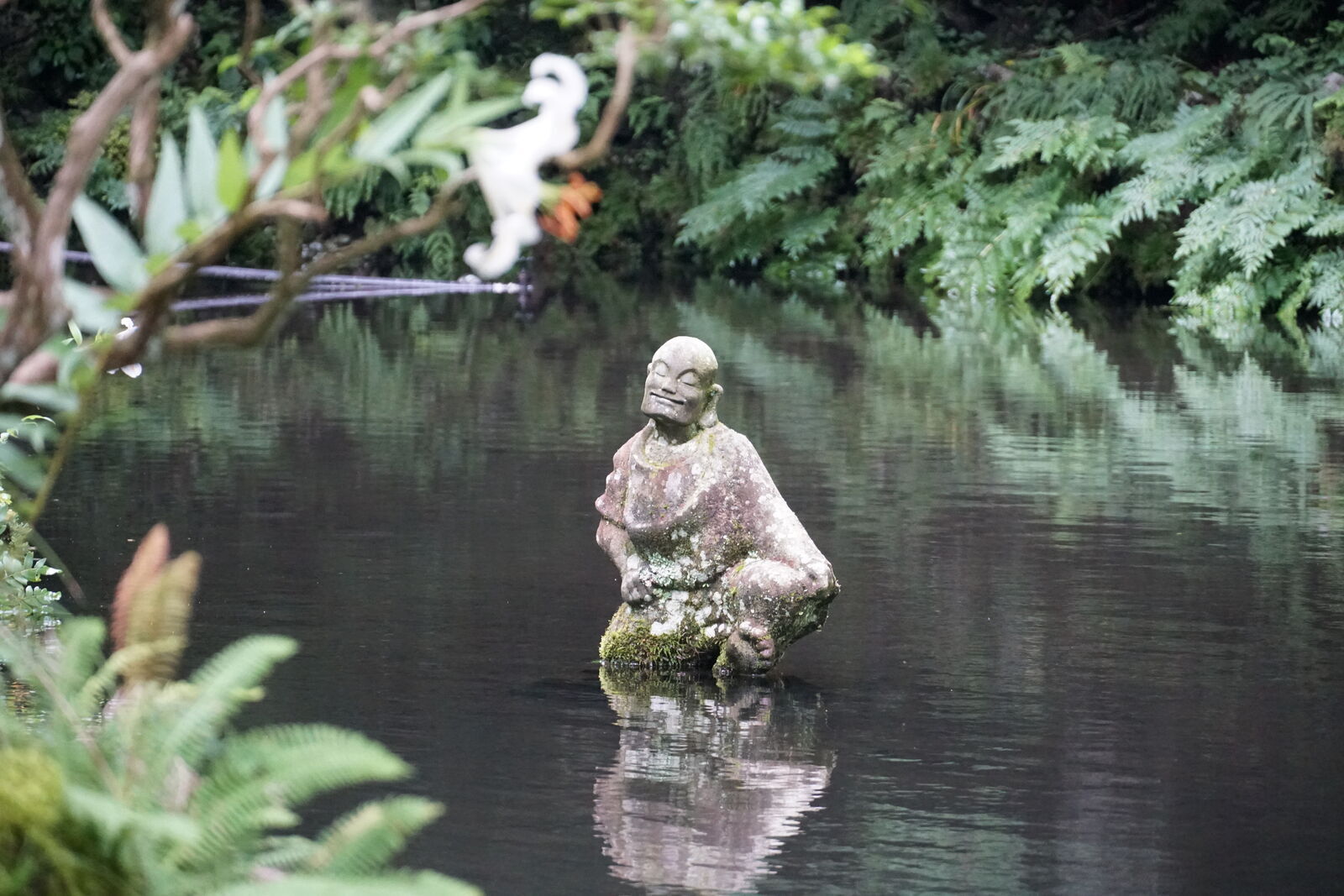
The parking is free, right at the temple entrance. There's a retirement home next door, which feels strangely fitting: a place of quiet contemplation beside a forest full of ancient stone faces. Before you even enter the temple grounds properly, you walk past the koi pond, and this is where the mood shifts. The water is dark and still, reflecting the towering cedars above, and there are figures standing in the pond itself. A monk with his arms folded, water up to his waist. Another one submerged to the chest, eyes closed, while enormous koi drift past him like they've been sharing this space for centuries. A white heron sometimes perches on a branch above the water, completing a scene so composed it looks staged. It isn't.
The koi pond is the introduction. It tells you what kind of place this is: one where the boundary between sculpture and nature has dissolved completely. The moss grows over the figures, the water rises around them, the fish ignore them. And you start to understand that these aren't decorations placed in a garden. They belong here the way the trees do.
The Forest
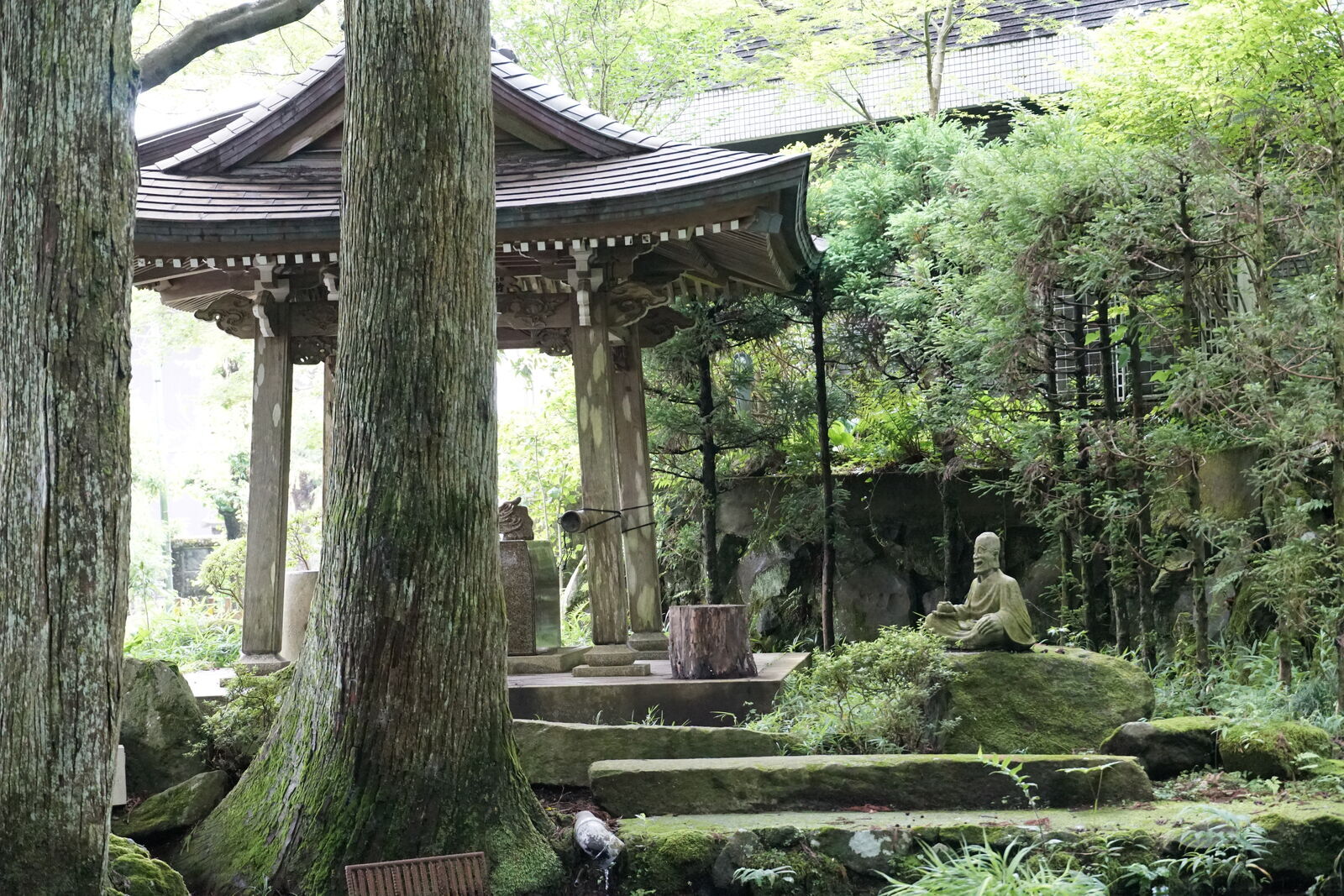
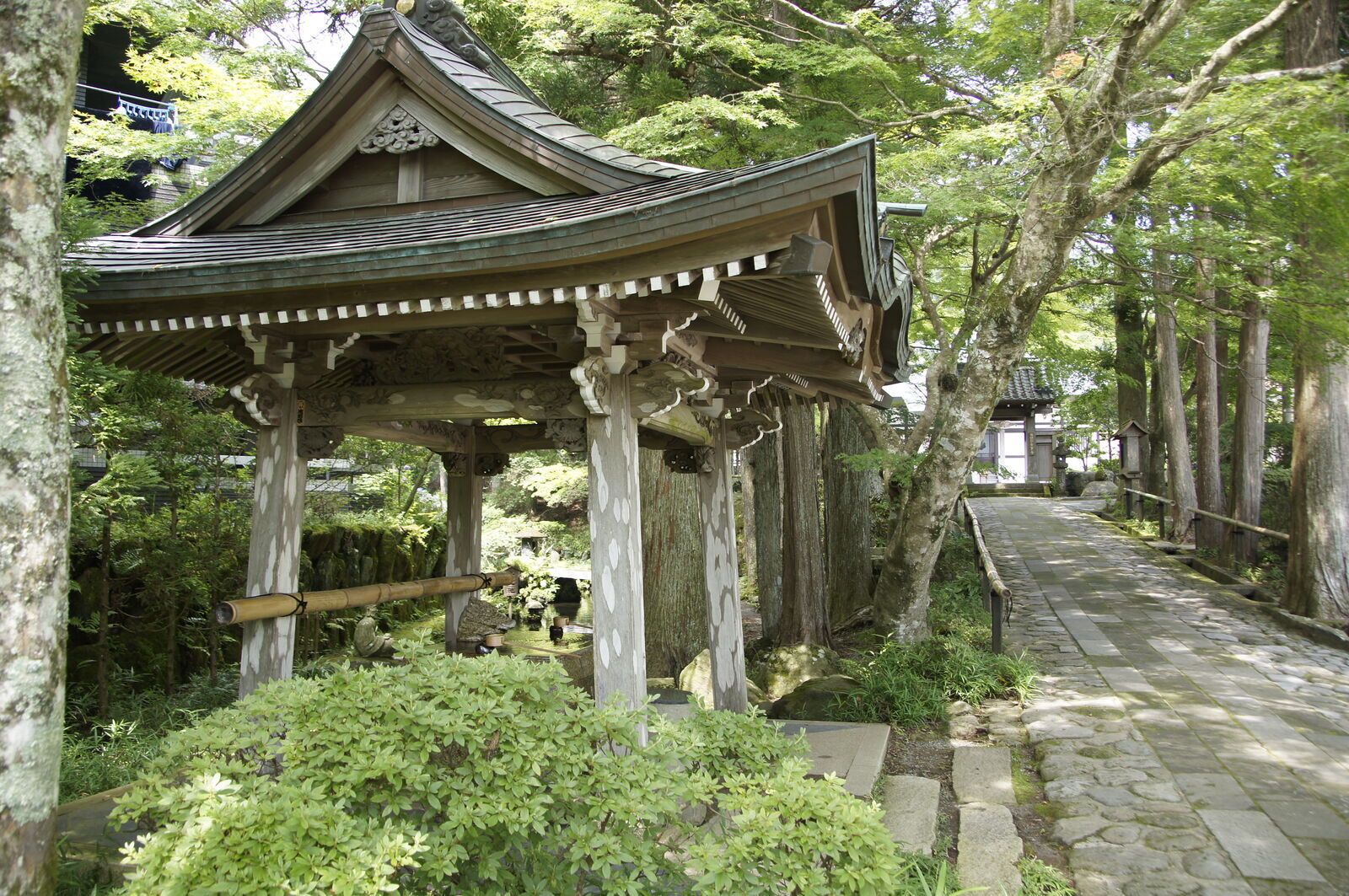
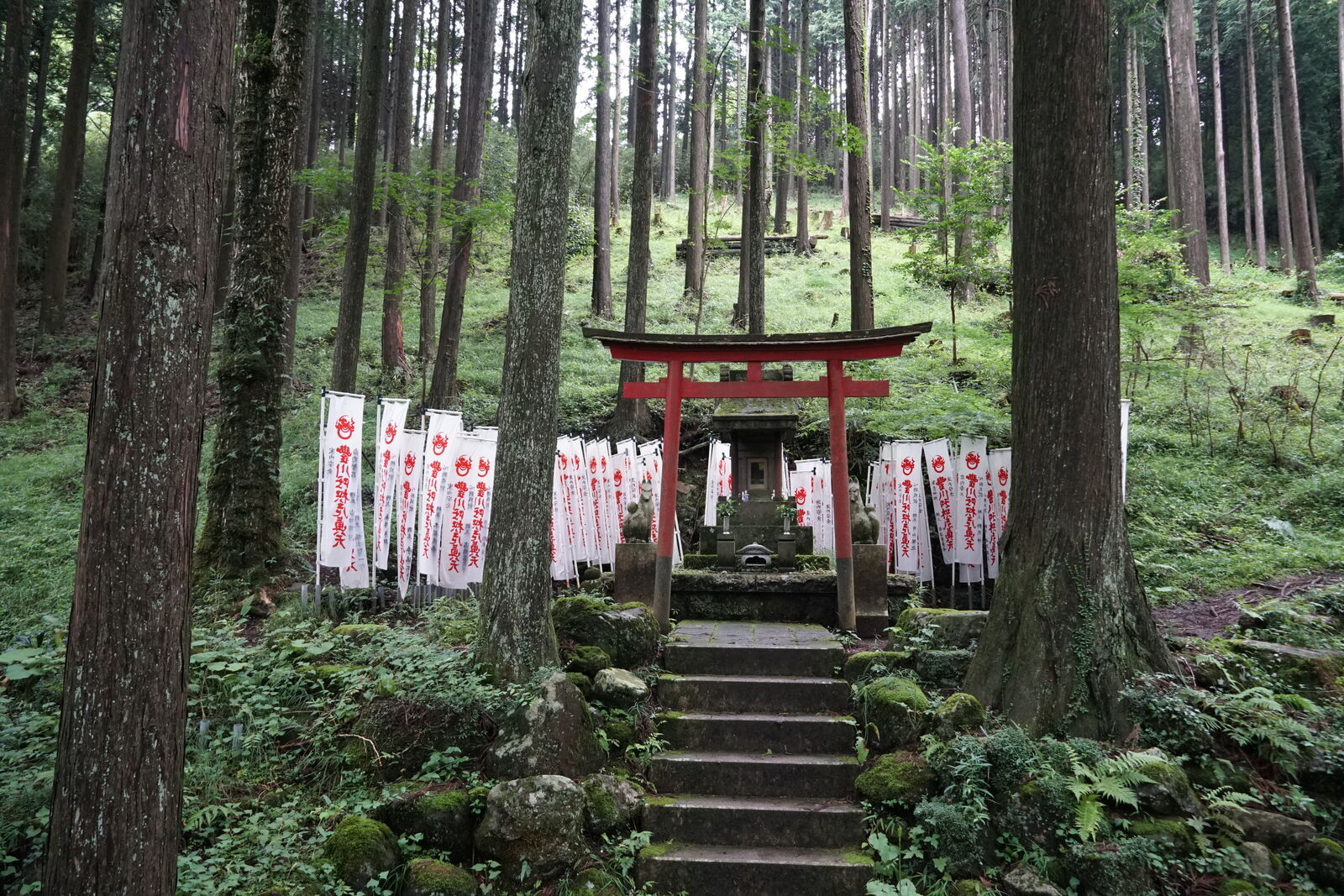
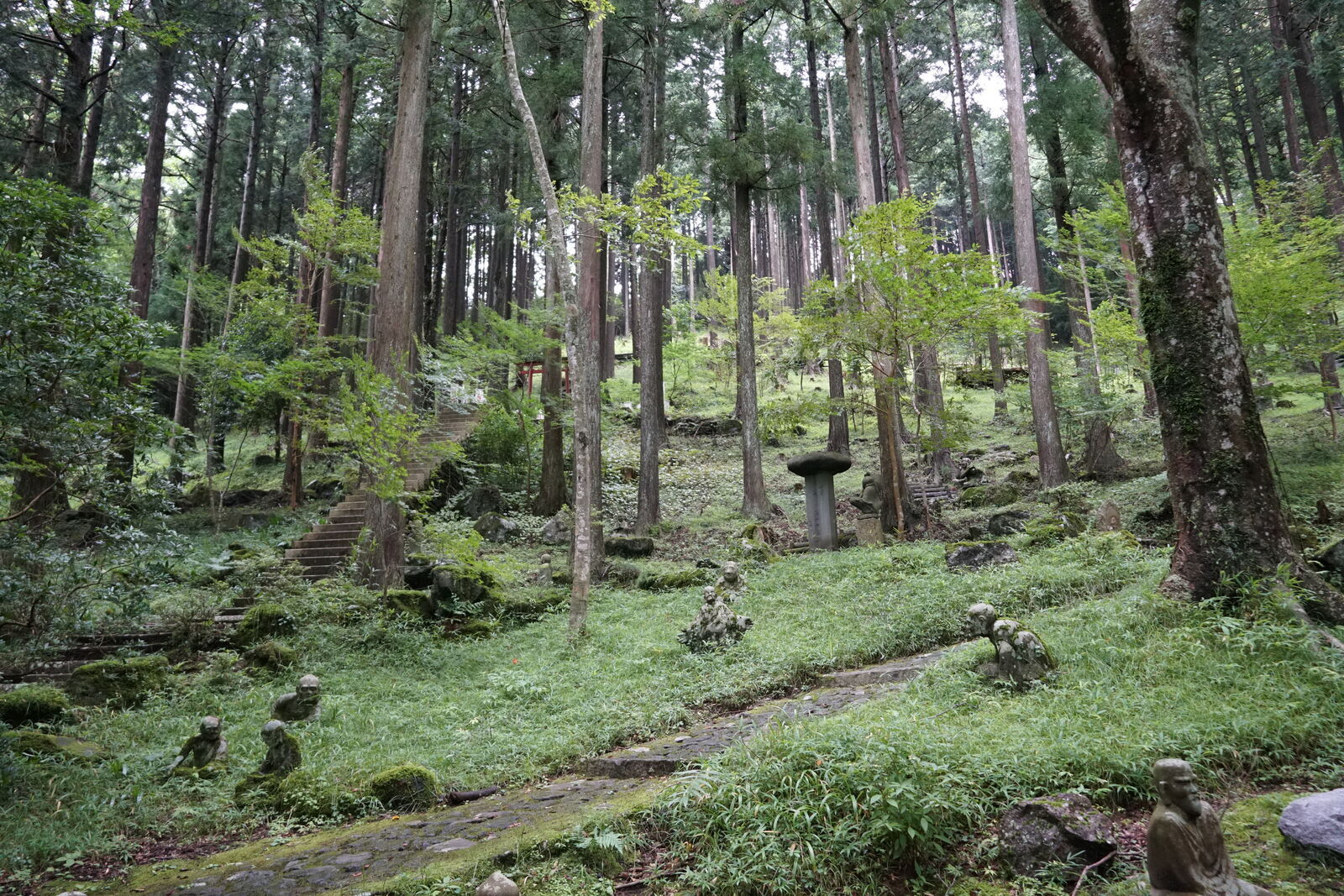
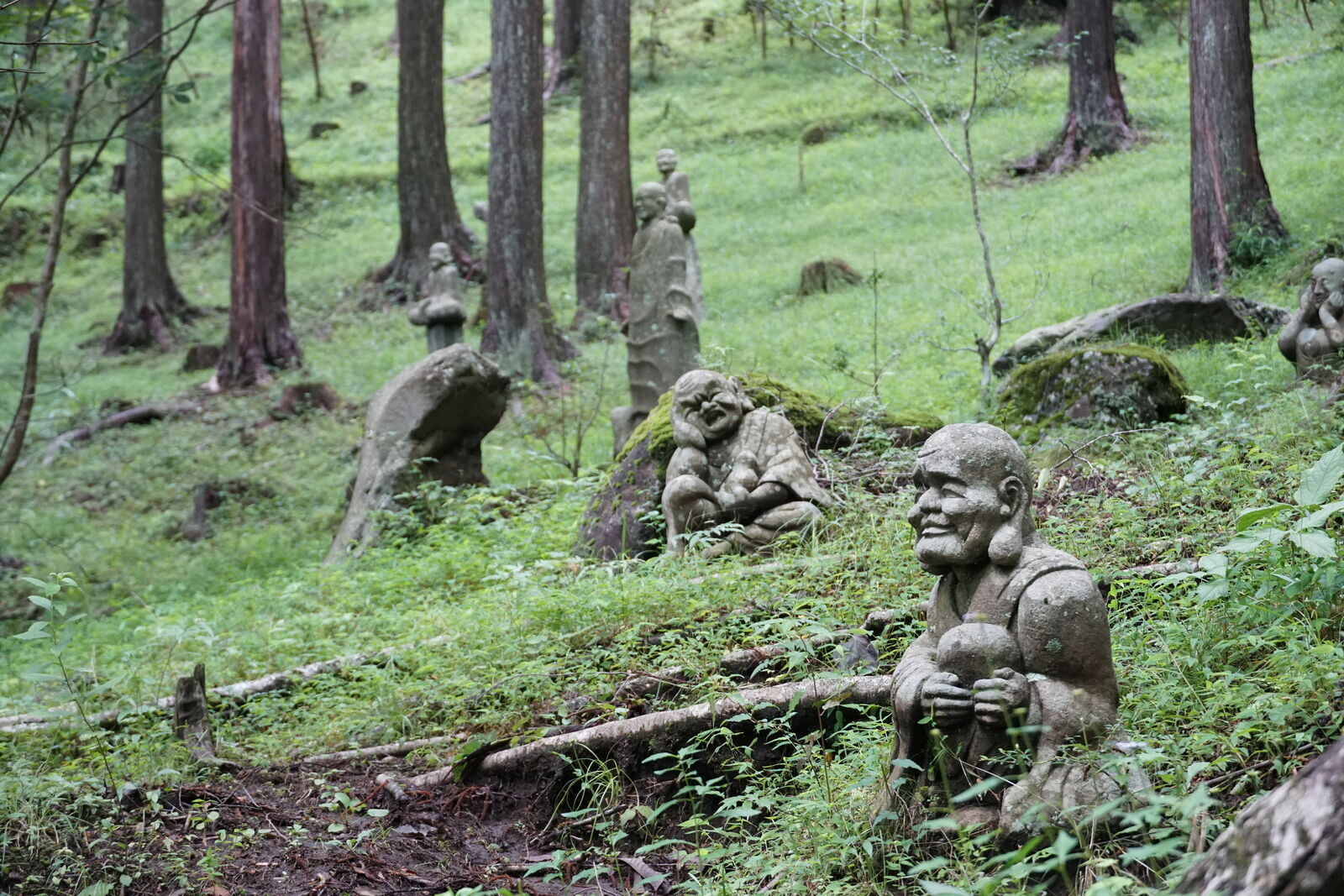
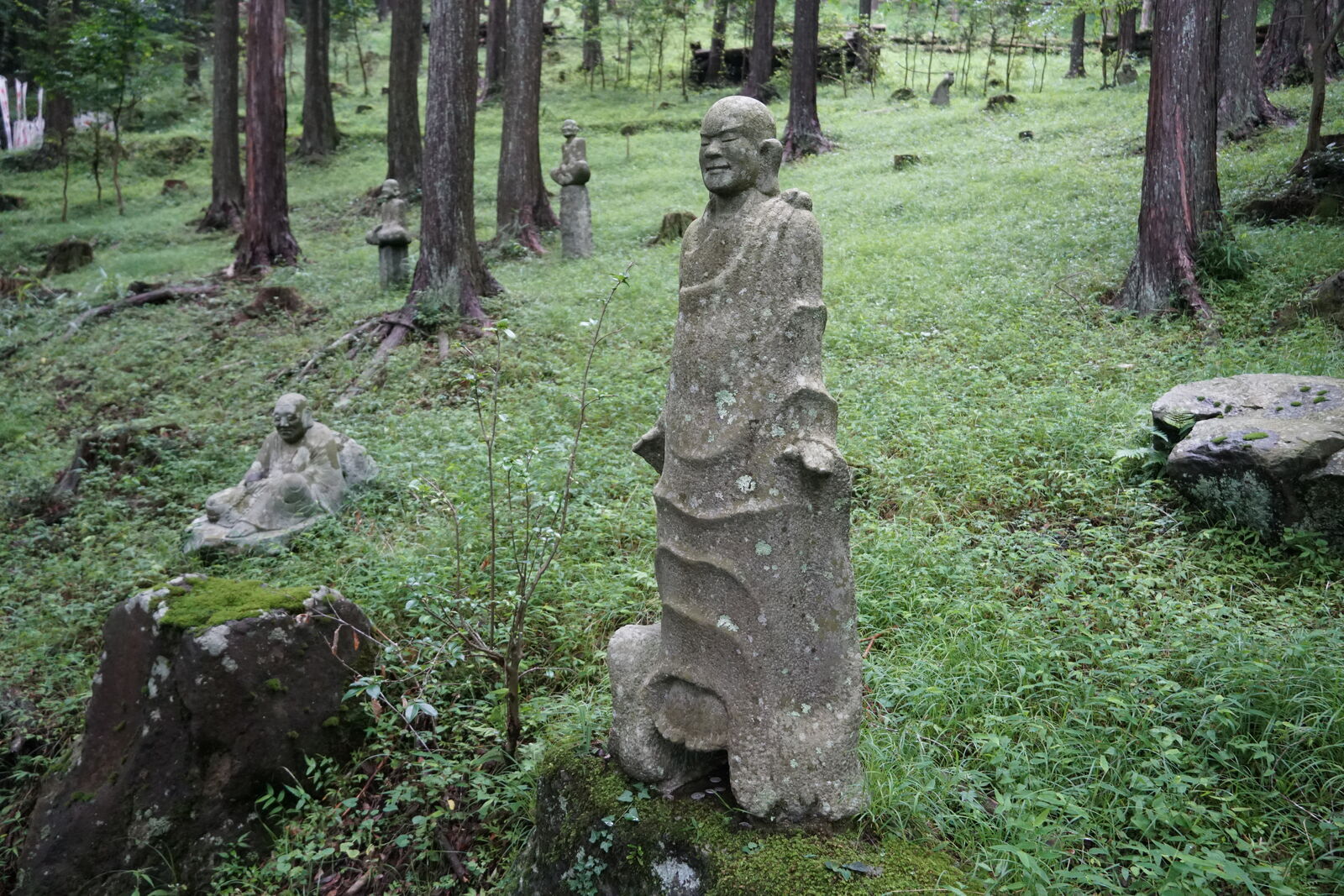
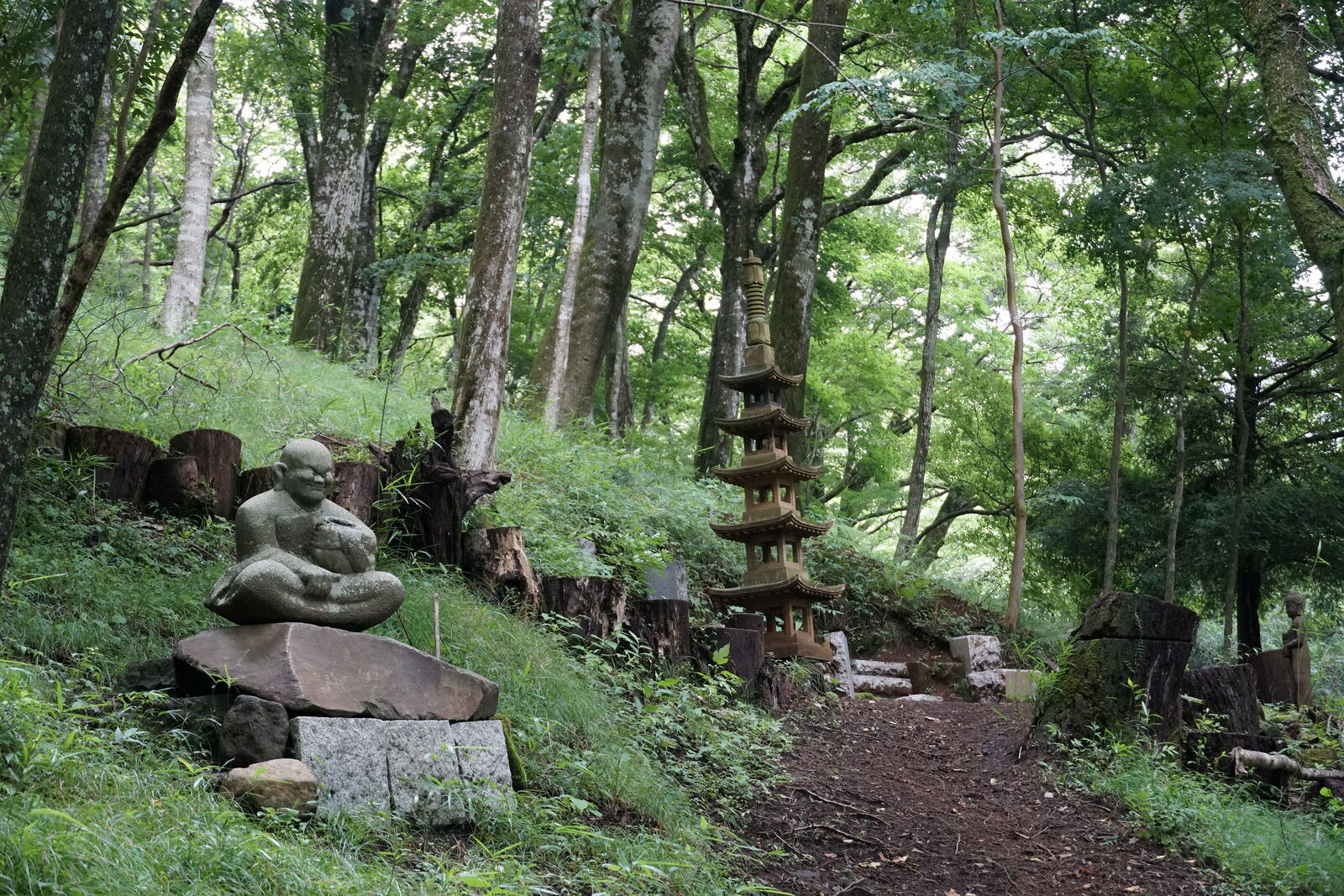
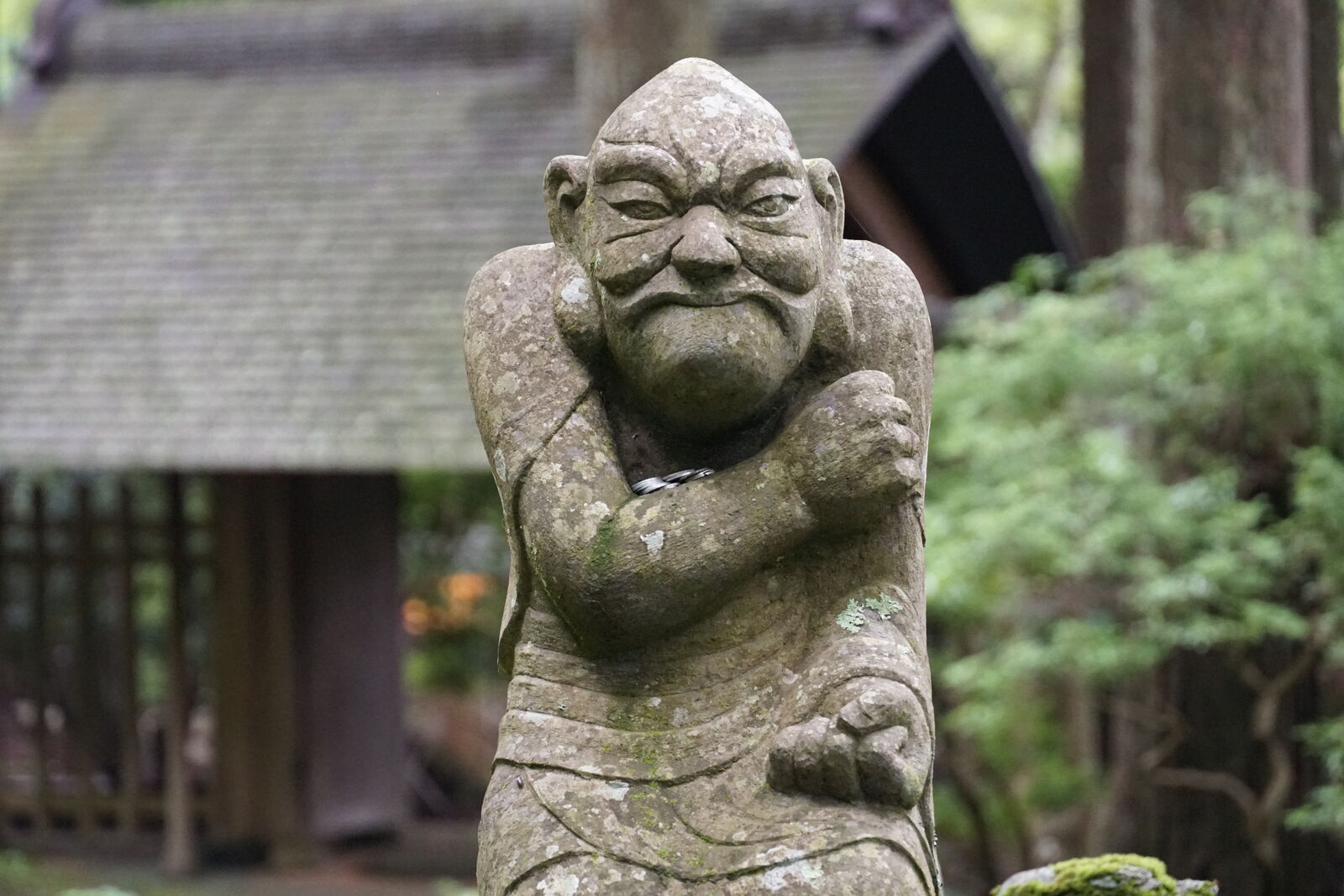
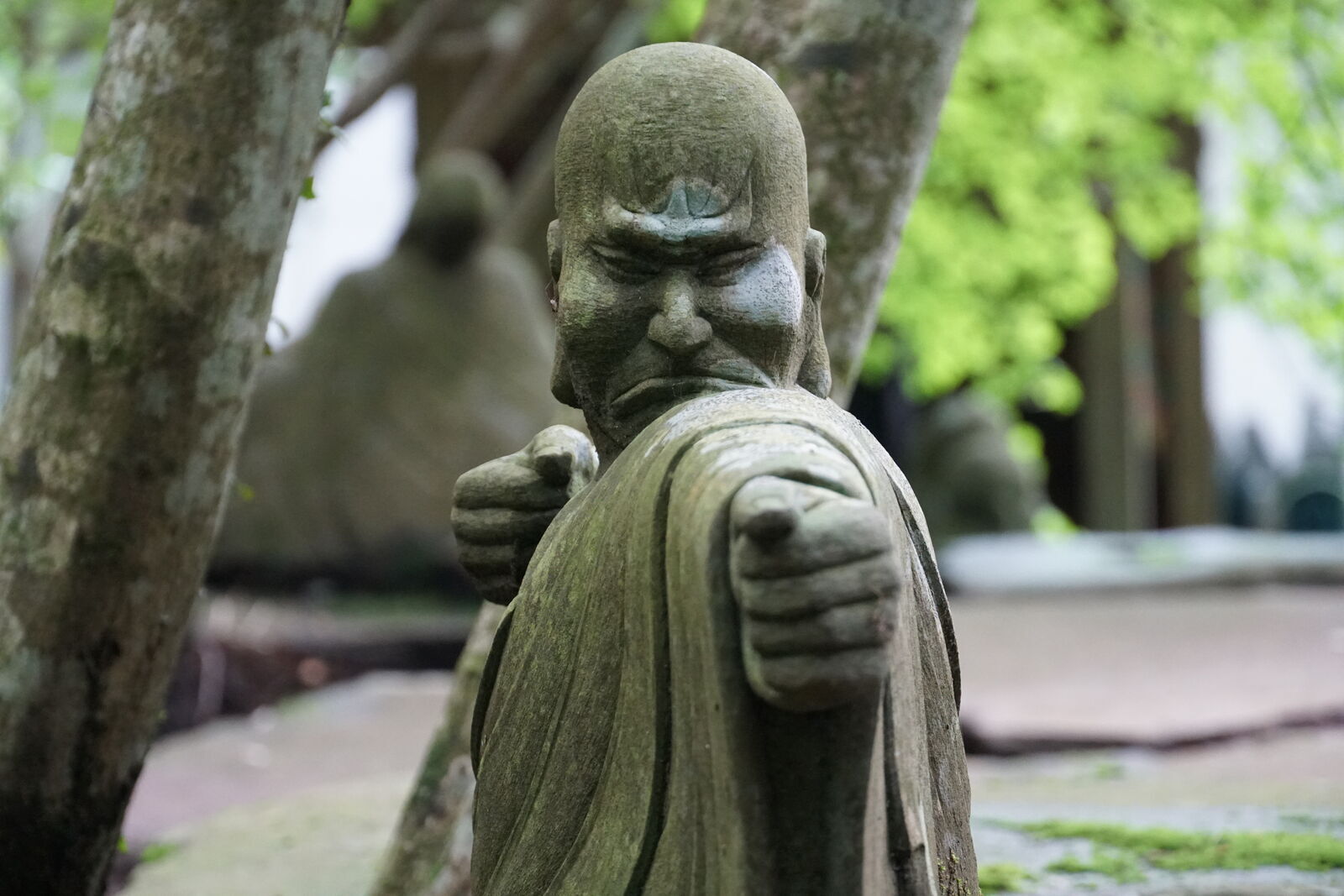
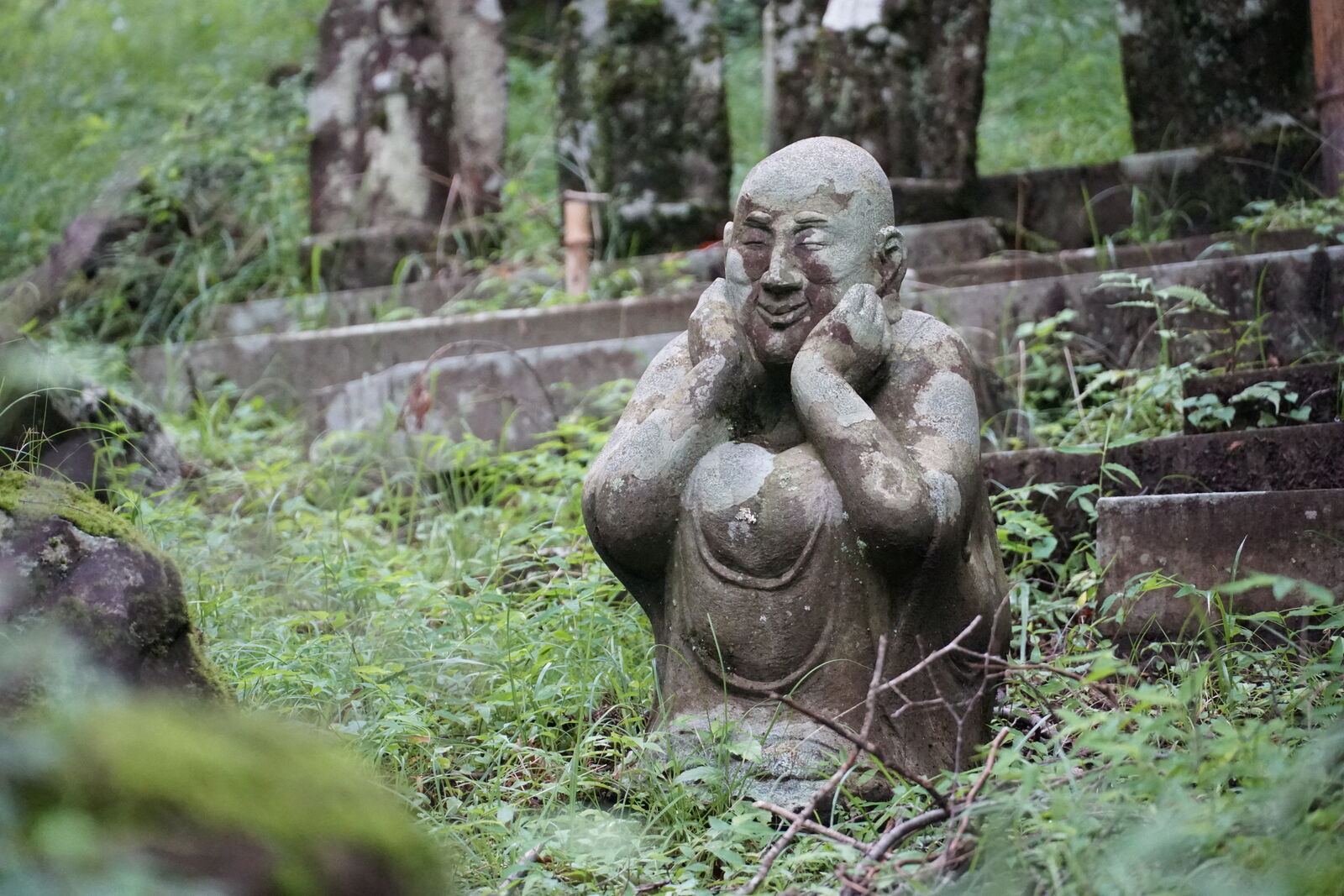
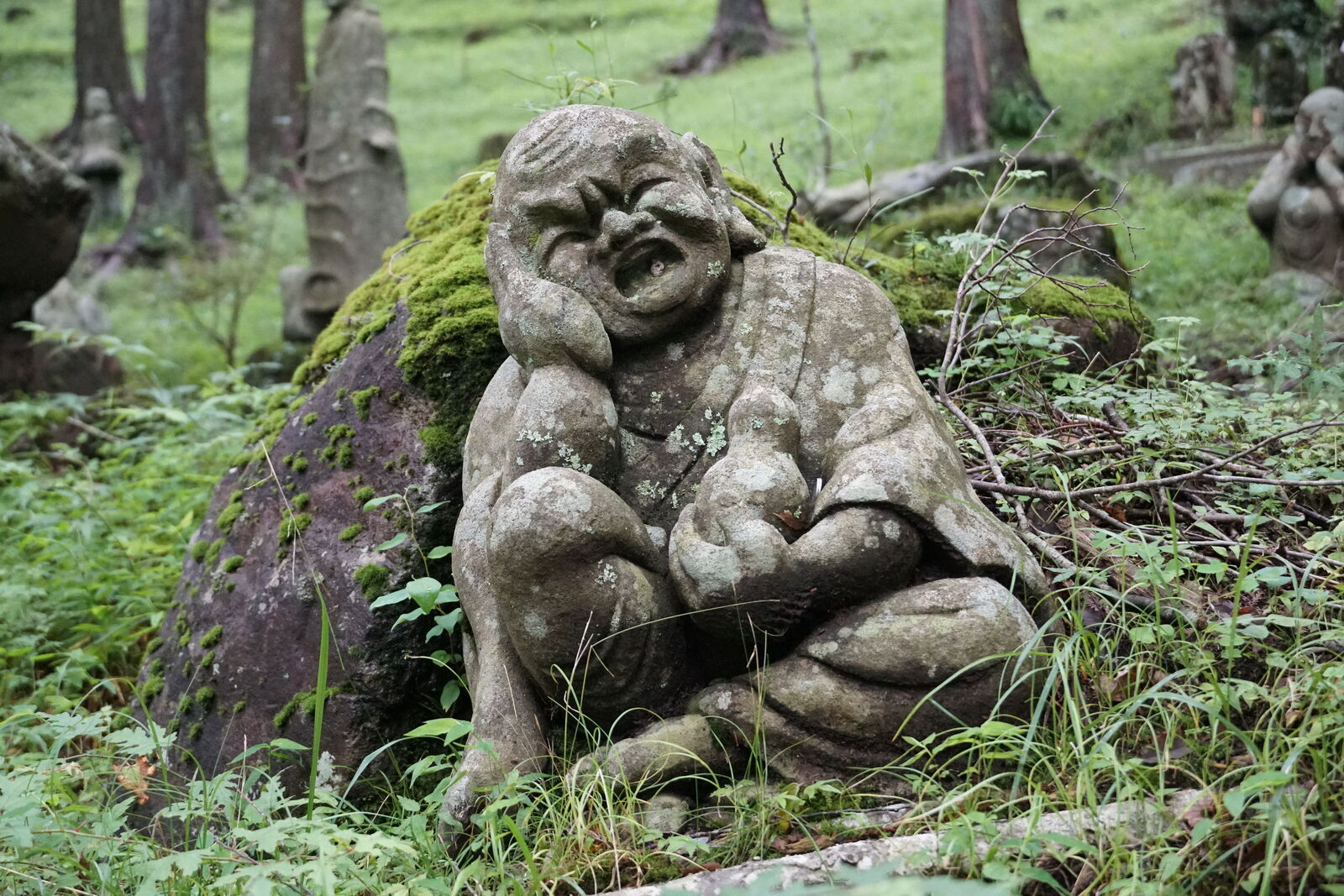
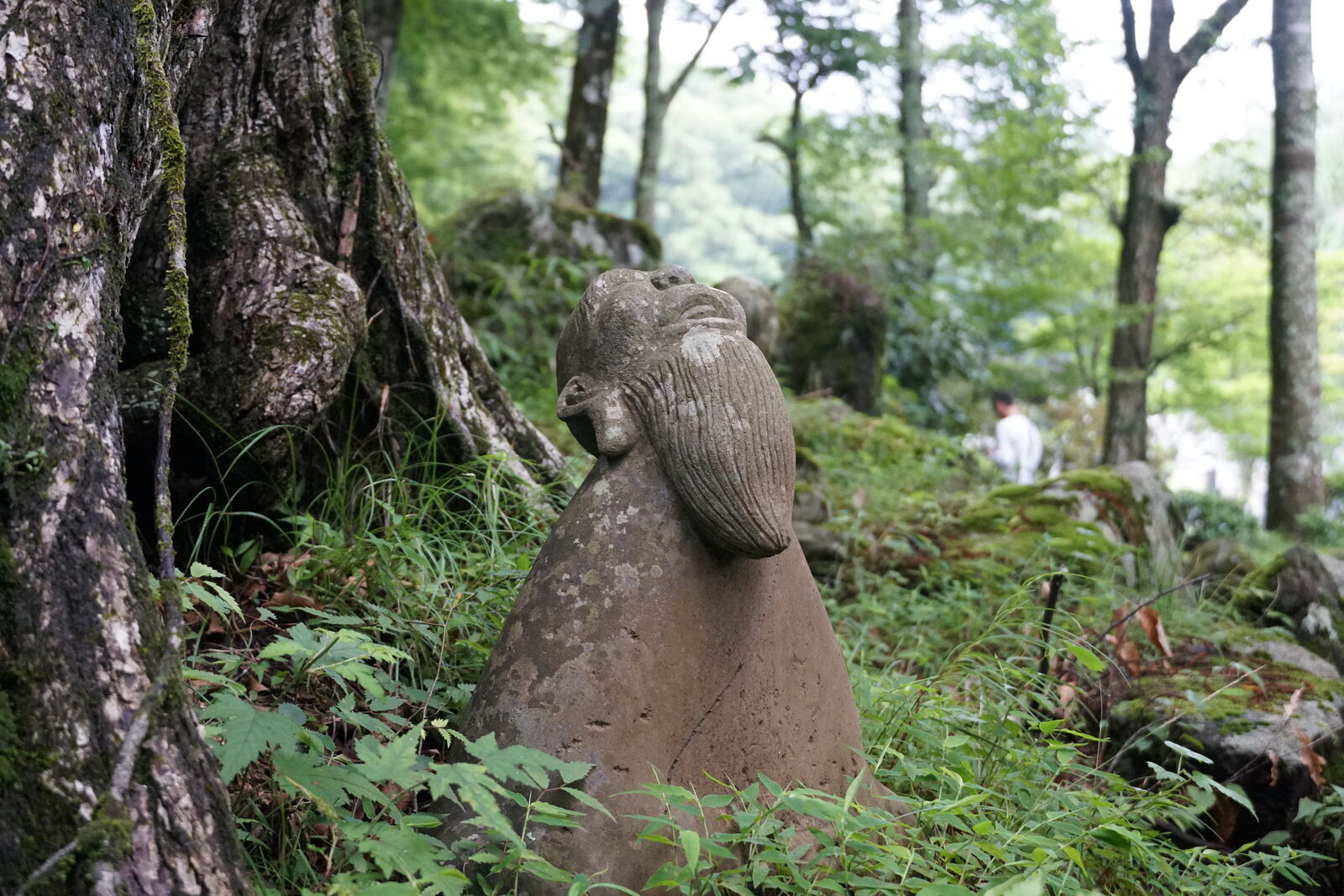
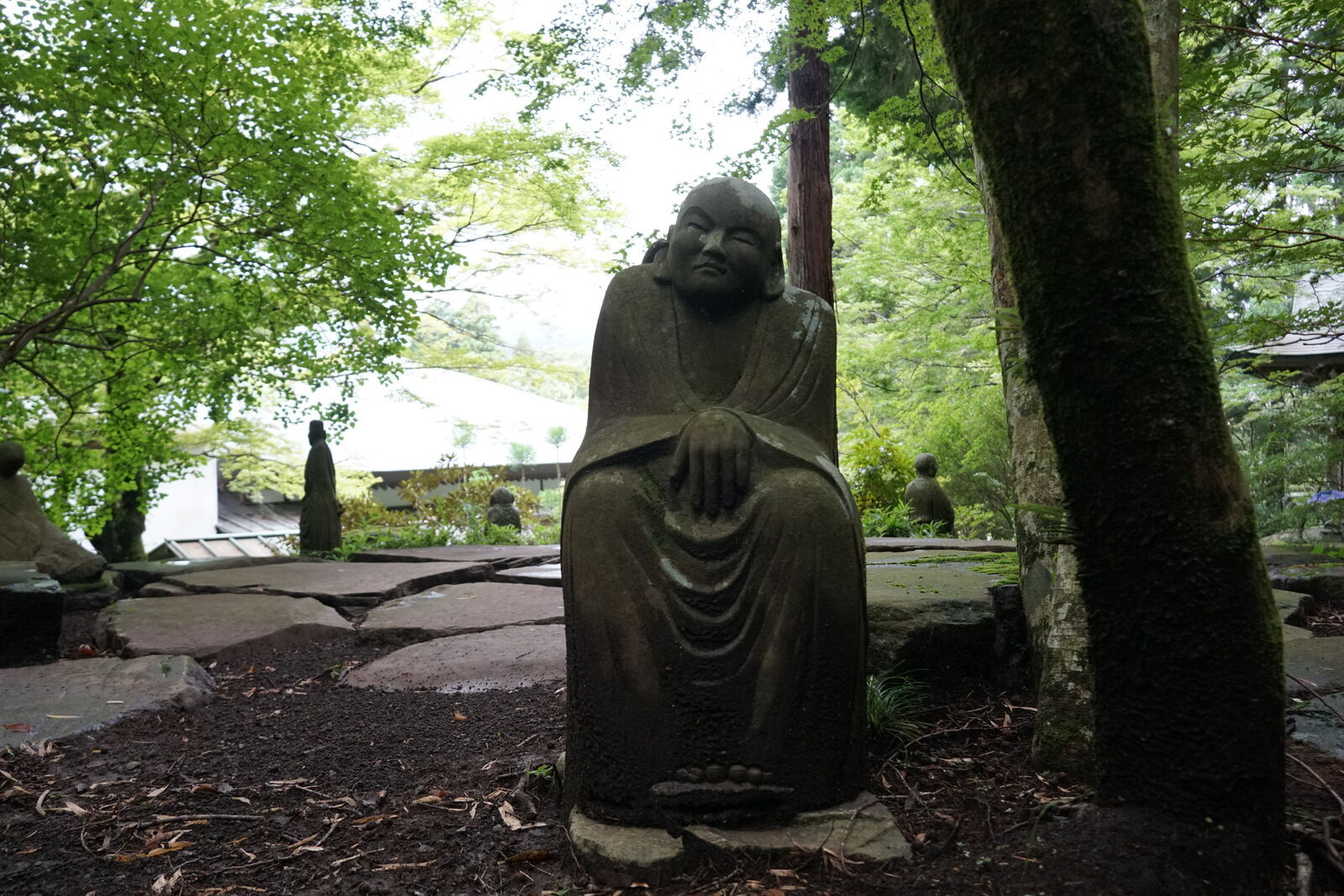
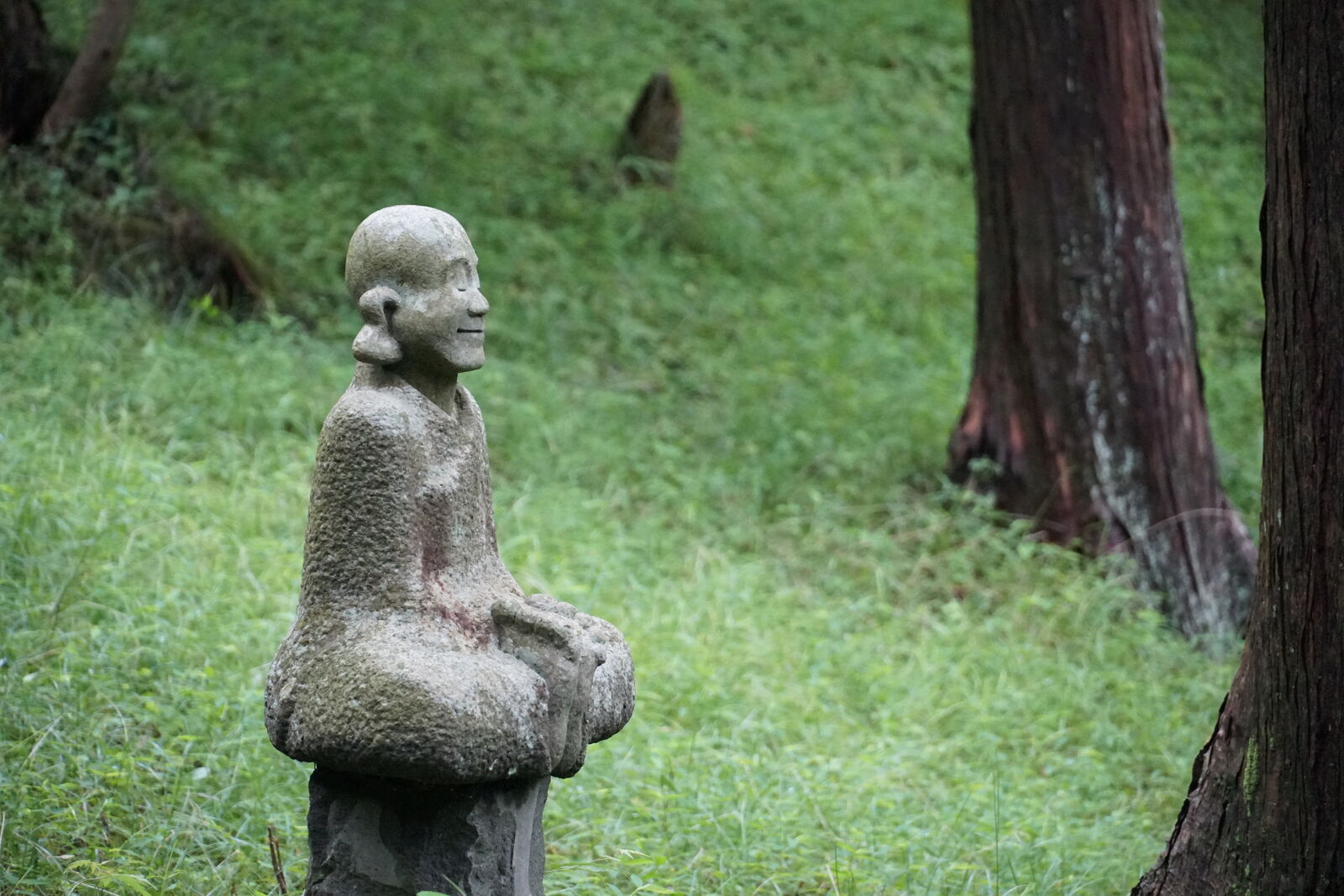
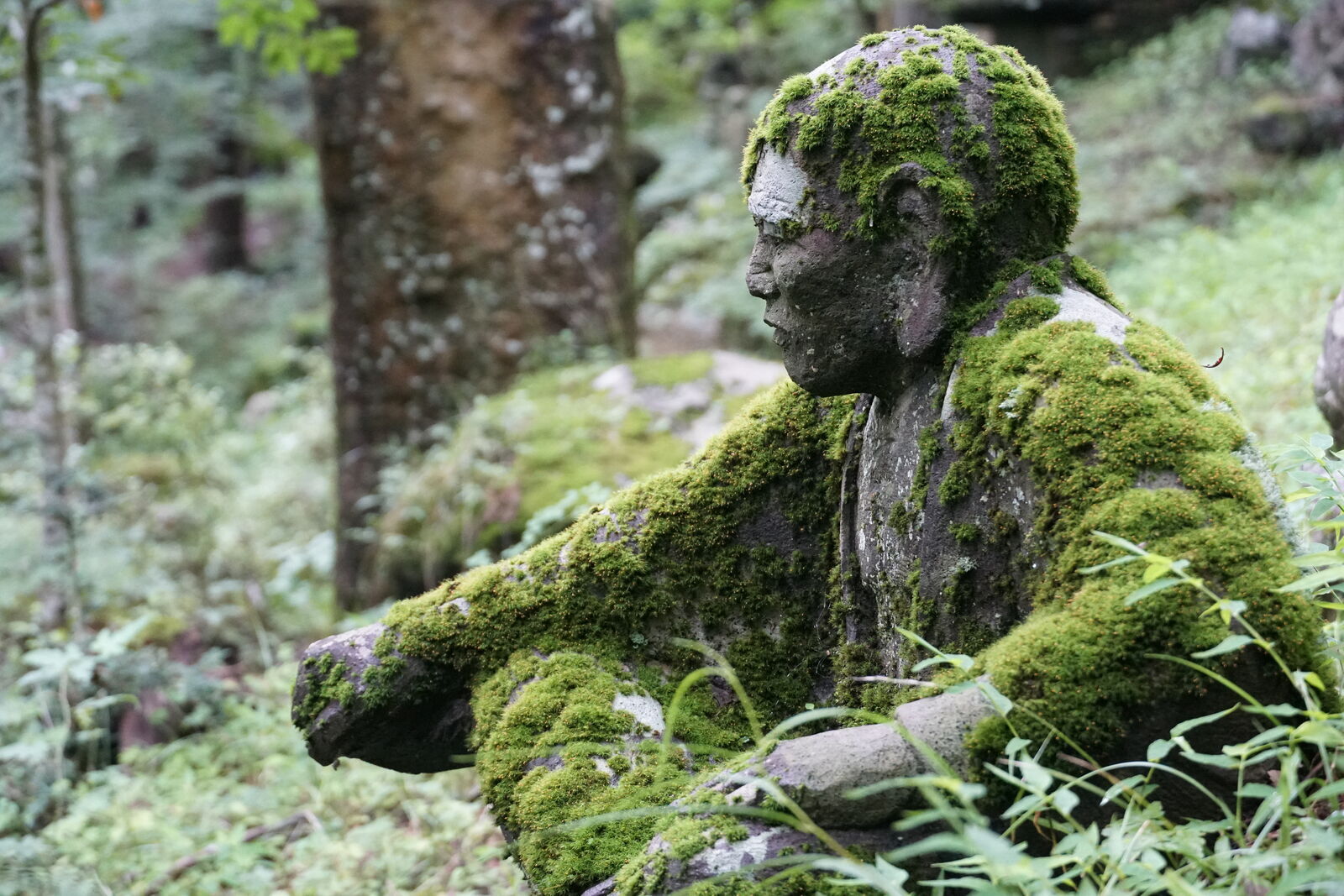
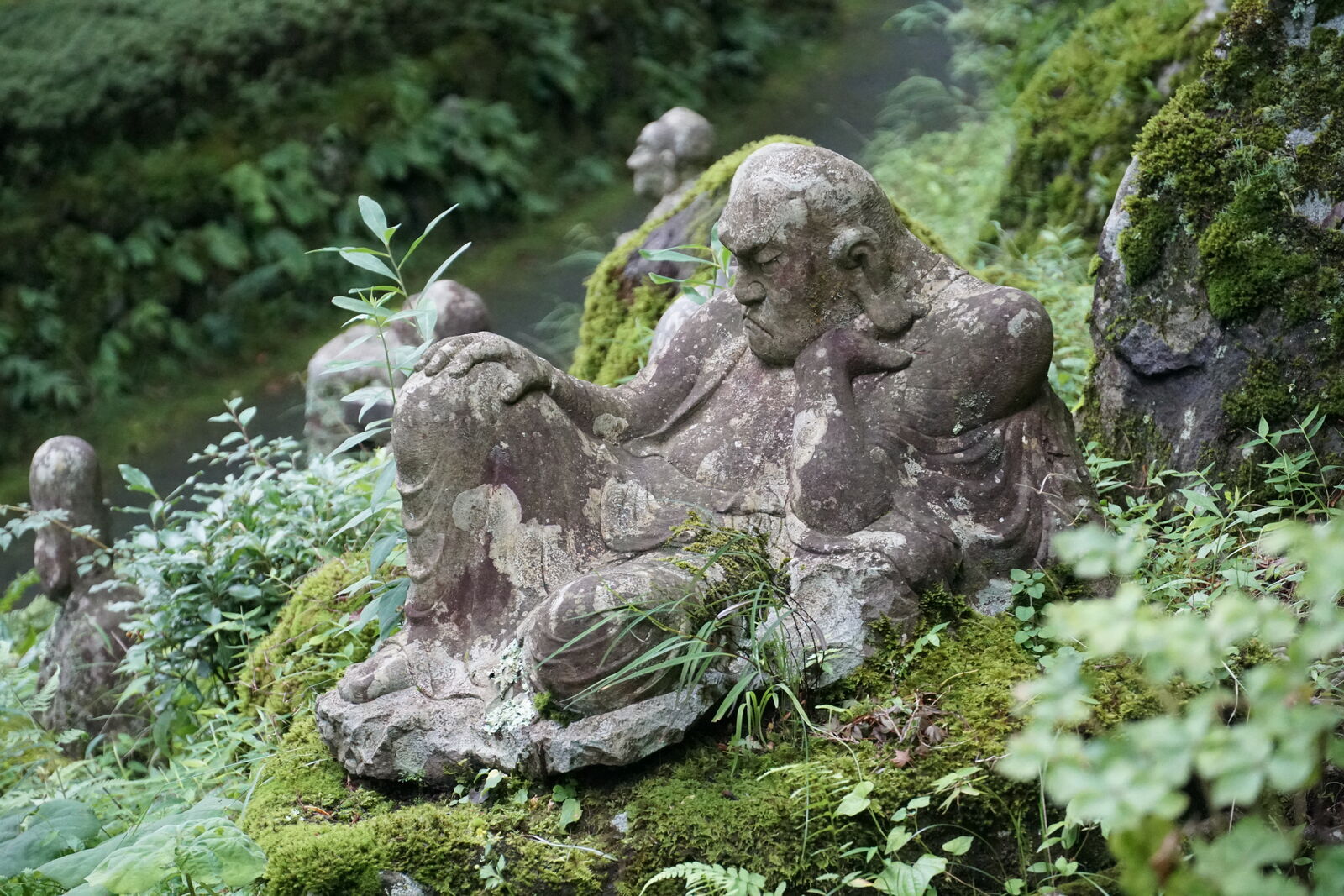
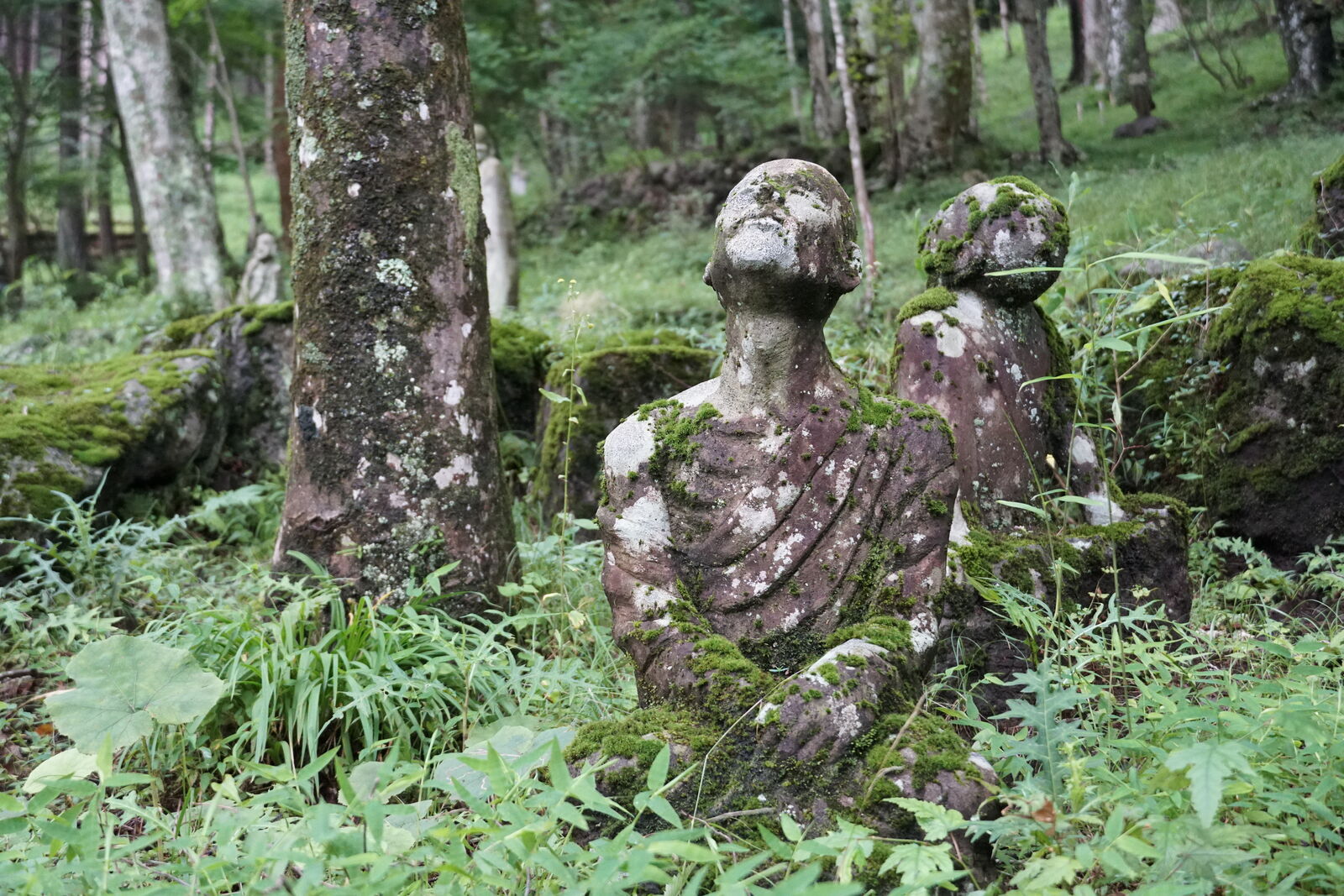
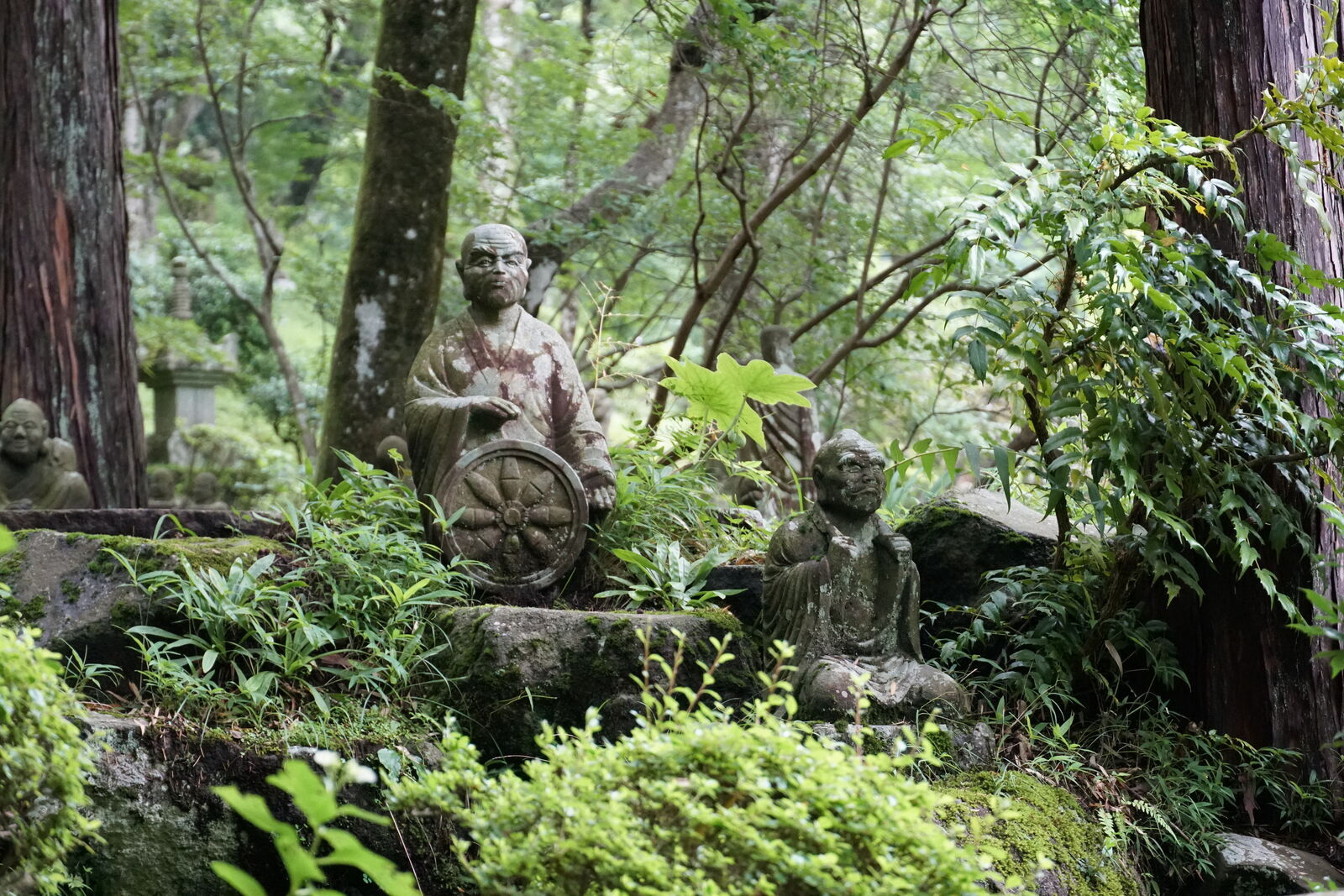
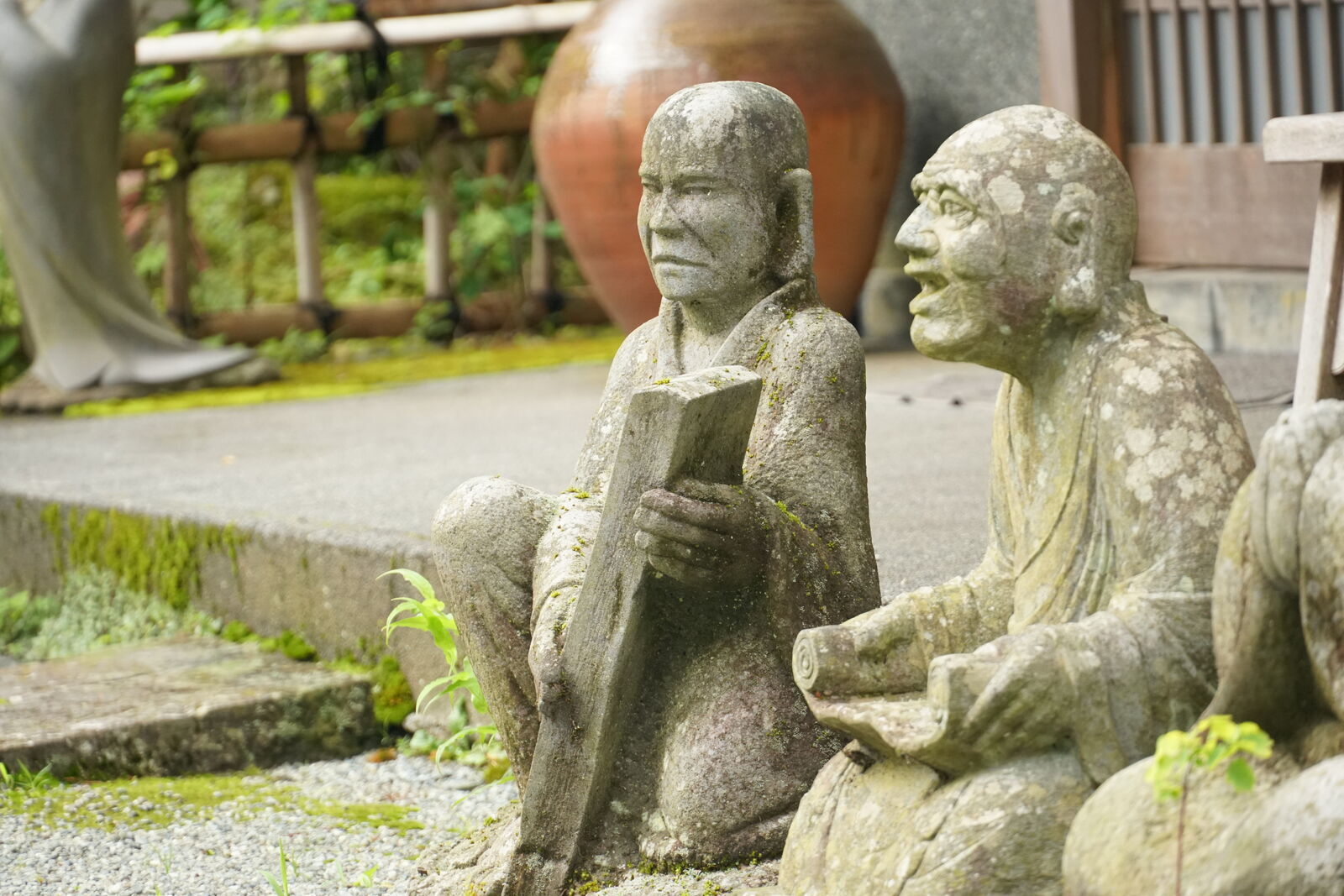
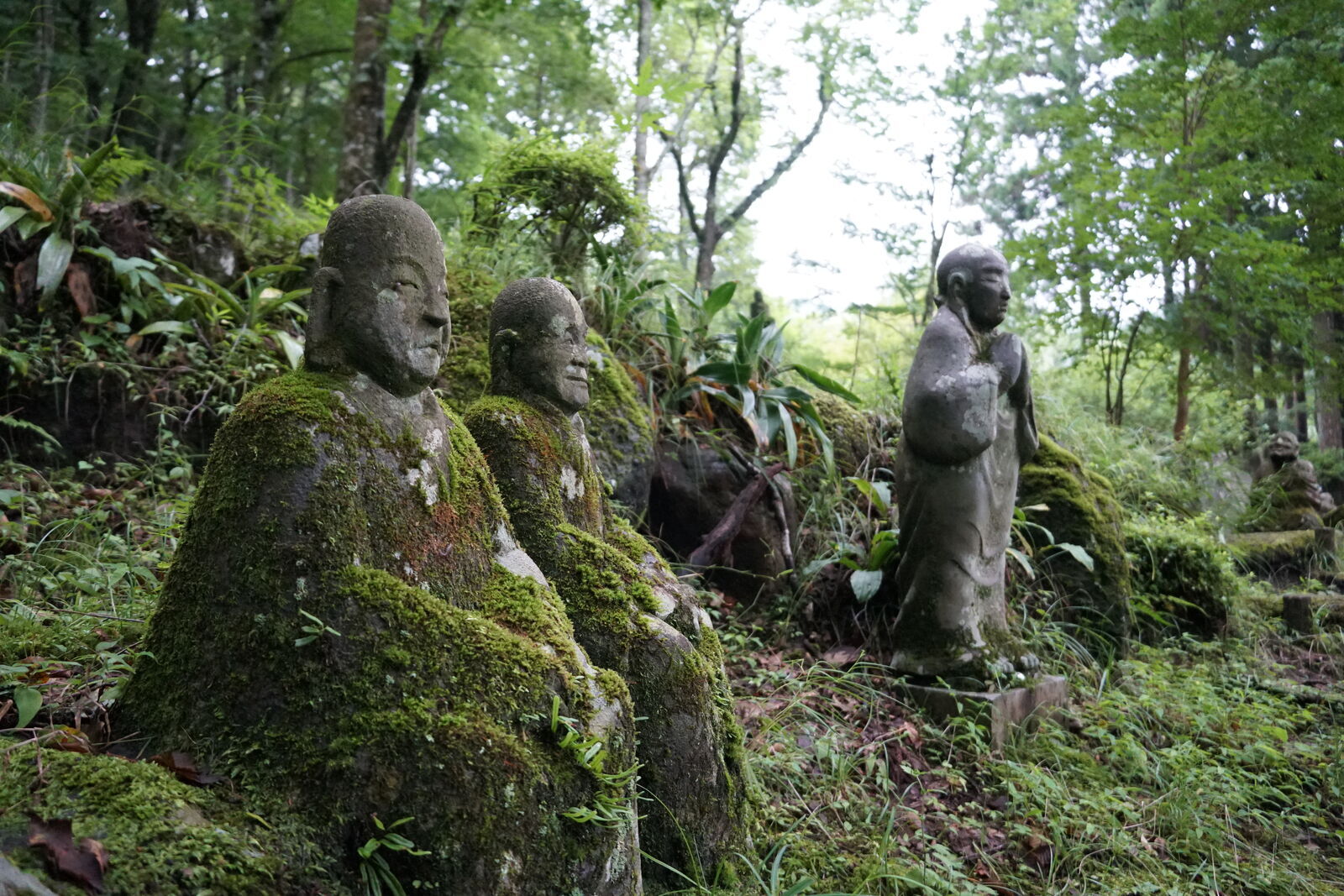
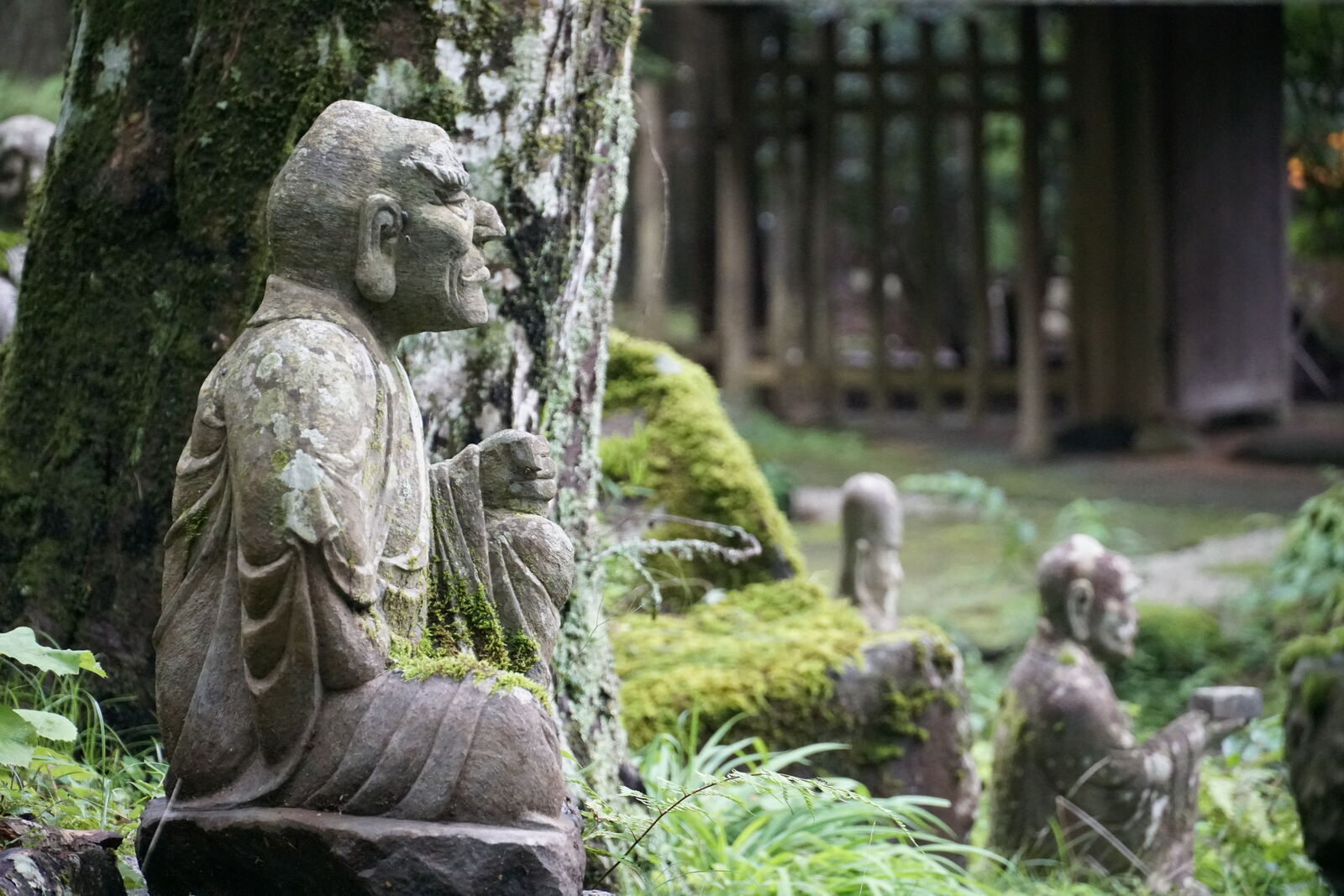
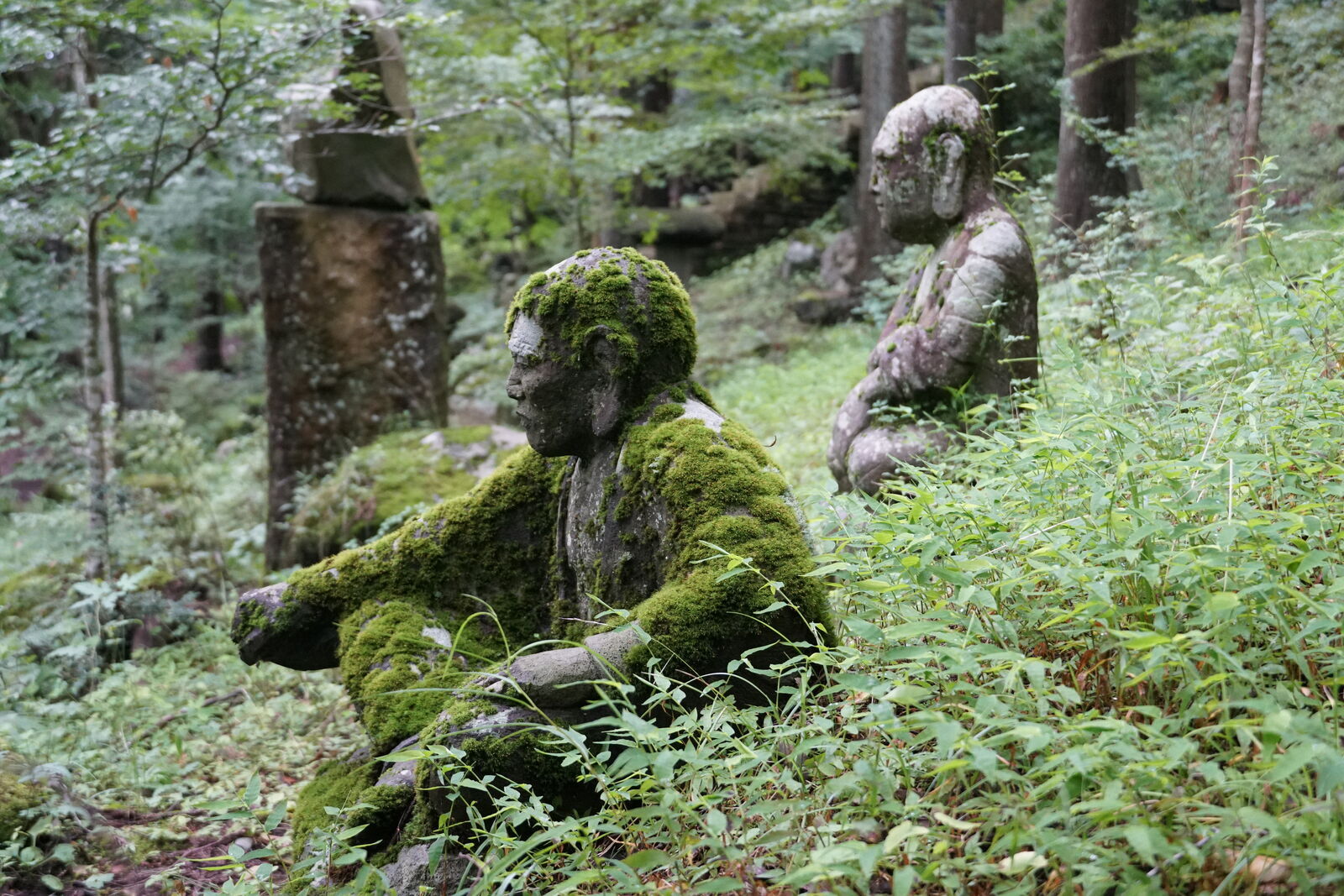
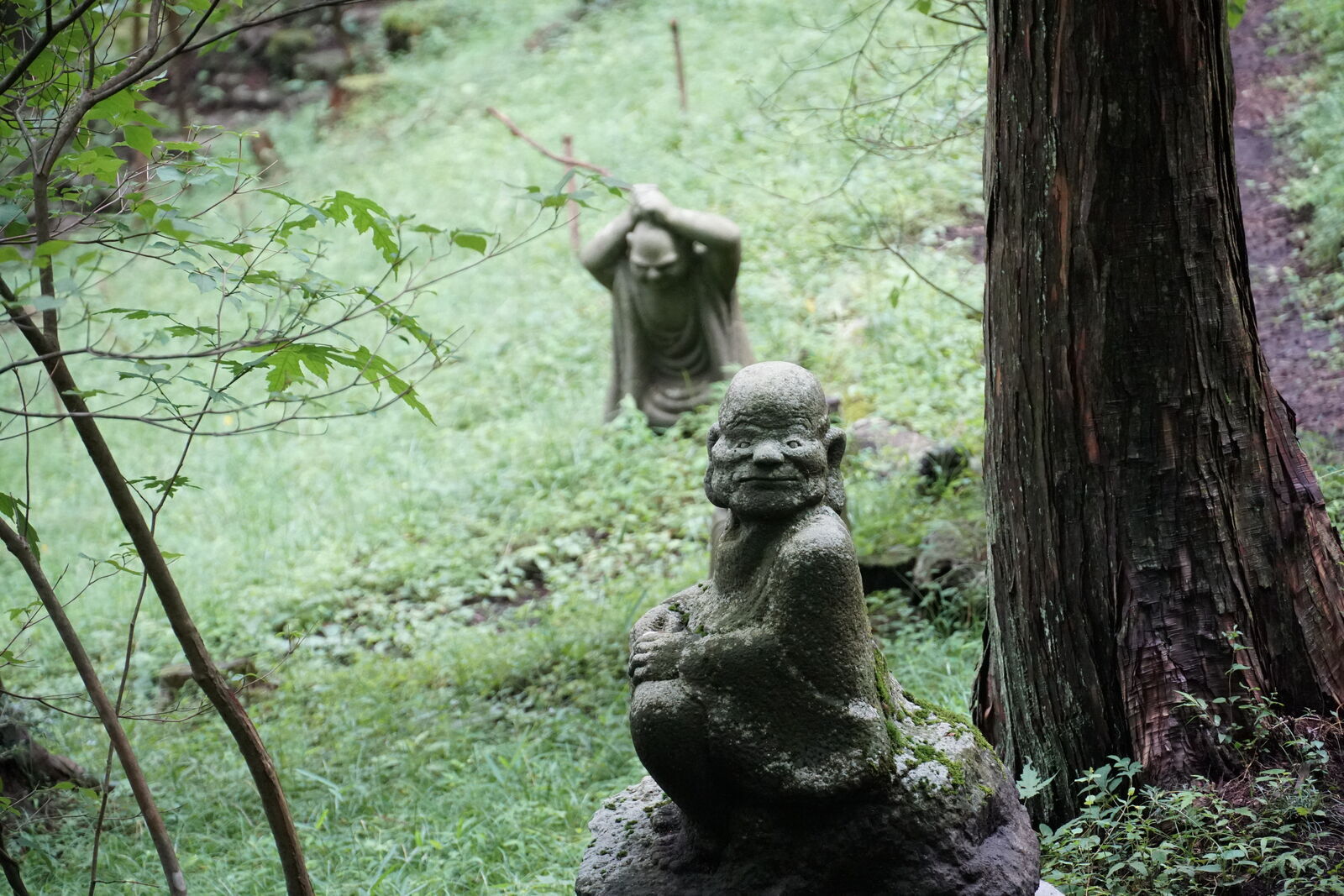
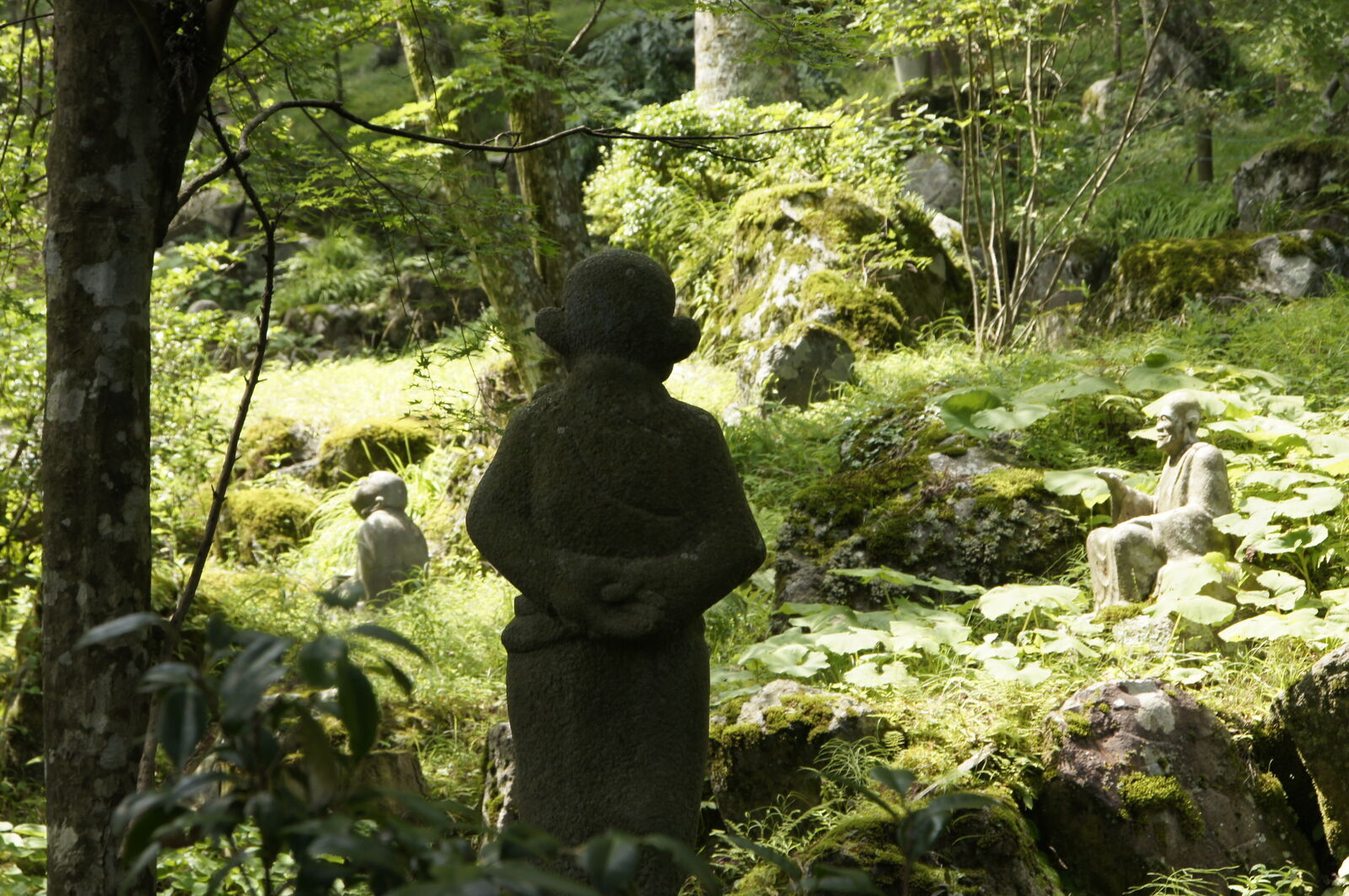
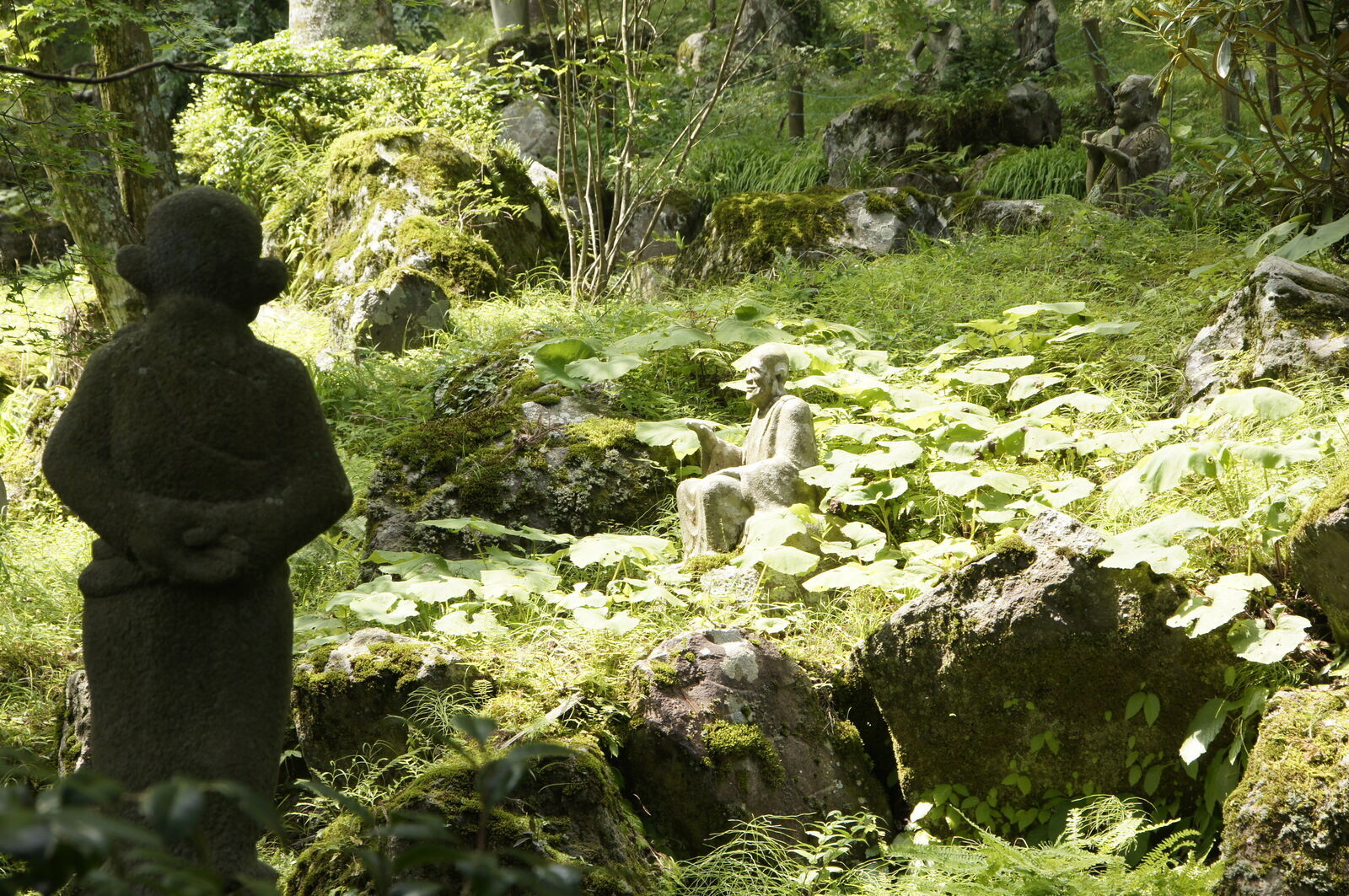
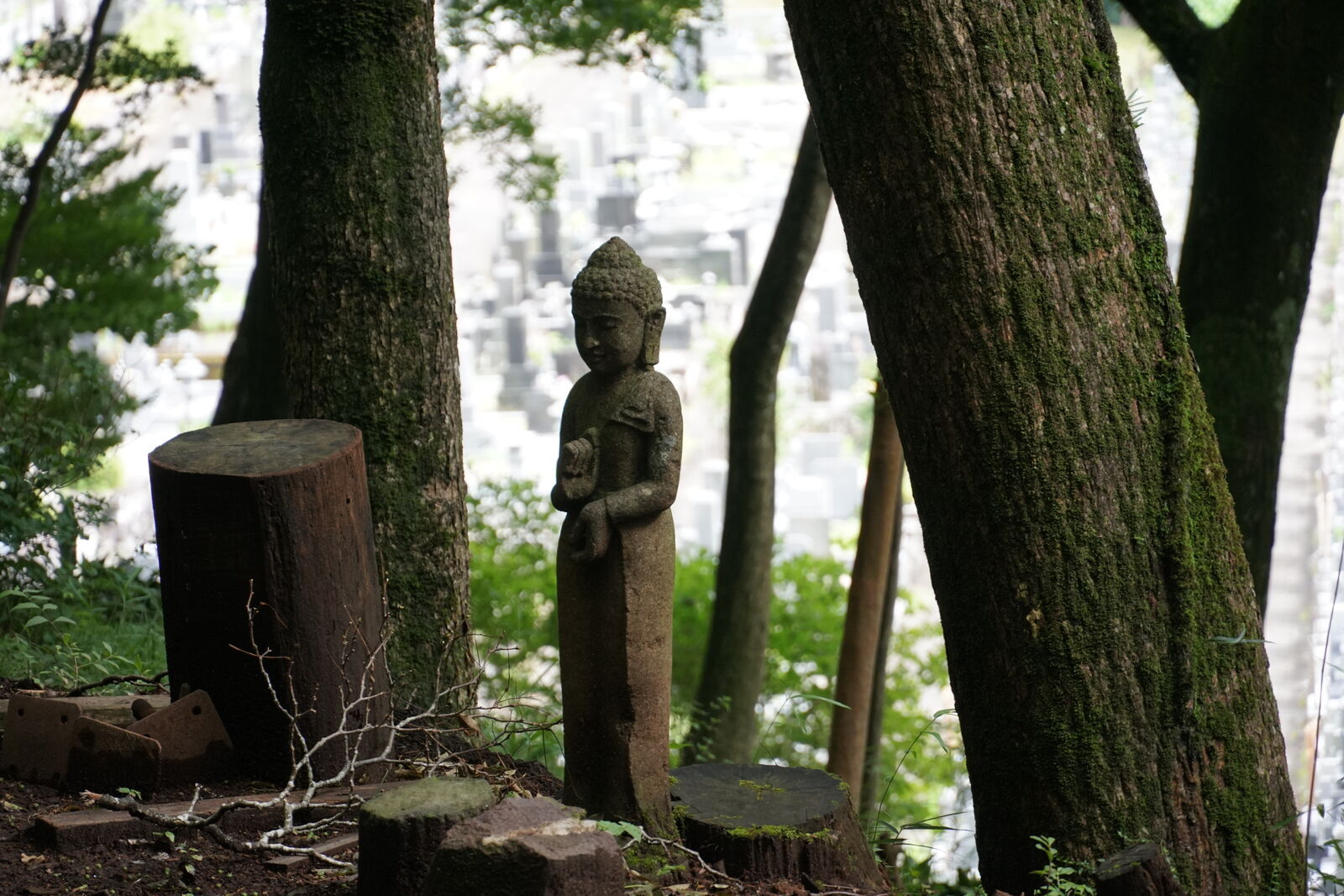
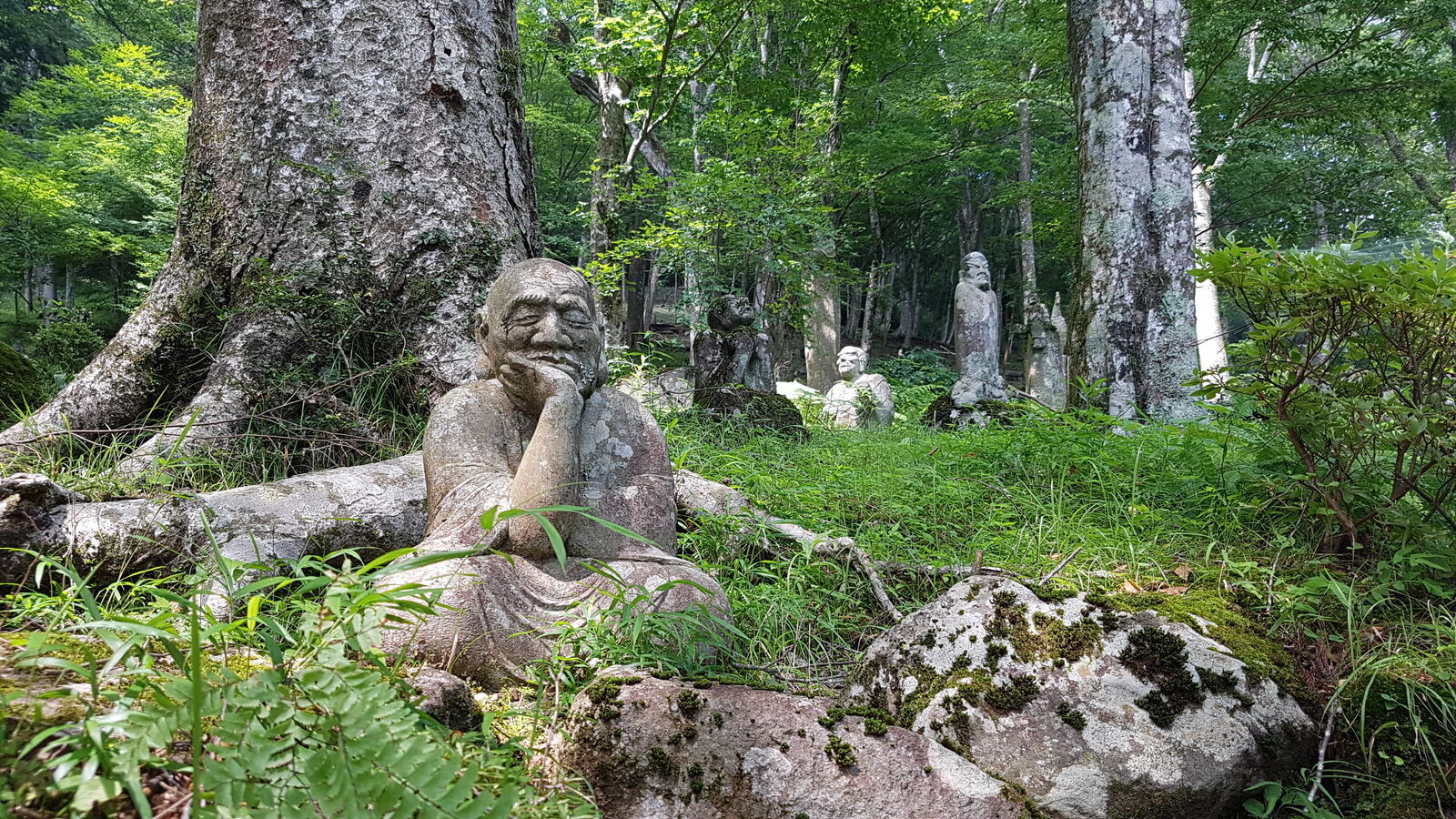
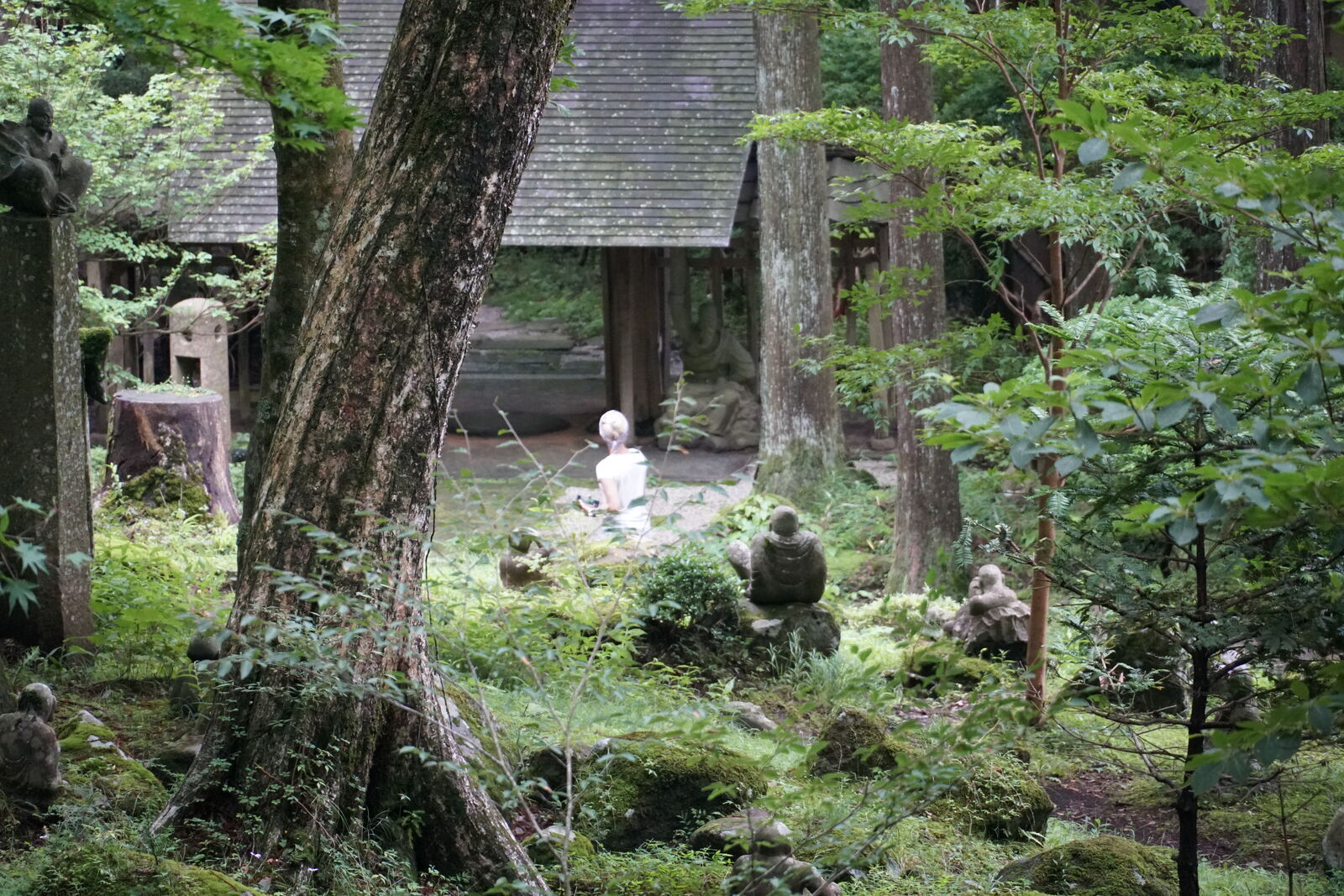
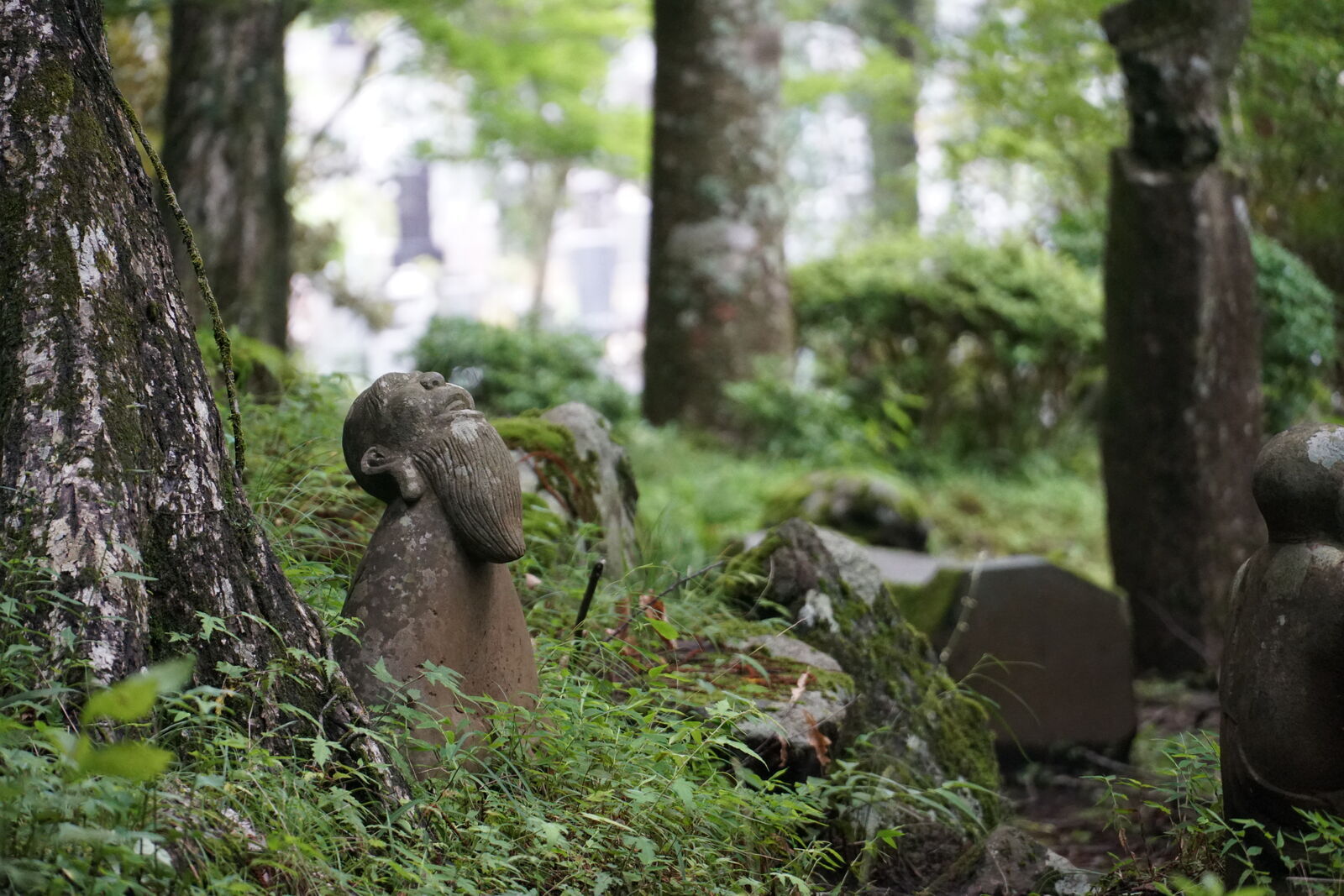
Past the temple buildings and the bell pavilion, a path leads uphill into the cedar forest, and this is where Chōan-ji becomes something you've never seen before. Stone rakan figures are everywhere. Sitting on rocks, standing between trees, arranged in small groups as if caught mid-conversation. Some are covered in thick green moss, their features barely visible, slowly becoming part of the forest floor. Others are newer, their expressions sharp and clear: a monk grinning with his whole face, another one leaning back with his arms crossed like a bouncer at a nightclub, a third staring up at the canopy with an expression of pure wonder.
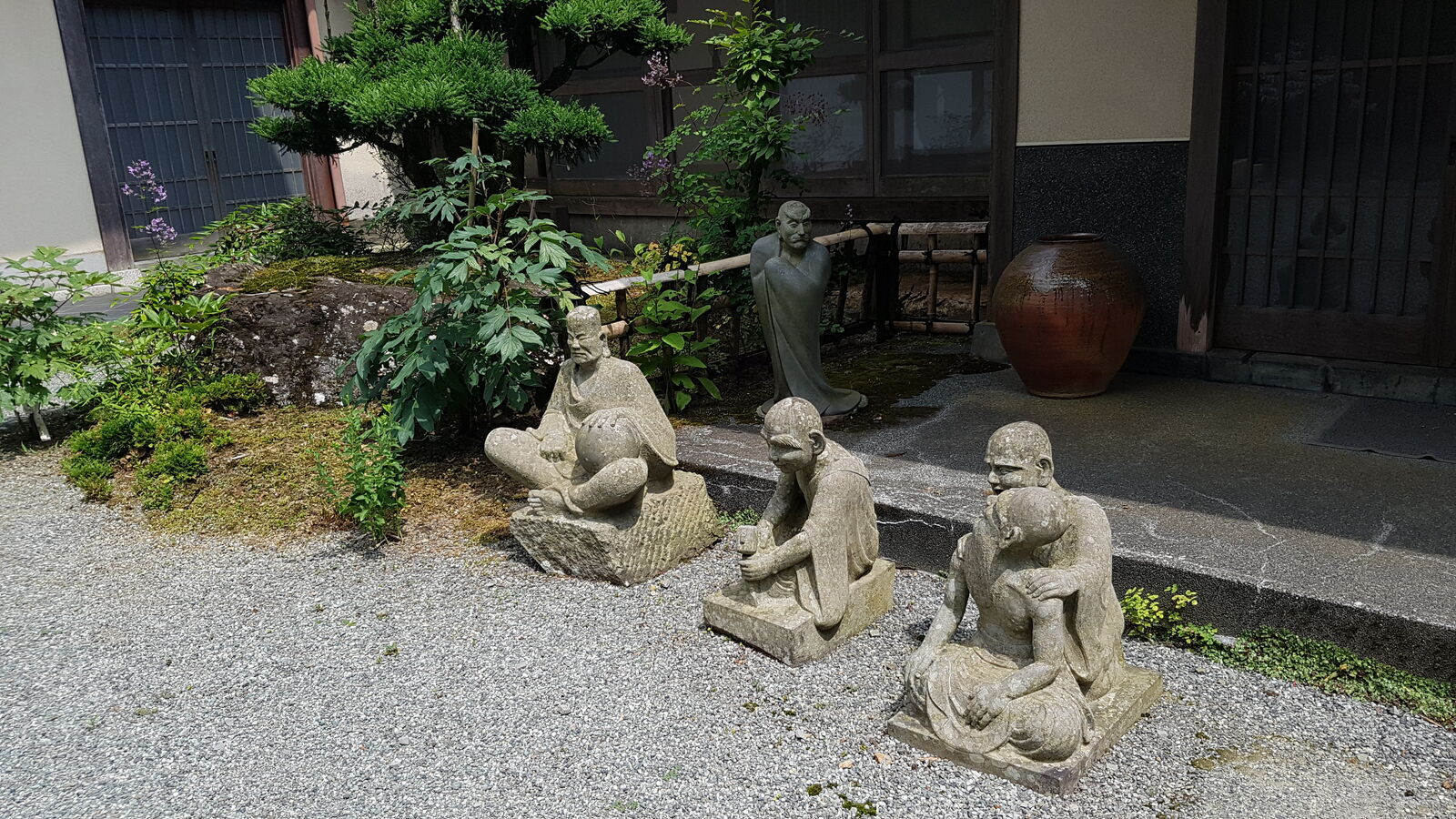
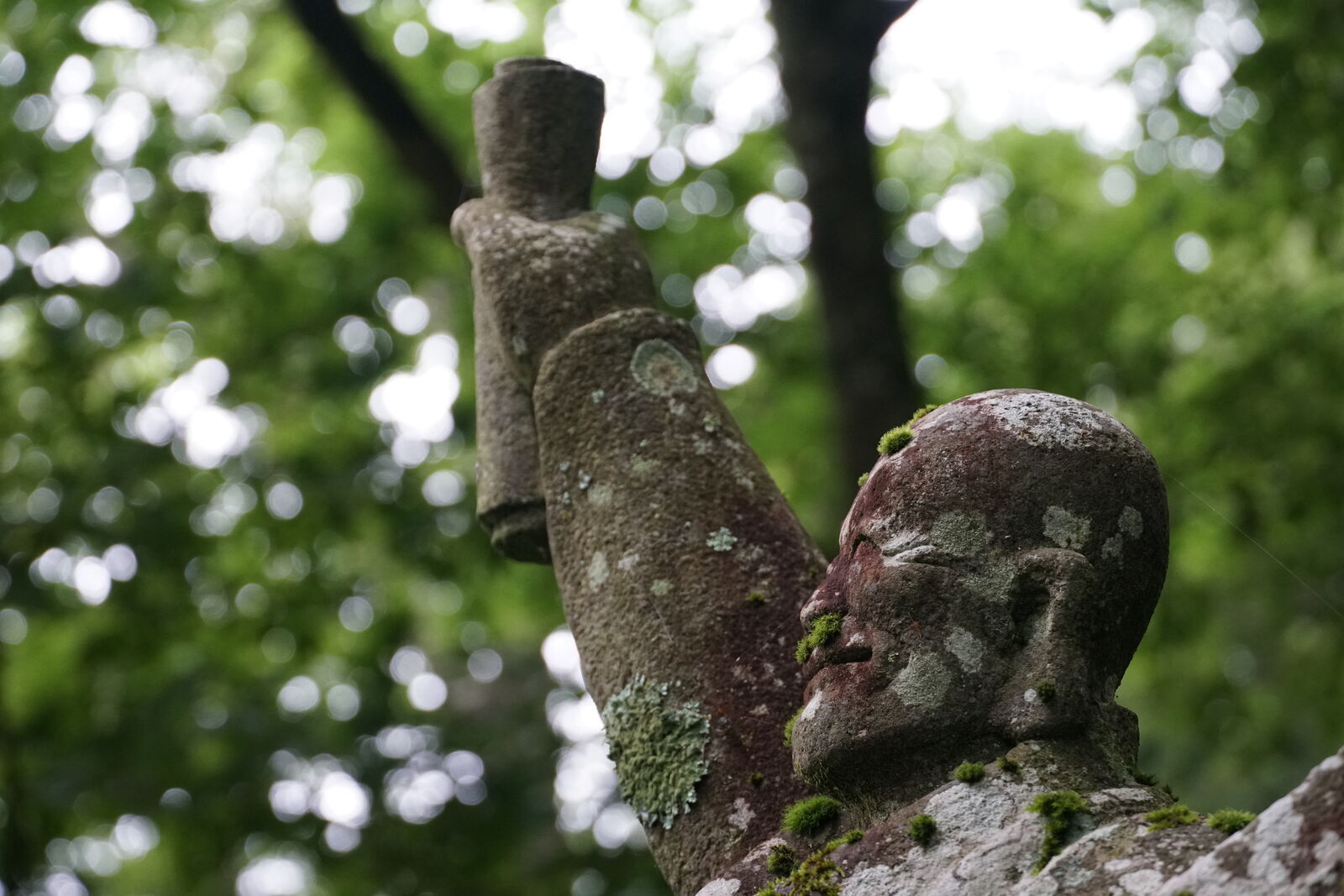
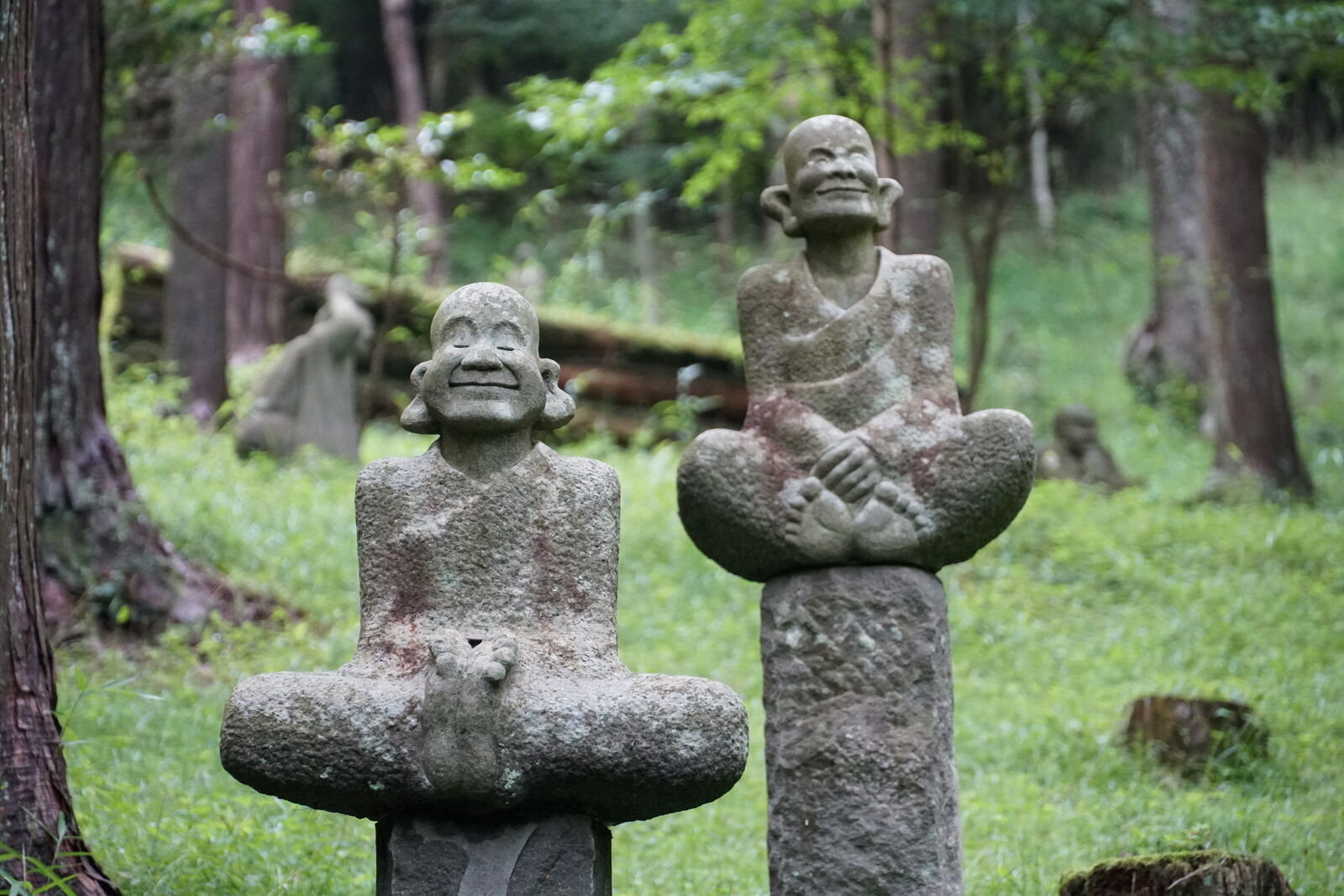
The variety is what makes this place extraordinary. These aren't rows of identical Buddhas. Each figure has its own personality, its own pose, its own relationship to the space around it. One holds a dharma wheel while a smaller figure beside him holds up a leaf. Two monks sit on tall stone pillars, both looking skyward, both laughing at something only they can see. A figure leans against a massive tree trunk, hands behind his back, watching the others from a distance like a teacher during recess.
You find yourself slowing down, looking more carefully. Every few steps there's another face peering out of the undergrowth, another figure you almost walked past. It becomes a treasure hunt, and it's one where you never run out of things to find.
Humor in Stone
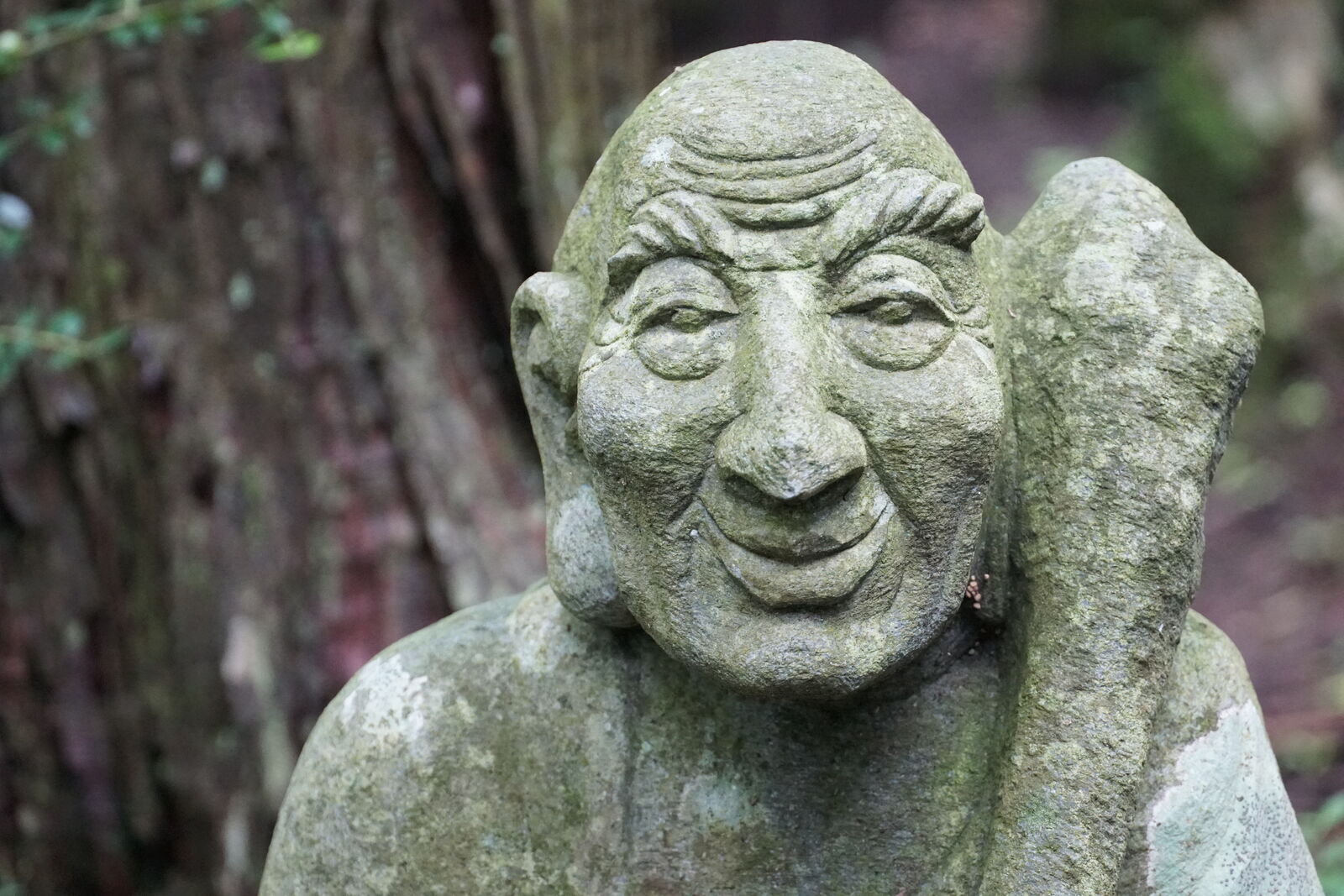
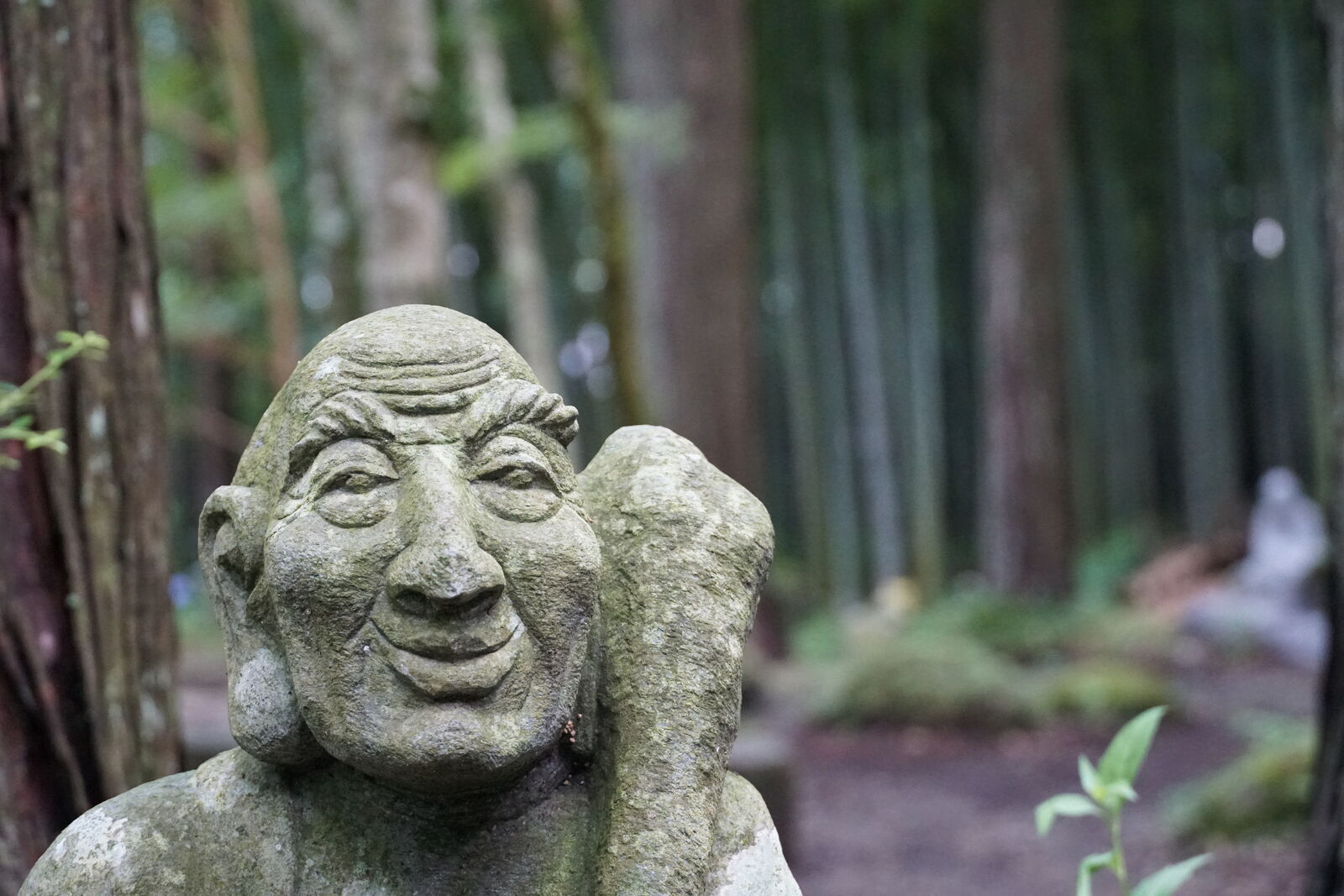
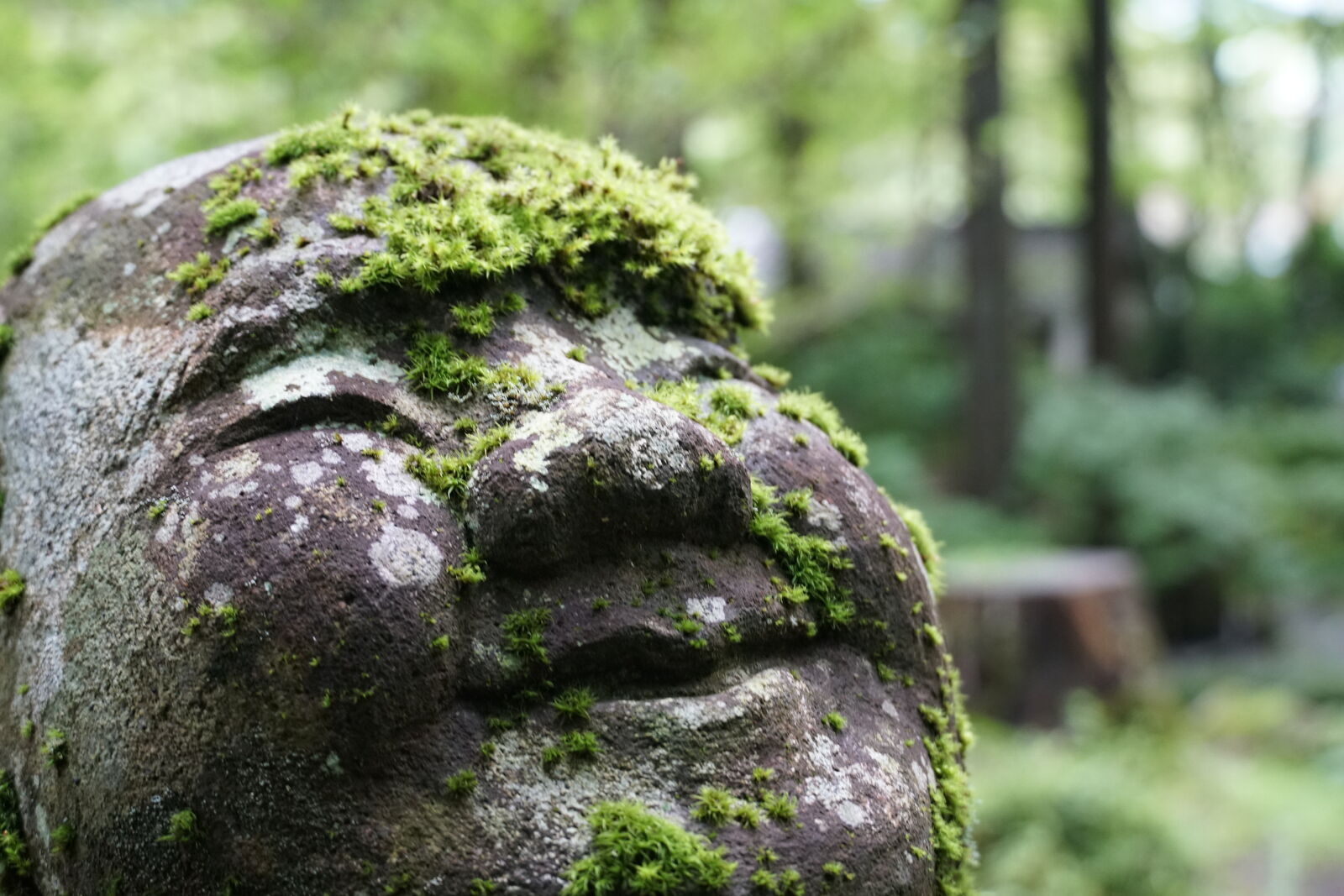
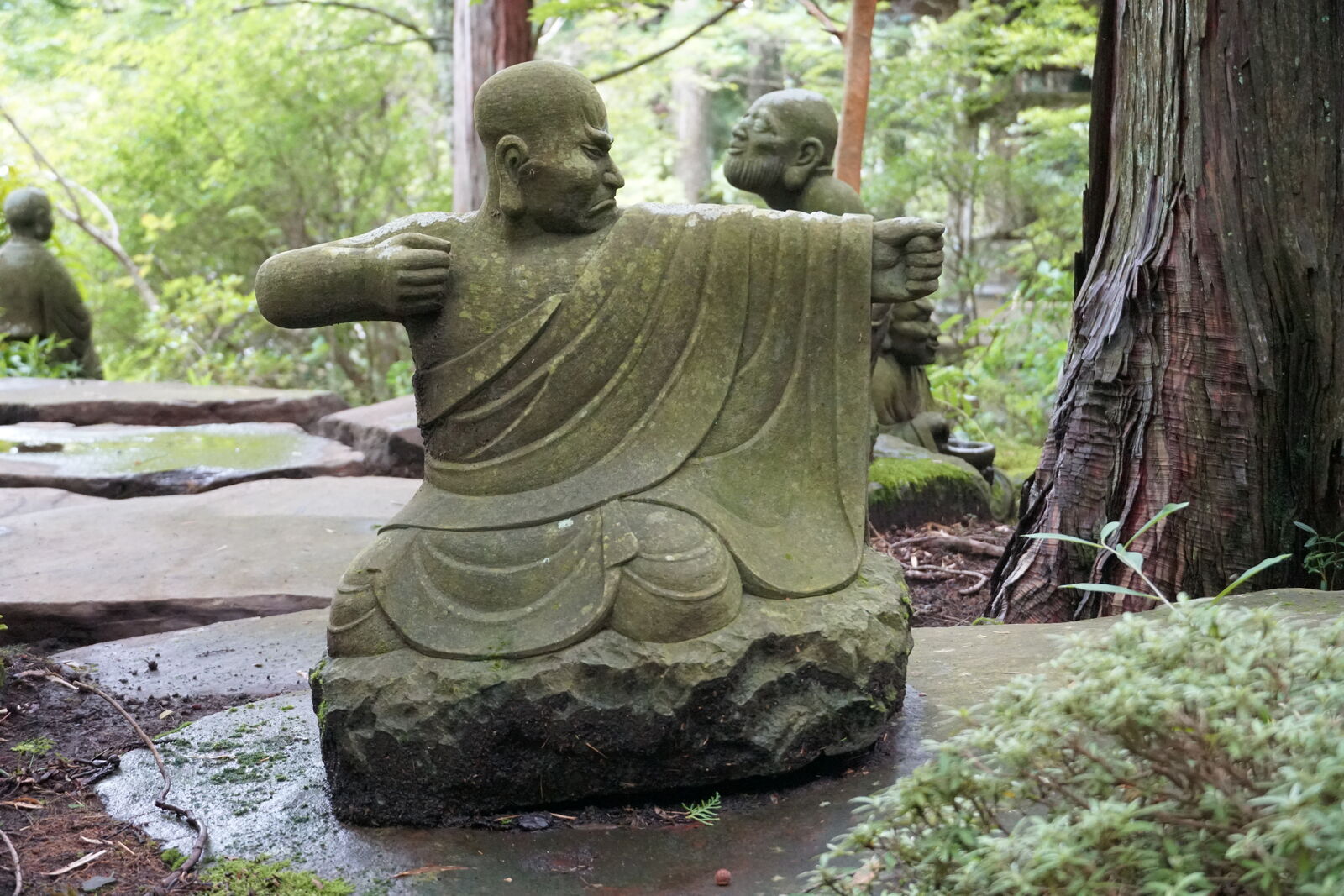
What separates Chōan-ji from every other temple I've visited in Japan is the humor. Japanese temple art is usually solemn, formal, designed to inspire reverence. Here, someone decided that enlightenment can also be funny. There's a figure with an expression so mischievous it looks like he just hid your shoes. Another one has his hands pressed to his cheeks in exaggerated surprise, mouth wide open. One monk is carved in a fighting stance, fists up, looking like he's about to defend his meditation spot. And then there's the face: a close-up portrait in stone, covered in moss that looks like wild hair, grinning with the serene confidence of someone who figured out the cosmic joke a long time ago.
This humor doesn't diminish the spiritual quality of the place. If anything, it deepens it. There's something profoundly Buddhist about the idea that wisdom and laughter aren't opposites. That a stone face can be both sacred and silly. The forest seems to agree.
Time and Moss
Some of the older figures have been here long enough that the moss has claimed them almost entirely. They sit like green ghosts, their outlines soft, their faces half-absorbed into the earth. You can see the progression: fresh stone, then lichen, then moss, then forest. Given enough time, every figure here will disappear. That feels intentional, or at least appropriate. A temple about impermanence, where the art itself is impermanent.
The newer figures, with their crisp edges and detailed expressions, stand in sharp contrast. Nobody is quite sure who keeps adding them, or when the tradition started. The effect is that the temple feels alive, still growing, still accumulating personalities. It's a collection that nobody curates and nobody controls, which might be why it works so well.
Solitude
Both times I visited, I was nearly alone. The first time, in the middle of July, there was nobody else in the forest at all. Just me, the cicadas, and a few hundred stone monks. The second time, maybe one or two other visitors passed through during the couple of hours I spent there. This isn't a place that attracts crowds, and that solitude is part of what makes the experience so powerful. Without other people around, the figures start to feel like company. You catch yourself nodding at one, or smiling back at another. The forest is quiet except for birdsong and the occasional rustle of wind through the cedars, and the figures seem to listen.
I can imagine this place being wonderful for families with children. The treasure-hunt aspect, the funny faces, the sheer variety of figures hidden in unexpected spots. But I'm also glad I experienced it in silence first. Some places need that.
Practical Info
Location: Sengokuhara, Hakone, Kanagawa Prefecture. Hidden off the main road in the highlands north of central Hakone. View on Google Maps
Access: By car is easiest. Free parking at the temple entrance. Also reachable by Hakone Tozan Bus to the Sengokuhara area.
Cost: Free admission. Donations are welcome.
Time needed: At least 1.5 to 2 hours. You'll want to explore slowly.
Best conditions: After rain, when the moss is vivid green and the stone glistens. Overcast days work beautifully for photography, keeping the contrast manageable under the forest canopy.
Crowds: Rarely an issue. I've visited twice in peak summer and was essentially alone both times.
Combine with: Hakone's other sights (Open-Air Museum, Lake Ashi, Owakudani), or use it as a stop when driving between Hakone and the Izu peninsula. Chōan-ji makes a perfect half-day detour.