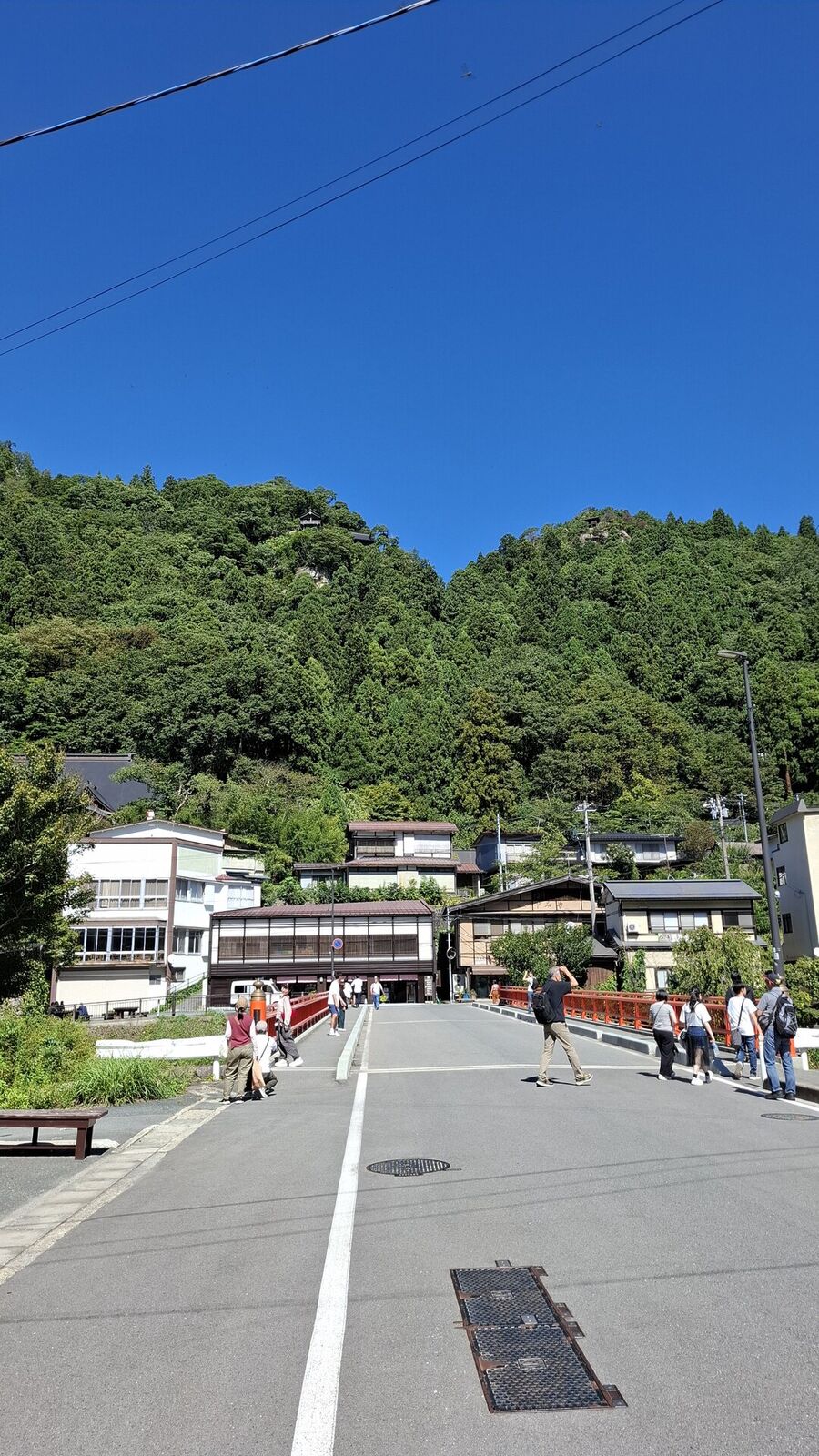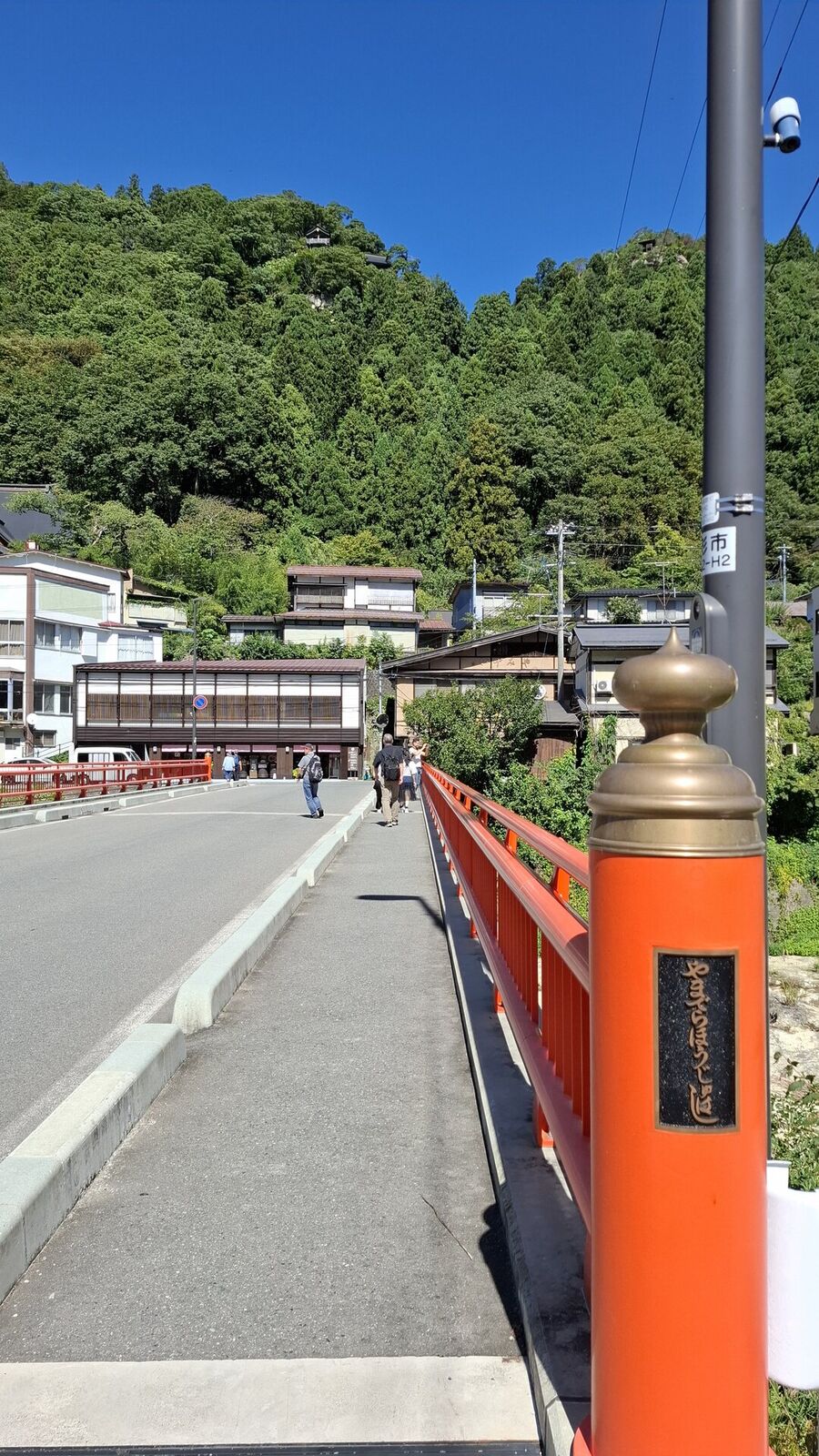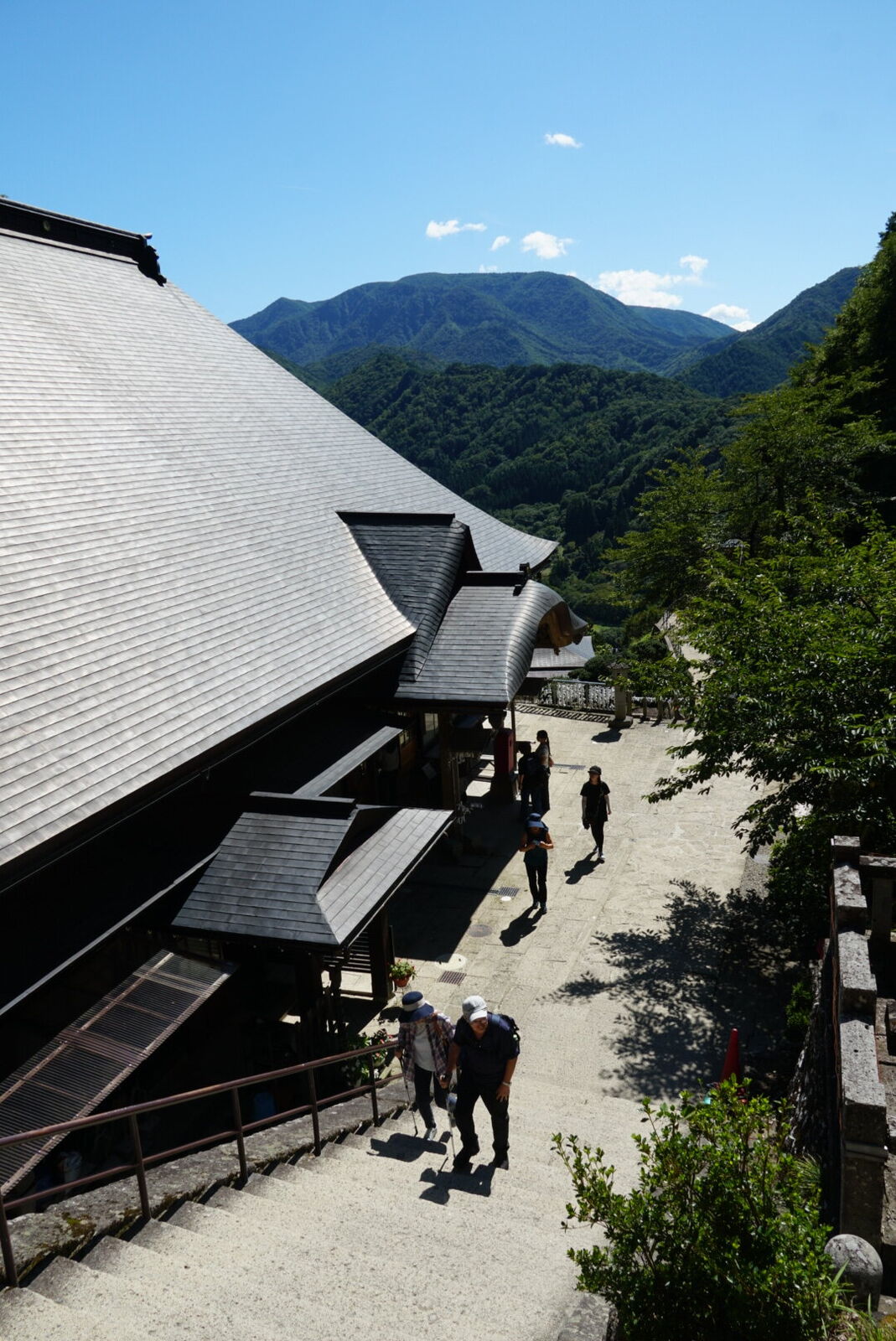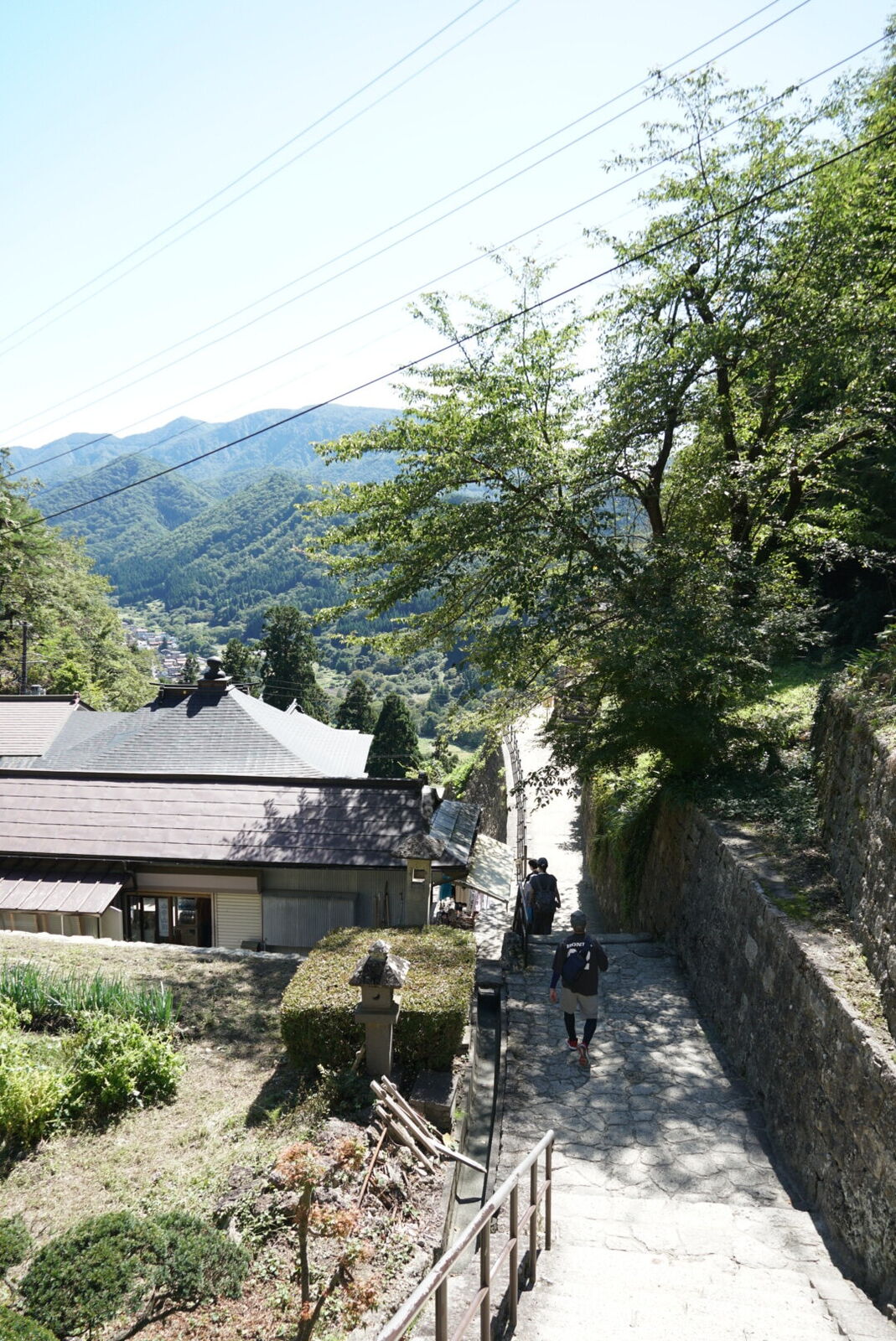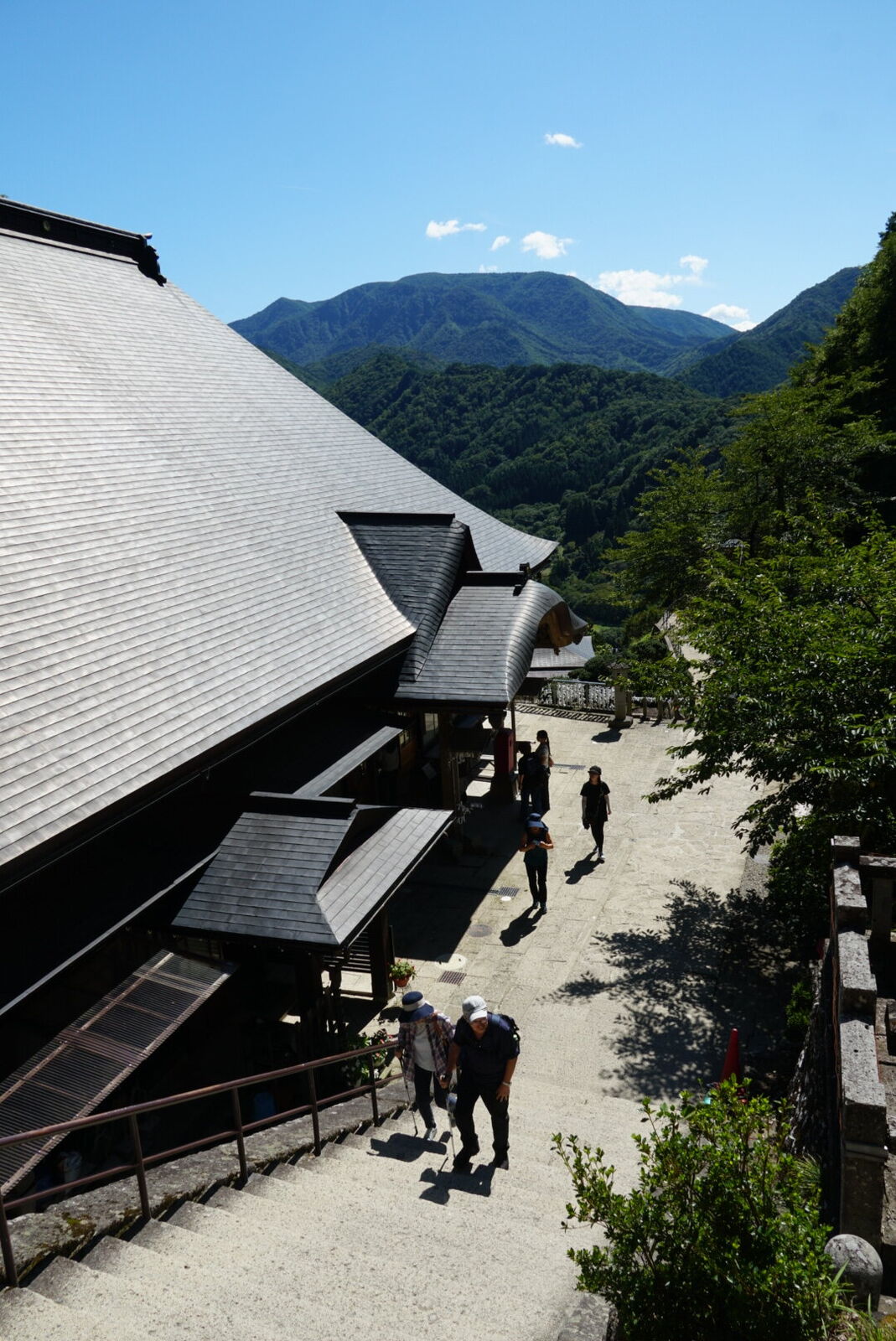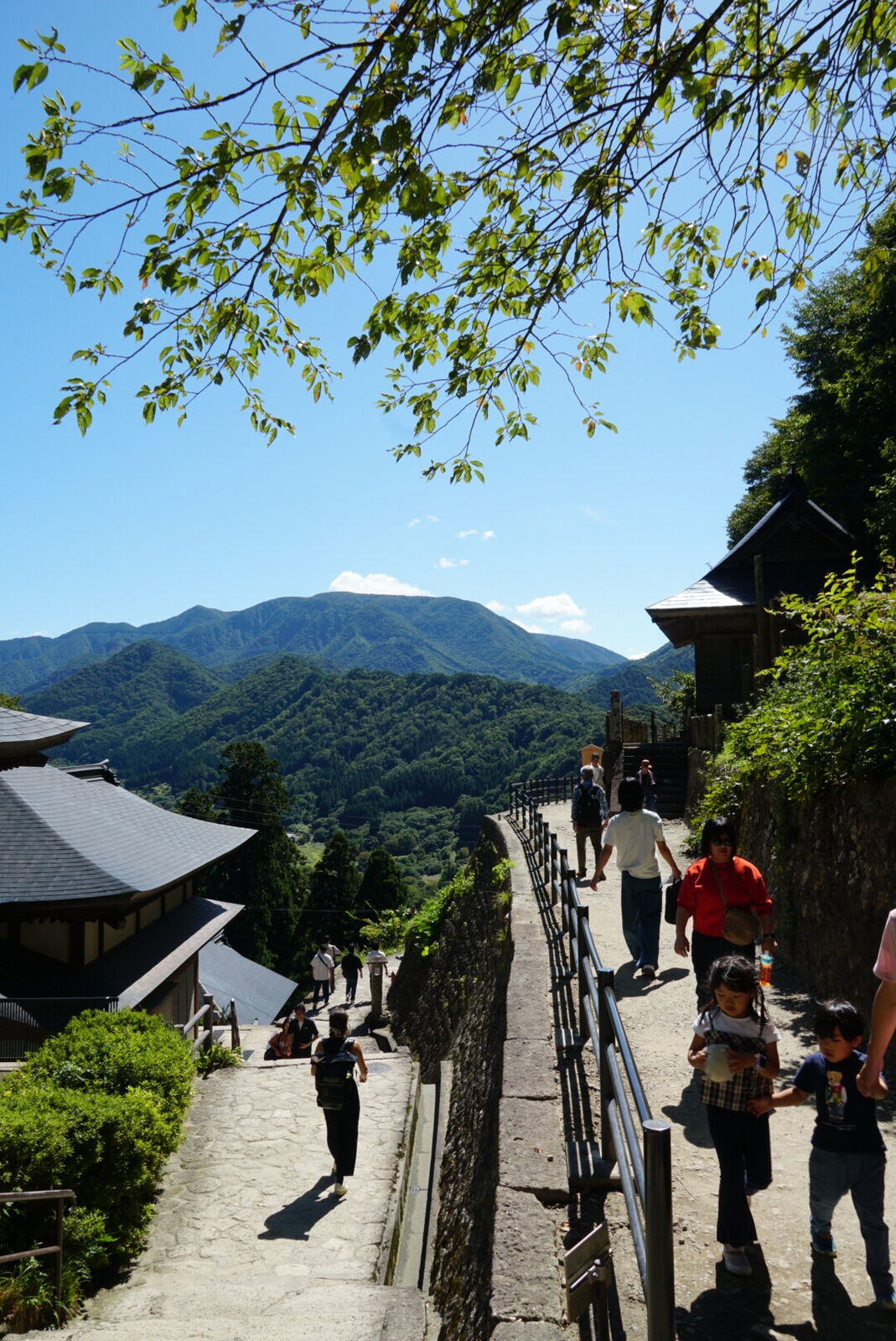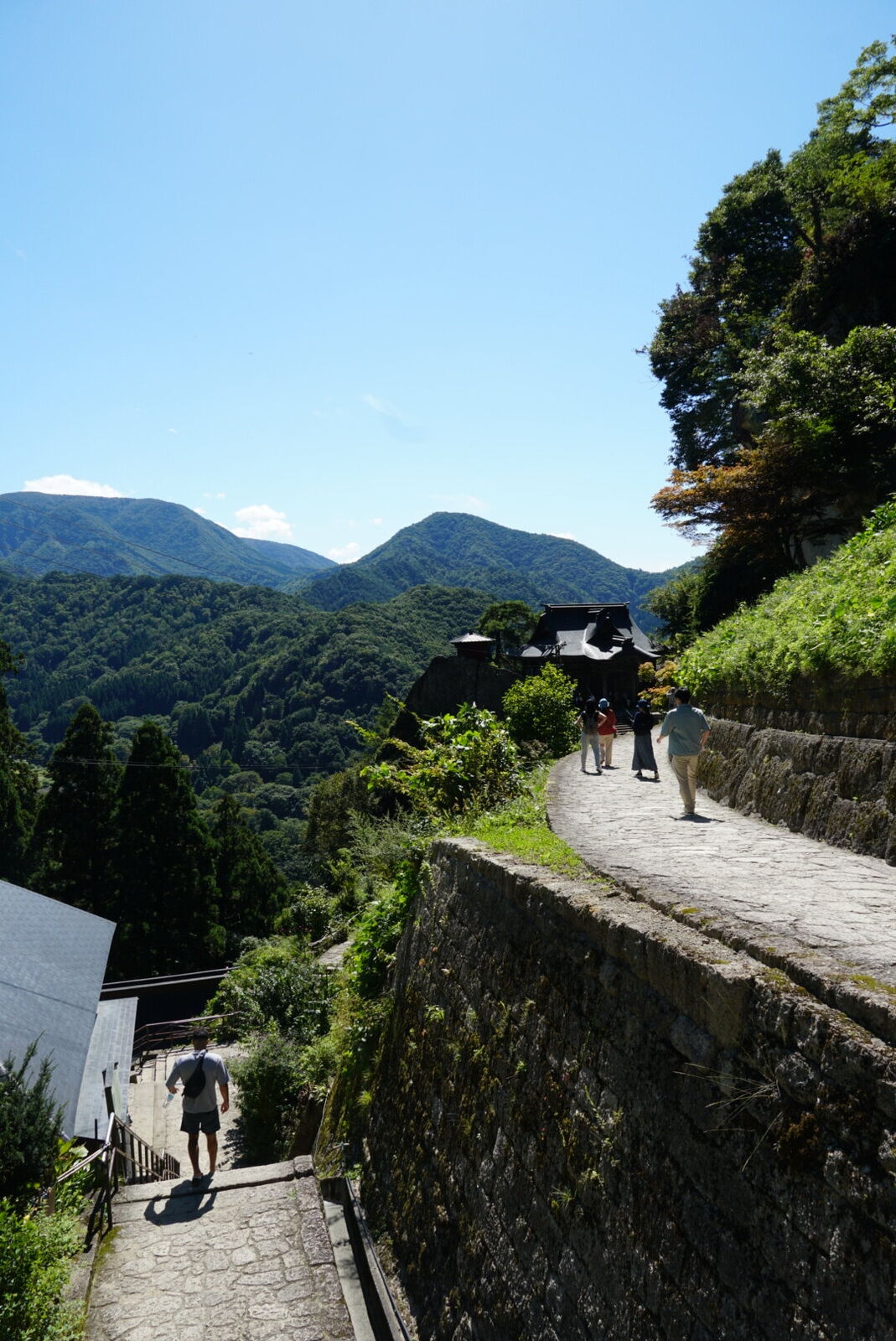
Yamadera is one of those names that kept coming up whenever I looked into Tohoku. A thousand-year-old mountain temple, 1,015 stone steps, a valley panorama from the top. It sounded like exactly the kind of place that would either live up to the reputation or disappoint under the weight of it. It lived up to it. From the cedar forest at the bottom to the Godaido viewpoint at the top, Yamadera is a temple that rewards you with something new every hundred steps.
The Cedar Forest
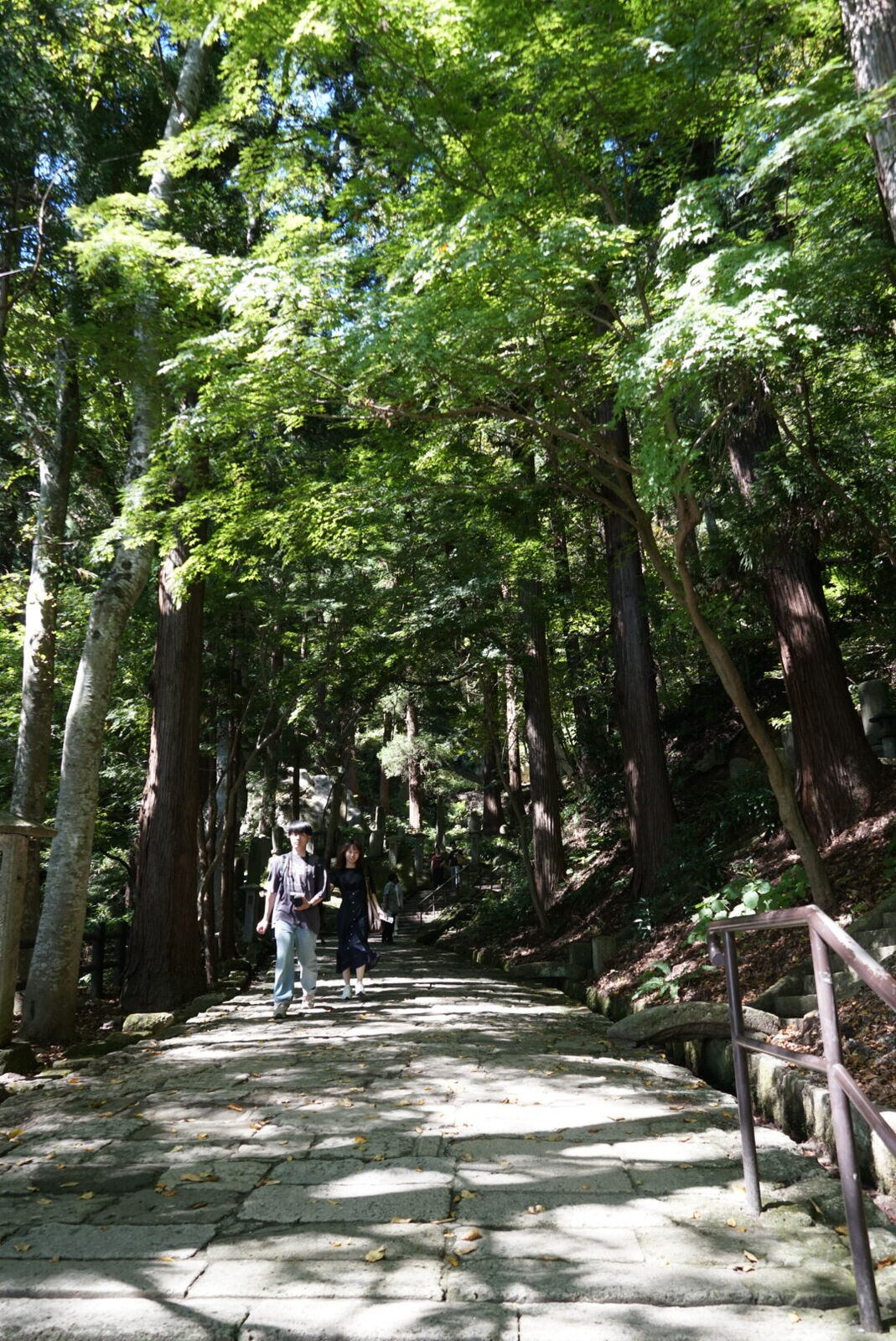
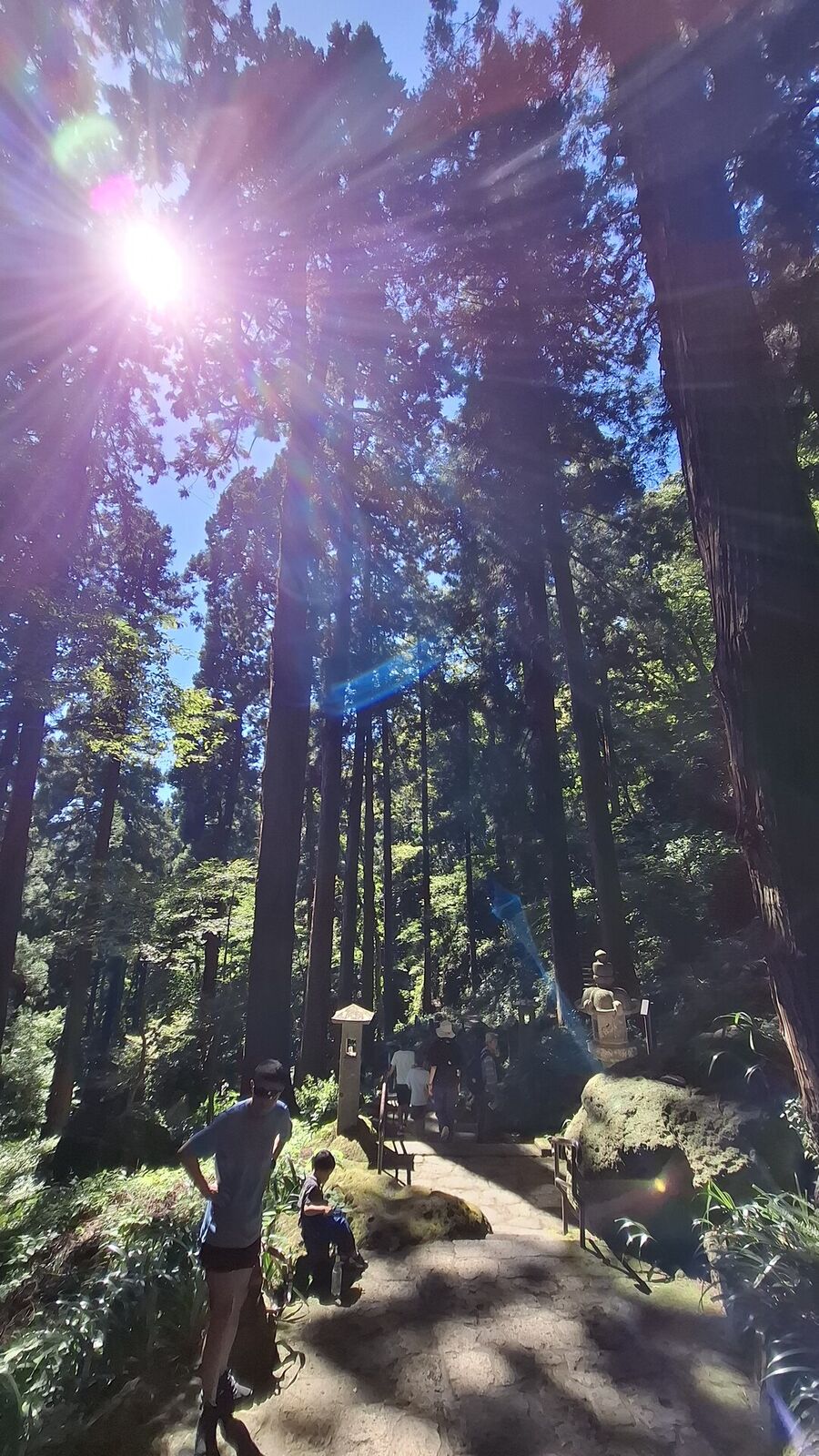
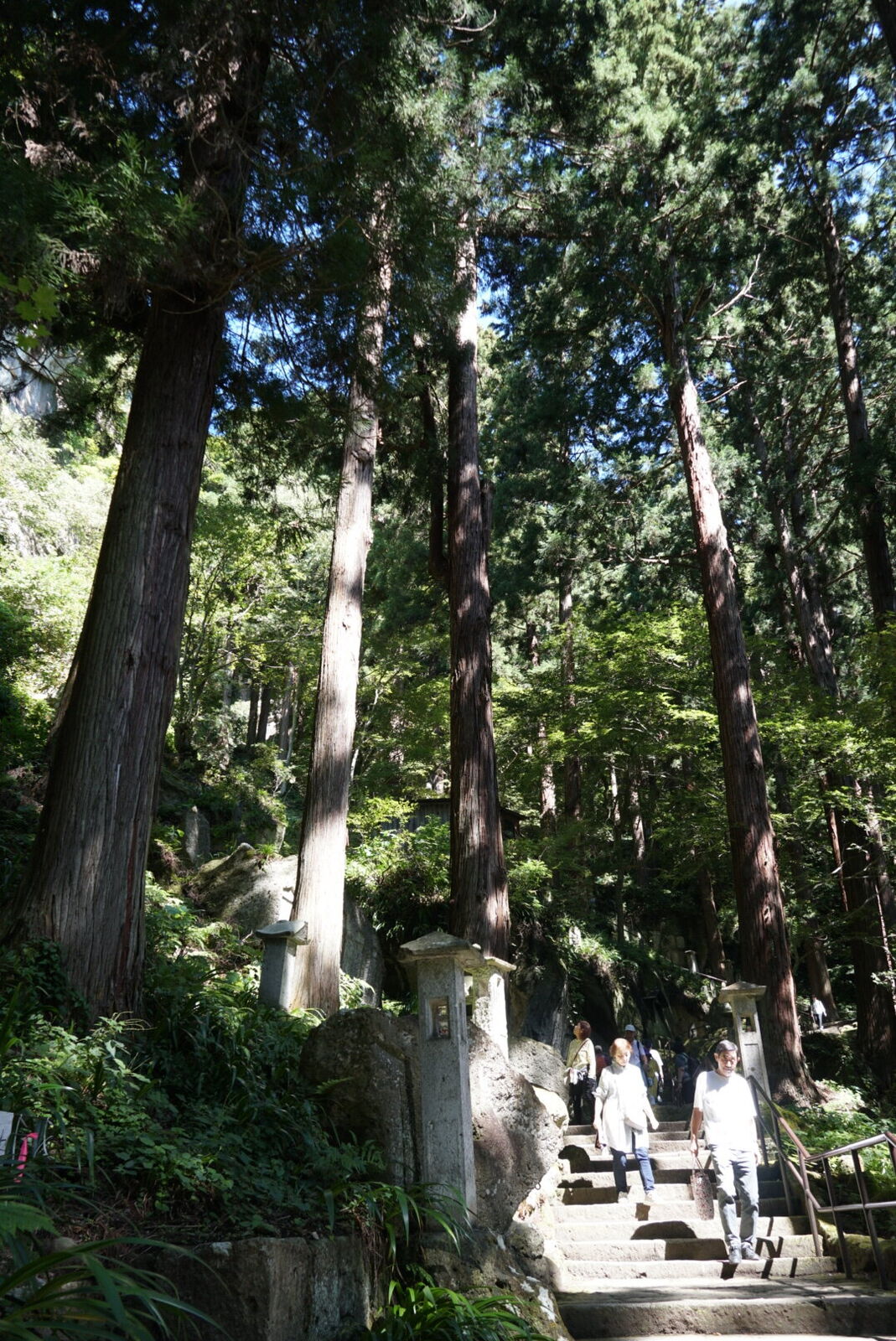
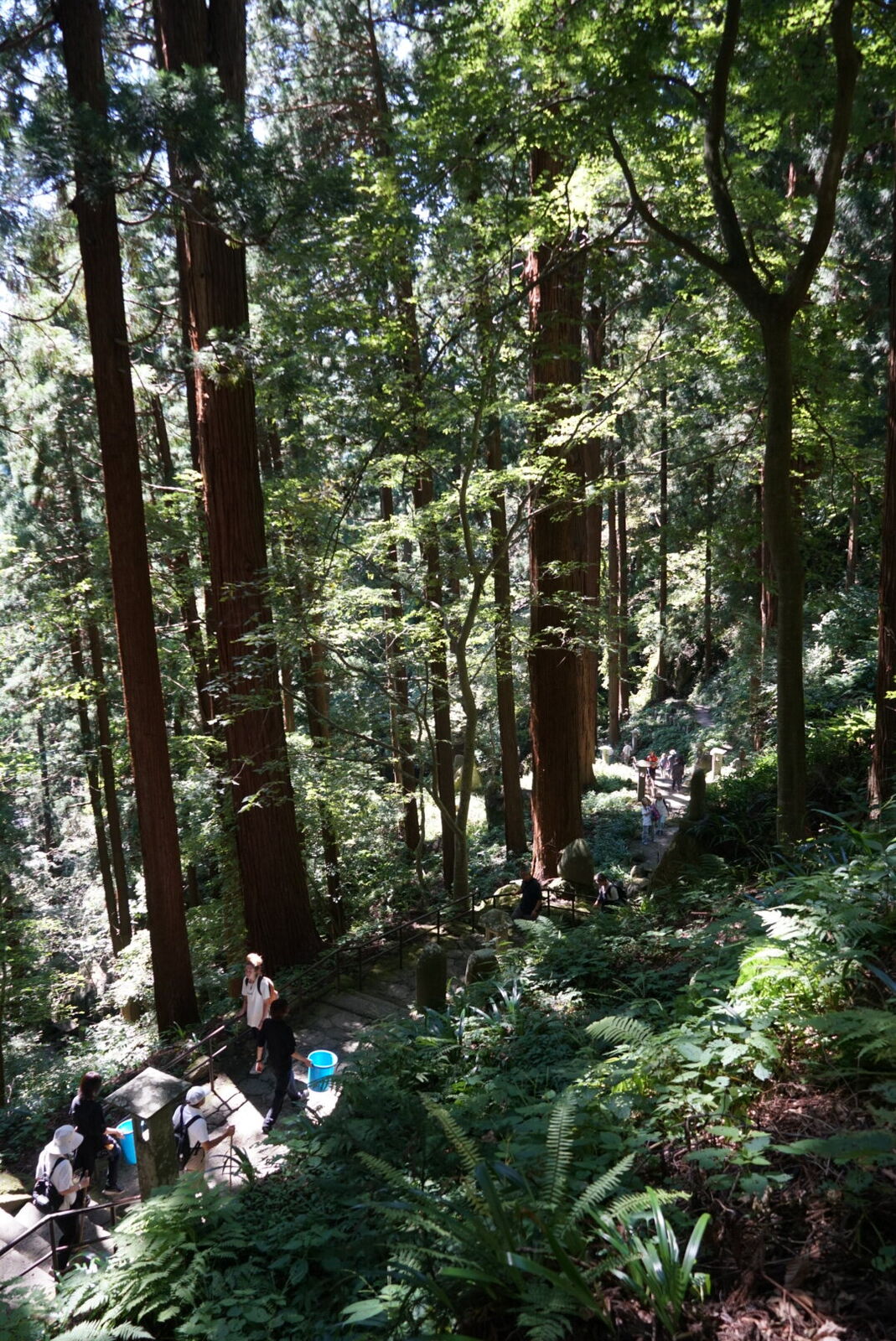
You enter through a gate and the town disappears. The path leads into a forest of towering Japanese cedars that block out most of the sky. Sunlight comes through in shafts, catching dust particles and giving the whole place a quiet, cathedral-like atmosphere. The stone steps under your feet have been worn smooth by centuries of pilgrims, monks, and visitors, and they wind upward through a landscape of sandstone cliffs and ancient trees.
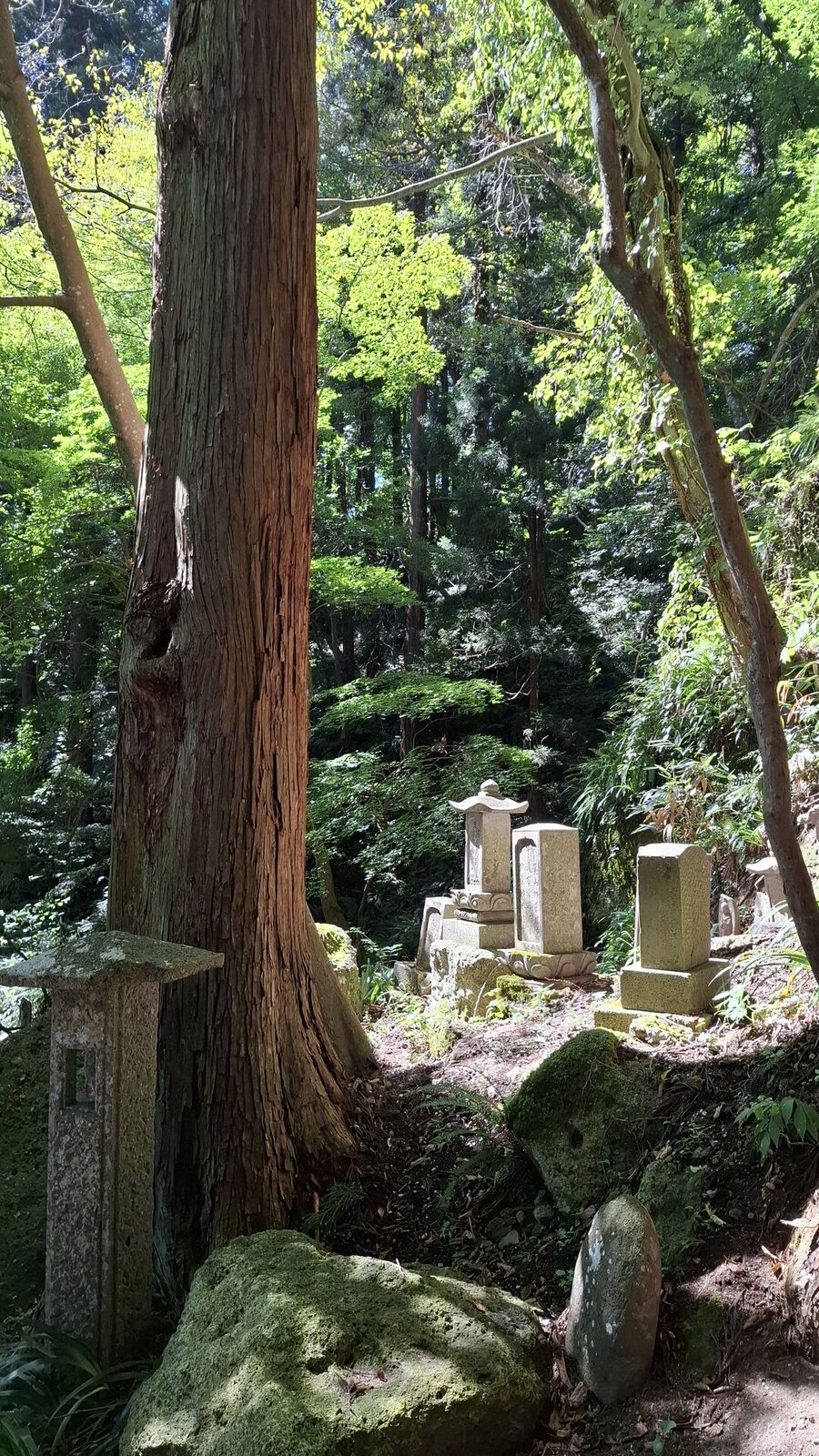
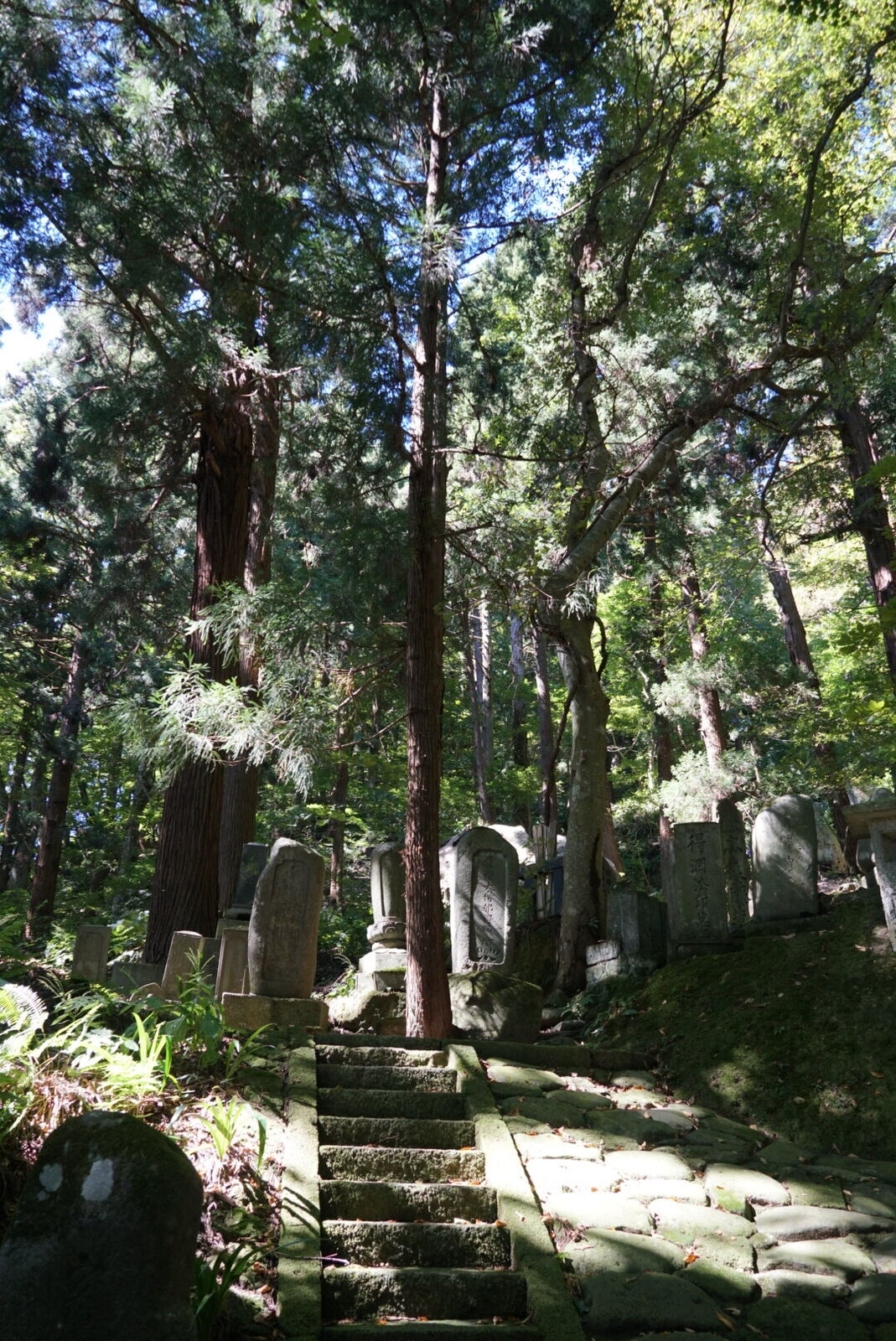
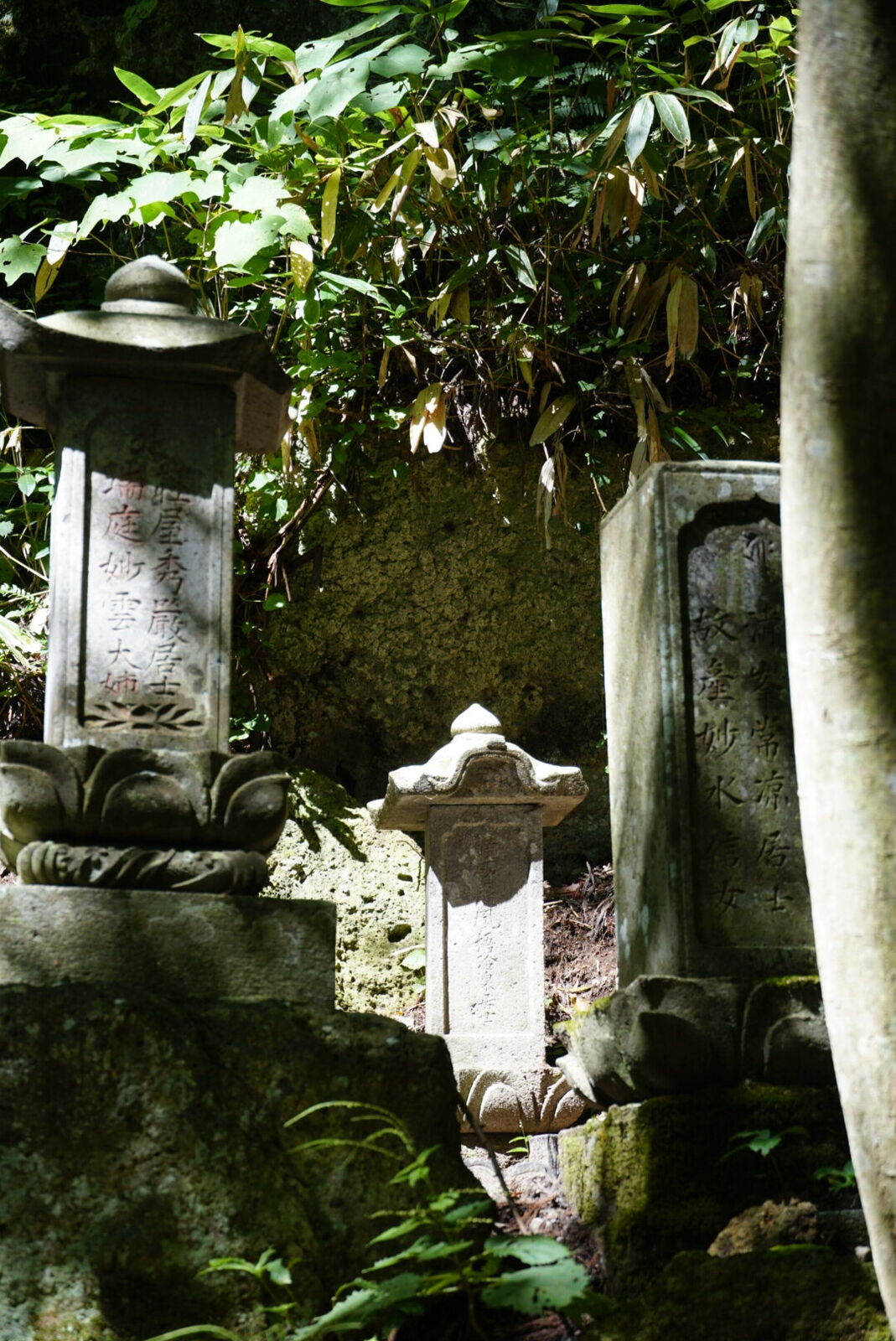
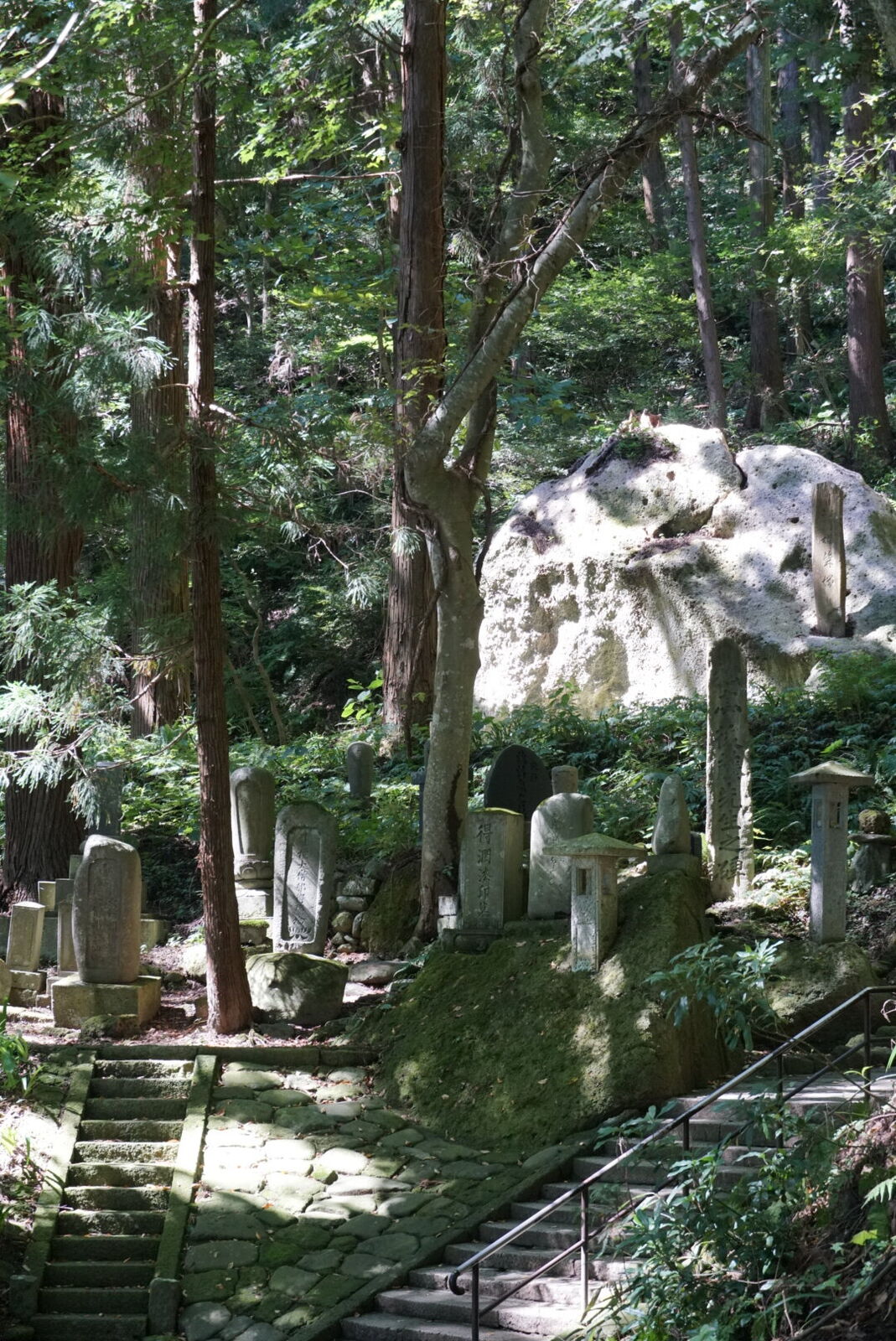
Both sides of the path are lined with stone memorials and burial markers of the monks and abbots who lived and practiced here over the centuries. Some are half-swallowed by moss and tree roots, inscribed with kanji that's been softening for hundreds of years. It's an interesting reminder of how many people have spent their lives in this place - Yamadera has been continuously active since it was founded in 860 AD, and these markers are the physical record of that long history of devotion.
The Yamabushi
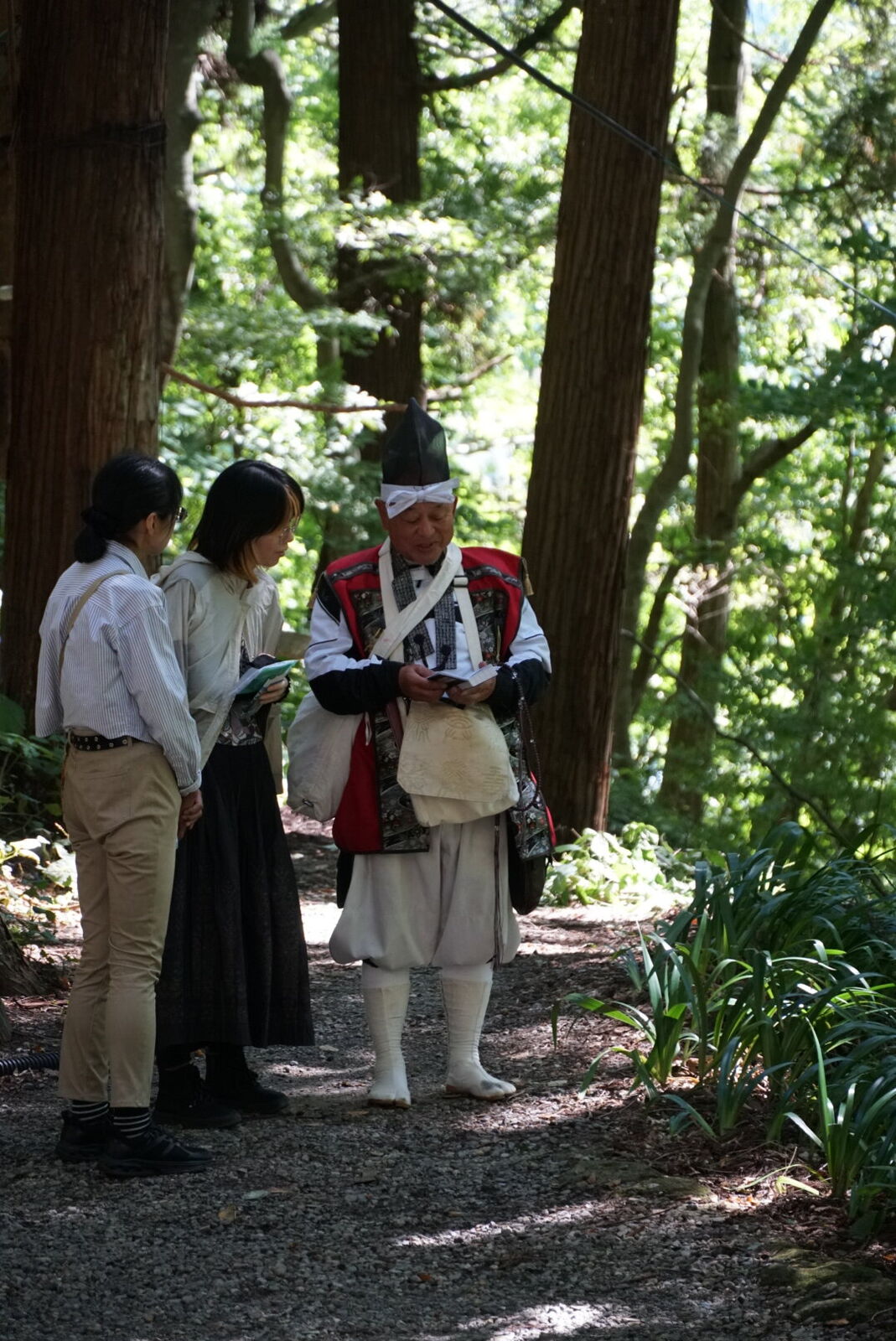
About halfway up, I passed a Yamabushi - a mountain ascetic in full traditional garb: white robes, a distinctive black hat, and the kind of presence that makes everyone on the path pause and look. He was standing with a Japanese couple, showing them something in a book, possibly acting as a temple guide. Encountering someone who represents the living tradition of mountain asceticism in the actual mountains where that tradition was practiced is a reminder that Yamadera isn't a museum. It's an active place of practice, and it has been for over a millennium.
The Path Up
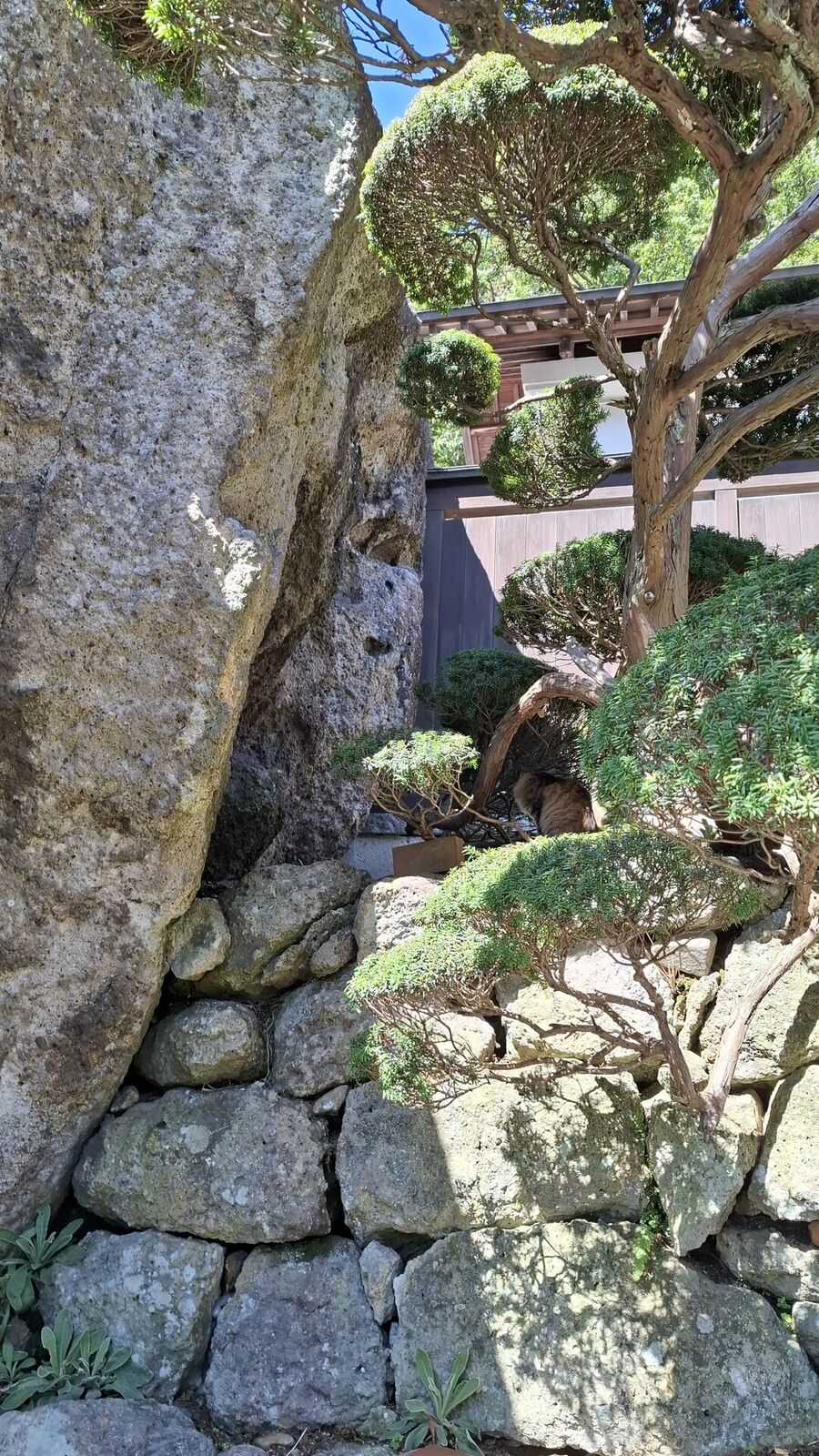
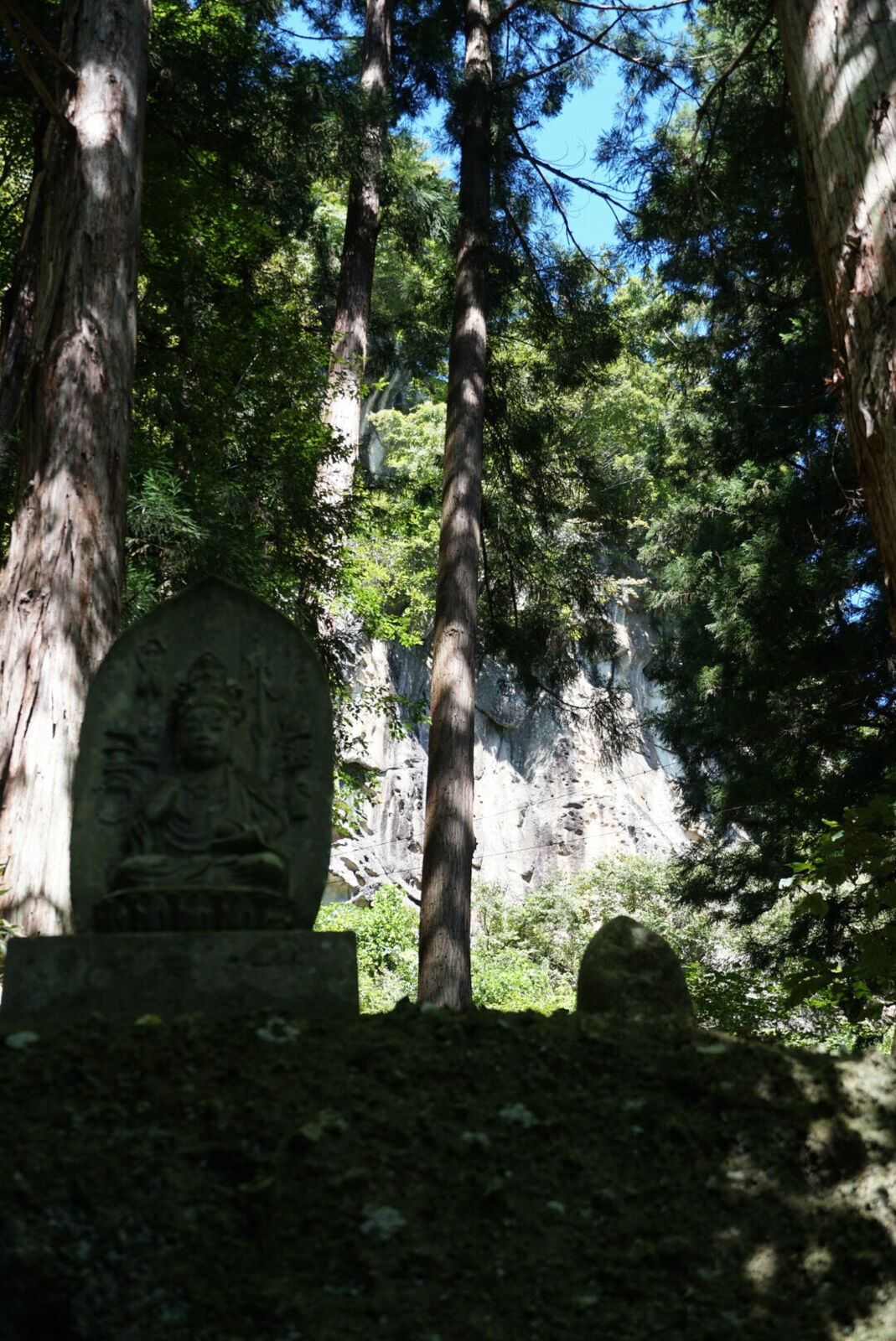
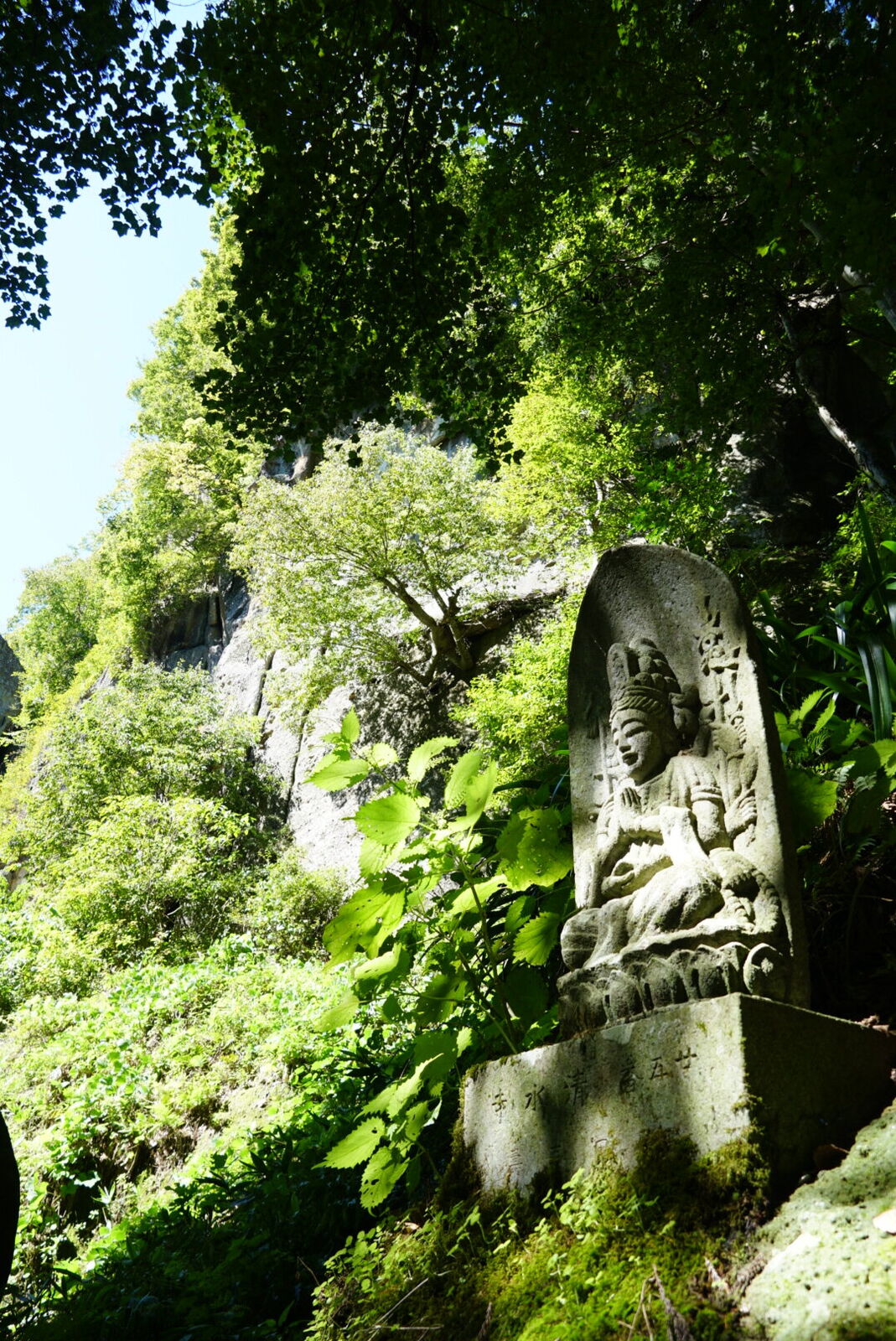
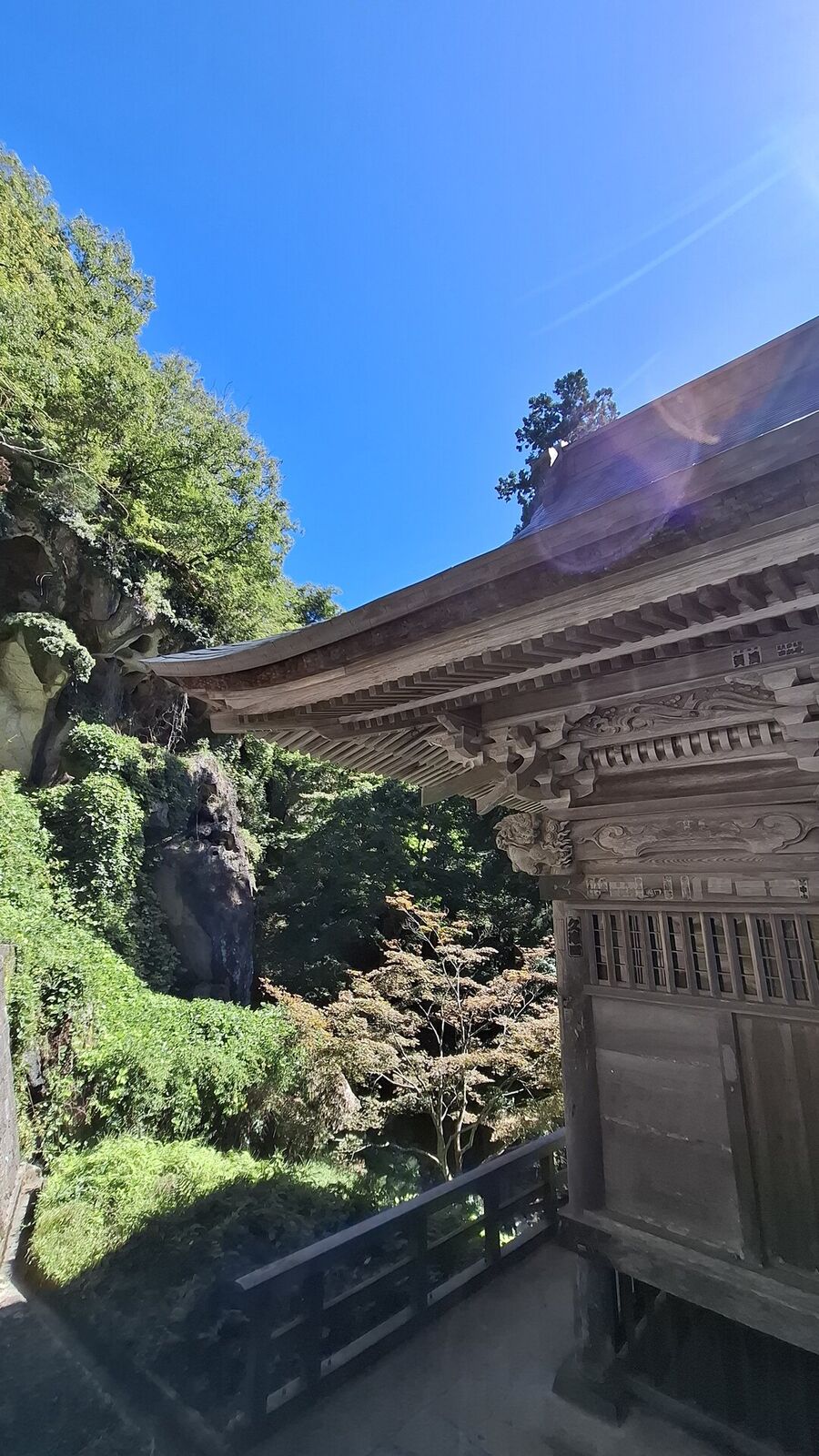
The steps get steeper as you go, and in late September it was warm enough to make you work for it. But the path is never boring. Every few minutes you pass another carved gate with intricate dragon and cloud motifs, another stone Buddha figure emerging from the sandstone cliff, another impossibly old cedar with a trunk as thick as a car. The temple reveals itself in stages, and there's always something worth stopping for.
It was a social climb, too. Tourists, Japanese families, elderly hikers with walking sticks, a school group in matching hats - everyone moving at roughly the same pace, sharing the same experience. There are warning signs at the bottom advising people with heart conditions to reconsider, and they're not being dramatic. In midsummer at 35 degrees this would be genuinely tough. But at the end of September it was manageable, and the variety of people on the path made it feel more like a shared pilgrimage than a solo hike.
The Top
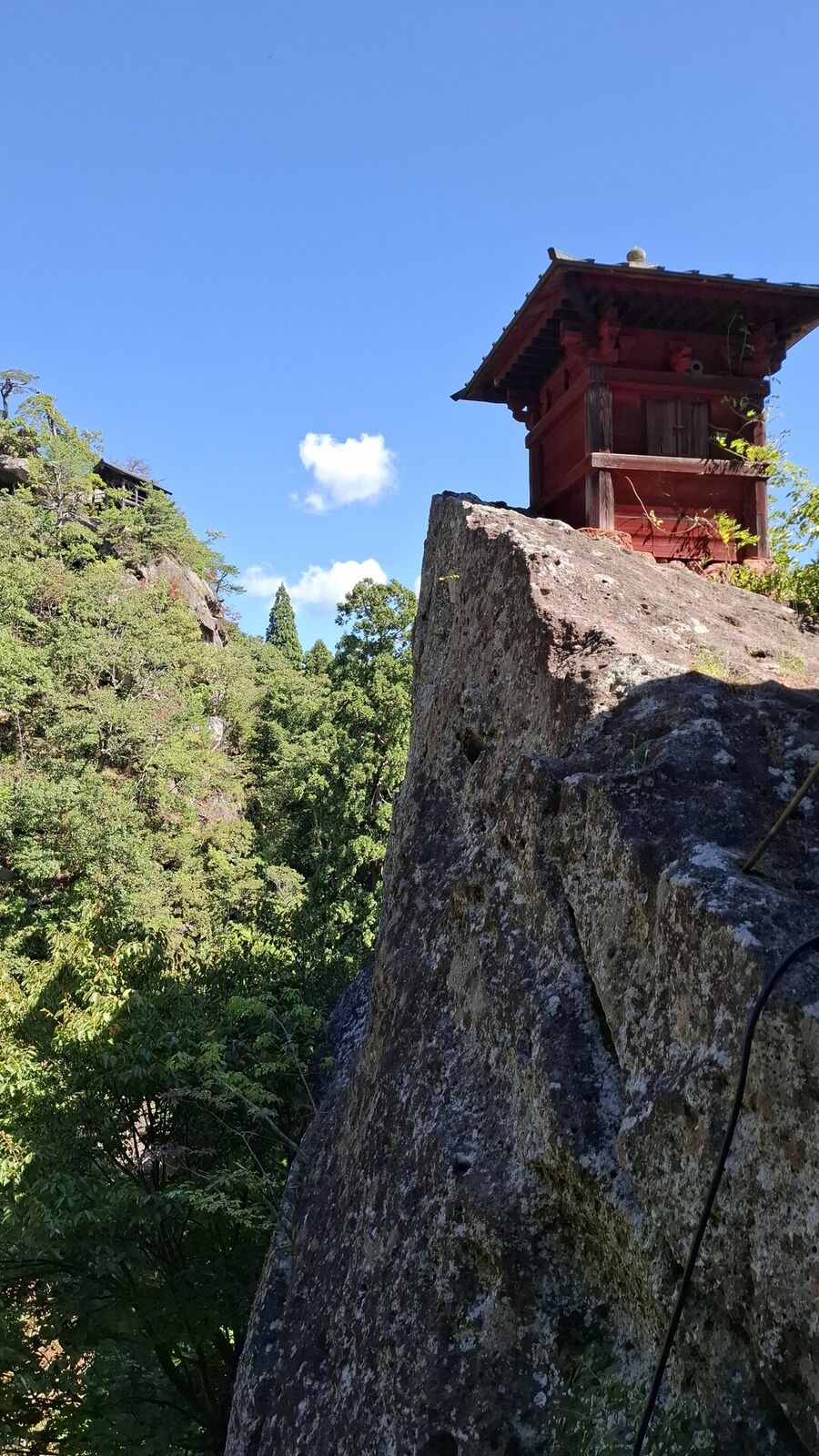
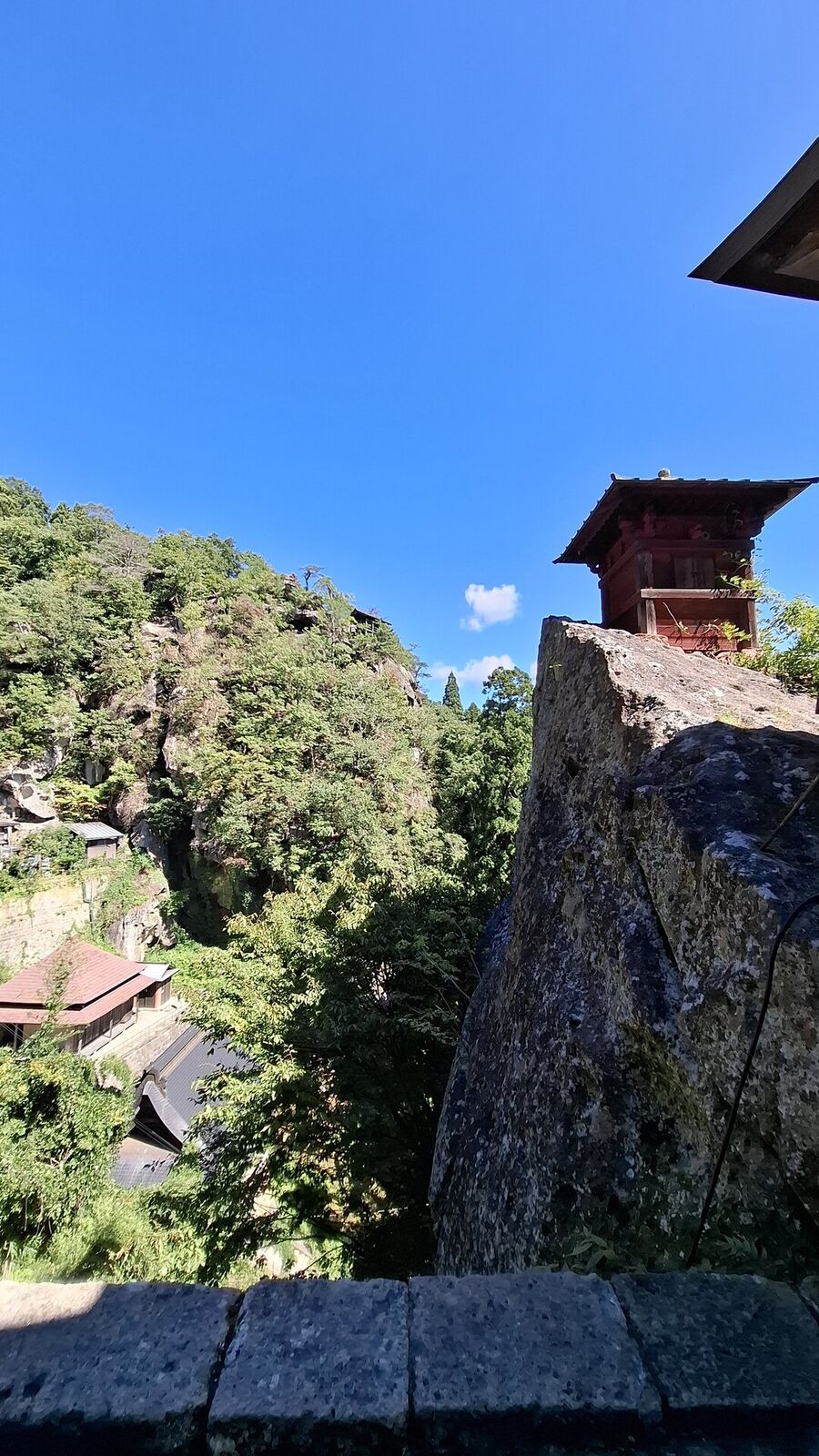
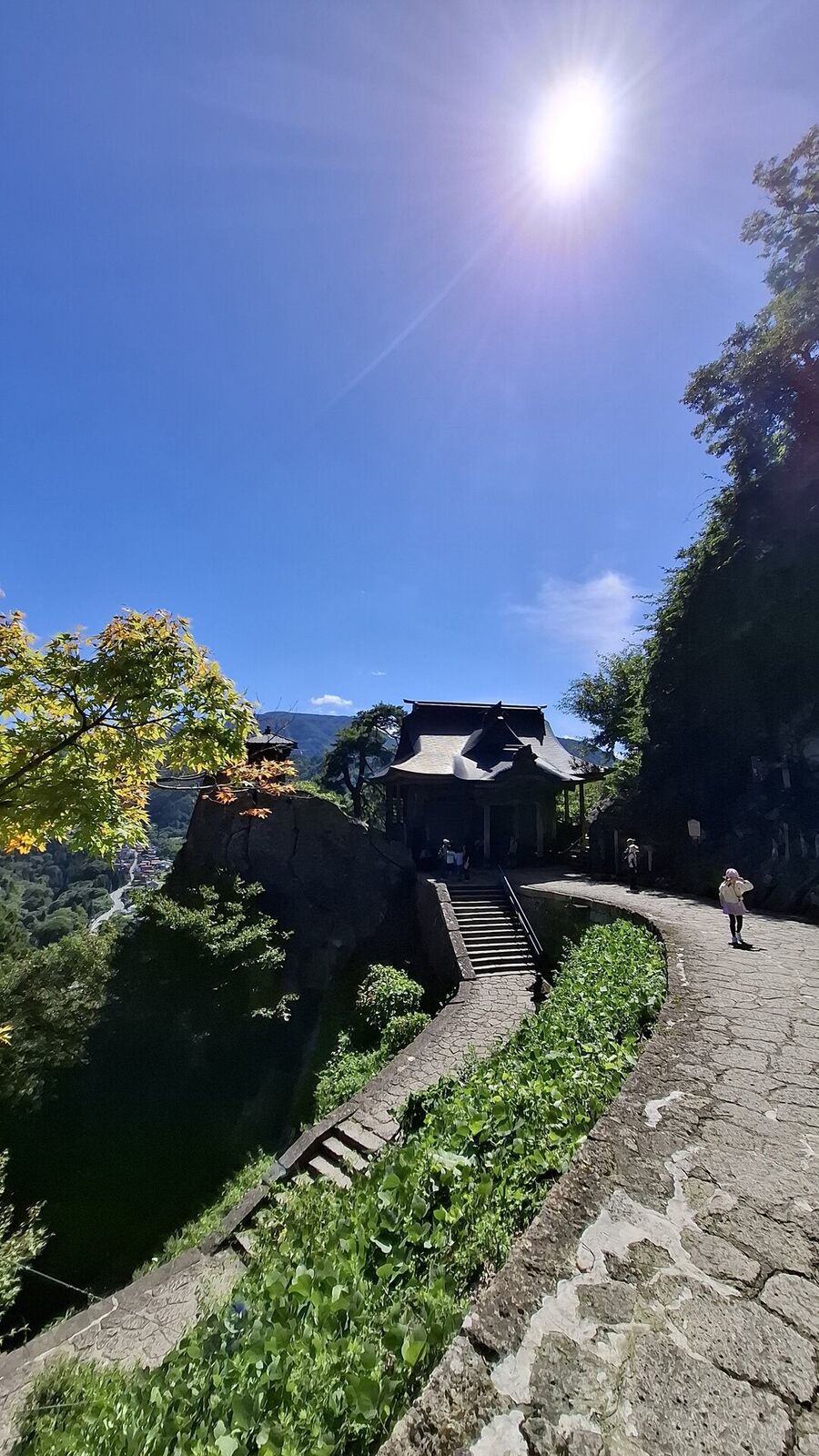
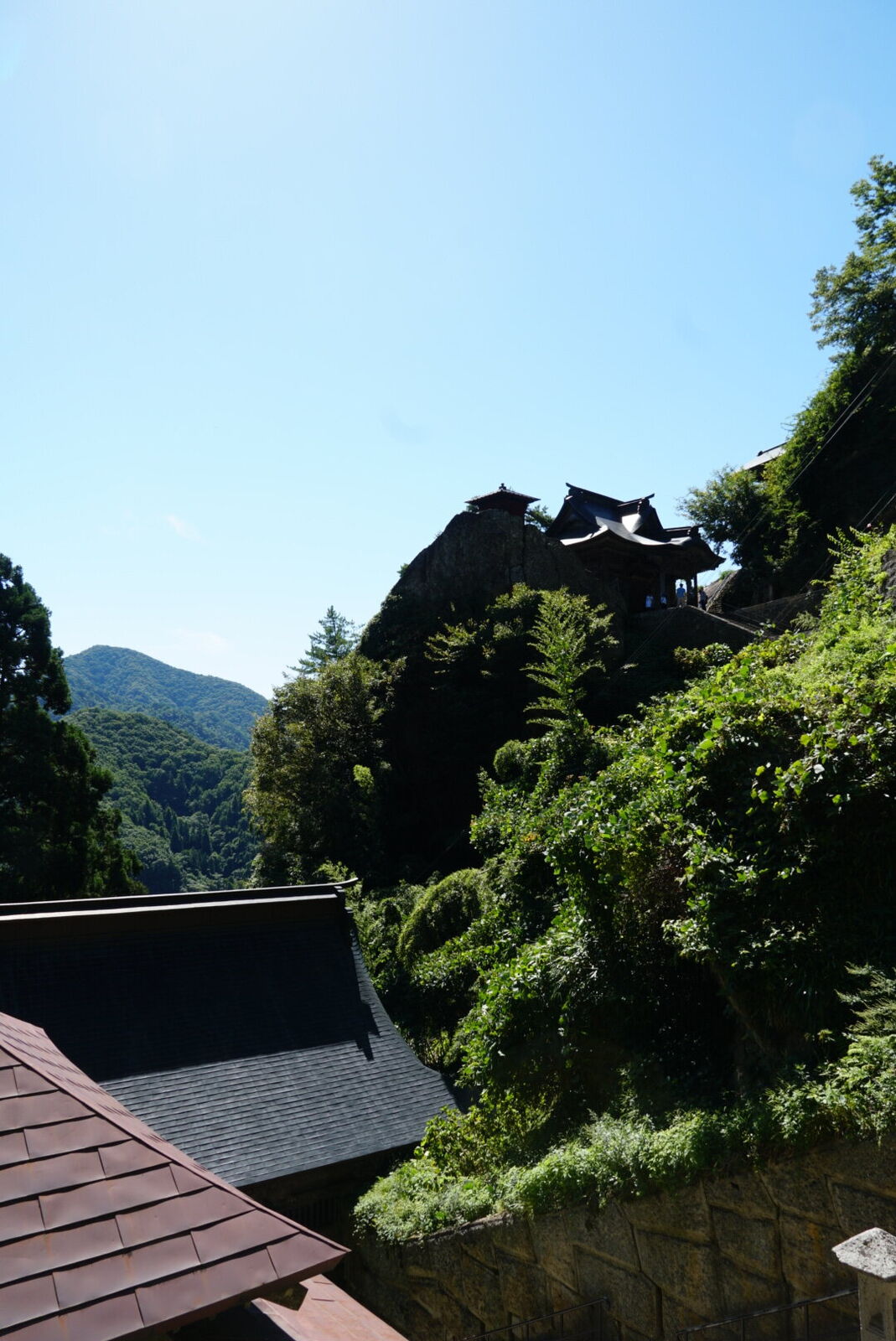
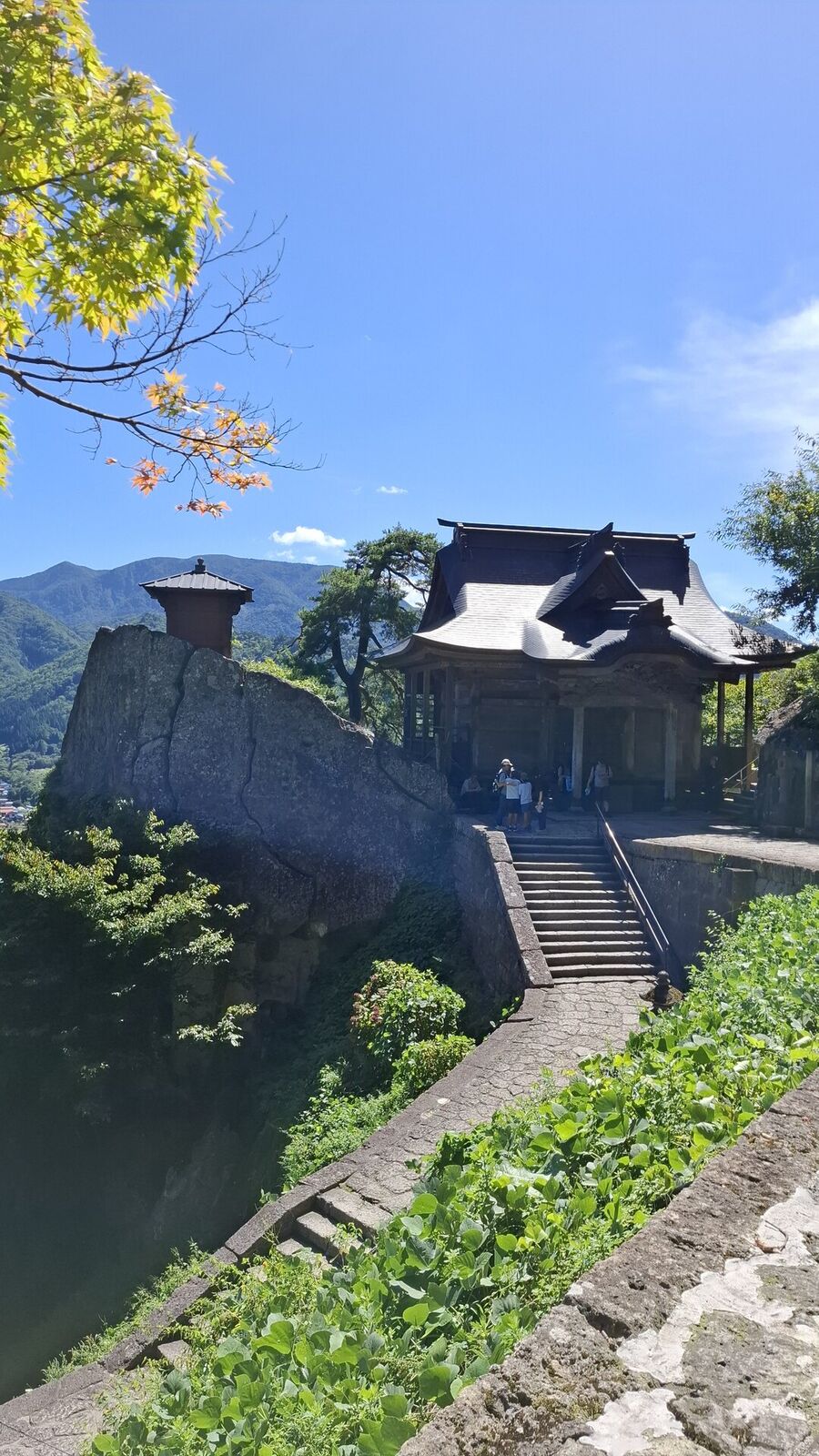
When the forest opens up and the first temple buildings appear on the cliff edge, the character of the place changes completely. The Nokyodo - a small red-painted hall perched on top of a massive rock outcrop - is one of the most striking sights on the mountain. It looks like someone placed a shrine on a boulder and the boulder simply agreed to hold it. Below and around it, more temple buildings cling to the rock face on narrow ledges, wooden structures anchored to sandstone in ways that seem both precarious and permanent.
The Godaido viewpoint is where everyone ends up. You step out onto a wooden platform and the entire valley opens up below you. Green mountains layered to the horizon, the town of Yamadera reduced to toy-sized buildings with its main street clearly visible far below, and on the clear day I visited, a view that stretched further than you'd expect from a place that felt so enclosed on the way up. There were stone Buddha figures up here too, carved into the rock or sitting on ledges, weathered by centuries of mountain weather but still serene.
The Town Below
Down at the base, the small town of Yamadera has a pleasant street with restaurants and cafes where you can sit and look back up at what you just climbed. There are also several smaller shrines and temples at the base of the mountain that are worth visiting - the area around Yamadera has more to offer than just the main climb. I liked the contrast: the steep, demanding ascent through ancient forest, followed by a quiet village street where you can have soba noodles and watch other visitors head up the same path you just came down.
Practical Info
Location: Yamagata Prefecture, Tohoku. The temple's formal name is Risshaku-ji (立石寺), designated as a National Historic Site. View on Google Maps
Access: By car: easy to reach, parking available at the base. By train: JR Yamadera Station is a short walk from the trailhead - one of the most convenient temple accesses in Tohoku.
Cost: 300 yen entrance fee for the mountain path.
The climb: 1,015 stone steps. Allow 30-45 minutes up, 20-30 minutes down. No elevator, no shortcut. Warning signs at the base advise people with heart conditions to reconsider.
What to bring: Water (there are vending machines at the top and bottom but not on the path), a towel, comfortable shoes with grip. In summer, sun protection and pace yourself.
Campervan tip: Multiple Michi-no-Eki options in the Yamagata area. The town at the base has parking lots that work fine for a day visit.
Best time: Autumn (October/November) for foliage. Spring for cherry blossoms. Summer is hot - start early. Late September is warm but manageable. Winter adds snow but the path can be icy and closed.