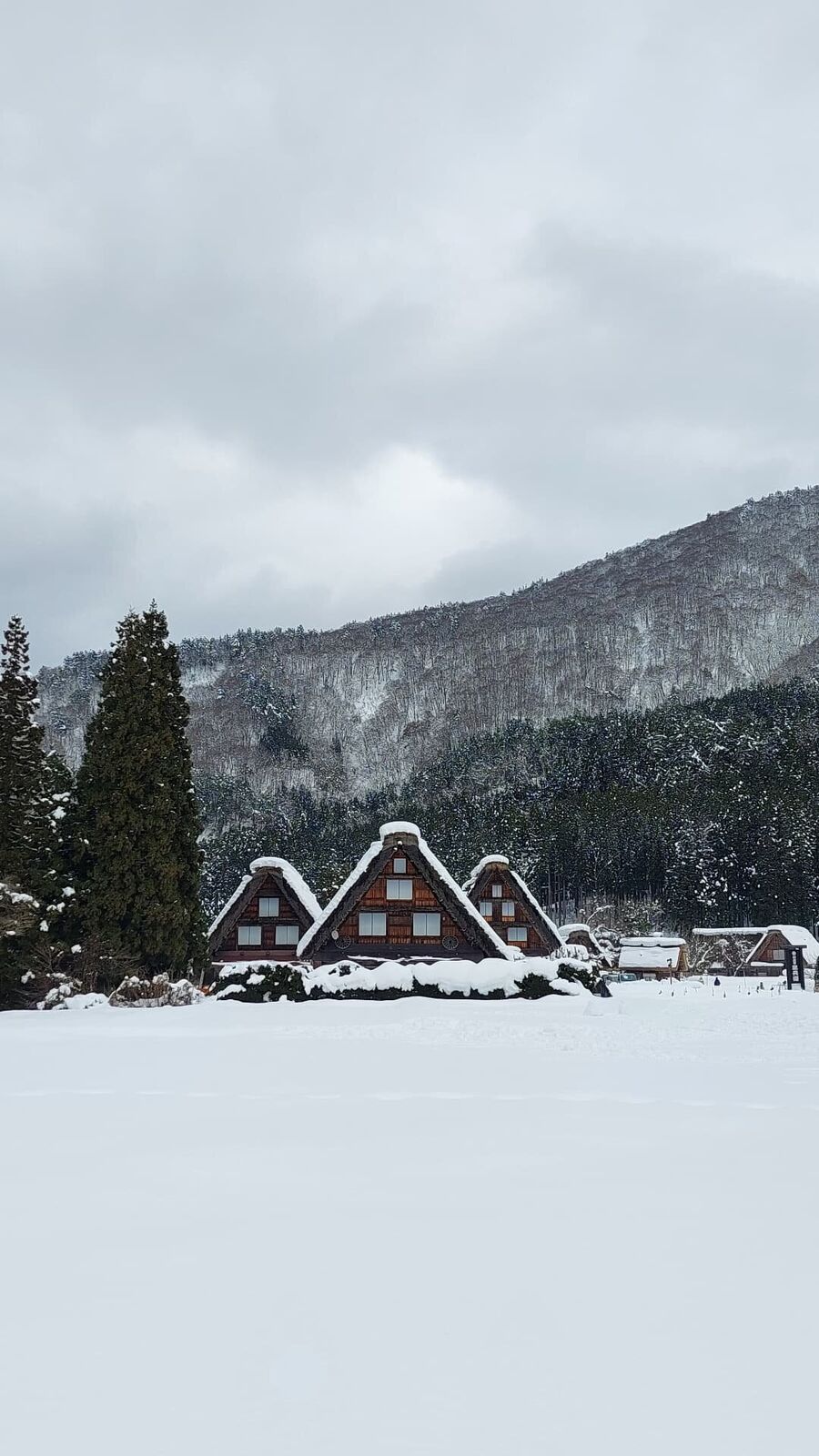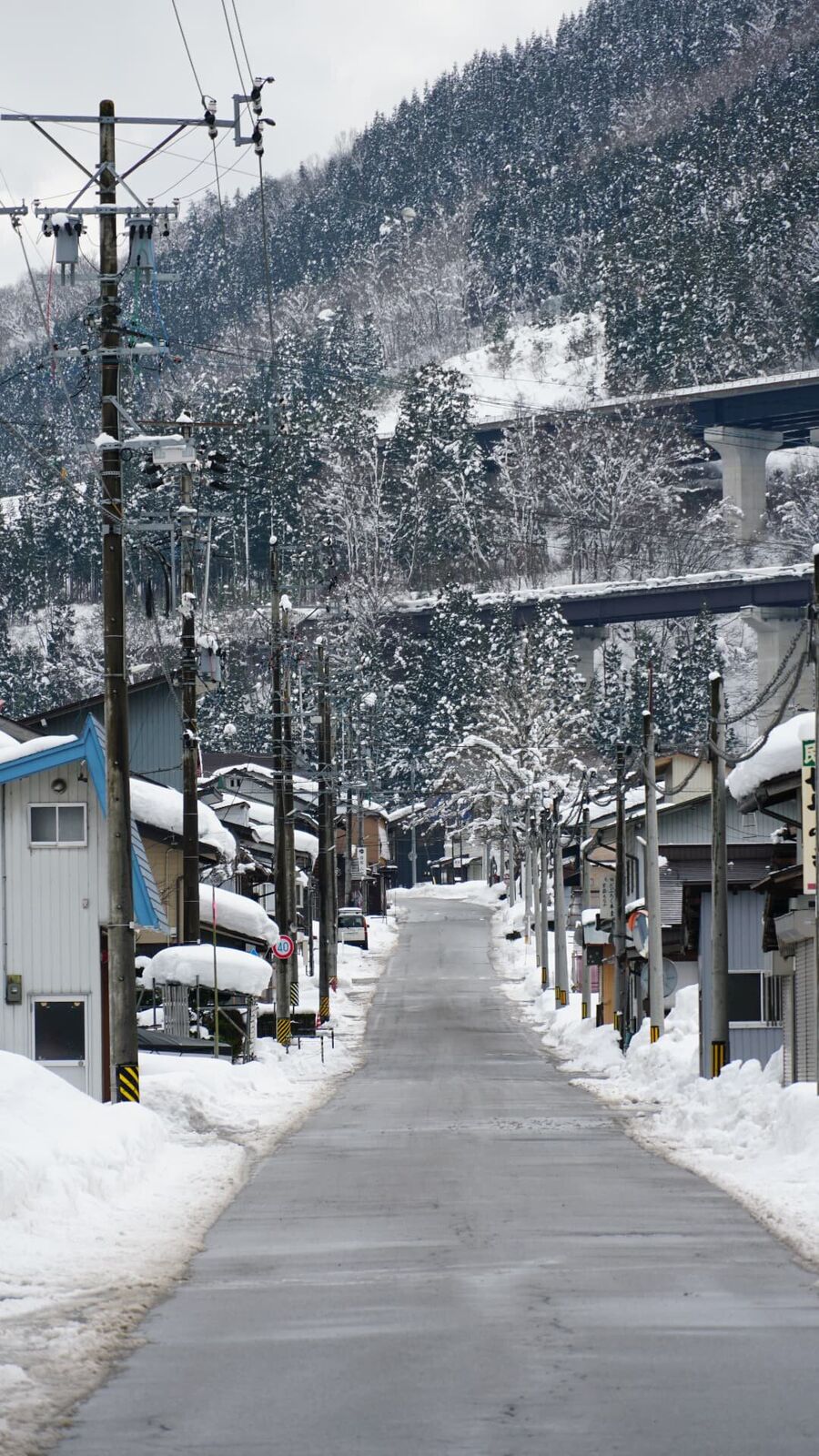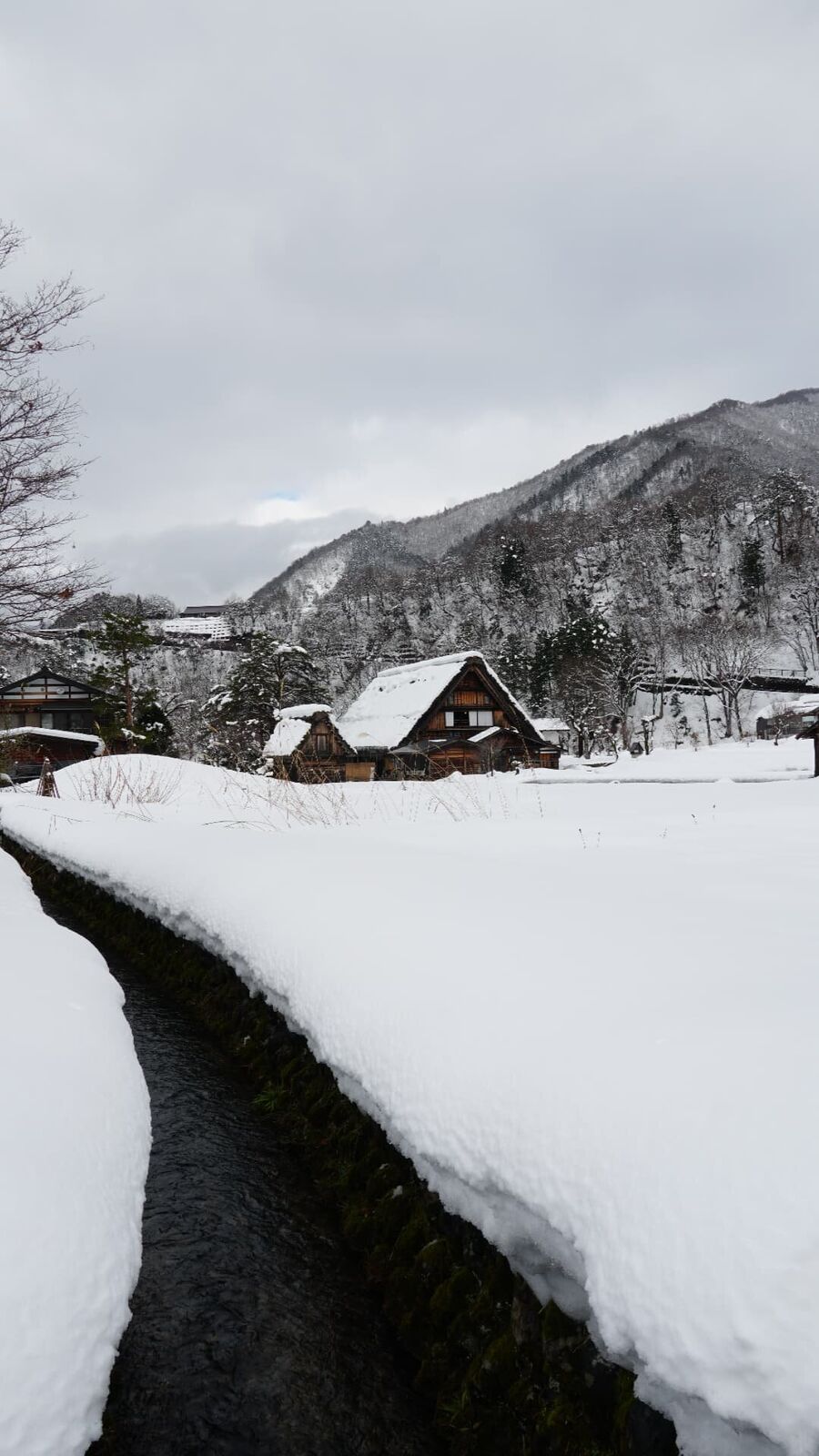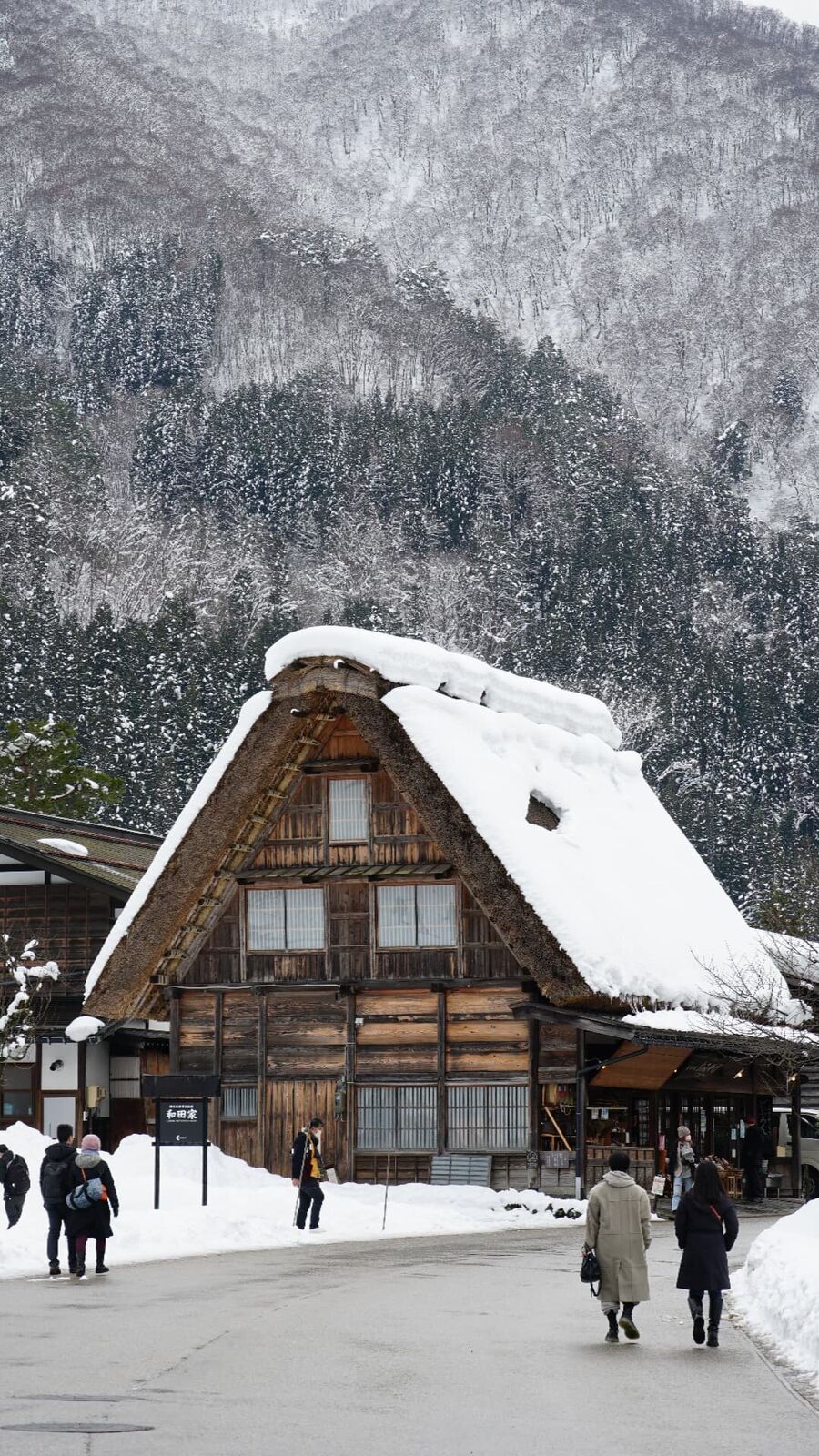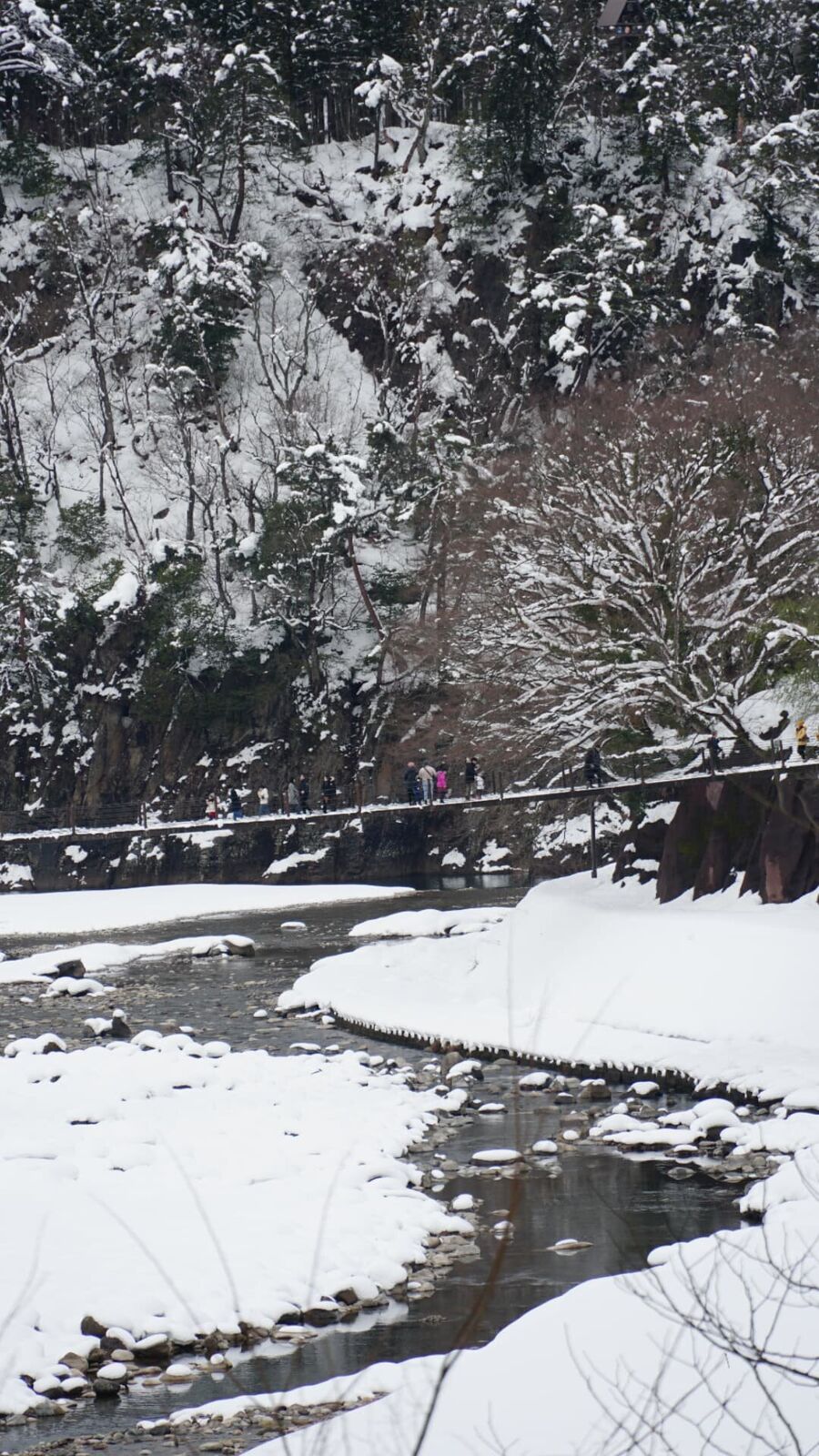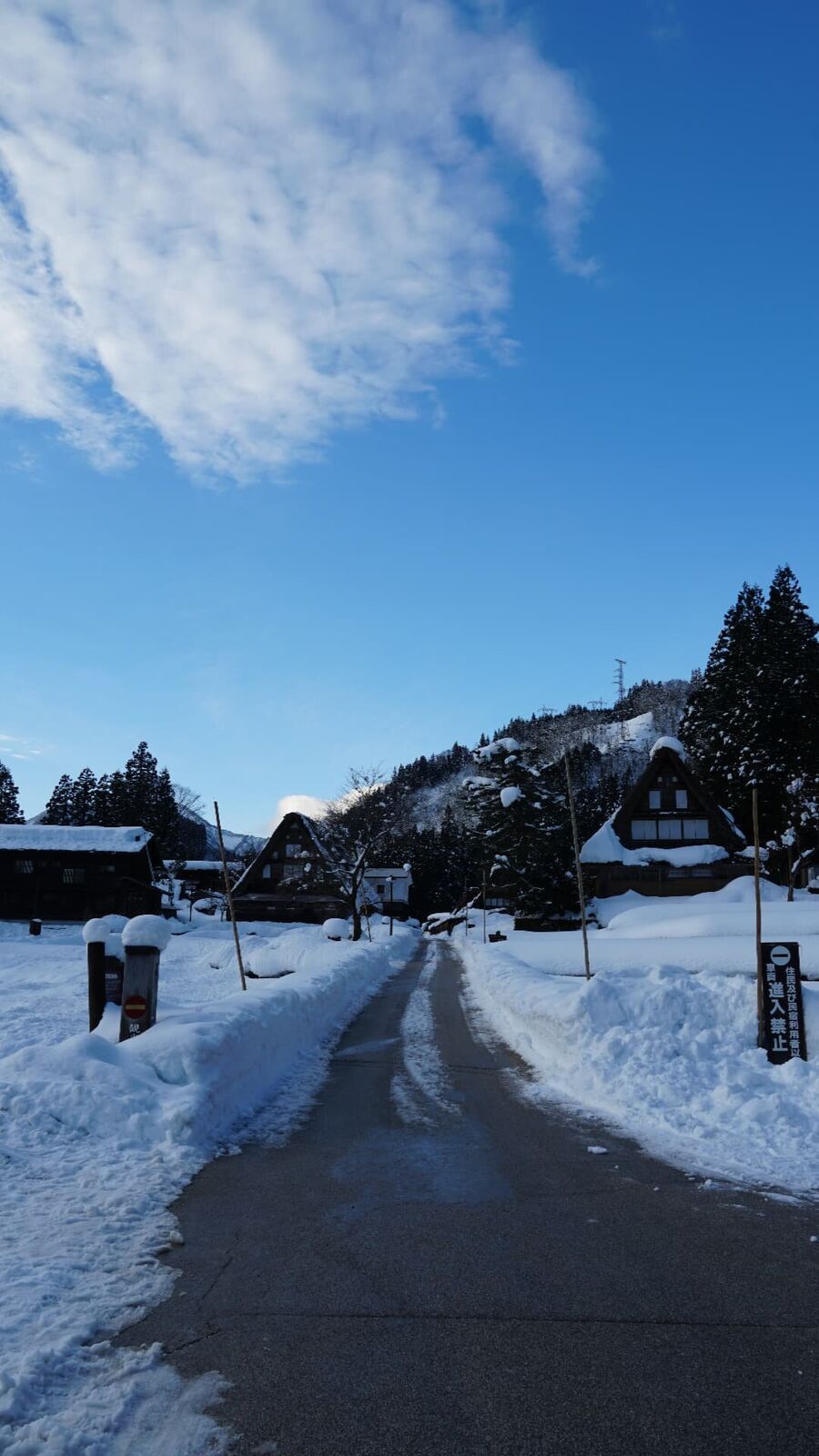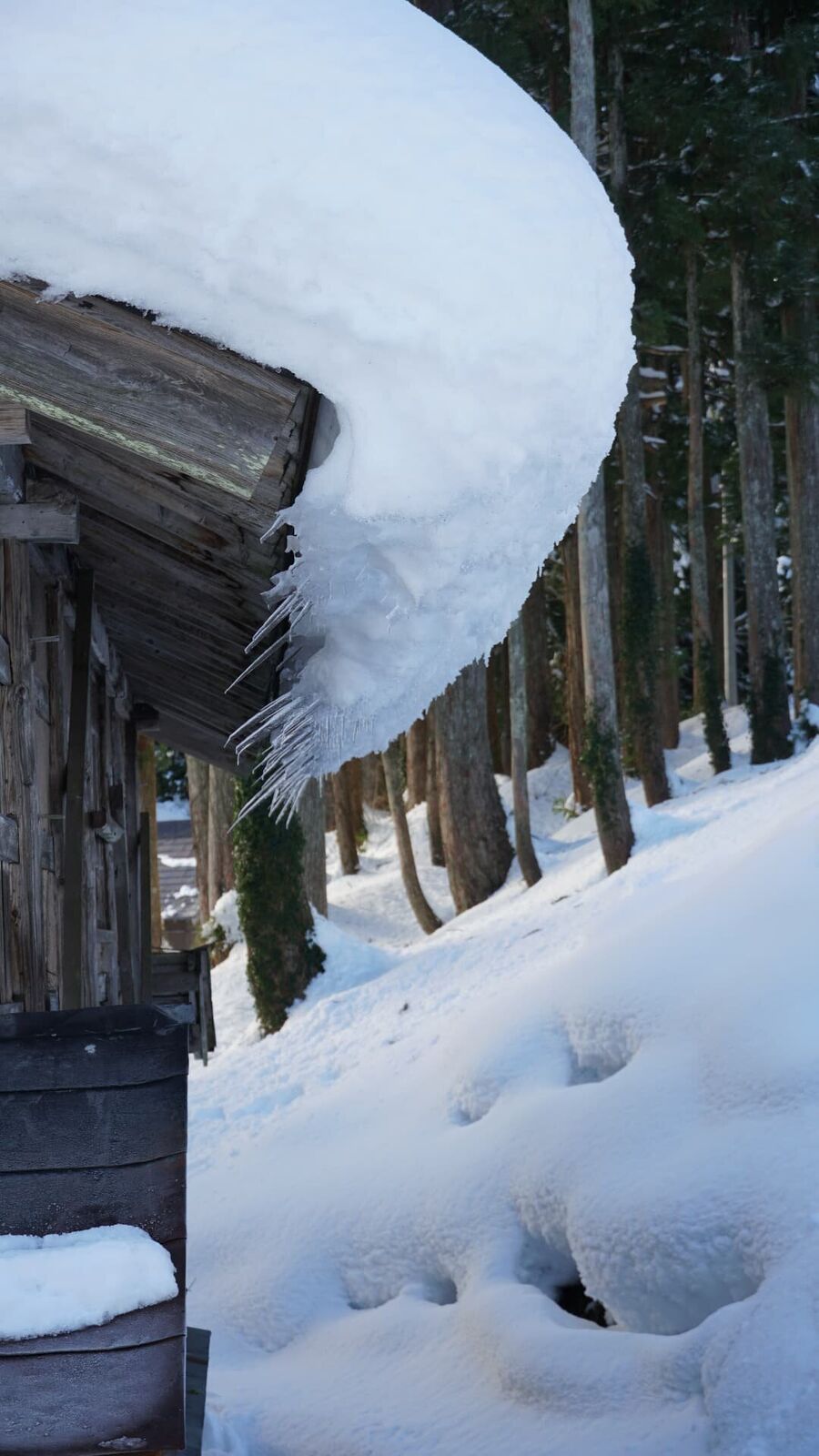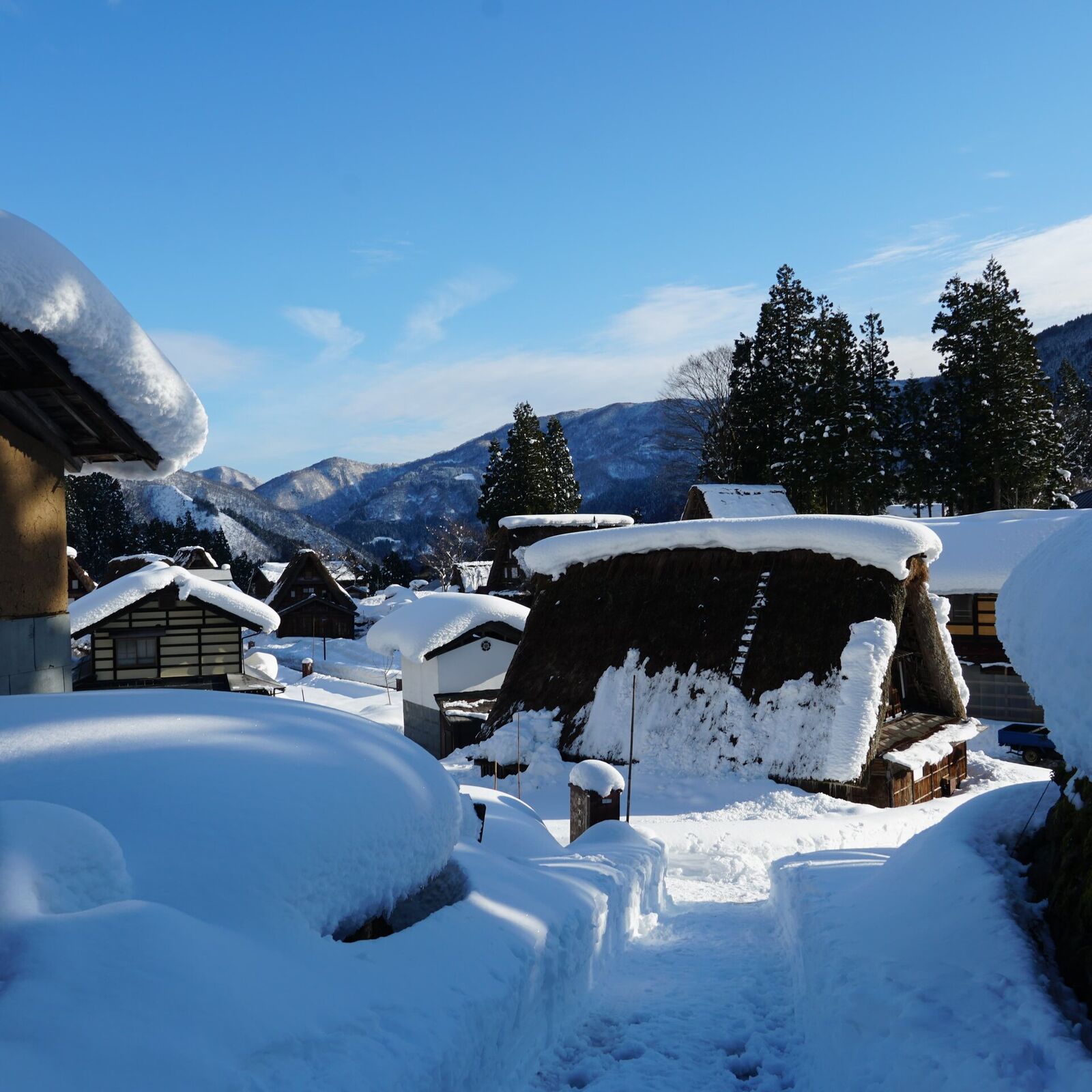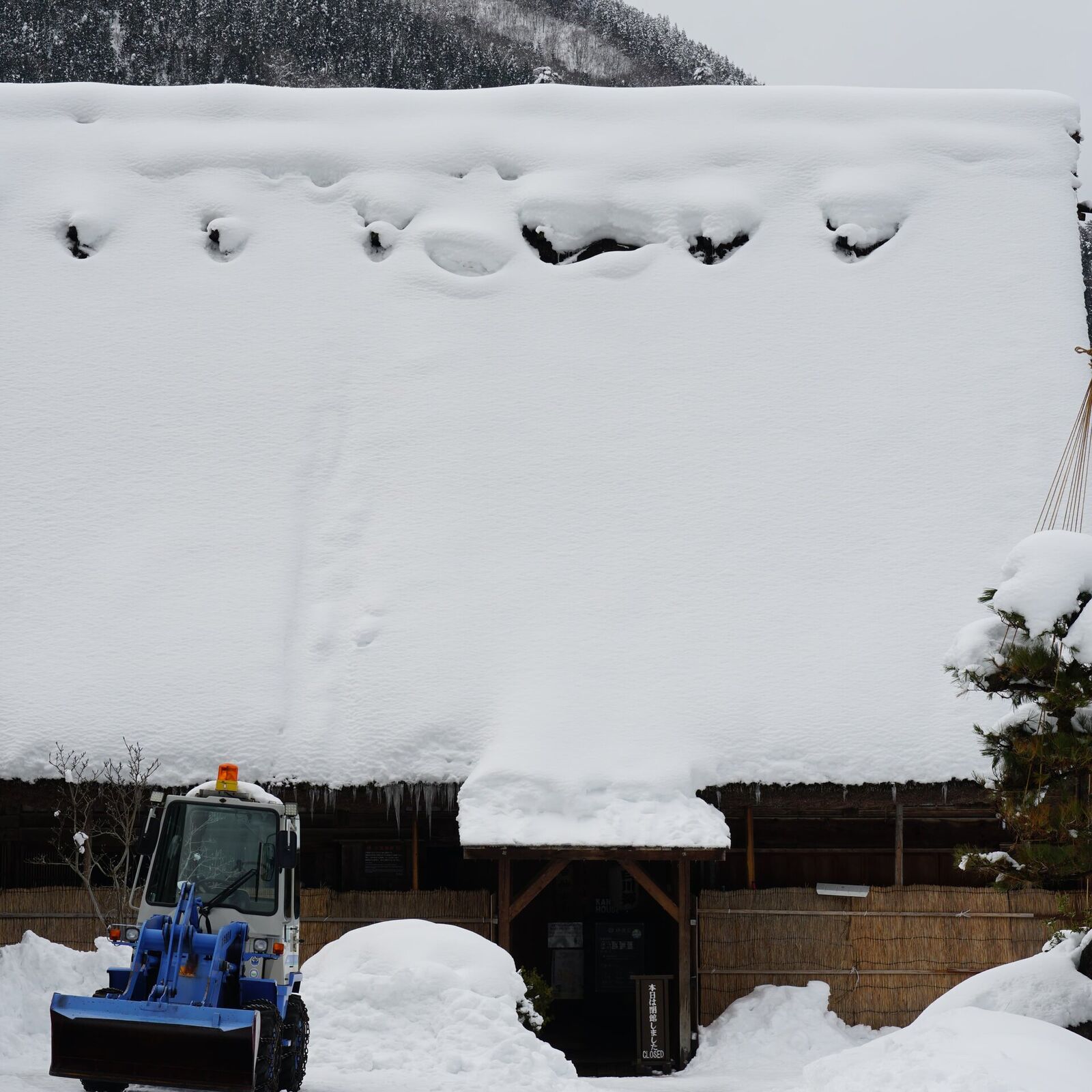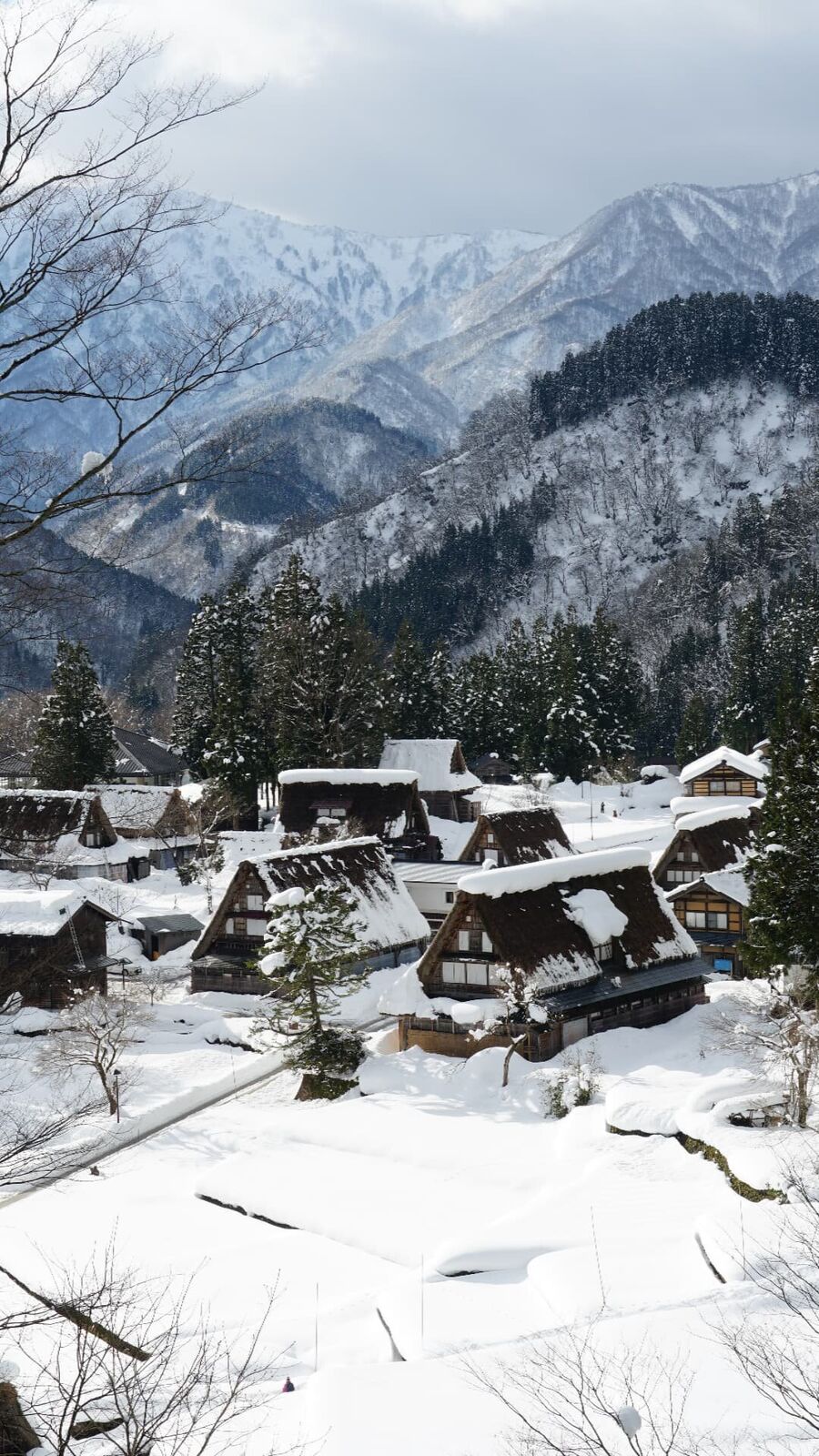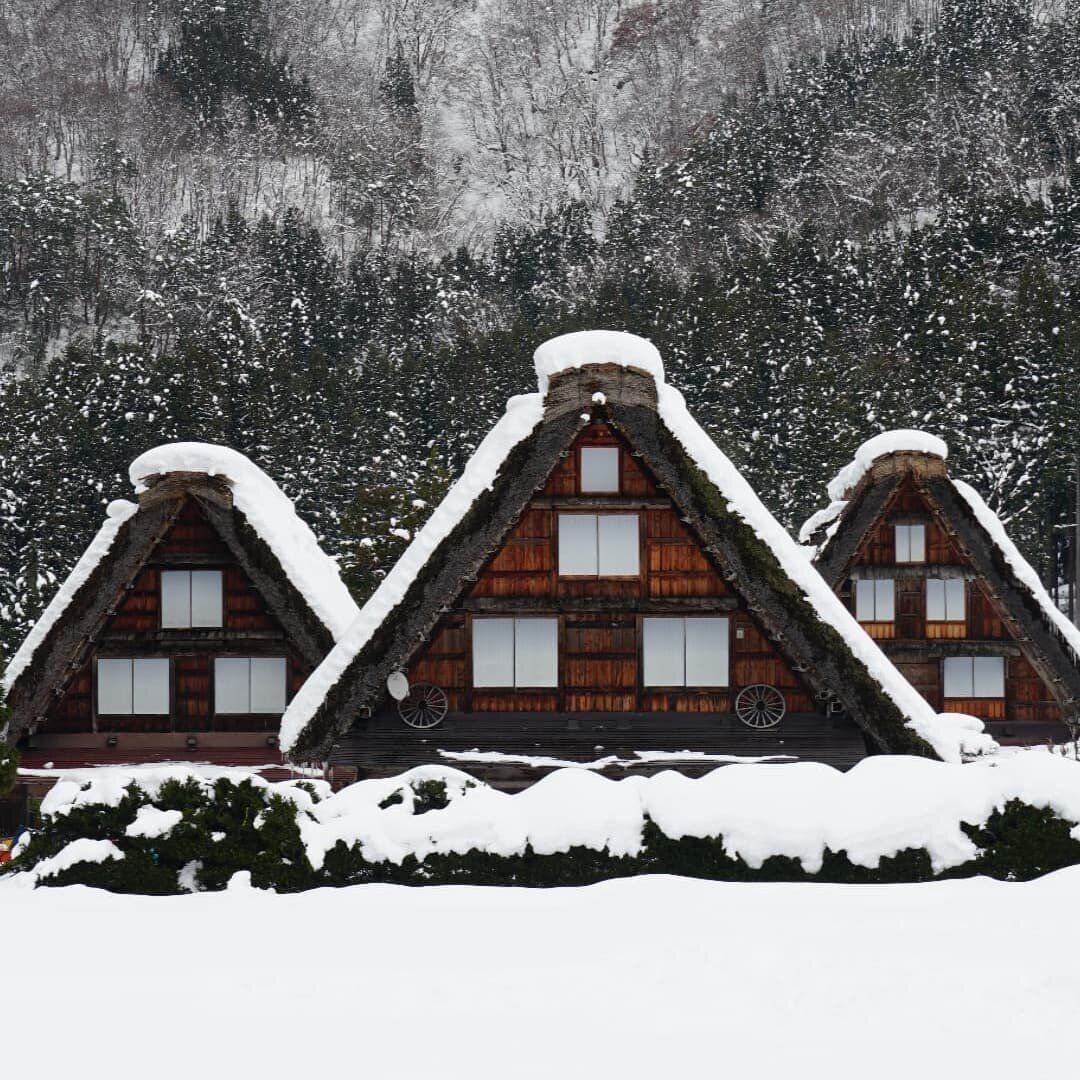
If summer rain makes Shirakawa-go beautiful, winter snow makes it magical. The amount of snow that falls here is hard to comprehend if you've only ever seen a German winter. We're talking meters, not centimeters. The roofs disappear under thick white blankets, the village paths become narrow corridors between walls of snow, and the whole valley transforms into something that looks like a Christmas postcard from another dimension.
Buried Alive
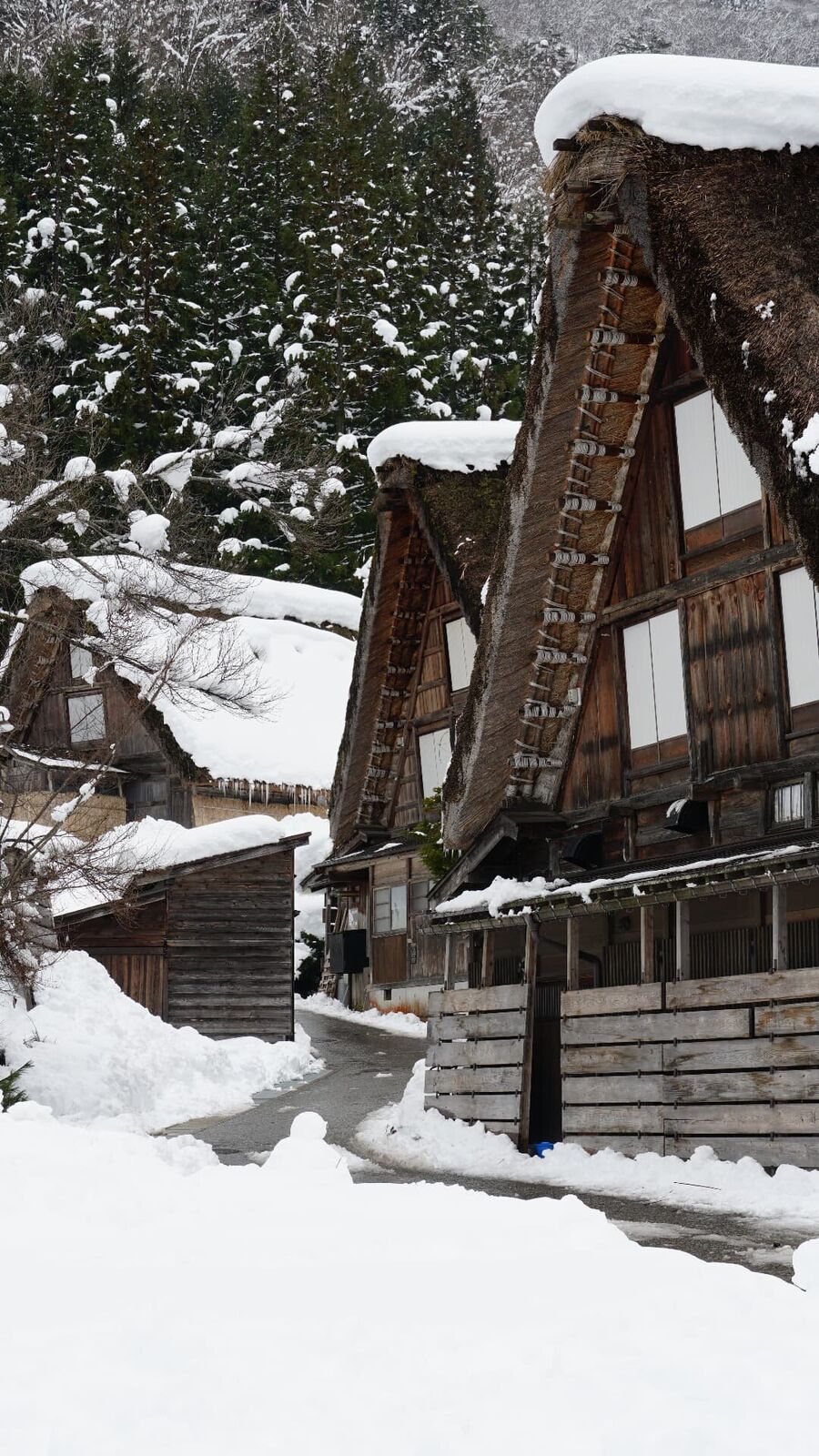
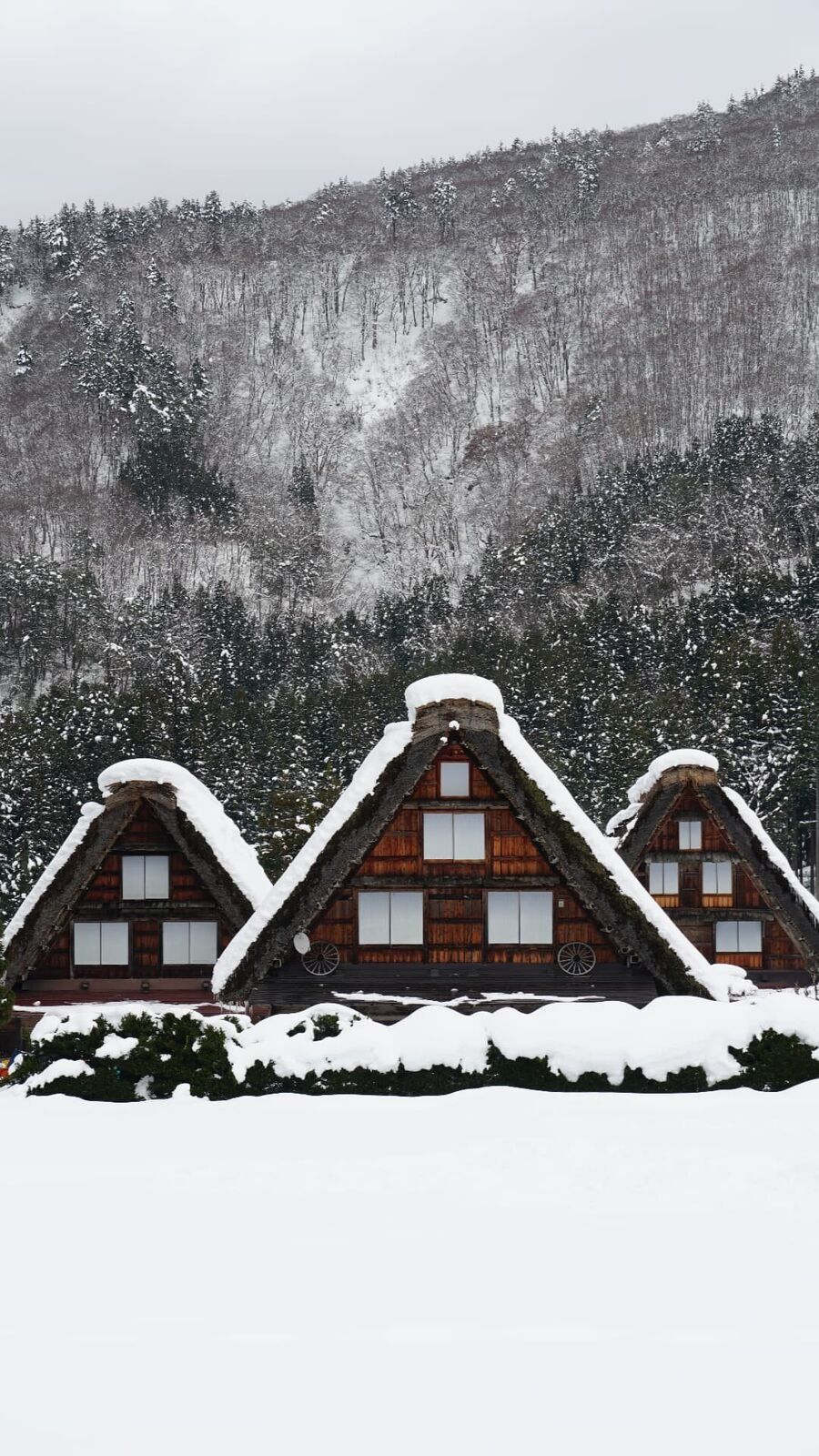
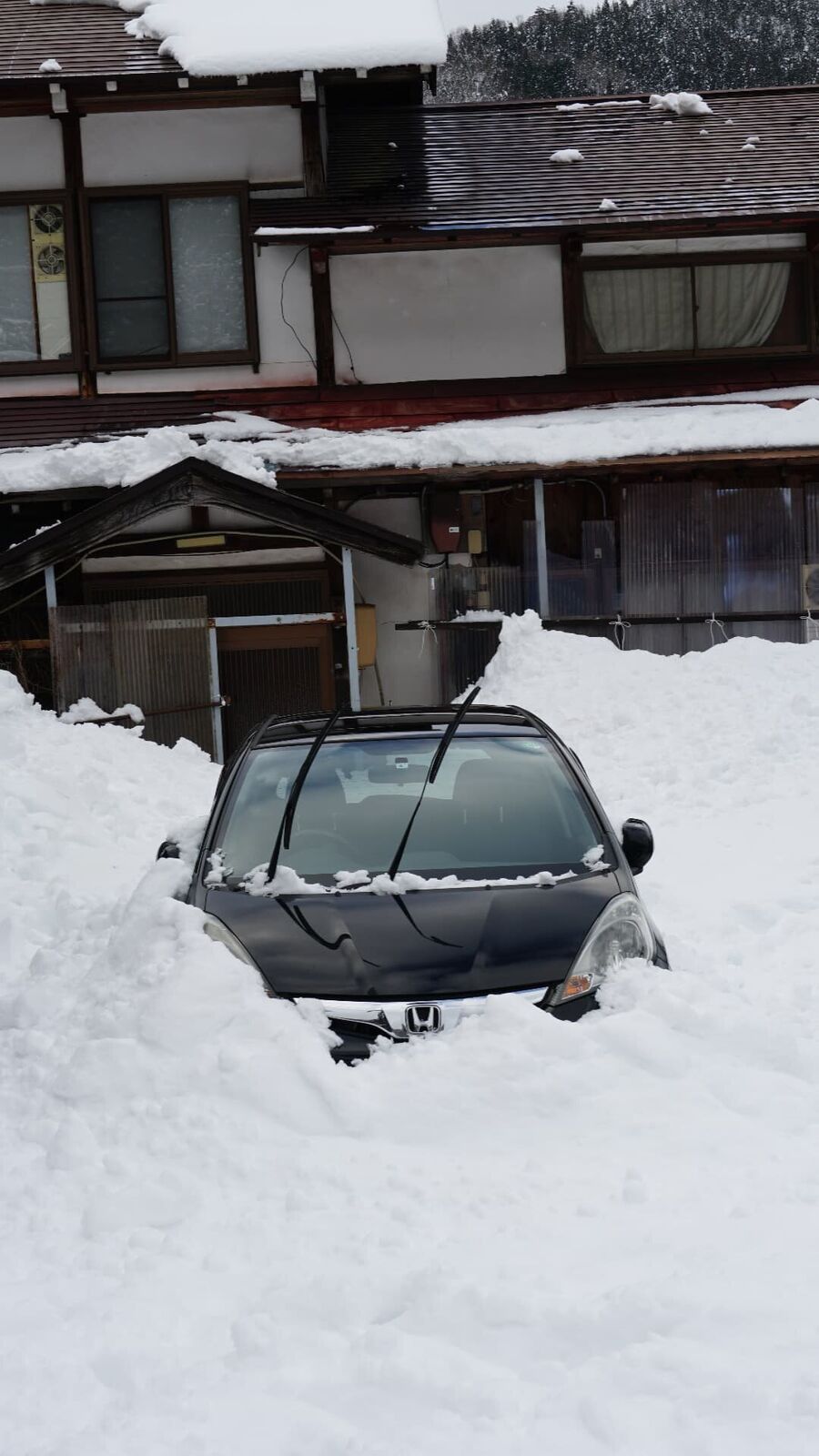
When I arrived in late December, the village was already buried. Cars parked along the streets had disappeared under snow drifts, only their windshields peeking out like submarine periscopes. The Gassho houses, designed over centuries to handle exactly this, stood unbothered. Their steep prayer-hands roofs shed the snow in controlled avalanches, and the dark aged wood seemed to absorb the white around it, creating this stark contrast that makes every photo look like it was shot in black and white with one warm channel left in.
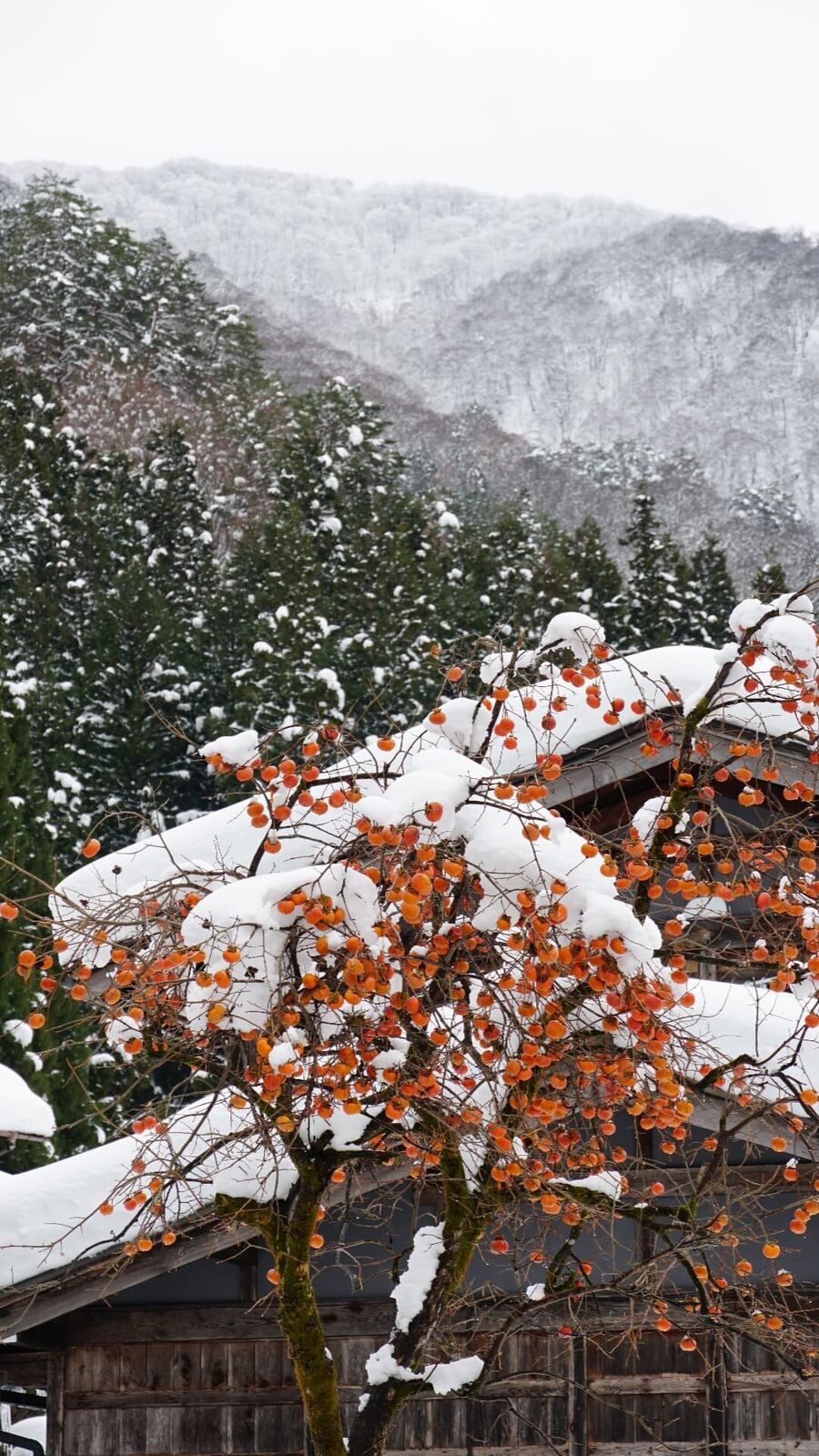
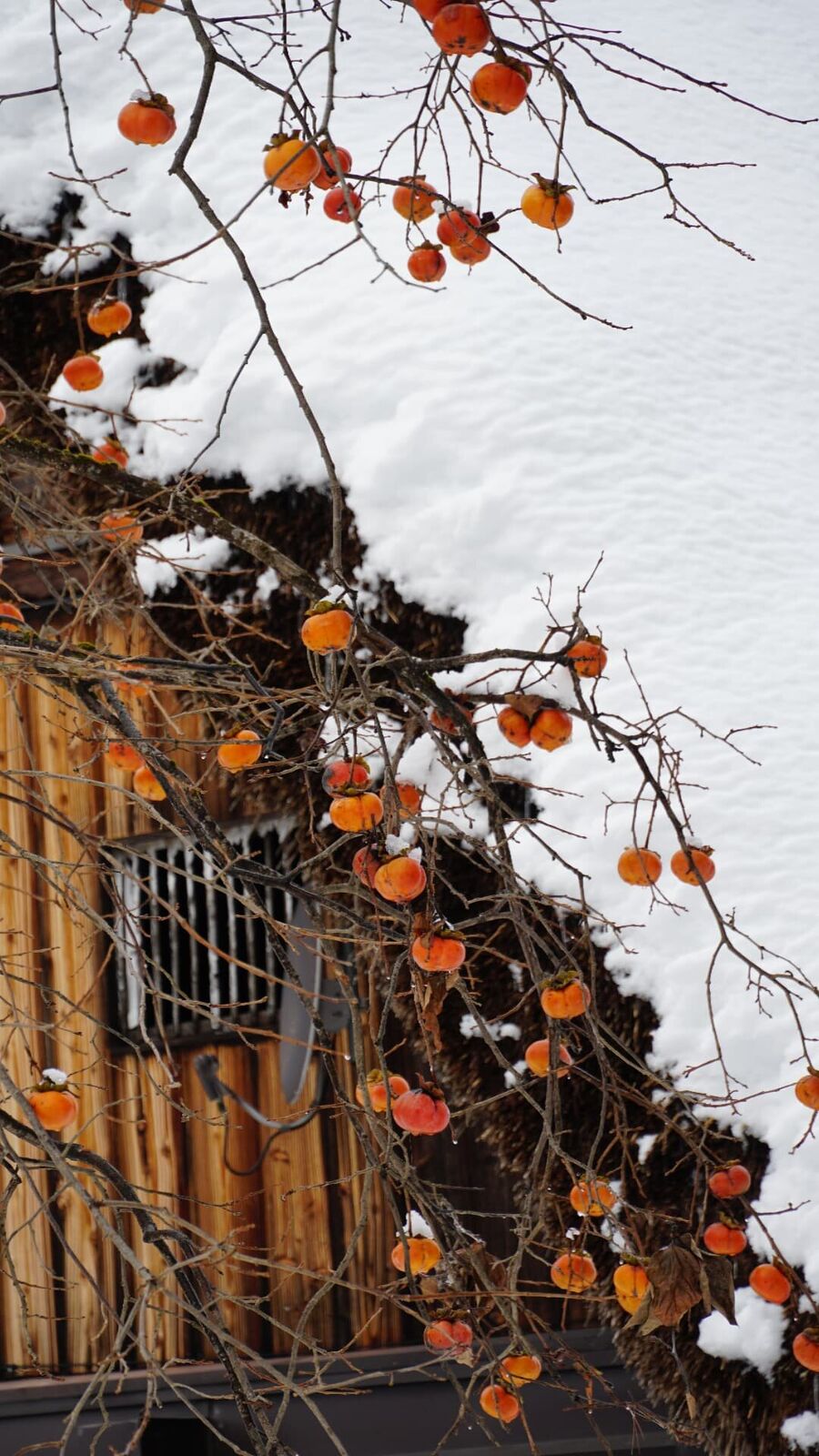
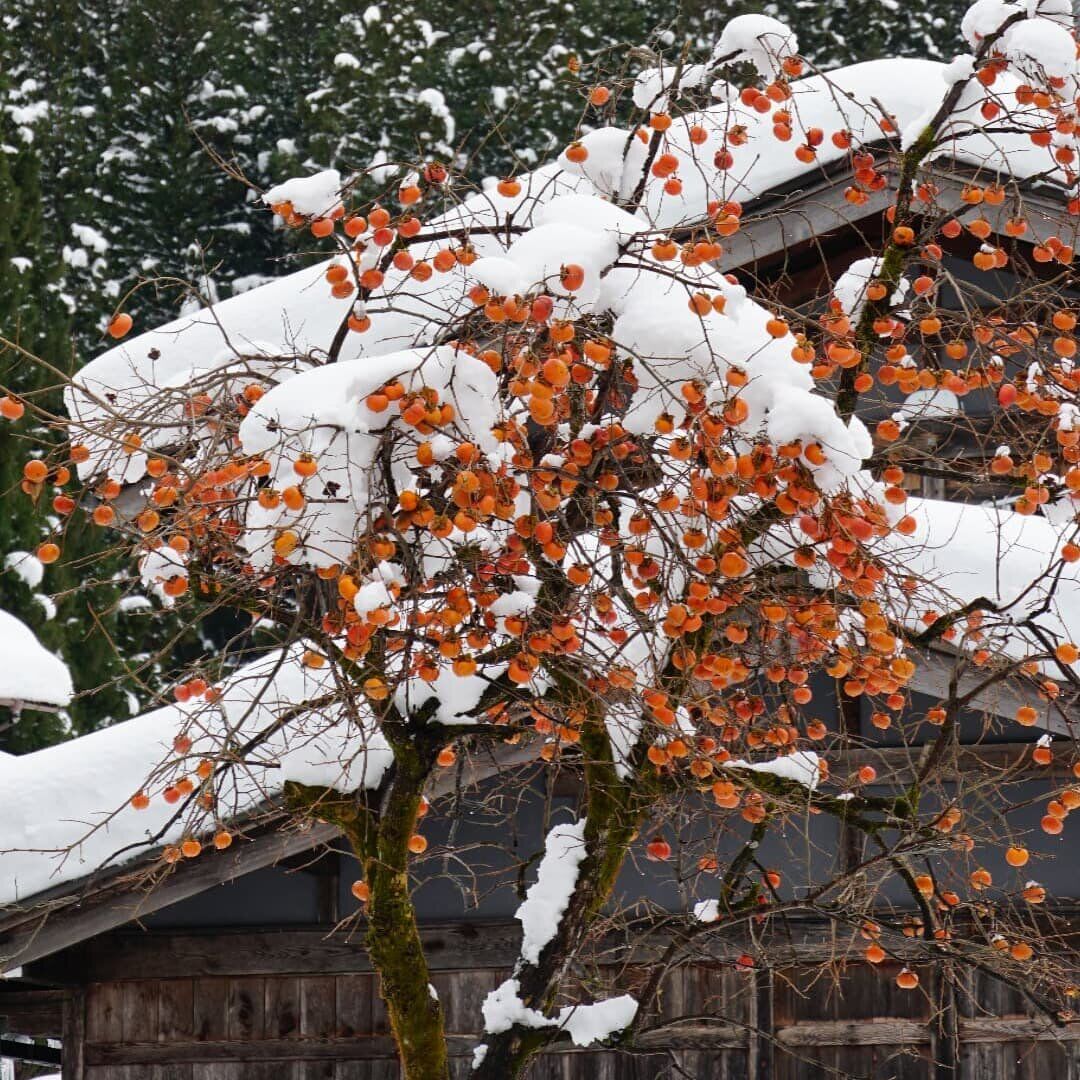
The persimmon trees were the exception. Bright orange fruit still hanging on bare branches, dusted with snow, standing out against the monochrome village like lanterns someone forgot to take down. They're one of the first things you notice and one of the last things you forget.
The People Who Keep It Standing
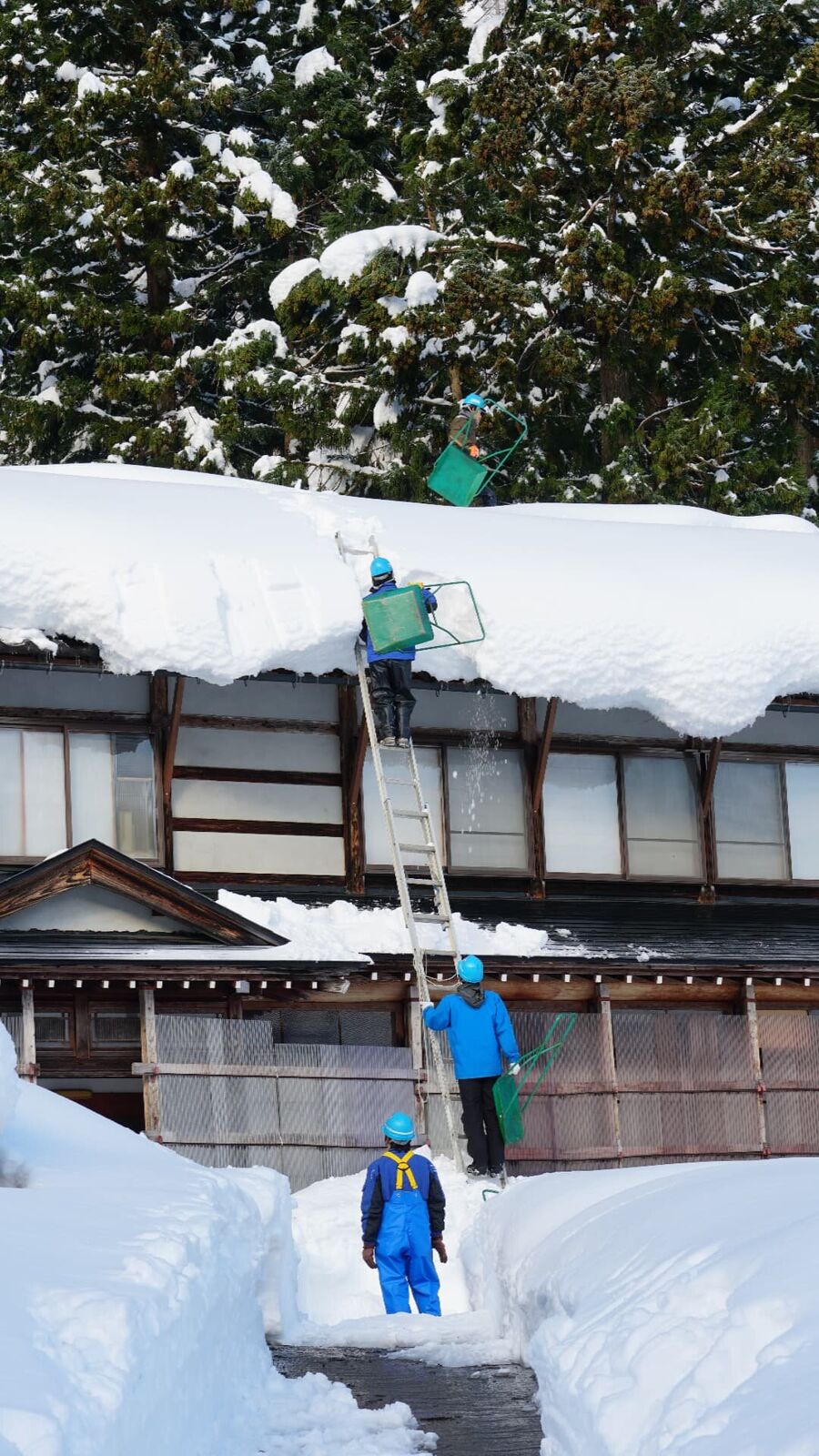
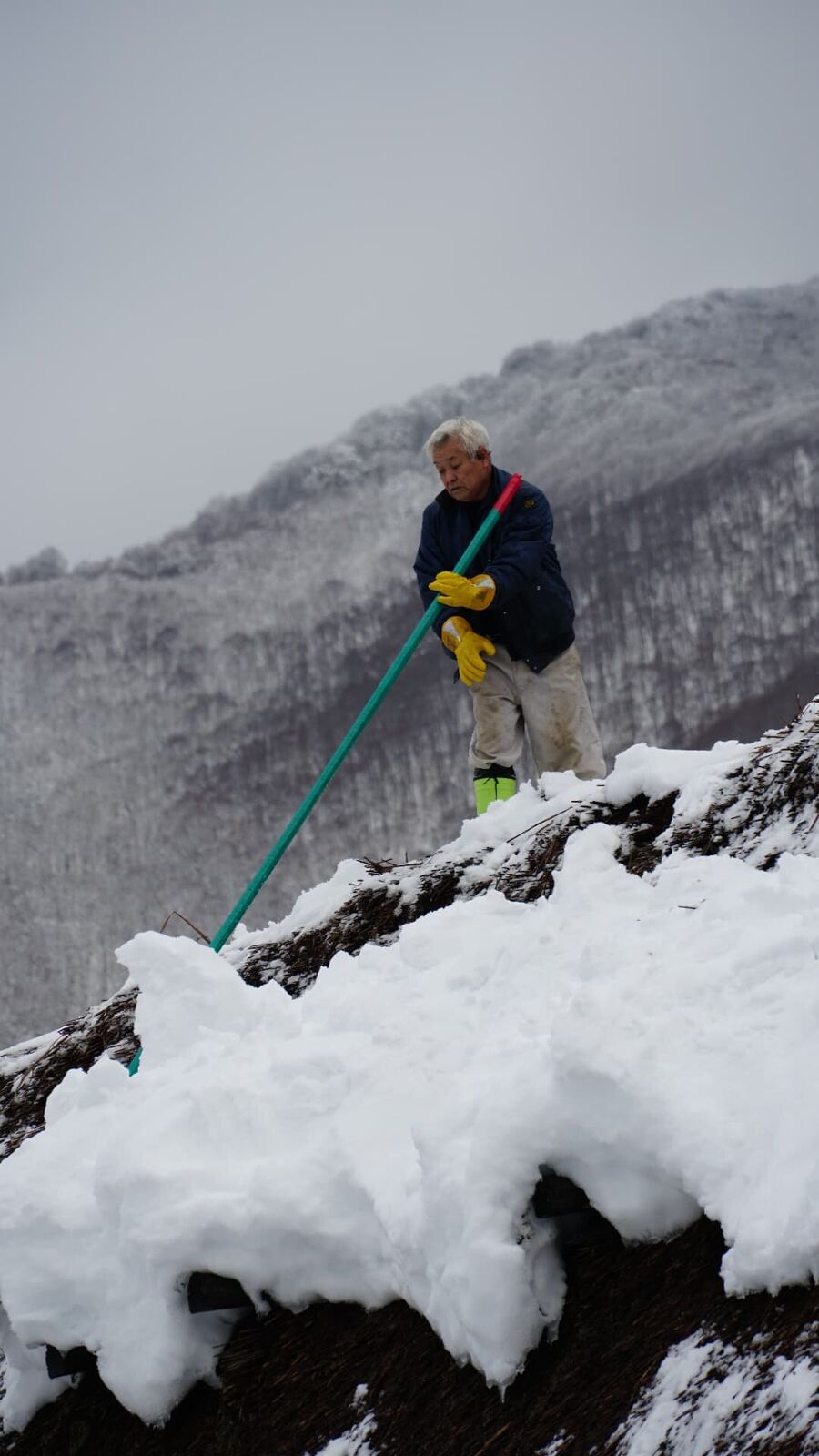
In winter you can see local workers up on the Gassho roofs, clearing the accumulated snow with long wooden tools. It's hard physical work, and watching an elderly man balanced on one of those steep rooftops, systematically shoveling snow that's taller than he is, gives you a profound respect for both the architecture and the people who maintain it. These roofs need this regular clearing - the snow is heavy and wet, and without maintenance even these centuries-old structures would eventually give way.
I watched a team of three workers in blue uniforms methodically clearing a roof near the village center. One on a ladder, one climbing, one at ground level passing up green basket-like scoops. They worked in a rhythm that suggested they'd done this hundreds of times, which they probably had. The snow they pushed off the edge fell in heavy clumps, sending up white clouds that caught the morning light. It's one of those scenes that reminds you this isn't a museum. It's a village where people do hard physical work to keep 250-year-old houses alive through another winter.
Night
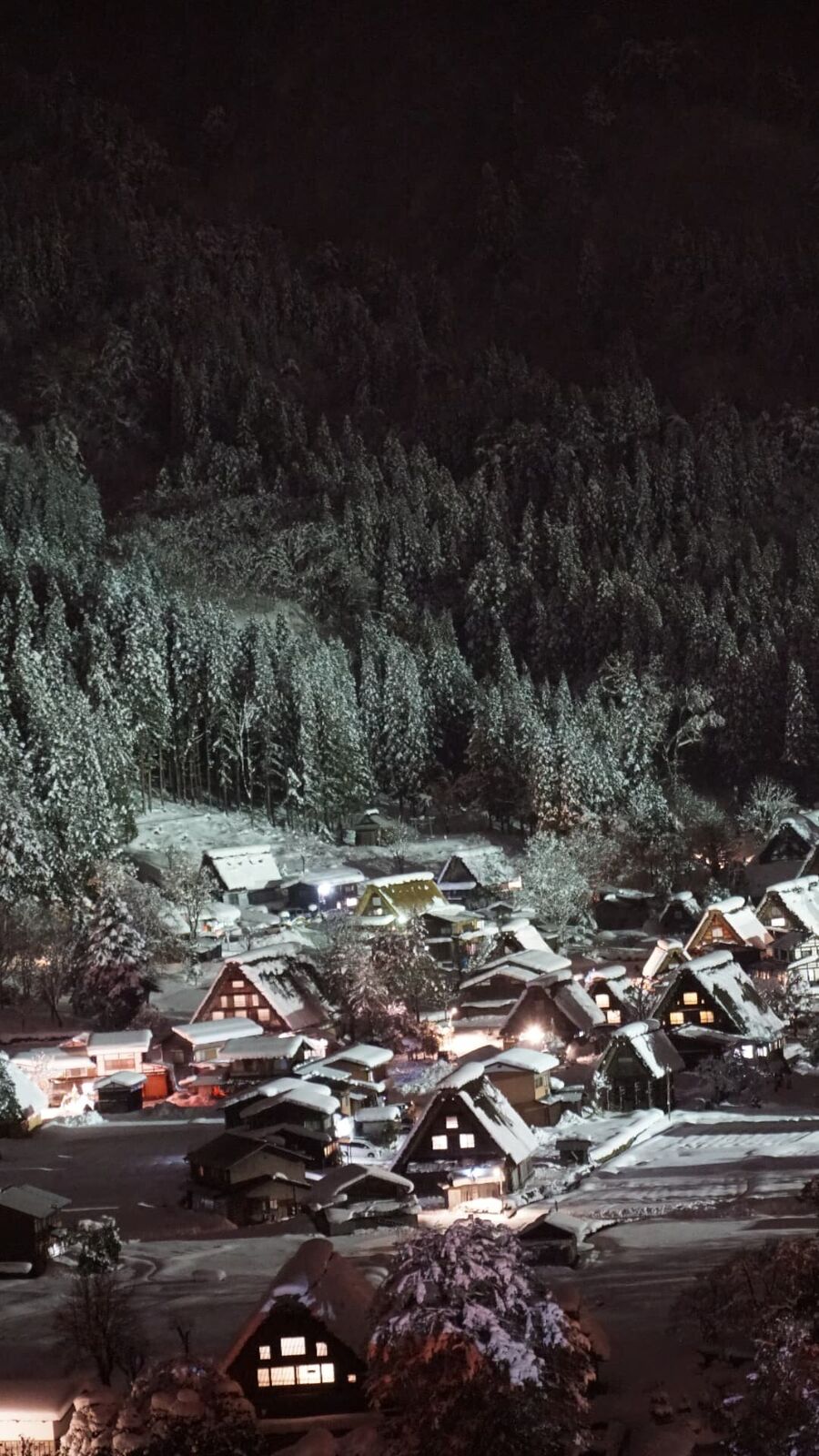
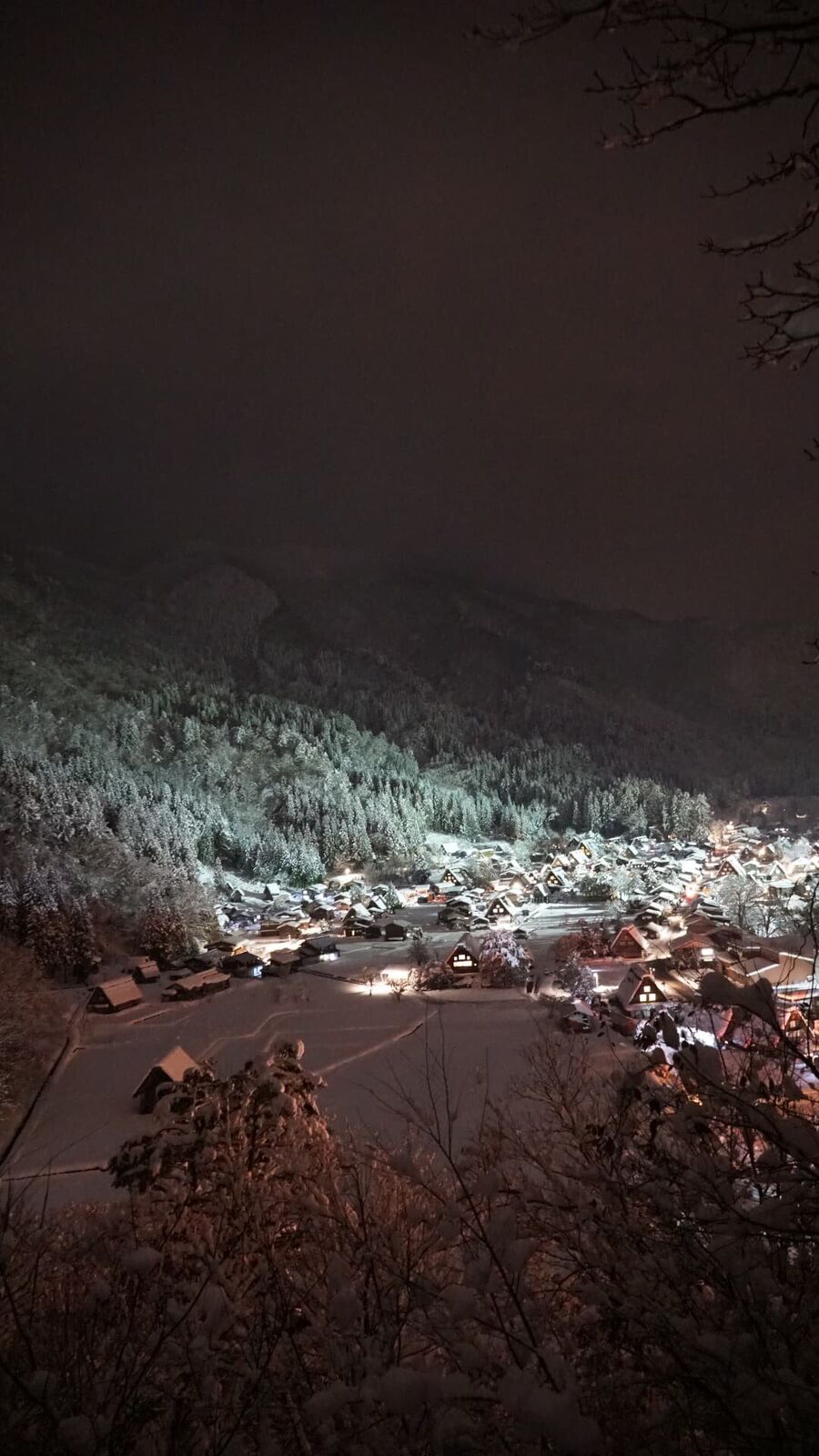
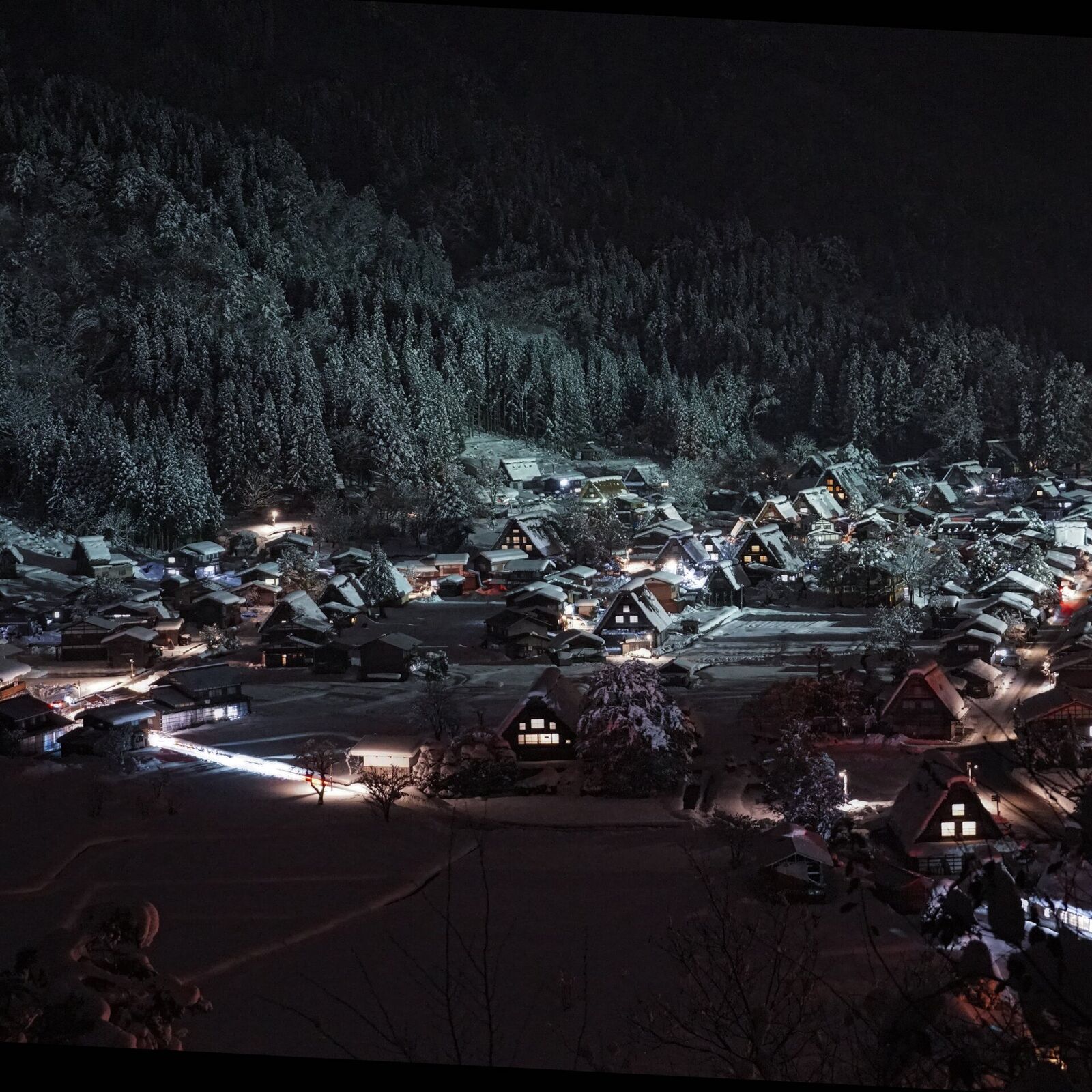
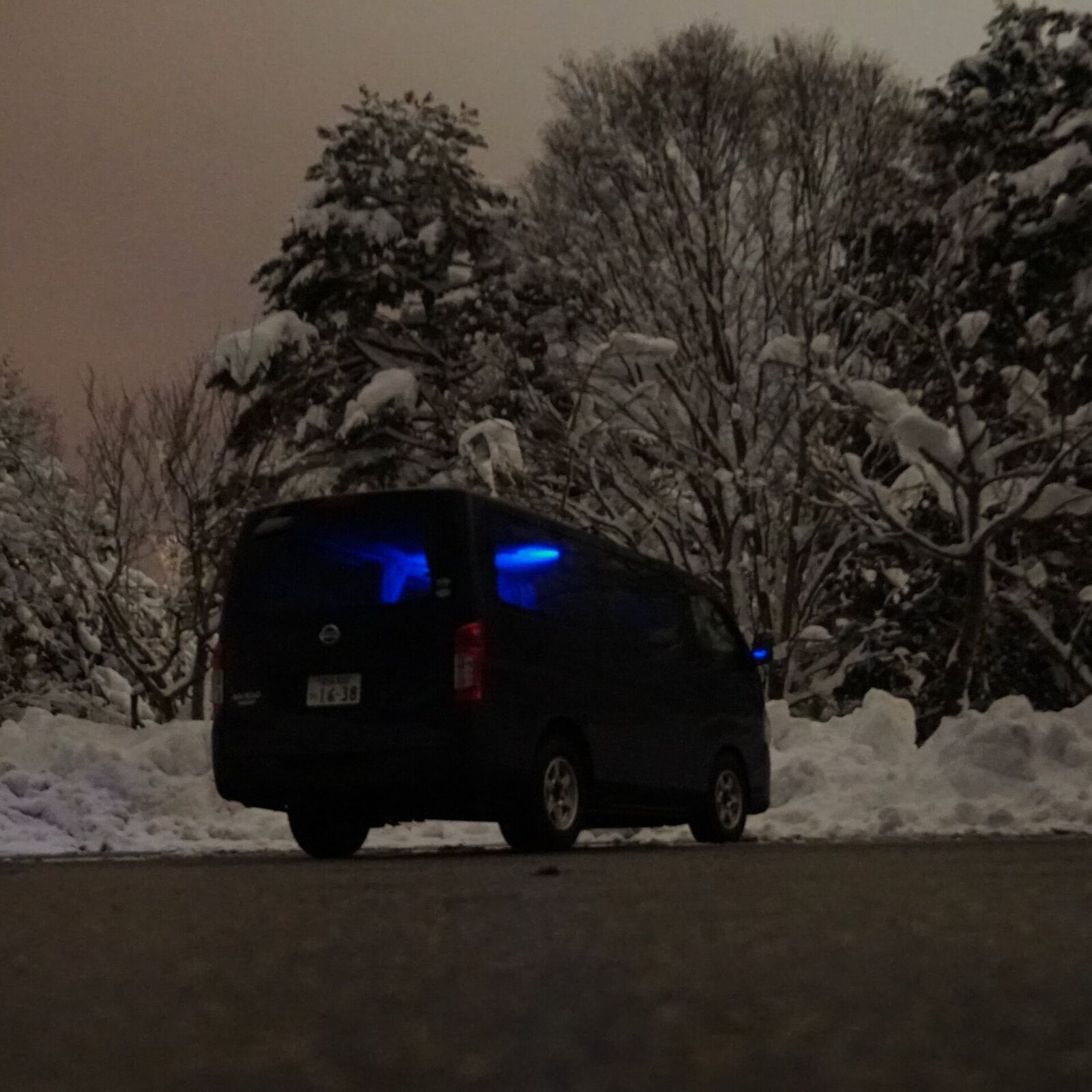
I spent a winter night at a Michi-no-Eki near the village, and the experience of waking up to Shirakawa-go buried in fresh snow was worth the cold. But the real magic happened at night. From the viewpoint above the village, the snow-covered houses with their warm window lights look like a scene from a fairy tale. The village glows from within, each house a warm orange rectangle against the blue-white snow, and the silence up there is absolute. It's the kind of view that makes you stand still and forget to take a photo for a few seconds, which is the highest compliment any landscape can receive.
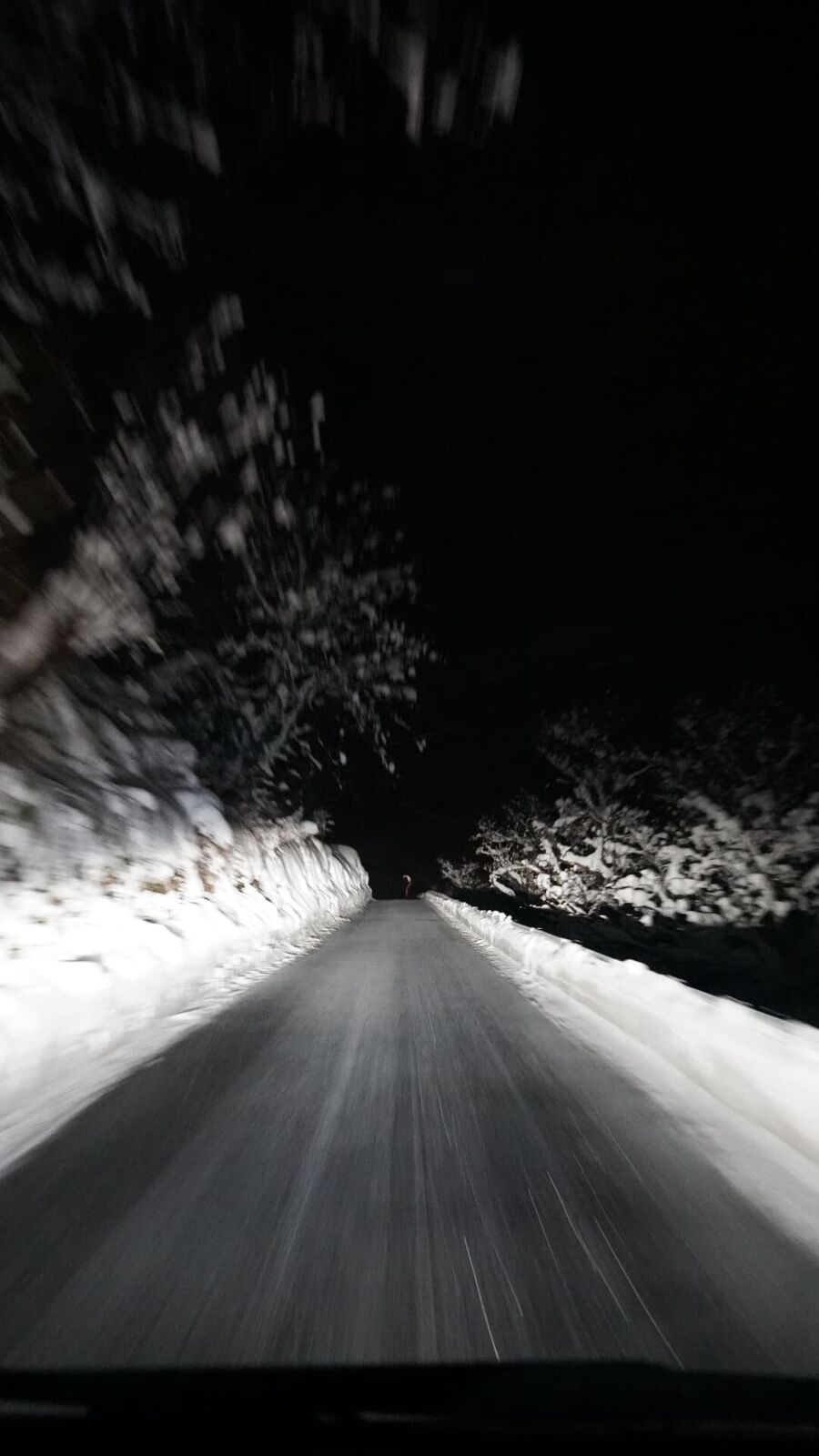
The road down to the village at night, with streetlights casting long shadows across the packed snow and the Gassho silhouettes rising against the dark sky, has its own quiet drama. Fewer people visit at this hour, and the village feels like it did before the tour buses found it.
The Details
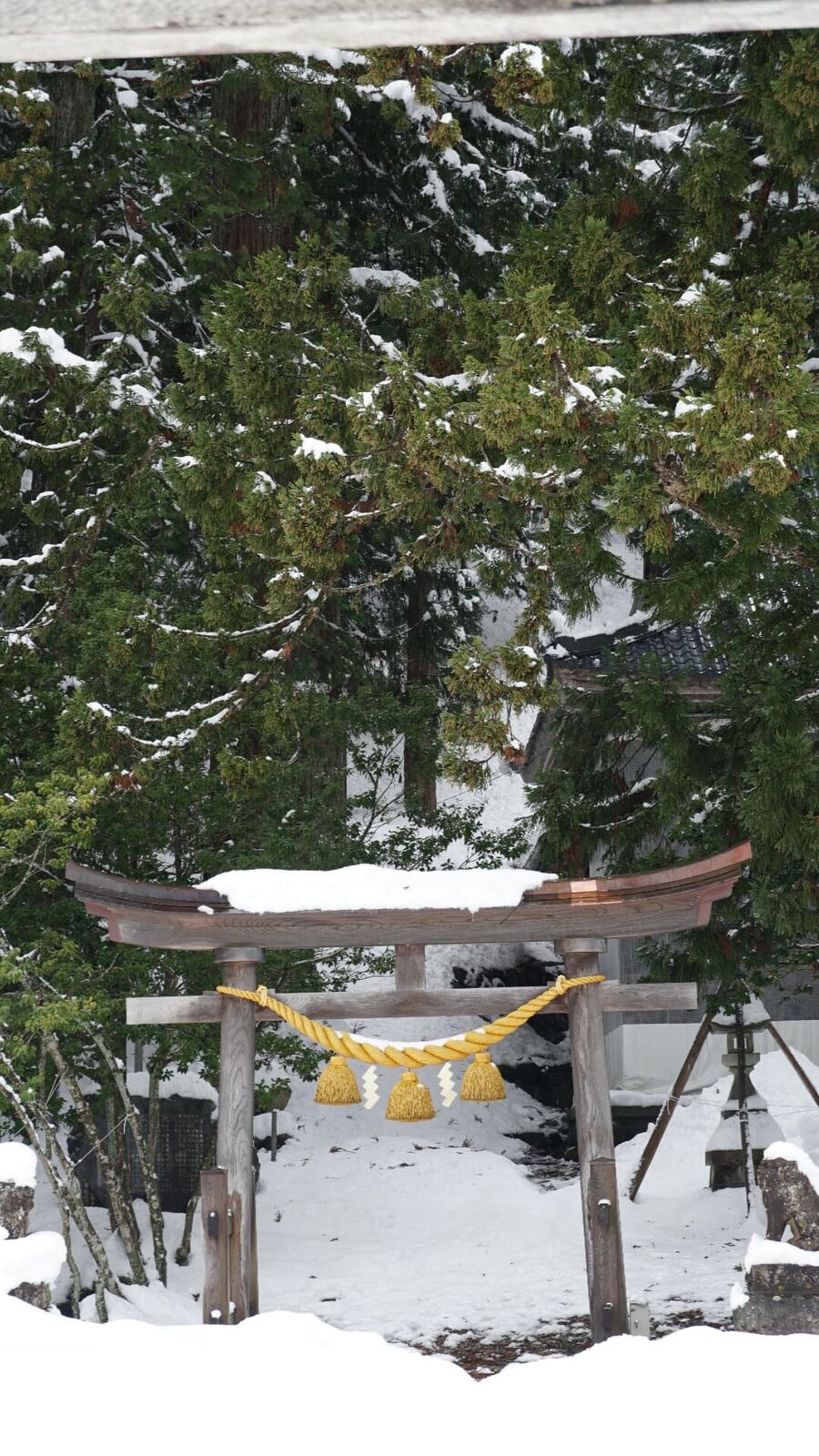
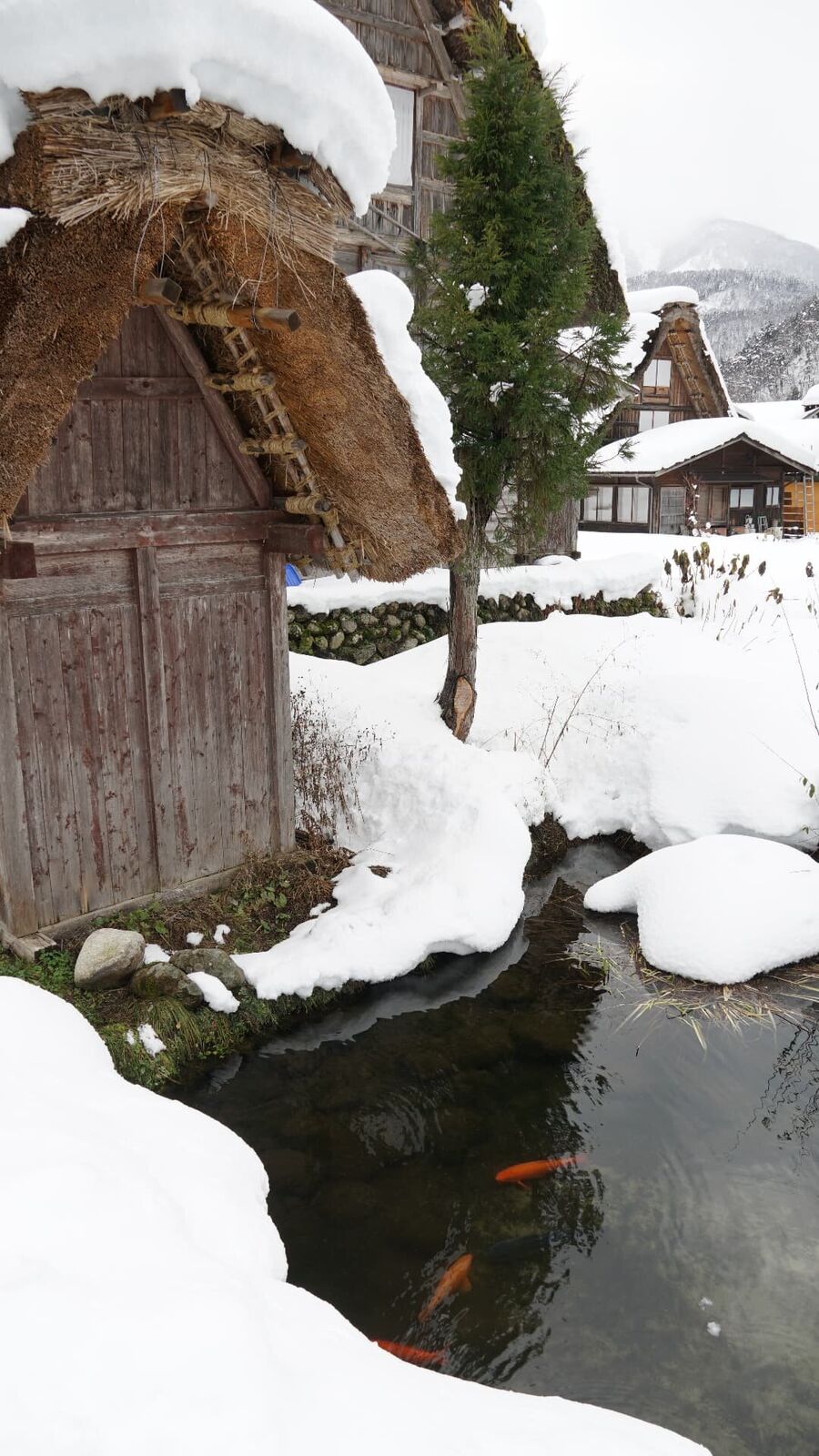
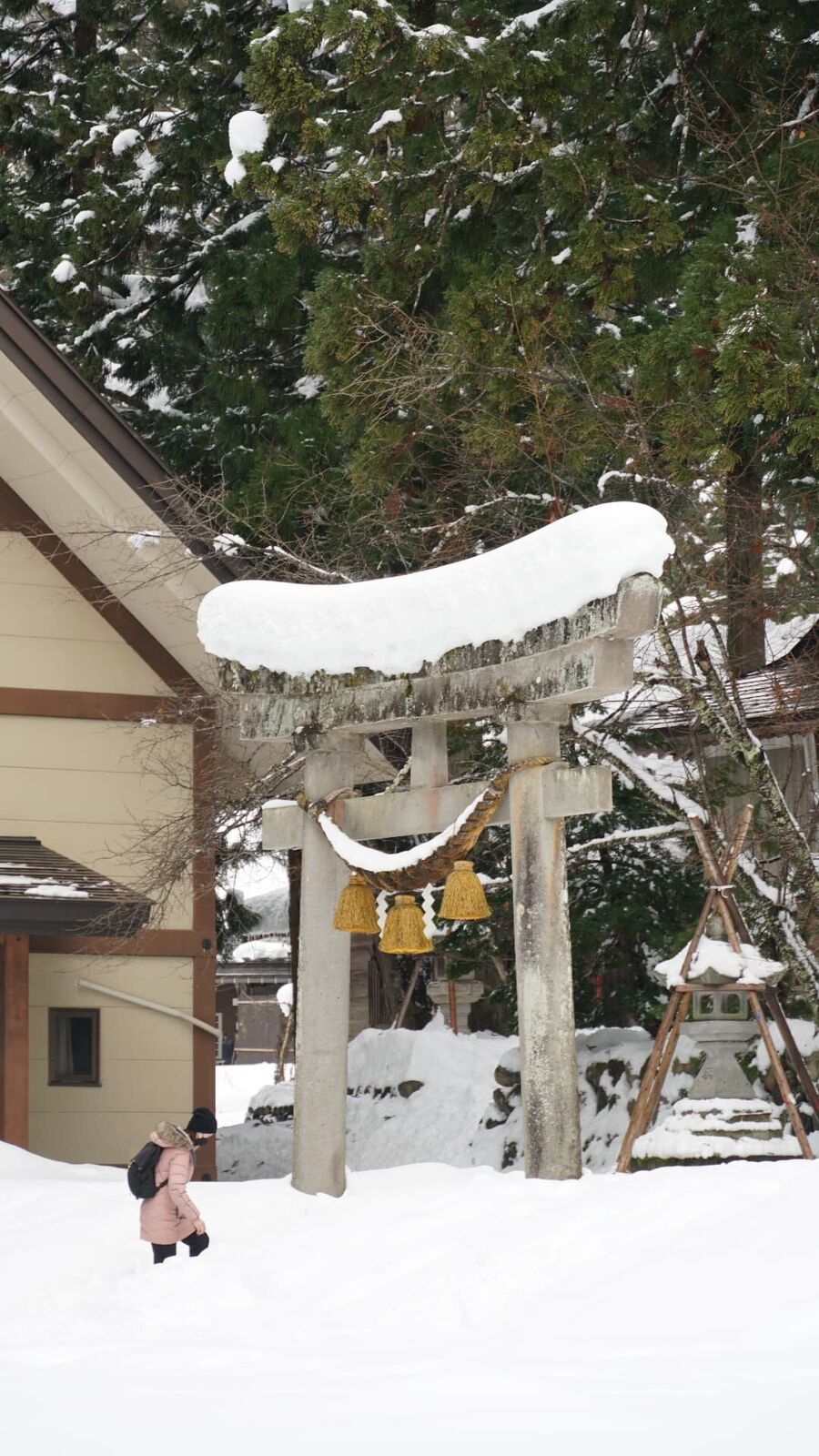
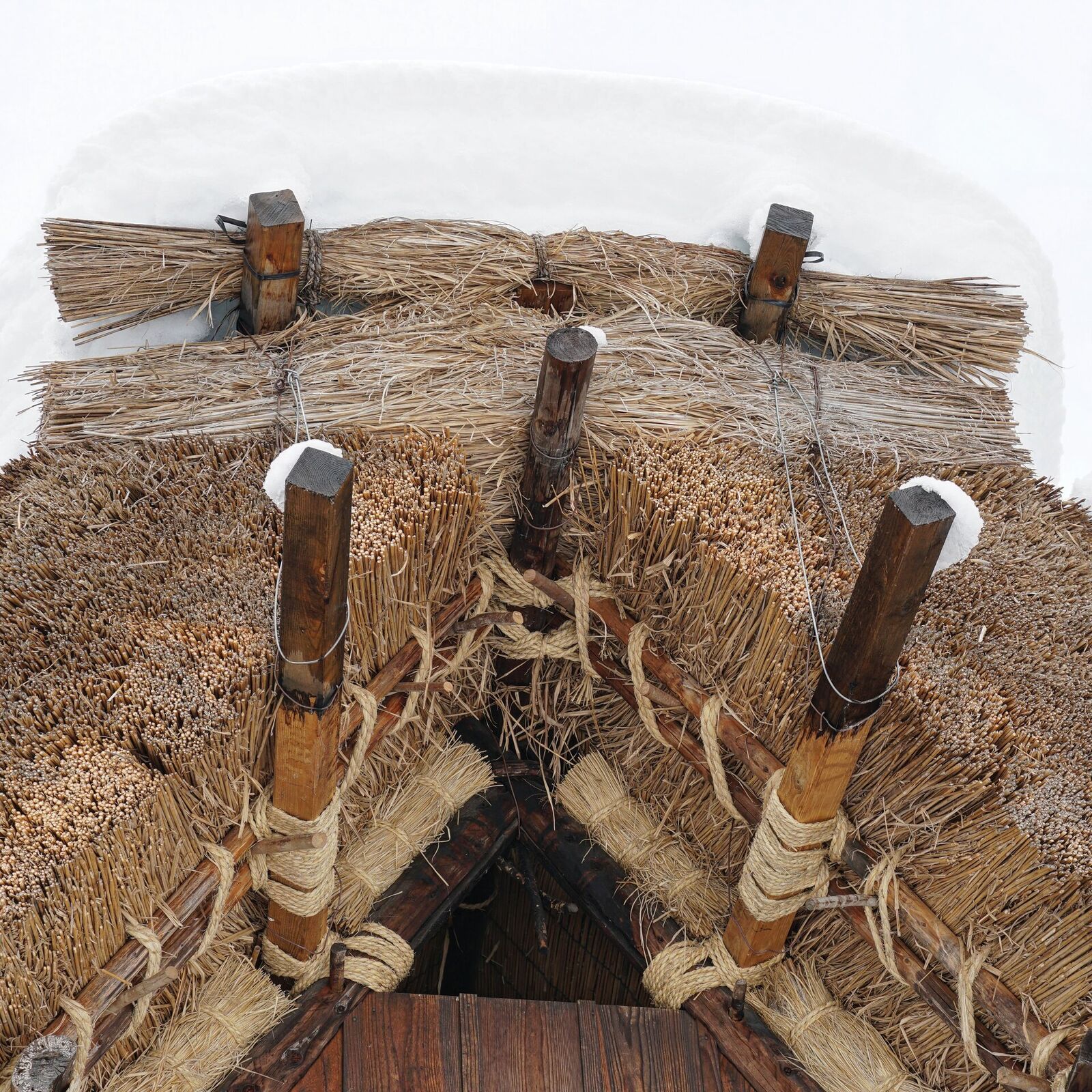
Winter strips Shirakawa-go down to its essentials: wood, straw, snow, and the occasional splash of color. A torii gate wrapped in shimenawa rope, stone guardians wearing snow caps, a koi pond with fish still moving under a thin layer of ice. The craftsmanship shows itself differently in winter. Look up at a Gassho roof ridge from below and you'll see the wooden pegs and rope bindings that hold the straw bundles together, engineering from a time when nails were expensive and skill was abundant. The snow sitting on top of those ridges makes the geometry even more visible.
For the summer side of the story, see Shirakawa-go in Summer.
Practical Info
Location: Gifu Prefecture, Chubu region. Central and well-connected. View on Google Maps
Access: By car: via Route 156 from Takayama or Kanazawa. Winter tires or chains required. By bus: regular services from Takayama (50 min), Kanazawa (75 min).
Illumination events: Four dates in January and February (2026: Jan 12, 18, 25, Feb 1), 17:30-19:30. Advance reservation and ticket are mandatory for all visitors - the event is capacity-limited to avoid overcrowding. By car: 6,000-10,000 yen per car, reservations open in September and December on the tourist association website. Bus tours available from Takayama, Kanazawa, and Nagoya. Overnight stays in the village through a lottery system (applications in October). Plan months ahead.
Campervan tip: The nearby Michi-no-Eki works for overnight stays, but prepare for serious cold. Insulation, a good heater, and winter-rated sleeping bags are essential. The viewpoint parking is restricted during illumination events.
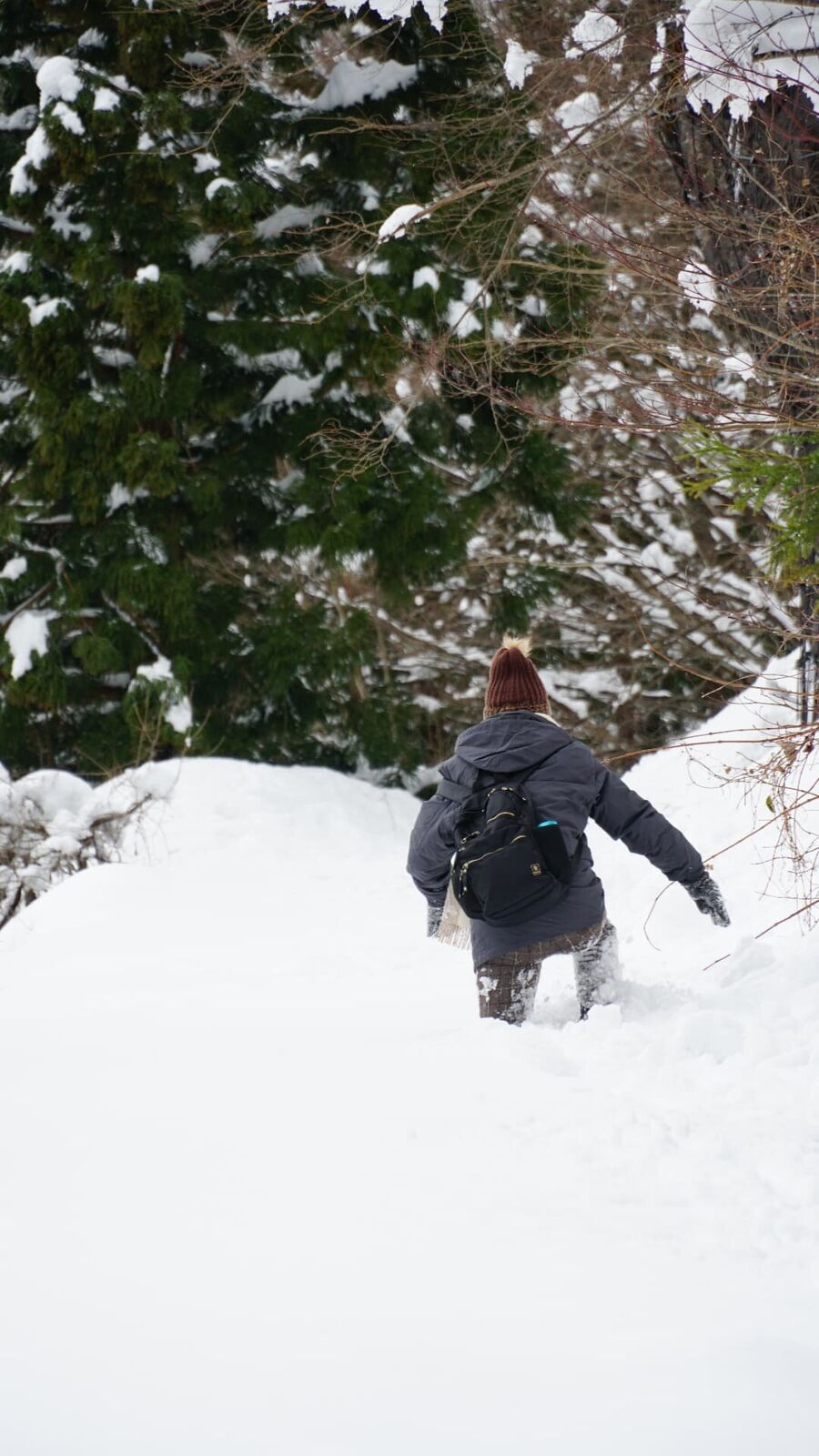
Snow: Expect meters of accumulation from December through February. Shirakawa-go is a well-maintained tourist village, so paths and roads are regularly cleared and well accessible. Waterproof boots are still recommended, but you won't be wading through waist-deep snow in the village itself.
Best time: Late December through February for maximum snow. Weekdays are quieter. Early morning light on fresh snow is worth the cold start.