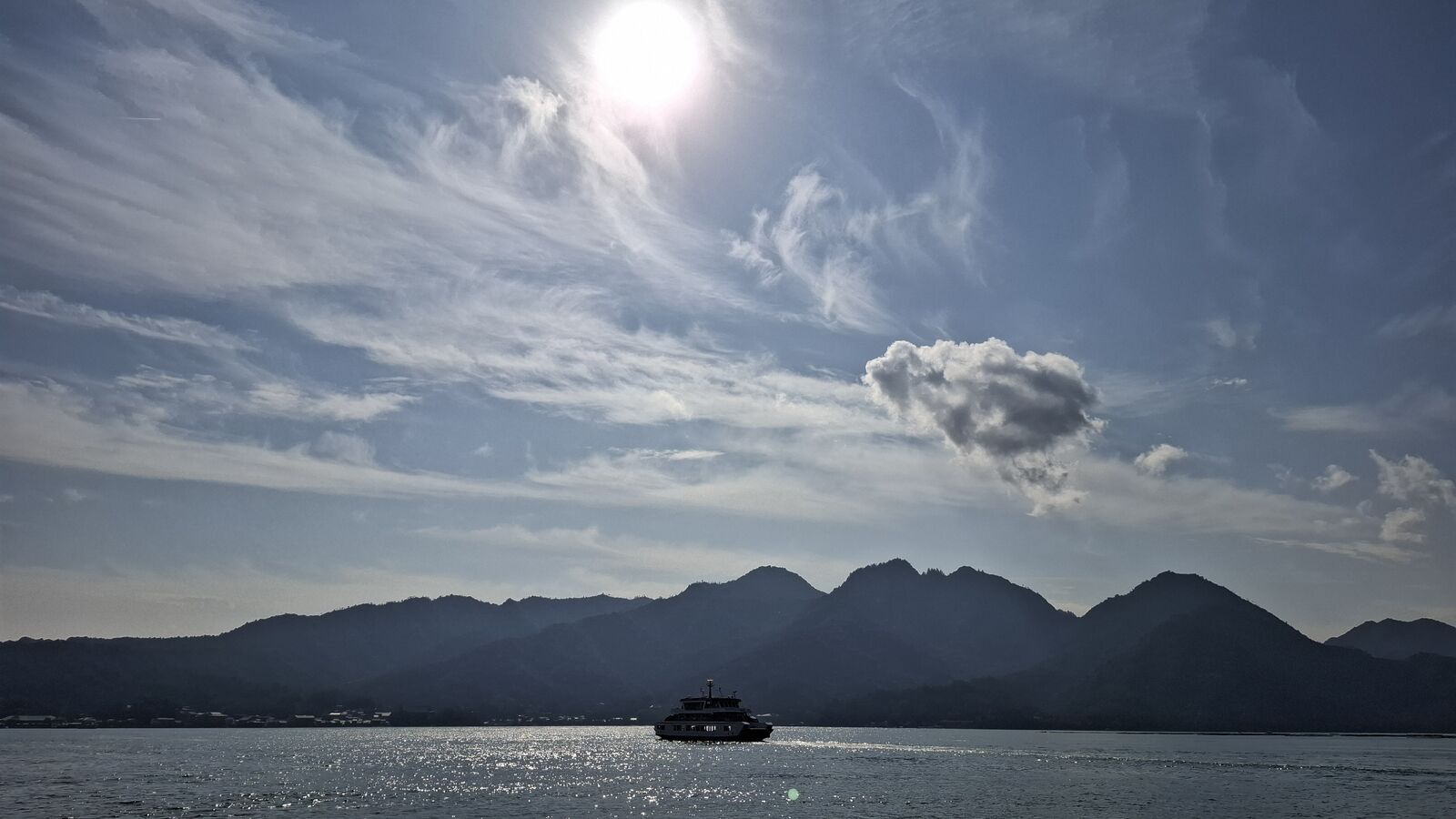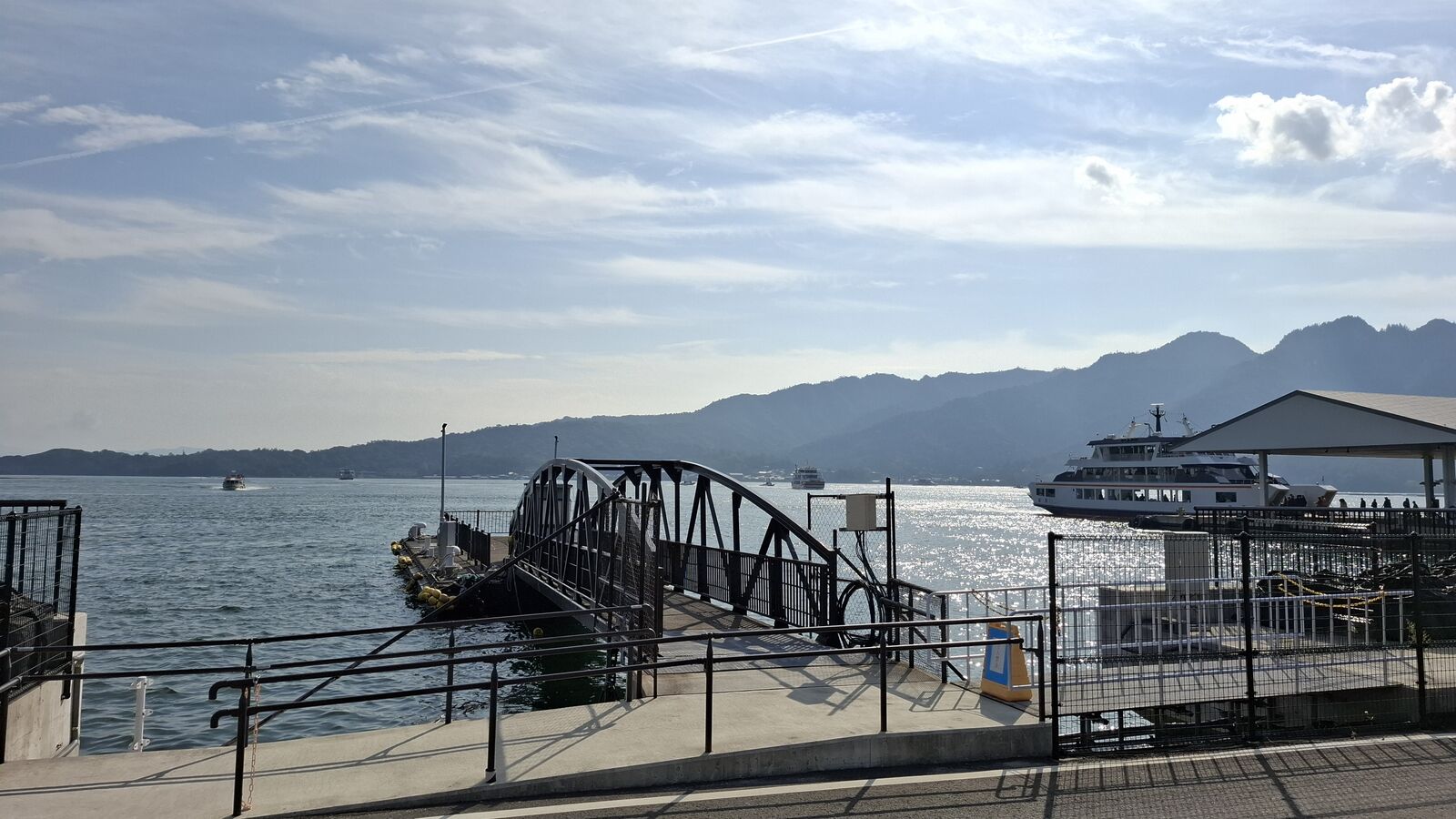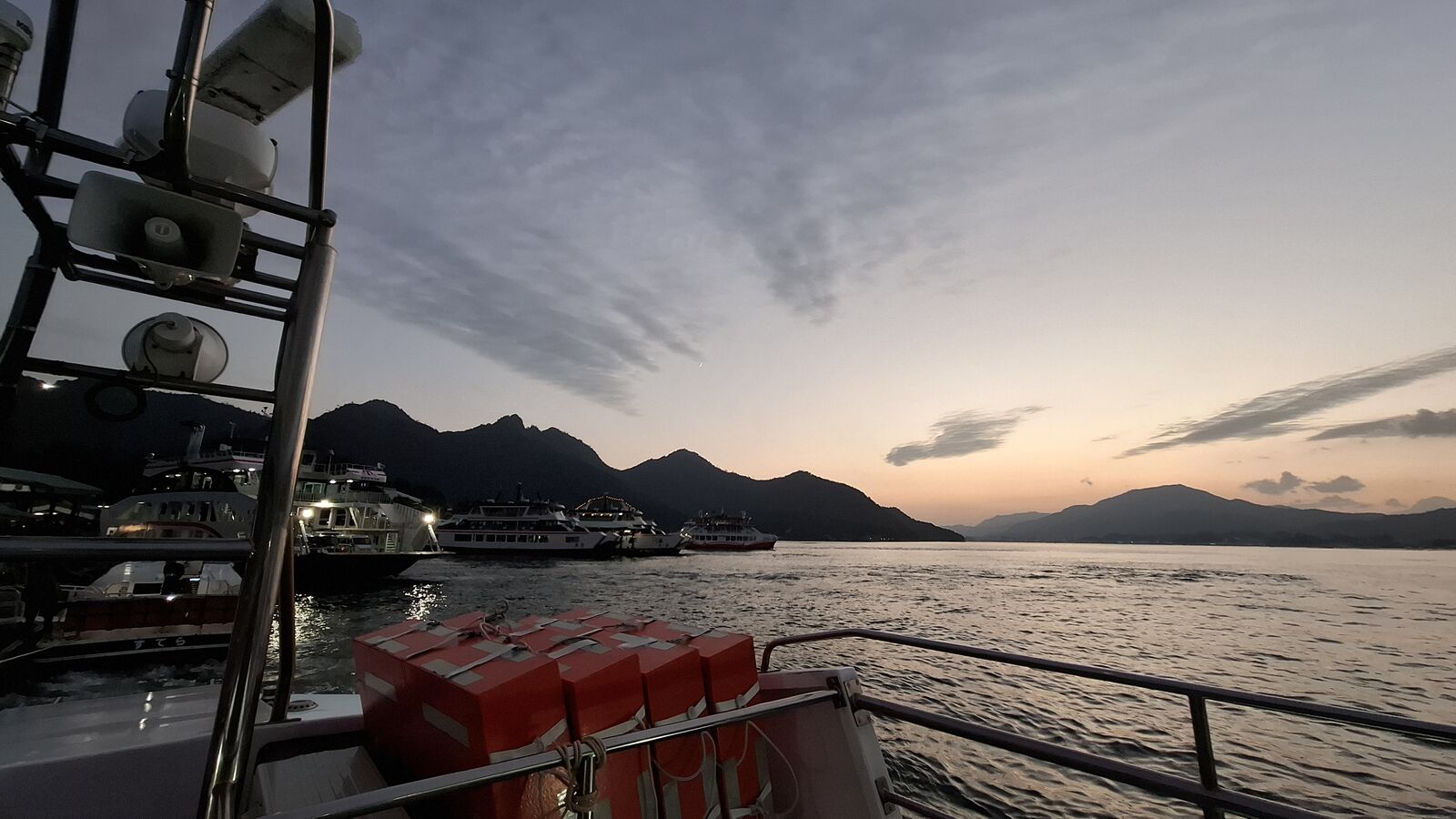
The fast ferry to Miyajima takes fifteen minutes and costs about five euros more than the regular one. It's the kind of decision that doesn't need thinking about. You sit on the upper deck, watch the Inland Sea open up around you, and before you've properly settled into the view, the island's mountain profile is already filling the windshield. A dark, forested silhouette rising straight out of the water.
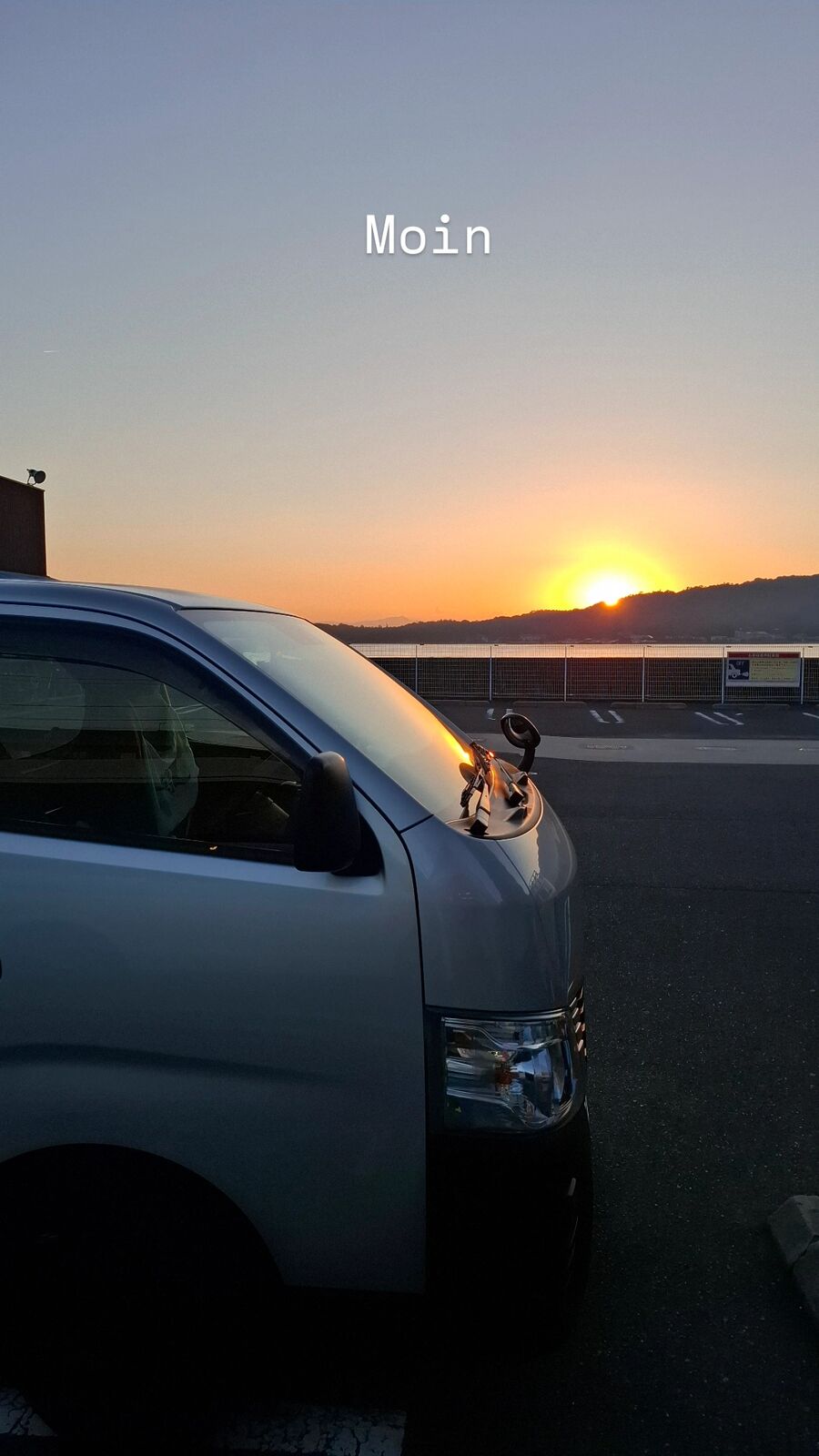
I'd driven down from an overnight spot near the Inland Sea bridges that morning, parked at one of the pay-per-day lots two streets behind the ferry terminal on the mainland, and walked over. The parking situation is uncomplicated: pick any lot near the terminal, pay the flat rate, sleep in the van if you want. I did exactly that the night before, and it was perfectly fine. Quiet, close to the water, no hassle.
The Sacred Island
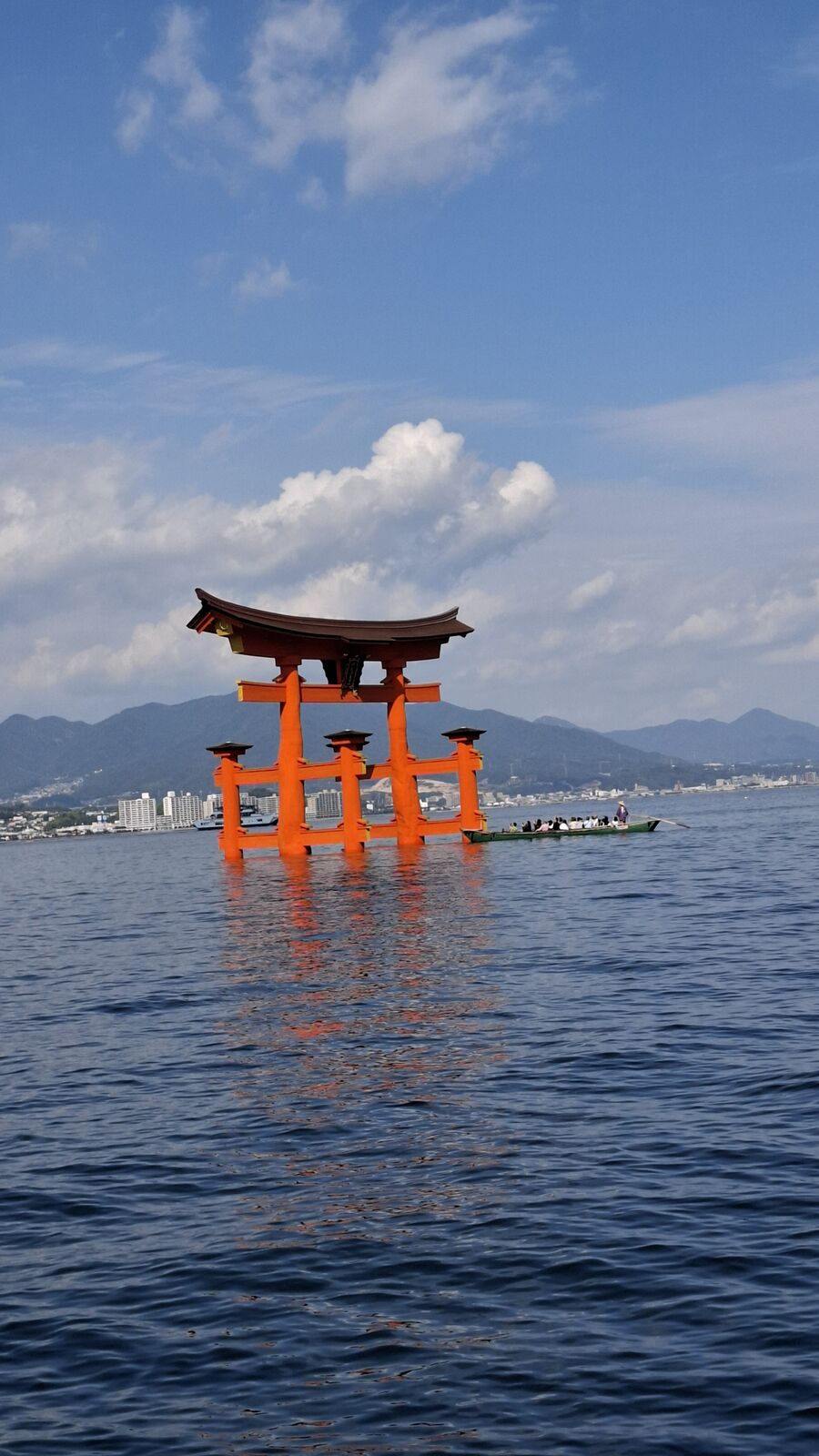
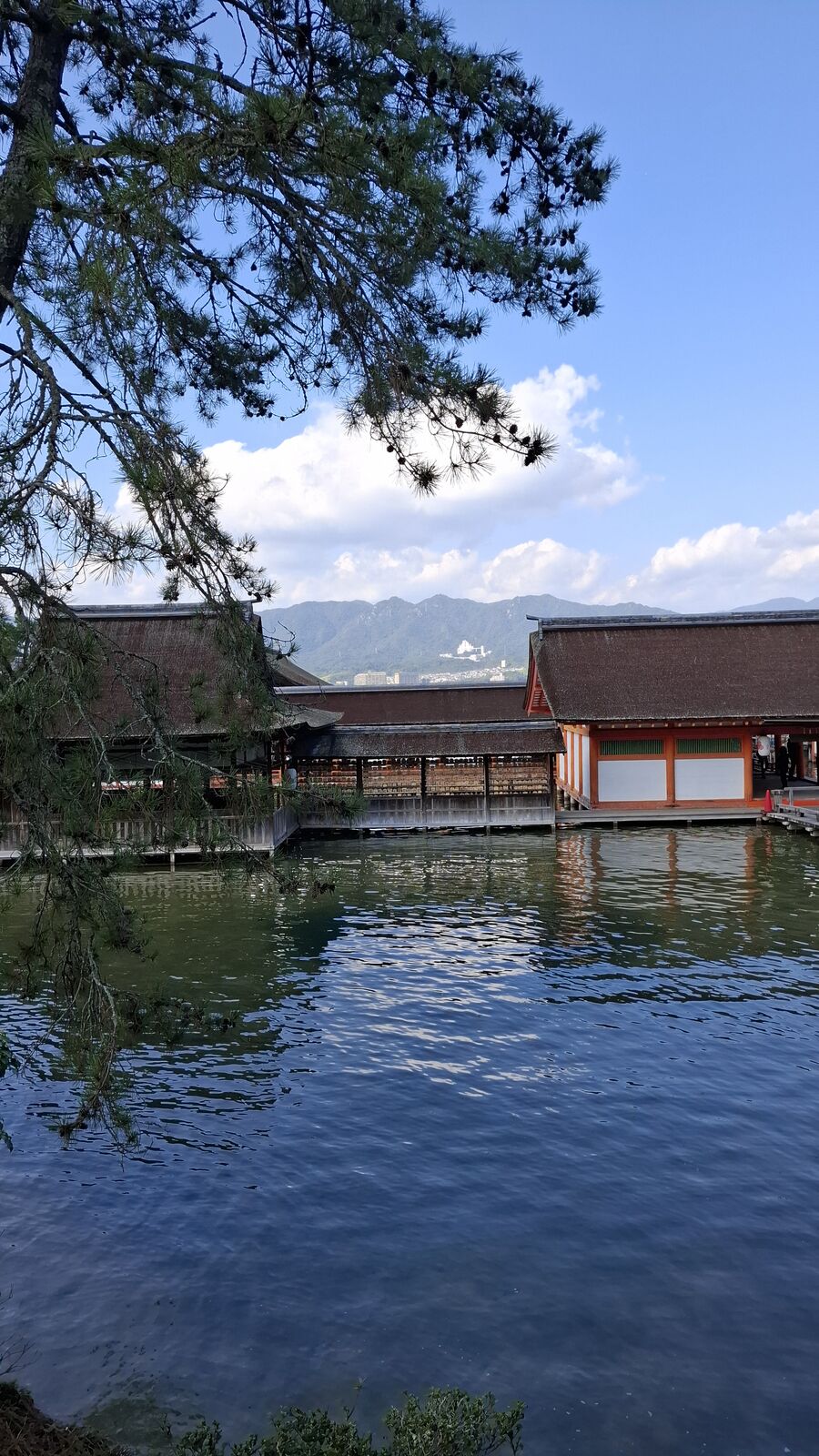
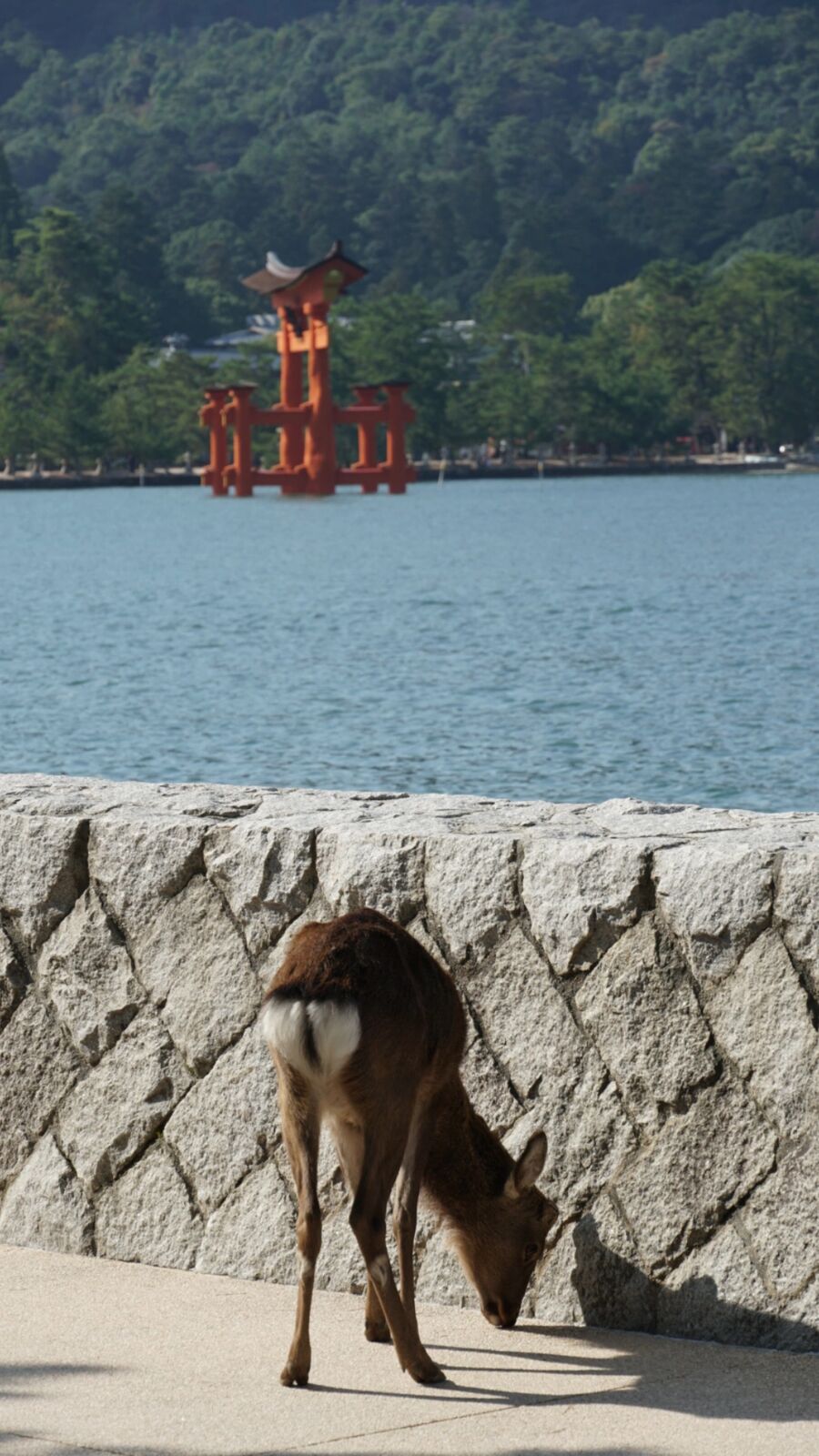
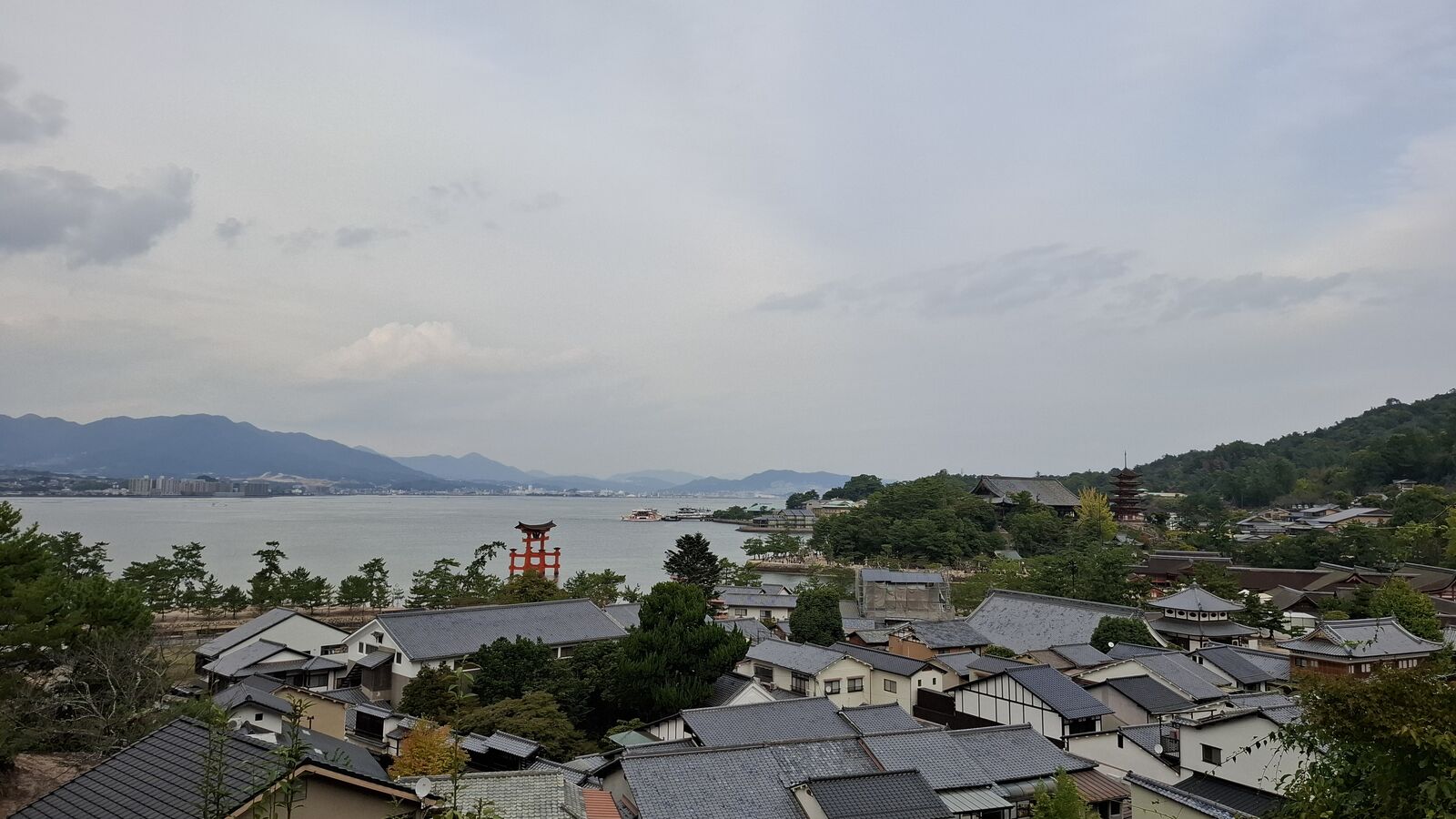
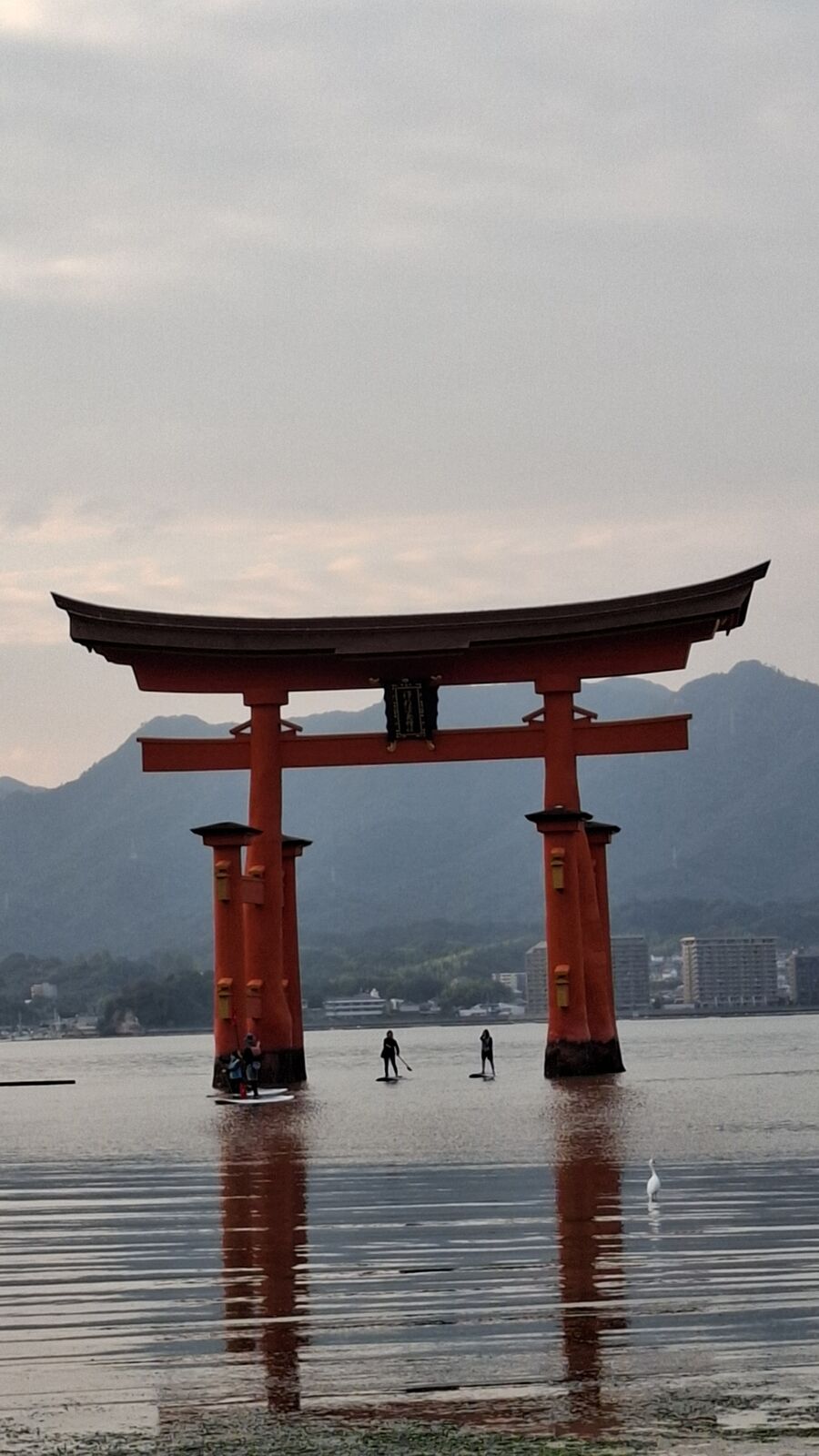
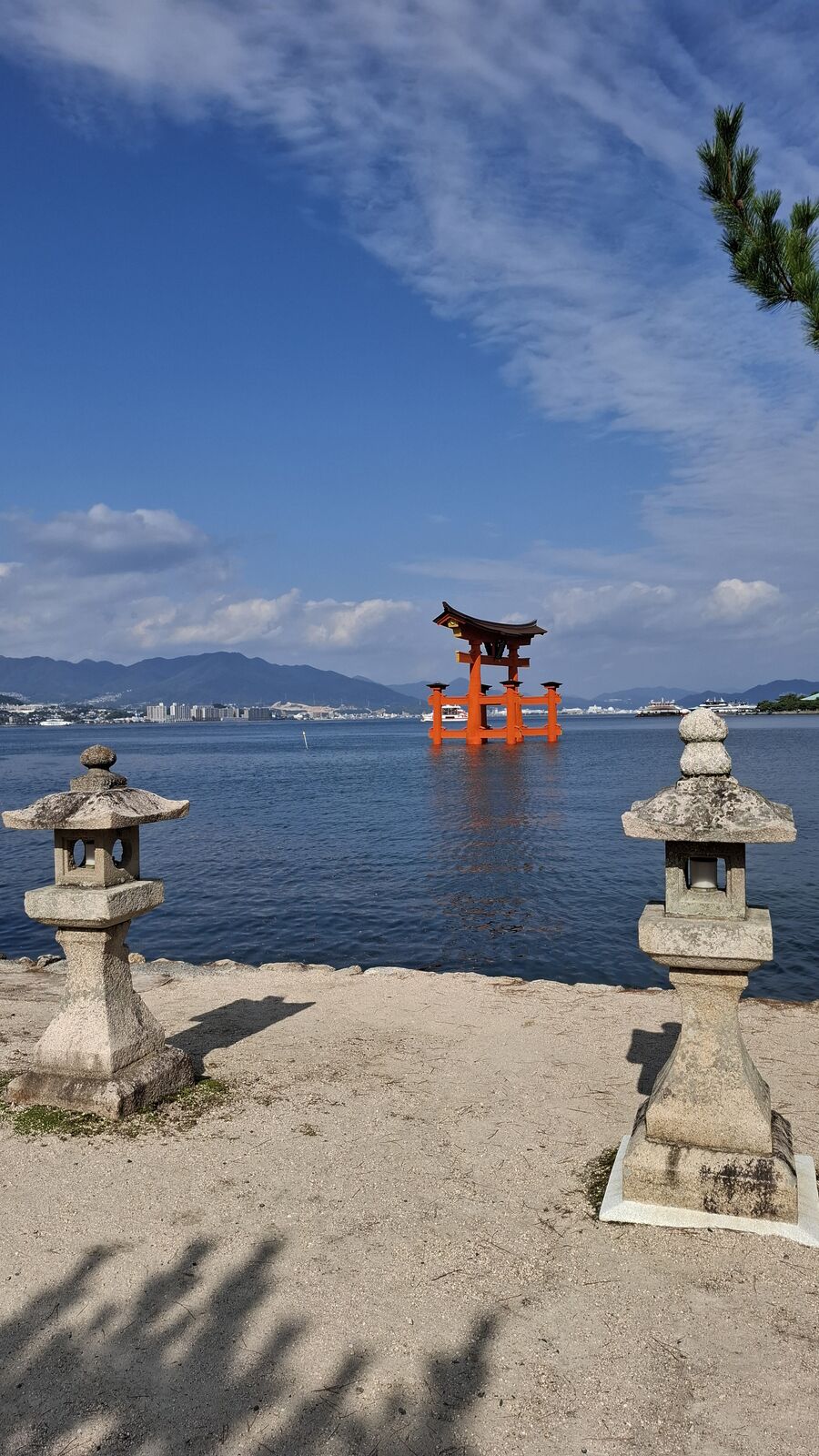
Miyajima is one of Japan's "Three Views," and you feel the weight of that designation the moment you step off the ferry. The island has been considered sacred since ancient times, and Itsukushima Shrine was built in a way that makes the boundary between land and sea, between the earthly and the divine, deliberately unclear. At high tide, the shrine buildings and the famous torii gate appear to float on the water. At low tide, you can walk out across the seabed and stand at the base of the gate itself, touching wood that's been standing in salt water for centuries.
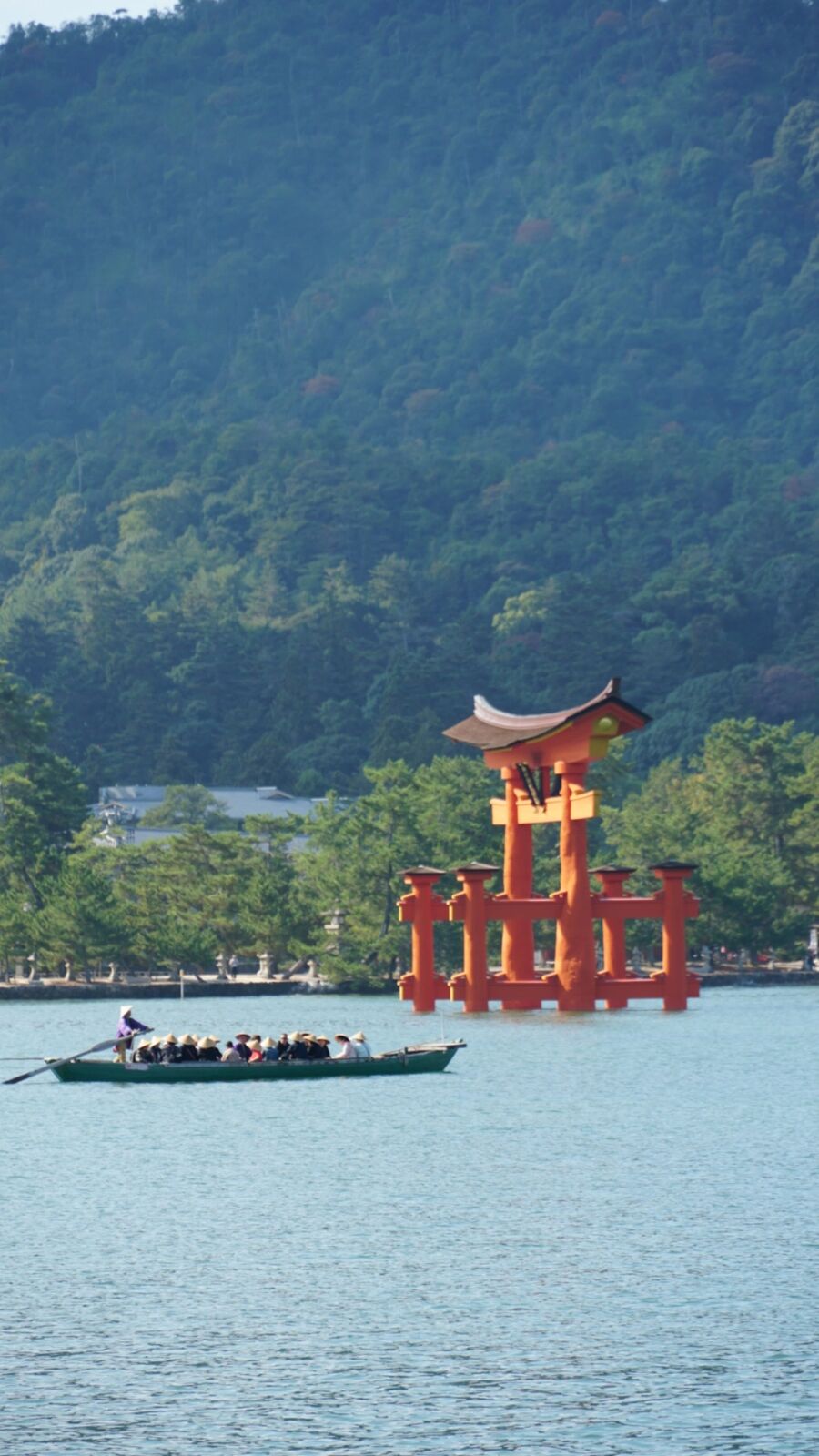
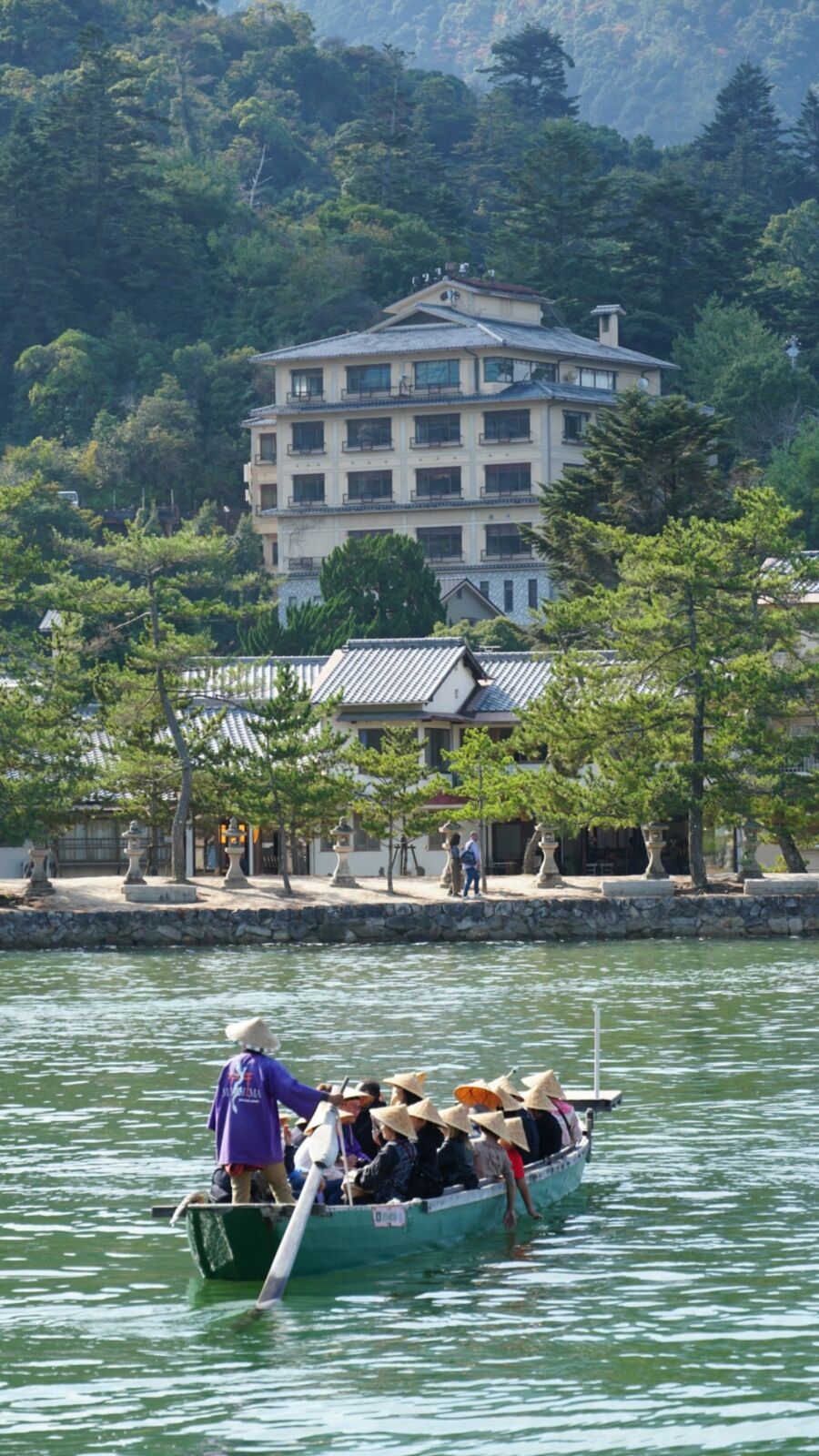
I arrived at high tide. The torii was surrounded by deep blue water, its vermillion pillars reflected on the surface, and tour boats were rowing past it carrying groups of visitors wearing traditional straw hats. The boatmen stood at the stern in purple robes, working a single oar back and forth, and the whole scene looked like it could have been painted three hundred years ago. Except for the phones, of course. Everyone had phones out, including me.
Deer and Ceremonies
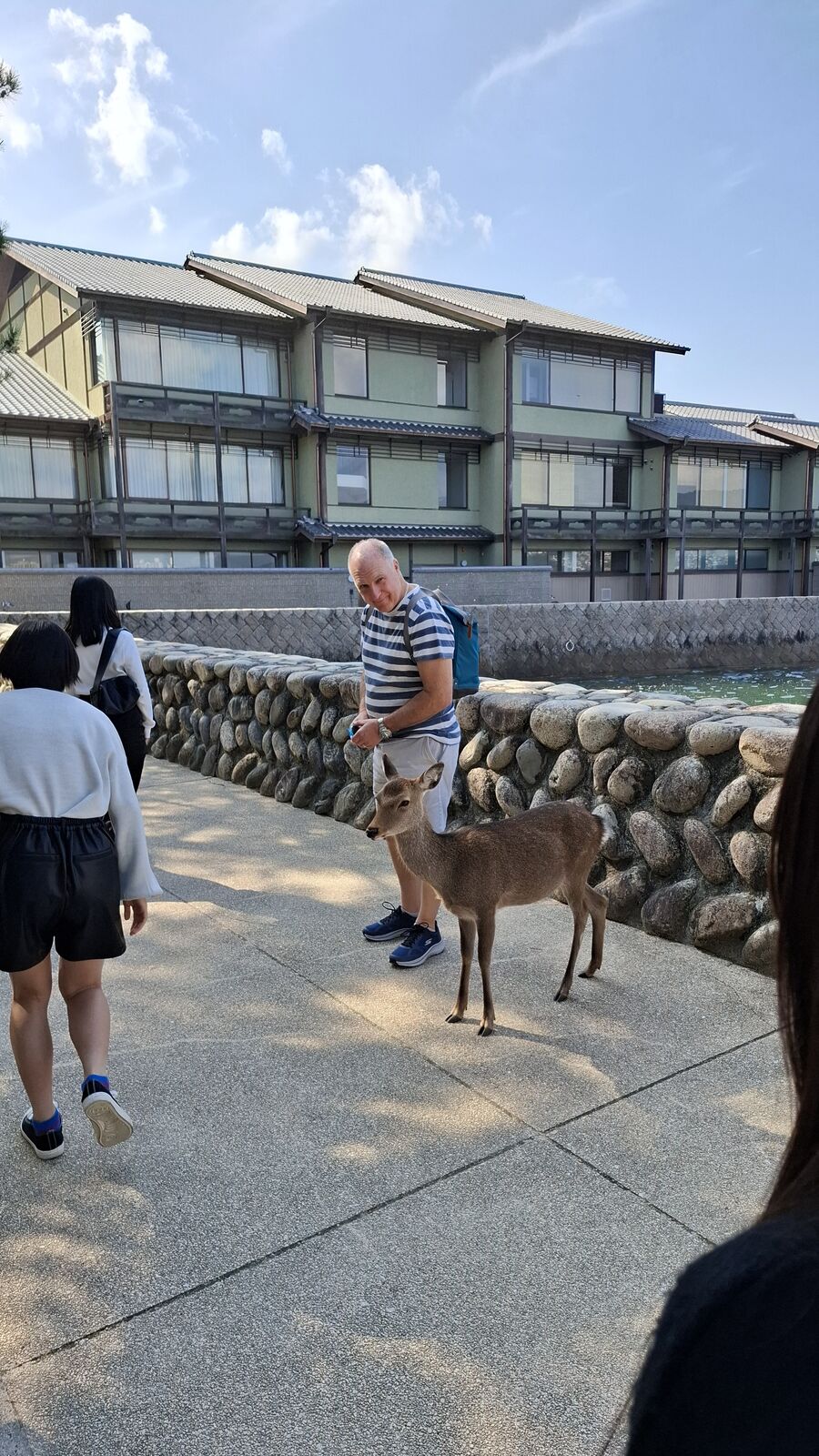
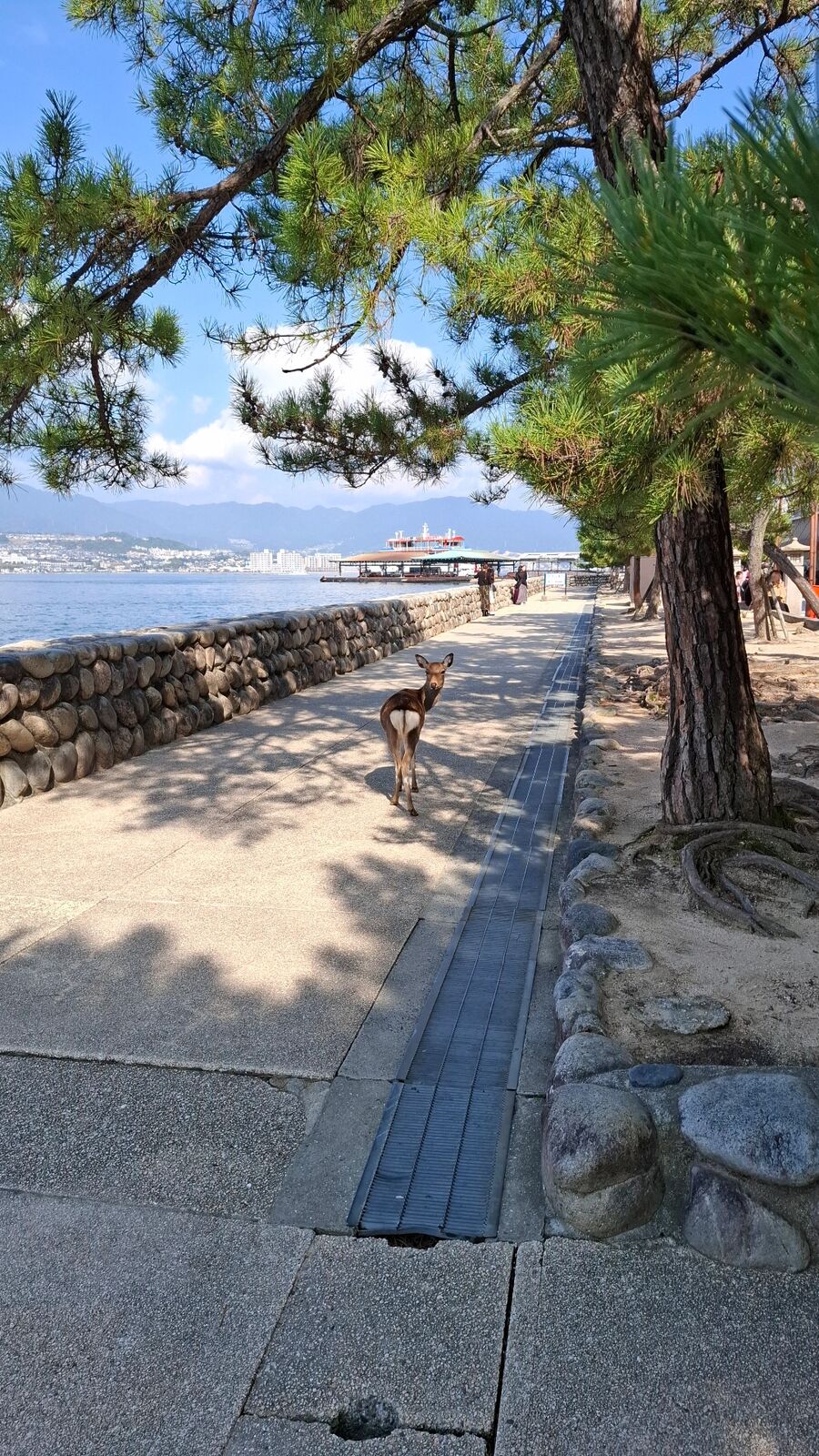
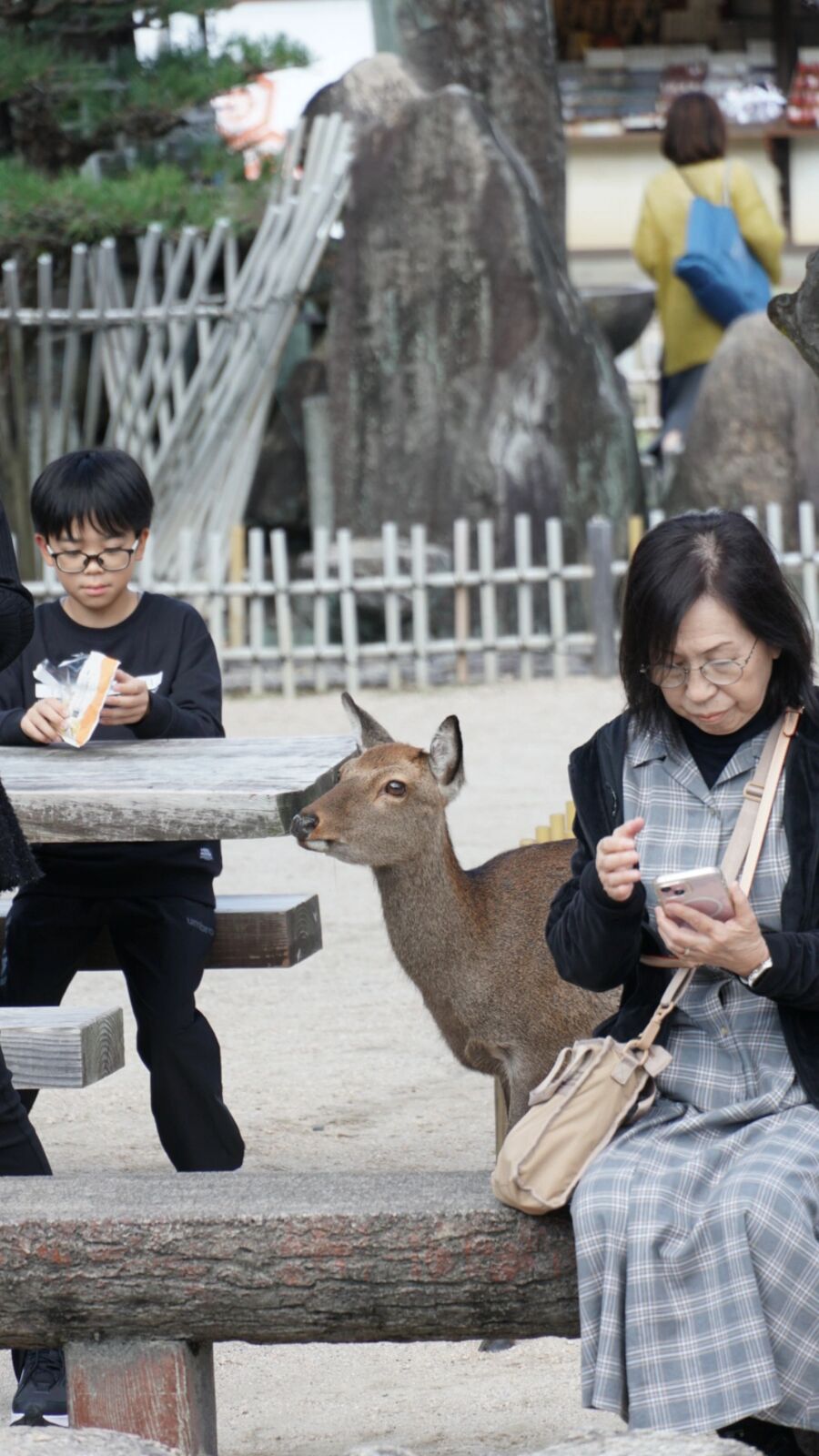
The deer on Miyajima are everywhere. They stand on the waterfront promenade like they own it, which historically they do. They're considered divine messengers, same as in Nara, and they've been here long enough that they've completely lost any wariness of people. You'll find them sleeping on benches, standing in doorways, and politely investigating whether whatever you're eating can be shared.
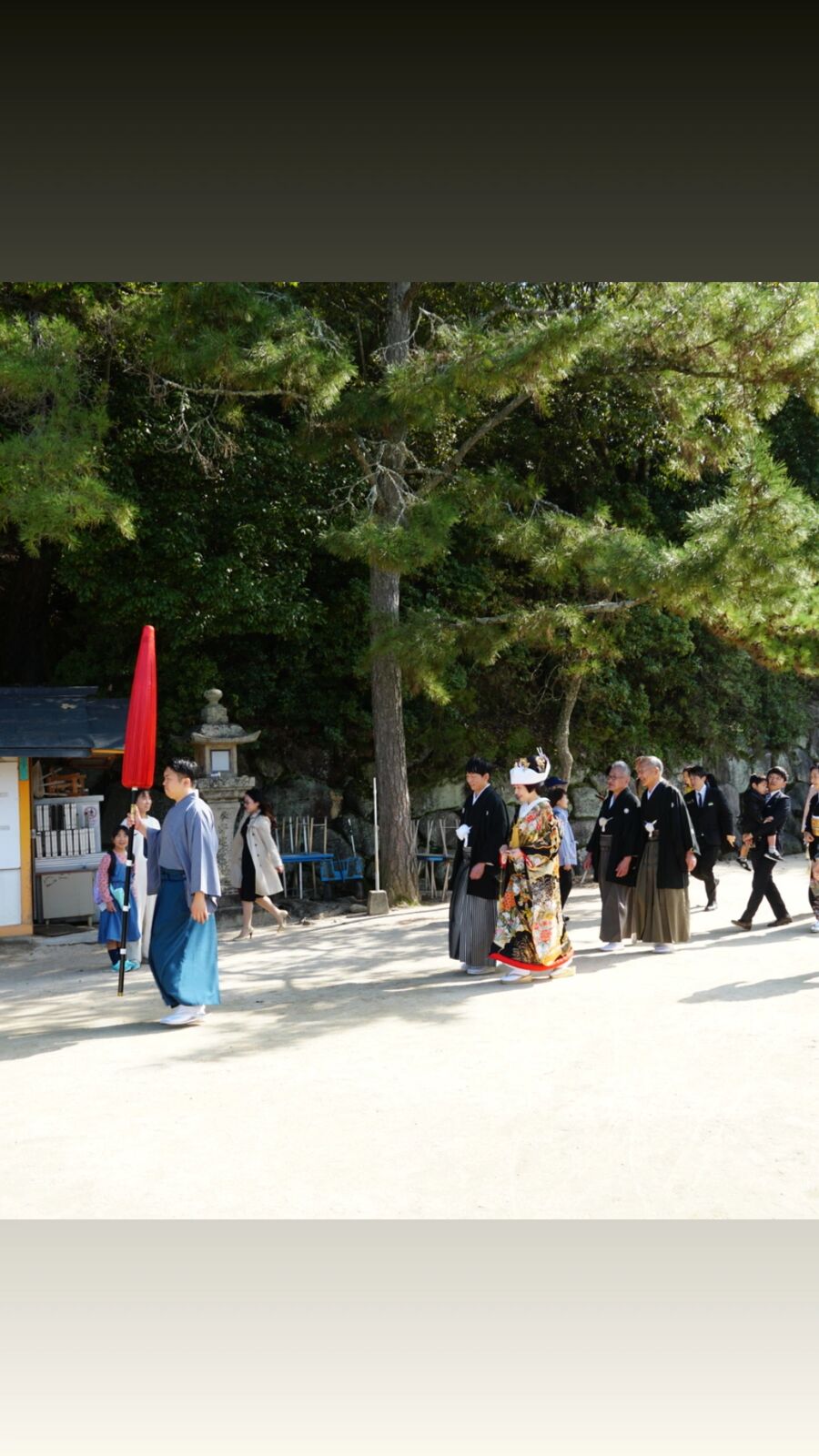
Walking along the shrine approach, I caught a Shinto wedding procession passing through the grounds. The bride in a white headdress and elaborate kimono, the groom in dark formal wear, attendants carrying a red parasol, the whole party moving with a dignity that made the tourists instinctively step back and lower their cameras. Some moments are like that. You see something and you know immediately that it matters, that you're witnessing something that has been done this way for a very long time.
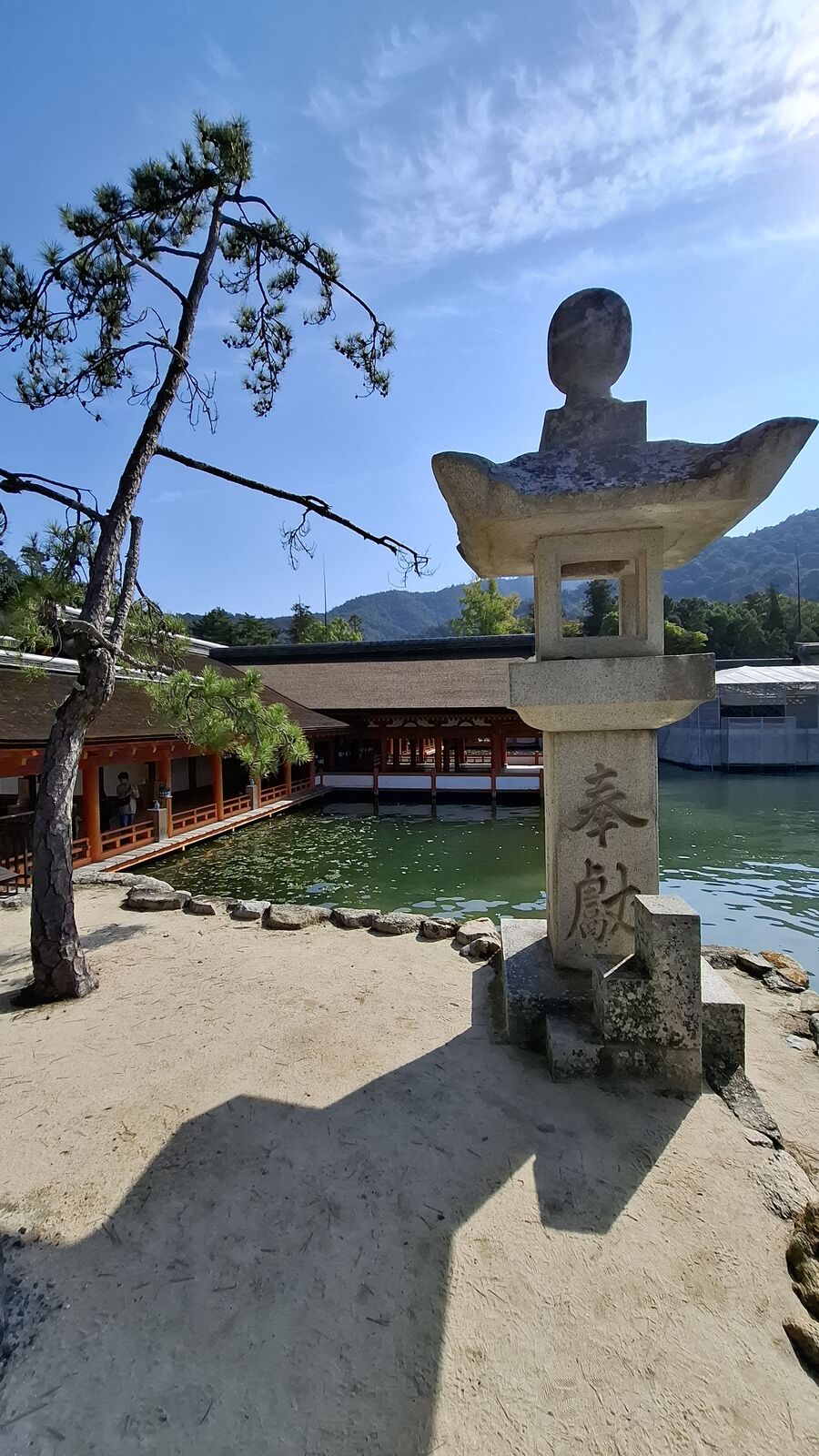
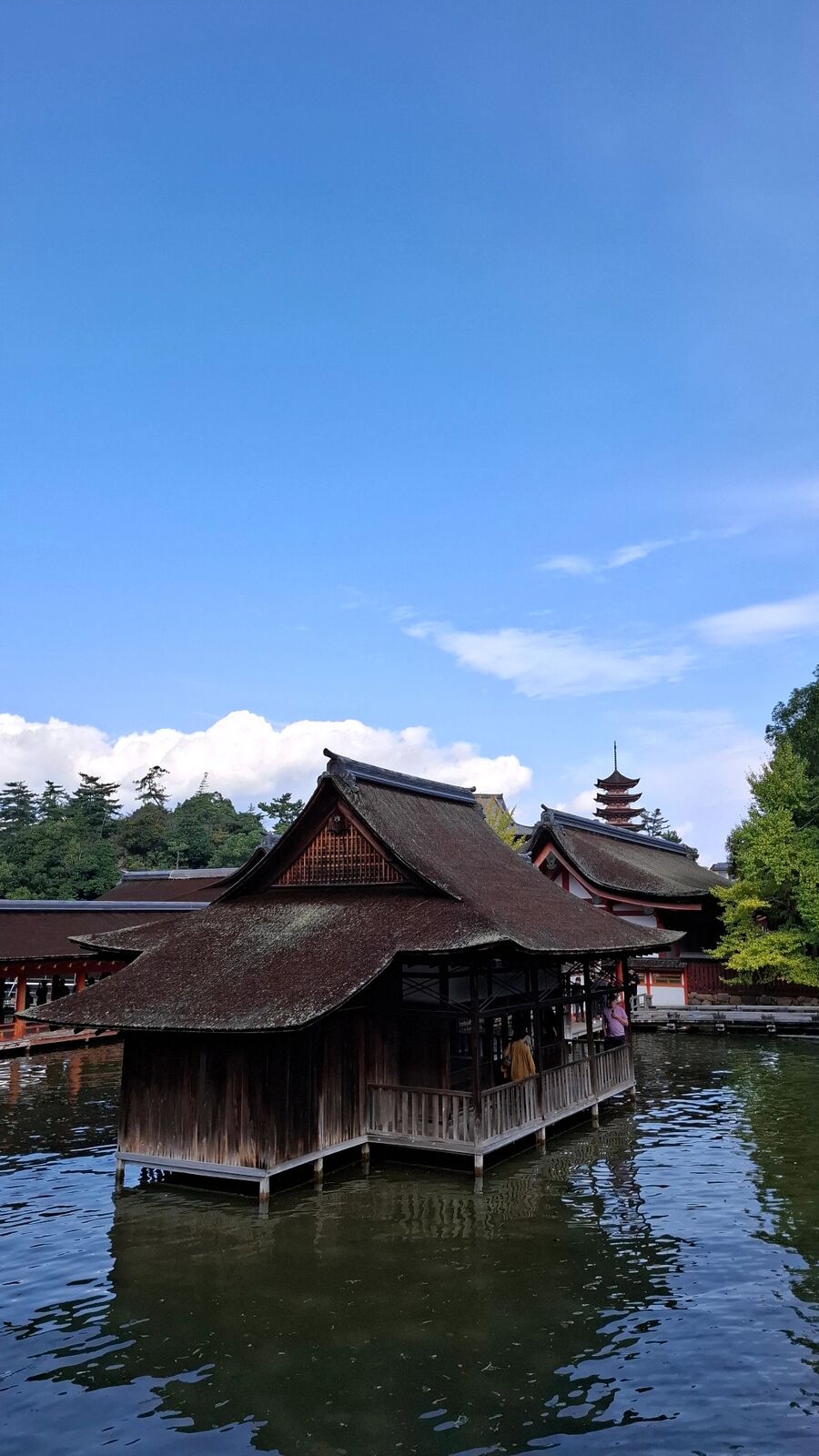
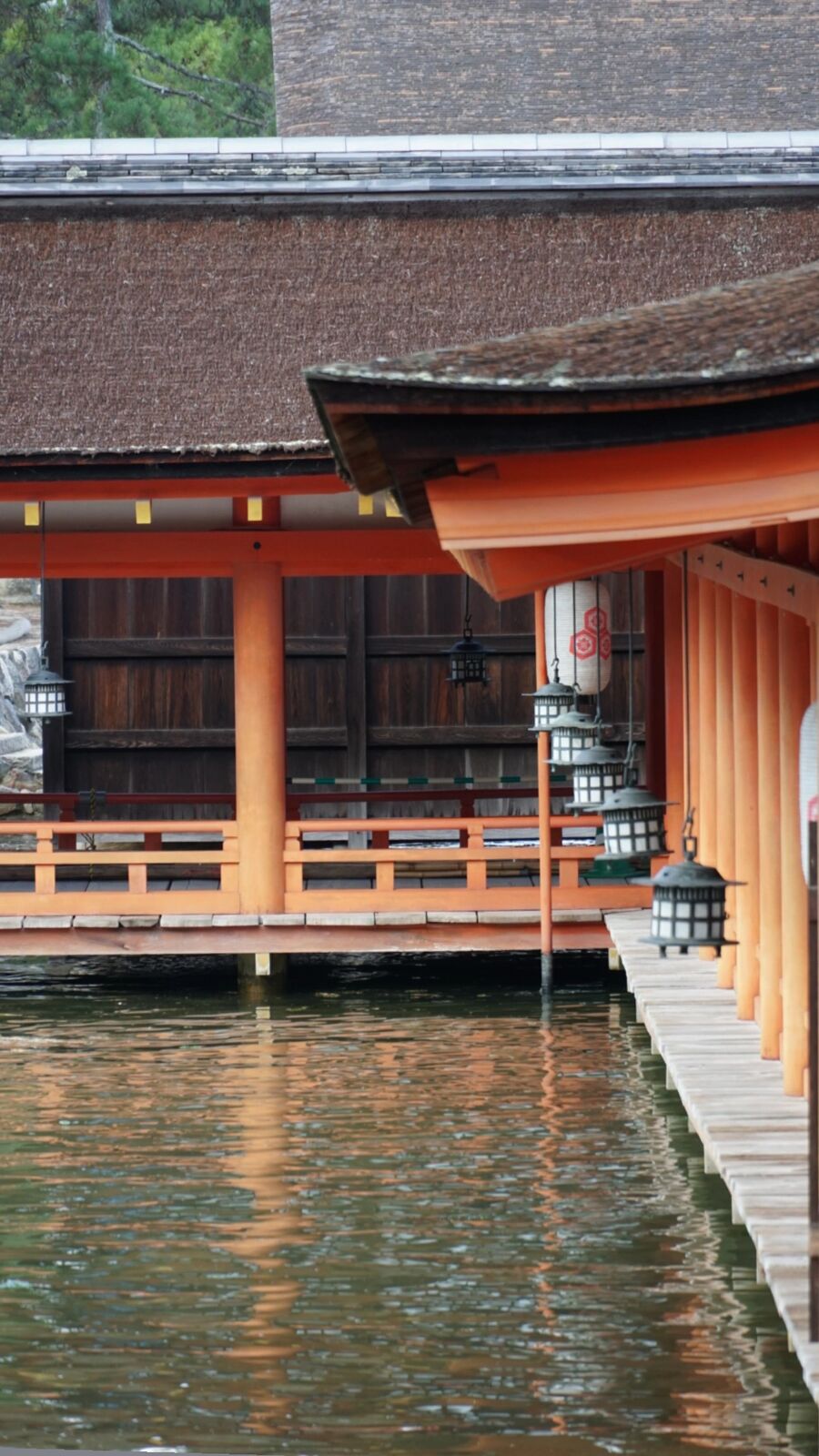
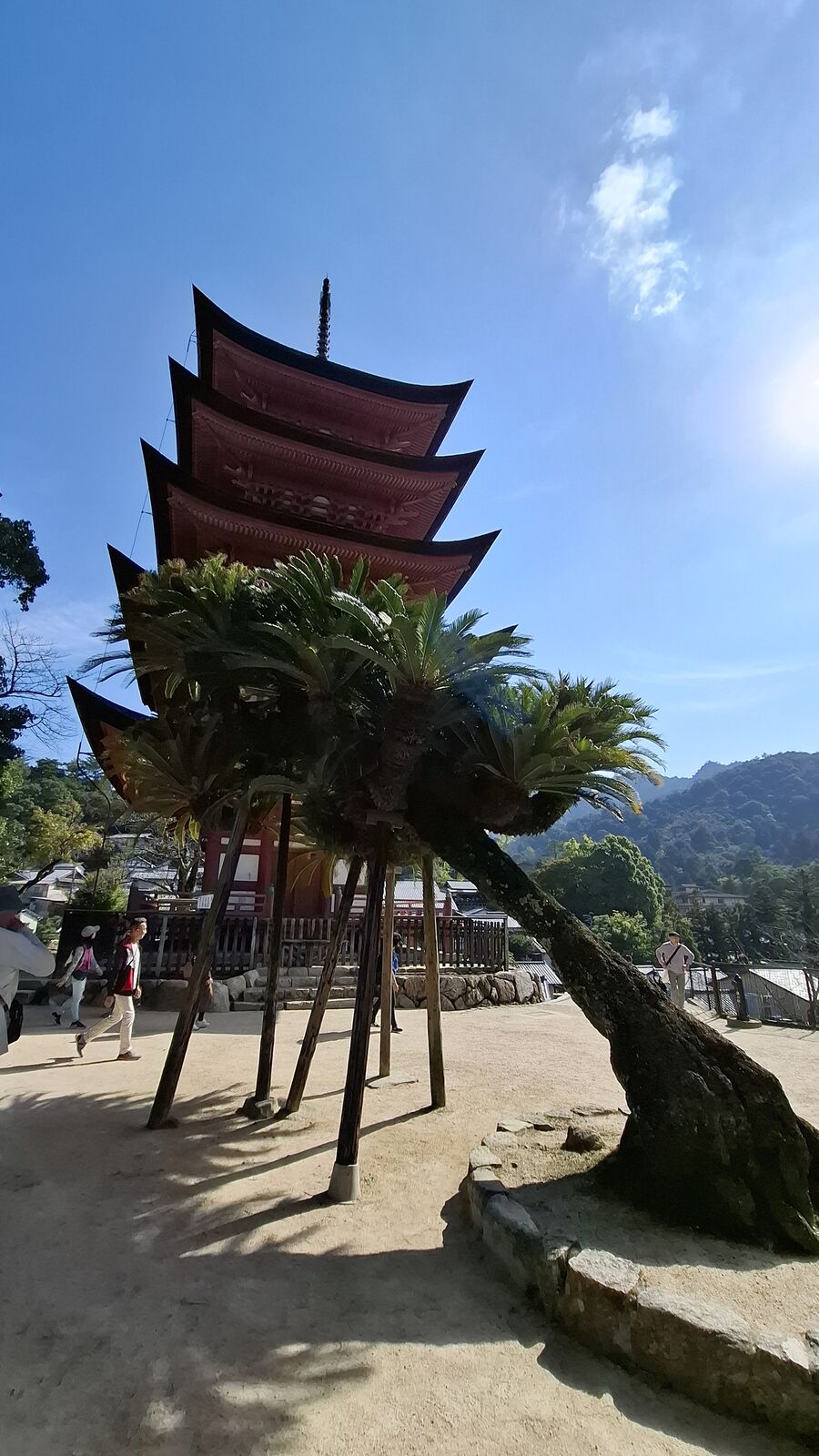
The shrine complex itself is worth slowing down for. The corridors of orange pillars leading out over the water, the Noh stage that seems to hover above the tide, the five-story pagoda visible through gaps in the roofline. It's a place that rewards looking up and looking sideways. The main path takes you through in twenty minutes, but you could spend an hour finding angles and details that most visitors walk past.
Quiet Corners
Miyajima is busy. There's no pretending otherwise. The main shopping street is packed, the shrine entrance has a line, and the area around the torii at any given time has more selfie sticks than trees. But the island is bigger than the tourist zone, and the people who stop at the selfie spots mostly don't venture much further.
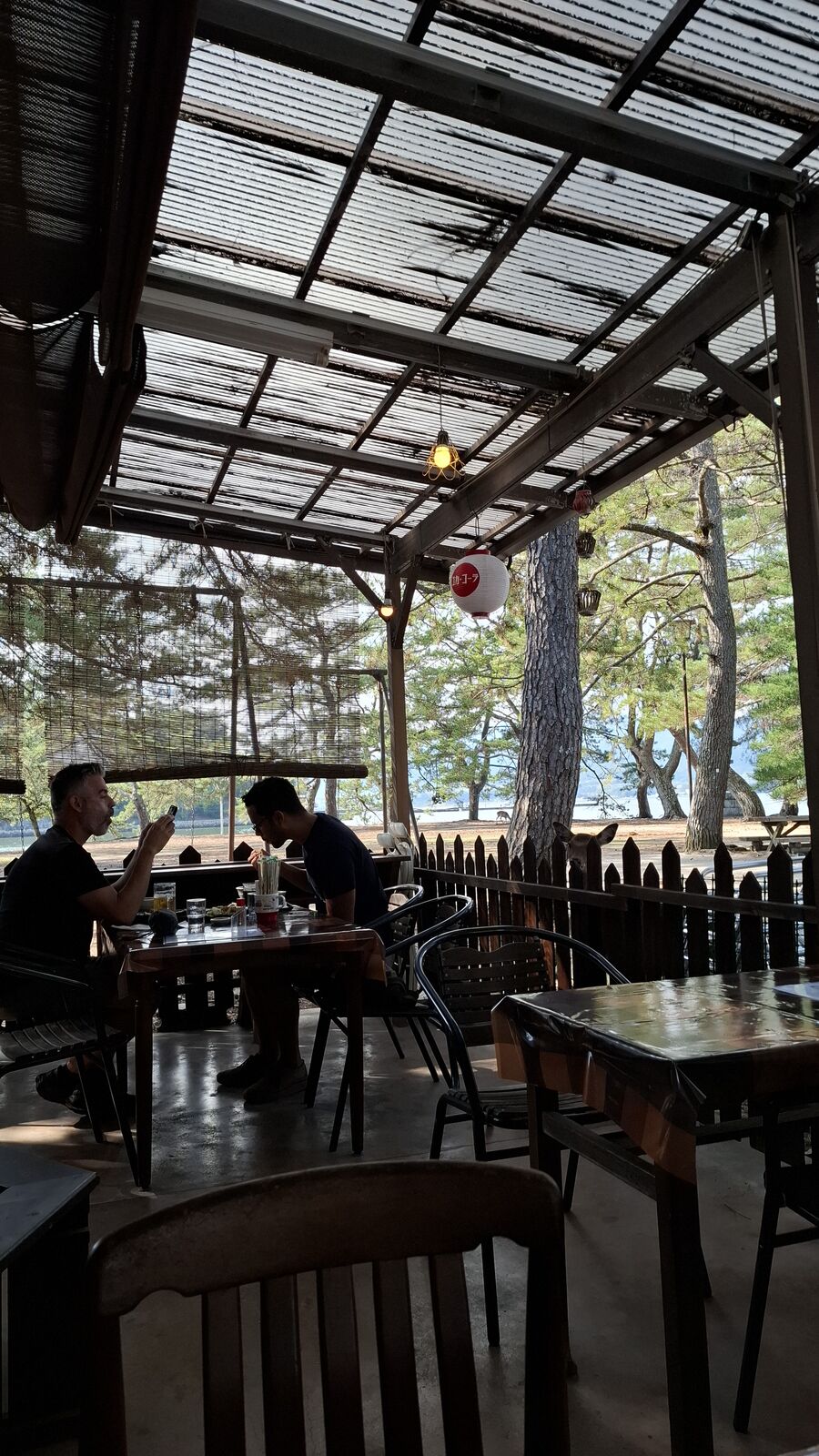
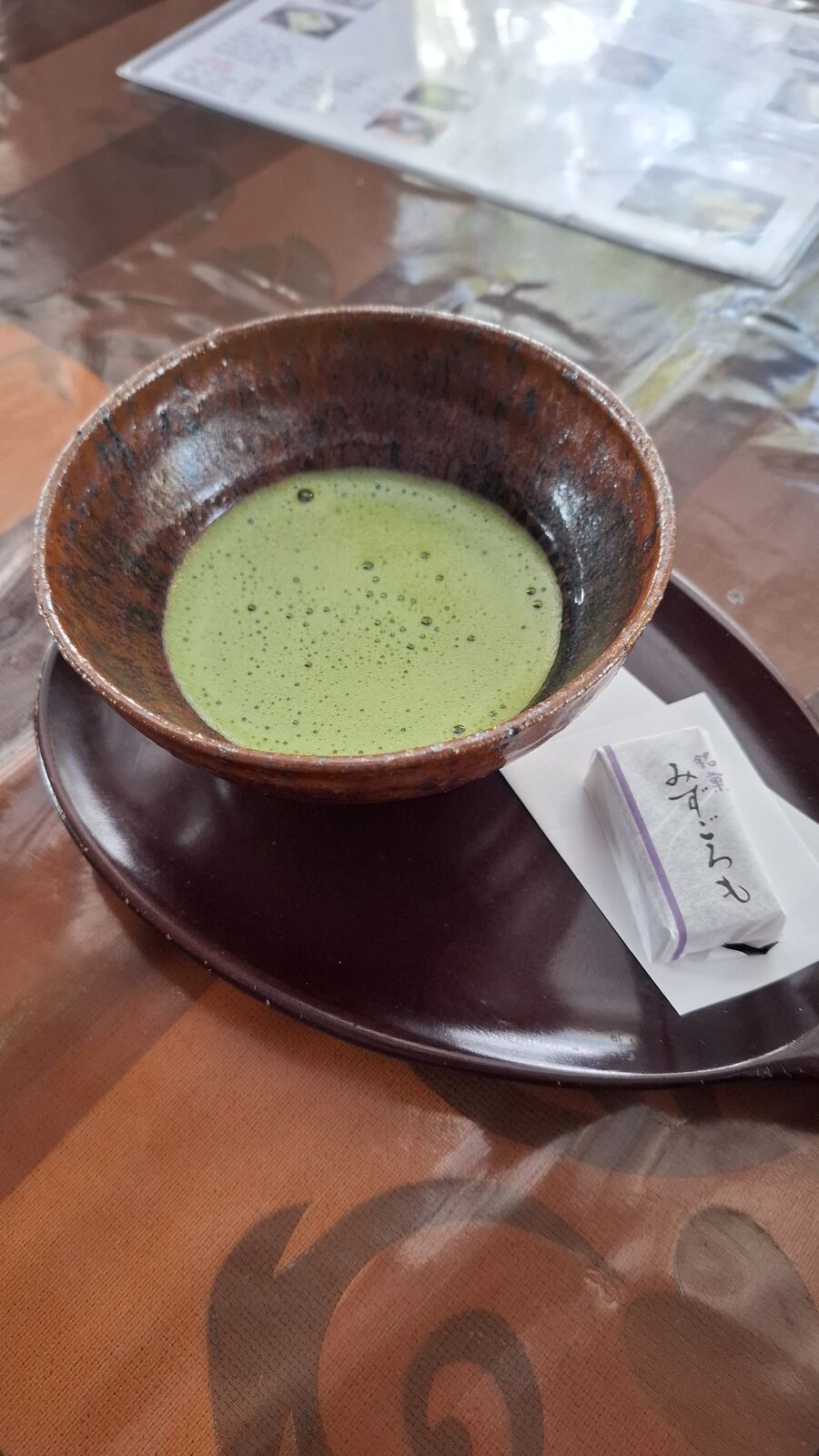
I found a café tucked away on the quieter side of the island, under old cedar trees, with maybe half a dozen guests. The kind of place where you sit down and nobody's in a hurry. I ordered matcha and a small lunch, and ended up talking to an American couple at the next table. They were retired, had sold their house in California, and were traveling the world with no fixed return date. He'd been in sales coaching, and we found enough professional overlap to keep the conversation going for a while. They were planning to stay in Japan for several months. I ran into them again a few days later in Osaka, had coffee at a hotel bar overlooking the castle park. Small world, same orbit.
I told them that their lifestyle was basically my retirement dream, and I meant it. Selling everything, no fixed address, just going wherever the next interesting place happens to be. They laughed and said that's exactly what everyone tells them, but almost nobody actually does it.
Daisho-in
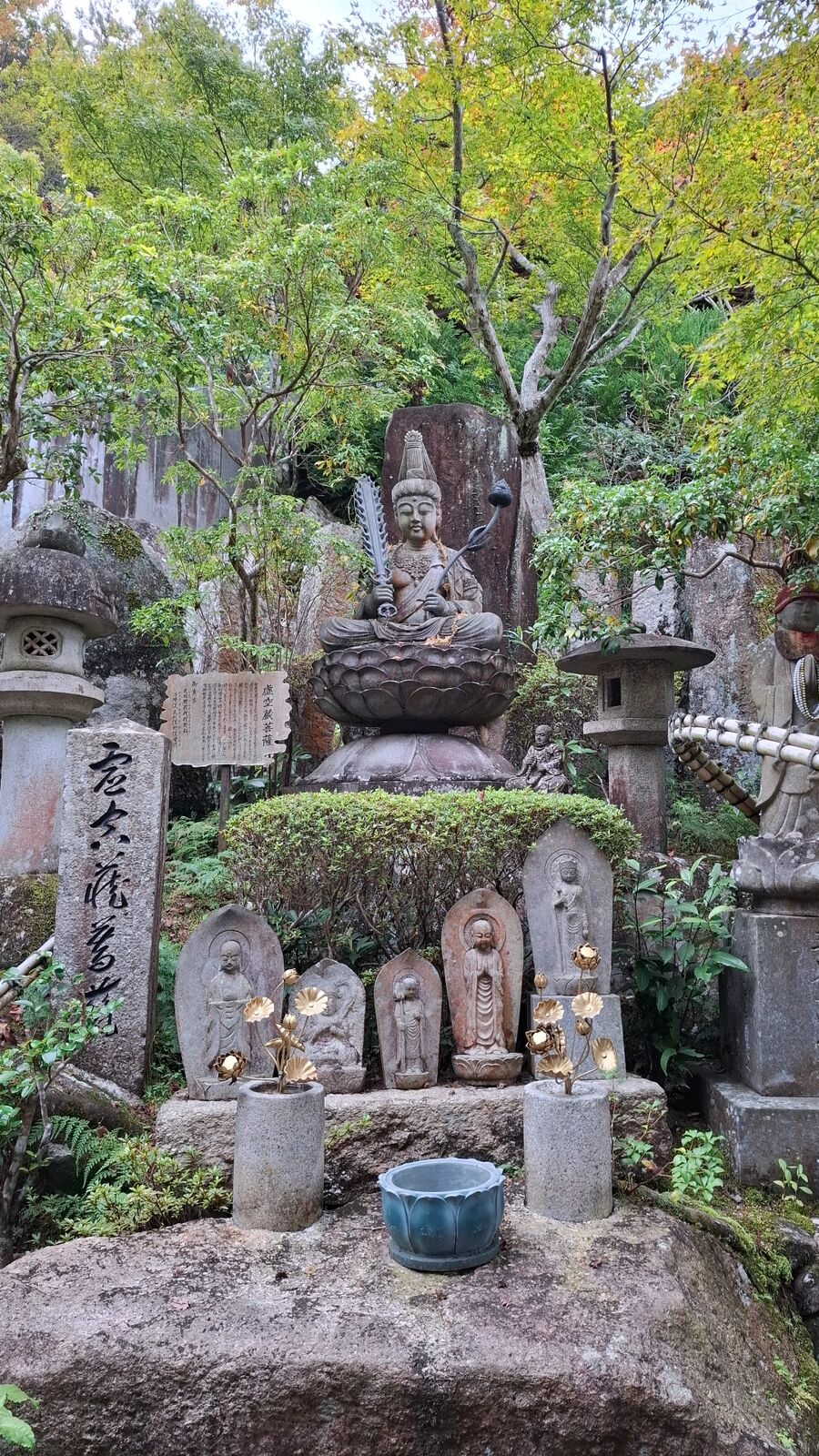
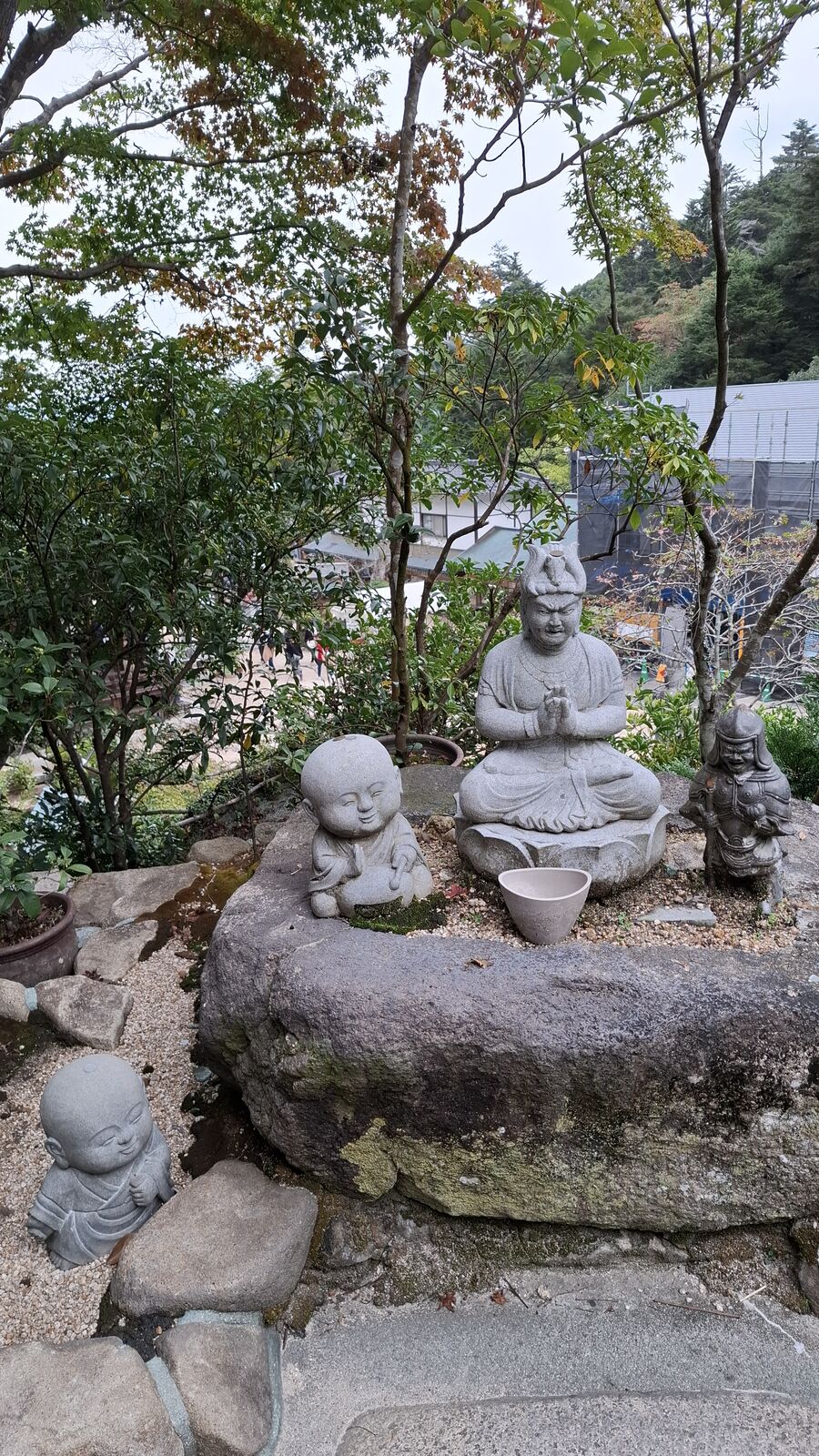
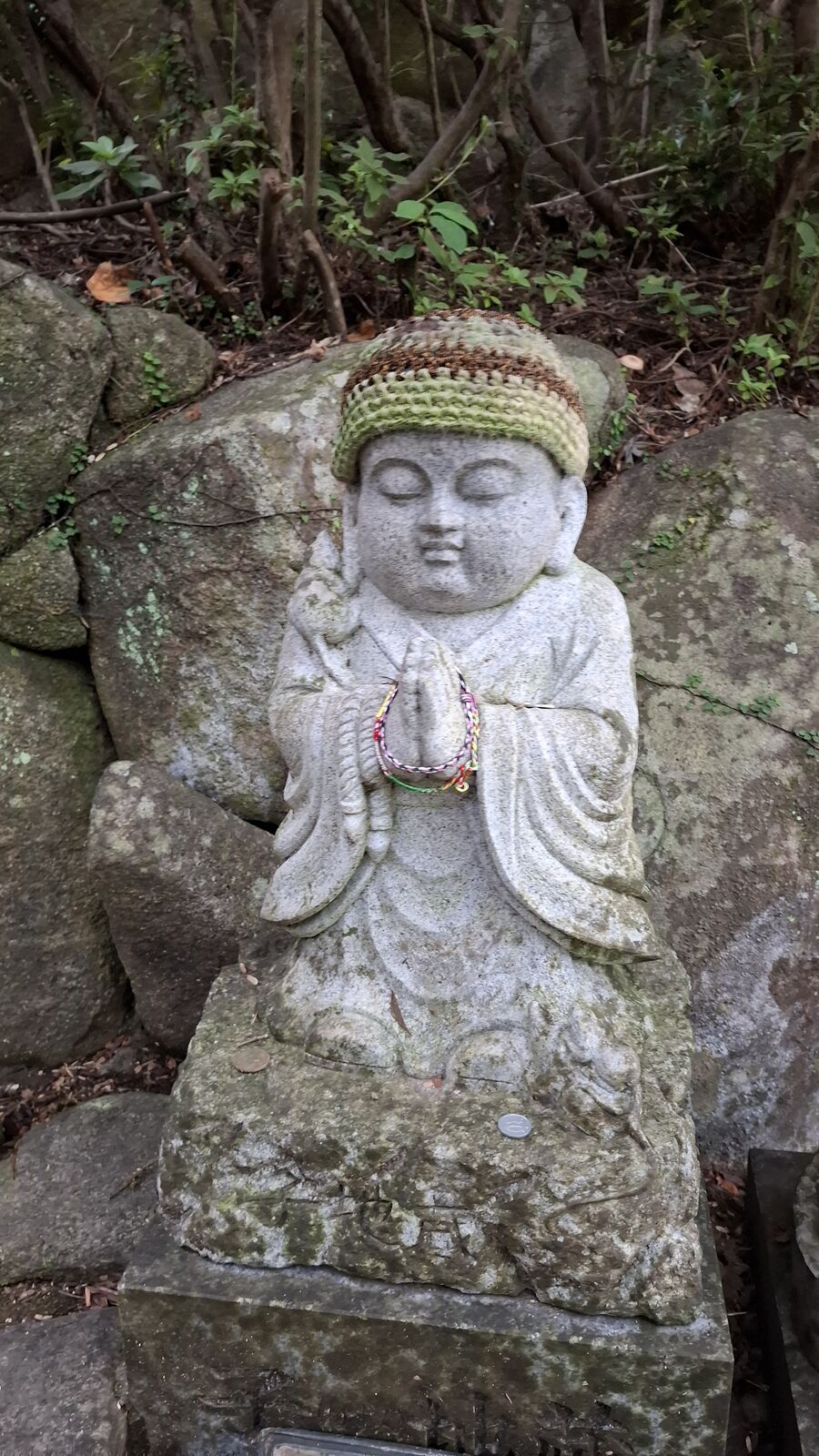
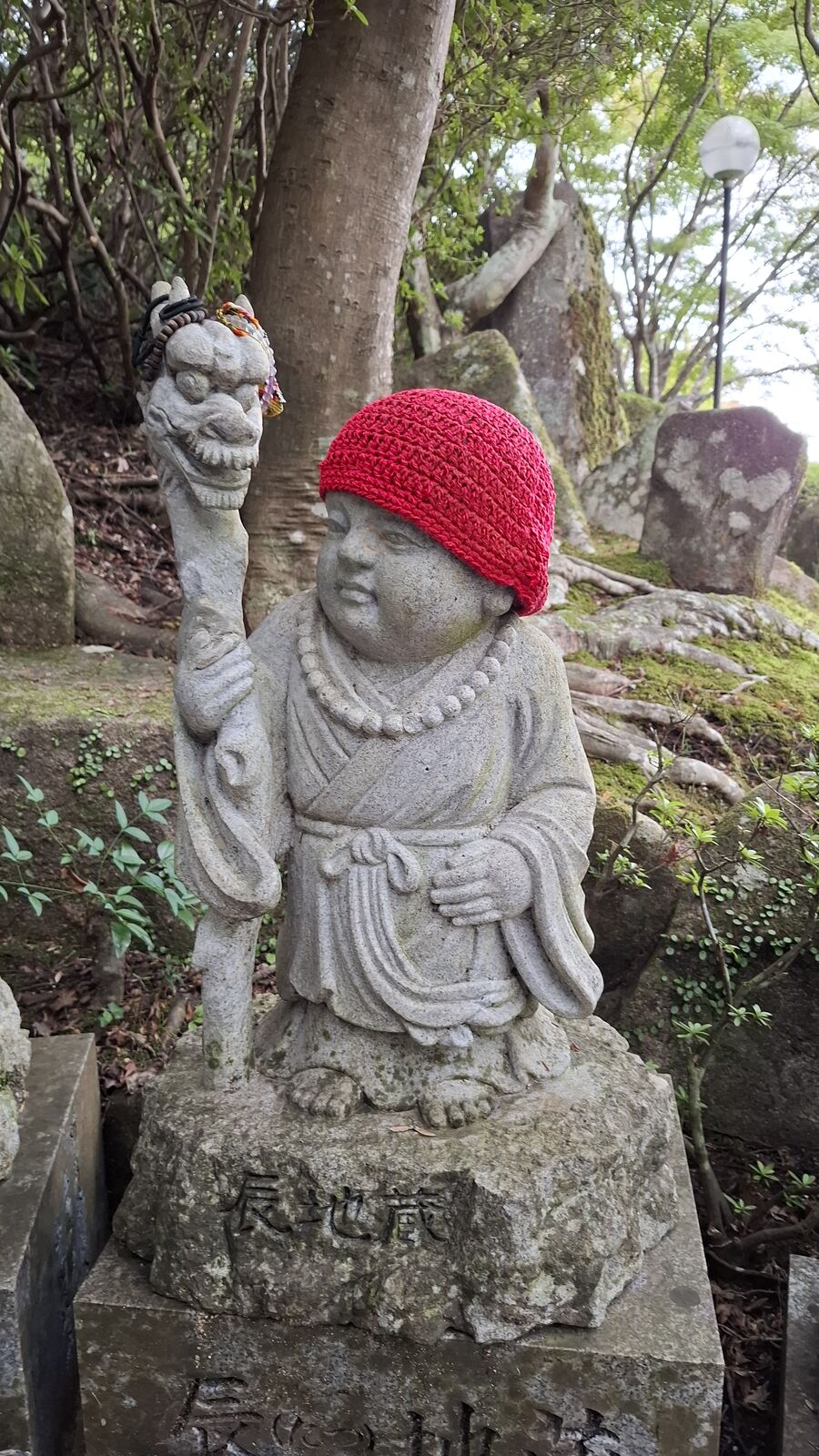
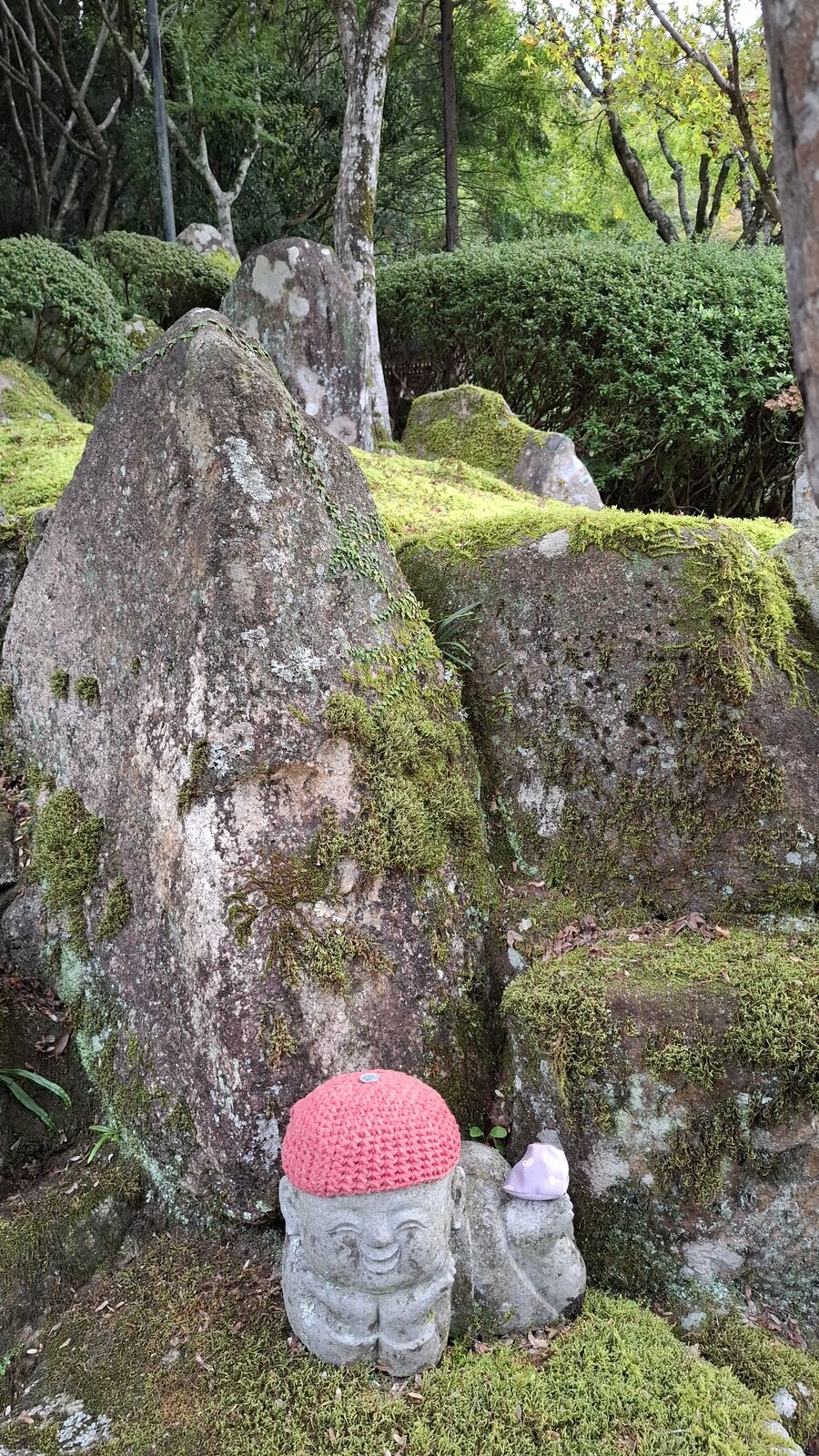
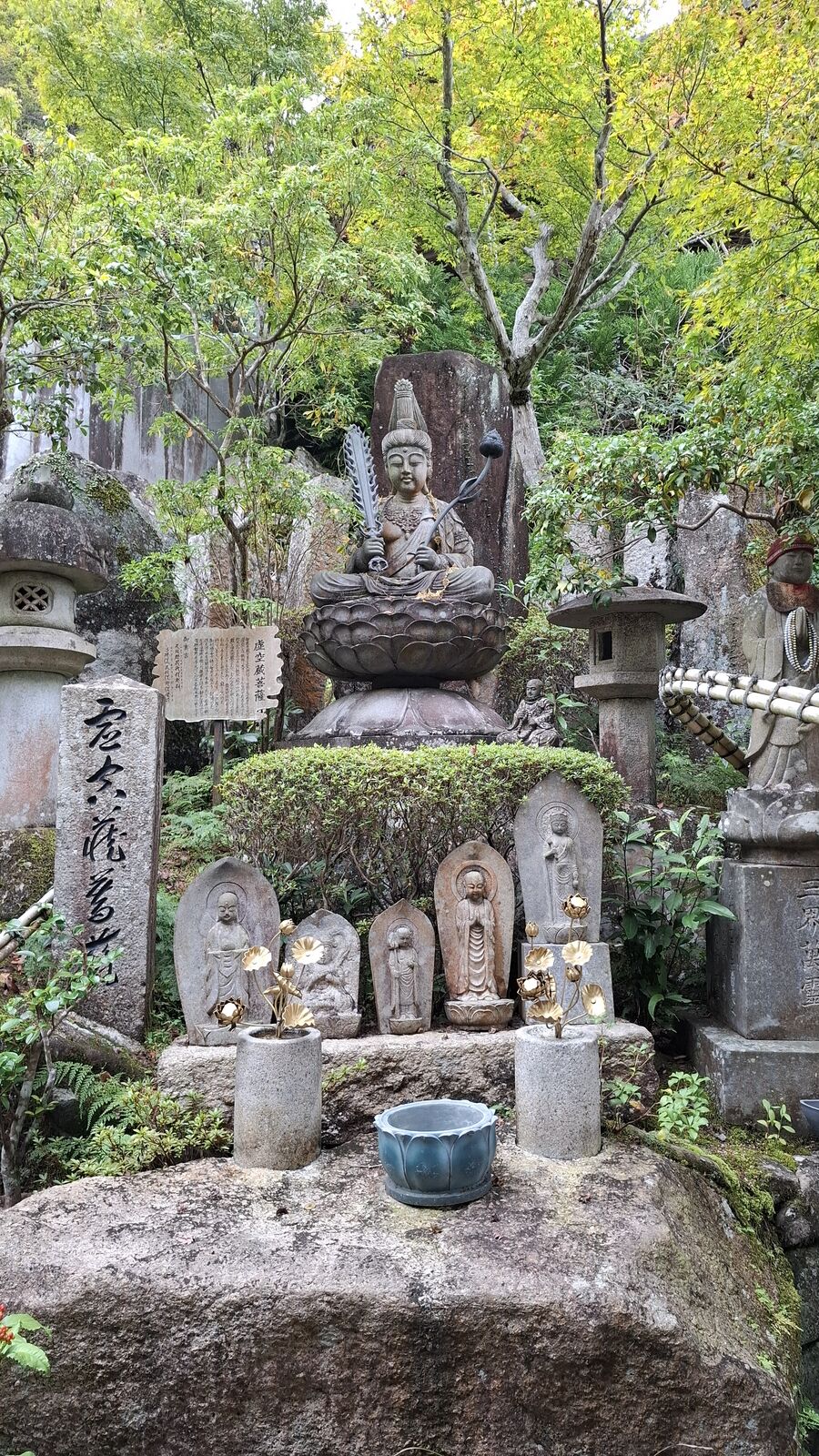
Above the town, the path climbs up through forest to Daisho-in, a Buddhist temple complex spread across the mountainside. If the shrine down below is all vermillion and ocean and ceremony, Daisho-in is the opposite: mossy stone, quiet paths, hundreds of small Buddhist statues arranged among the trees like they've been having a conversation for centuries.
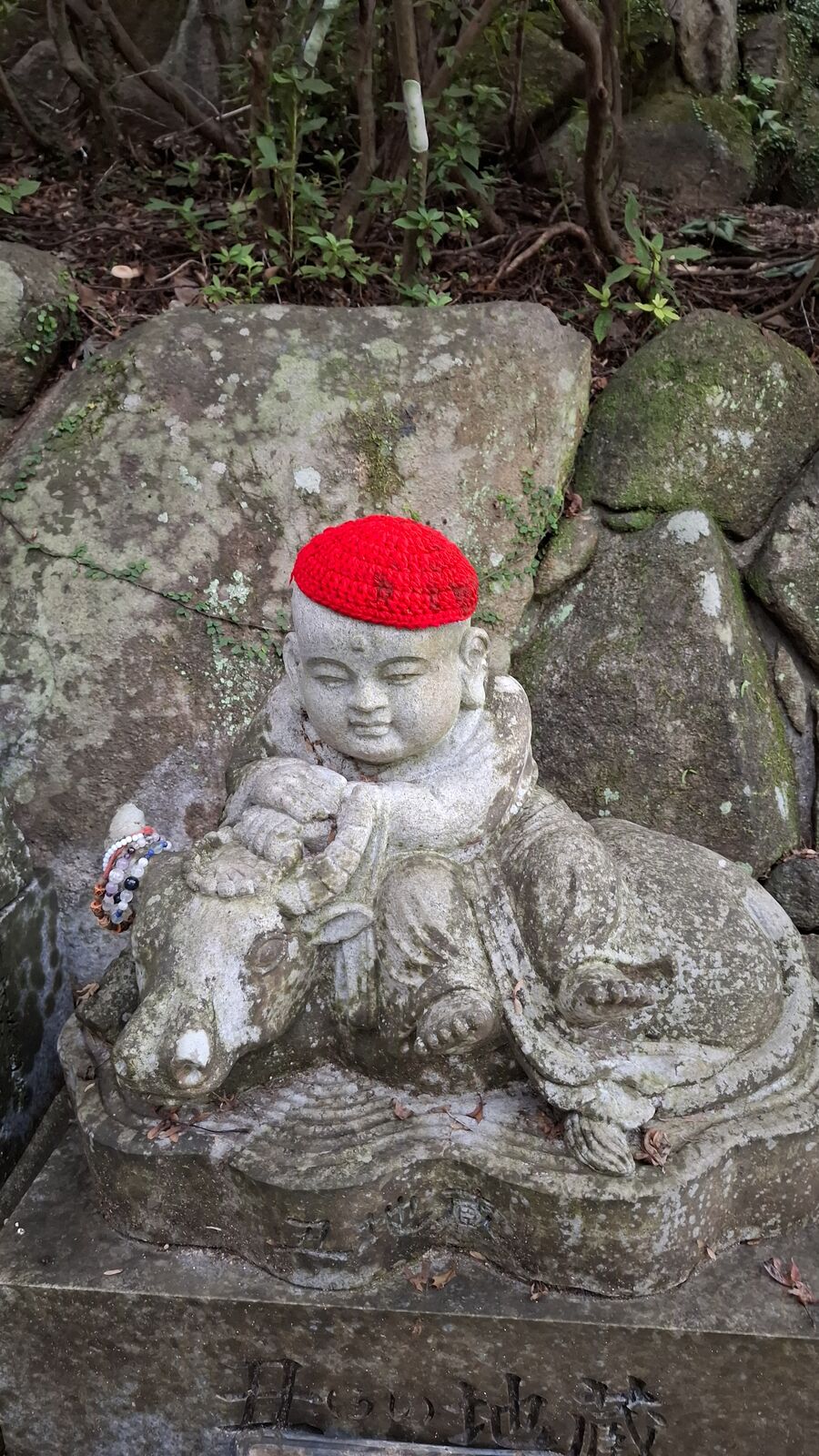
The jizo statues are what stay with you. Small stone figures wearing hand-knitted red and pink caps, some smiling, some sleeping, some waving. They're placed along stairways and between boulders and in corners where you only see them if you're looking. Each one has been dressed by someone, the caps replaced when they wear out, the bibs retied. There's something about that ongoing care that makes the place feel less like a museum and more like a community. Not just for the living.
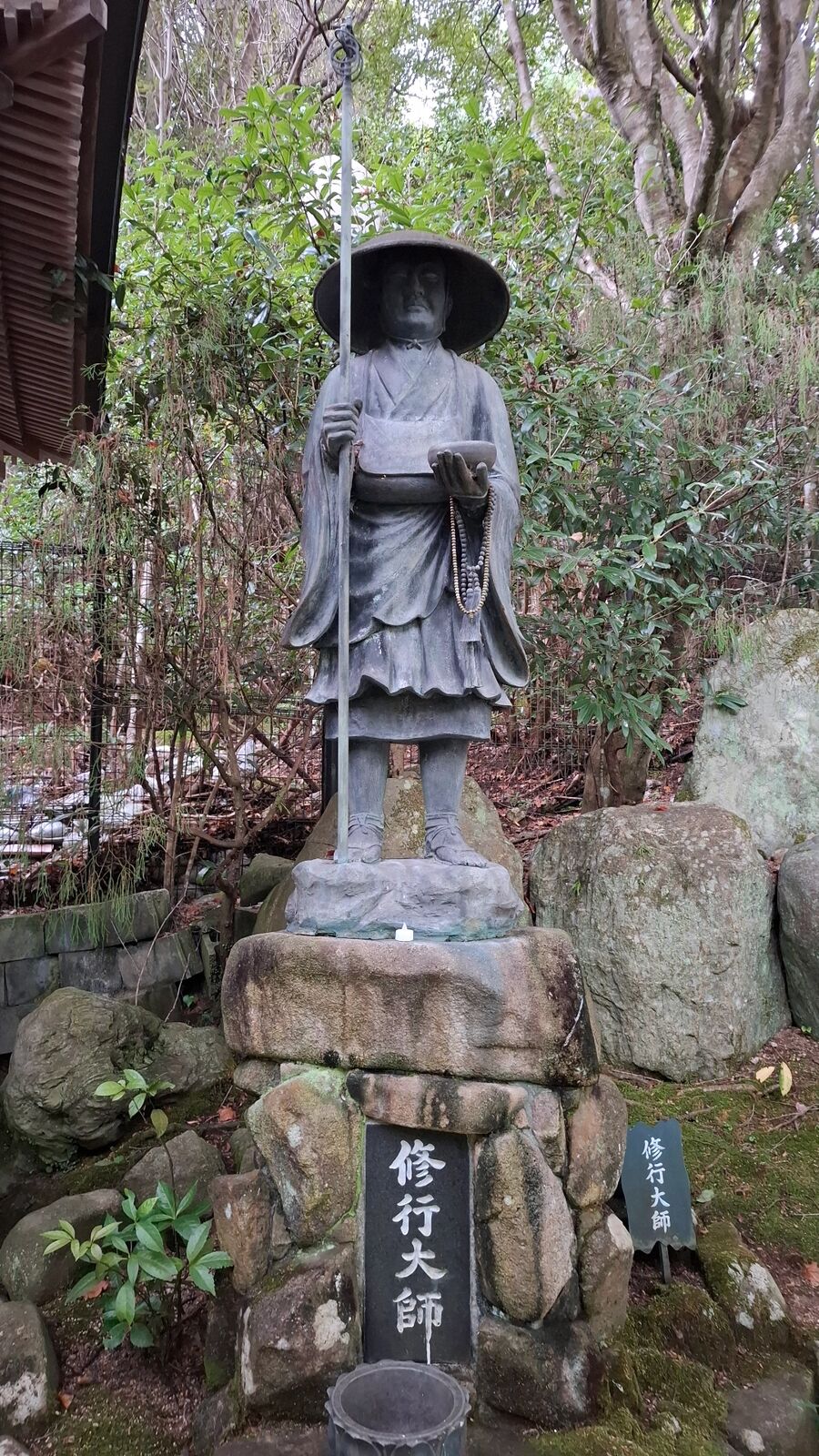
Higher up, I found a statue of Kobo Daishi, the founder of Shingon Buddhism, standing in his traveling robes with a walking staff. The plaque read 修行大師. The path behind him led further up the mountain toward Mount Misen, the island's highest peak. I didn't go up this time. Next trip. The light was already getting low, and I had a feeling the torii at sunset was going to be worth being back down at the waterfront for.
Between Tides
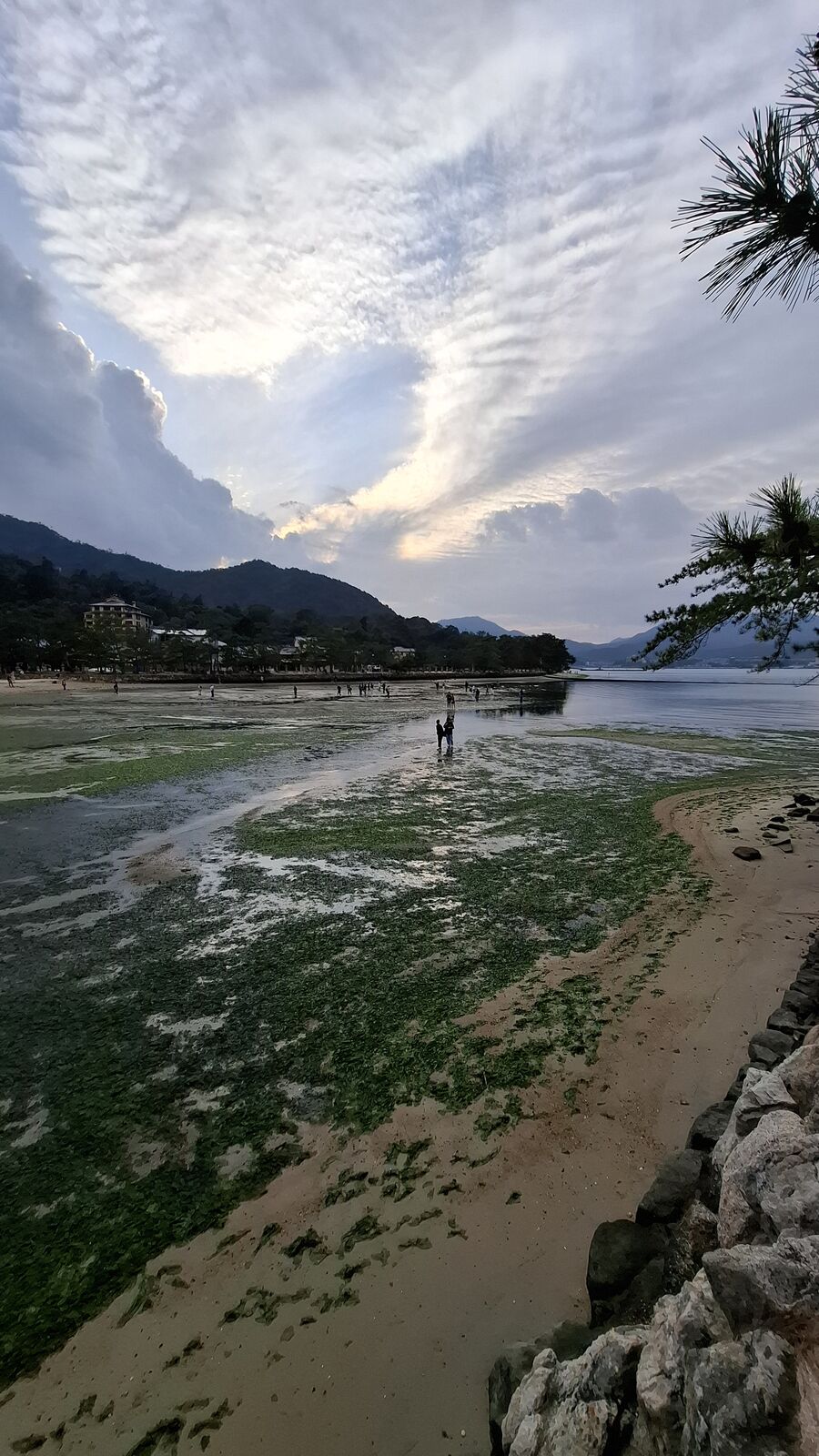
I'd timed the visit without planning to. When I arrived in the morning, the tide was high and the torii stood in water. By late afternoon, the tide had gone out and the entire seabed was exposed. People were walking across mudflats that had been ocean a few hours earlier, picking their way between puddles and seaweed, heading toward the torii gate that now stood on dry ground with its massive wooden pillars fully visible from base to top.
It's a strange thing to watch. The same gate, the same place, but the entire context changes. In the morning it was floating, sacred, untouchable. In the afternoon it was standing in mud and people were posing for photos between its pillars. Neither version is more "real" than the other. That's the whole point of building a shrine between tides. The sacred isn't fixed. It moves with the water.
Sunset
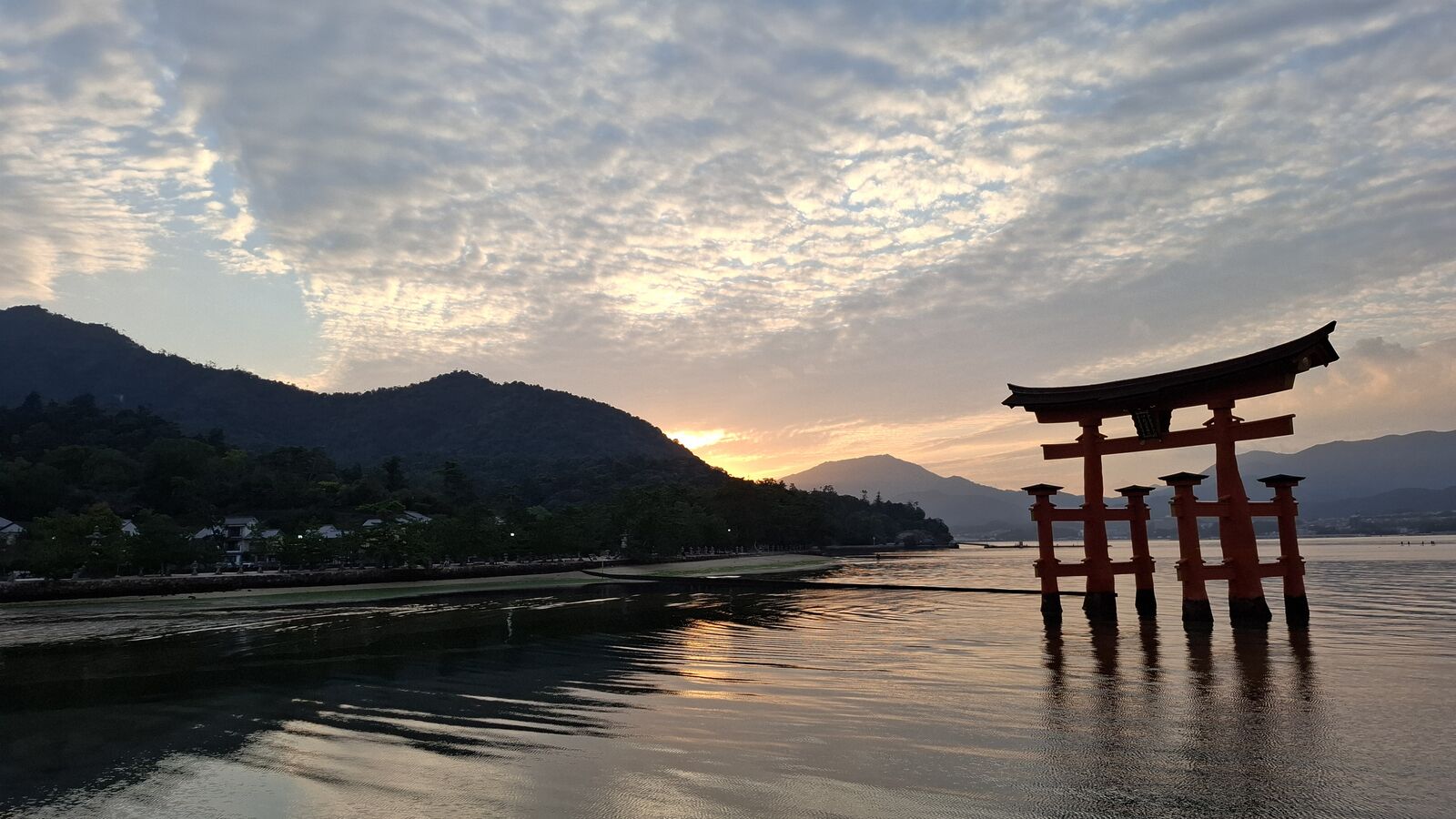
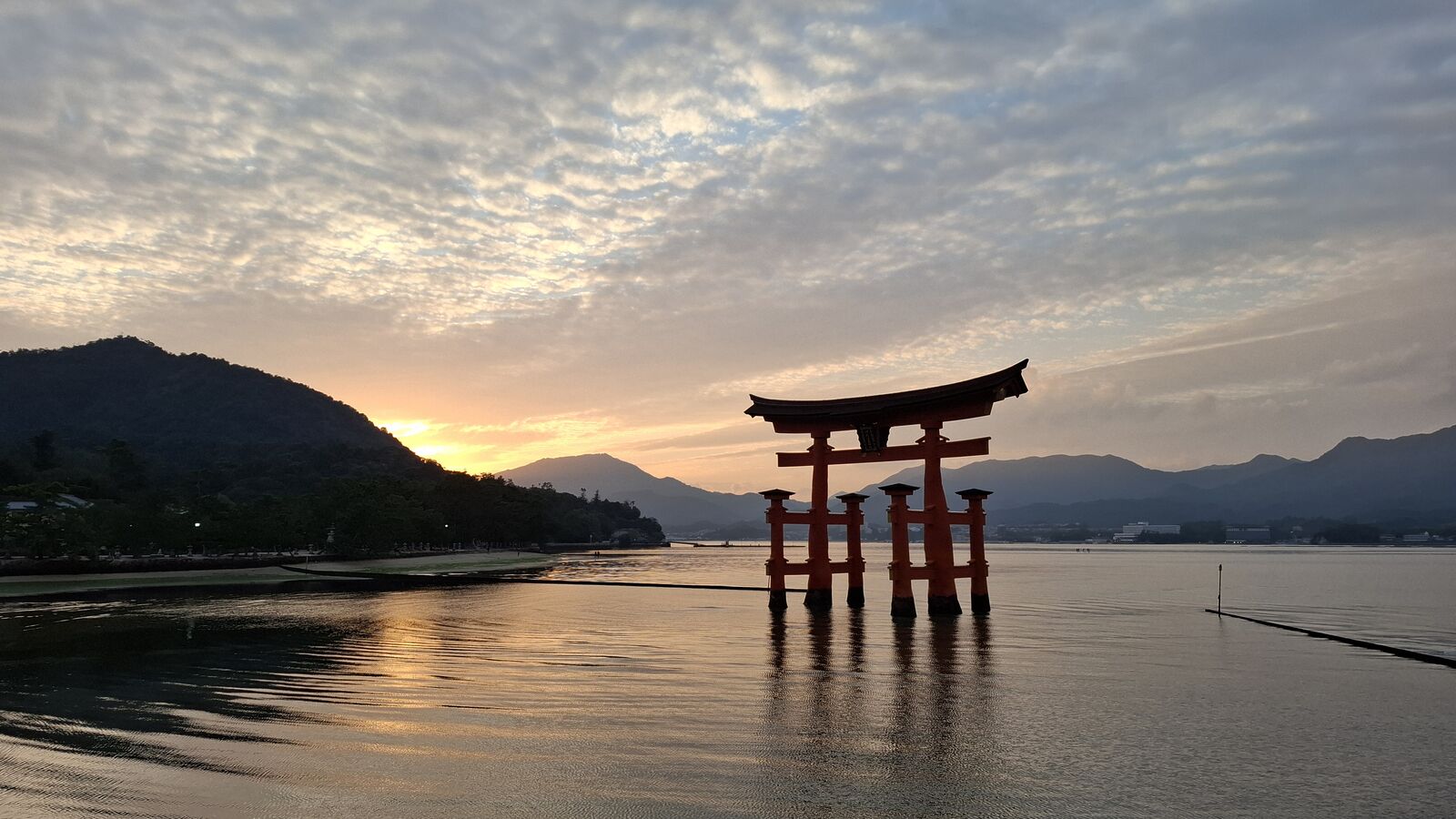
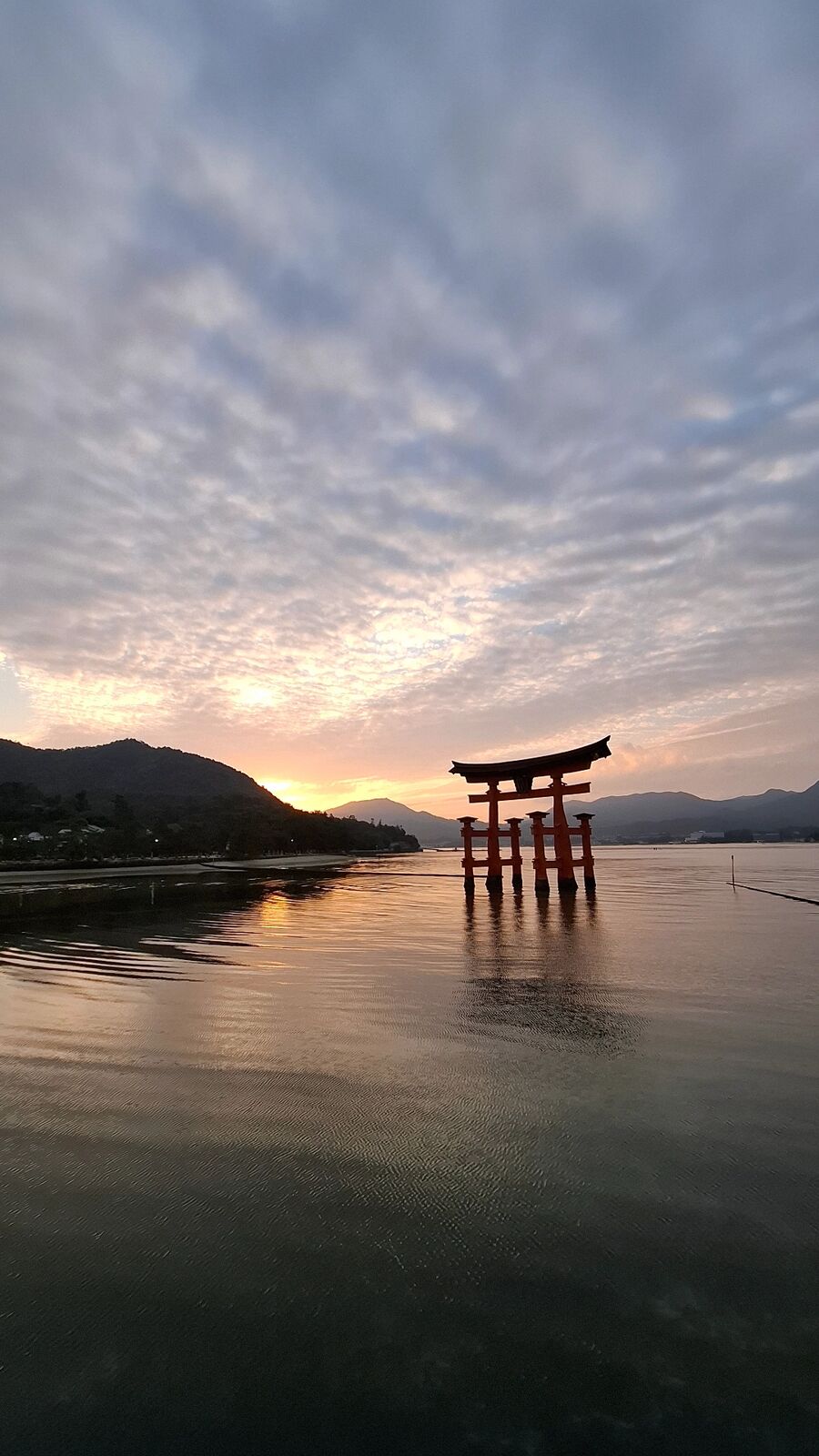
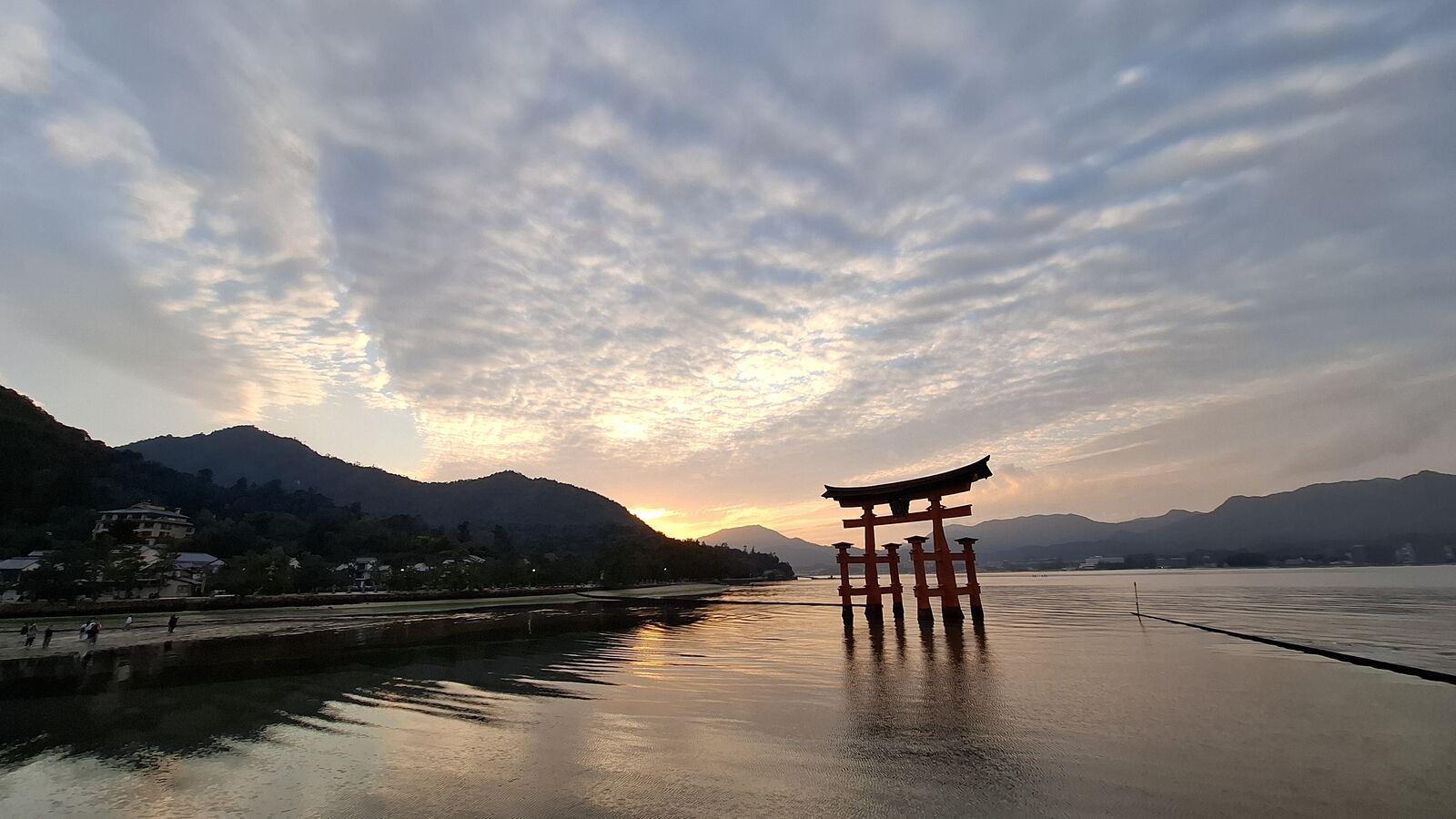
The tide was coming back in by sunset. The torii was half in water again, the mudflats shrinking, and the sky was doing what skies do in November over the Inland Sea: soft orange deepening to amber, grey clouds streaked with light, the mountain behind the gate turning to silhouette. I sat on the stone seawall and watched. Plenty of other people were watching too. Nobody talked much.
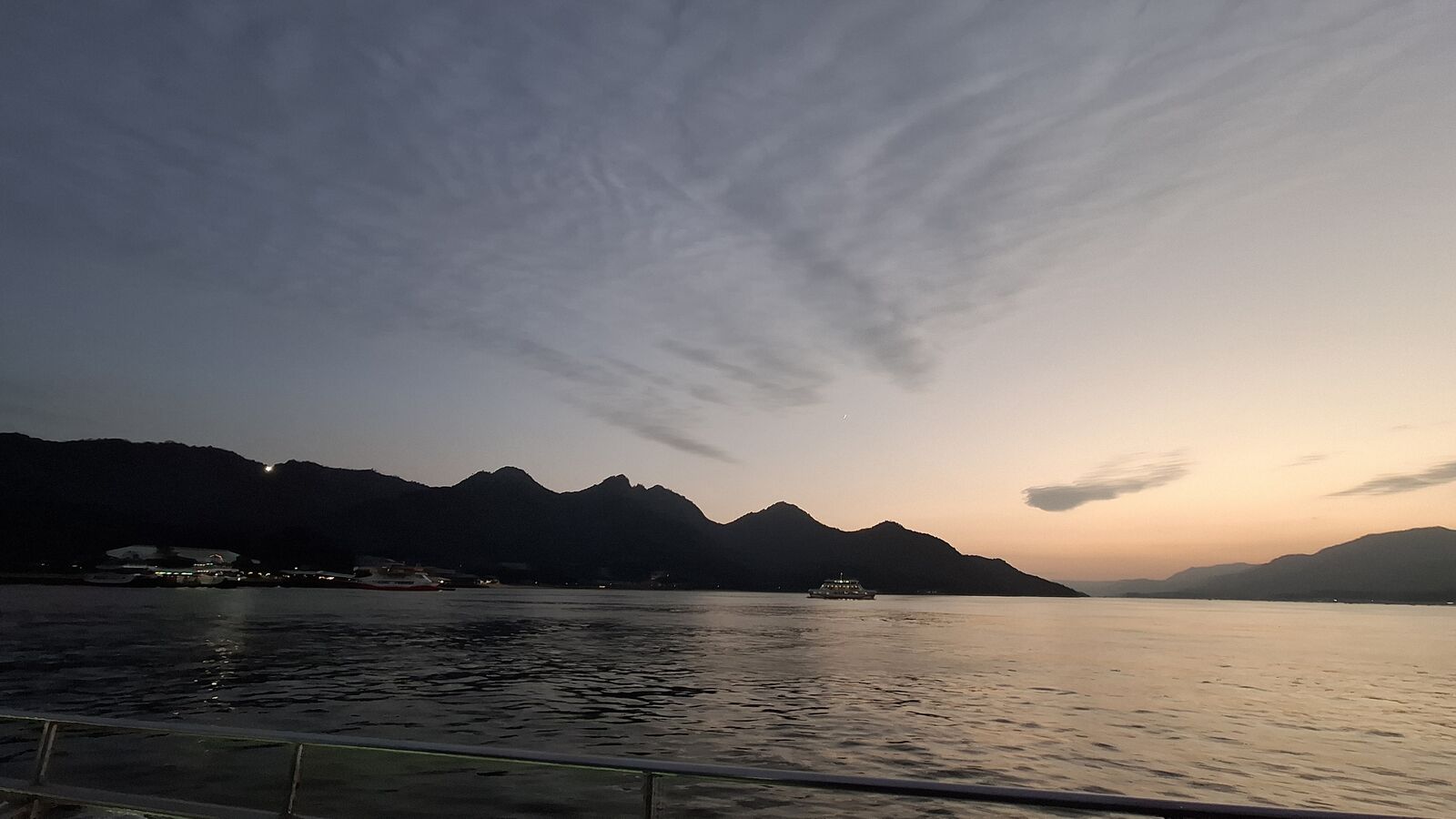
The last ferry back was approaching. You could see it crossing the water in the distance, its lights already on. I walked down to the port and boarded, and from the deck I watched Miyajima's mountain profile recede into the evening sky. A crescent moon was out. The larger car ferry was crossing in the other direction, lit up like a small building moving across dark water.
Practical Info
Location: Miyajima (宮島) / Itsukushima, Hatsukaichi, Hiroshima Prefecture. View on Google Maps
Ferry: Two options from the mainland terminal in Miyajimaguchi. The regular JR ferry (covered by Japan Rail Pass) takes about 10 minutes. The fast ferry costs a few euros more and takes about 15 minutes but runs less frequently. Both are fine. The fast ferry felt worth it to me.
Parking: Several pay lots near the mainland ferry terminal. Flat daily rates, perfectly safe for overnight van parking. I stayed at one two streets behind the terminal and had no issues.
Time needed: A full day. I arrived mid-morning and left on one of the last ferries at sunset. You want to see both tides if possible.
Crowds: Busy around the shrine and shopping street. Much quieter at Daisho-in, the backstreets, and the cafés away from the main drag. Manageable if you don't fight it.