I knew the Miho Museum had a good reputation. I knew it was designed by I.M. Pei. I knew it was somewhere in the mountains of Shiga Prefecture, about an hour southeast of Kyoto. That was enough. I deliberately didn't look at too many photos beforehand, didn't read the architectural breakdowns, didn't watch the YouTube videos. Sometimes the best thing you can do before visiting a place is to let it surprise you.
It surprised me.
The Approach
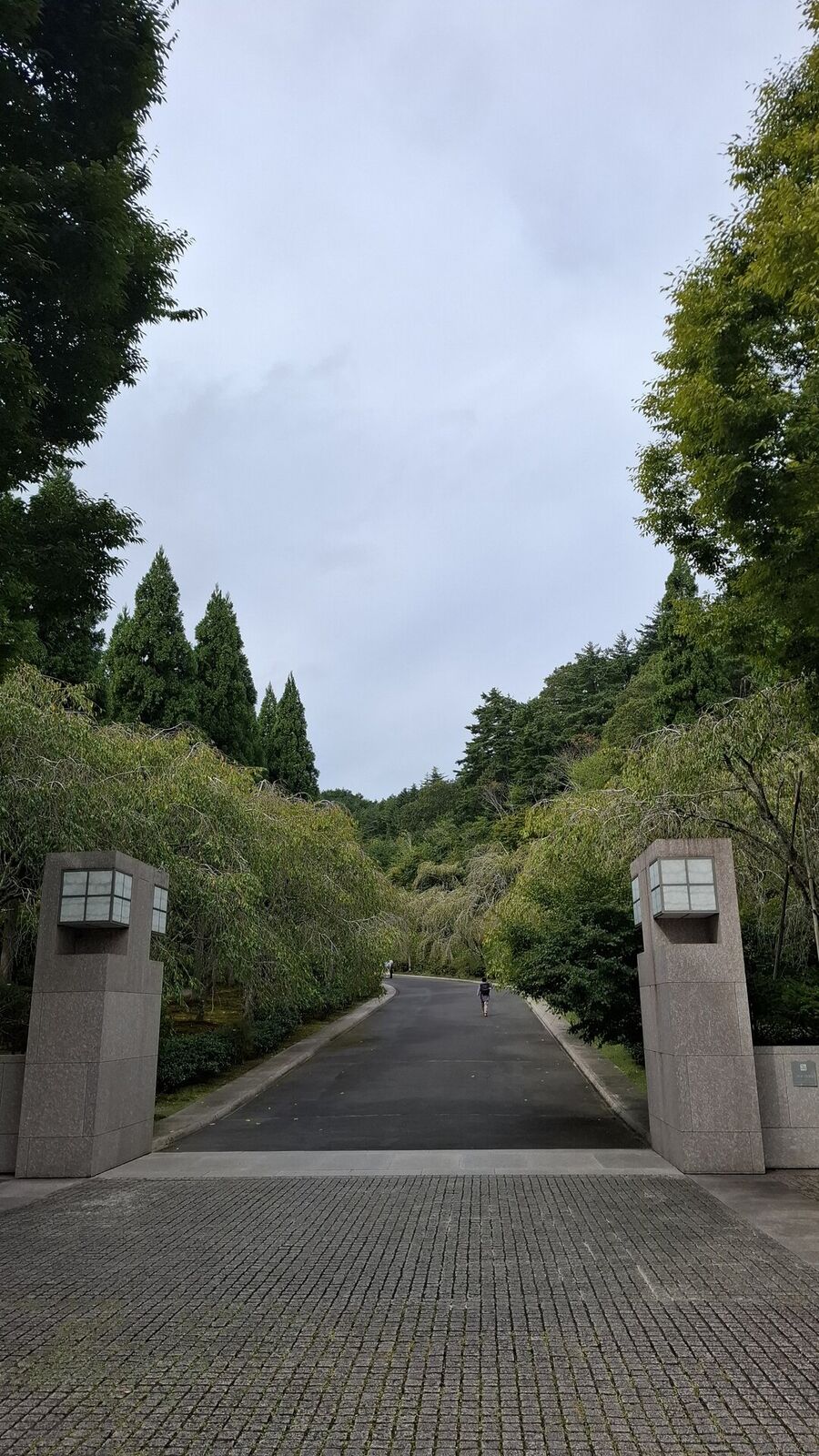
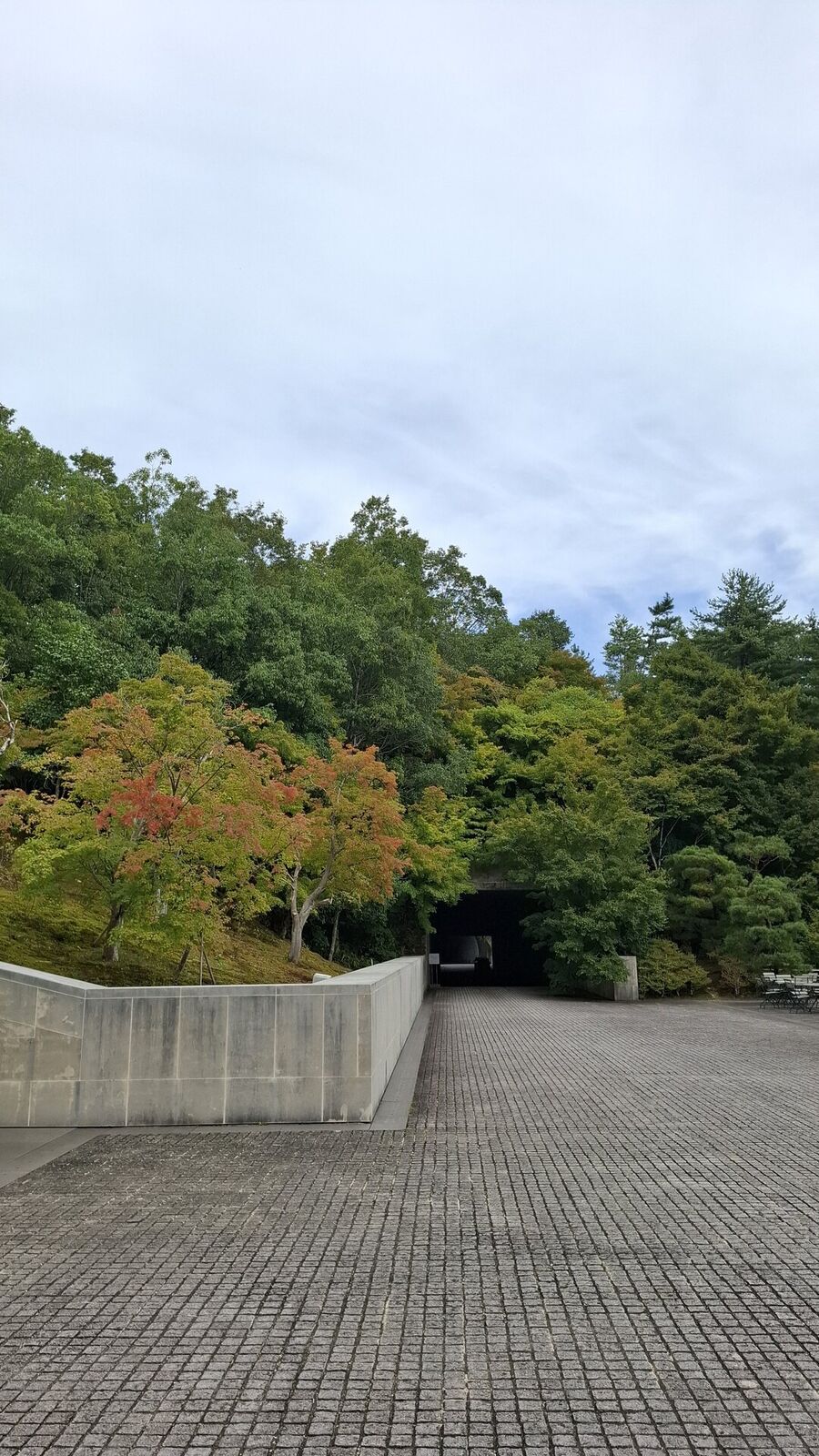
The Miho Museum doesn't start at the front door. It starts in the parking lot, at the bottom of a hillside, where a walkway leads you uphill through an avenue of cherry trees. I was there in early autumn, so instead of blossoms the trees had just begun to turn, hints of gold and amber against deep green. Gardeners were working along the path, carefully tending the moss and pulling individual leaves by hand, the way you see them do in Zen gardens. That level of care sets the tone for everything that follows.
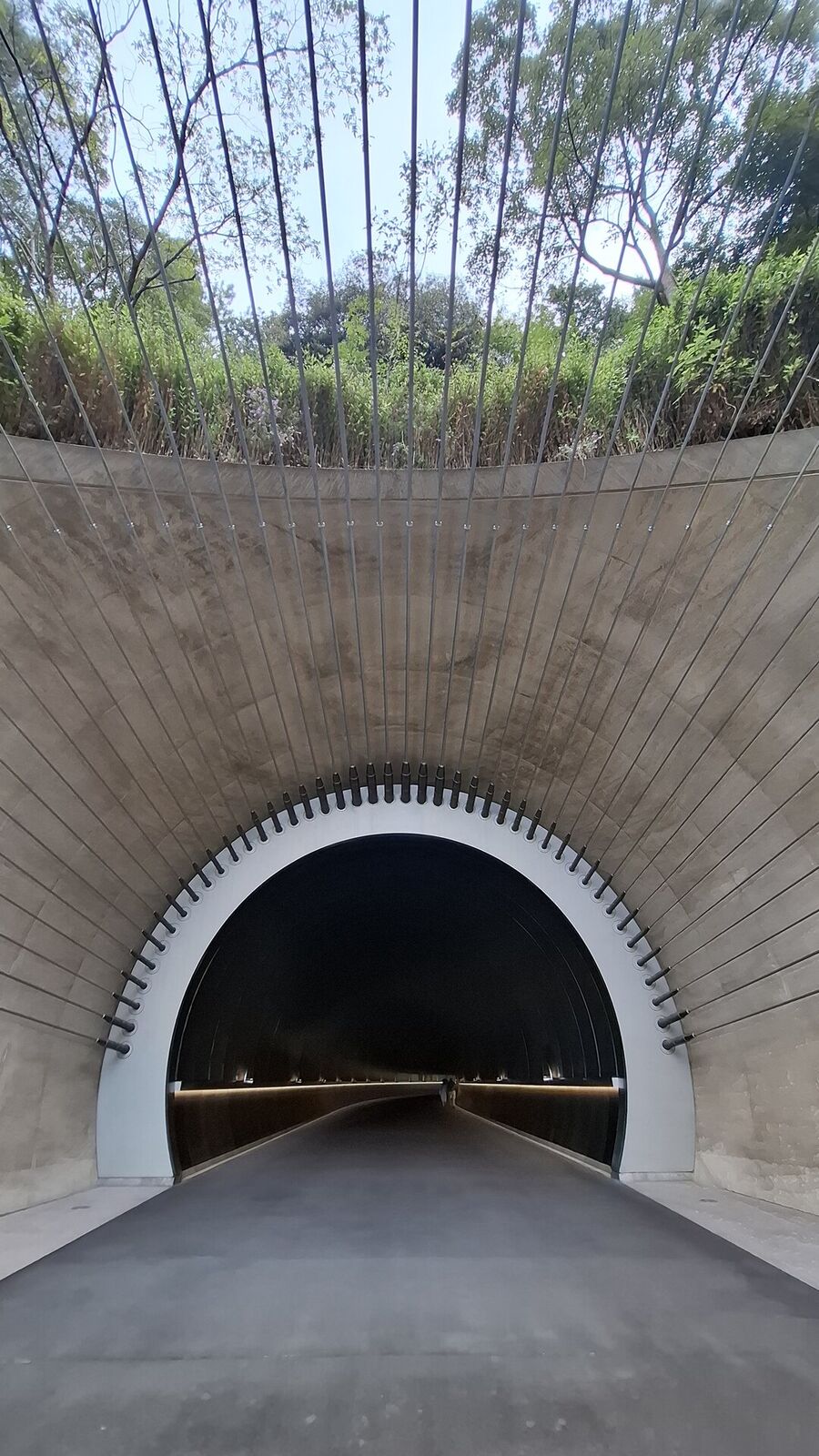
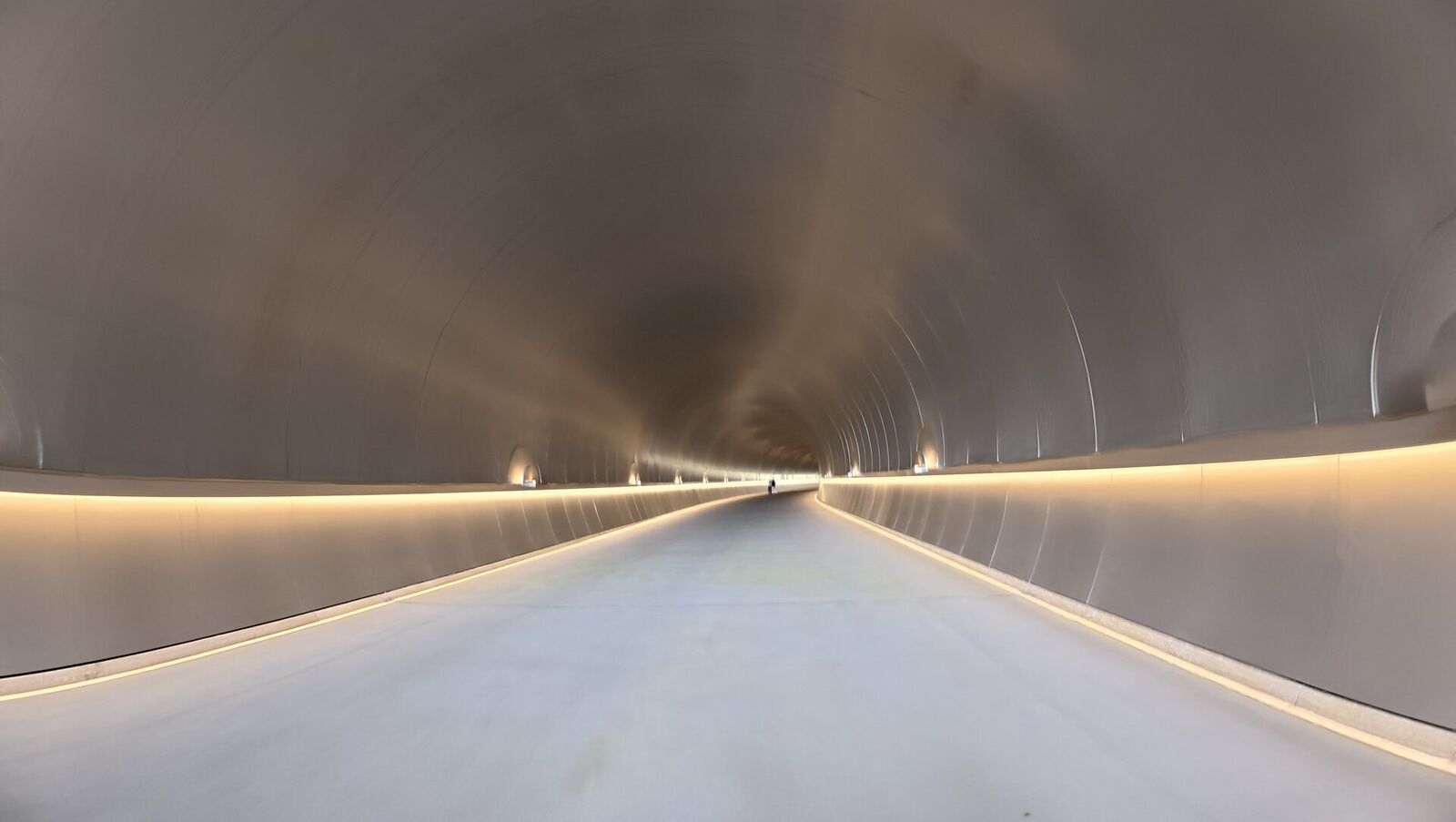
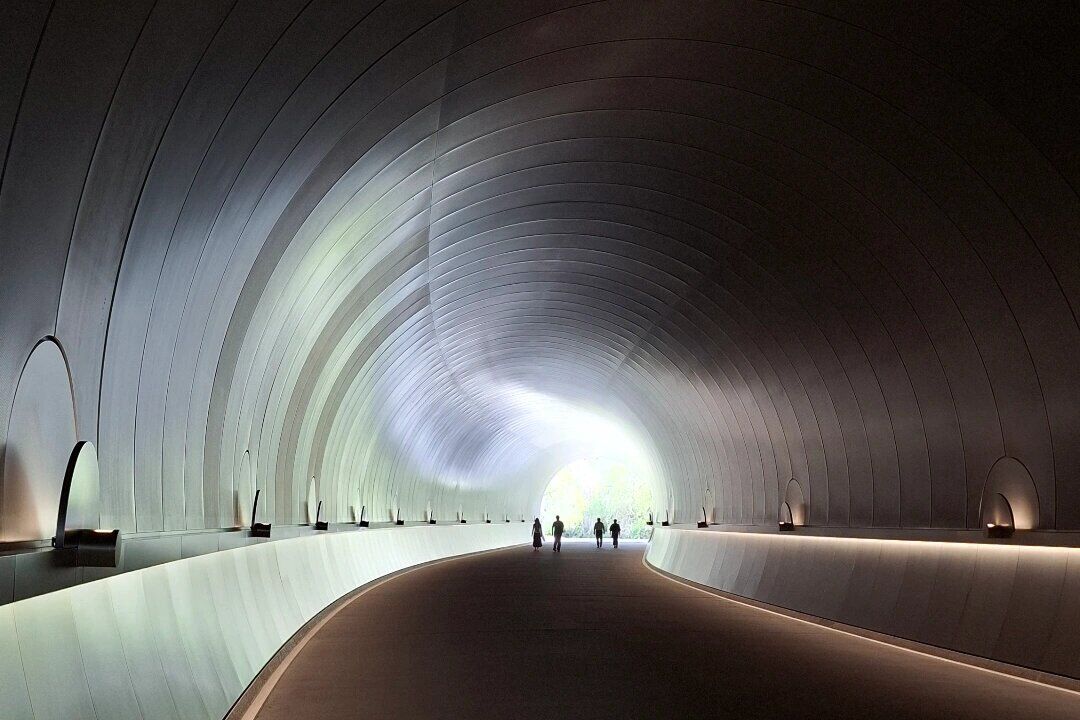
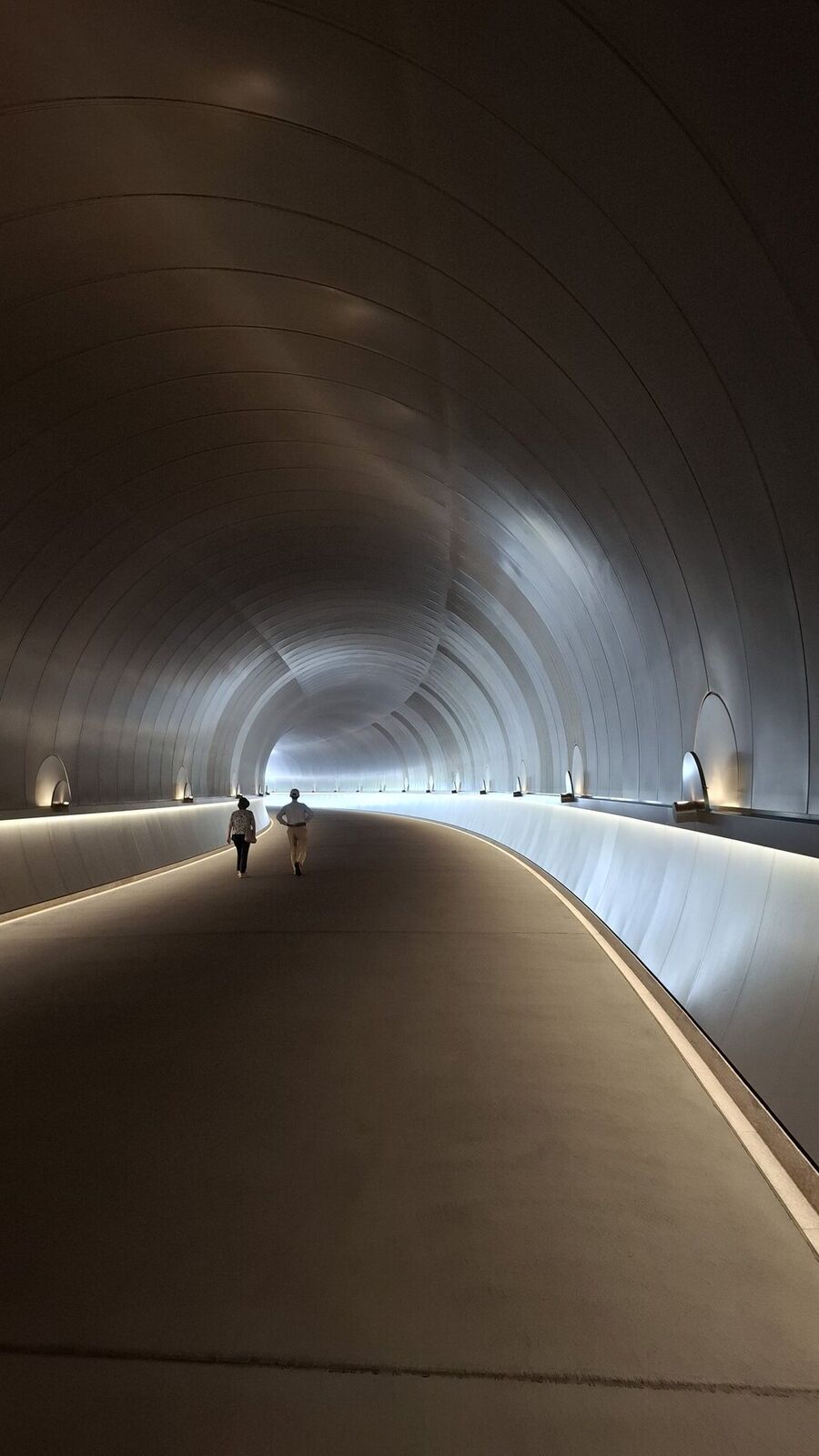
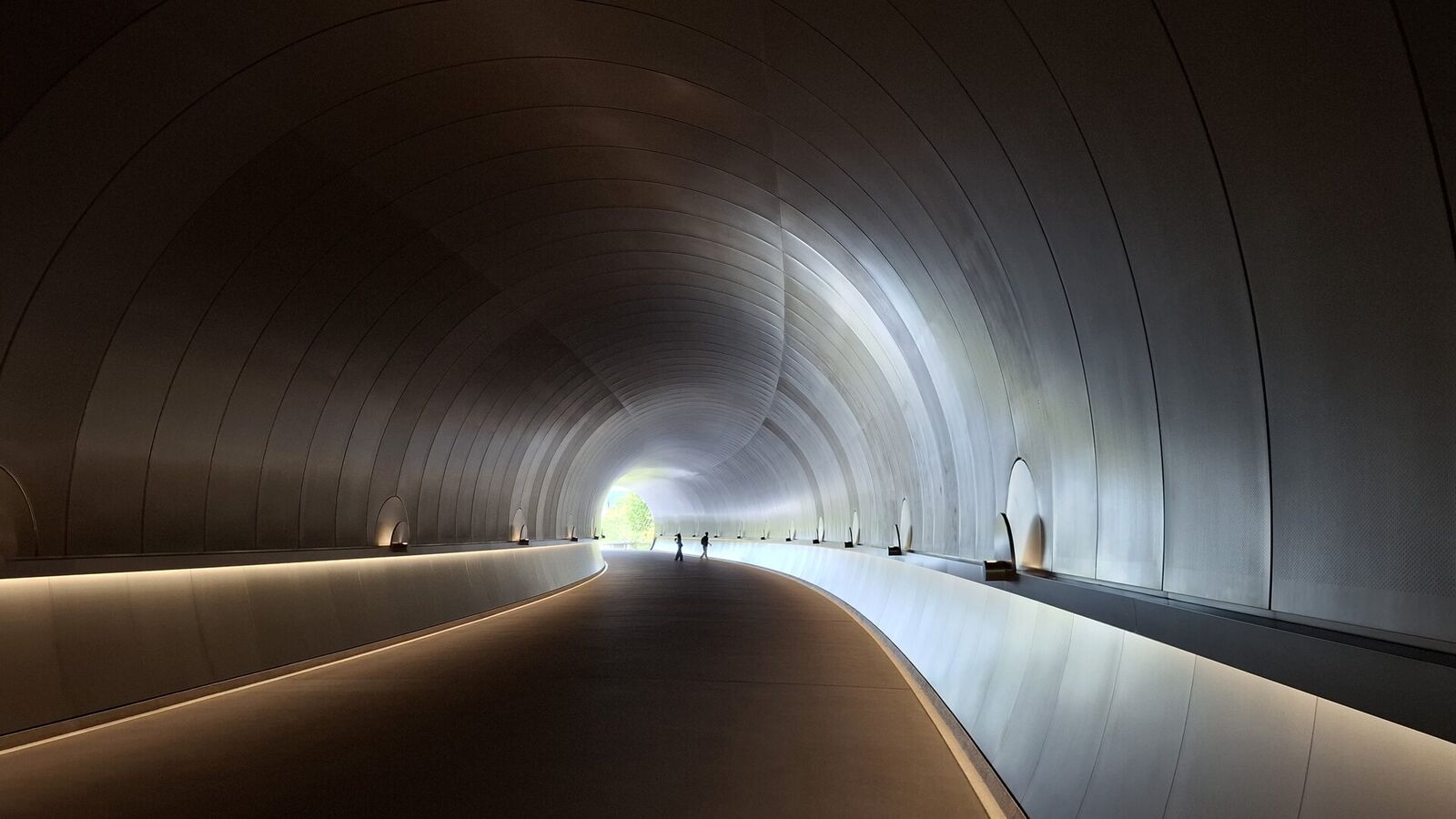
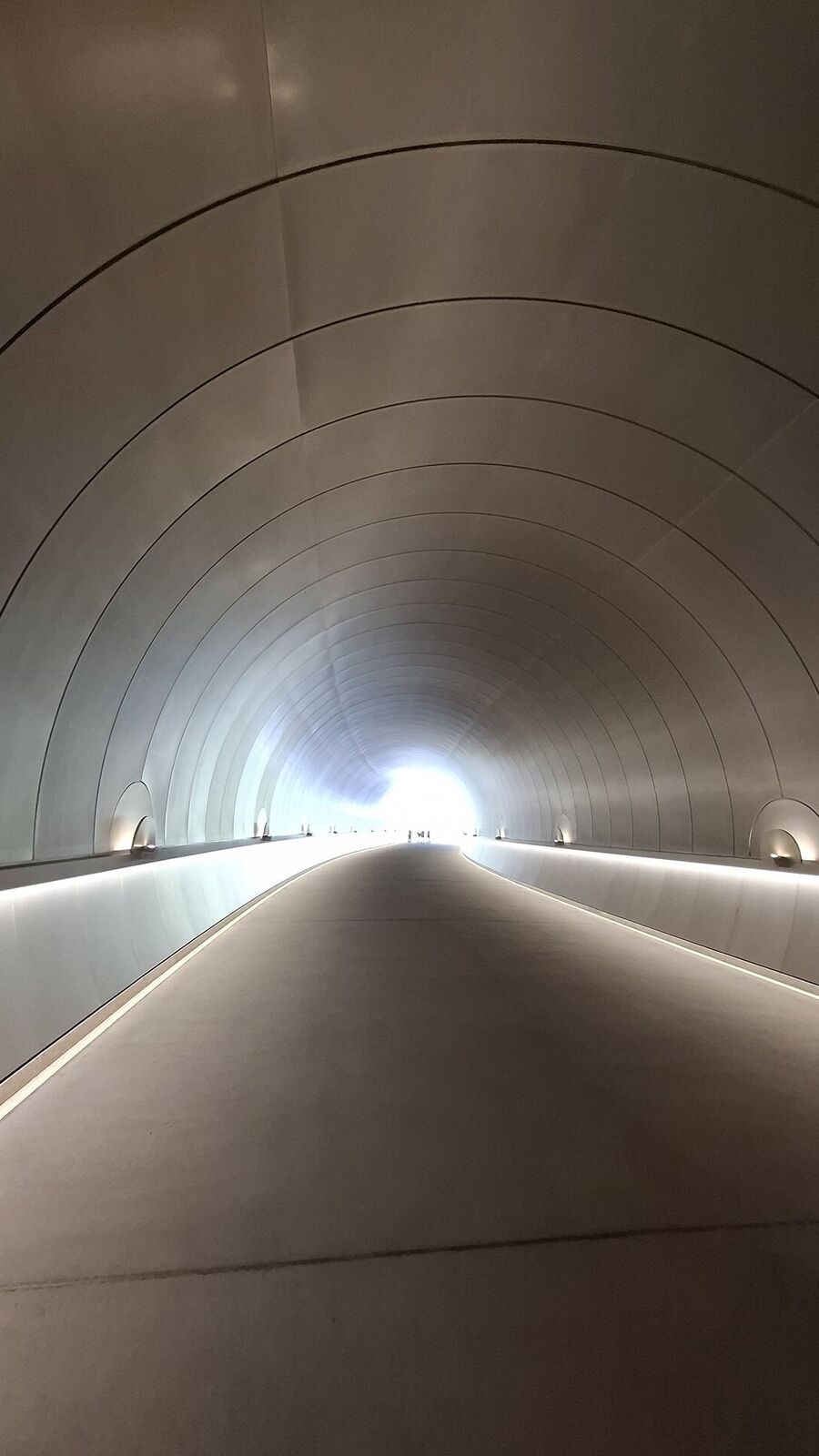
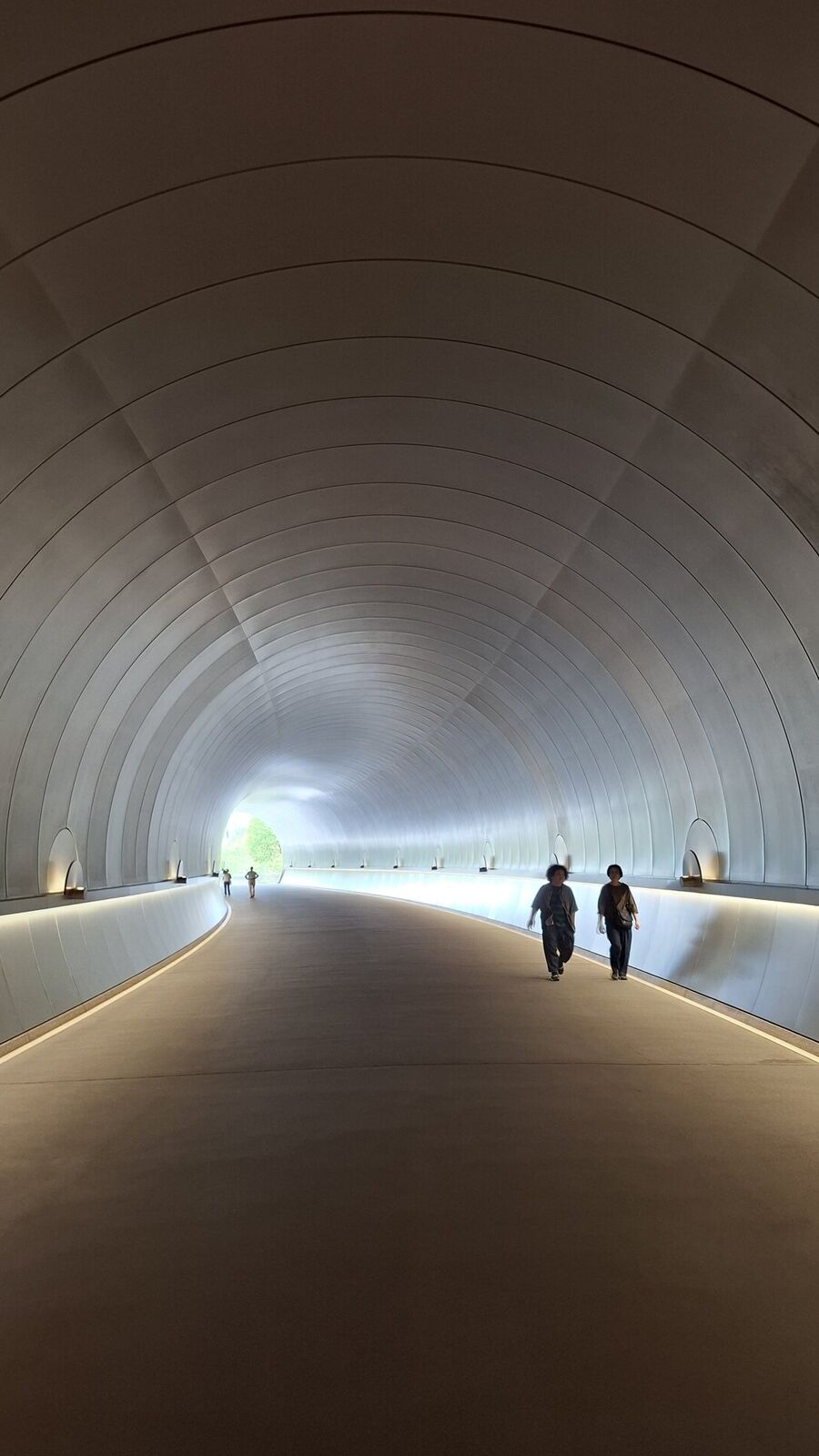
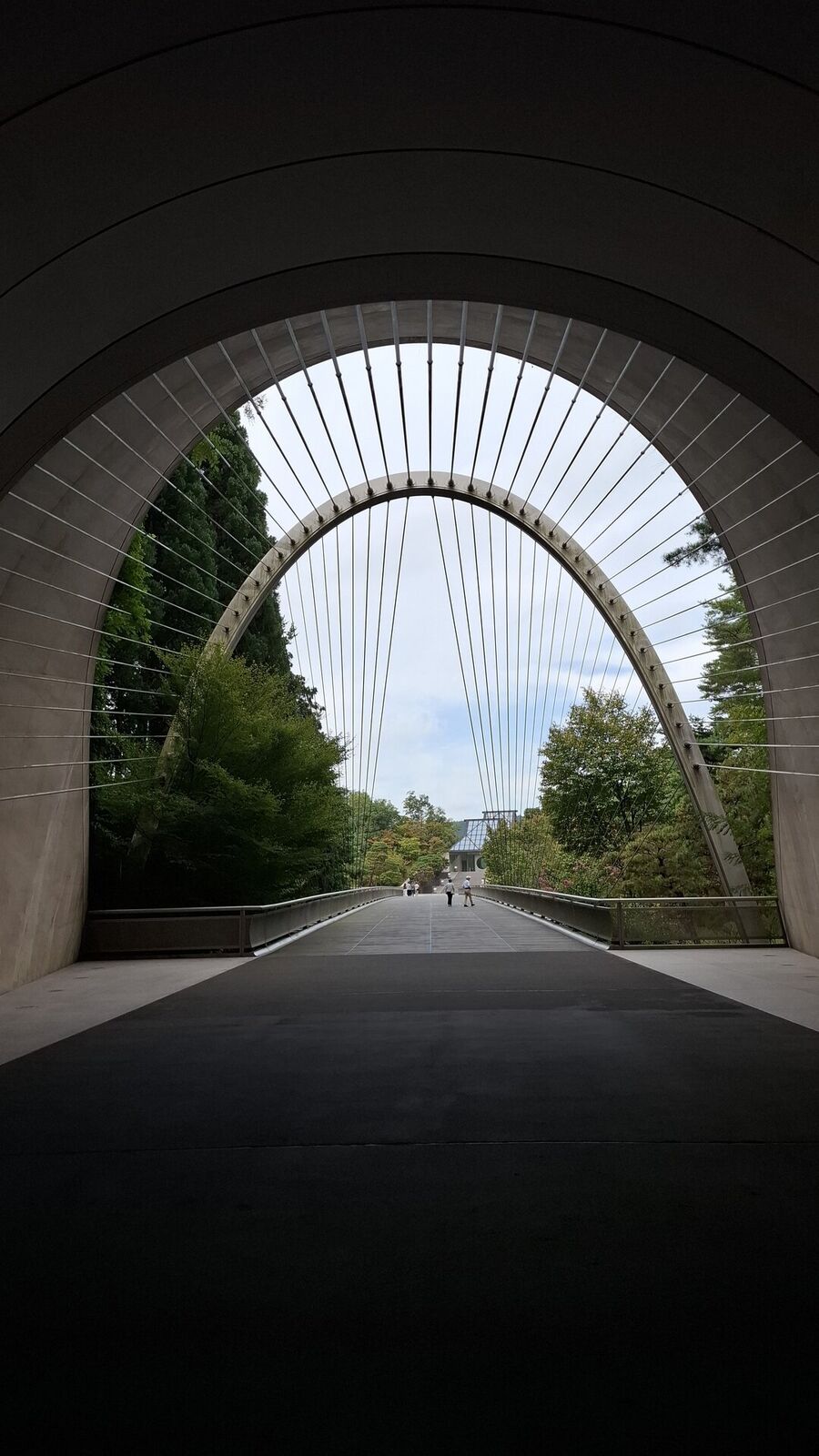
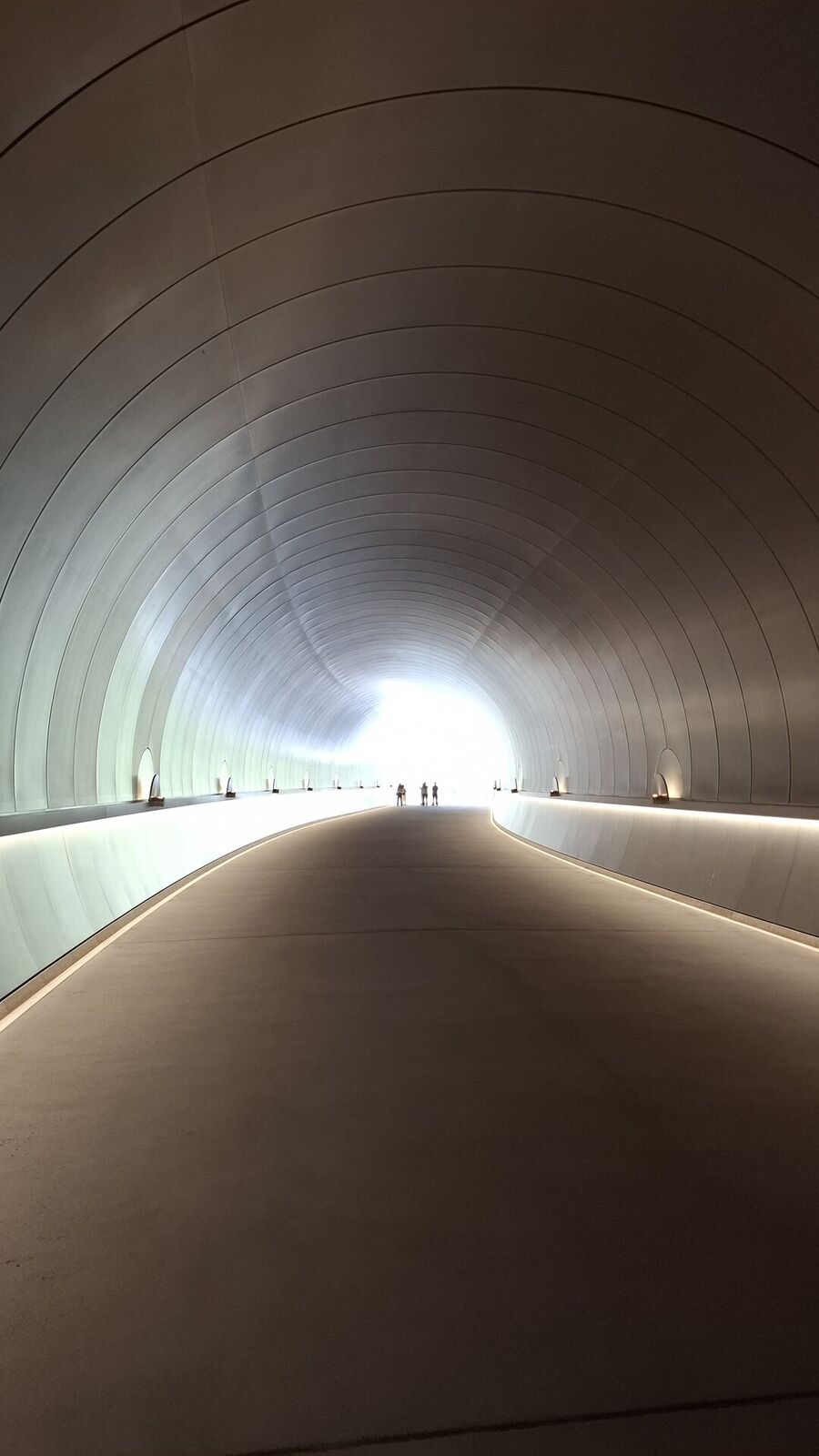
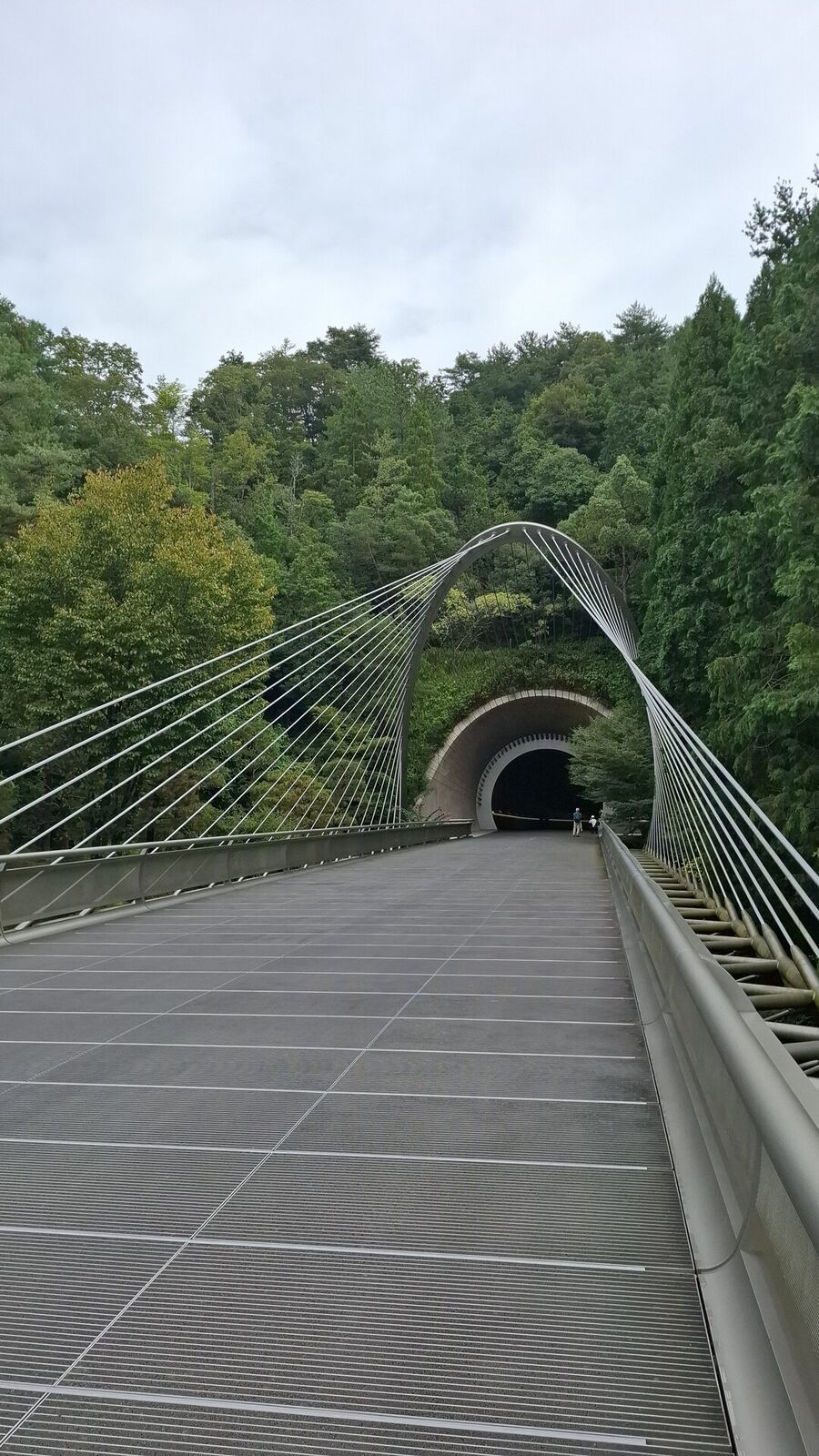
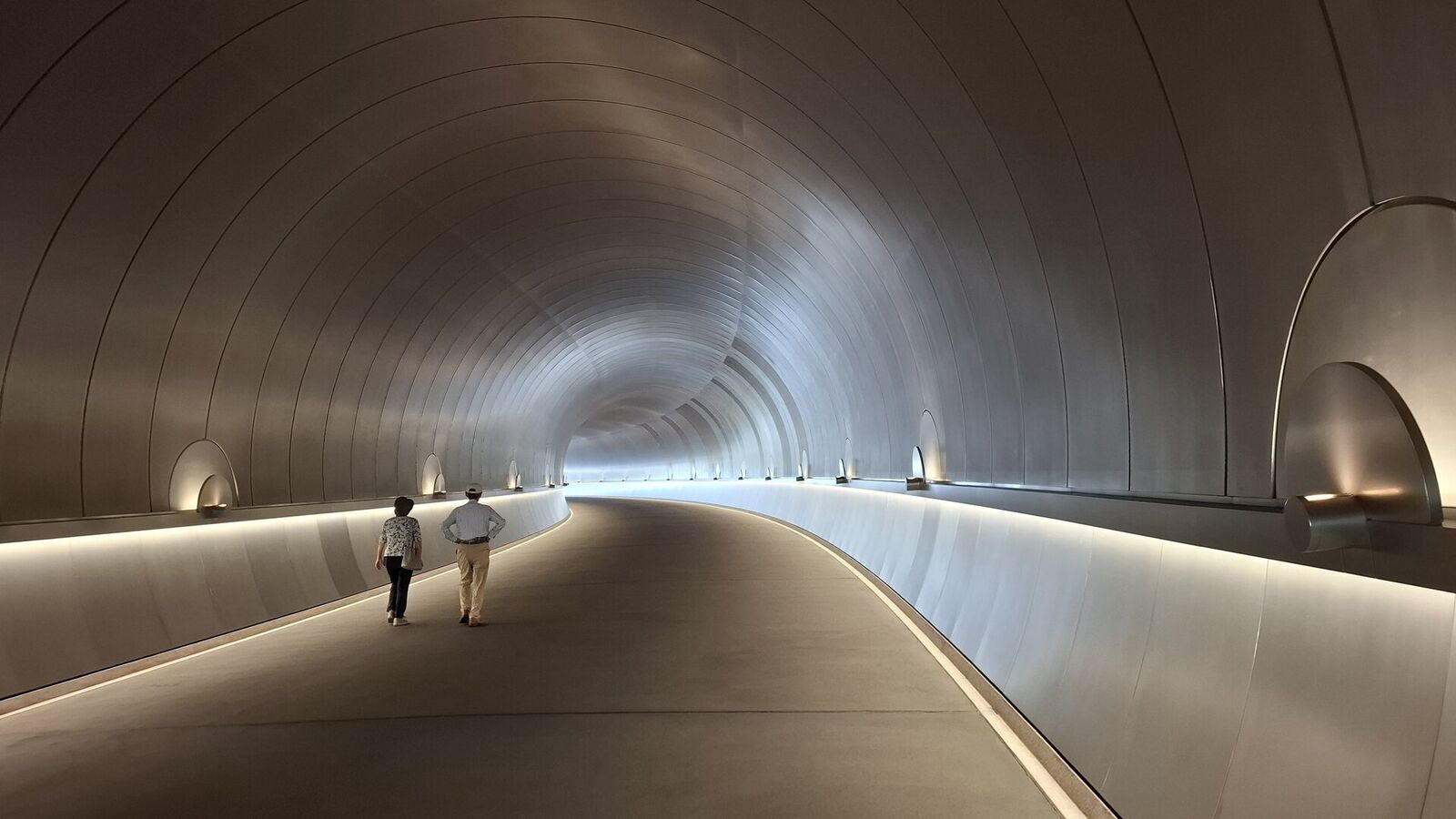
The path climbs gently, and then you see it: the tunnel entrance. A perfect arch in a concrete wall, the opening framed by steel cables from the suspension bridge above. You step inside, and everything changes. The tunnel is clad in a copper-colored metal that catches the light in ways that shouldn't be possible underground. It curves gently, so you can't see the end, only a distant glow where the exit must be. The floor lighting runs along both sides in warm strips. Other visitors appear as silhouettes far ahead, growing smaller as the tunnel stretches on. It's longer than you expect. It's more beautiful than it has any right to be.
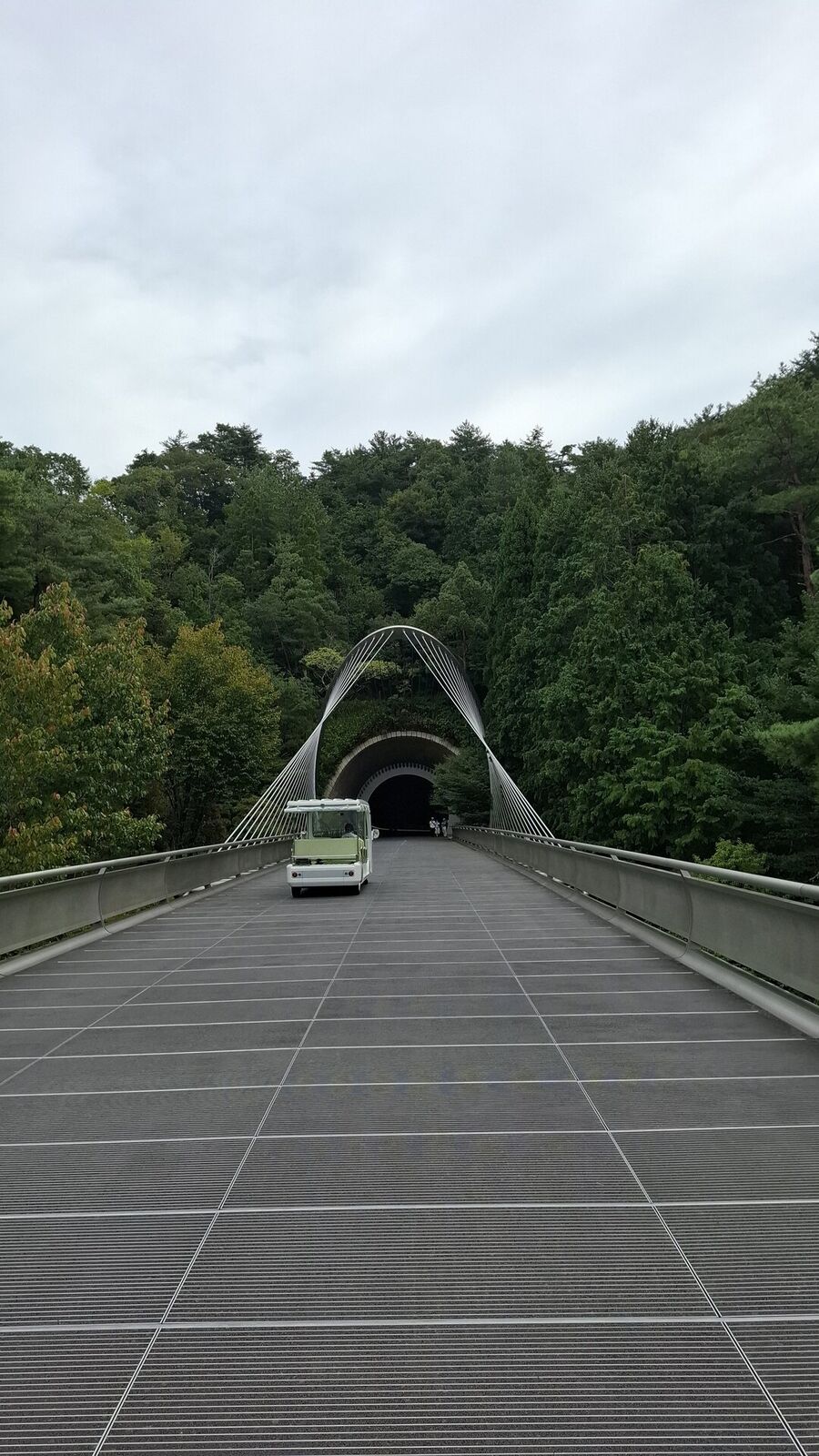
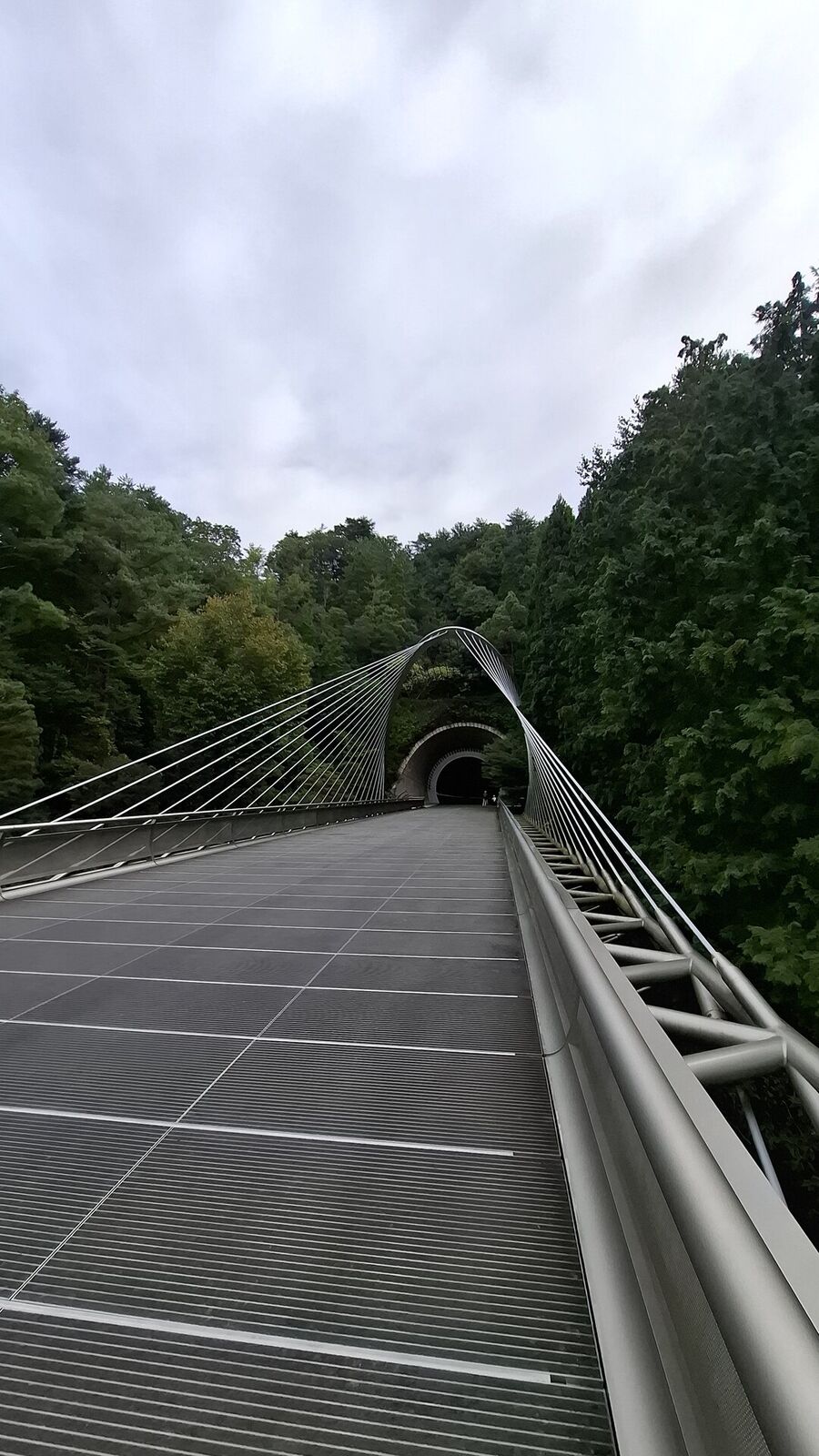
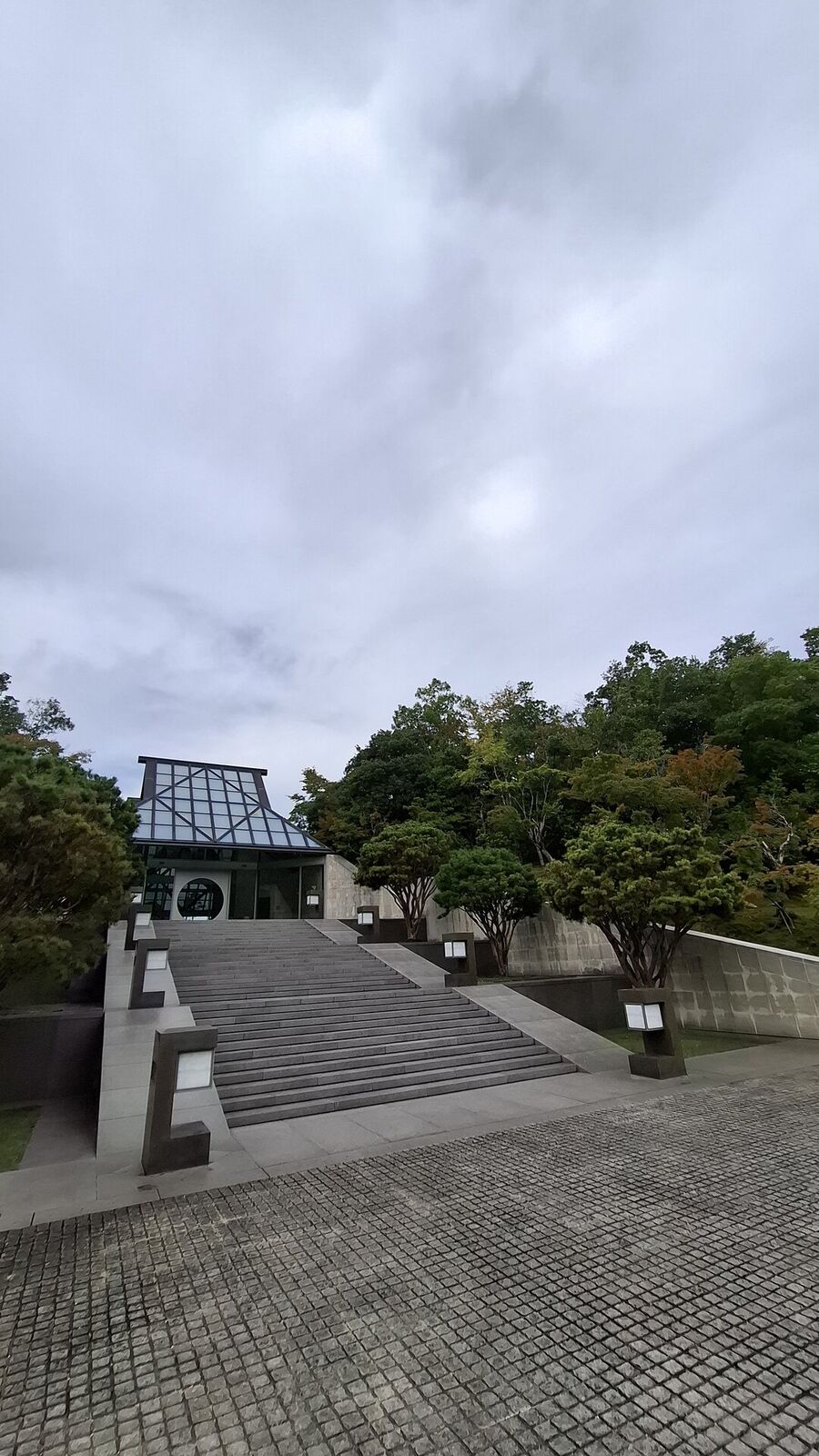
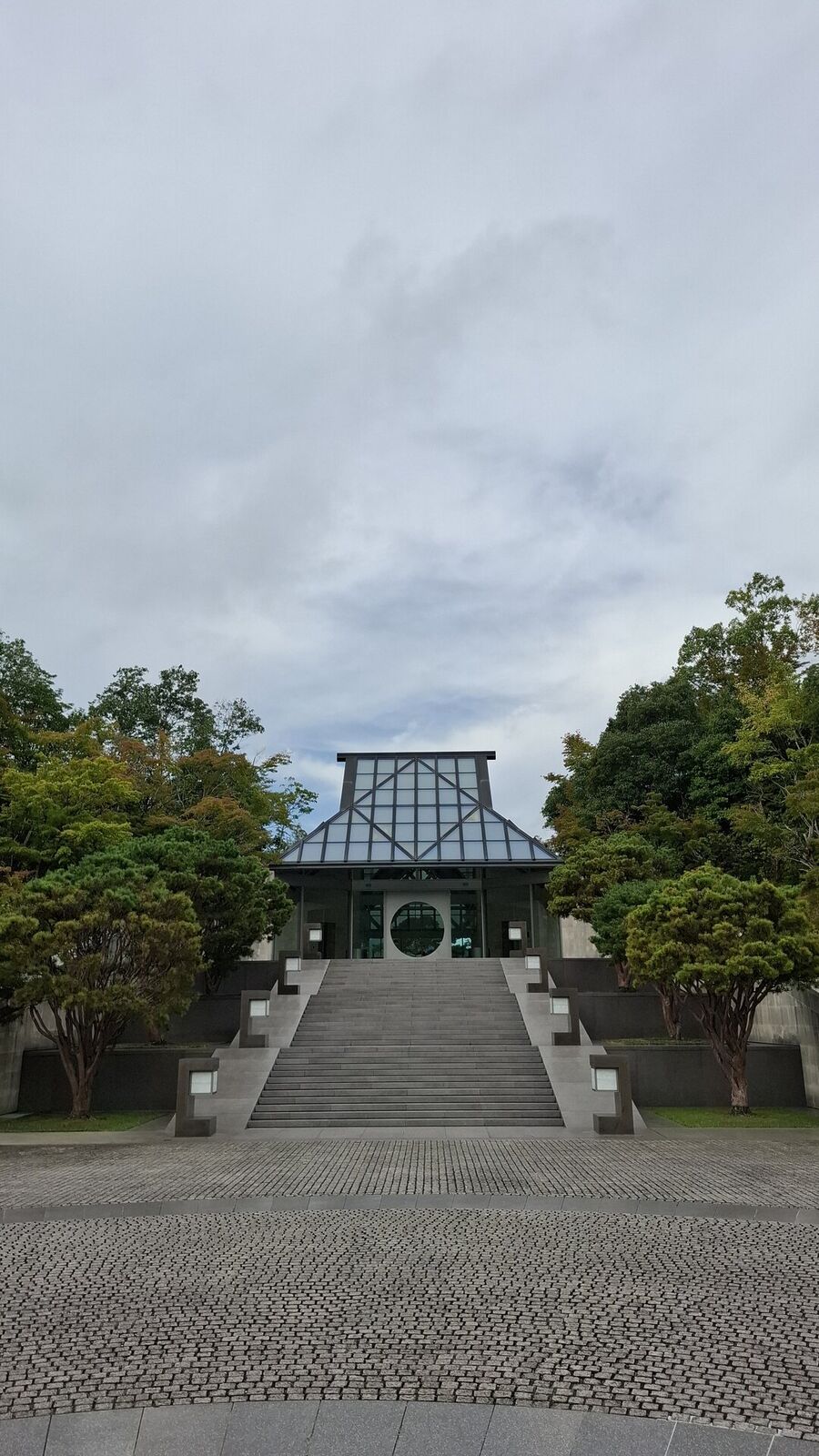
I.M. Pei designed this approach as a reference to the Taohua Yuan Ji, the ancient Chinese tale of "The Peach Blossom Spring," where a fisherman stumbles through a narrow passage and discovers a hidden paradise on the other side. That's exactly what it feels like. You walk through darkness, and then you emerge onto a suspension bridge spanning a gorge with forested slopes dropping away on both sides. Ahead of you, set into the hillside as if it grew there, is the museum building: glass and steel and limestone, assembled from geometric shapes that look like a child's building blocks scaled up to monumental proportions. Except everything is precise and intentional and impossibly elegant.
The Building
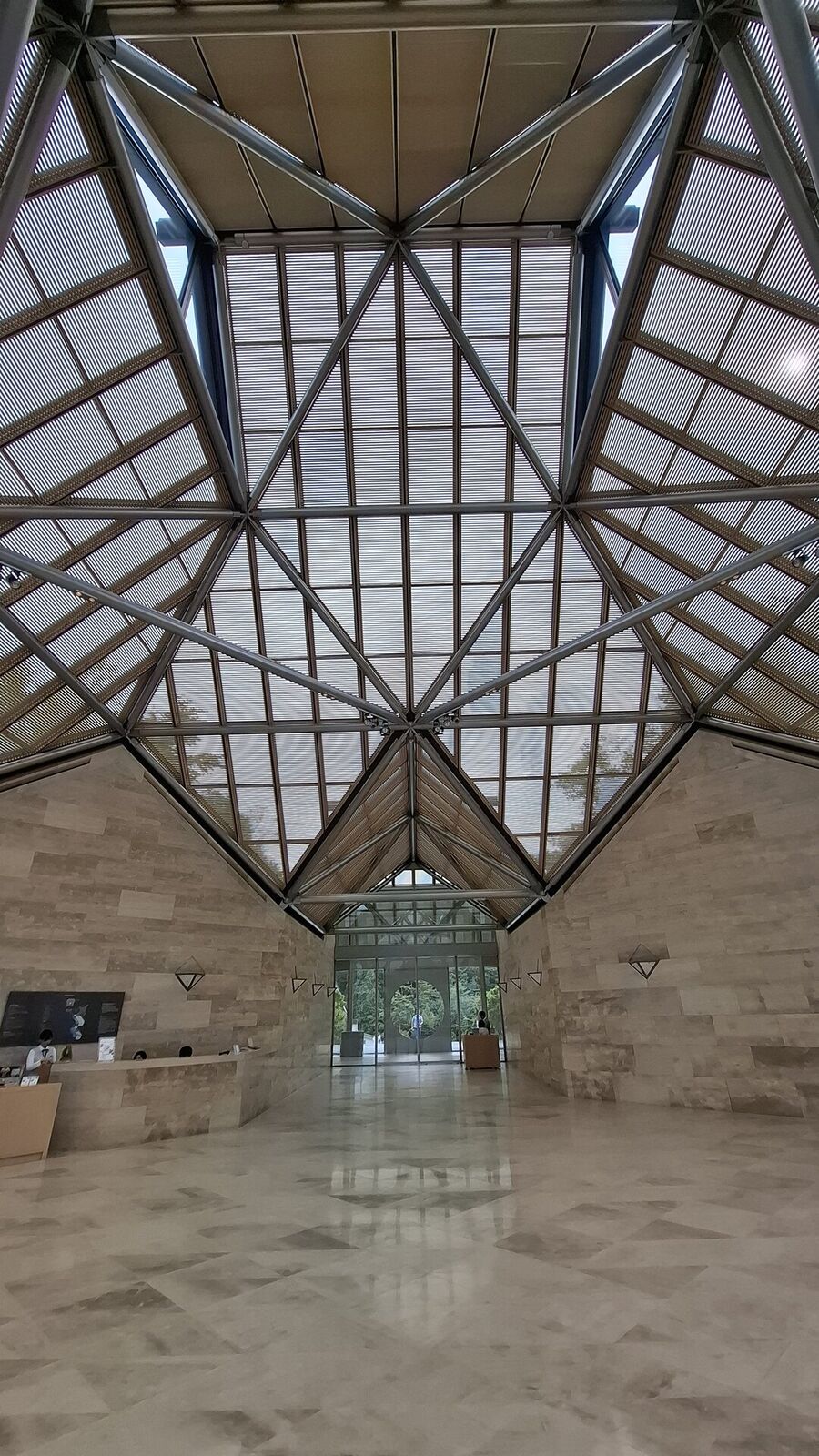
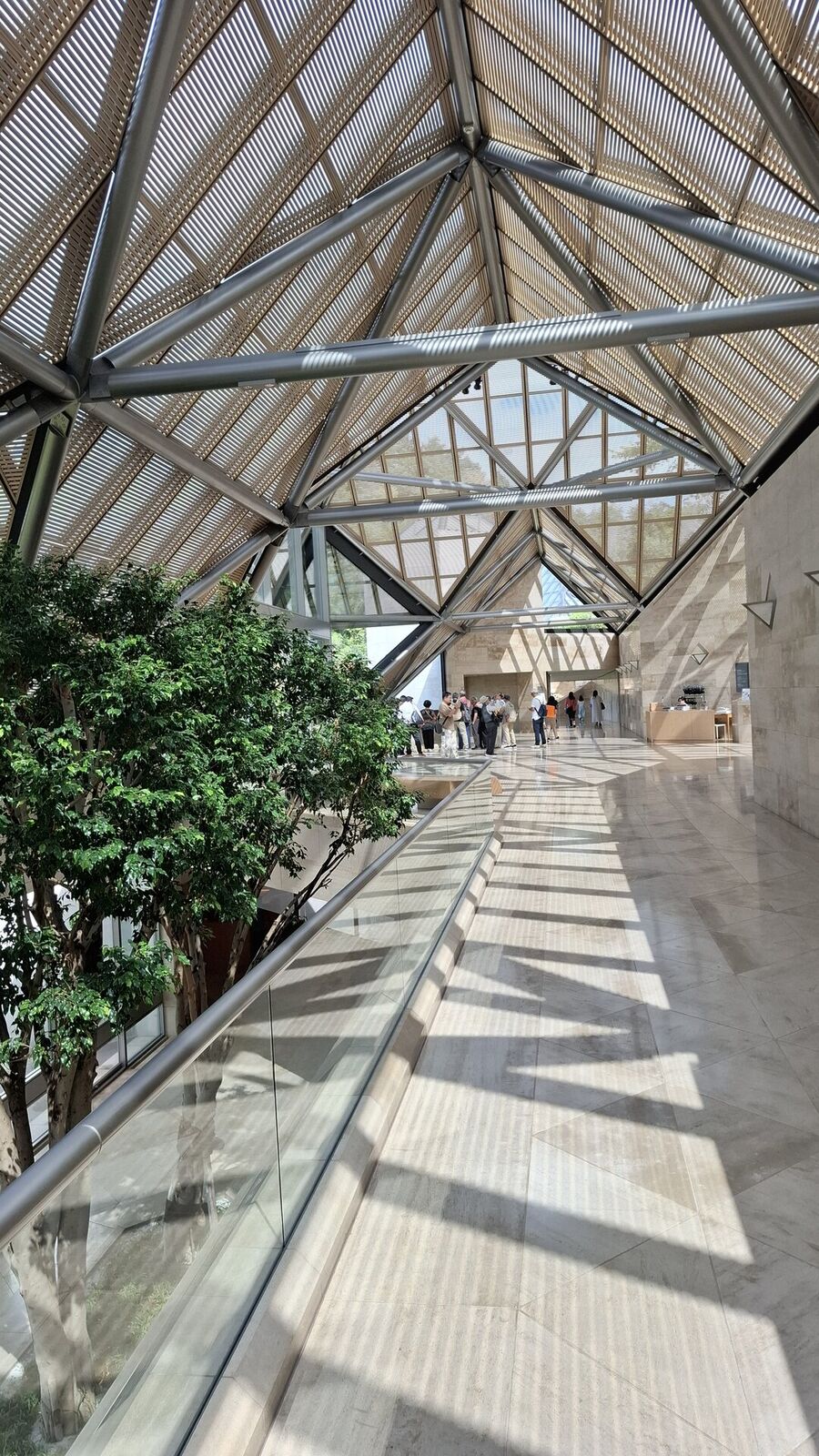
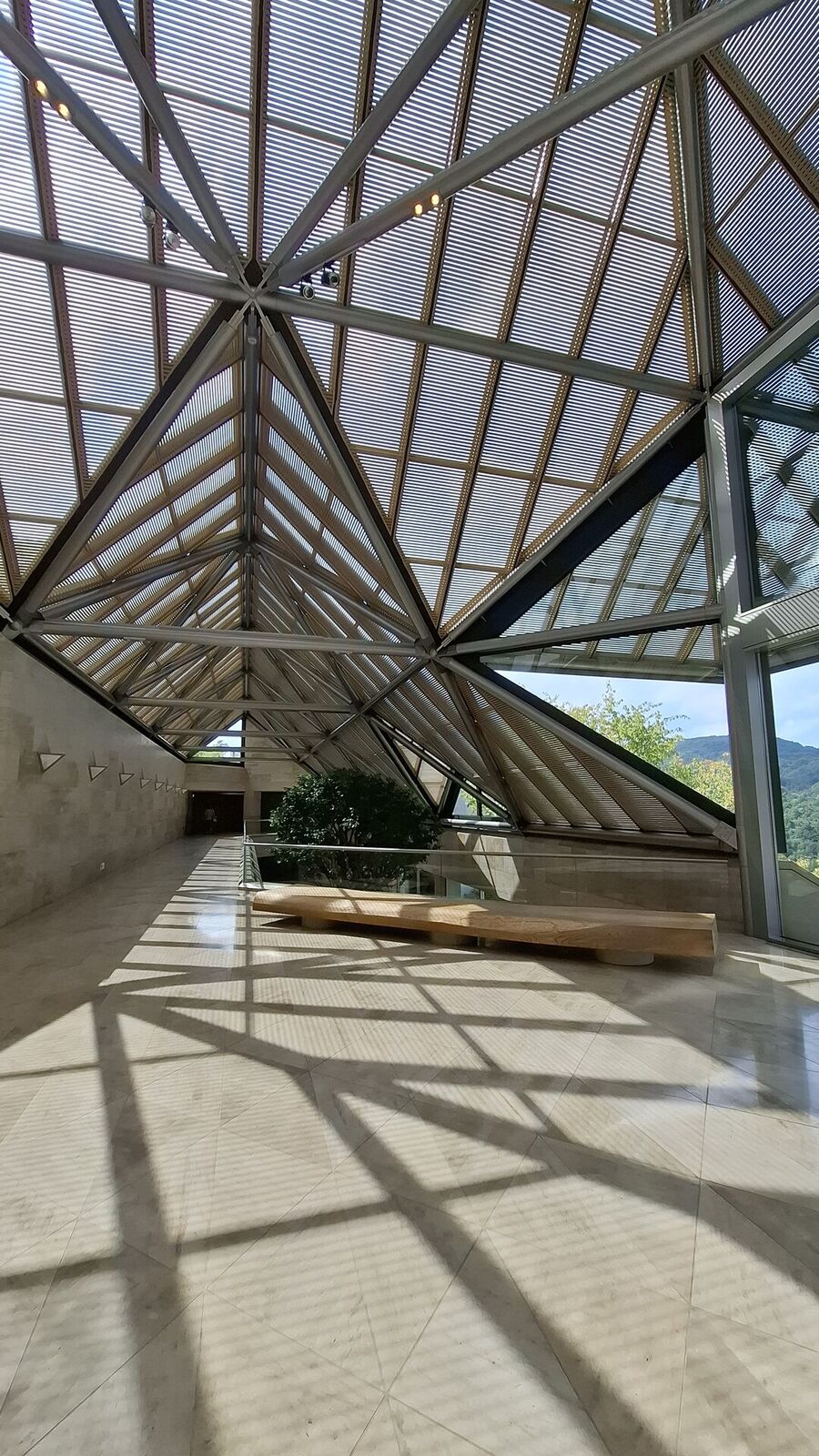
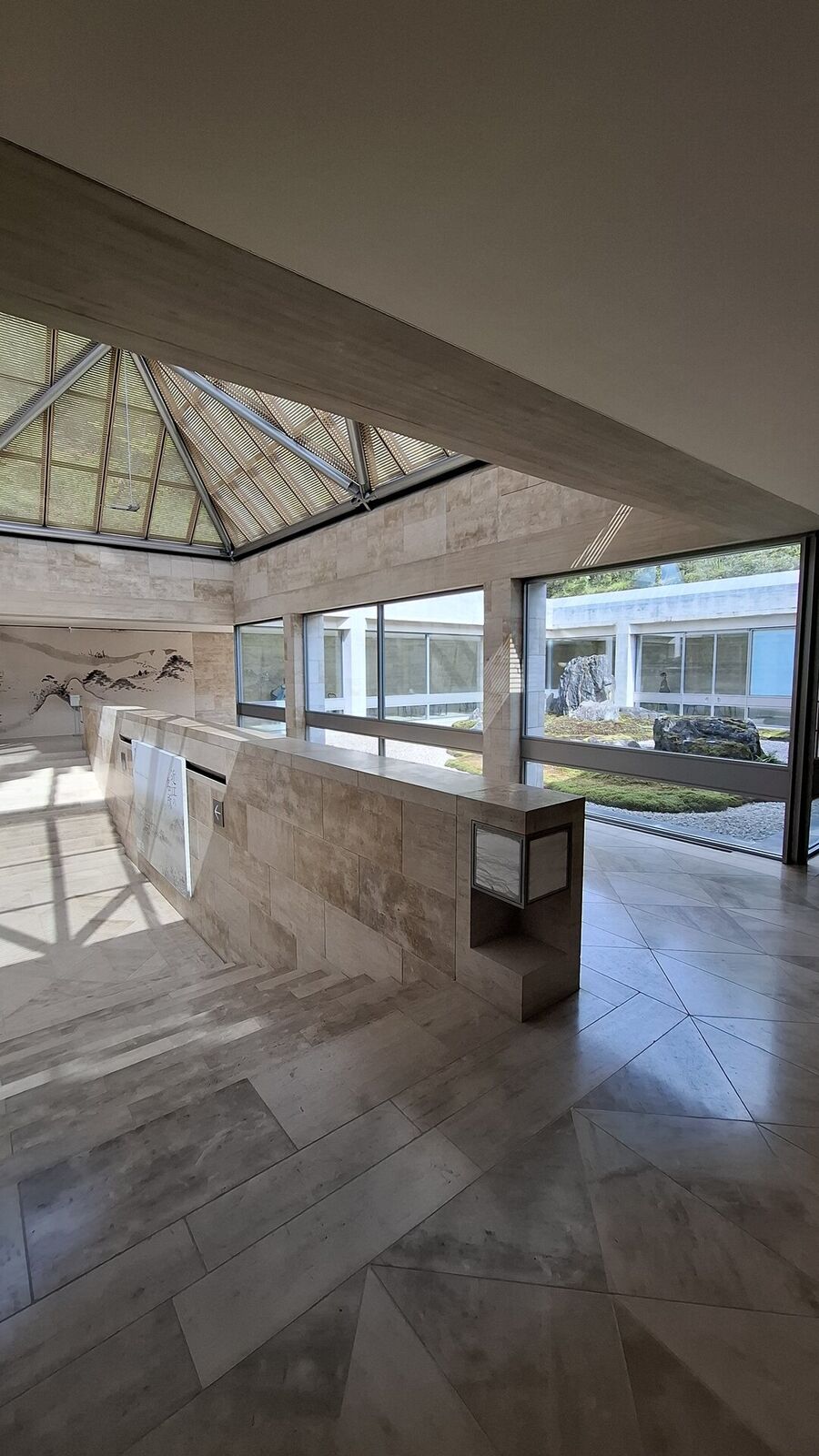
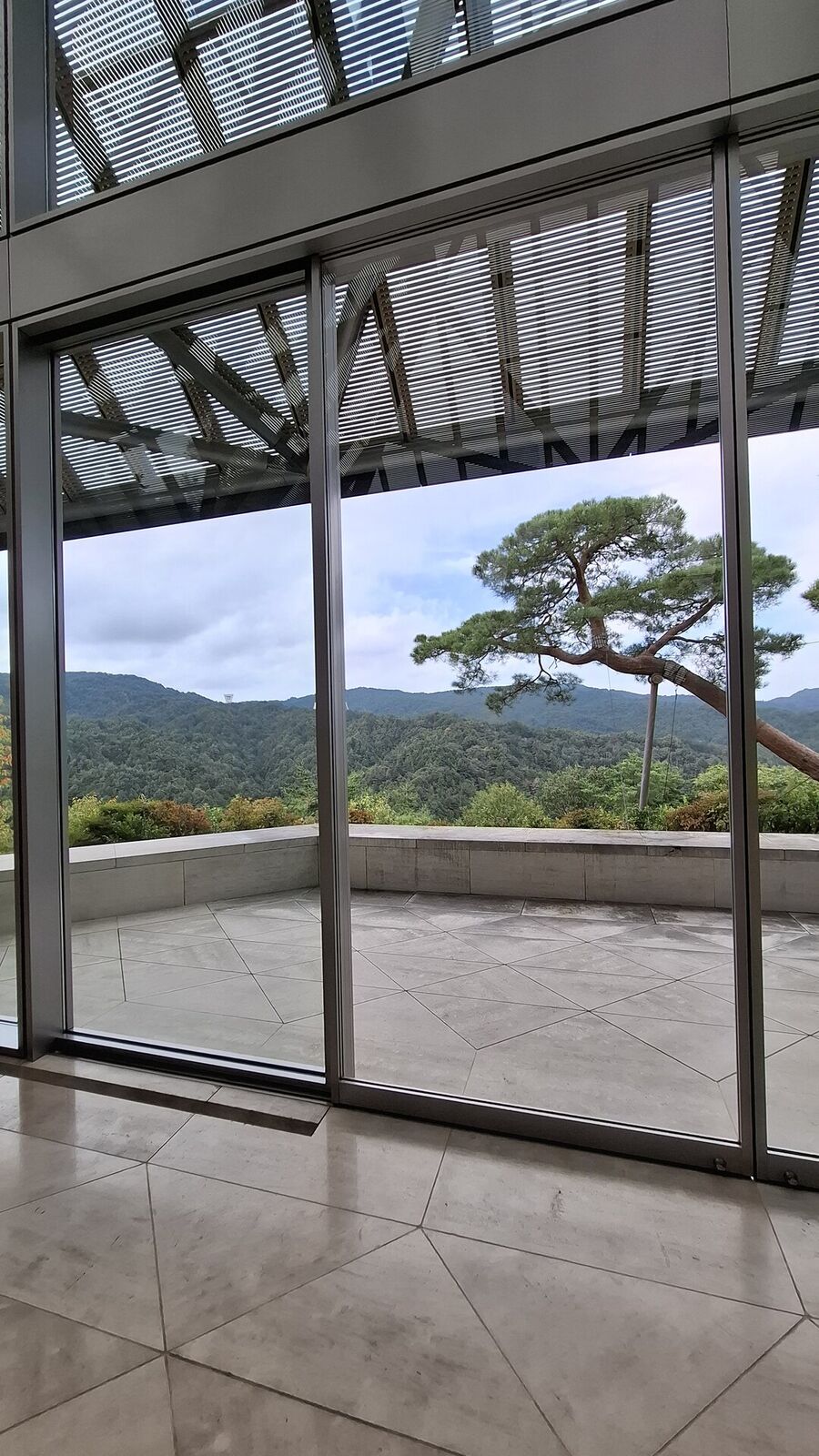
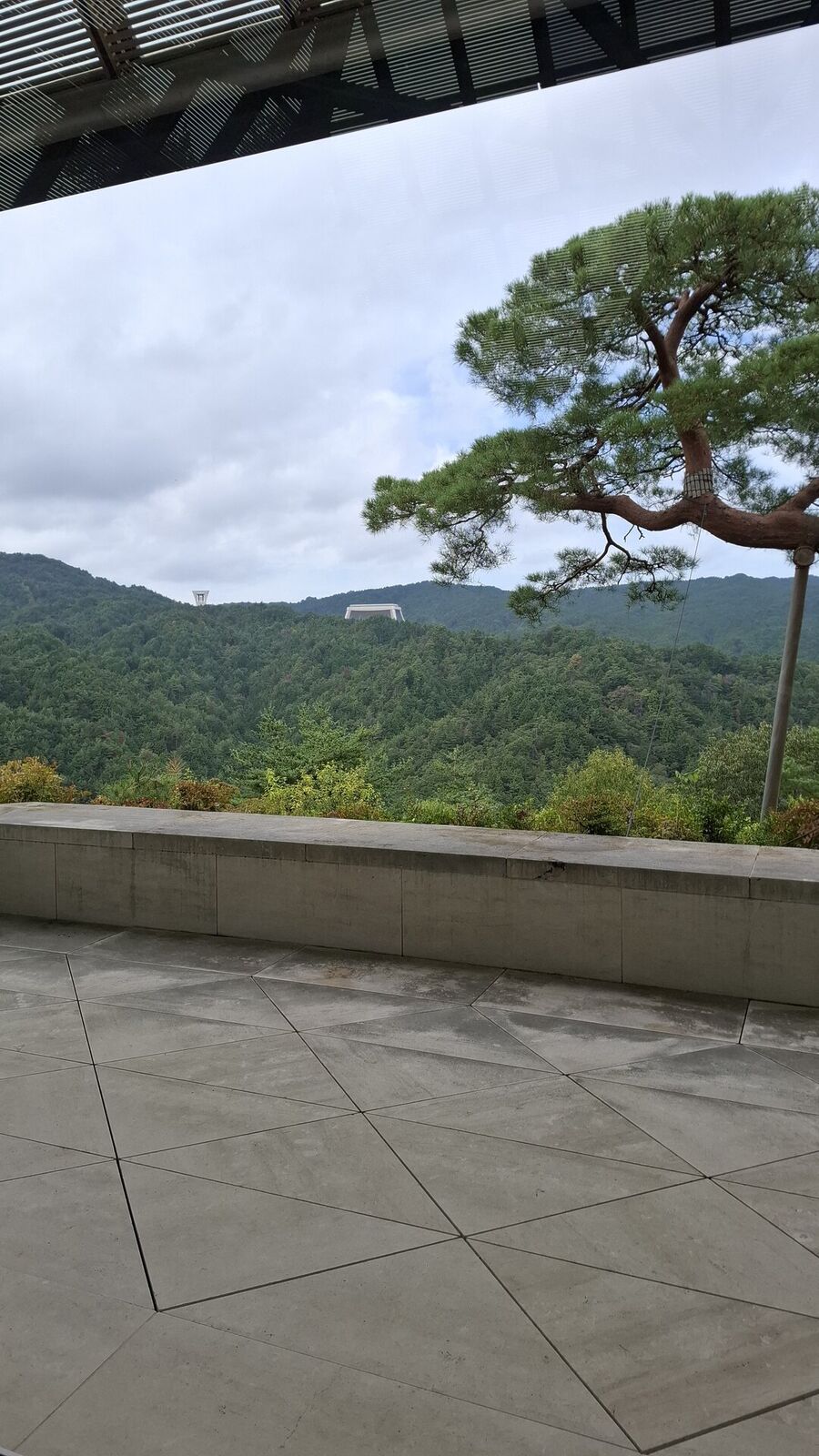
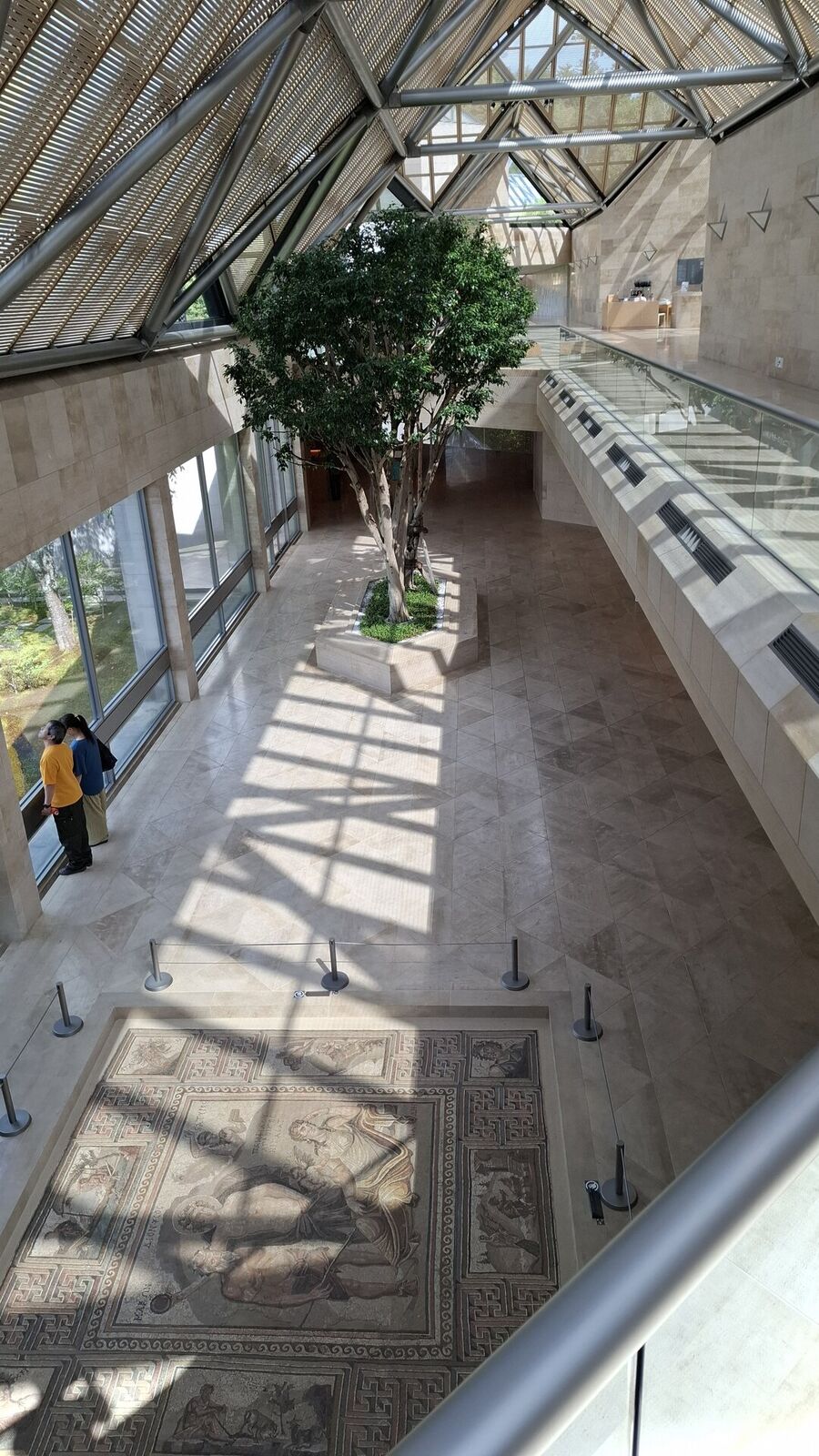
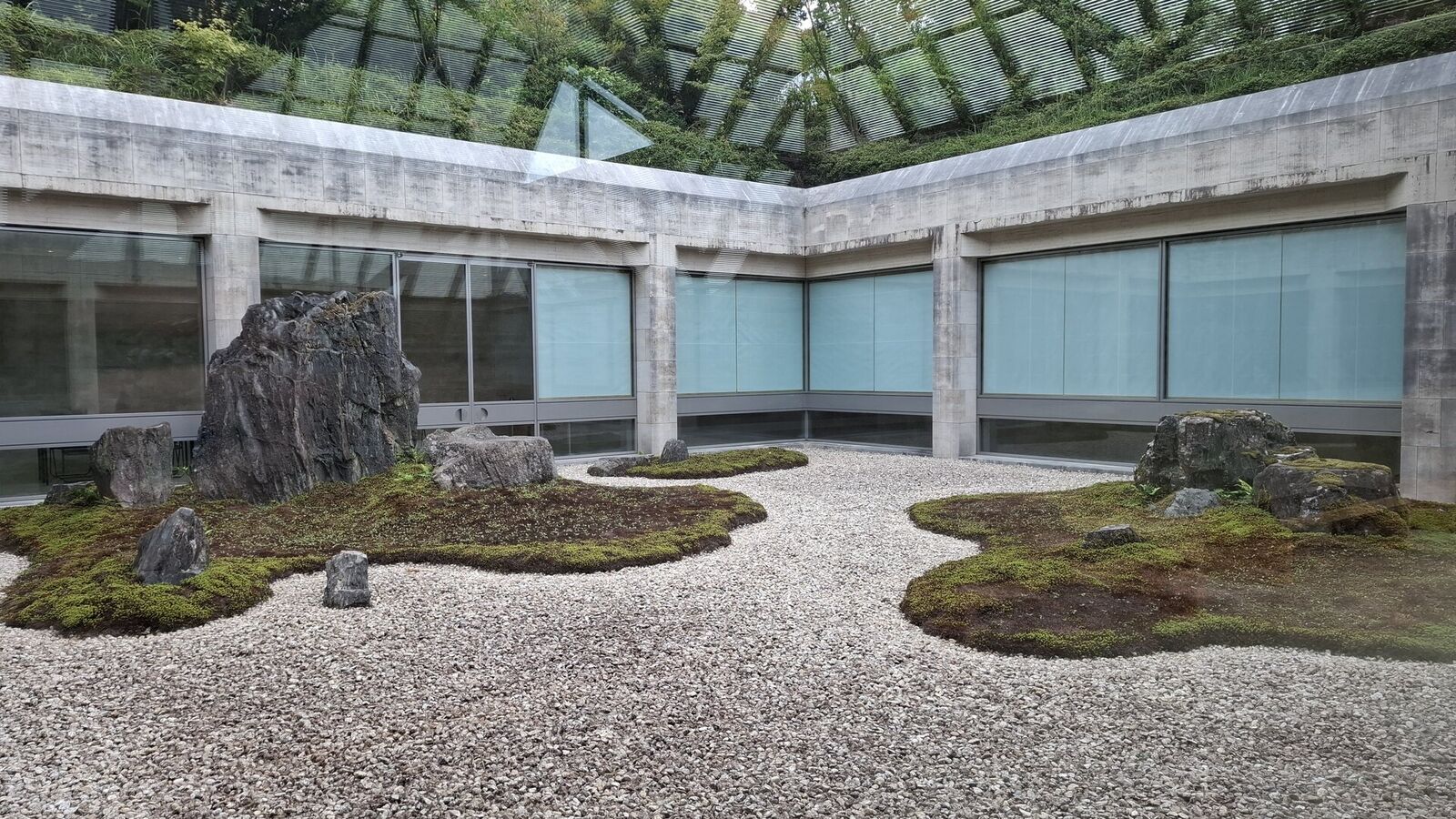
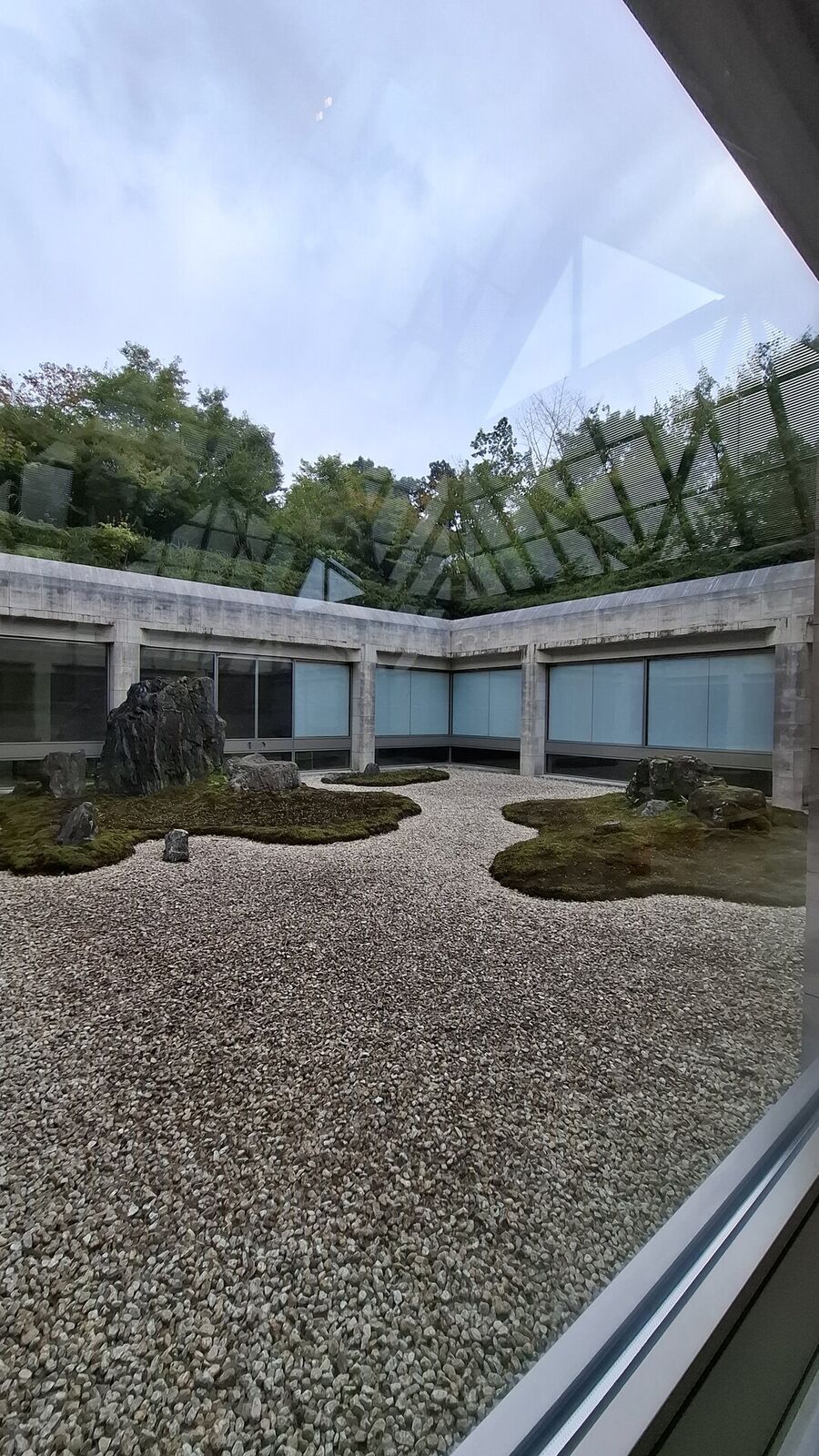
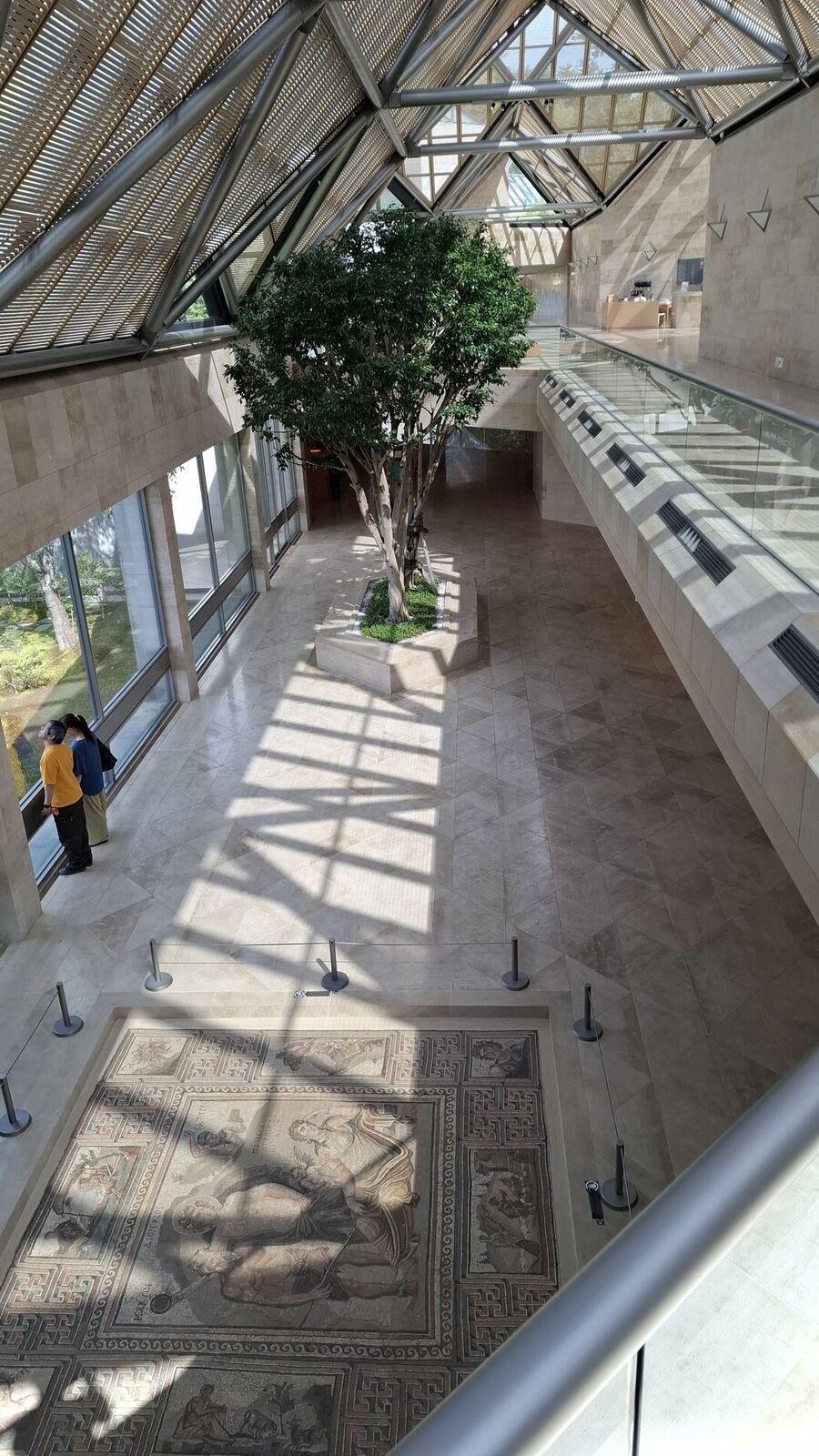
Roughly three-quarters of the Miho Museum sits underground, carved into the mountain. What you see from the bridge is just the entrance wing, a glass-and-steel crown that rises from the forest. The limestone used throughout the building is the same warm beige stone that Pei chose for the Louvre Pyramid in Paris. Inside, the spaces are flooded with natural light filtering through the geometric glass roof, throwing lattice shadows across the stone floors. Trees grow in interior courtyards. Rock gardens are visible through floor-to-ceiling windows. The architecture doesn't feel like a container for art. It feels like a place that would be worth visiting even if every gallery were empty.
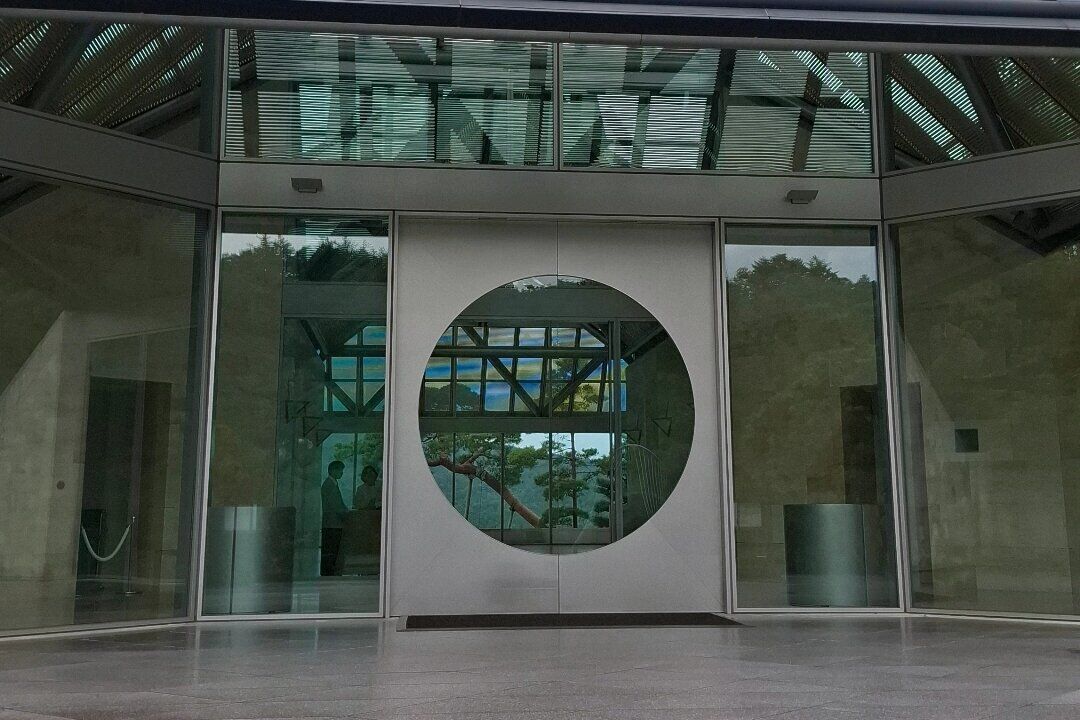
The entrance hall alone is something. You walk in through a circular window set in a limestone wall, and the space opens up: high ceilings, the steel lattice of the roof, views out to green hillsides through glass walls. The floor has a mosaic that could have been excavated from a Roman villa. A single tree grows from the atrium floor, reaching toward the glass above. Everything is light and stone and geometry.
The Collection
The permanent collection houses around 3,000 pieces spanning ancient civilizations from Egypt, Greece, Rome, Central Asia, China, and Japan. If you've spent time in the great museums of Europe, the collection itself may not be the revelation. The pieces are beautiful, well-curated, and thoughtfully displayed, but the real draw here is what comes next.
When I visited, there was a special exhibition on the Eight Views of Omi, the famous series of ink paintings depicting Lake Biwa across centuries of Japanese art history. This is what kept me in the museum for hours. Screen after screen of ink wash landscapes by master painters and calligraphers, each interpreting the same eight scenes of the lake in their own style. The brushwork alone is staggering: strokes that go from millimeter-thin hairlines to broad, confident sweeps in a single gesture. A tiny flick of the brush becomes a temple on the lakeshore. A few controlled lines suggest a bridge dissolving into mist.
Some of these works were painted on folding screens, paravents that stood taller than me, the lake unfolding across six or eight panels. Others were intimate scrolls barely wider than a forearm. The range of interpretation across centuries, from meticulous detail to radical abstraction, was extraordinary. I bought the exhibition catalog in the museum shop. It sits on my desk now, and I still flip through it.
Architecture and Art
One thing I noticed is that the architecture and the exhibitions don't really try to enhance each other. Once you're in the galleries, the rooms are darkened in the way museum galleries always are. The spectacular glass ceilings and limestone corridors give way to controlled lighting and neutral walls. It's not a criticism. The architecture is its own experience, complete and self-sufficient. The exhibitions are their own experience, complete and self-sufficient. You get both in a single visit, and the combination is more than worth the trip. But they don't blend into each other the way some museum designs attempt. Pei designed a building that stands on its own, and then gave it rooms where art can stand on its own too.
The Hidden Paradise
Standing on the bridge after visiting the museum, looking back at the tunnel entrance and the forested gorge below, I thought about what Pei was going for with the Peach Blossom Spring concept. The story is about a place that exists outside of time, hidden from the world, discoverable only by accident. The fisherman finds it, stays a while, and when he leaves, he can never find the way back.
The Miho Museum captures that feeling better than it should be possible for a building with a parking lot and a ticket counter. The drive up through the mountains of Shiga already takes you out of the world. The cherry tree avenue slows you down. The tunnel resets your senses. And then you emerge into something that feels like it was built in a lost jungle, or by an ancient civilization that never disappeared. It's modern, obviously. It's a museum, obviously. But the feeling of stumbling into a hidden place that shouldn't exist is real, and it stays with you after you leave.
Practical Info
Location: Koka, Shiga Prefecture (about 1 hour southeast of Kyoto by car). View on Google Maps
Architect: I.M. Pei, opened 1997
Hours: 10:00 to 17:00, closed Mondays. Seasonal opening only (spring, summer, autumn). Closed mid-December through mid-March.
Access: By car is easiest. Bus service available from Ishiyama Station (JR Biwako Line) during open seasons.
Time needed: Half a day minimum. The approach alone takes 20 minutes. Allow time for both the architecture and the exhibitions.
Cherry blossoms: The approach avenue is spectacular during sakura season (usually early April), but expect crowds.
Tip: Arrive at opening time. The tunnel and bridge are best experienced with few other visitors. The museum shop has excellent art books and exhibition catalogs.
Note: Check the museum website for current seasonal opening dates and special exhibitions before visiting. Collections rotate, and the special exhibitions are often the highlight.