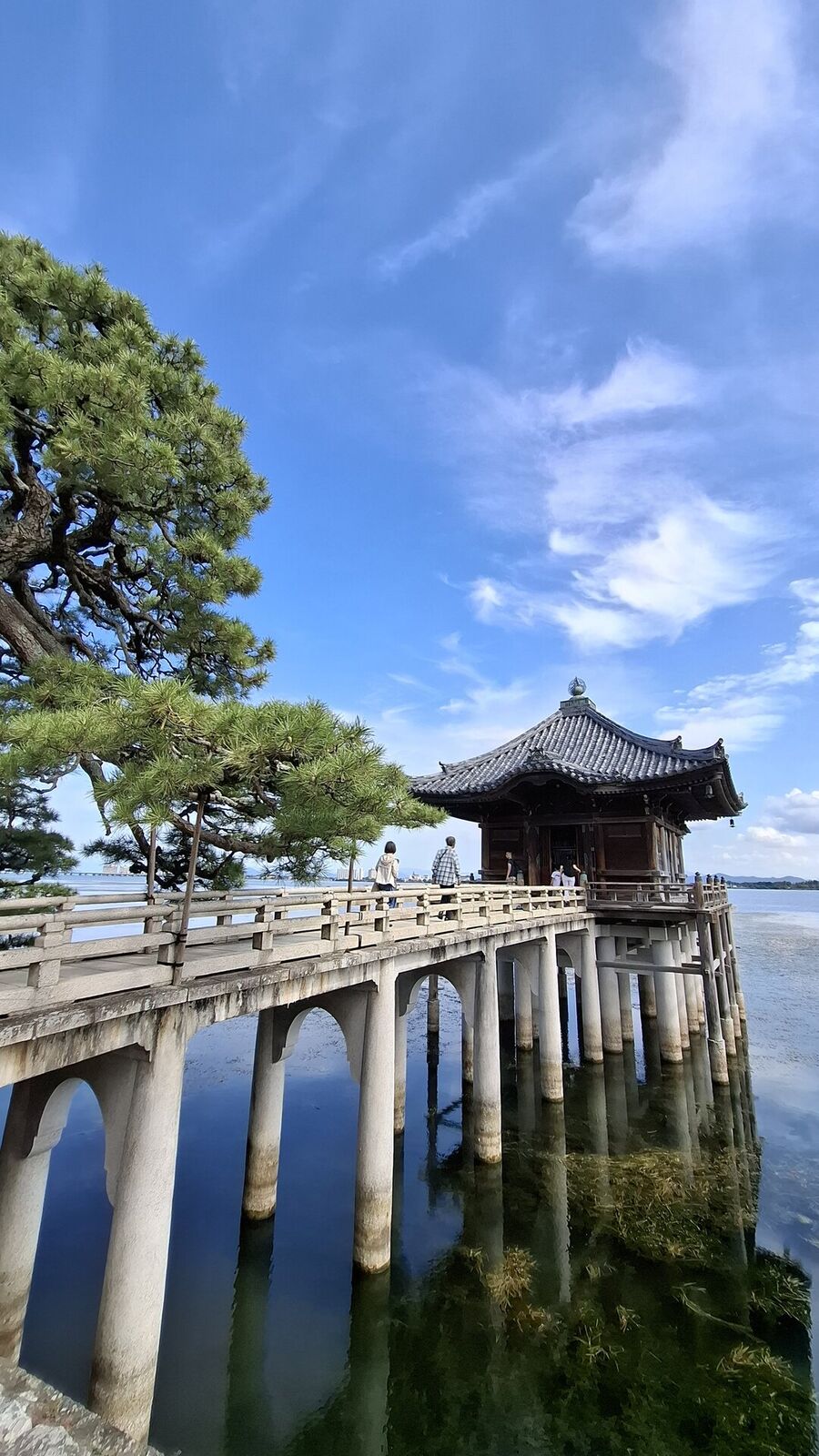
I first saw the Ukimido in a photograph somewhere and had one of those moments where you stop scrolling and think: that can't be real. A small wooden pavilion sitting on stone pillars in the middle of a lake, connected to shore by an elevated bridge, framed by ancient pine trees leaning out over the water. It looked like something from an ink painting, not a place you could actually drive to. But it is, and it's on the shore of Lake Biwa in Shiga Prefecture, about 15 minutes from Otsu.
Lake Biwa
Lake Biwa is Japan's largest lake, and most people drive past it on the way to somewhere else. It sits between Kyoto and Nagoya, covering a massive stretch of Shiga Prefecture, and the sheer scale of it is hard to grasp from any single vantage point. Standing on the shore, it doesn't feel like a lake. It feels like an inland sea. The far shore is a faint line of mountains in the haze, and the water stretches out so far that it starts reflecting the sky in a way that makes the horizon disappear. If you're driving the Meishin Expressway, you'll catch glimpses of it through gaps in the sound barriers, but that doesn't do it justice. You need to stop and stand next to it.
The Temple
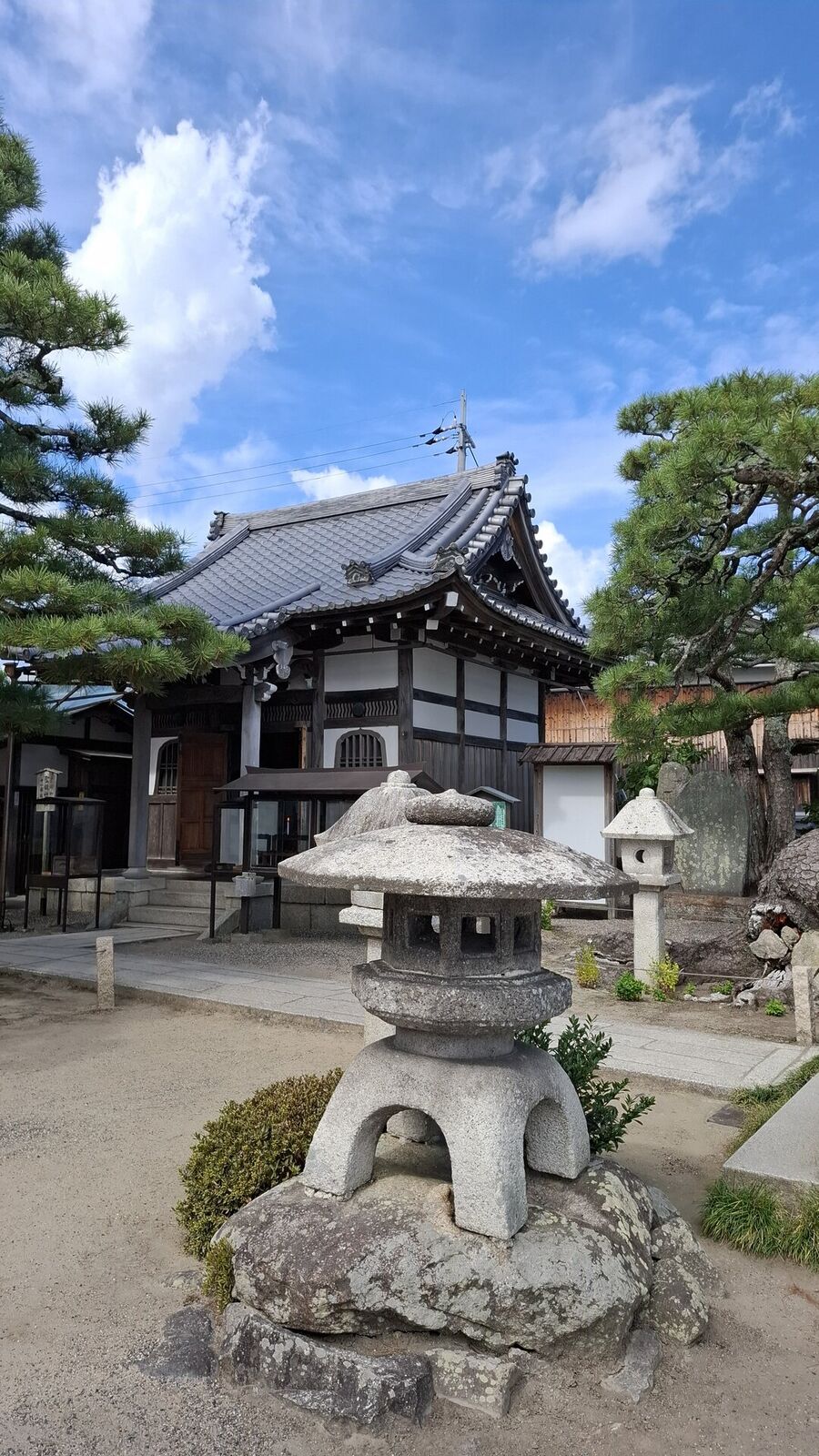
Mangetsu-ji itself is a small Buddhist temple on the southwestern shore of the lake, not far from the town of Katata. It's modest - a main hall, stone lanterns, beautifully shaped pine trees in a compact courtyard. The kind of neighborhood temple you'd walk past without a second thought if it weren't for what's sitting in the water next to it.
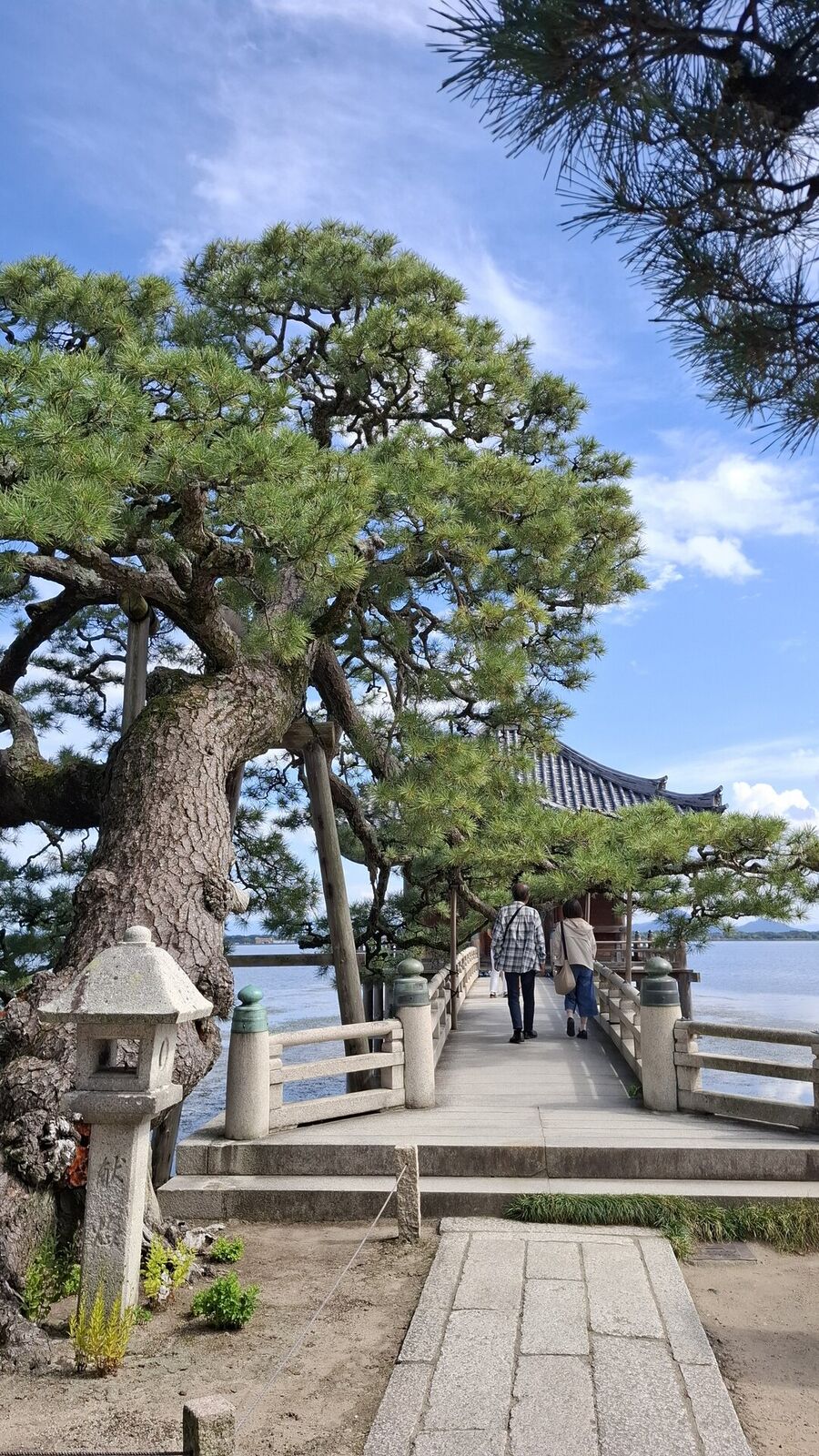
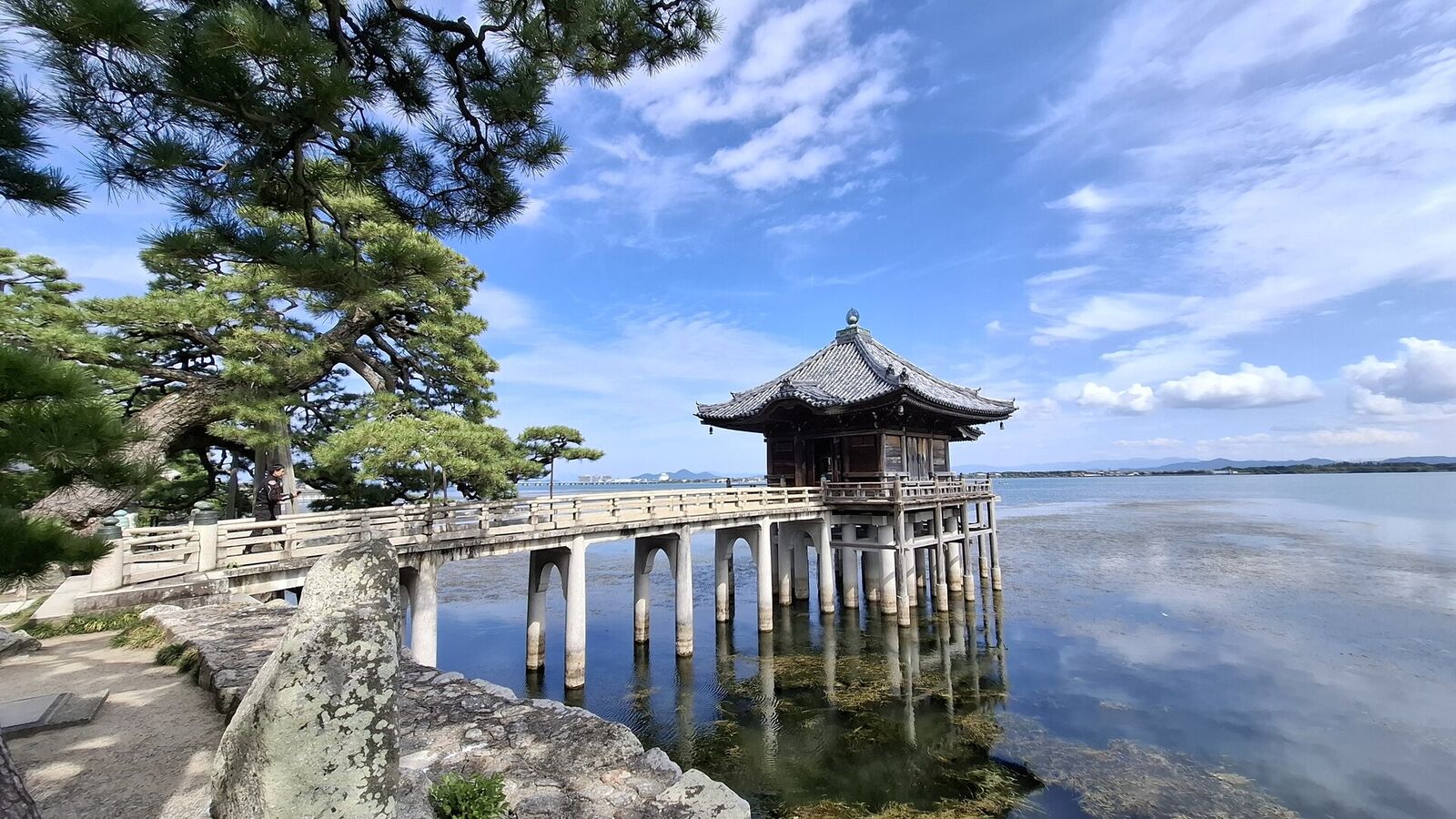
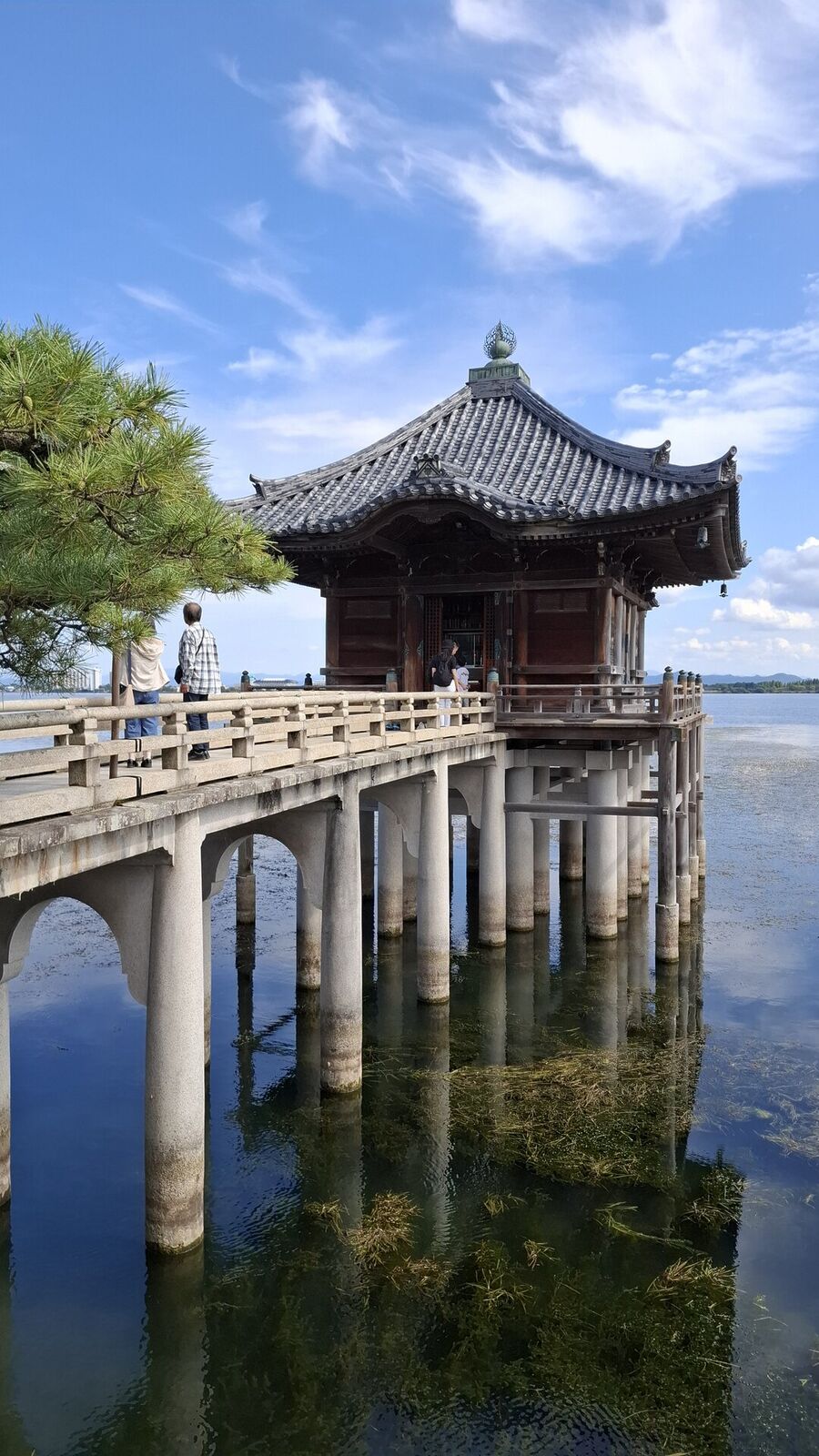
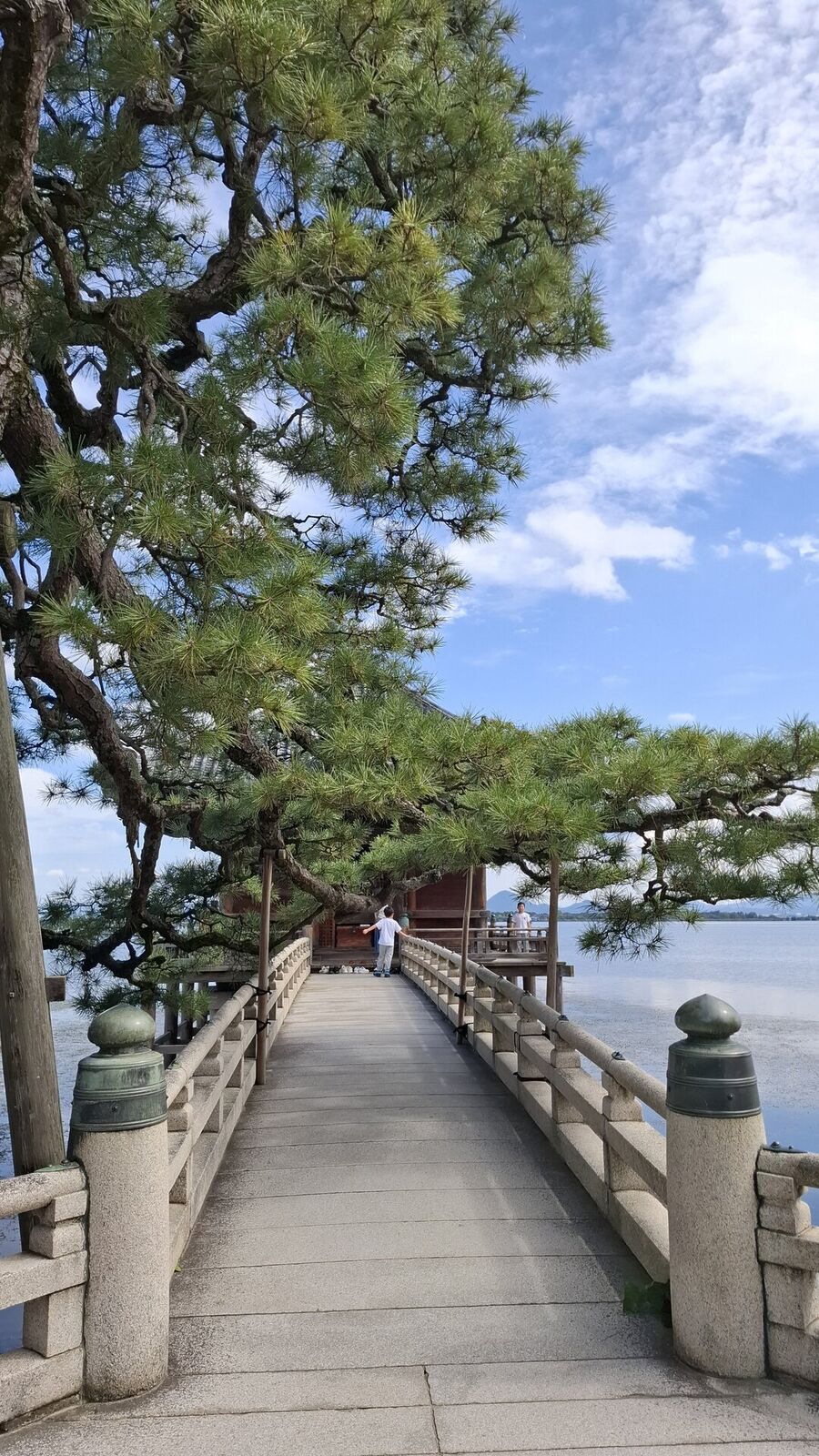
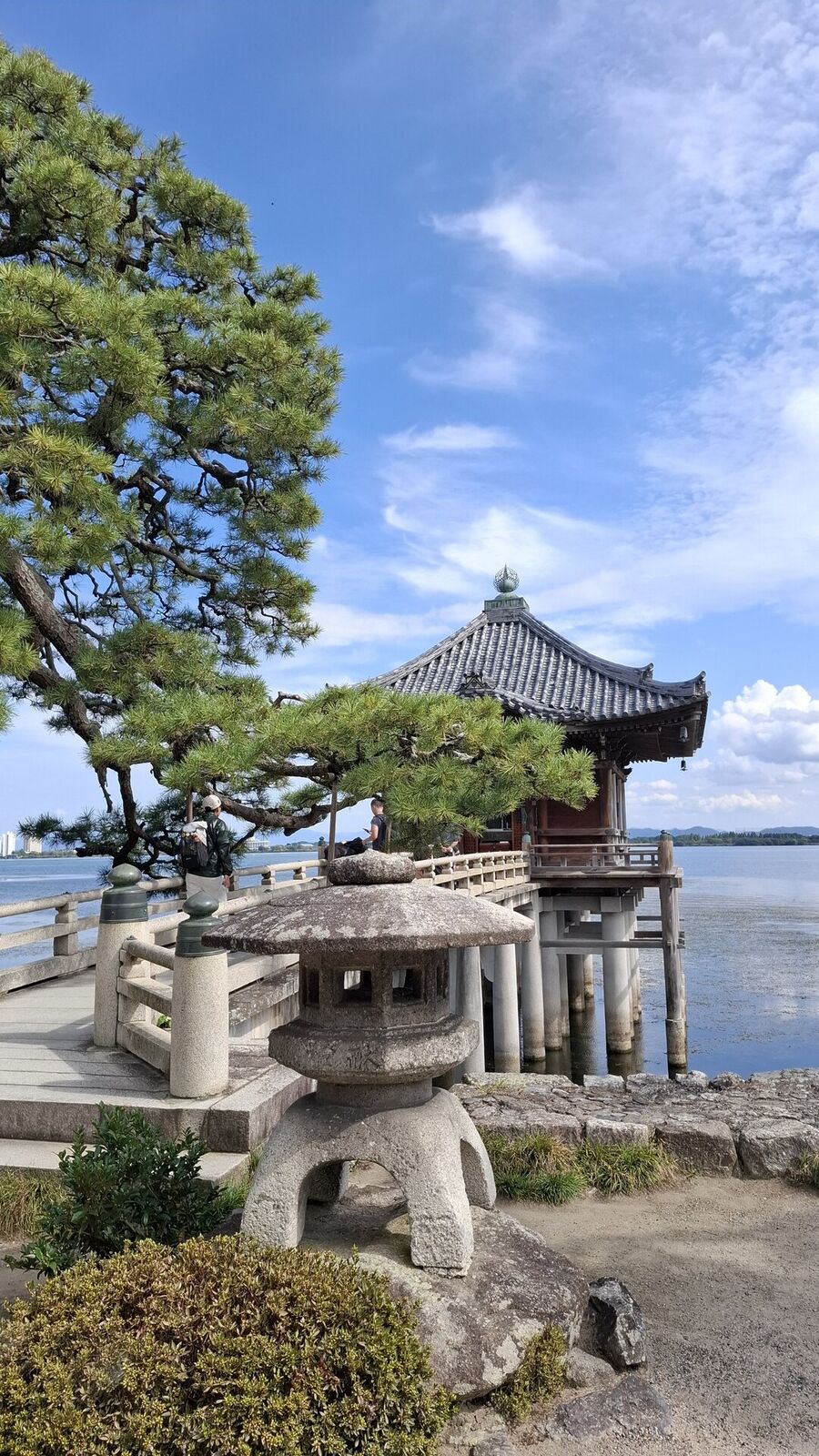
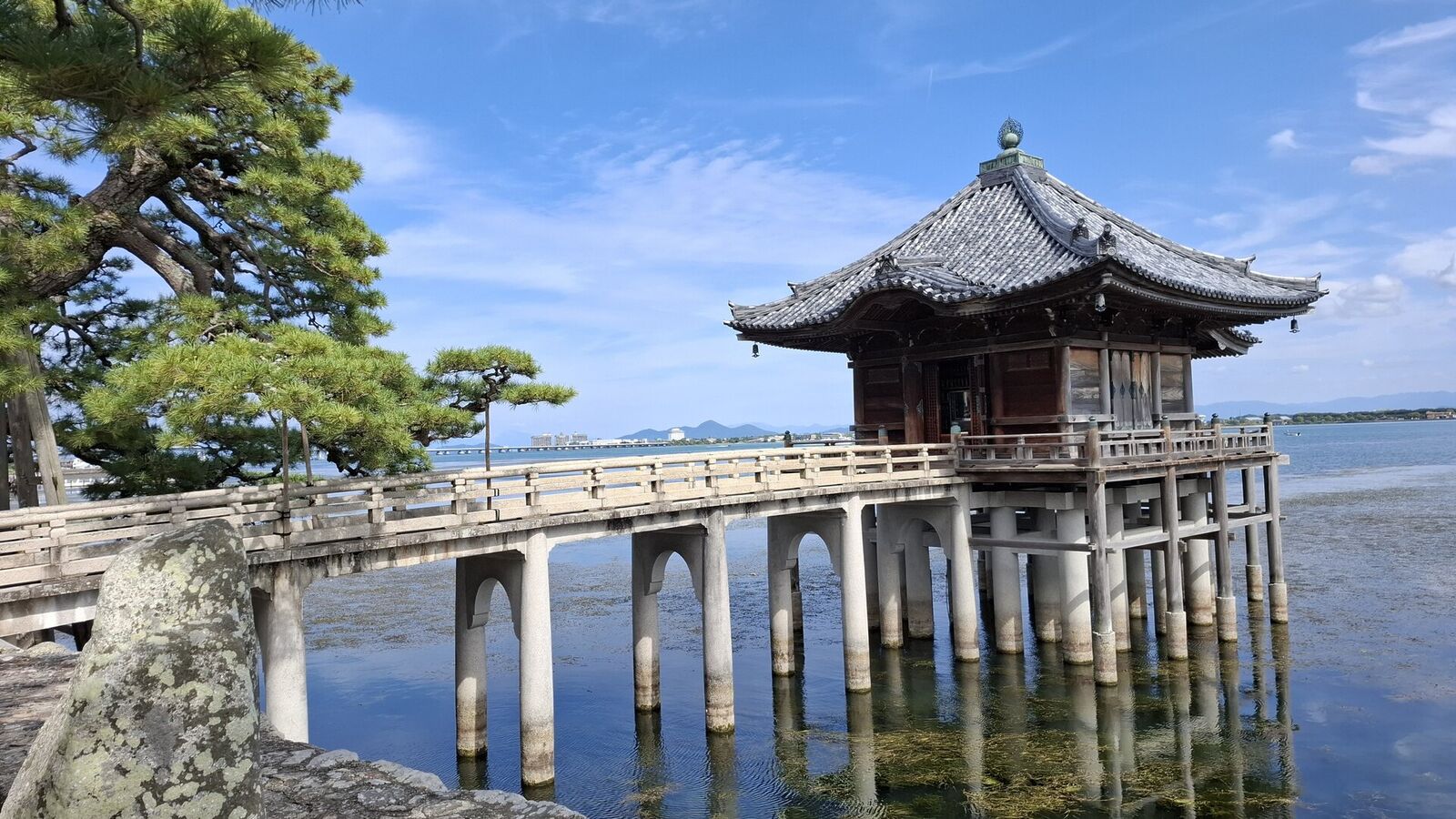
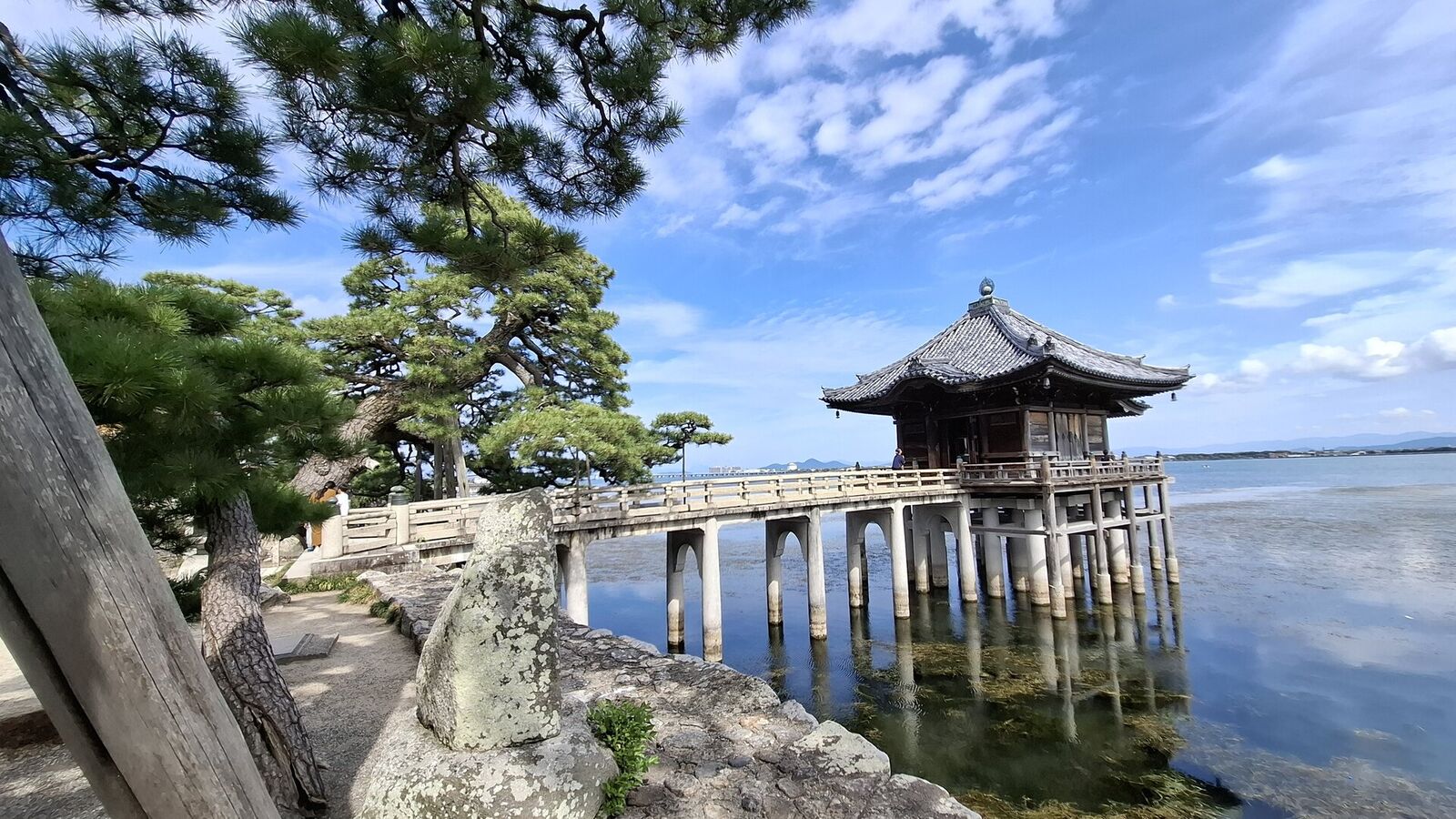
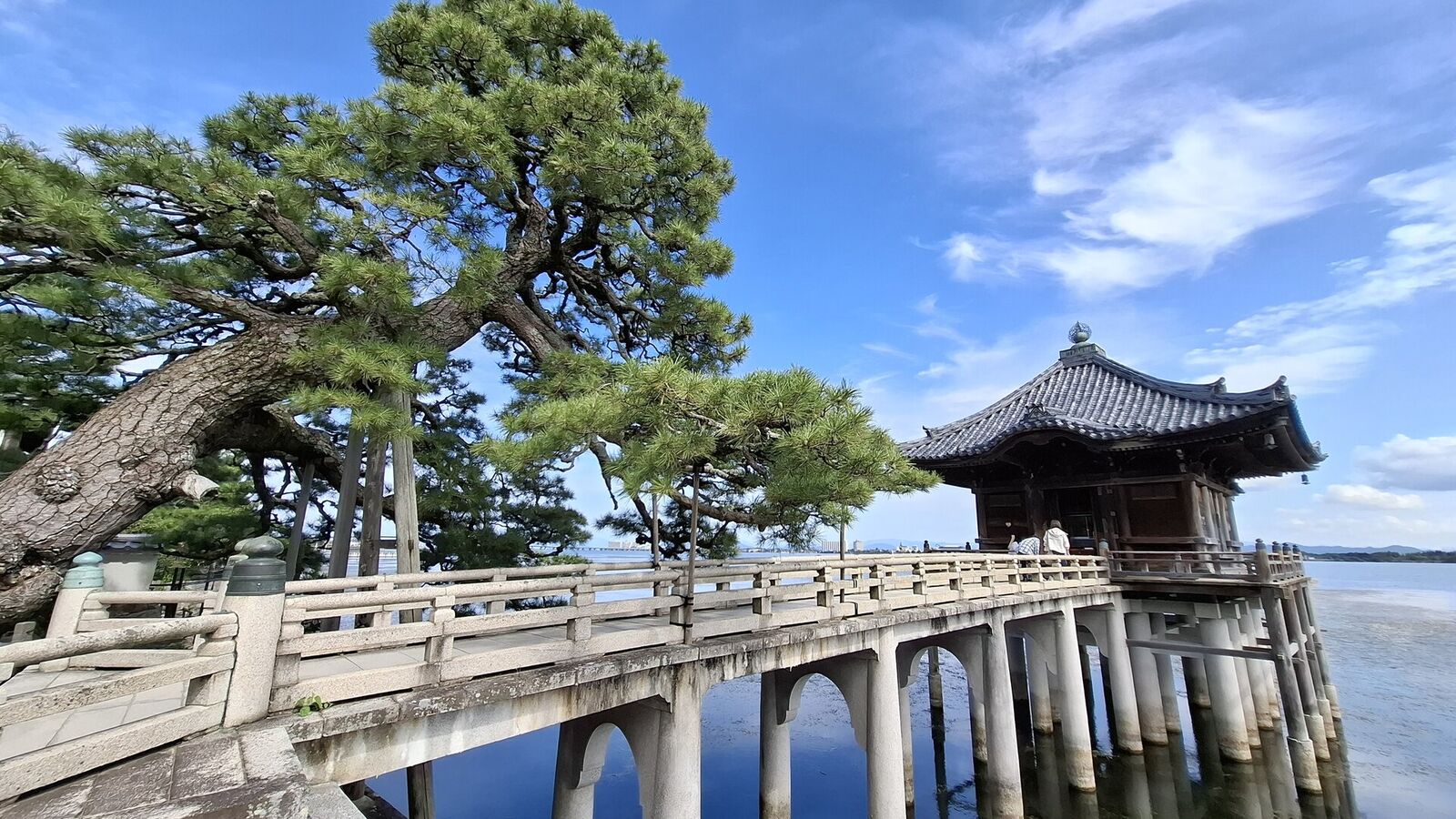
The Ukimido, the "floating hall," is the reason people come here. It's a small wooden pavilion built on stone pillars that stand in the shallow water of the lake, connected to the shore by an elevated stone bridge. The structure dates back centuries, though it's been rebuilt several times. What strikes you first isn't the architecture itself - it's how the building seems to float. On a calm day, the pillars reflect perfectly in the water, and the pavilion appears to hover above the surface. The clouds mirror below it. The pine trees on shore lean toward it as if reaching out. It's a composition so good that it barely needs a photographer. The place just arranges itself.
Walking Out
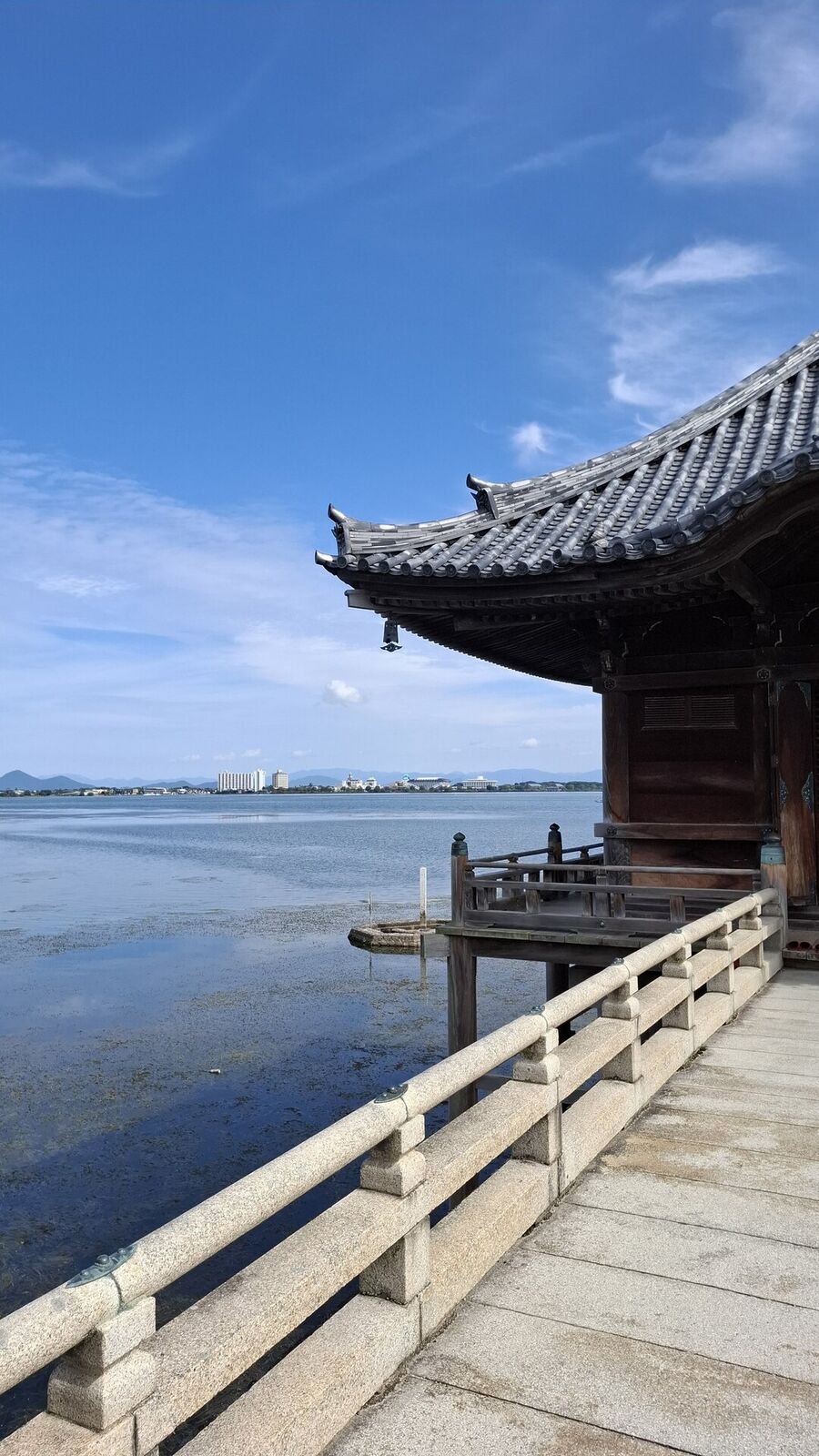
Most visitors walk across the bridge to the pavilion, and you should too. You leave your shoes at the start of the wooden terrace that wraps around the outside, and then you can circle the entire structure on bare feet. The pavilion itself is a shrine - you can't go inside, but you can stand before it, bow, clap your hands in prayer. On the day I was there, a family with small children was making the rounds, the kids running ahead on the wooden boards, delighted by the water on all sides. It was one of those quietly sweet moments that reminded me this isn't just a photo spot. People come here to pray.
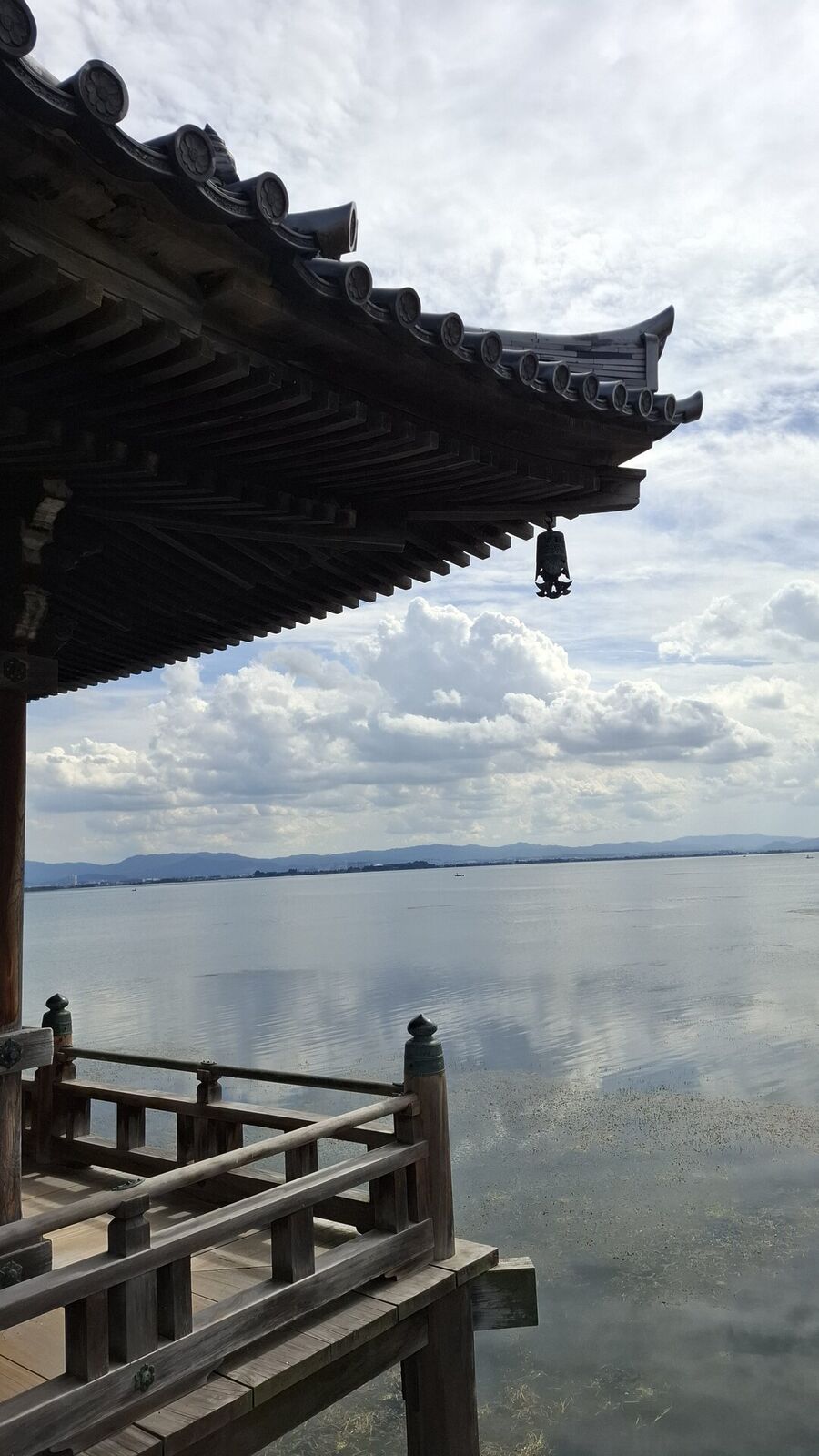
The view from the terrace is worth the short walk across the bridge. You're surrounded by water on three sides, the roof curving up above you, and through the wooden railing Lake Biwa opens up to the horizon with mountains in the distance. The shallow water below is clear enough to see the bottom, aquatic plants swaying gently. On the day I visited, the clouds were piling up over the far shore in big white formations, and their reflection in the still water created this effect where the pavilion seemed to float between two skies.
Looking back toward shore from the terrace gives you a different perspective. The pine trees that frame every Ukimido photograph now stand behind you, and the temple grounds look smaller, more intimate. You can see why this spot was chosen for a shrine - there's something about being just far enough from land that the world gets quieter.
The Pines
The pine trees deserve their own mention. They're old, gnarled, and massive. Their trunks curve and twist in ways that suggest centuries of wind coming off the lake, and their branches spread out horizontally, creating natural frames for the Ukimido behind them. In Japanese garden design, this kind of pine is called a thing of beauty precisely because of its imperfection - the asymmetry, the struggle visible in every bend. These pines have been growing here long enough to become part of the view rather than just standing next to it.
Practical Info
Location: Katata, Otsu, Shiga Prefecture. Southwestern shore of Lake Biwa. View on Google Maps
Access: By car: about 15 minutes from Otsu, easy parking nearby. By train: JR Katata Station, then a 20-minute walk or short bus ride.
Cost: Free to enter the temple grounds and walk to the Ukimido.
Time needed: 20-30 minutes is enough to see everything and take photos. Worth combining with other Lake Biwa stops.
Campervan tip: Easy stop on a Lake Biwa circuit. Plenty of Michi-no-Eki options around the lake for overnighting.
Best time: Calm days with good cloud formations. The reflections in the still water are what make this place. Early morning or late afternoon light works best. Walk across the bridge and circle the terrace - don't just photograph from shore.