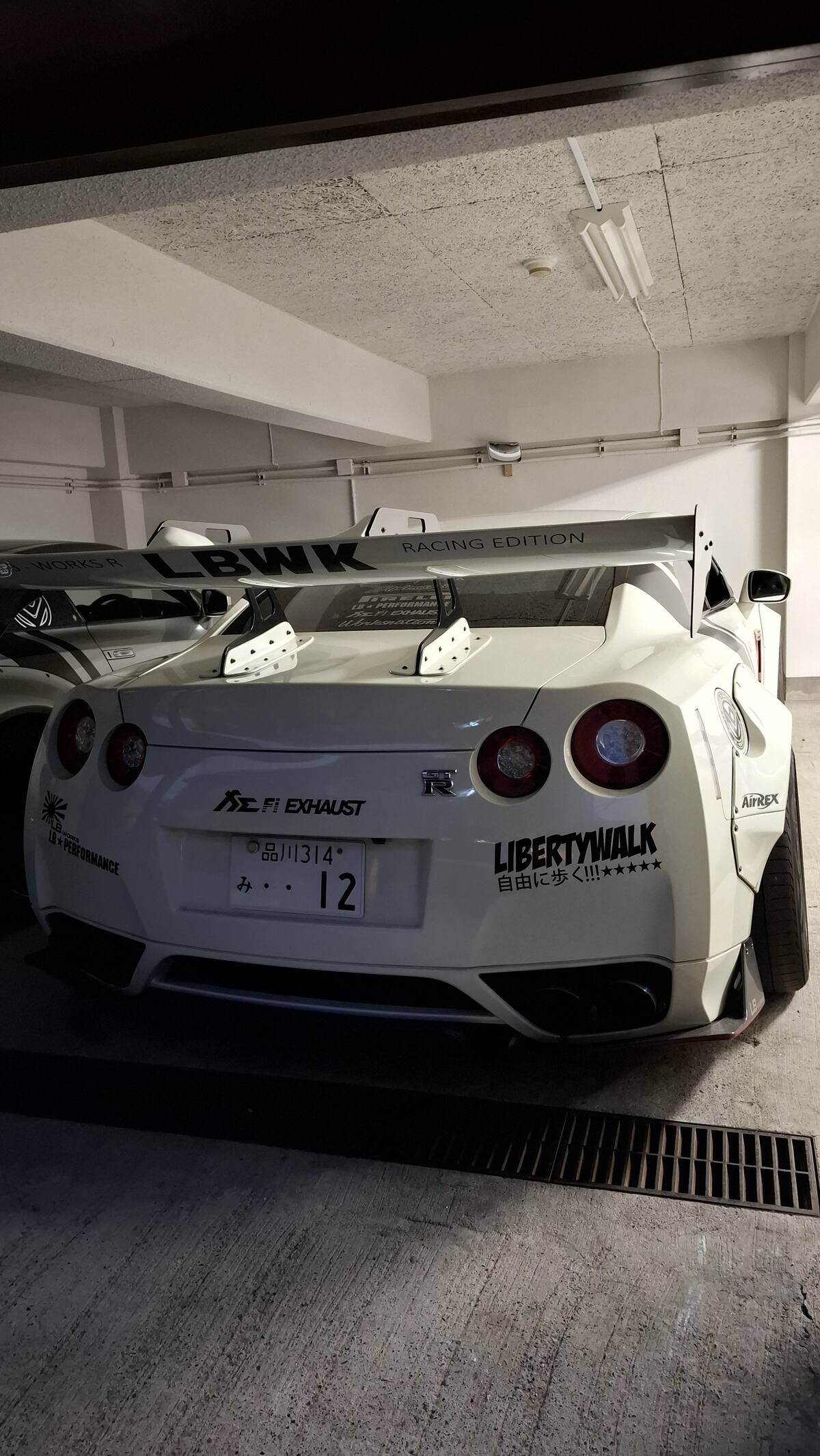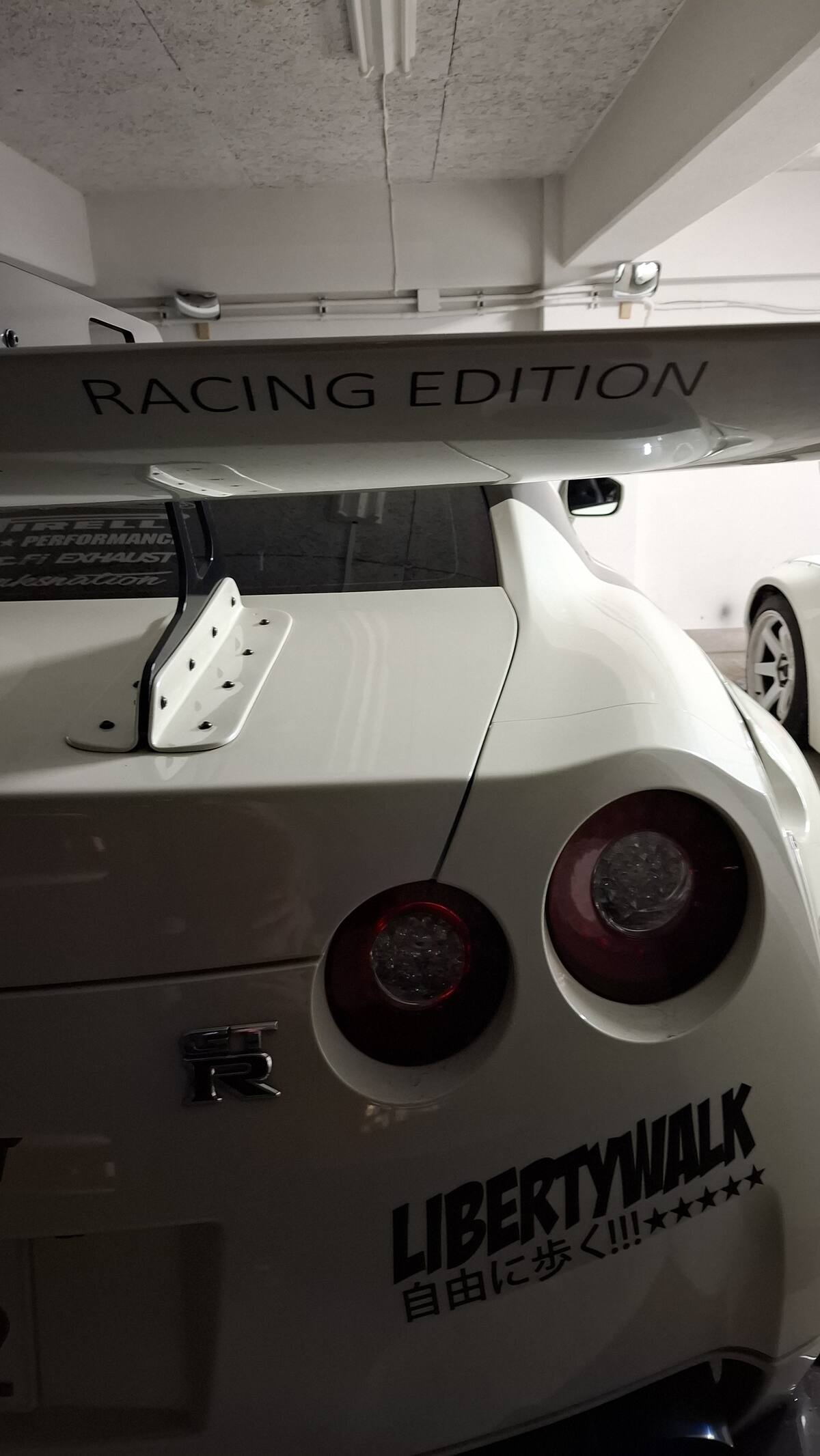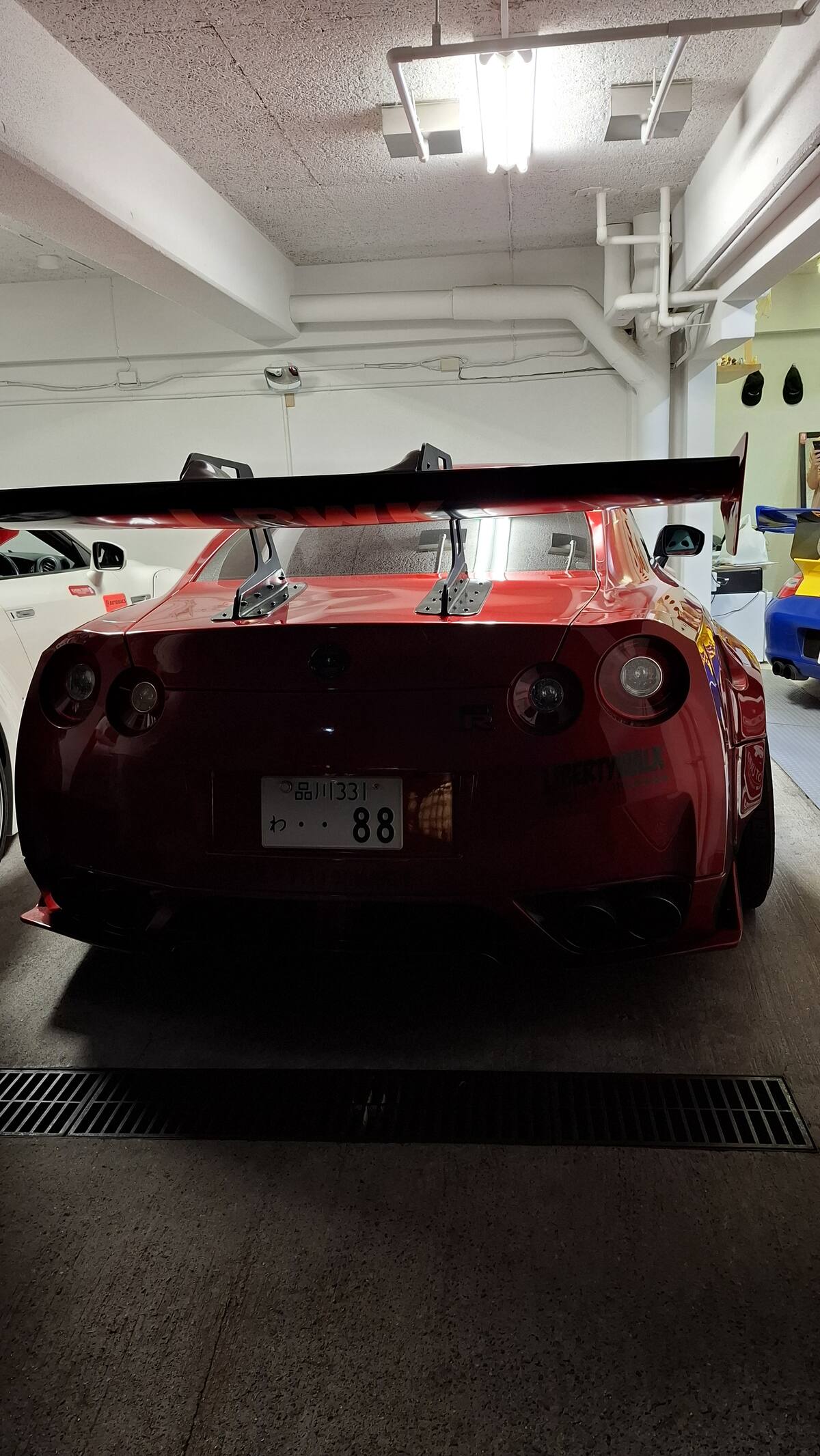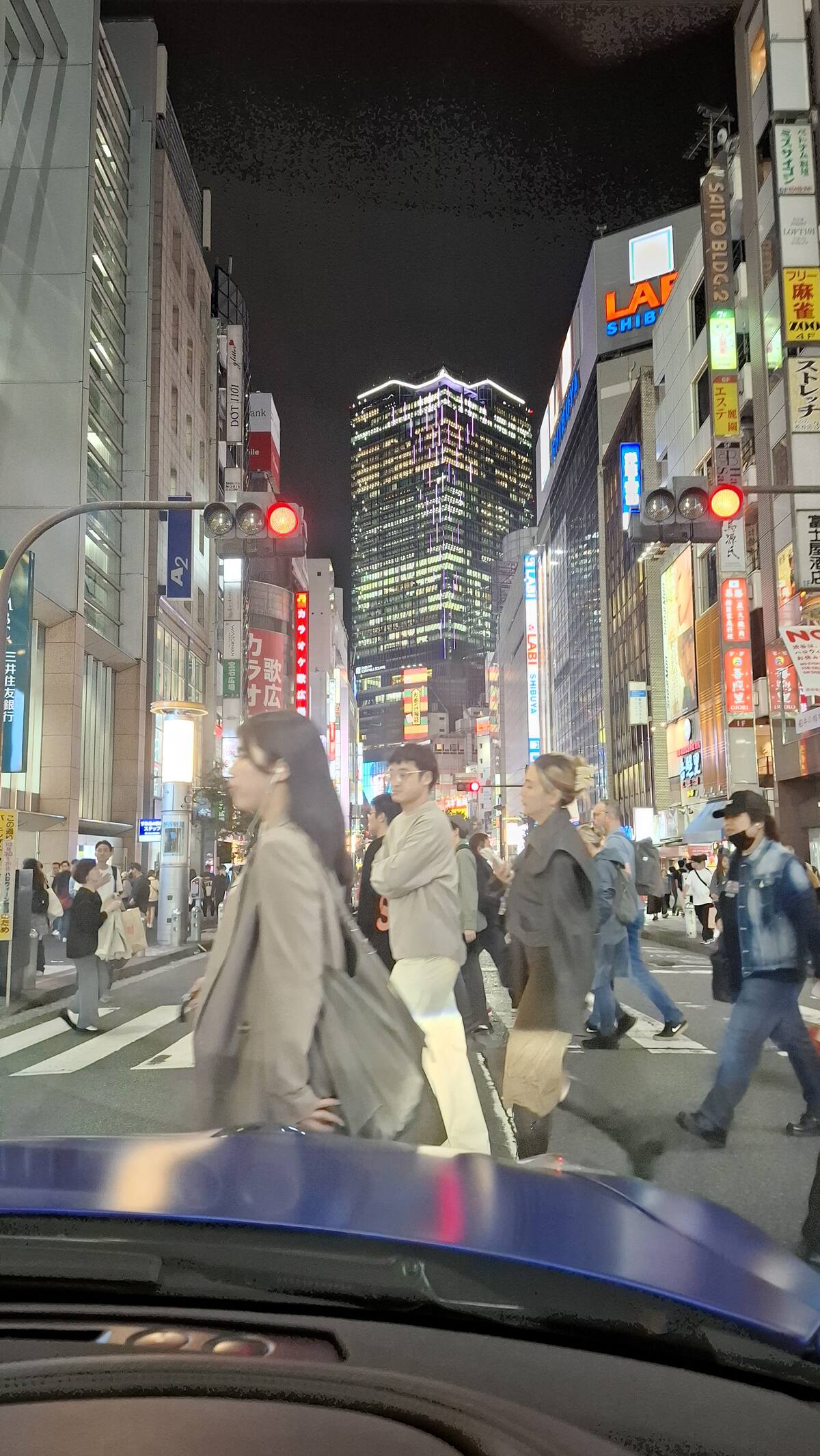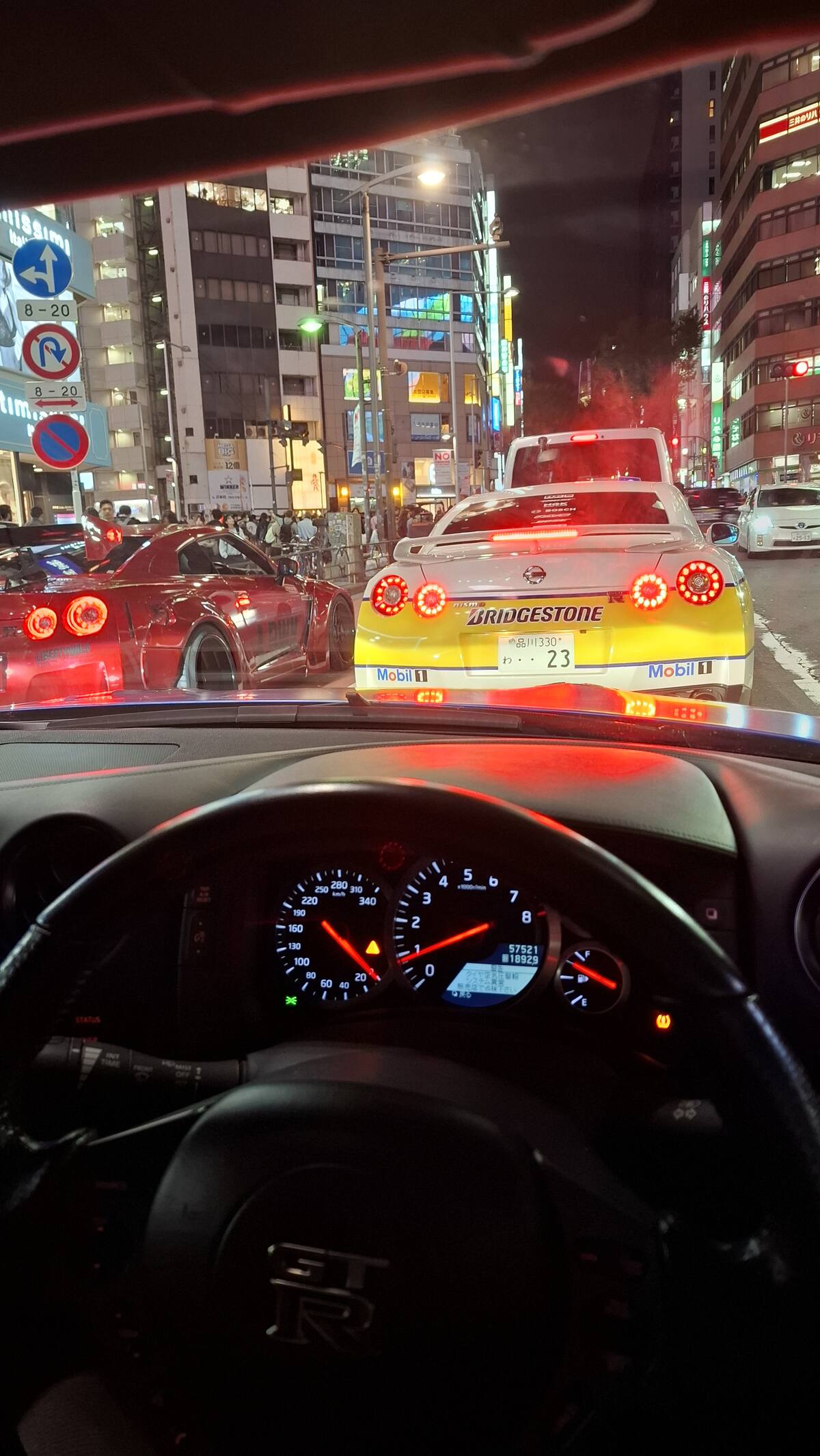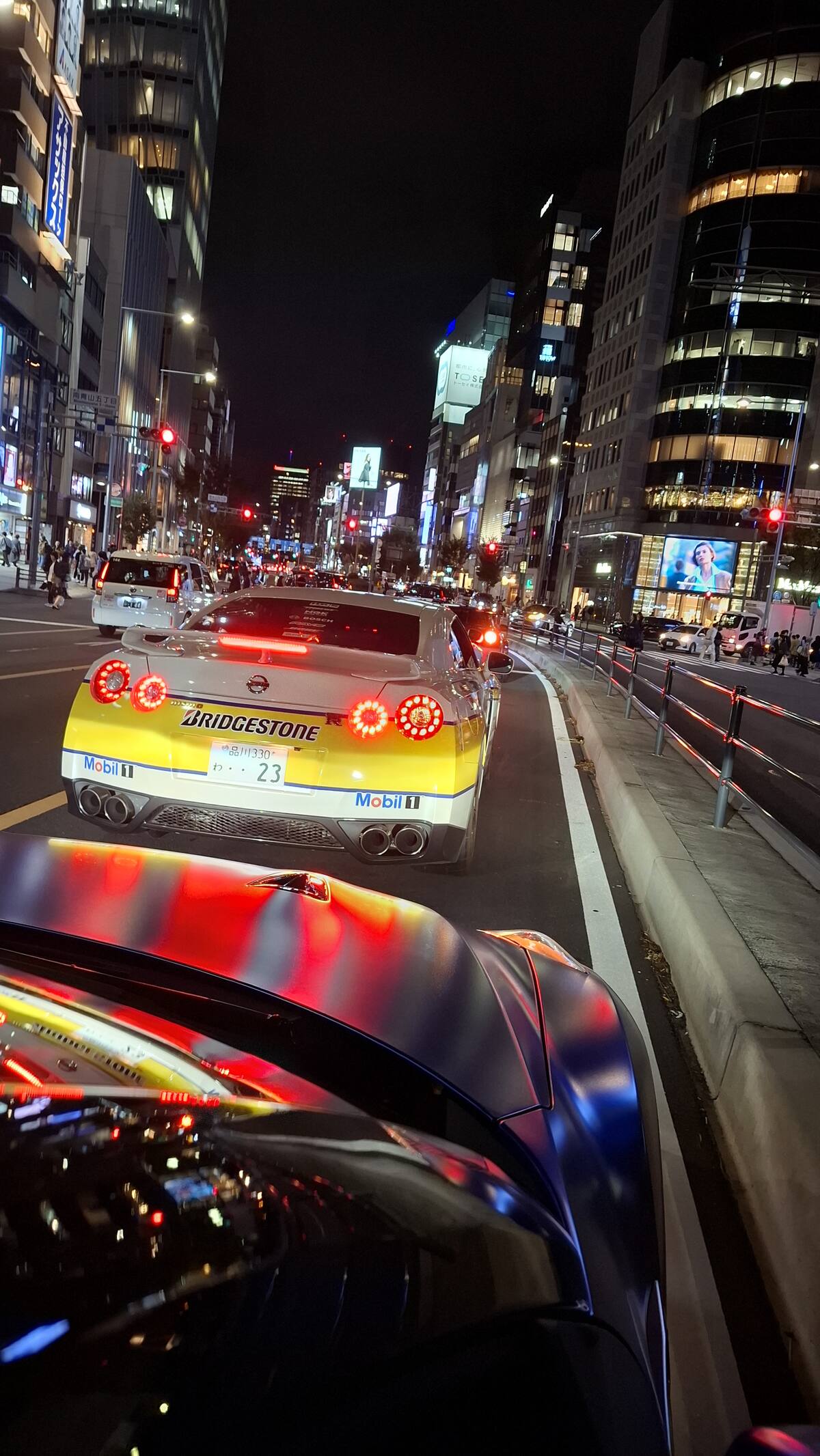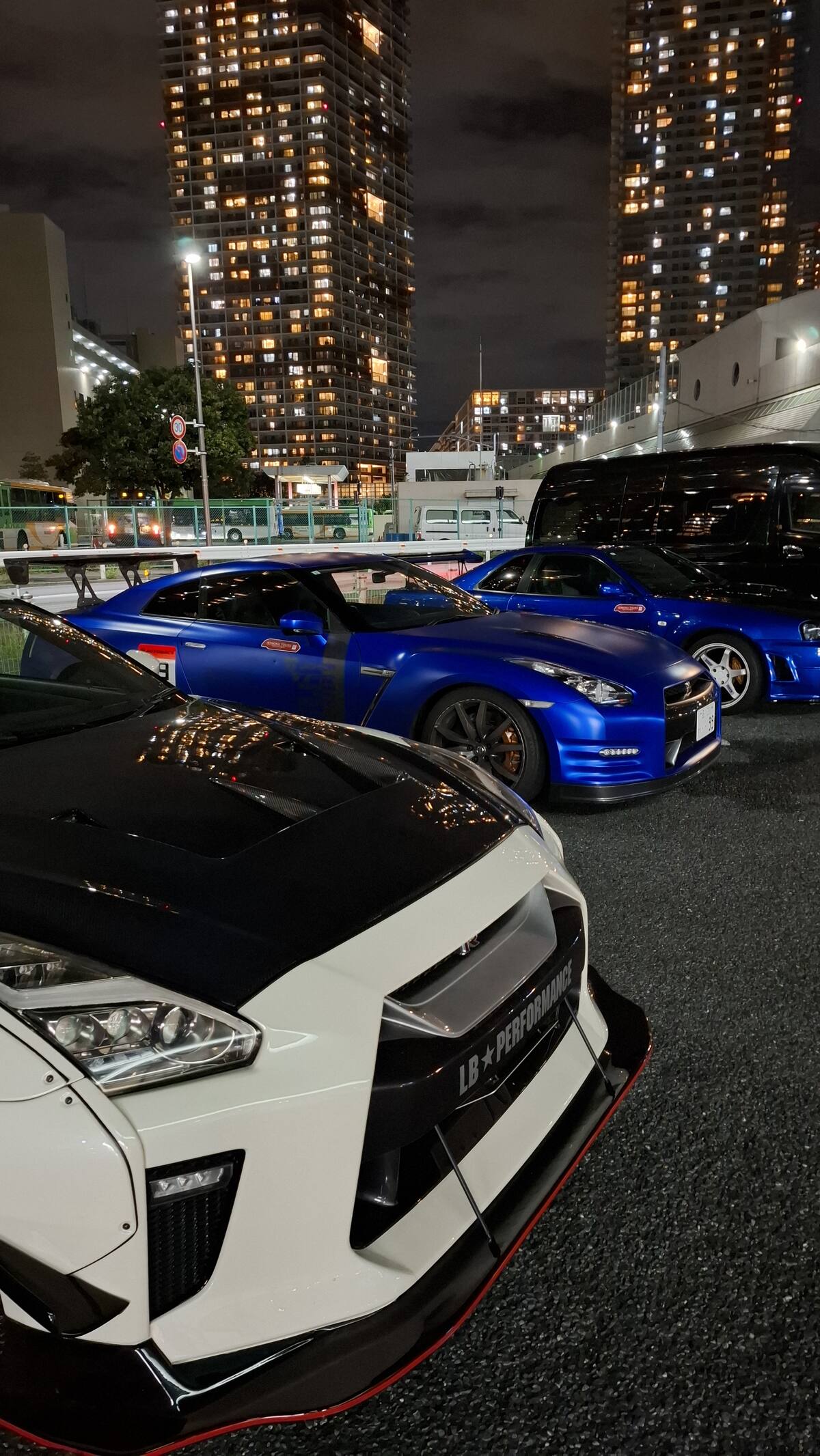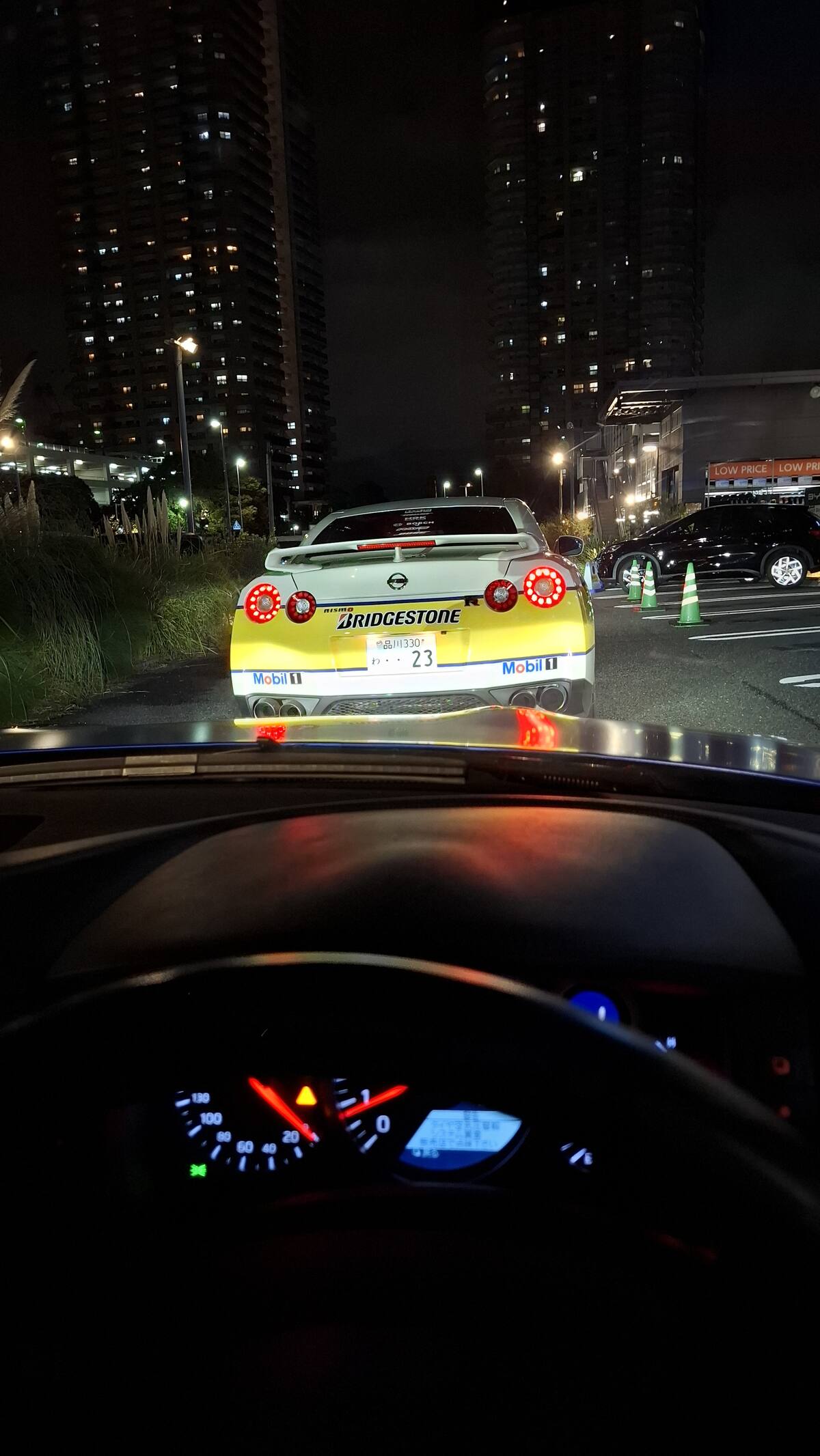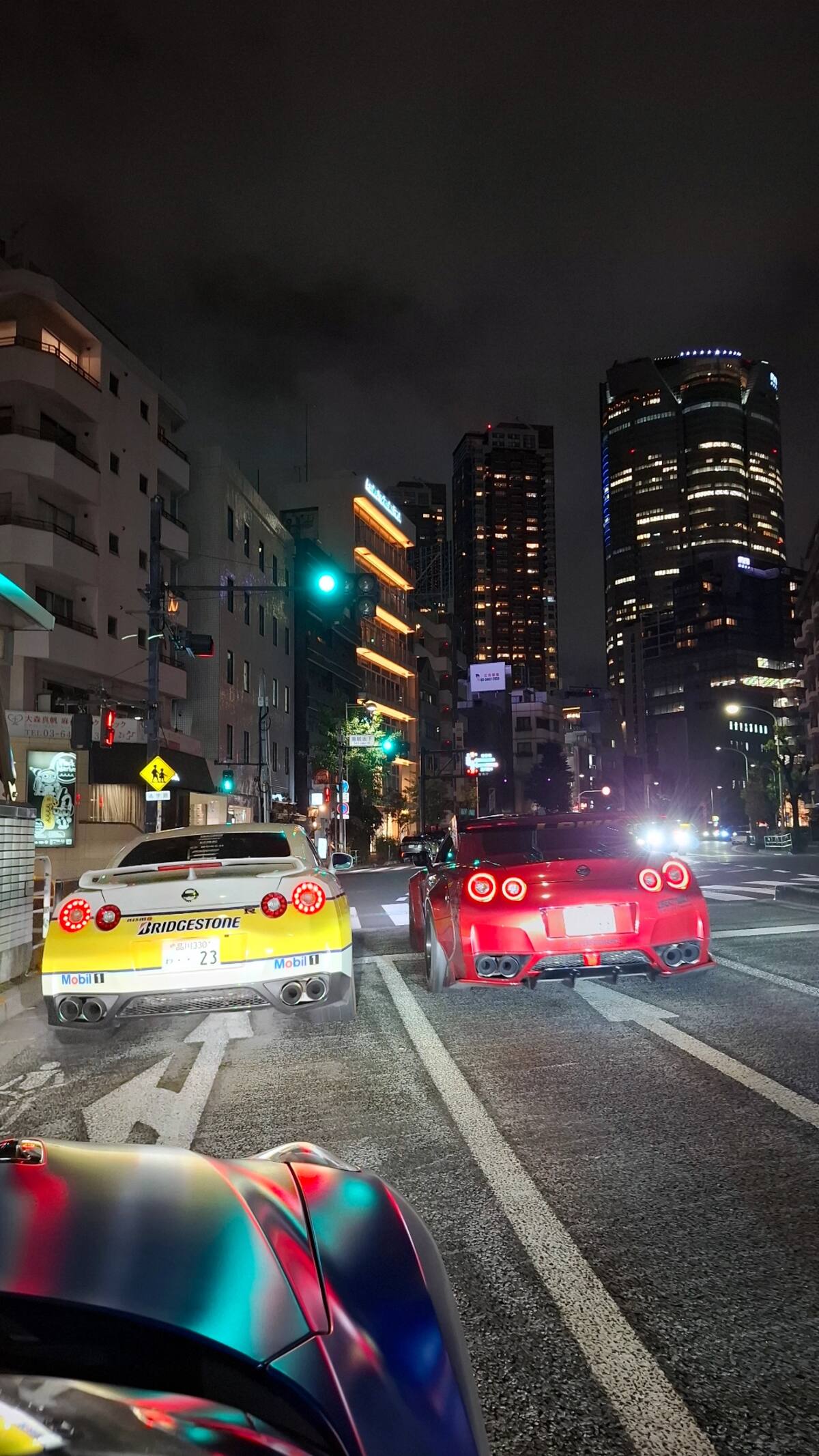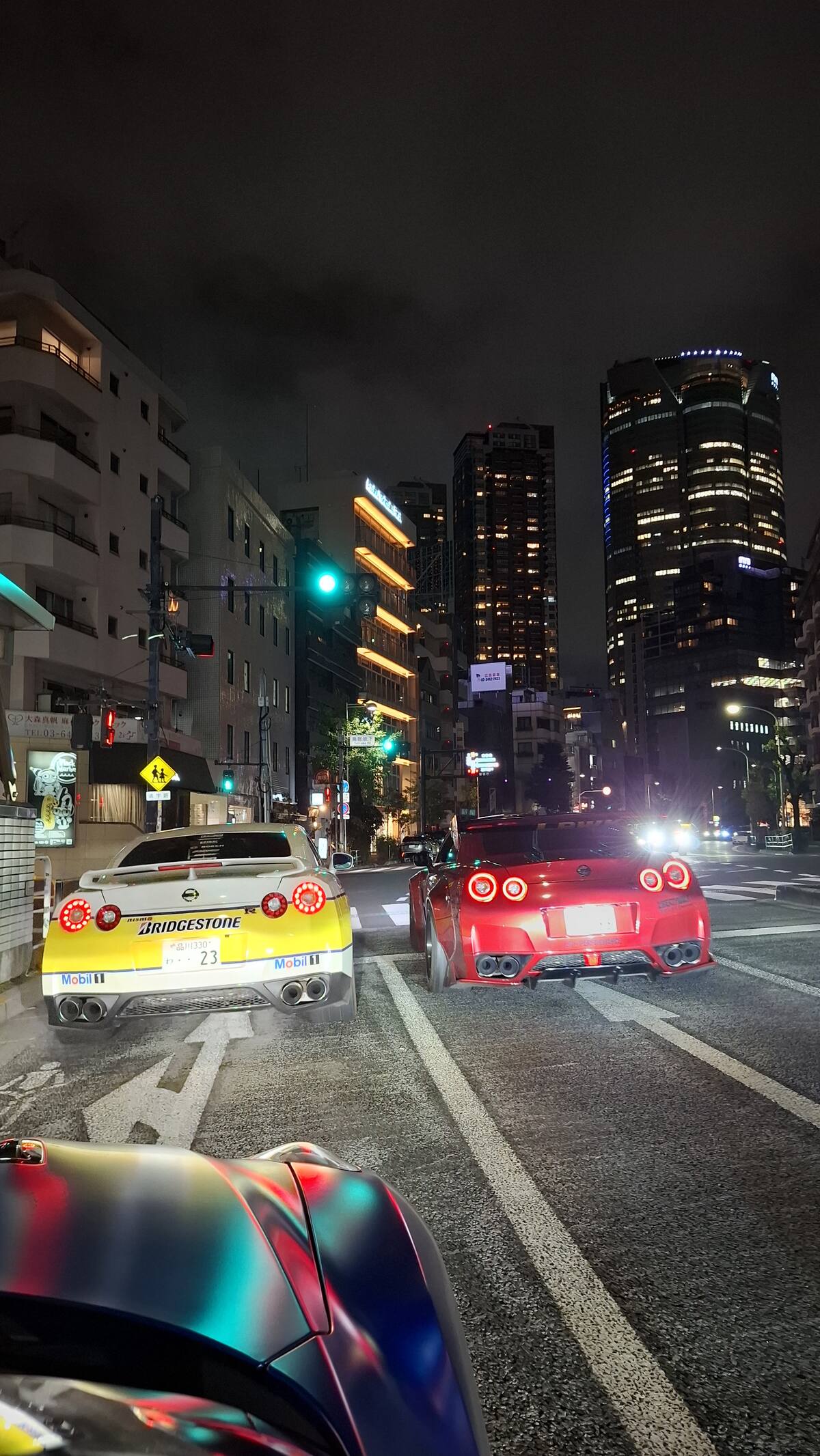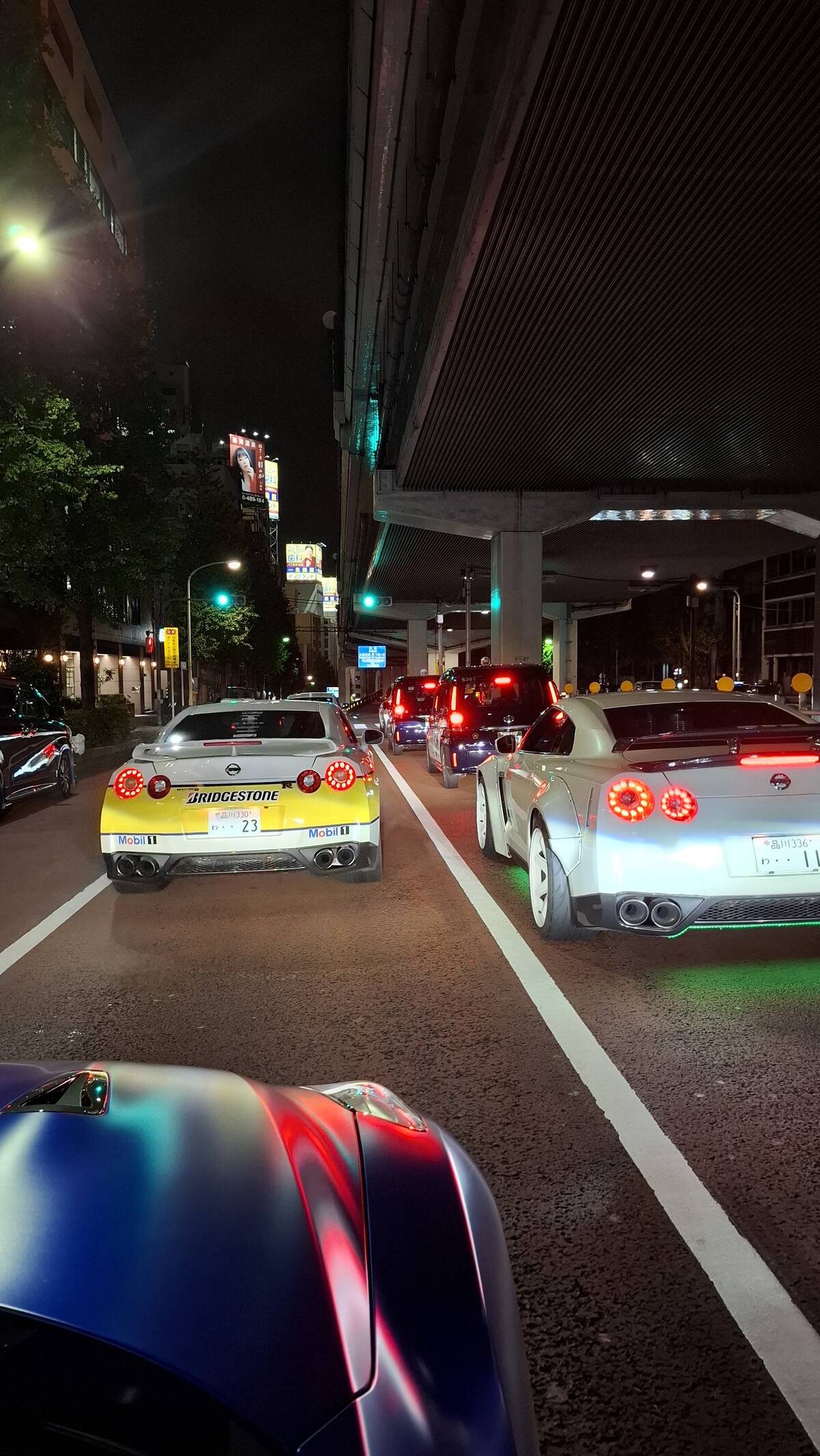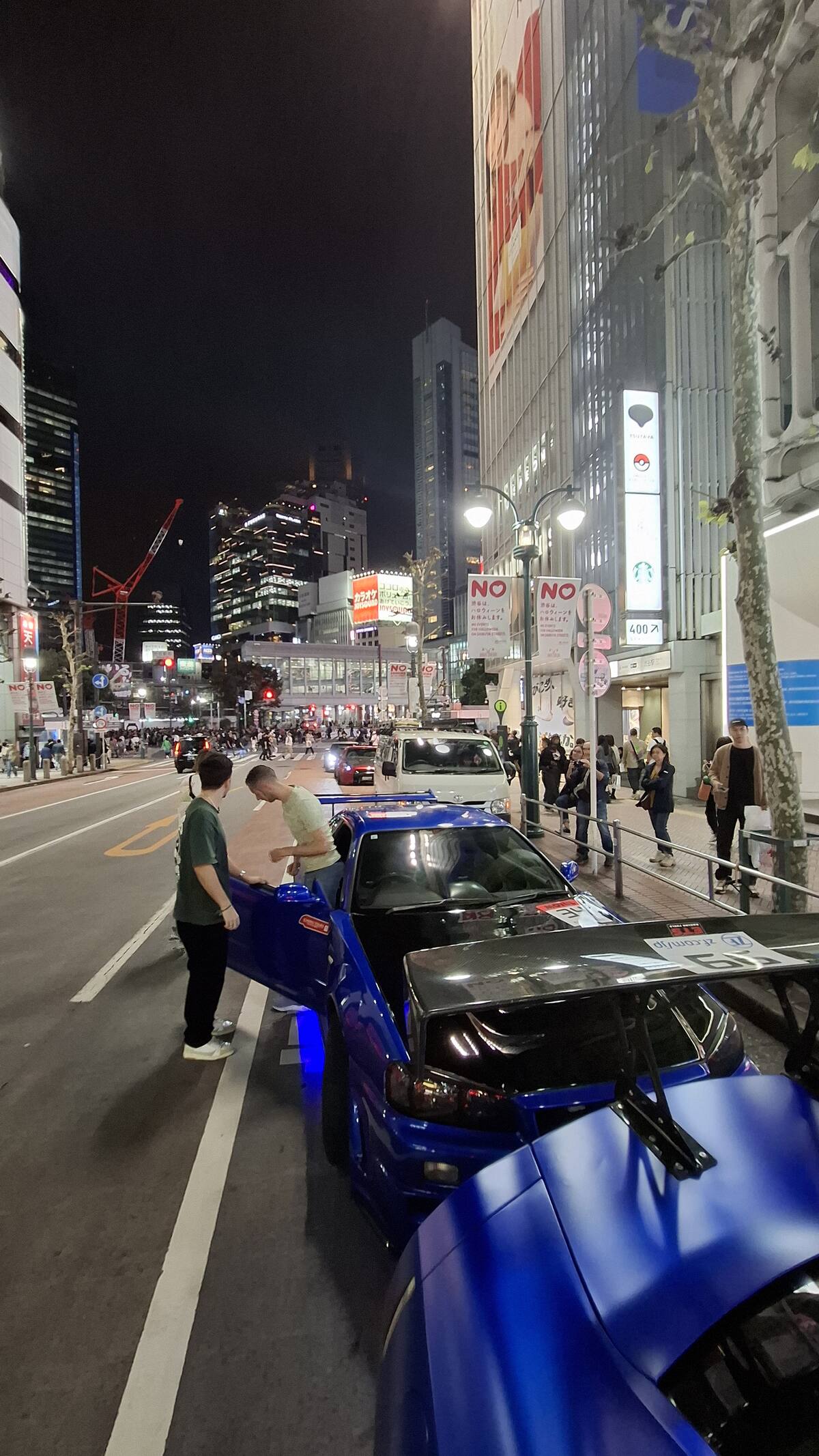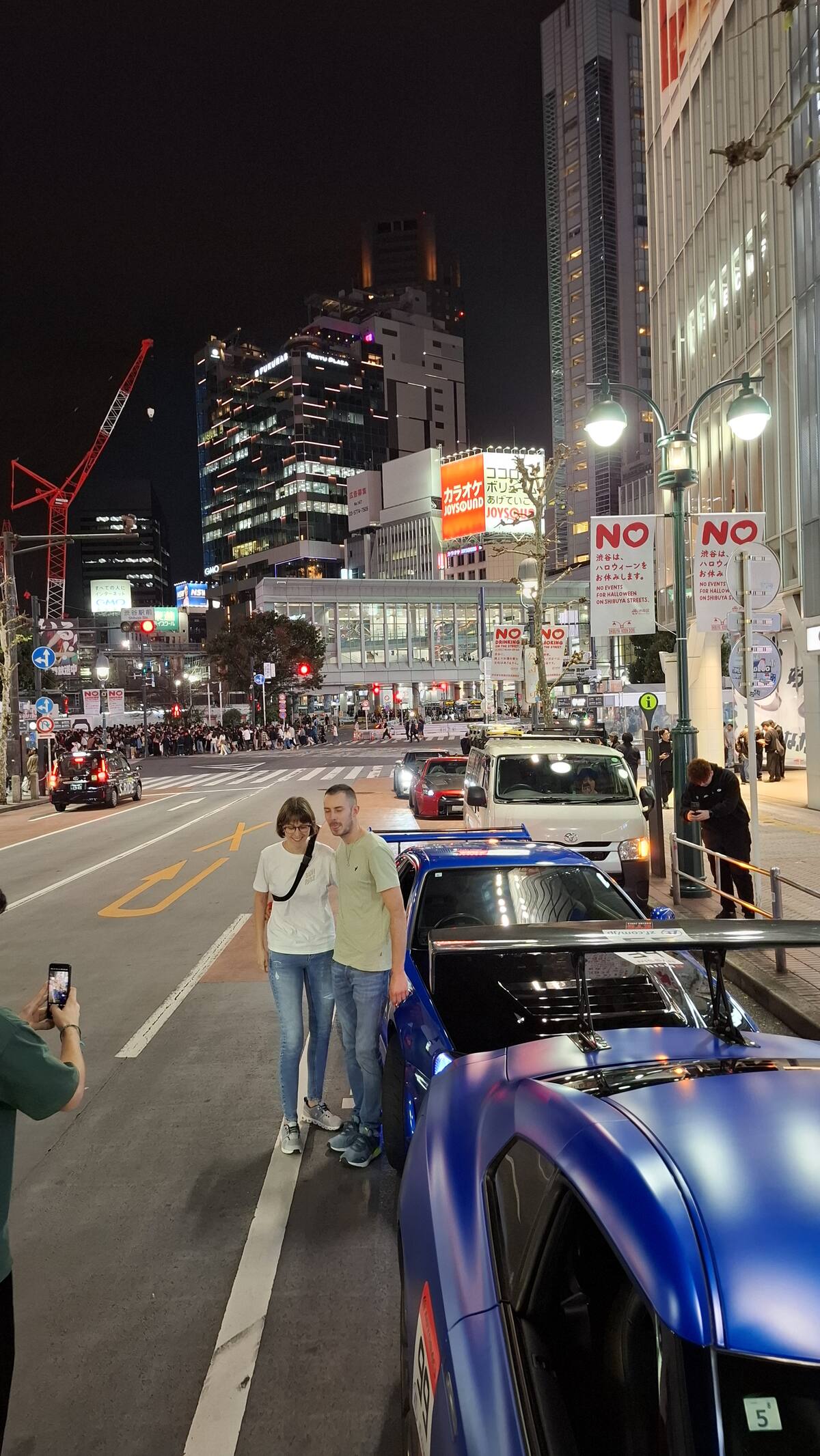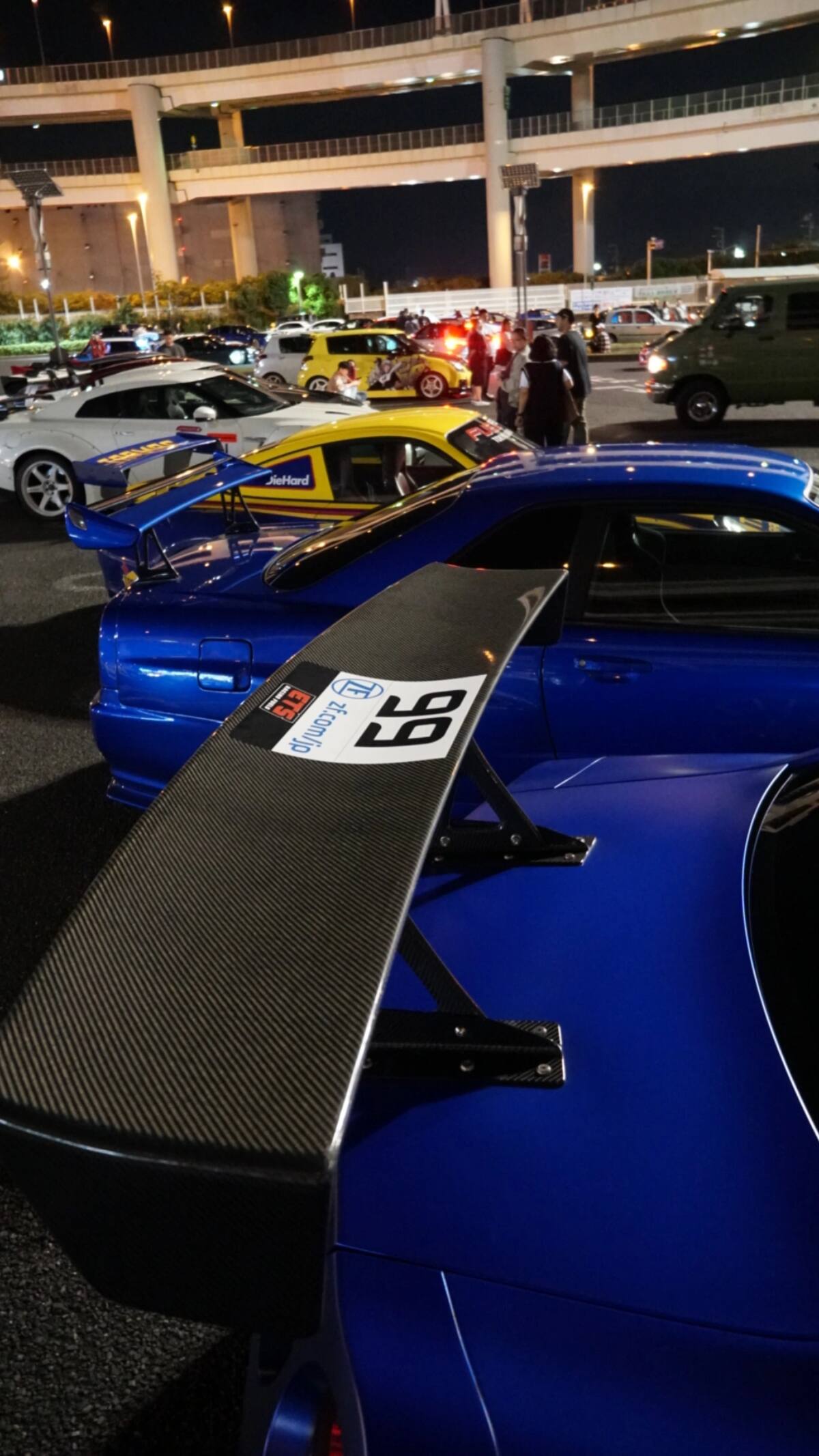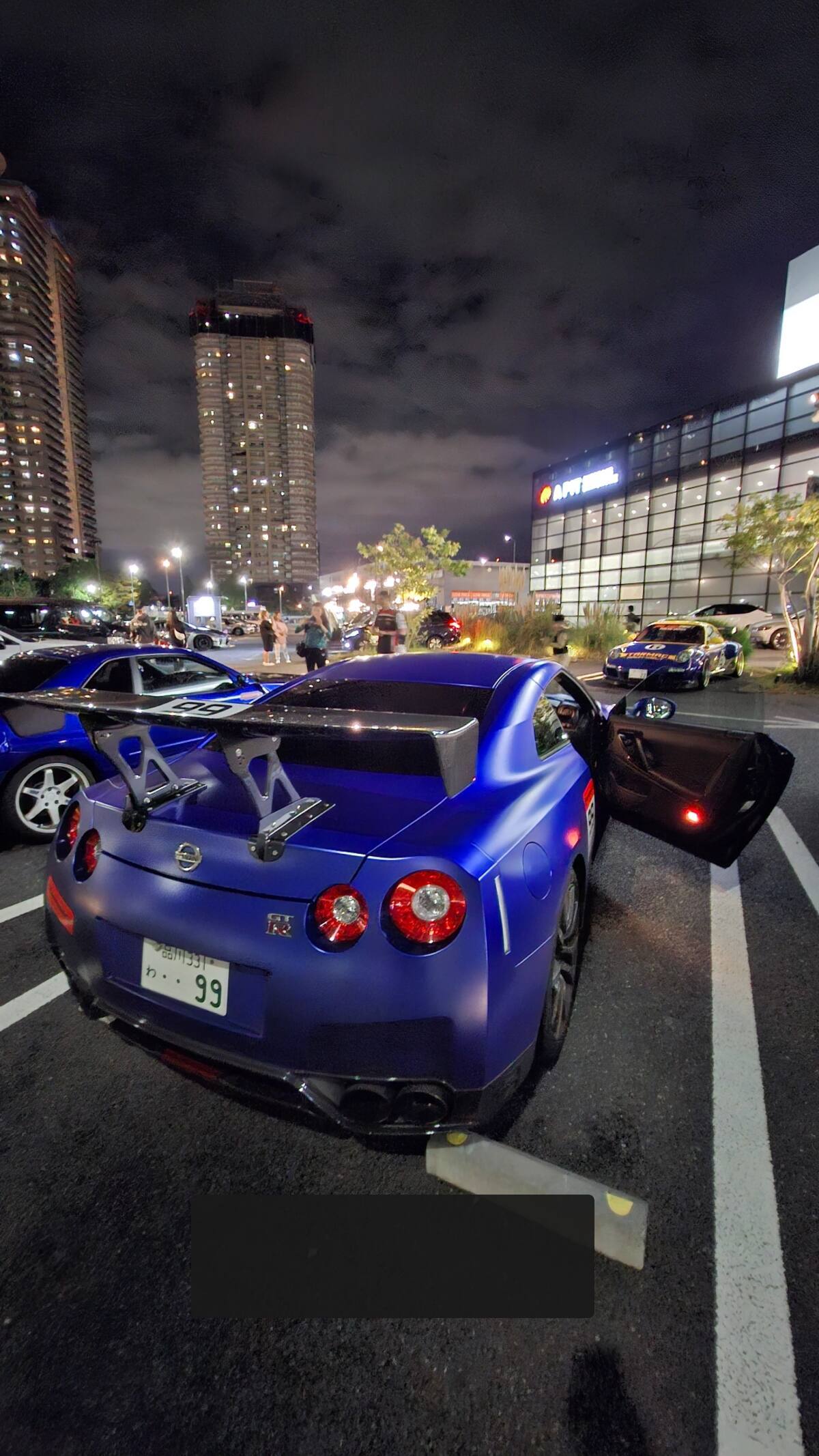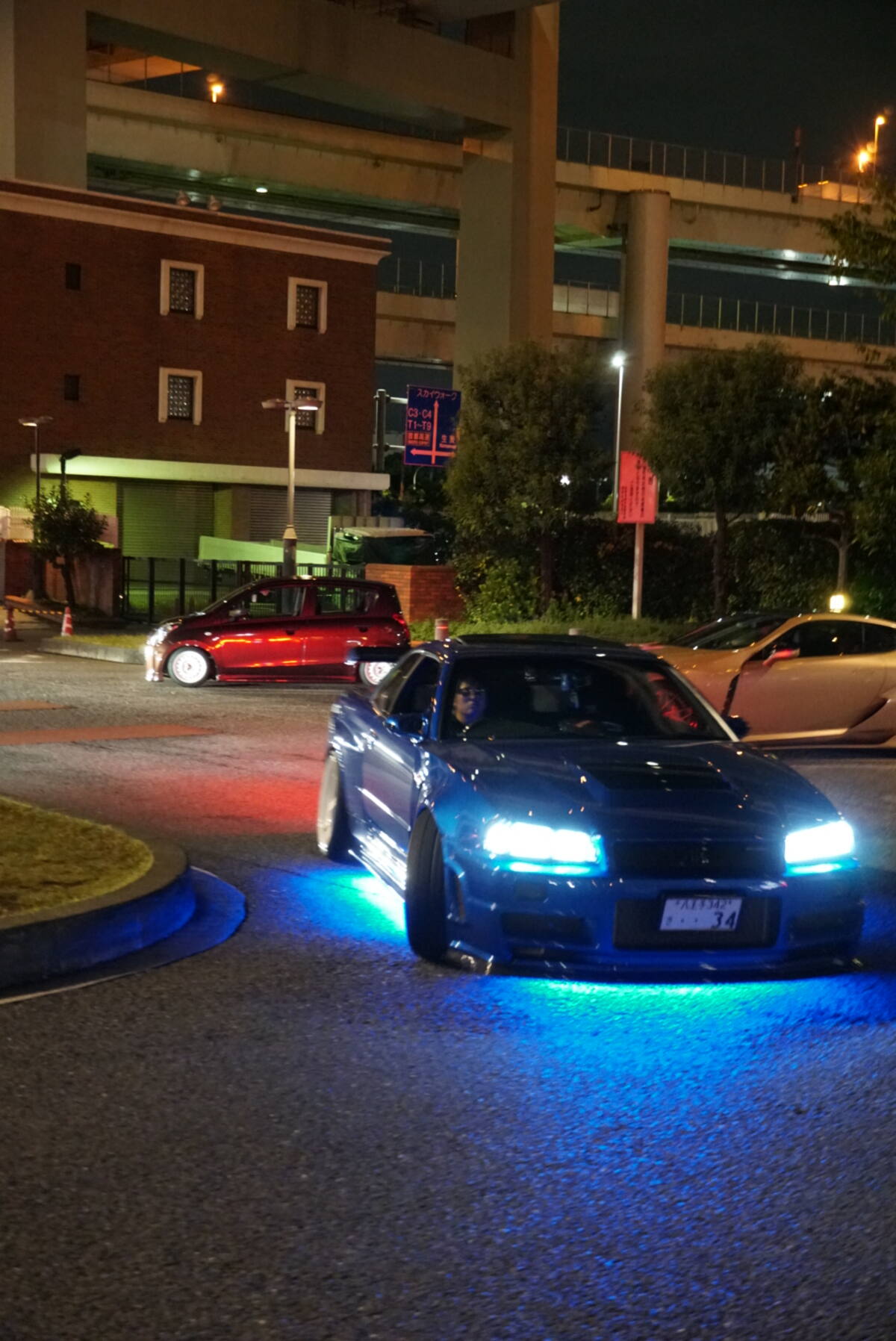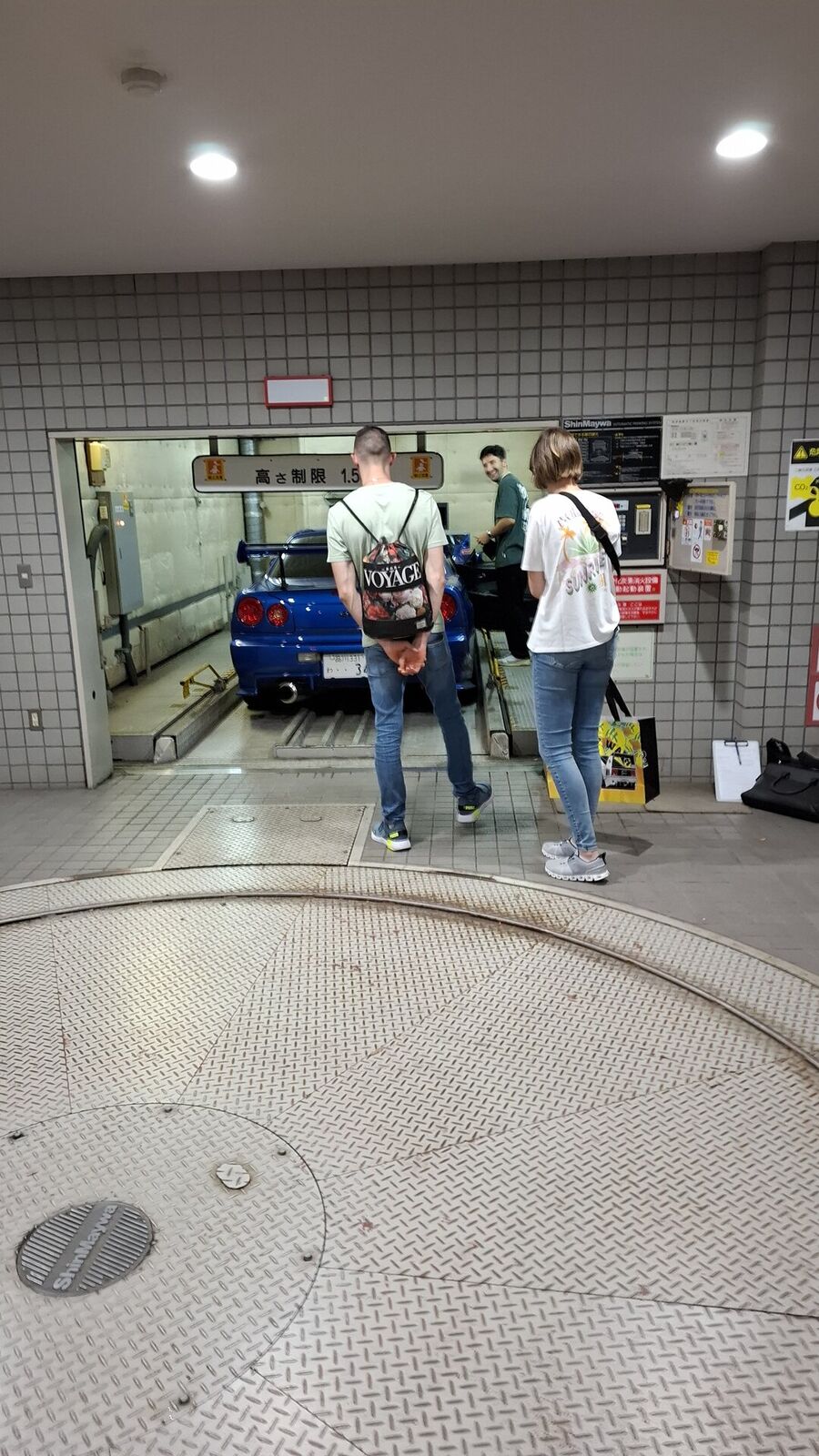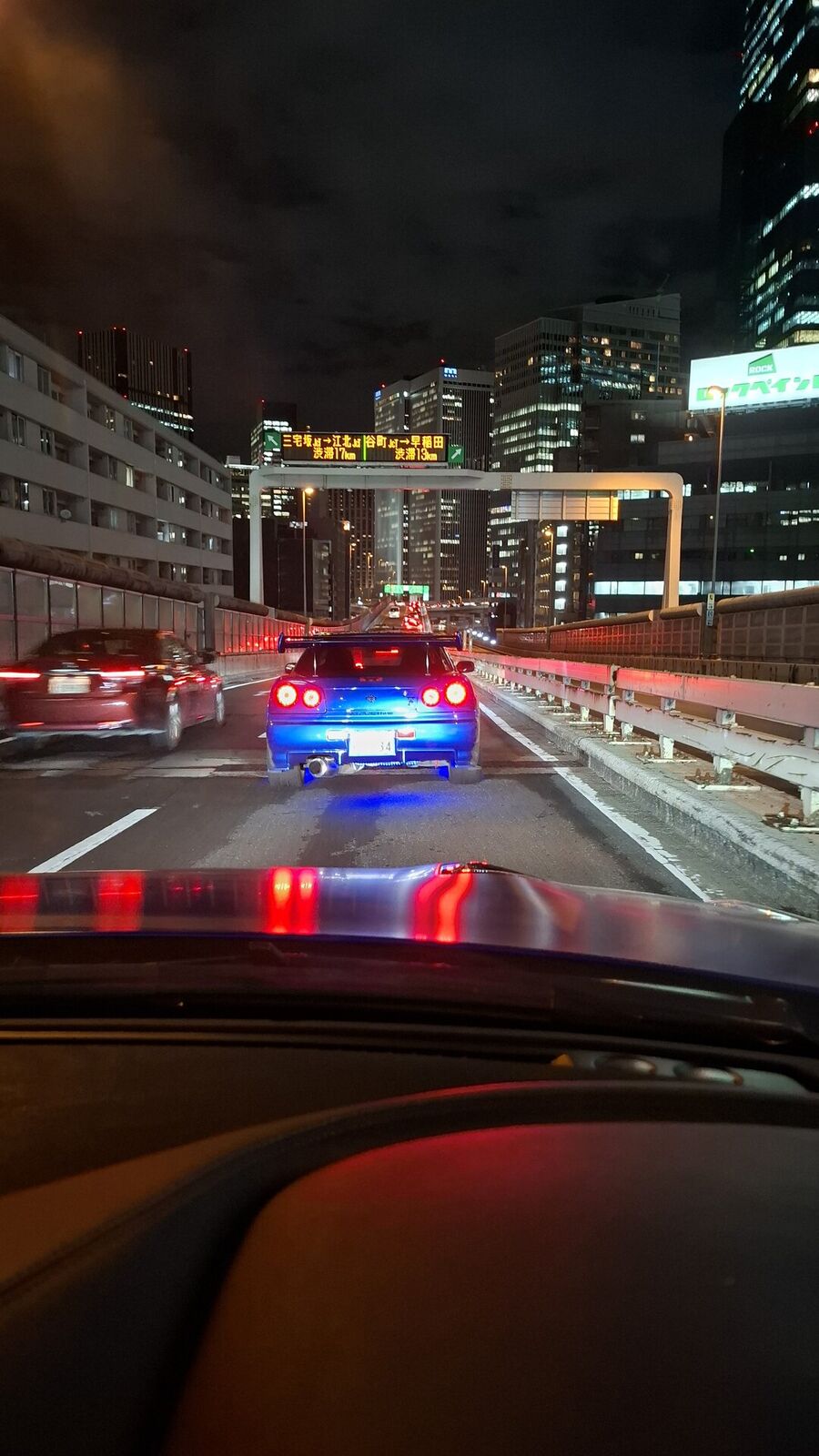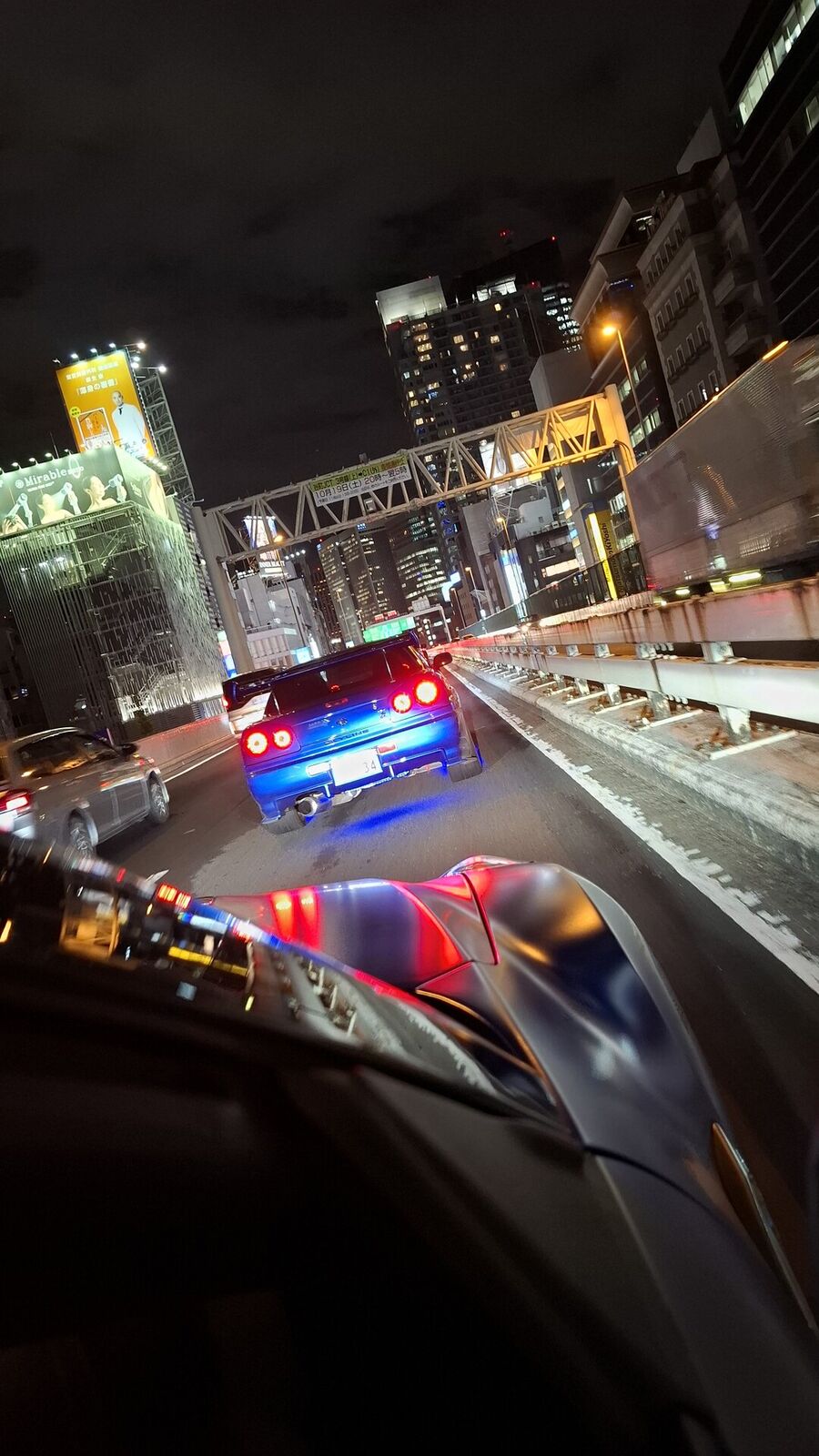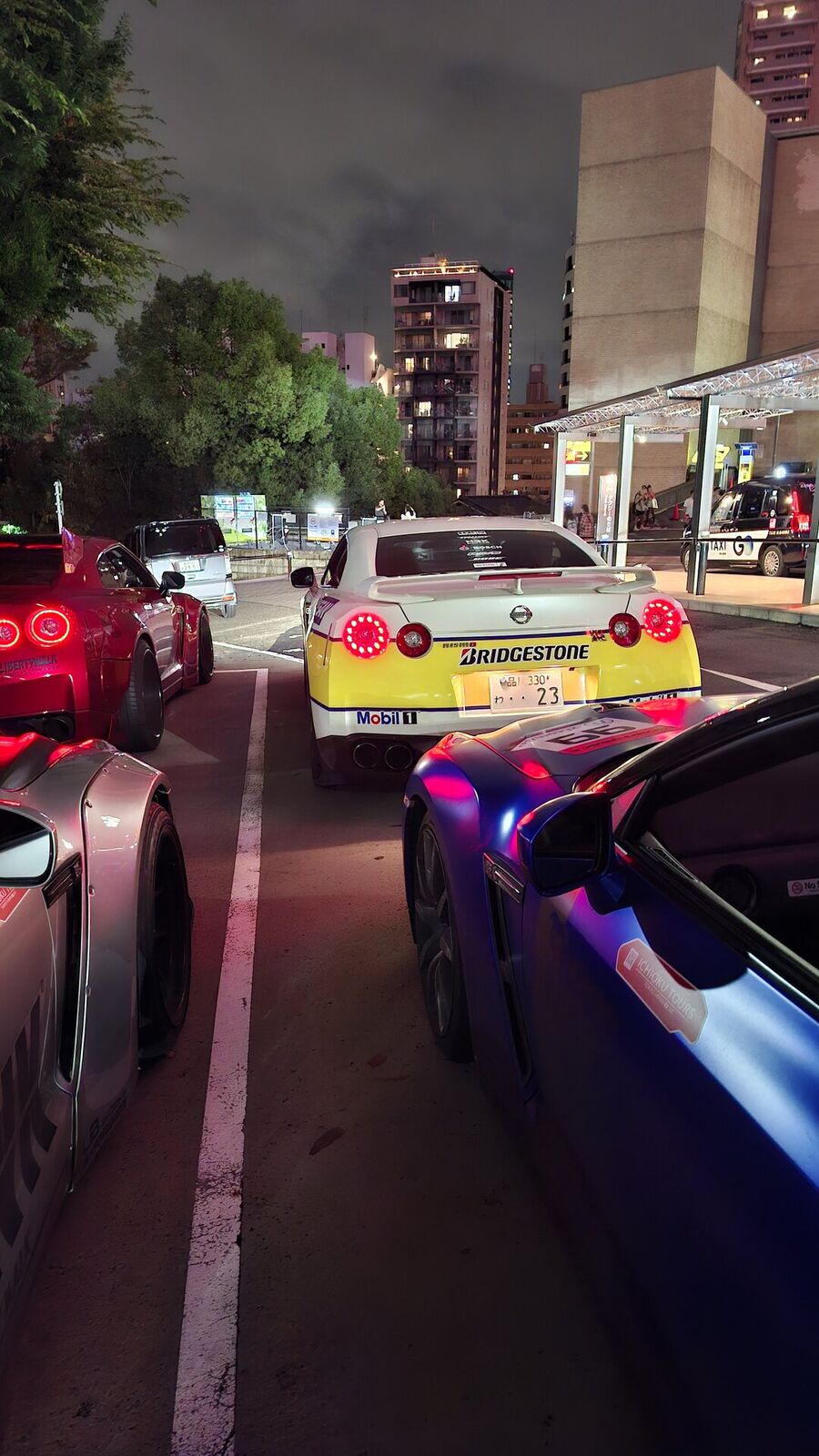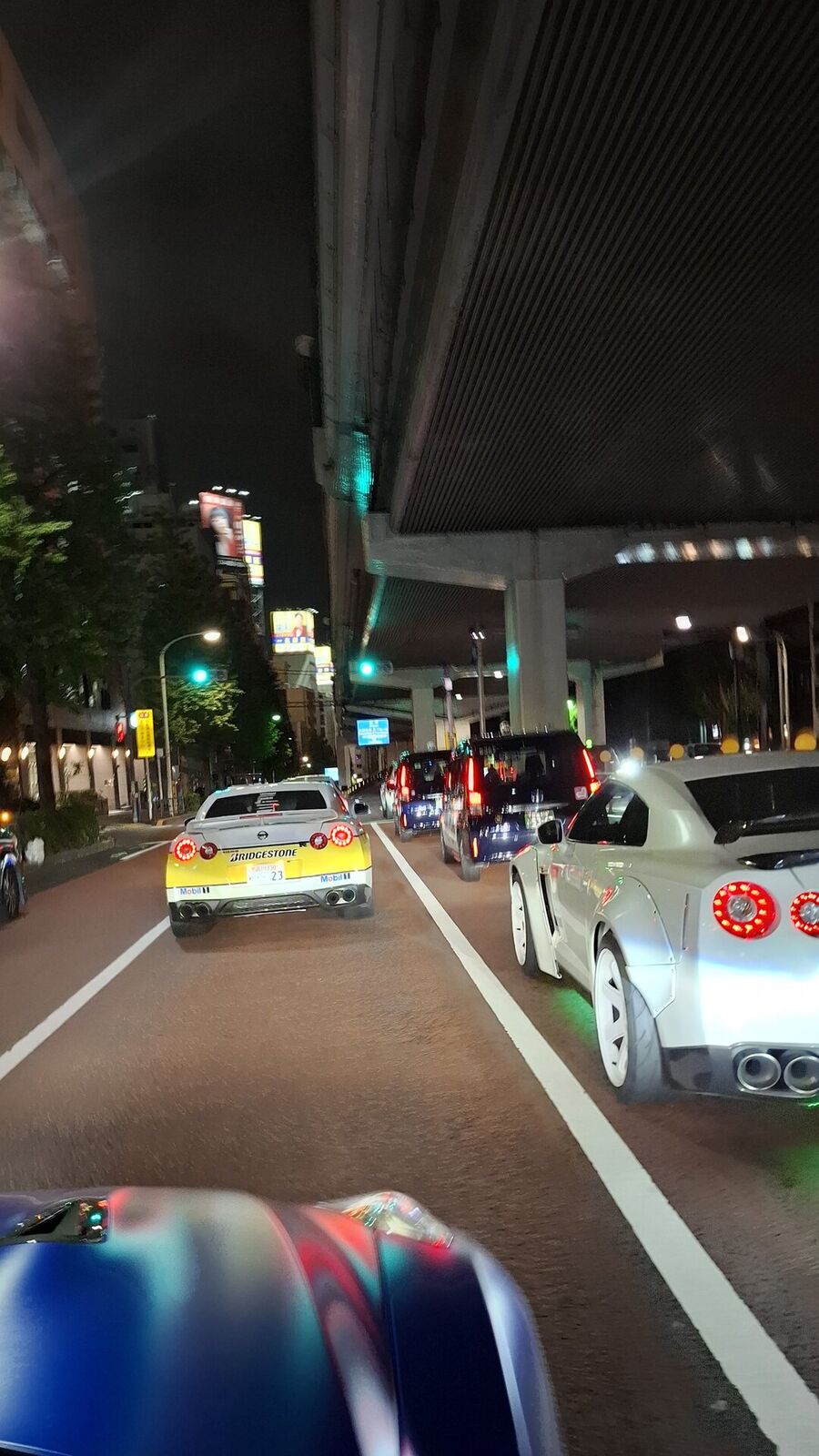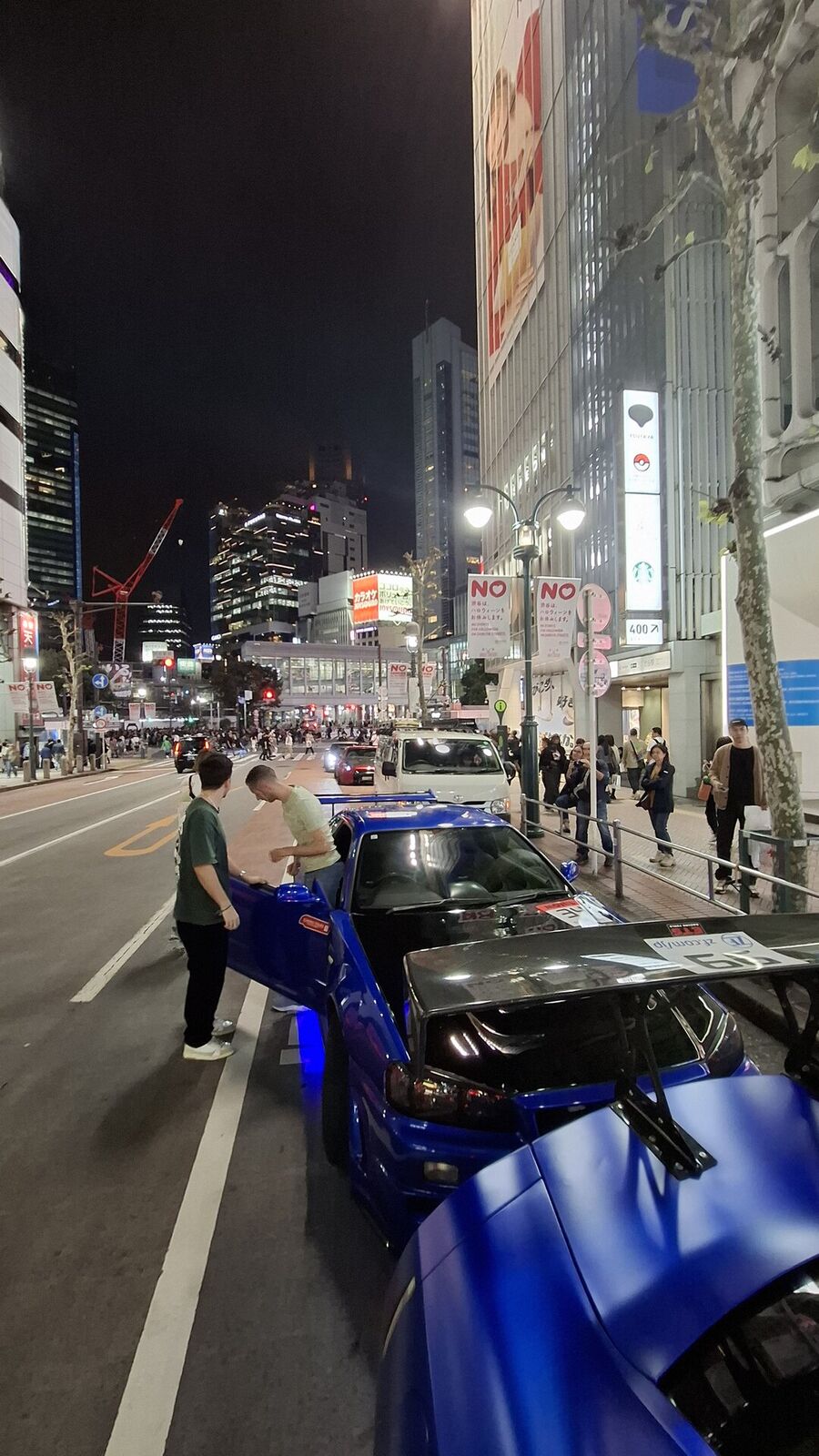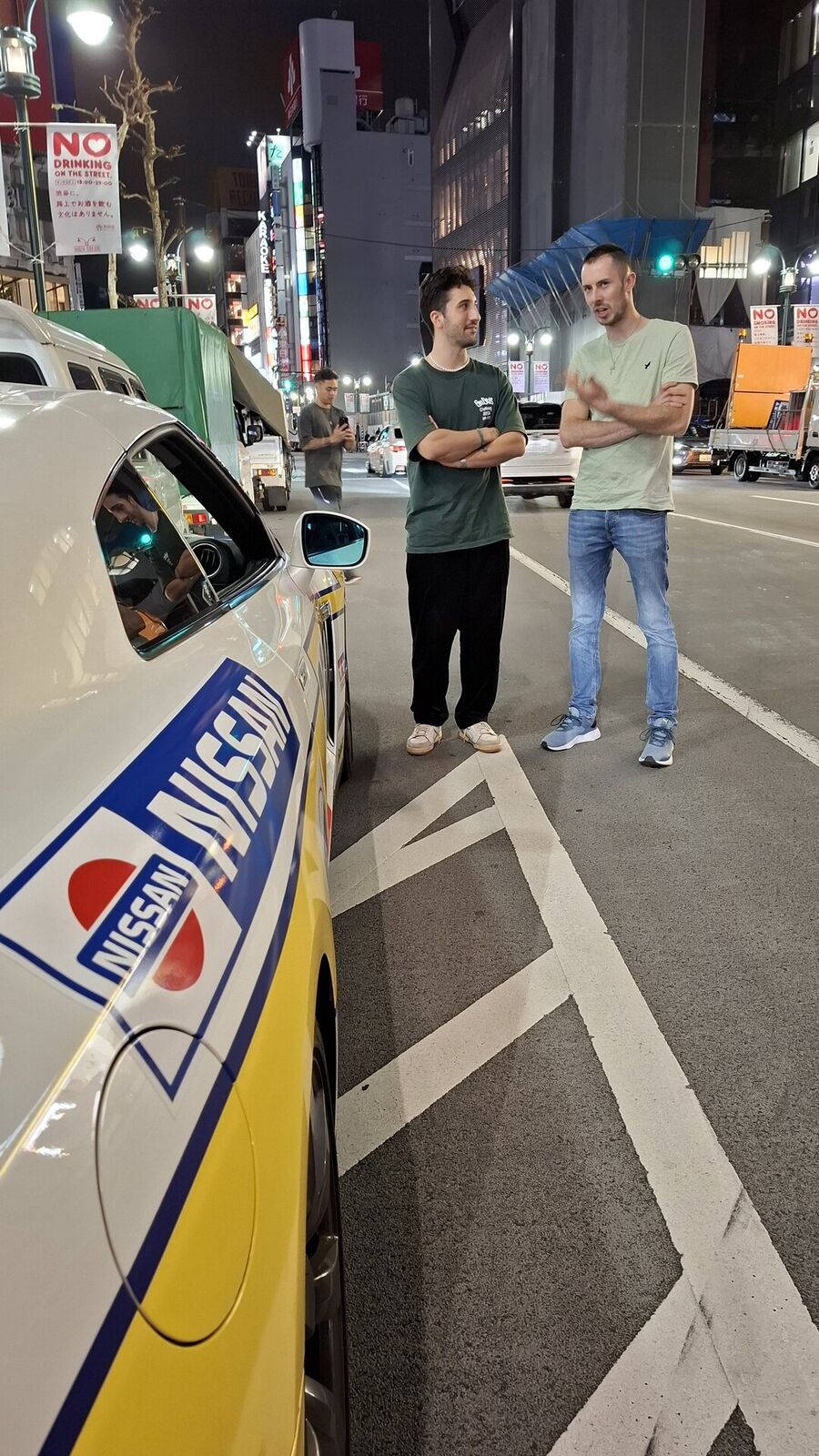
There are things you do in Japan that you tell people about and they nod politely because they've heard it before. Temples. Cherry blossoms. Sushi. And then there are things that make their jaw drop. Driving a 600 horsepower Nissan GT-R R35 through Shibuya at night while hundreds of people pull out their phones to film your convoy of Liberty Walk supercars is one of those things.
Next to hiking Mount Fuji, the Ichioku self-driving tour was the single best experience I've had in Japan. And I've been coming here for years.
The Beast
When I showed up, Niklas - the guide, and a German, which I did not expect in Tokyo - looked at my booking and just grinned. "We have something special for you," he said. "It's called The Beast." That turned out to be an R35 GT-R with 600 horsepower under the hood. I drive a BMW 340i at home with over 300 horses, so I'm no stranger to power, and maybe that's why they trusted me with more than the average tourist gets. But 600PS in central Tokyo is a different animal entirely.
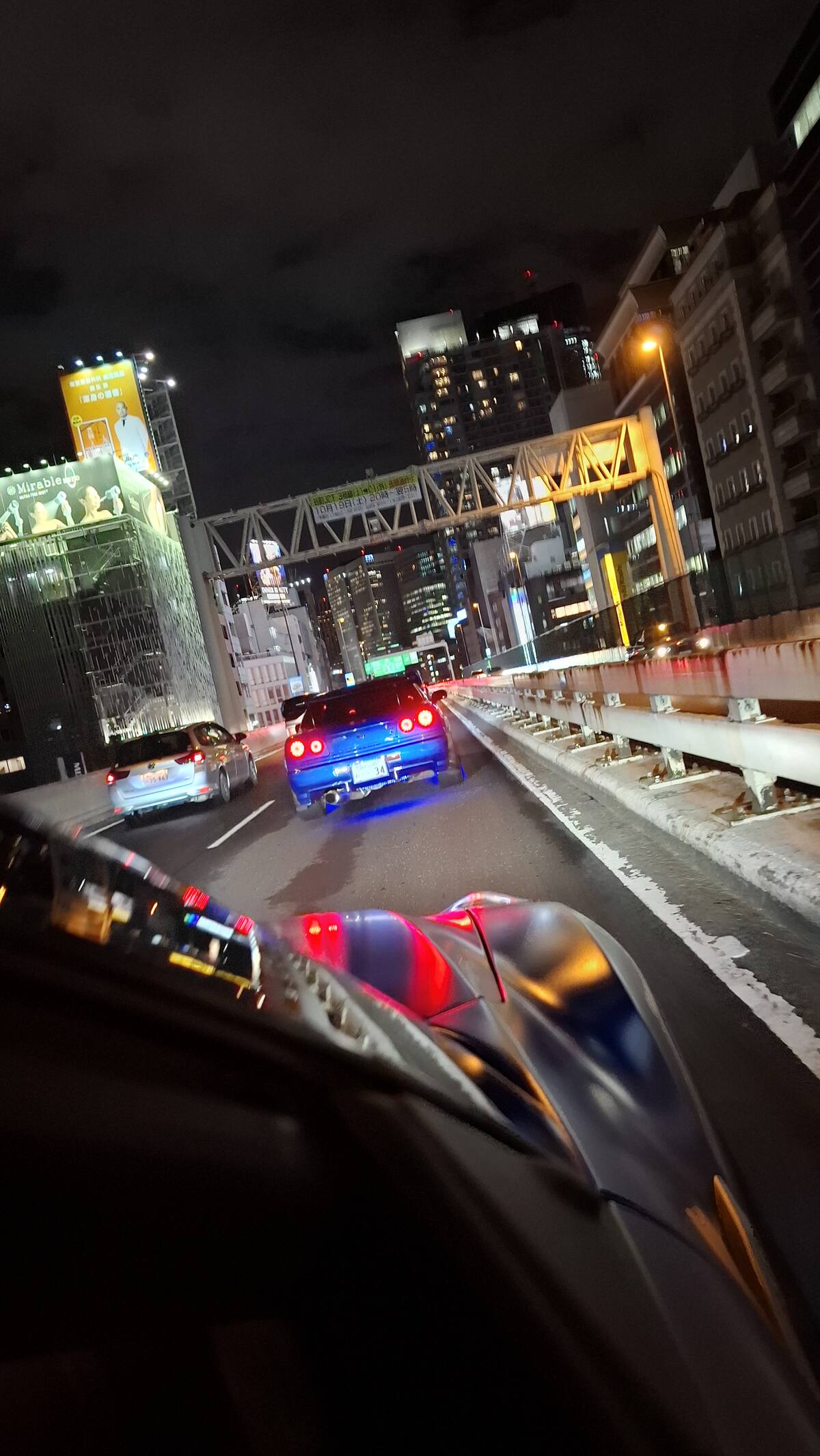
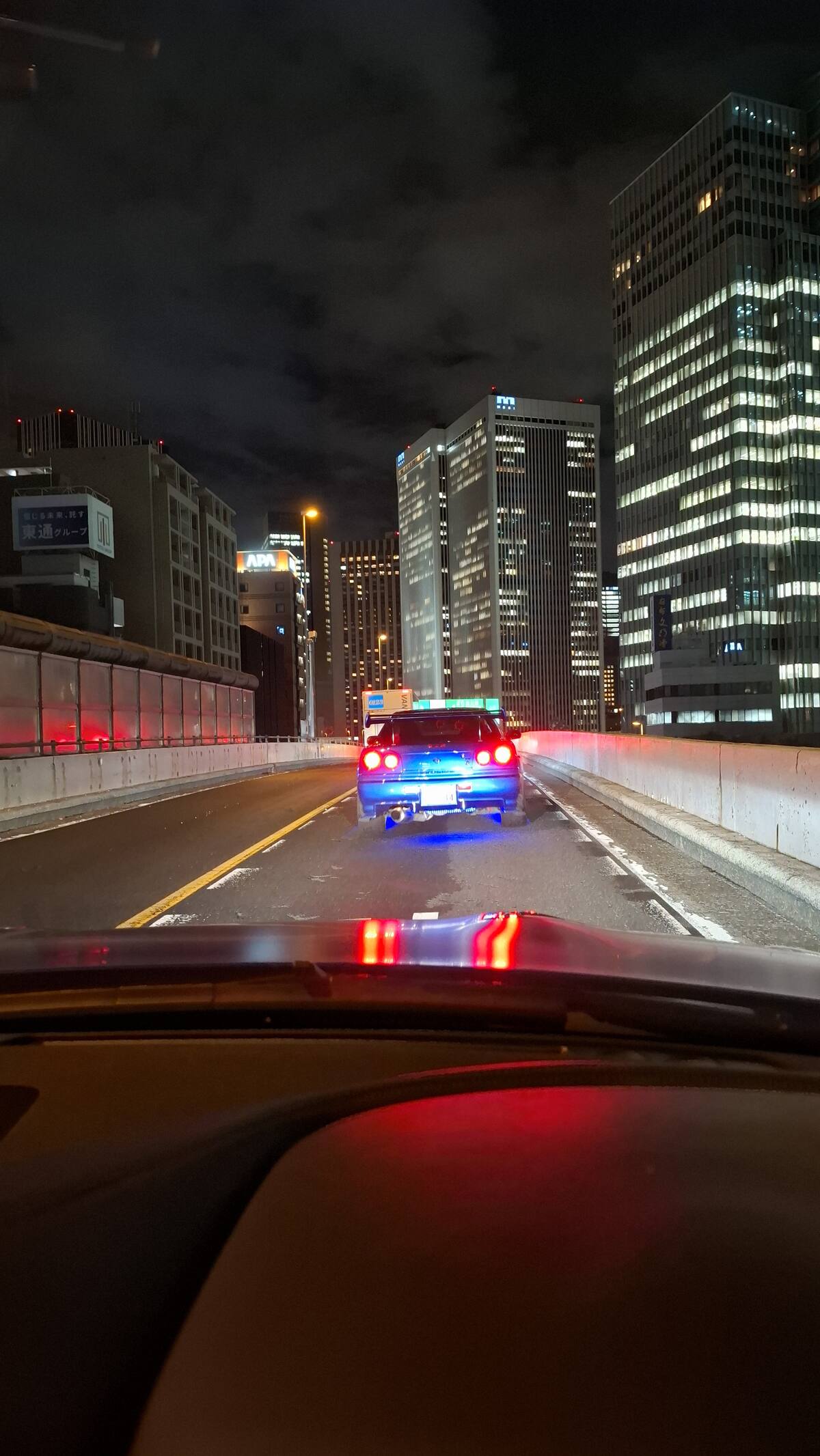
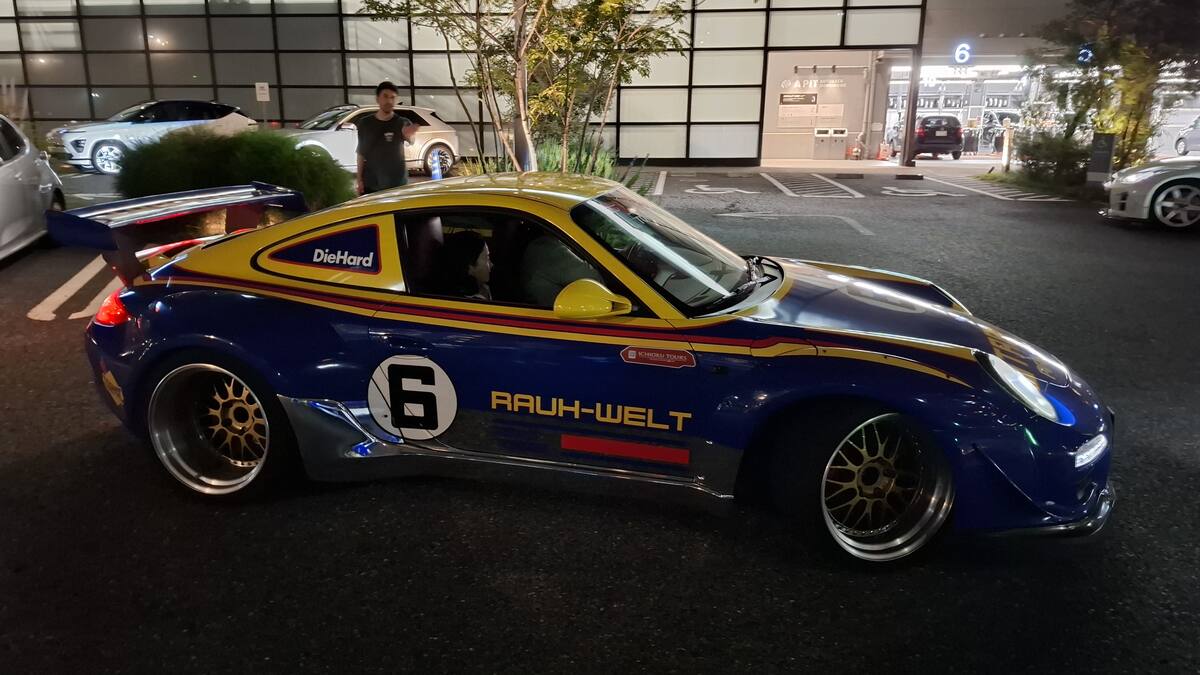
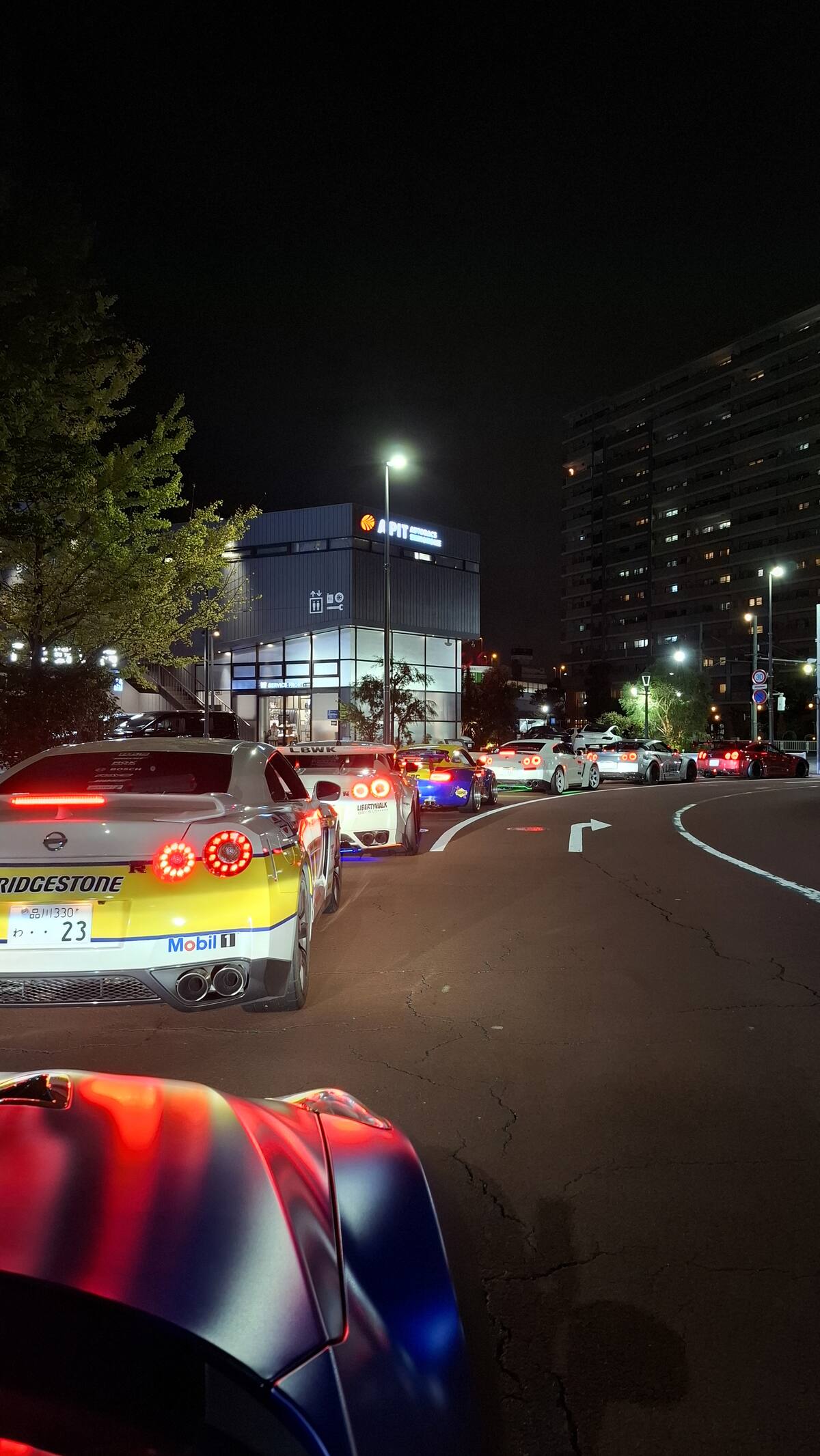
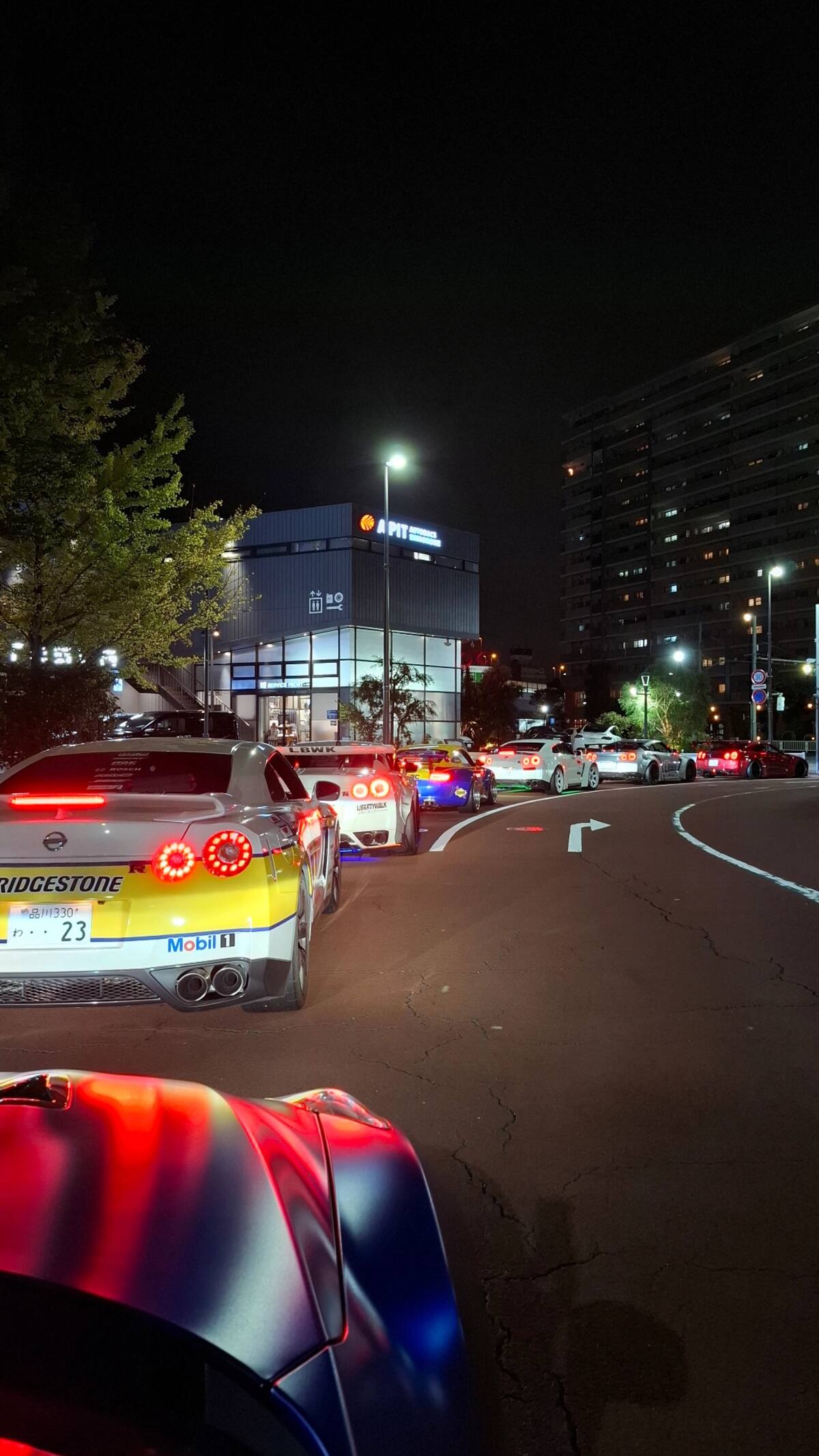
We were the German-speaking group that evening: me in The Beast, Niklas leading the way in another R35, and a couple from South Tyrol in the legendary R34 GT-R - the one everyone wants to drive because of that unmistakable turbo sound. He's a master mechanic back home, drives a Mitsubishi Evo. She drives a GTI. Car people, instantly on the same wavelength. We clicked immediately. The second group that night had about eight more vehicles - a mix of Liberty Walk Nissans, a tuned Porsche from a Japanese shop, and several other JDM legends - led by an Australian guide.
I'd thought about this for a while when I found Ichioku online. They offer Lamborghinis, Porsches, all kinds of exotics. But why would I rent a Porsche in Japan? I can drive a Porsche in Germany. The whole point is the JDM cars - the GT-Rs, the Supras, the RX-7s. The cars that grew up on these roads.
Through Shibuya
The route started in Shibuya, right in the thick of it. Around eight in the evening, perfect weather, no rain, windows down. The streets were packed with people and lit up on both sides in that way only Shibuya can be - screens, neon, shop fronts glowing. And then we rolled through in a convoy of the most insane JDM cars you've ever seen.
It felt like being in a movie. That's not an exaggeration. Everywhere you looked, people at the curb were pointing, filming, pulling friends over to see. Especially the younger tourists - they lost their minds. Phones out from every direction, people literally running to the edge of the street to get footage of these cars. We stopped for photos too, and within seconds there was a crowd around the vehicles. You could feel the energy change the moment the convoy appeared. It's a surreal experience, going from anonymous tourist to the center of attention simply because of the car you're sitting in.
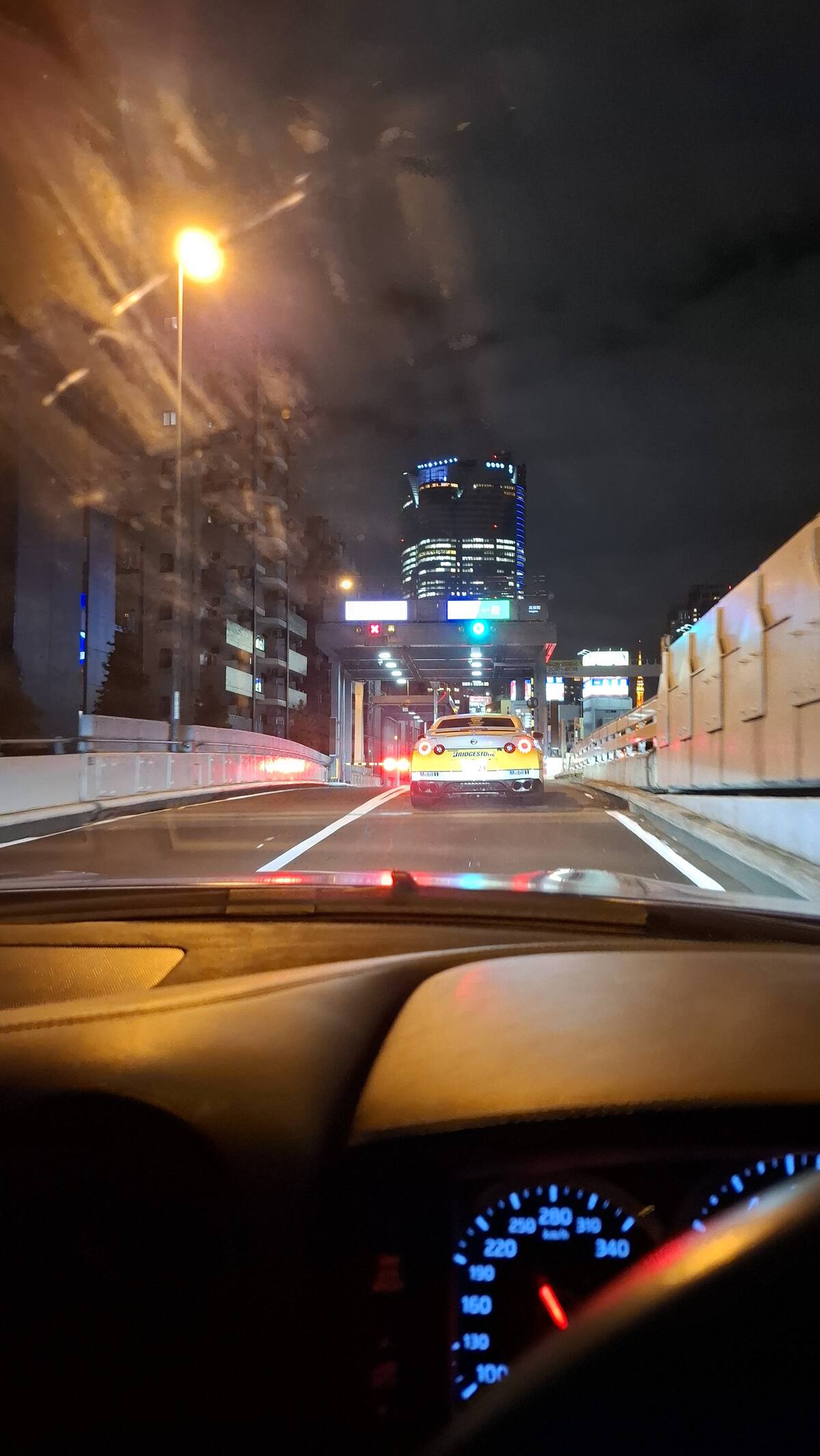
And then the highway on-ramp. If you've ever seen footage of Tokyo's elevated expressways at night, you know what I'm talking about. But being inside it, piloting a GT-R up that spiral ramp between walls of illuminated skyscrapers - that's something else. It looked like a scene from a Neo-Tokyo music video. Light everywhere, the sound of the engine echoing off the buildings, the city dropping away beneath you as you climb onto the expressway. That moment alone was worth the entire trip.
The Sound
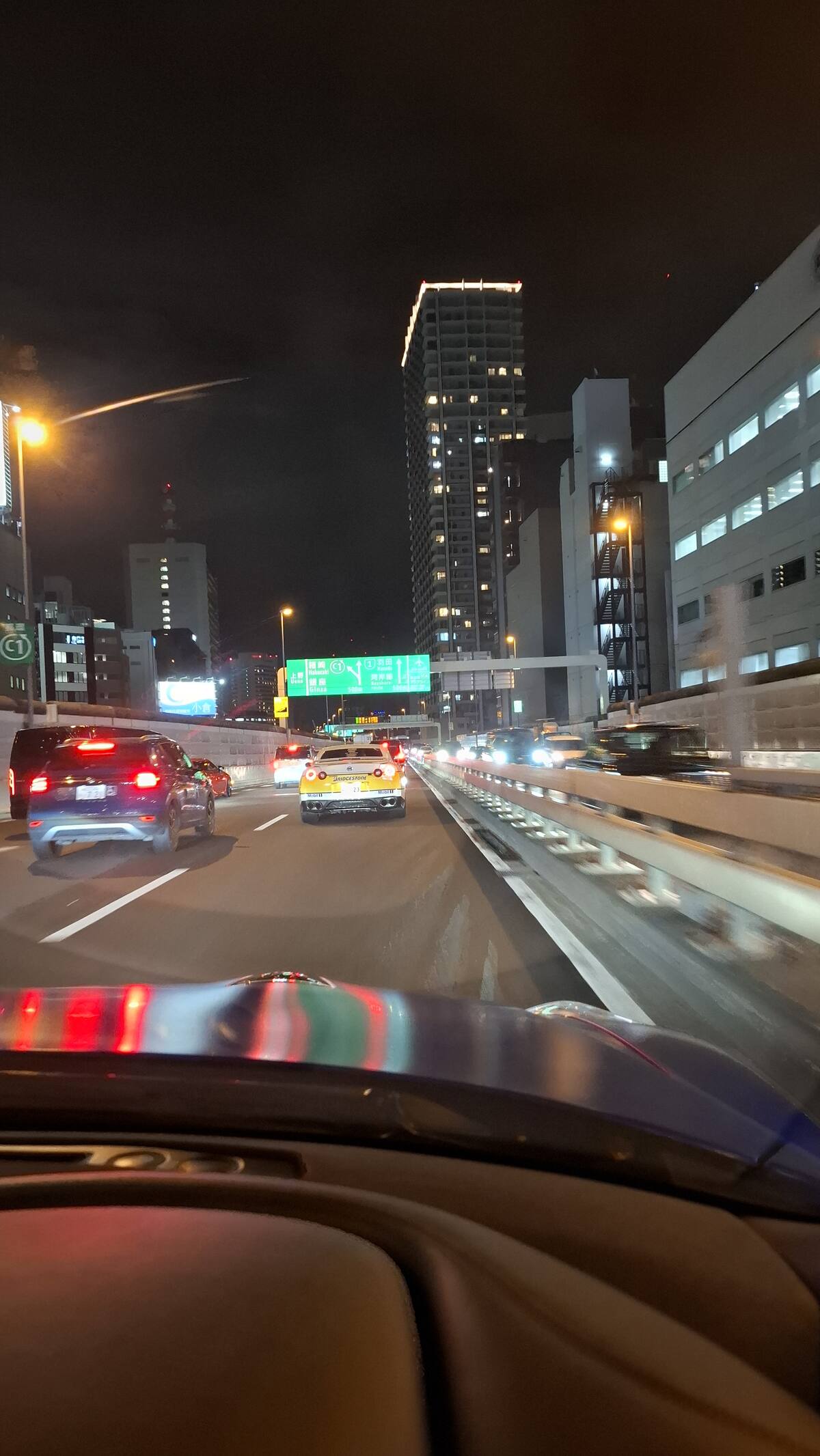
I drive thousands of kilometers in Japan every year, usually in a campervan. The left-hand traffic is second nature to me at this point; I don't even think about it anymore. But the GT-R is a completely different experience on these roads. When we hit the tunnels on the Shuto Expressway, I dropped the windows and gave it full throttle just to hear the engine roar through that concrete tube. There are videos where you can hear me laughing out loud like a kid because I couldn't contain myself.
This wasn't about speed. In Germany, I could do 250 on the Autobahn. That's not the point here. Japan's car culture is different. It's about the experience, the sound, the feeling of acceleration, the group dynamic. When the highway cleared up later in the evening, Niklas gave us the signal and we could open up the throttle for a few seconds to feel what 600 horsepower actually does when you step on it. The acceleration pins you into the seat and the exhaust note turns into something between a scream and a roar. But then you ease off and cruise again, because that's what it's about here: enjoying the moment, not chasing a number on the speedometer.
Japanese car culture is fundamentally more respectful than what I'm used to in Germany. On the Autobahn, with a car like this, you'd be in the left lane hammering it. Here, people have fun together. They're considerate. They enjoy the cars, the community, the shared experience. Even the Toge culture - the mountain pass drifting that happens late at night - is done with spotters and on routes where they know there's no regular traffic. I've stumbled into Toge scenes at remote Michi-no-Eki in the middle of the night, groups of young guys with tuned cars, and it's never felt threatening or reckless. Just people having fun with machines they love.
Autobacs
One of the stops was Autobacs, and I had no idea these places existed at this scale. It's a massive store that covers everything automotive - tuning parts, replacement parts, tires, but also merchandise, clothing, and model cars. I collect Tomica die-cast models of my favorite anime vehicles from Initial D, Wangan Midnight, and MF Ghost. They sit in a glass case in my office at home. I've been searching for specific cars across various toy shops and anime stores in Japan for years, and Autobacs had ones I'd never found anywhere else.
I spent a good while going through the shelves, picking up the missing cars from my collection, browsing through Initial D merchandise and t-shirts. And then I found it: a Tomica R35 GT-R in the exact same color as the car I was driving that night. That one has a special place in the display case now. The kind of souvenir you can't plan.
Daikoku Parking Area
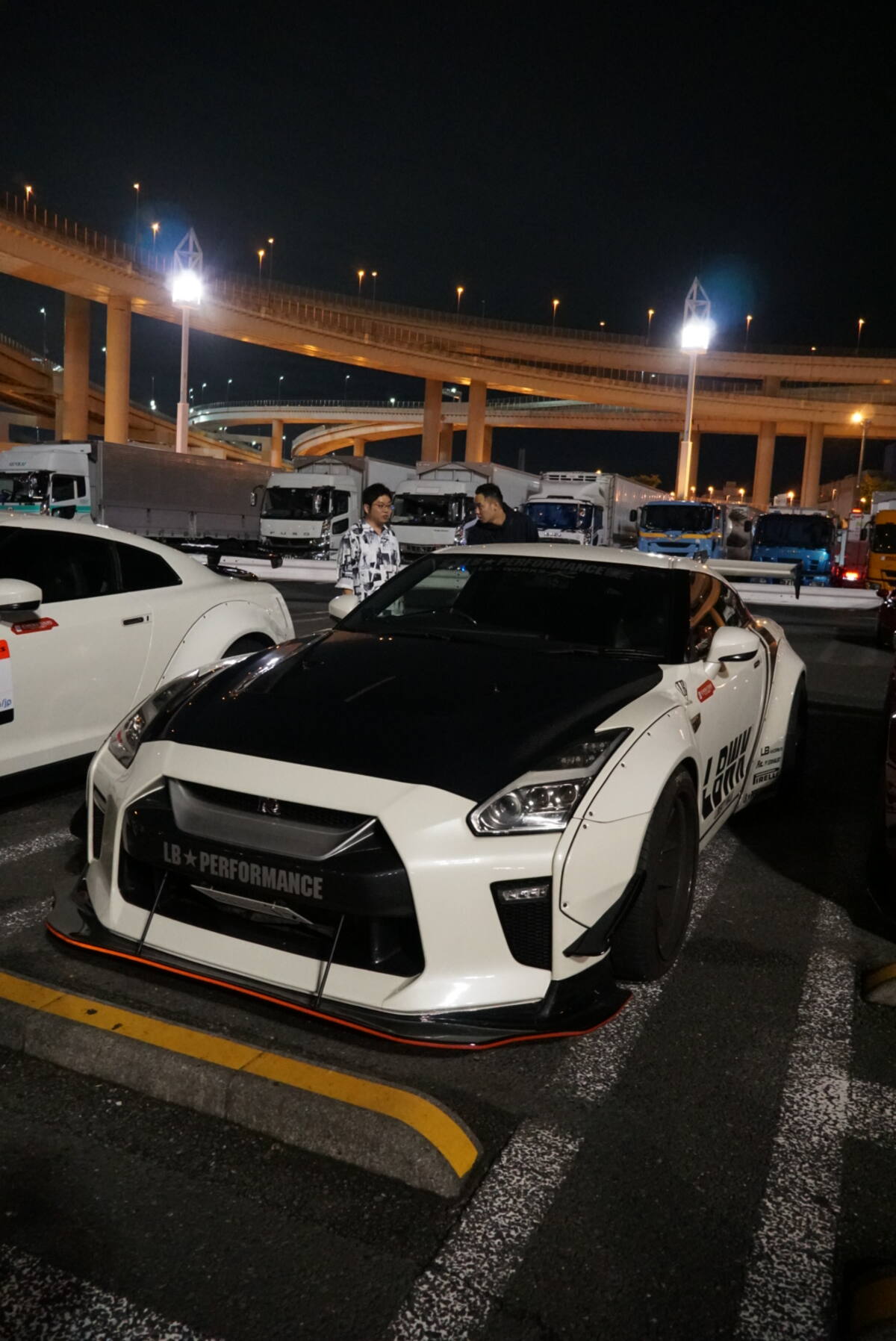
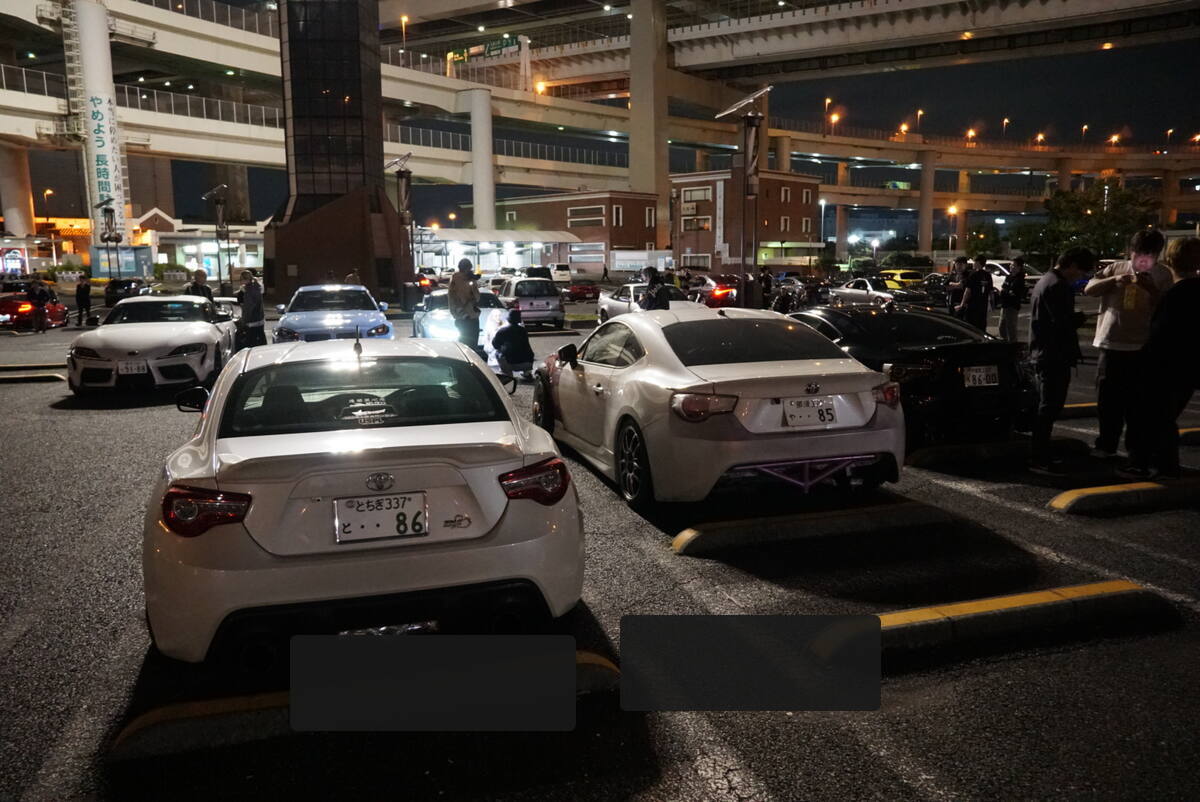
If you're into cars and you come to Japan, Daikoku PA is a pilgrimage site. It sits in the middle of a highway interchange near Yokohama - you can only get there by car, which already filters the crowd. The access ramp spirals up around the parking area in a wide arc, and the acoustics of that spiral are insane. When someone with a straight-pipe exhaust guns it up that ramp, the sound reverberates across the entire rest stop. It's engineered drama, even if that wasn't the intention.
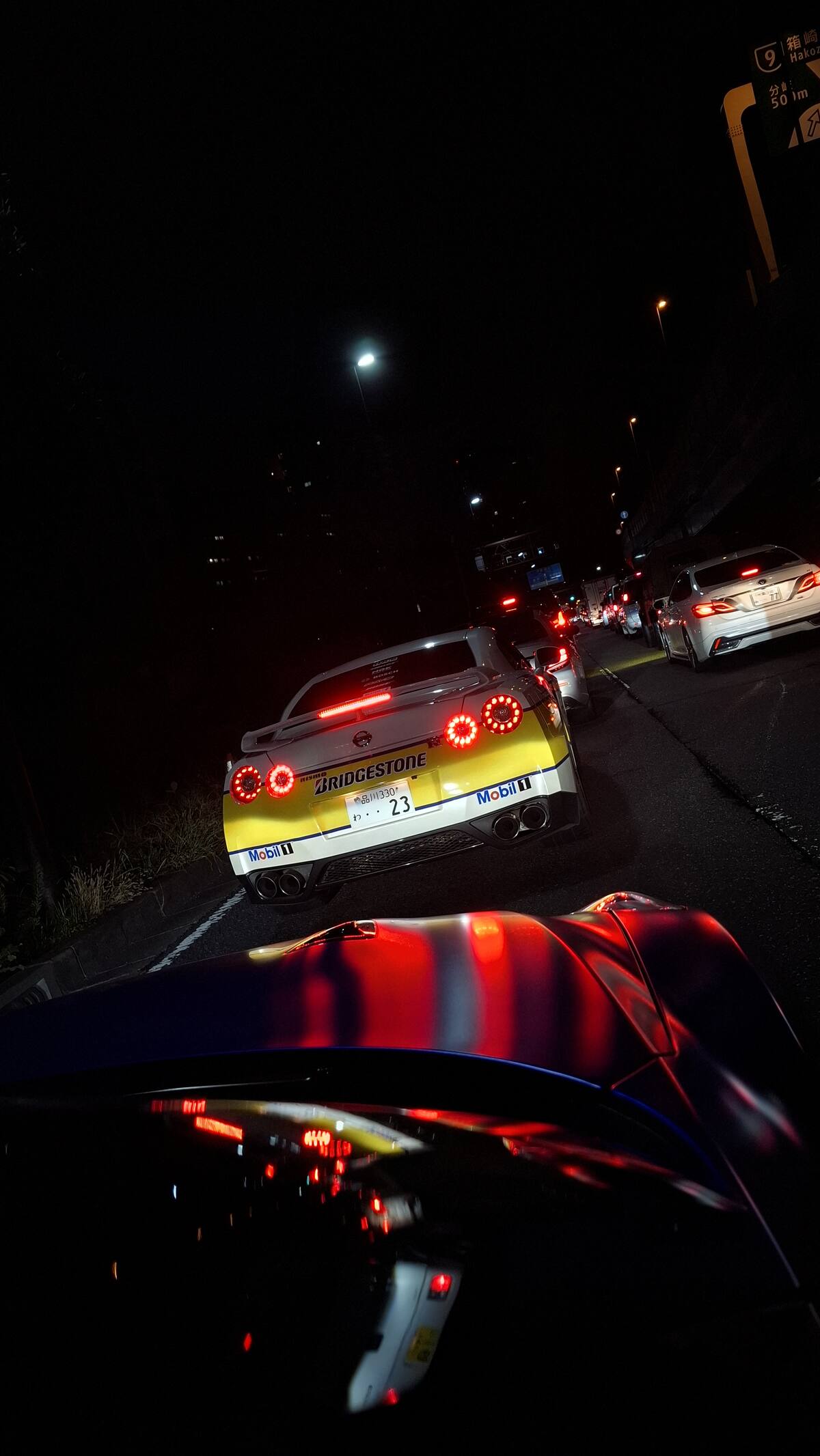
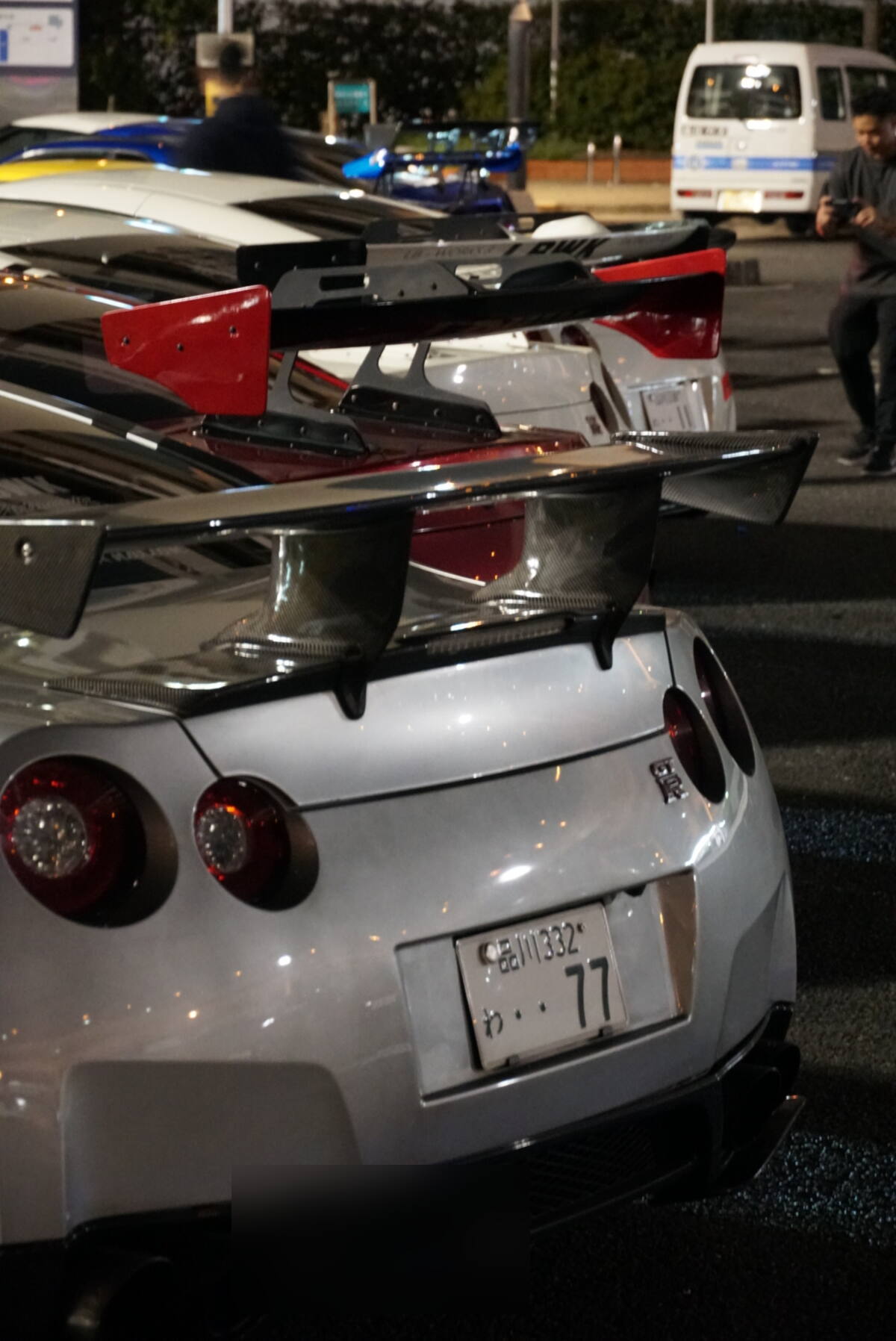
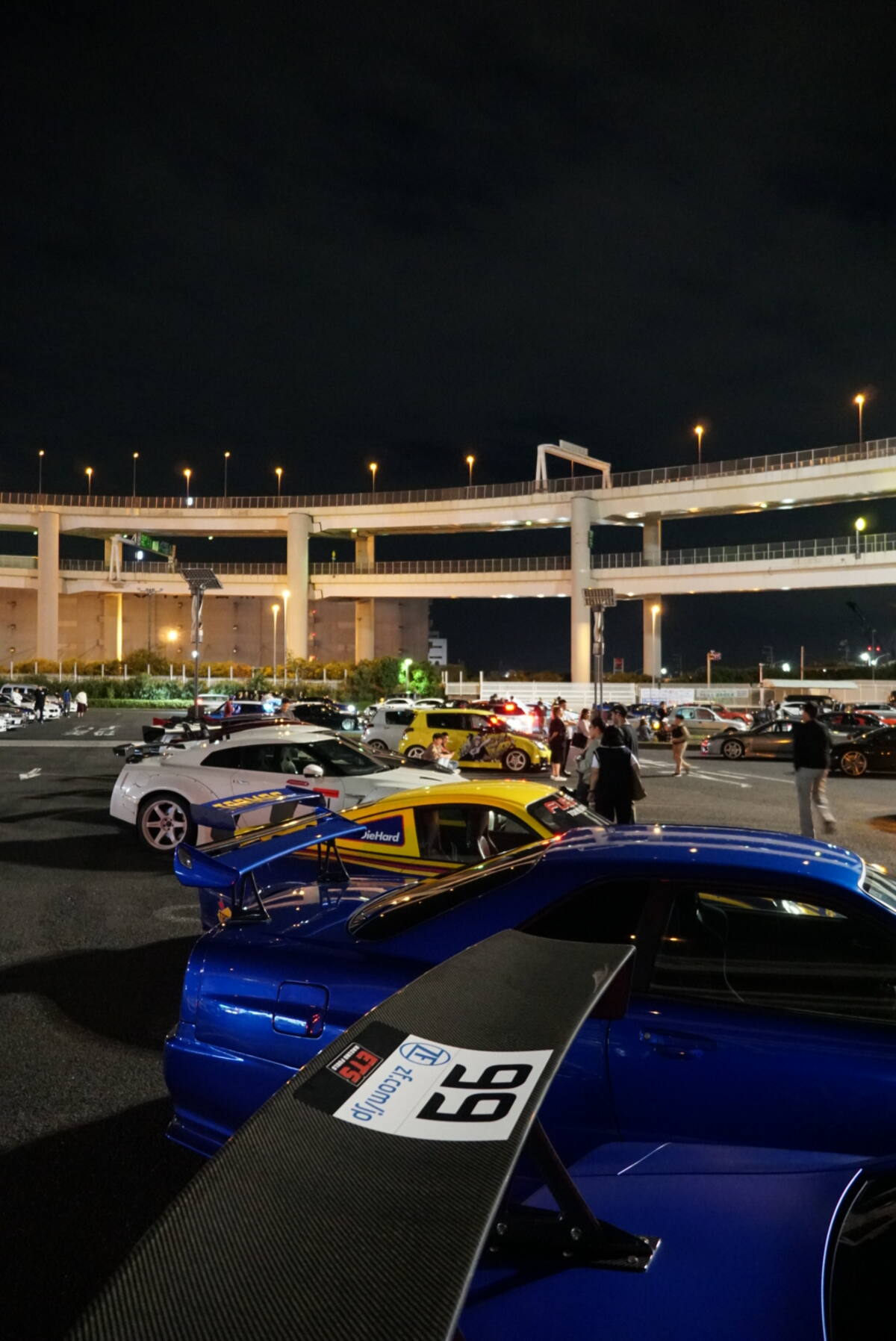
We arrived on a weekday evening, so it wasn't as packed as the weekend madness I've experienced there before. But there were still plenty of cars and people. When you show up as an Ichioku fleet, you do get noticed. The tour vehicles are wrapped in liveries, stickered up like race cars from the Fast and Furious era, and rolling in as a group of ten-plus cars turns heads even at a place where extraordinary is the baseline.
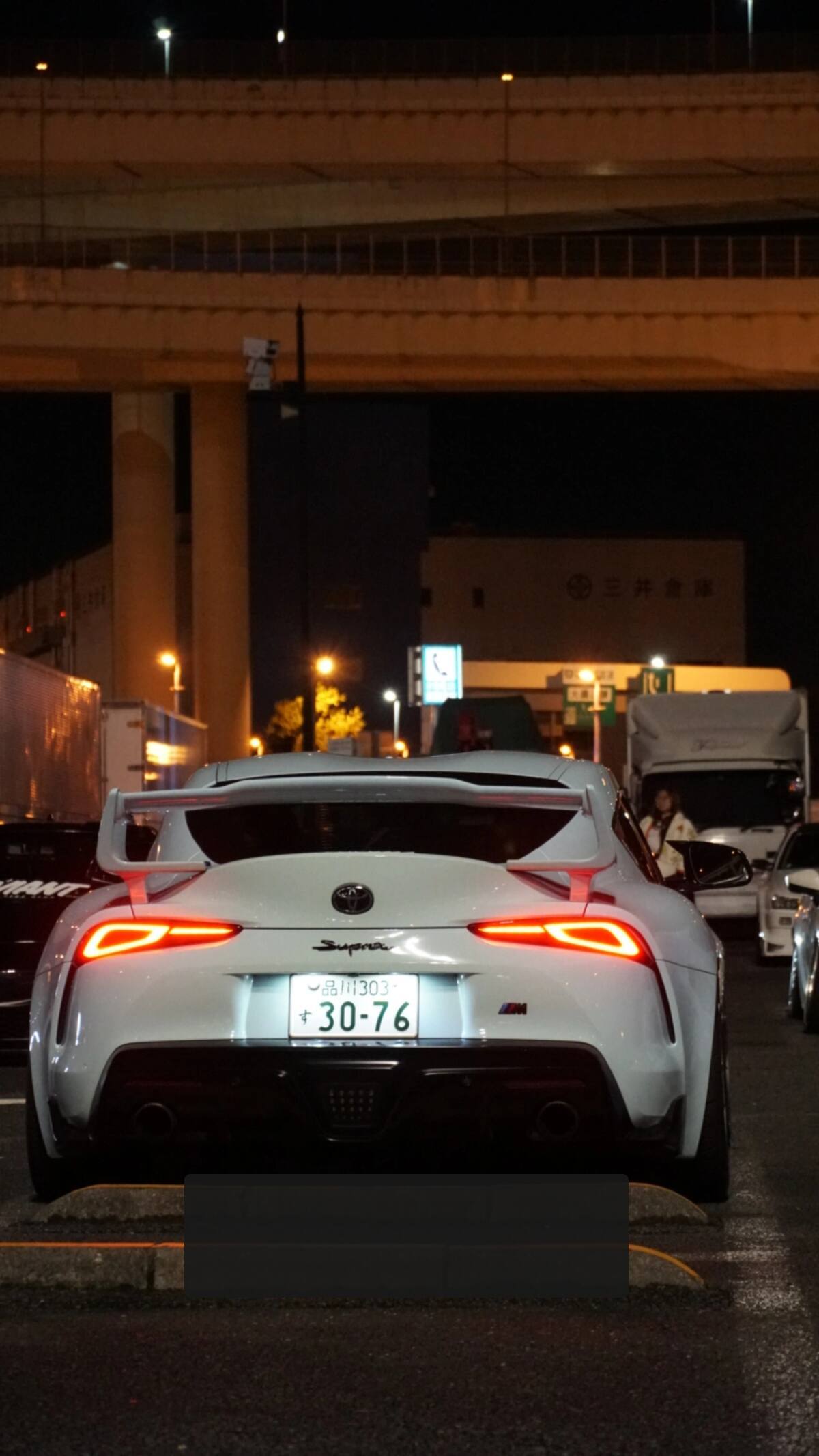
On a busy weekend, Daikoku is something else entirely. The lot is completely full of the most diverse collection of modified cars you'll see anywhere on the planet. JDM legends from every decade - beautifully restored 70s and 80s Toyotas and Nissans, modern GT-Rs and NSXs, Supras in every generation, cars wrapped in full anime liveries with neon underglow. But also Lamborghinis, tuned Corvettes, imported American muscle. Hoods open everywhere, owners explaining their builds, people from every country fachsimpeln about turbo setups and suspension geometry. Influencers with ring lights shooting content. Anime-themed girls cruising through in neon-lit cars with massive artwork on the doors and hoods. You hear French, German, English, Japanese all mixed together.
The smell hits you too. Gasoline and hot rubber and exhaust fumes. It sounds like it shouldn't be pleasant, but when you're a car person, it's perfume.
Around ten or eleven, the police usually come by and clear the place out - politely, the Japanese way. People disperse to secondary spots: a rest area near the Tokyo Bay tunnel, or if you get lucky and the locals invite you along, some insider locations that aren't on any map. But the main event is those few hours before midnight when Daikoku is in full swing. A playground for anyone who has ever loved a car.
After the Tour
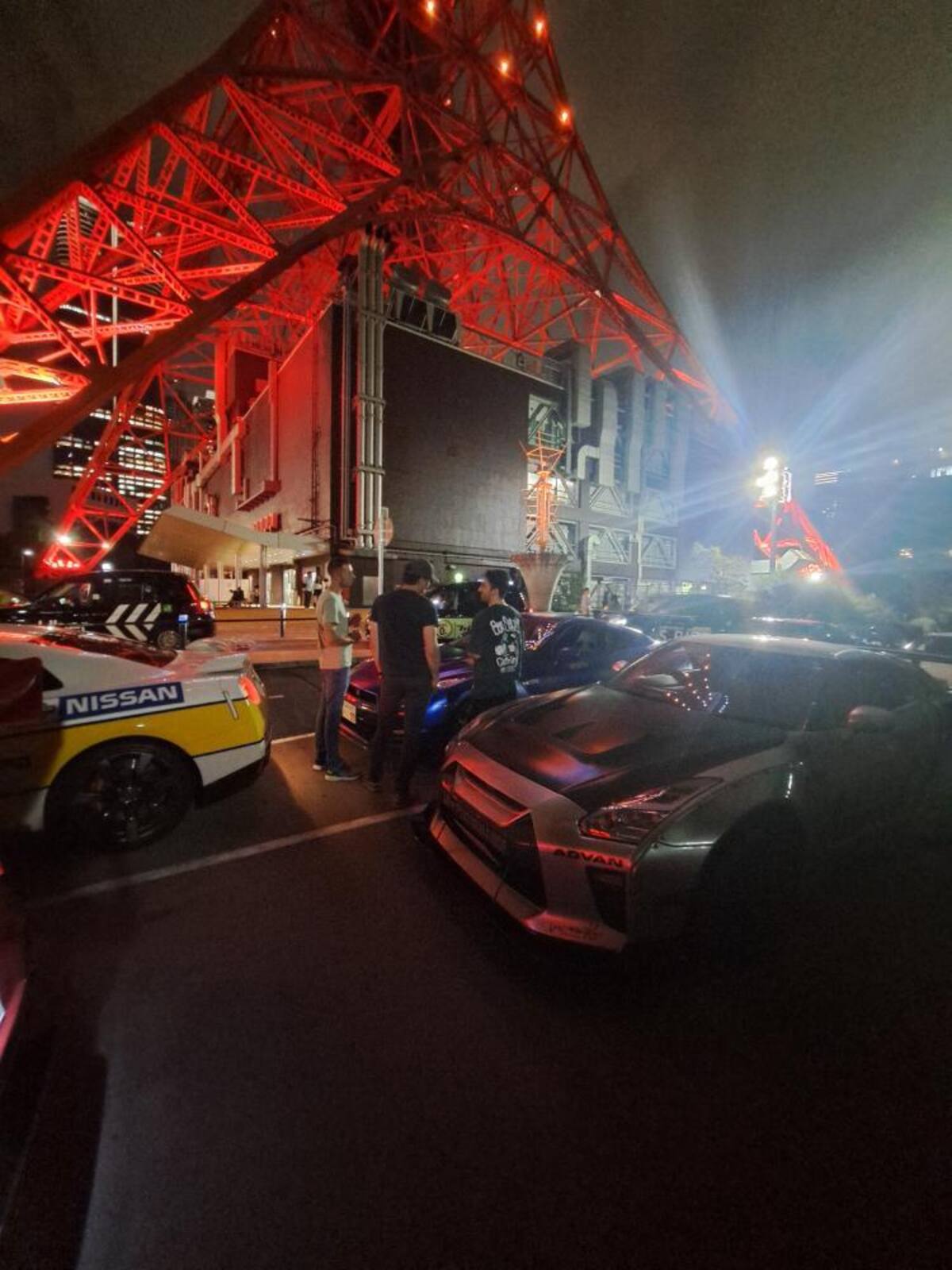
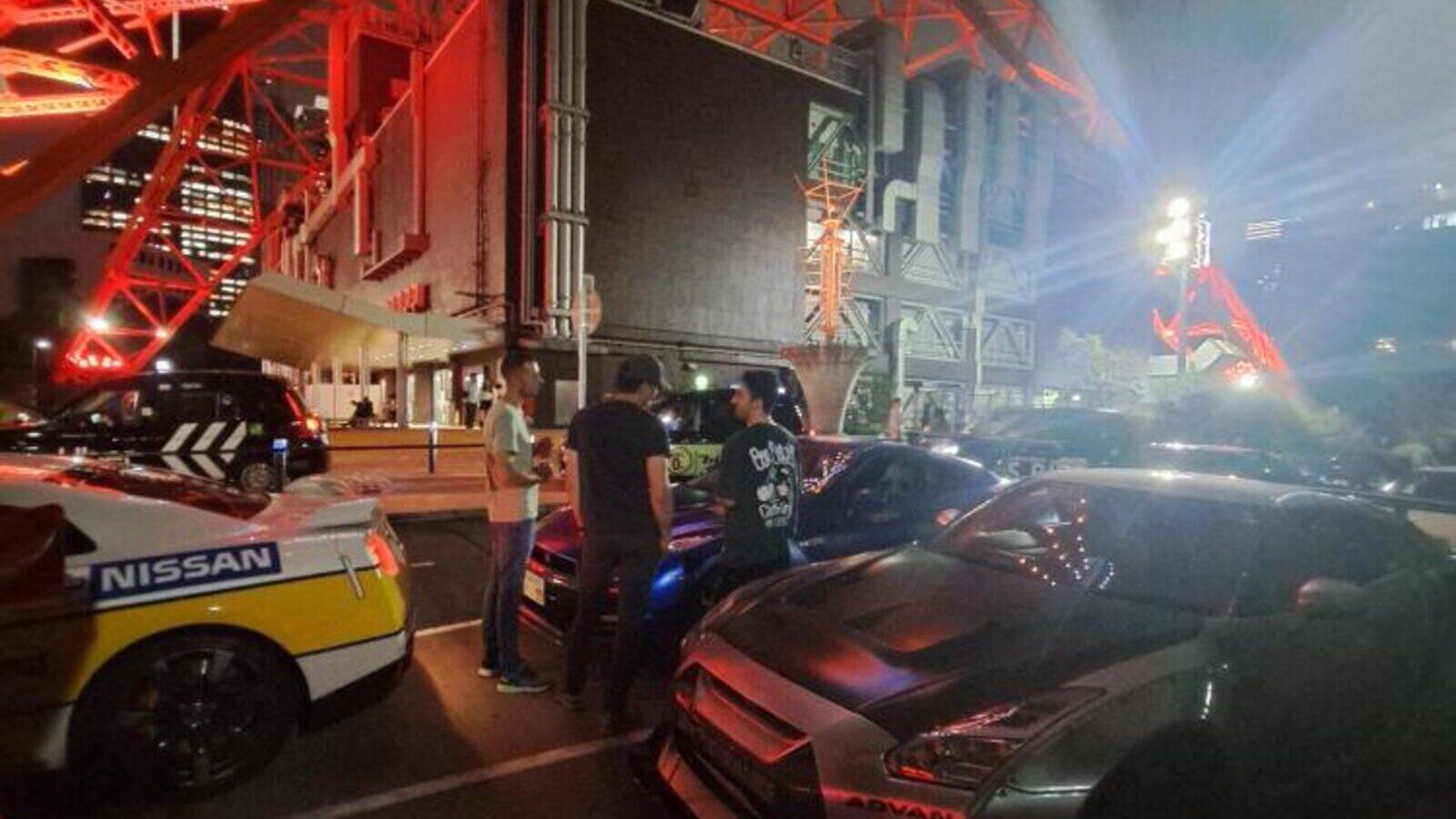
The whole evening lasted over four hours. We cruised through downtown, took the Rainbow Bridge, stopped at Tokyo Tower for photos, hit Autobacs, spent time at Daikoku, and drove back through the quieting city. By the end of the night, I couldn't stop grinning. That grin didn't go away for days.
I exchanged photos and videos with the South Tyrolean couple afterwards. We still follow each other on Instagram. Same with Niklas. It's the kind of experience that creates an instant connection between strangers because you're all sharing something that most people will never understand unless they've been in that seat.
After that night, I told myself: if I ever have enough money set aside - after the things that actually matter, like the animal rescue work and the campervan build - I'm getting a GT-R of my own. Not for the speed. For the feeling. Freude am Fahren exists outside of BMW too.
What's Next
Ichioku runs day tours to Hakone too, and that's what I'm doing this July. The Hakone mountain passes are where MF Ghost takes place, and the final race in Initial D was on Hakone as well. A full day on those mountain roads in a JDM car, with the volcanic landscape and hot springs as a backdrop - I'm already counting the days. Maybe I'll try a different car this time. They have a Supra from Tokyo Drift in the fleet, and a Liberty Walk GT-R. We'll see what's in the stable.
Practical Info
Location: Daikoku Parking Area (大黒PA), Yokohama, Kanagawa Prefecture. View on Google Maps
Operator: Ichioku Tours (Tokyo, Shibuya area)
What: Guided self-driving tours in JDM supercars (GT-R, Supra, RX-7, NSX, and more)
Routes: Tokyo night cruise (Shibuya, Shuto Expressway, Daikoku PA), Hakone day tour, C1 Loop midnight run
Cost: Varies by vehicle. I paid around 360 EUR for the R35 GT-R evening tour, all-inclusive (fuel, tolls, insurance, CDW). Check ichioku.net for current pricing.
Requirements: Passport, credit card, and a valid driving permit for Japan. Minimum age 23 (26 for certain vehicles). Important: the rules depend on where you're from.
If you're from the US, UK, Australia, or most other countries: Japan accepts International Driving Permits (IDPs) issued under the 1949 Geneva Convention on Road Traffic. Get your IDP before you travel - your national automobile association (AAA in the US, for example) can issue one. Valid for one year from your date of entry into Japan.
If you're from Germany, France, Belgium, Switzerland, Monaco, or Taiwan: These countries did not sign the 1949 Geneva Convention, so their IDPs are NOT recognized in Japan. Instead, you need your national driver's license plus an official Japanese translation. For Germans: the translation can be issued by JAF (Japan Automobile Federation, available at their offices and major airports, same-day service), by the ADAC in Germany, or through your campervan rental company (e.g. Japan Campers offers this - just send a photo of your license). The translation must come from one of these officially recognized bodies. Typical Japan: only their own certified translations count. More details in the Vanlife Guide.
Duration: Evening tours approx. 4+ hours, day tours longer
Language: English-speaking guides (I got lucky with a German one)
Tip: Book a JDM car, not an exotic. You can drive a Lamborghini at home. You can't drive a Liberty Walk R34 GT-R through Shibuya at home.
Daikoku PA: Best on Friday/Saturday evening. Accessible only by car (highway rest stop between Tokyo and Yokohama). Expect police clearing around 22-23h.