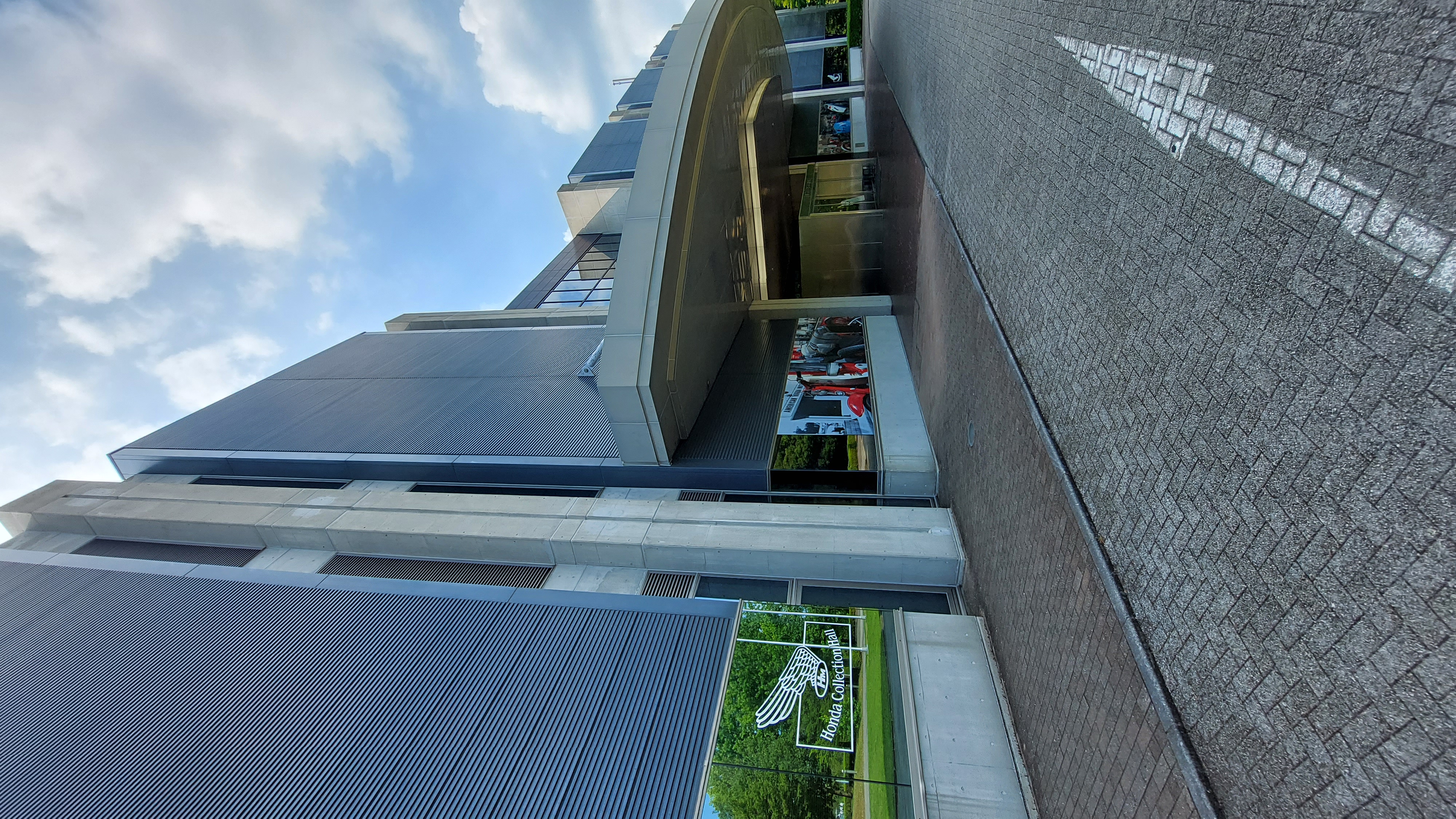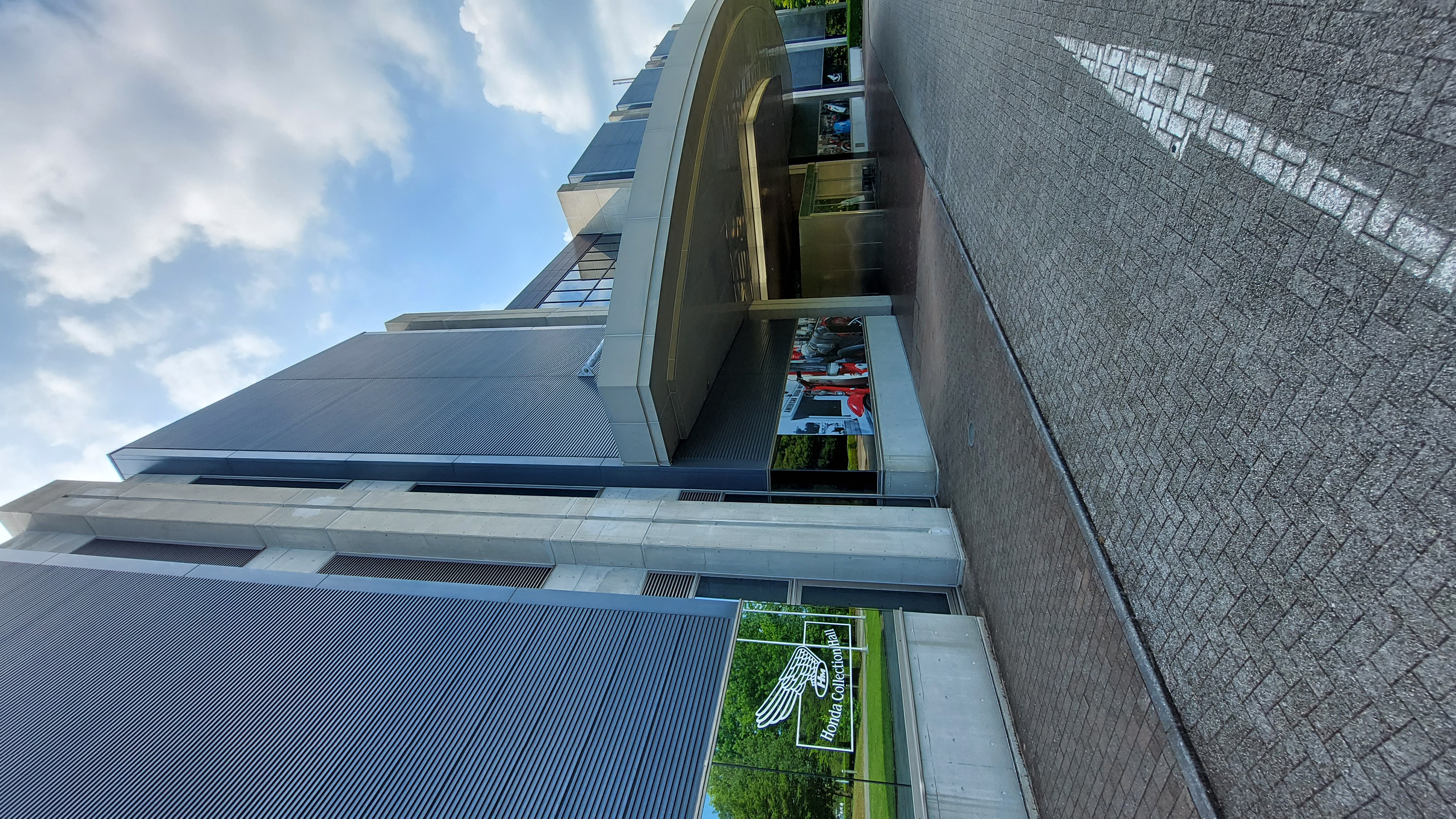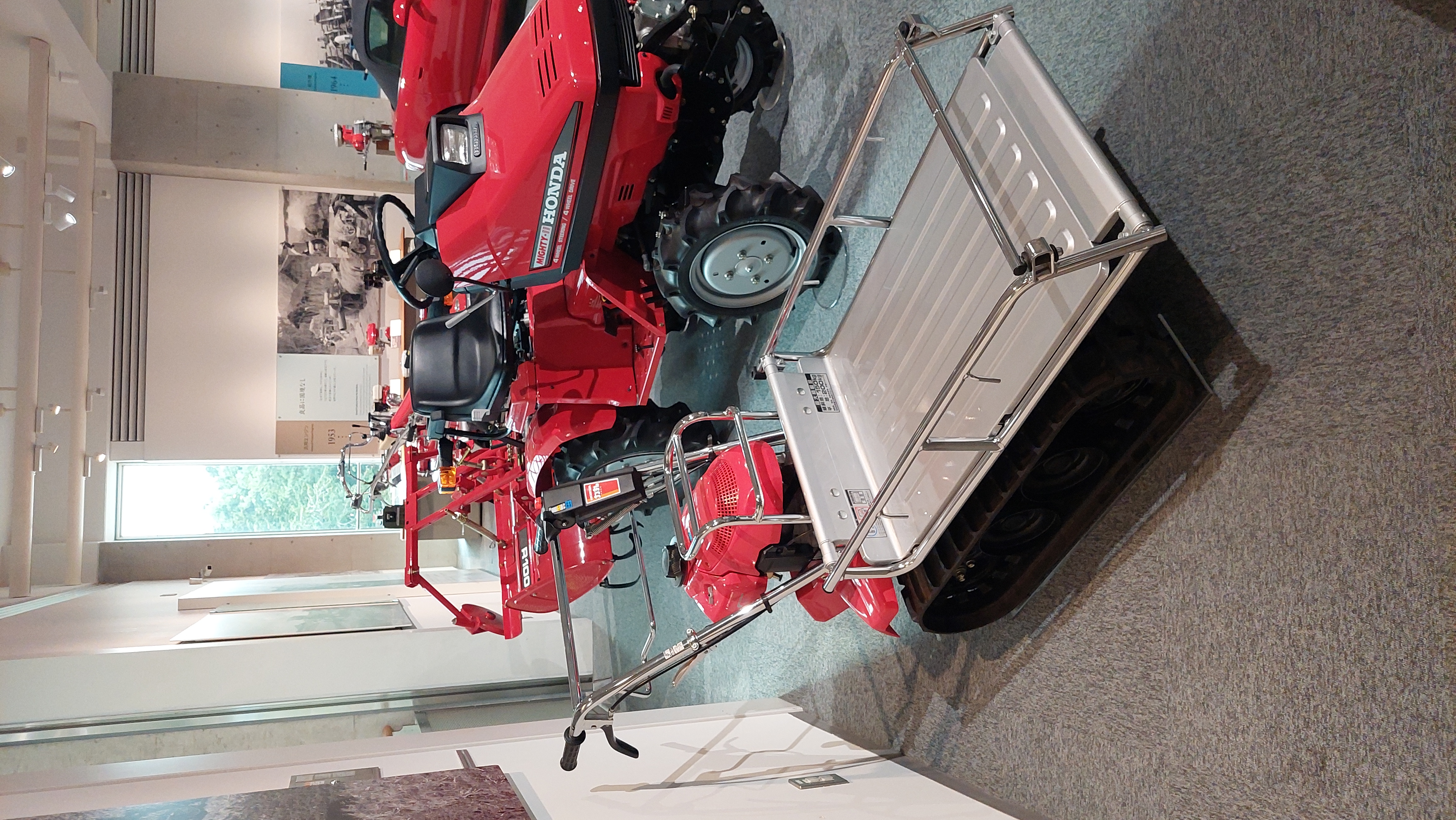
There's a building in the forests of Tochigi Prefecture, about two hours northeast of Tokyo, that contains the entire history of Honda in physical form. Not as a corporate showroom. Not as a curated greatest-hits display. As a warehouse of every significant machine the company ever made, from the very first motorized bicycle Soichiro Honda bolted together in 1948 to the NSX-R that redefined what a Japanese sports car could be. The Honda Collection Hall sits inside Mobility Resort Motegi, Honda's own racing circuit, and if you care about cars at all, it will stop you in your tracks.
I drove there during my summer 2023 trip in the campervan. Motegi is not on any typical tourist route. There are no shinkansen connections, no convenient bus services, no tour groups. You need a car, and you need to want to be there. Which already filters the crowd down to the people who actually care.
Where It Started
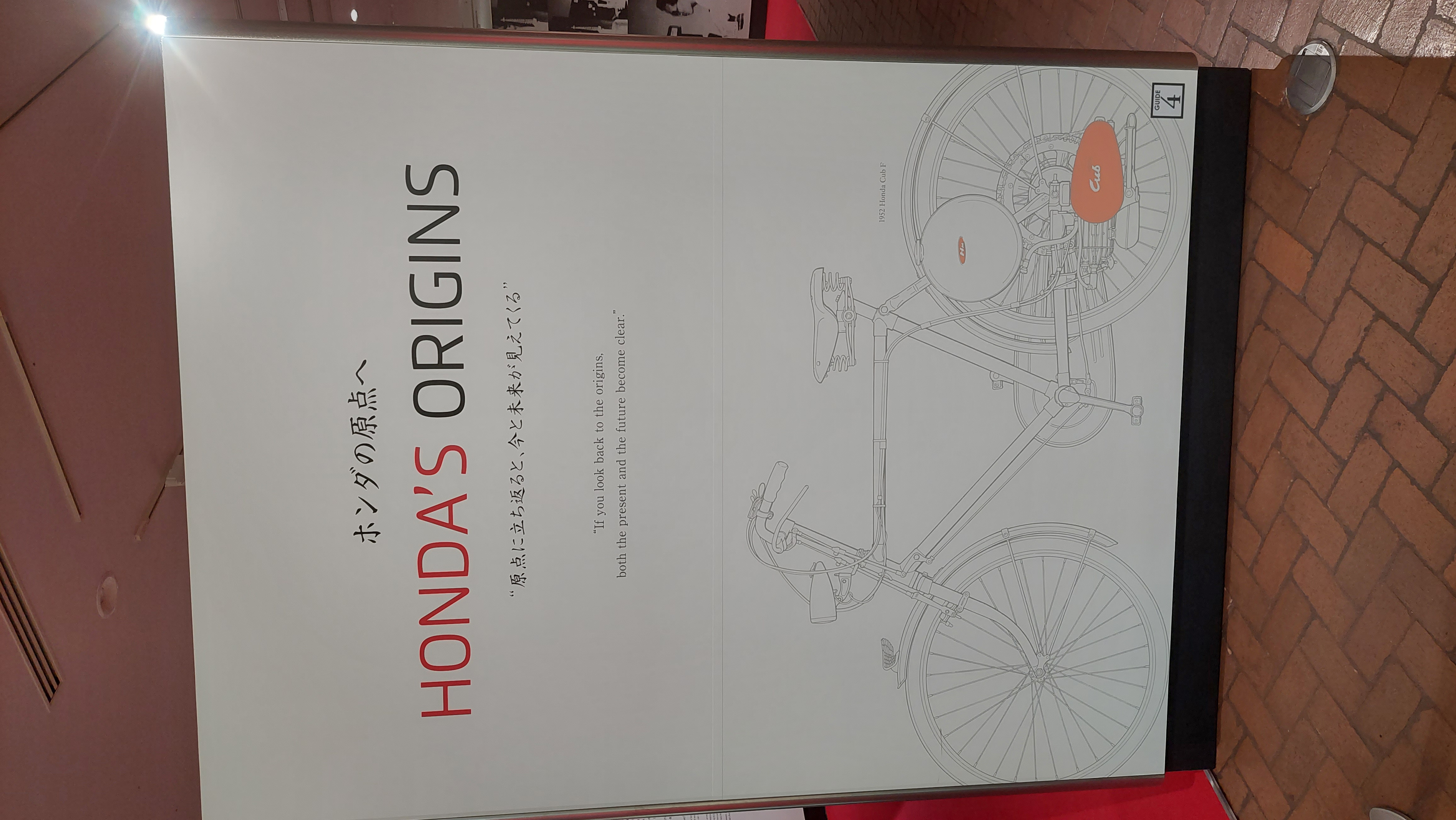
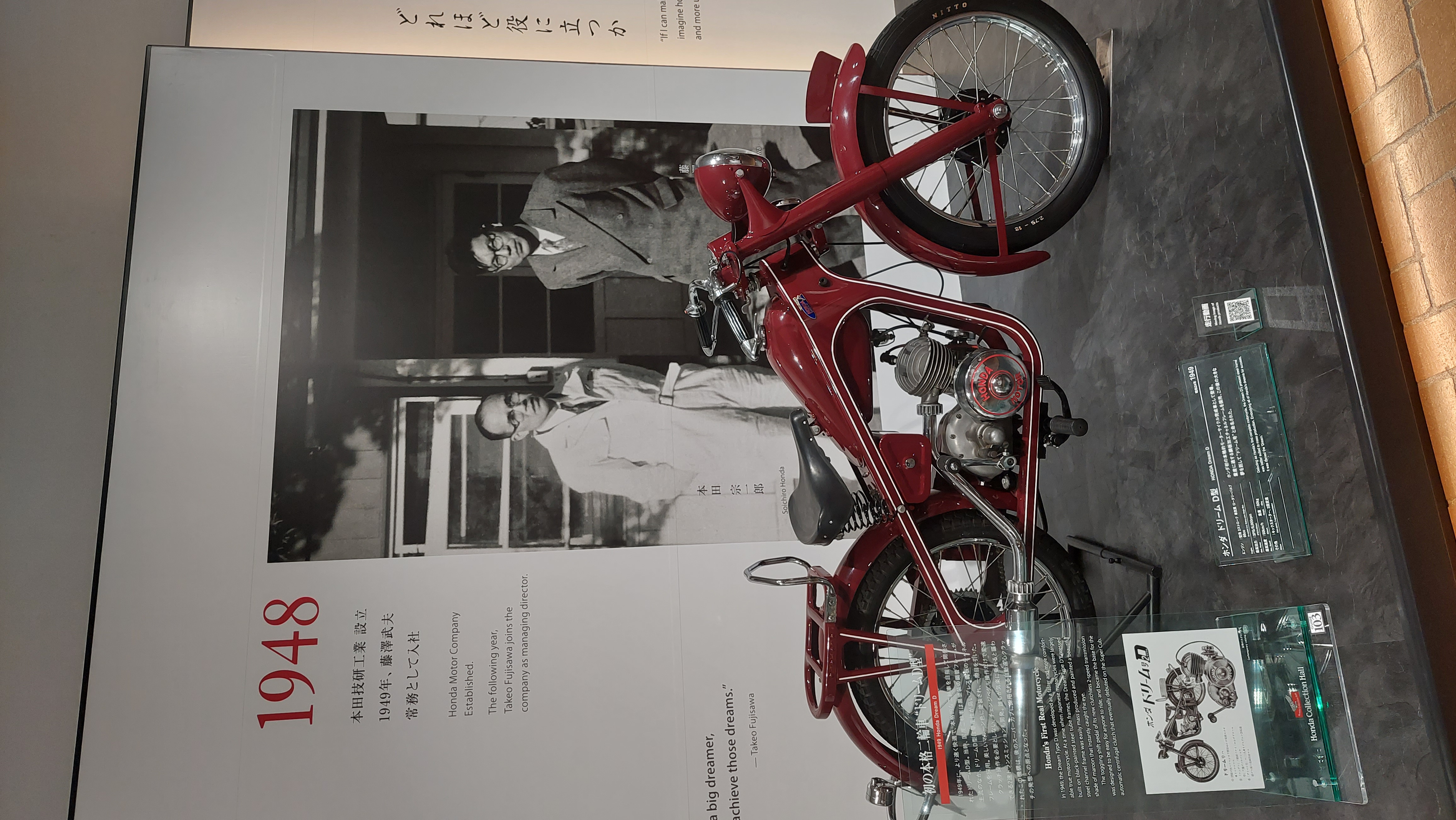
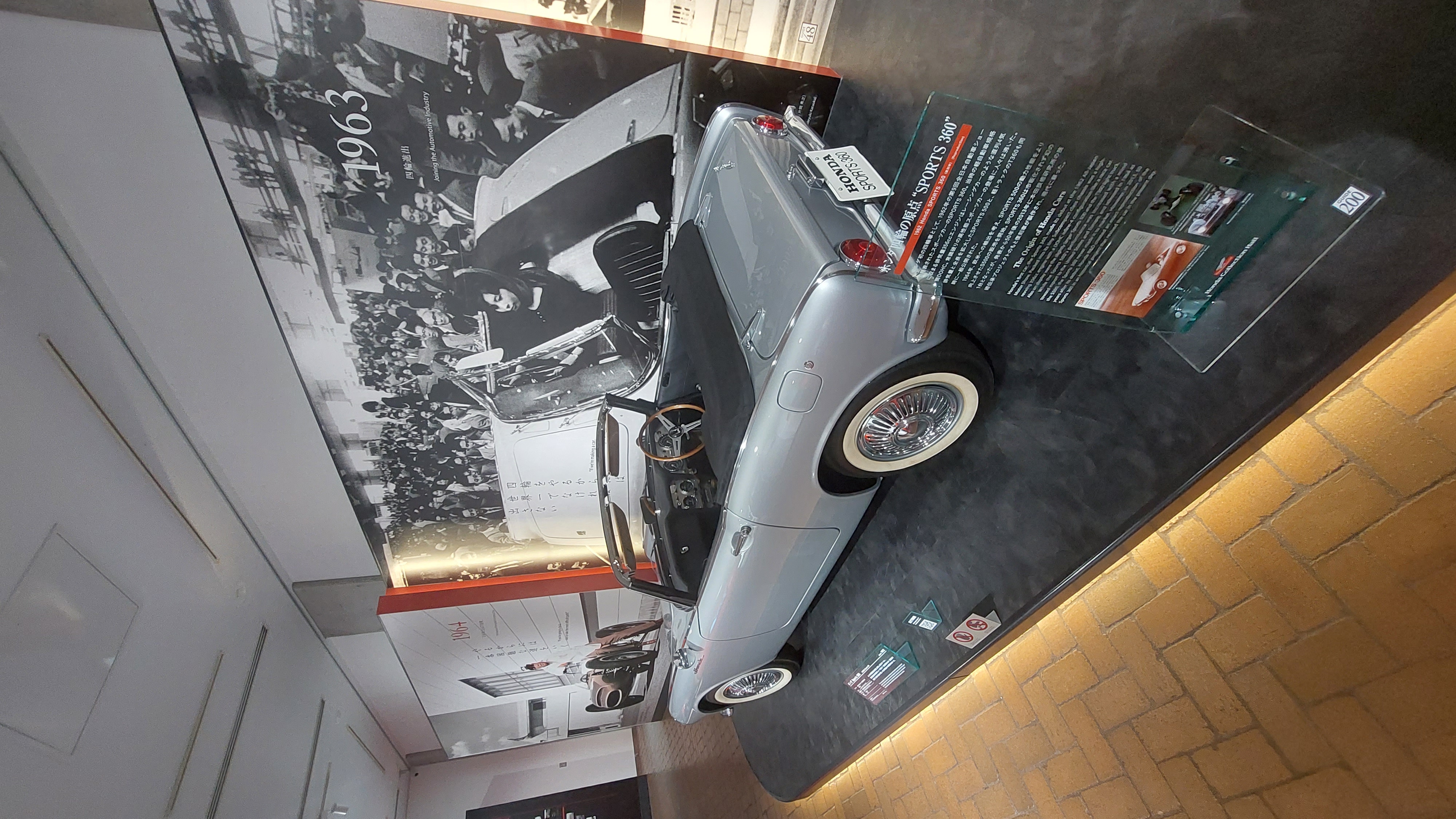
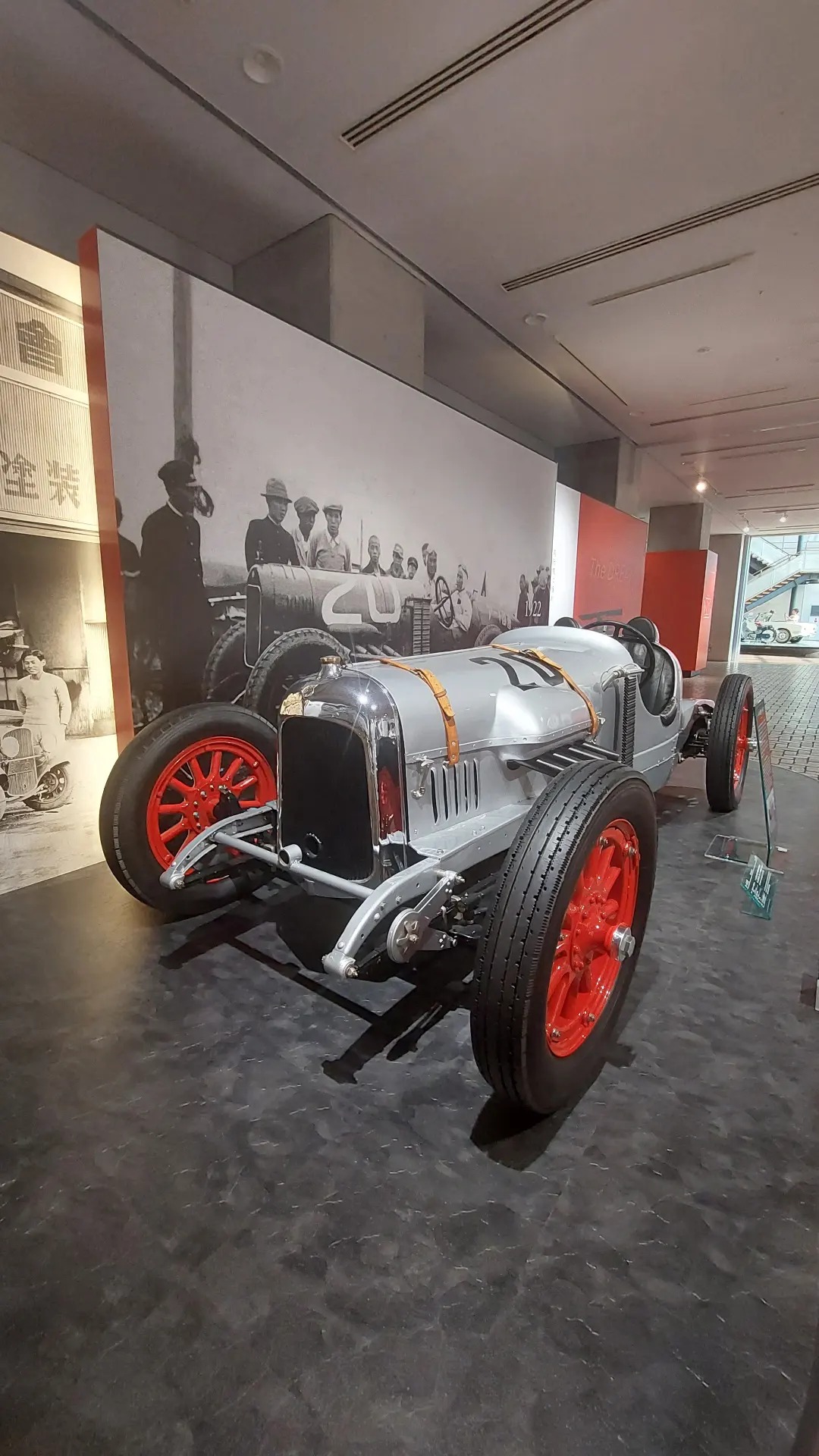
The museum opens with Soichiro Honda's origin story, and it's not the sanitized corporate version. A photograph from 1948 shows a man in overalls next to a red motorized bicycle - an engine strapped to a bicycle frame - that was the first thing to carry the Honda name. Next to it, the actual machine. Seeing both side by side, the photo and the object, immediately sets the tone: this place is about engineering, not marketing.
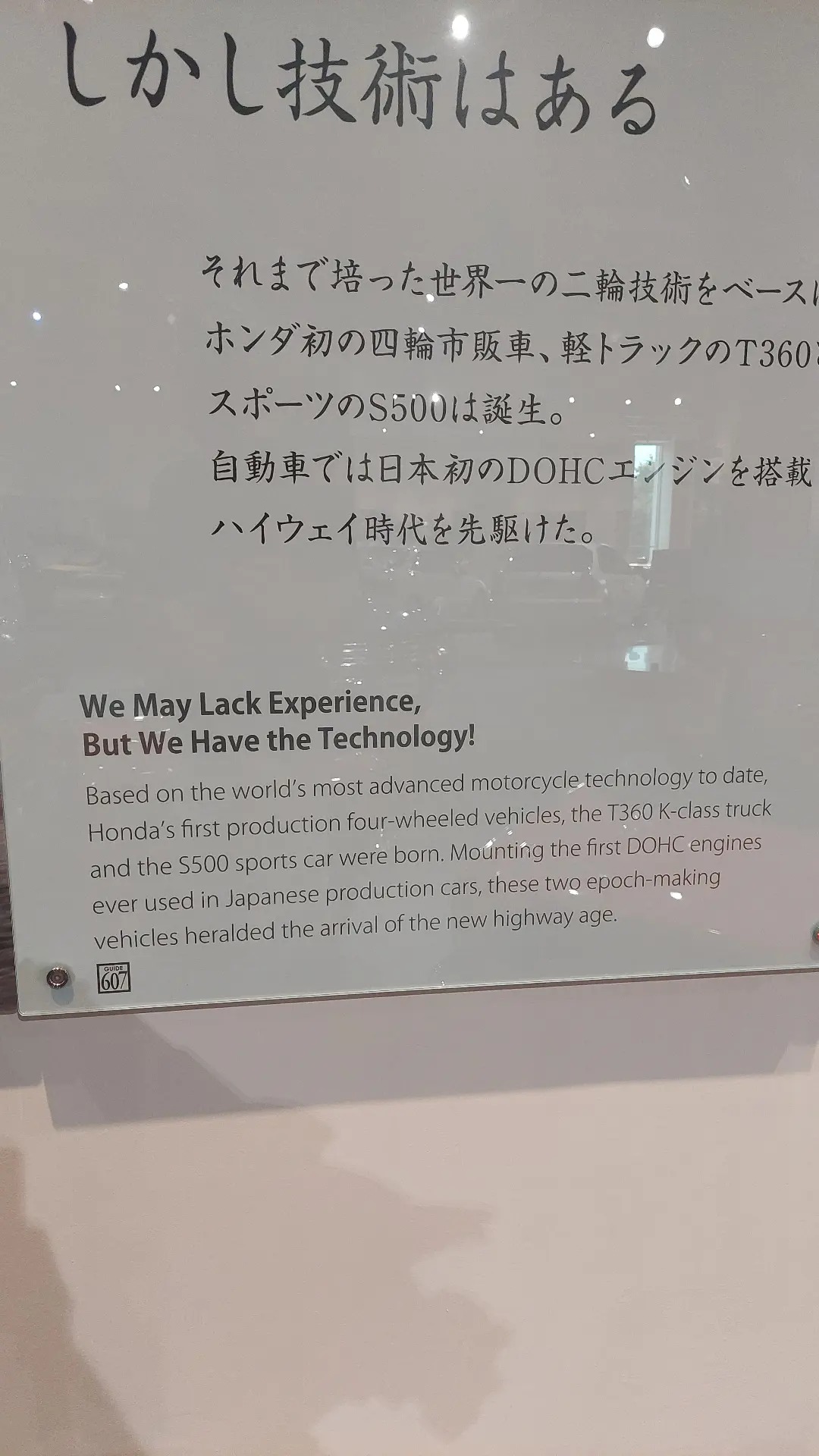
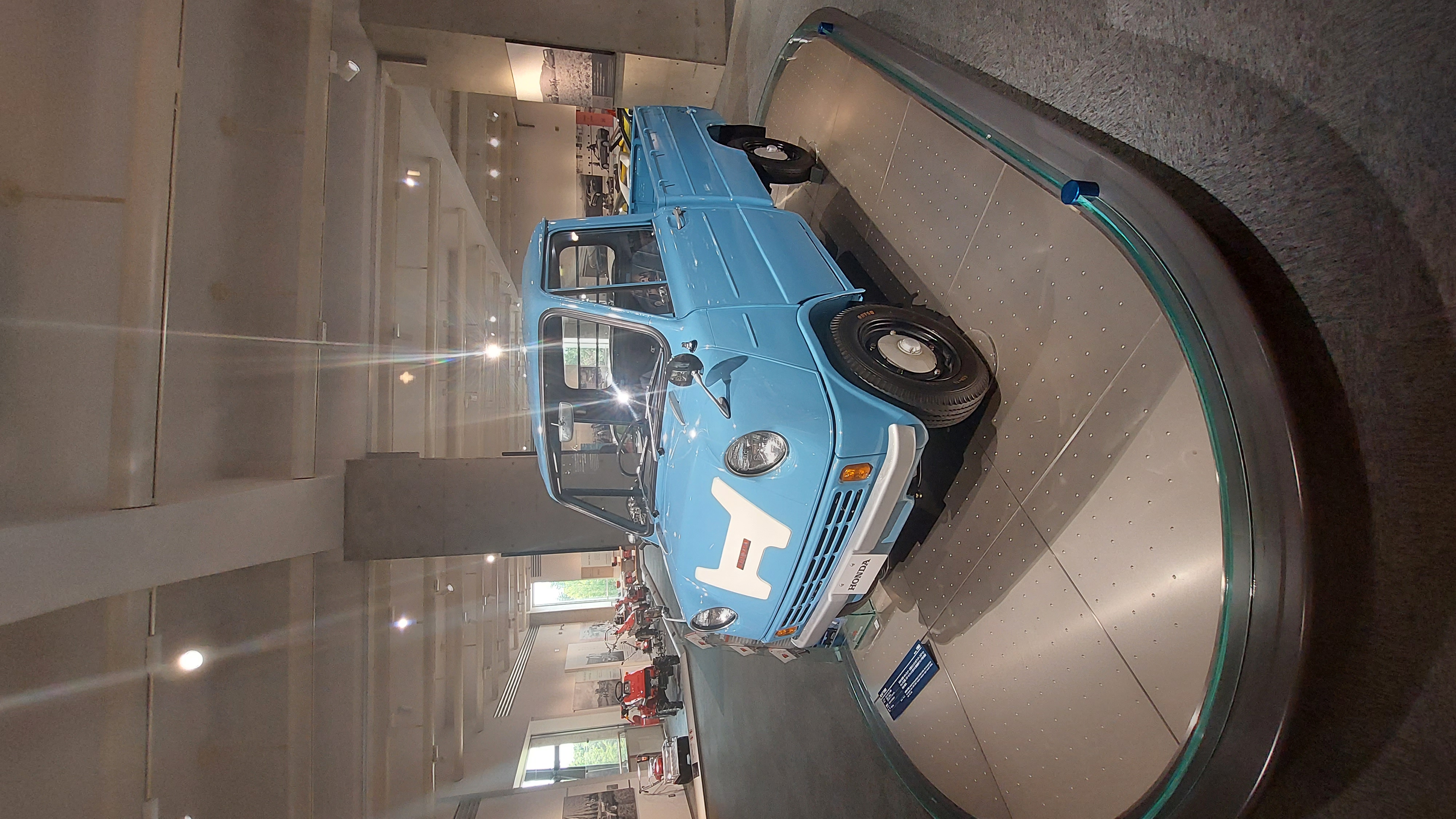
There's a sign on the wall that became my favorite exhibit in the entire museum: "We May Lack Experience, But We Have the Technology." That was Honda's actual philosophy when they decided to build their first four-wheeled vehicle. A motorcycle company with zero experience in cars, announcing to the world that they're going to do it anyway. And right there beneath the sign sits the T360, Honda's first car - a tiny light-blue kei truck with the old Honda "H" logo on the front. It looks like something from a children's book, and it changed the entire trajectory of the company.
The Cars That Disappeared
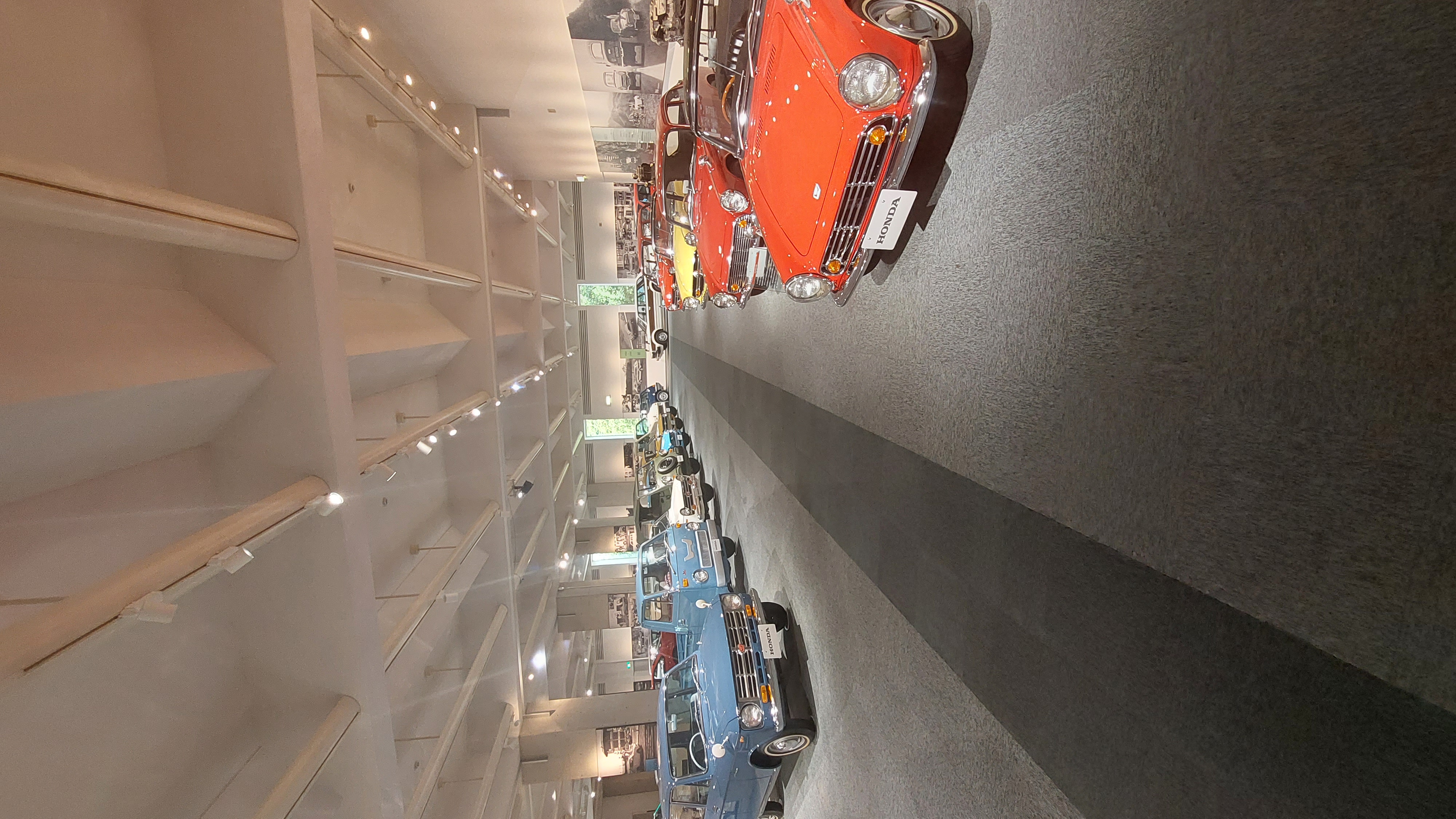
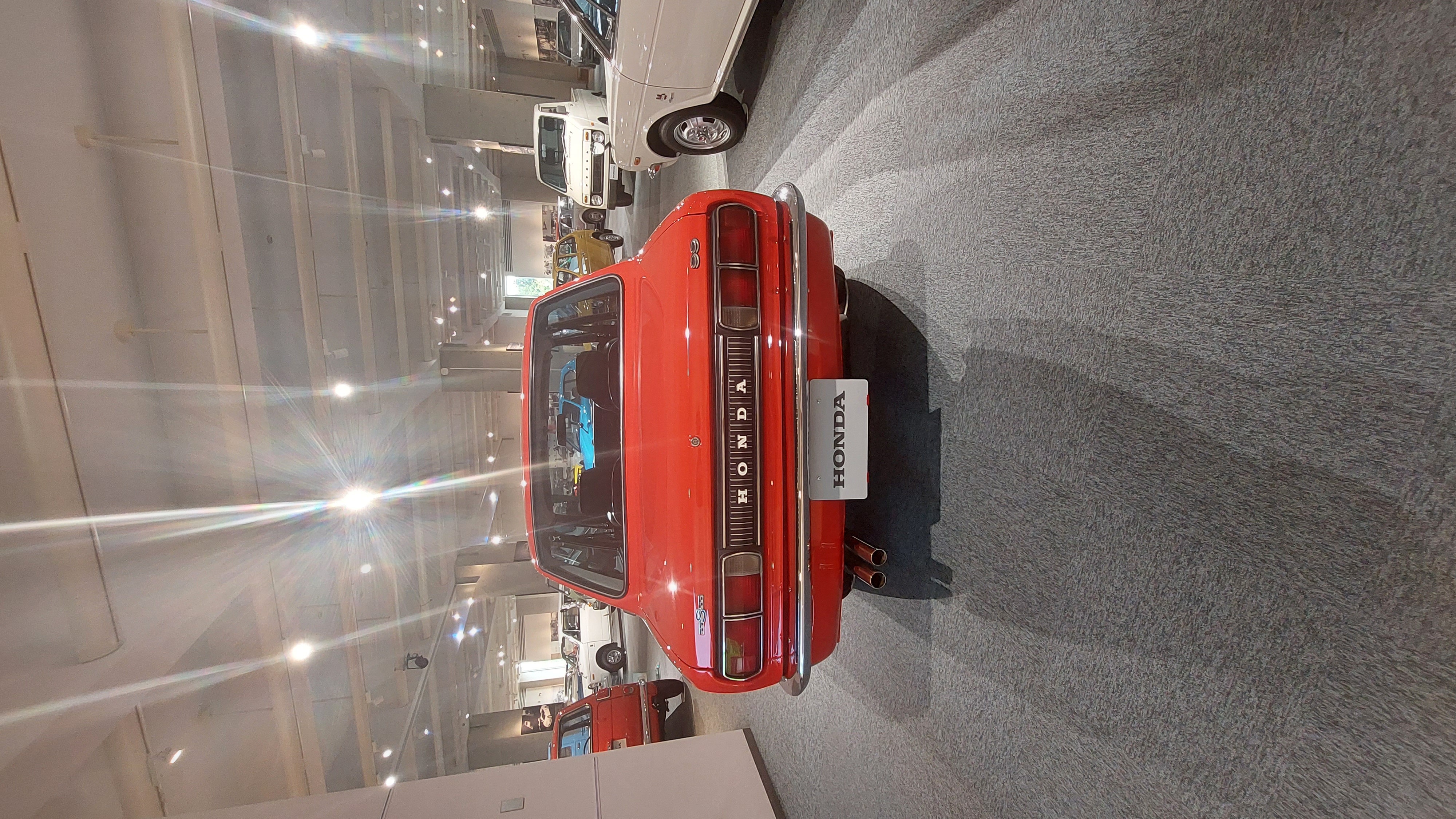
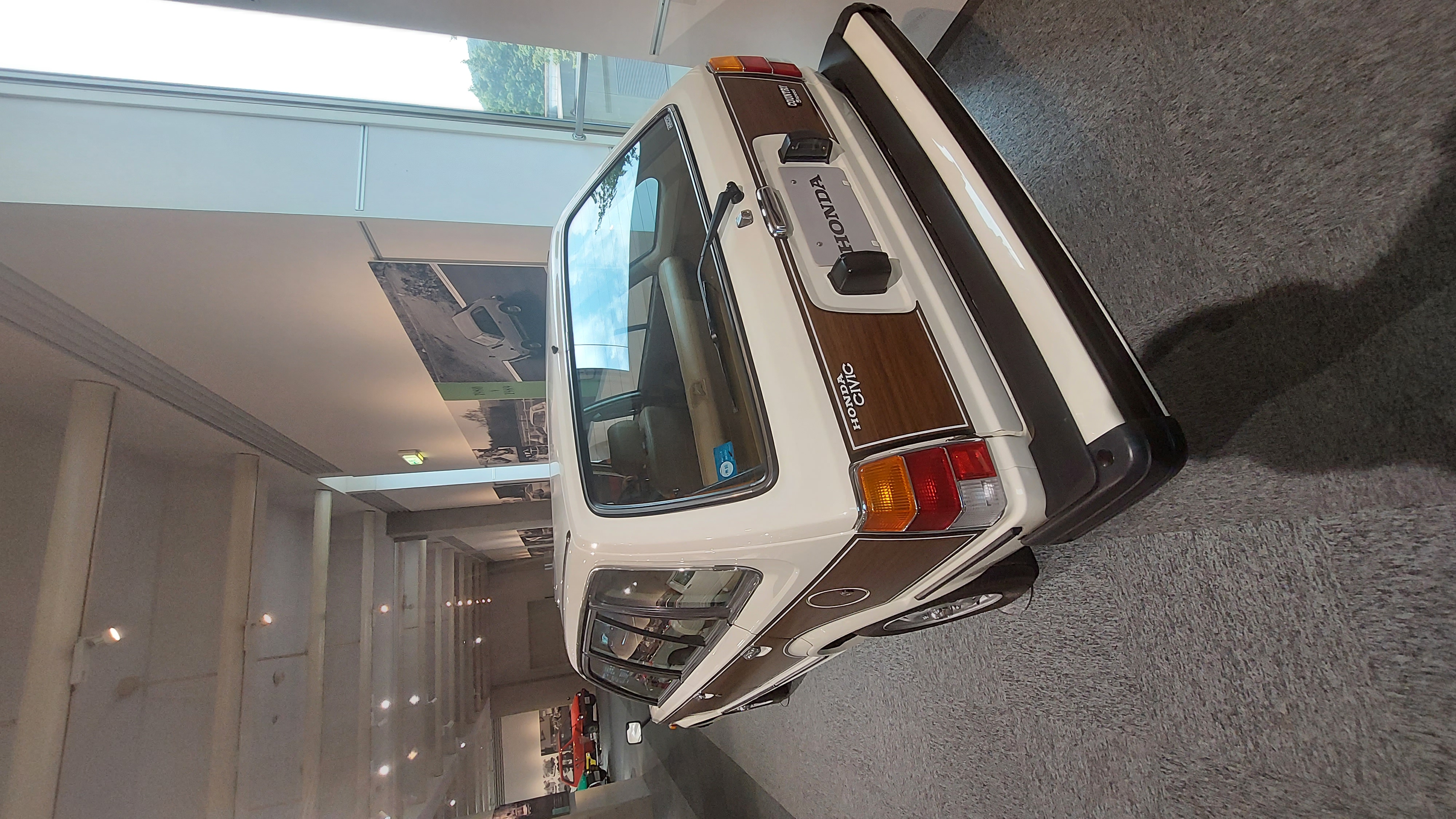
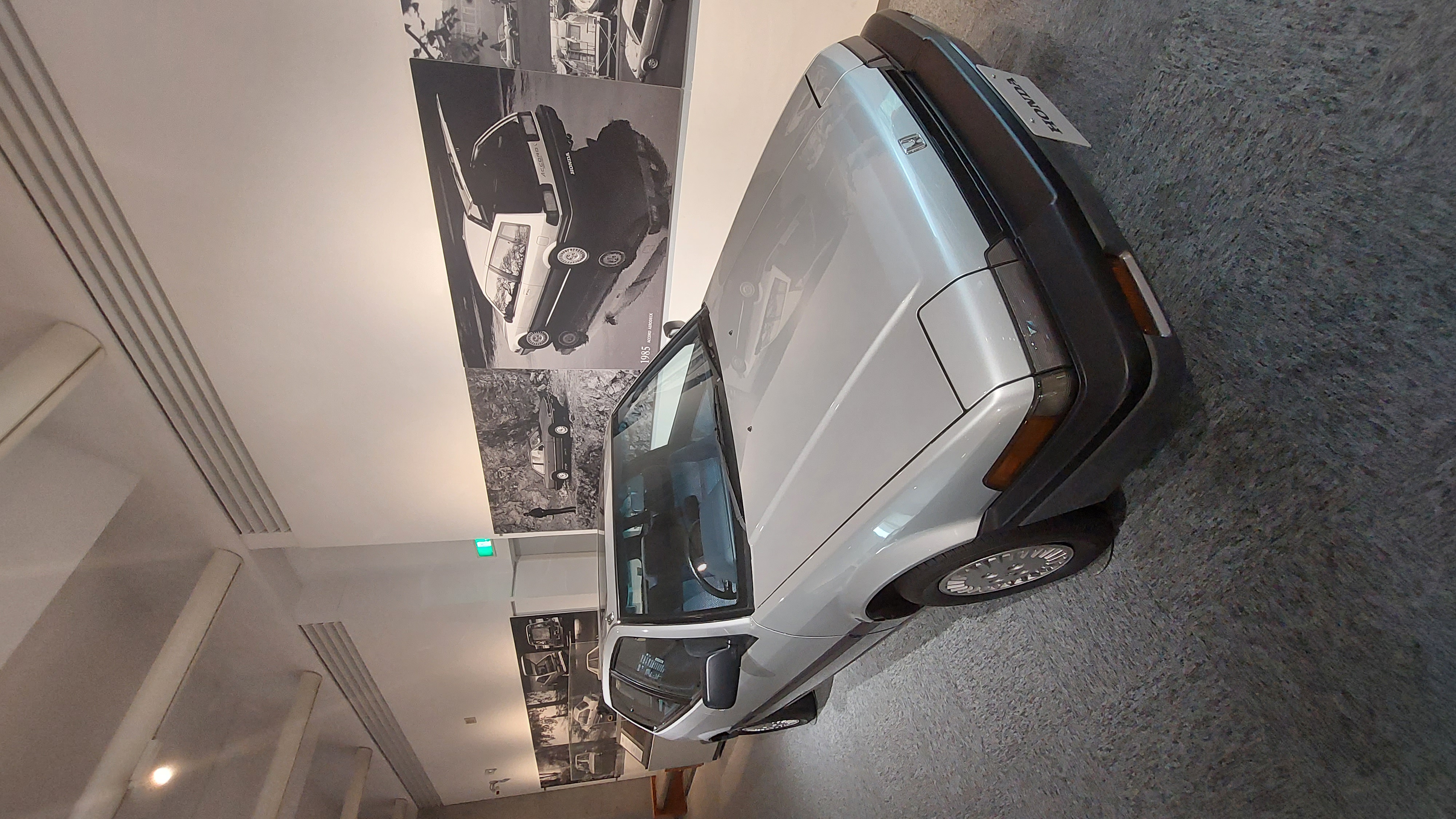
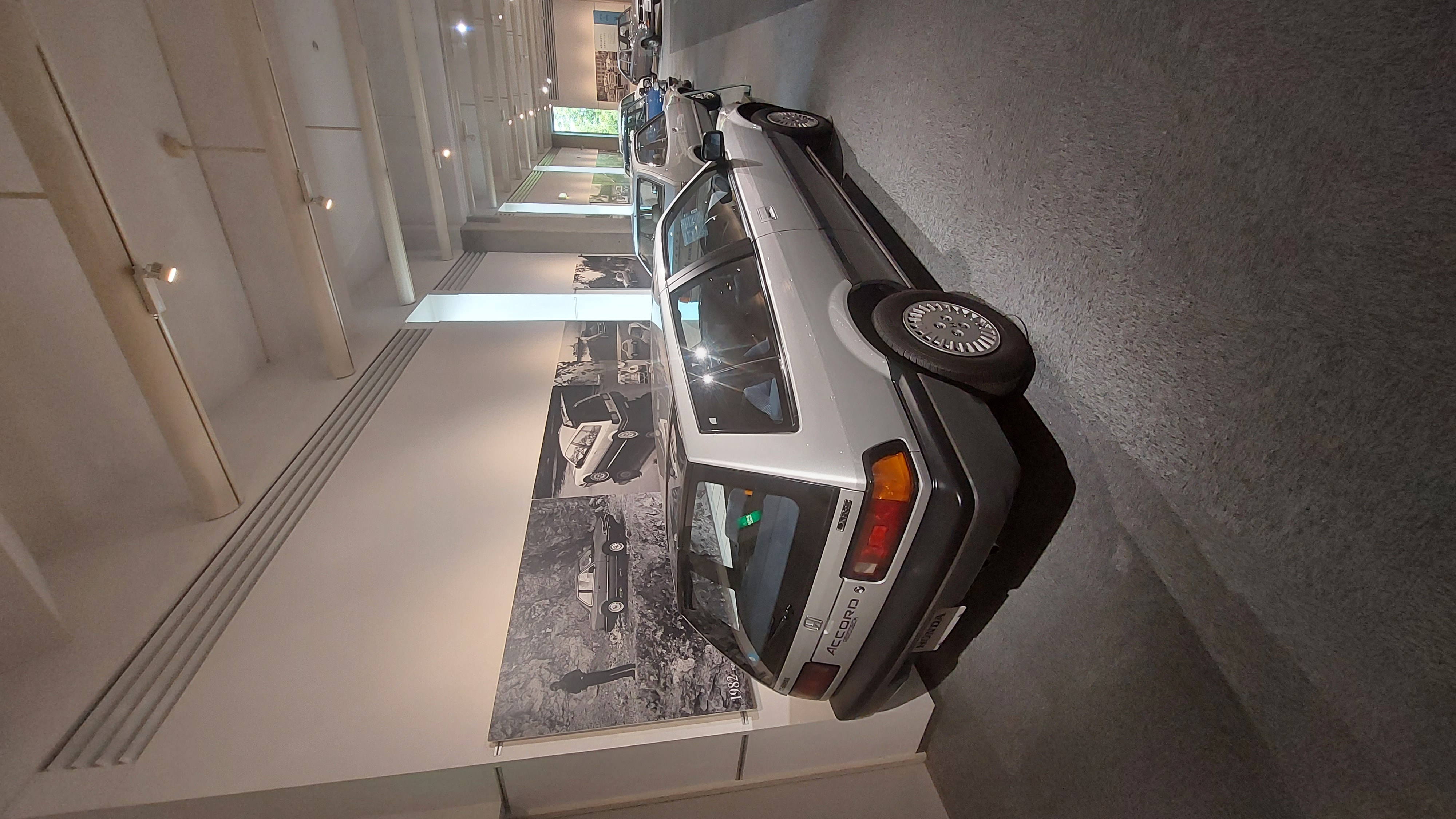
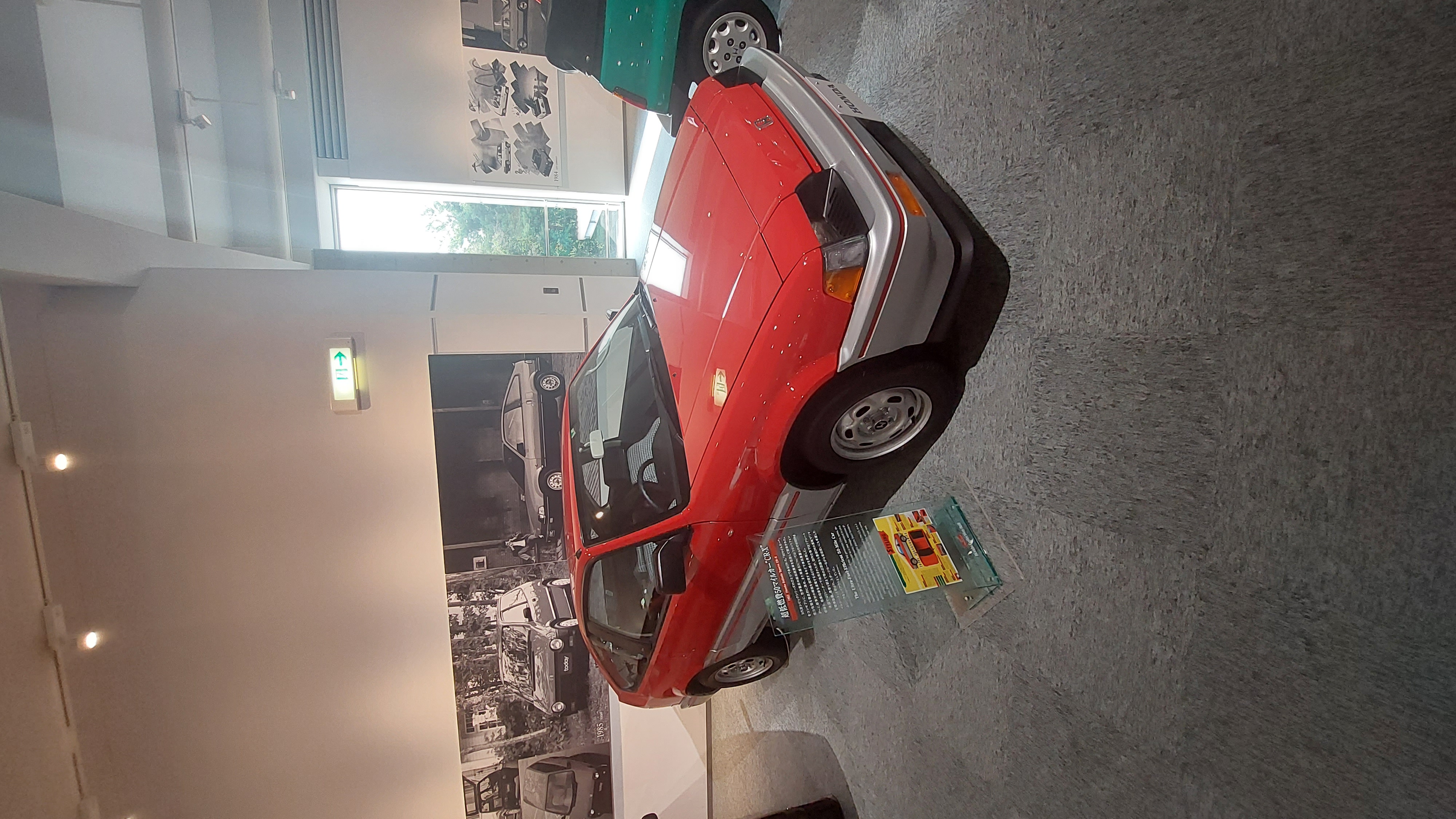
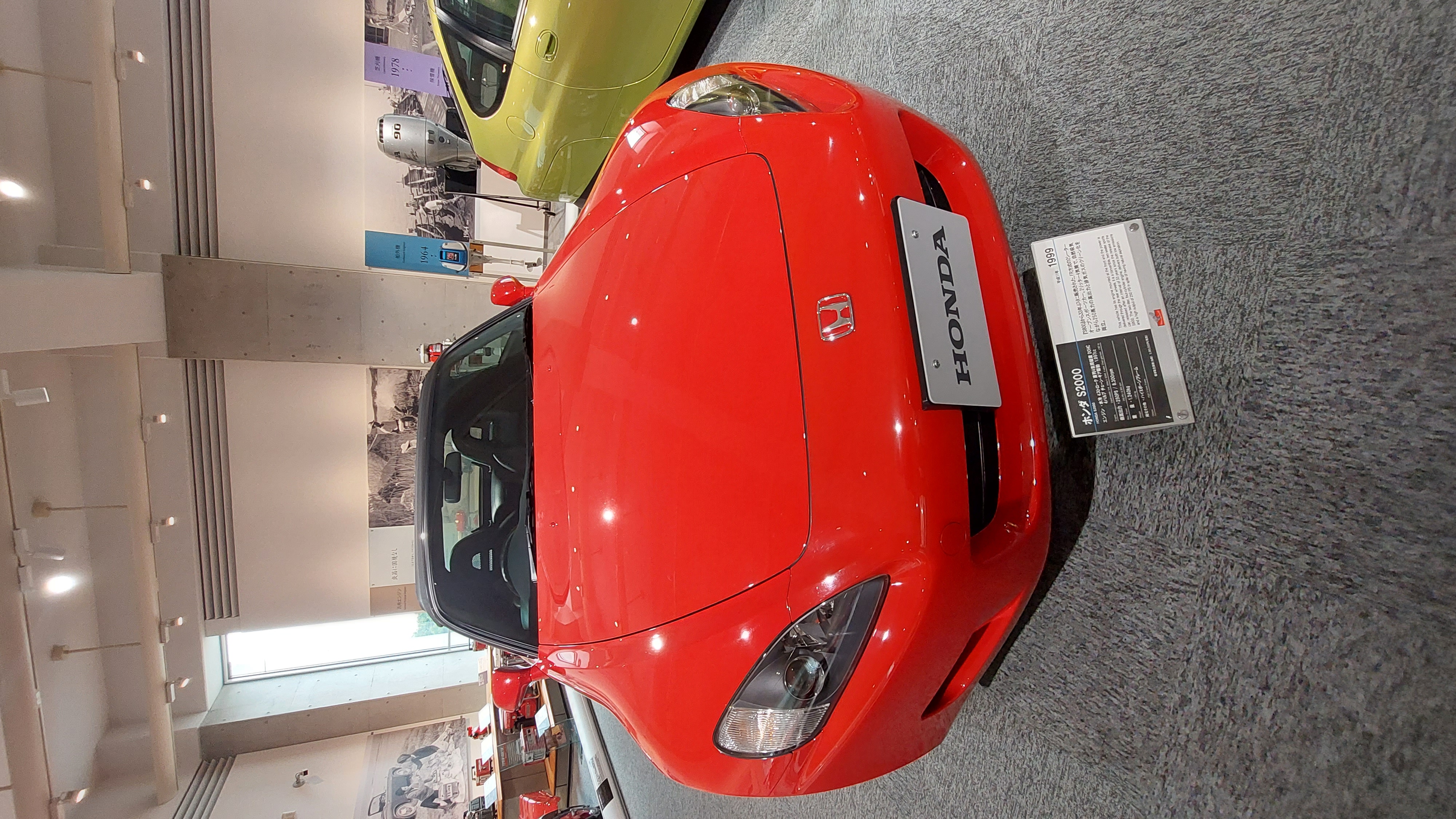
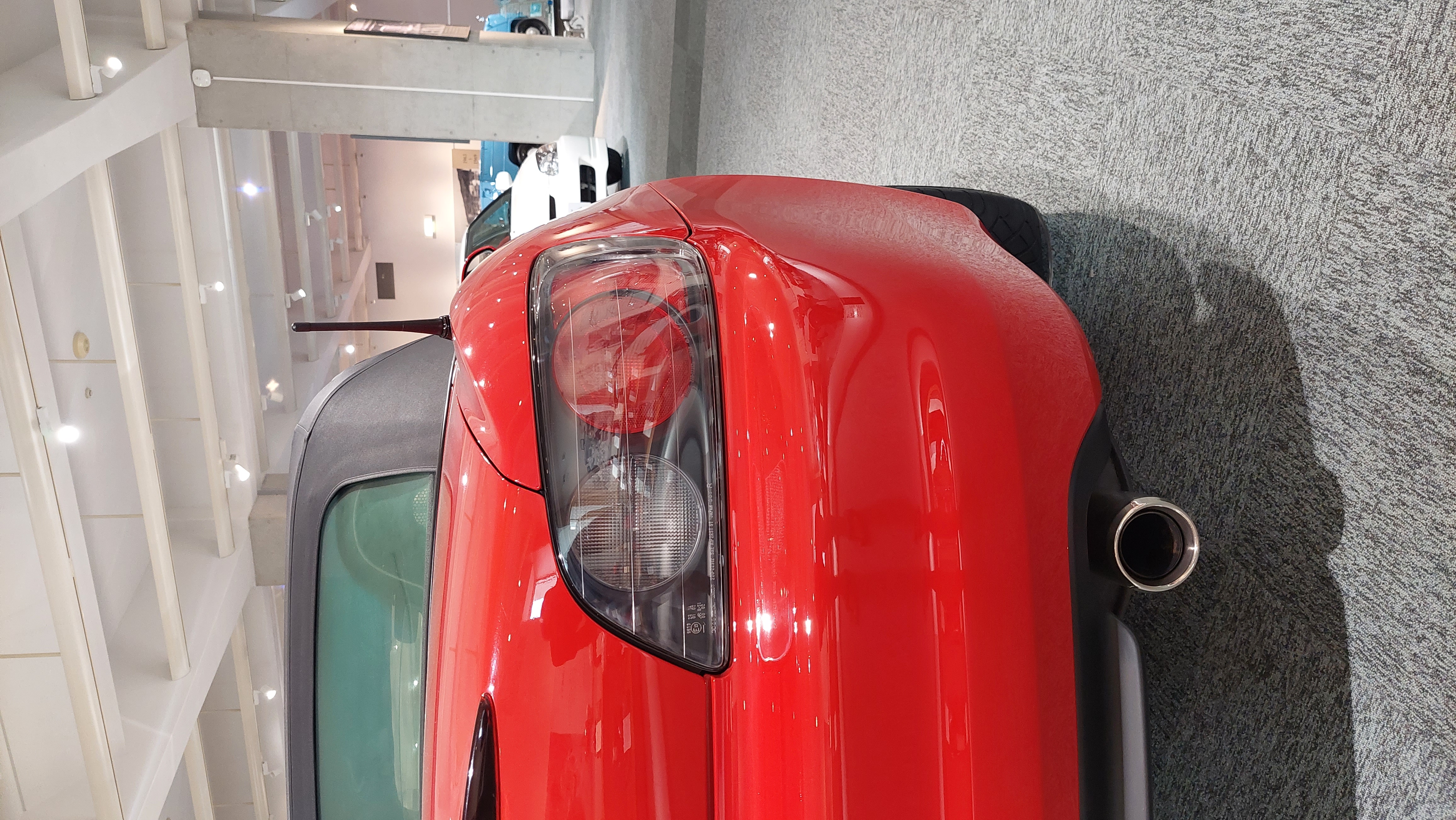
What got me the most wasn't the supercars. It was the ordinary Hondas. The Accord that every other family on my street in Frankfurt seemed to own. The CRX that was the attainable dream car when I was a teenager. These cars have completely vanished from European roads - rust, scrappage programs, and time did their work - but here they were, in perfect condition, under museum lighting, treated with the same reverence as a Formula 1 car.
There's something profoundly strange about seeing a car you remember from the school parking lot displayed on a plinth with an information card. It forces you to reconsider what's worth preserving. Honda clearly decided: everything. Every machine they ever made matters, because every machine was a step in the story.
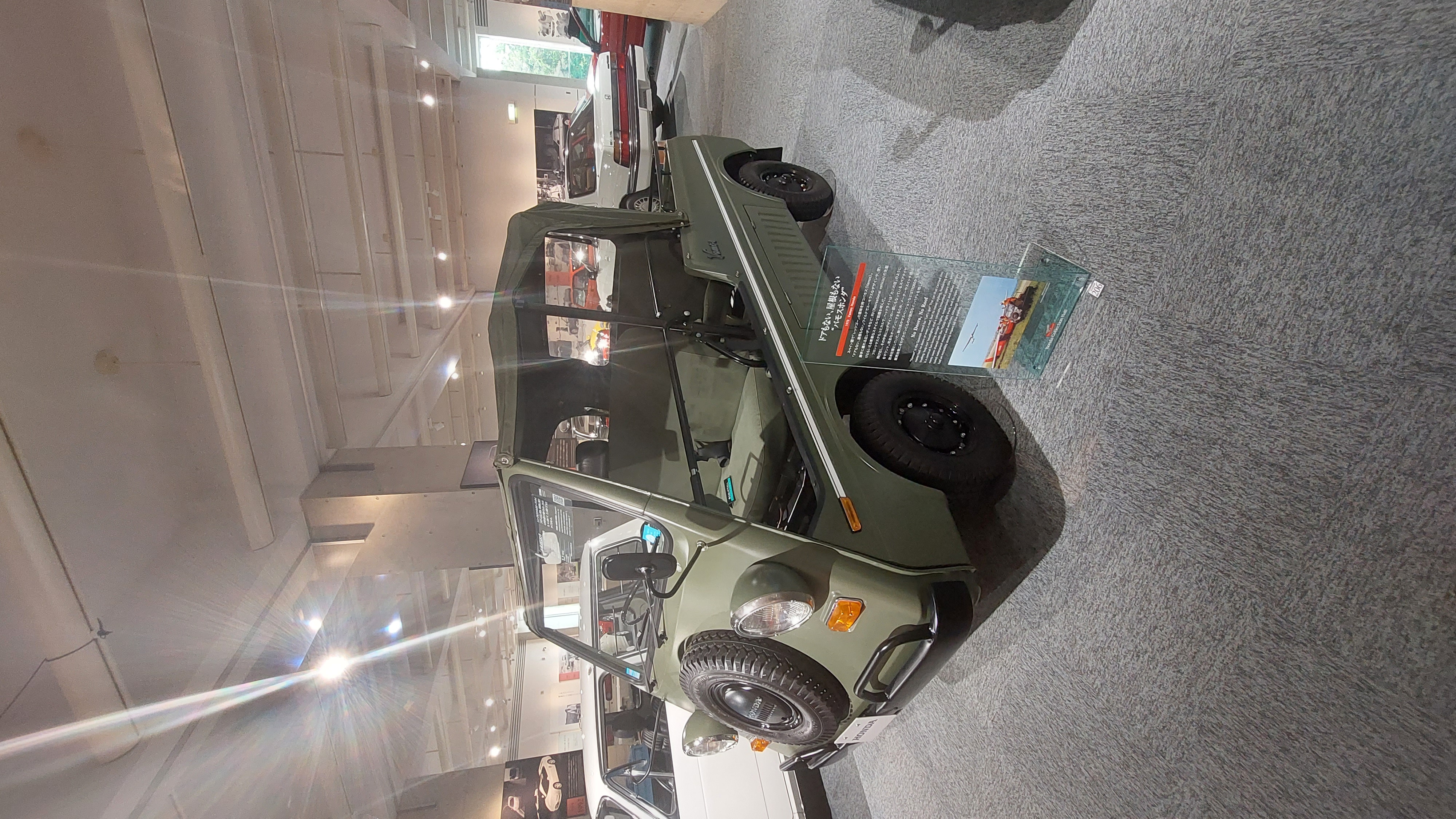
The Vamos was there too - an olive-green utility vehicle that looks like Honda tried to build a Jeep and ended up with something entirely more charming. The City, the N360, models that most people have forgotten existed. Walking through these rows felt less like visiting a museum and more like walking through my own memory, car by car.
The Type R Lineup
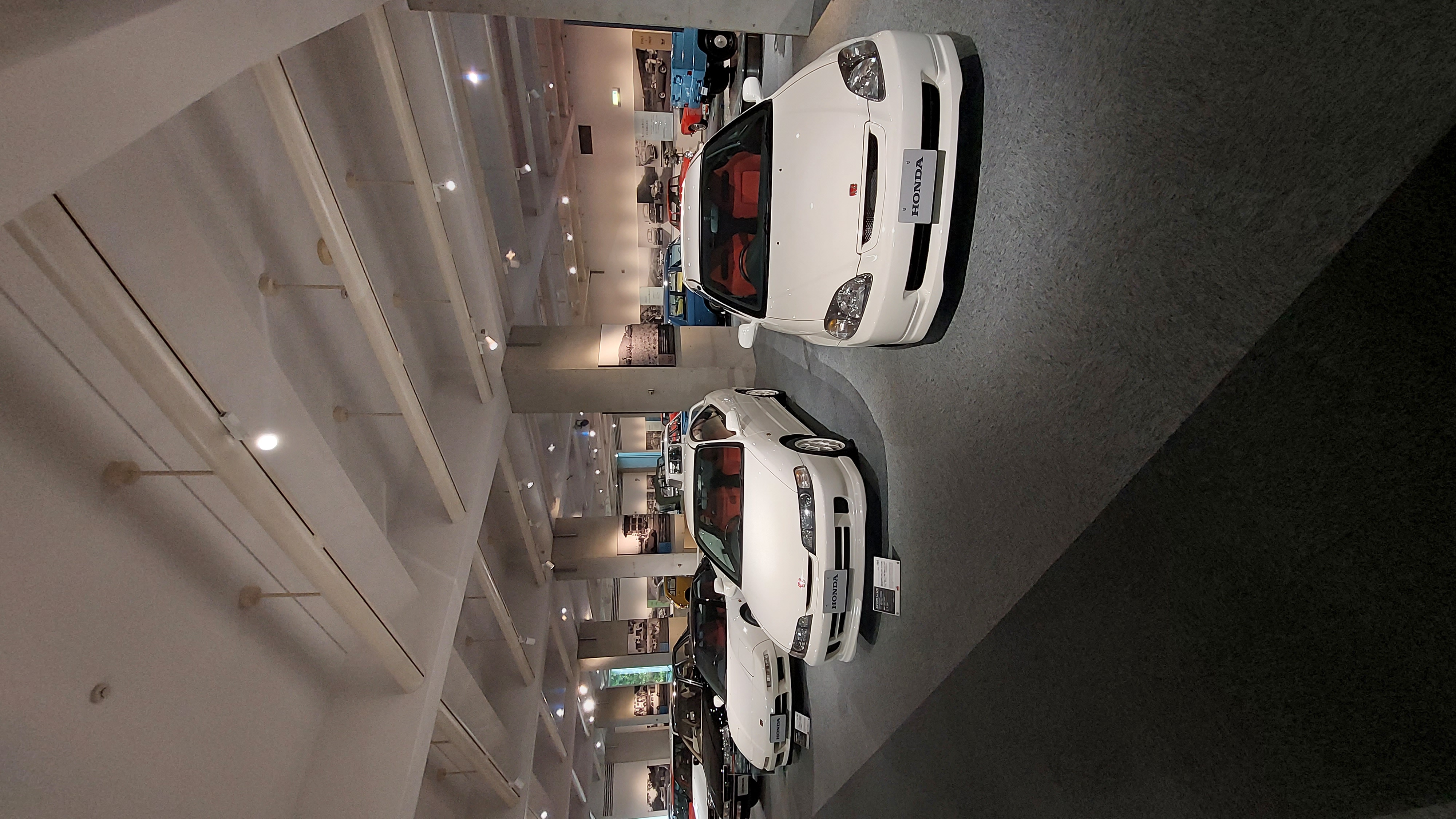
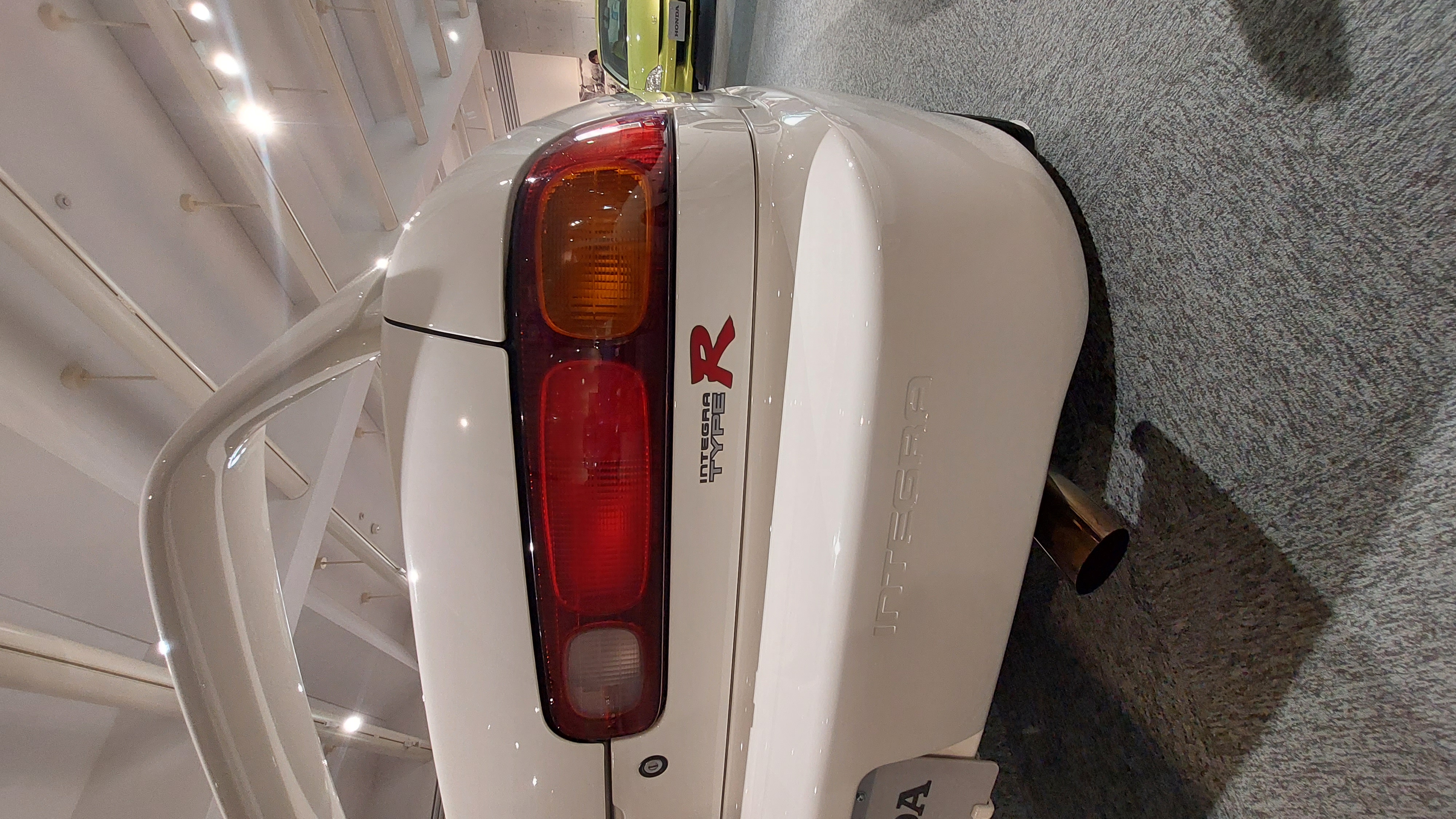
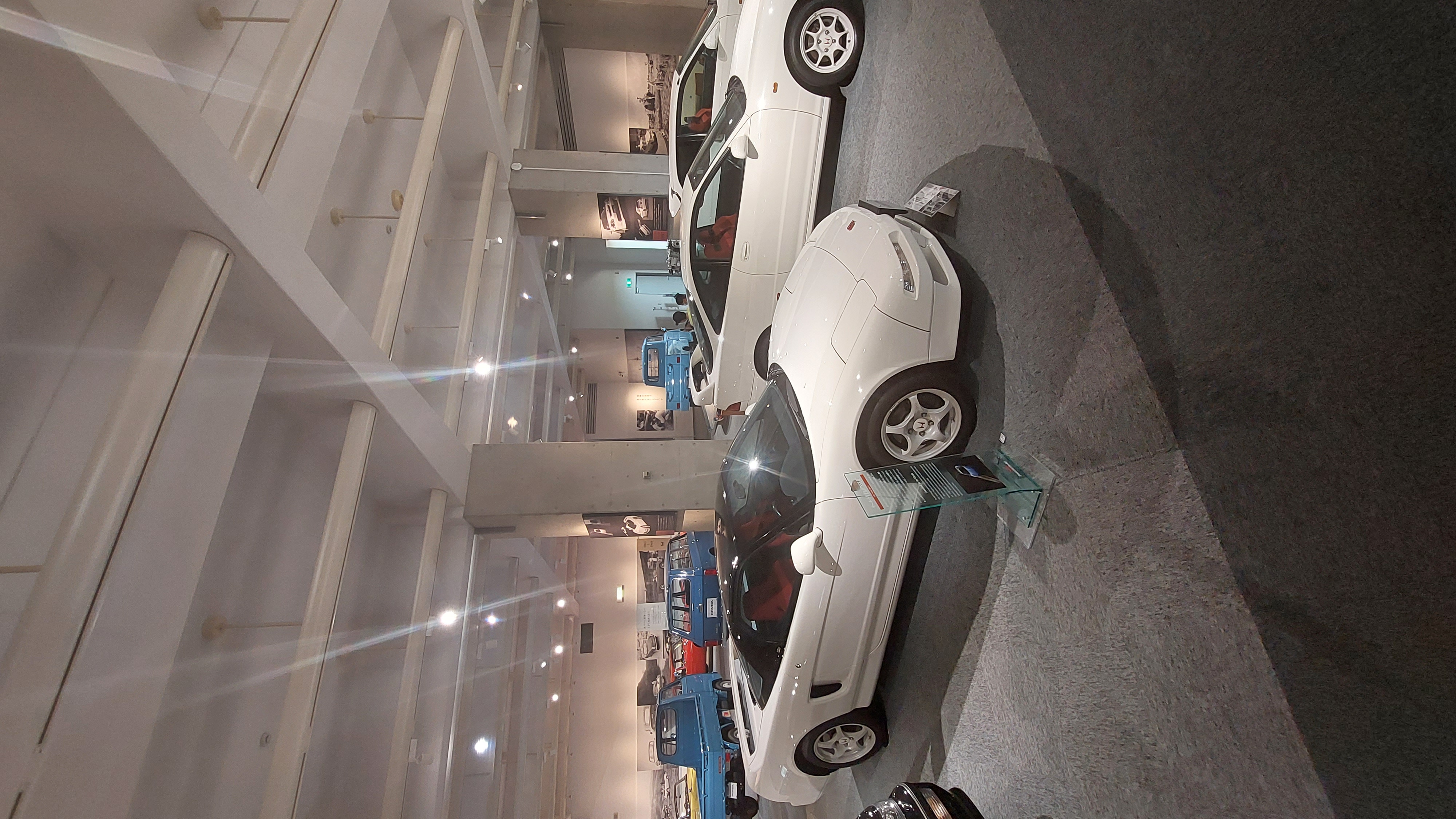
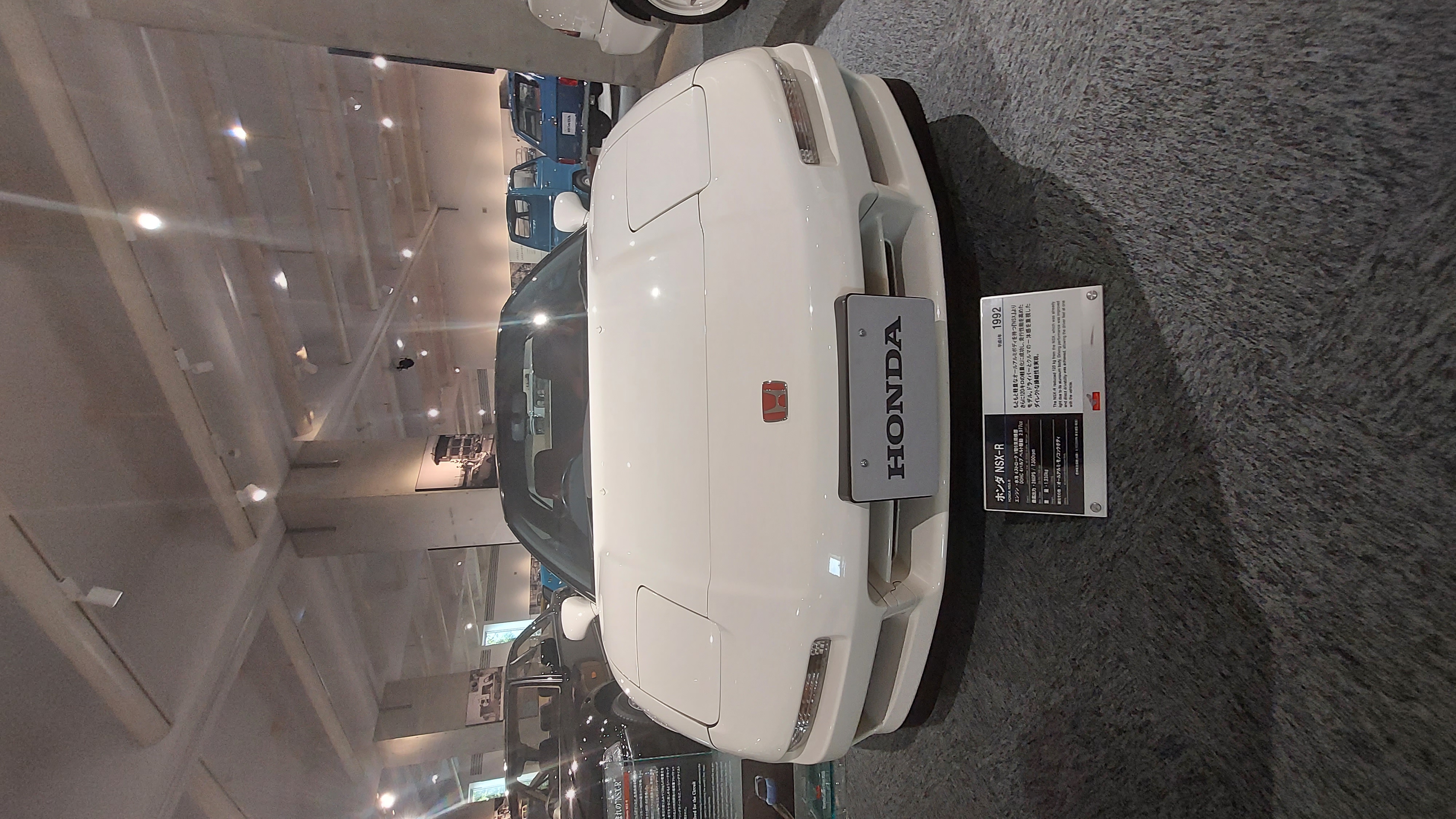
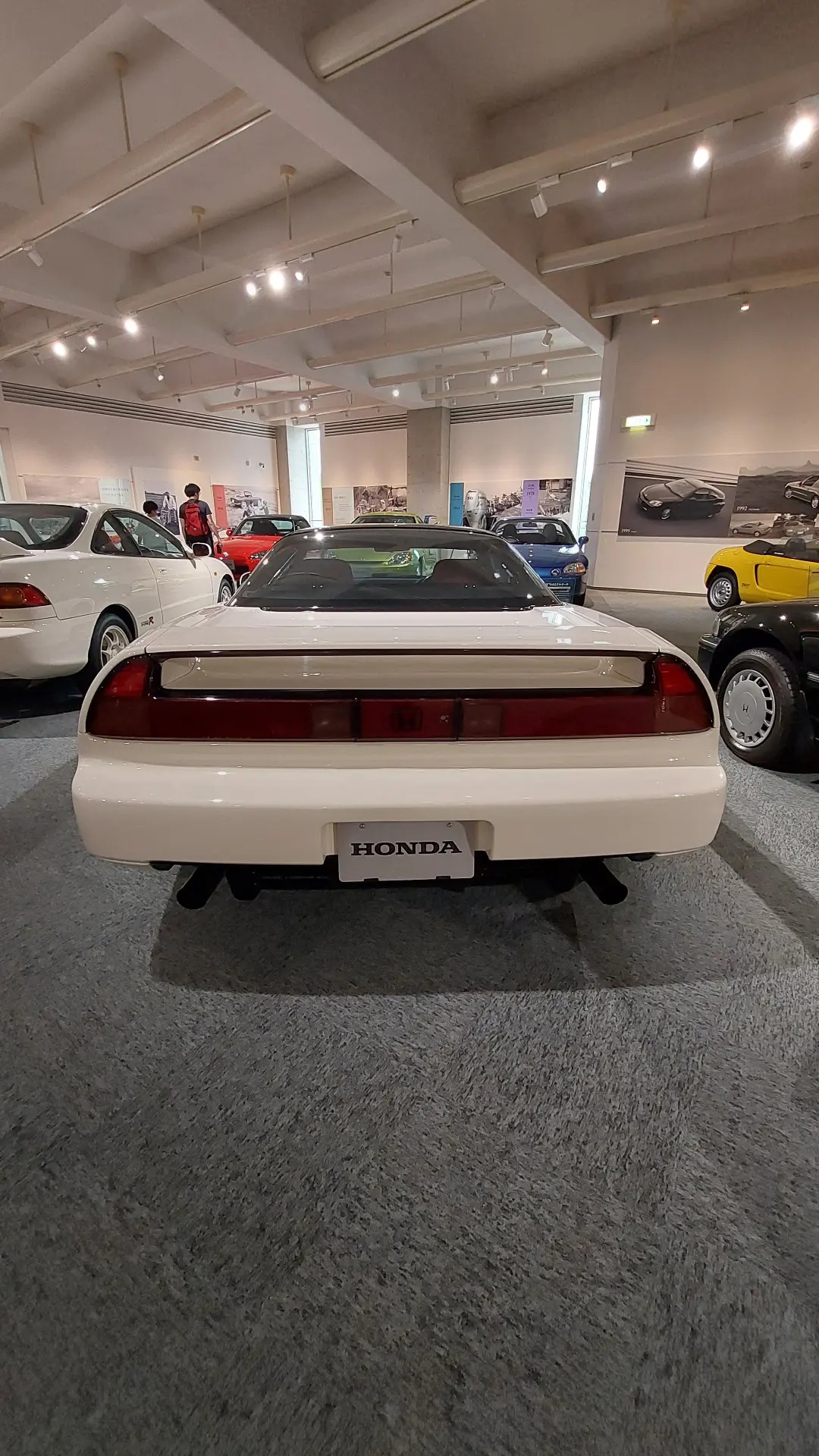
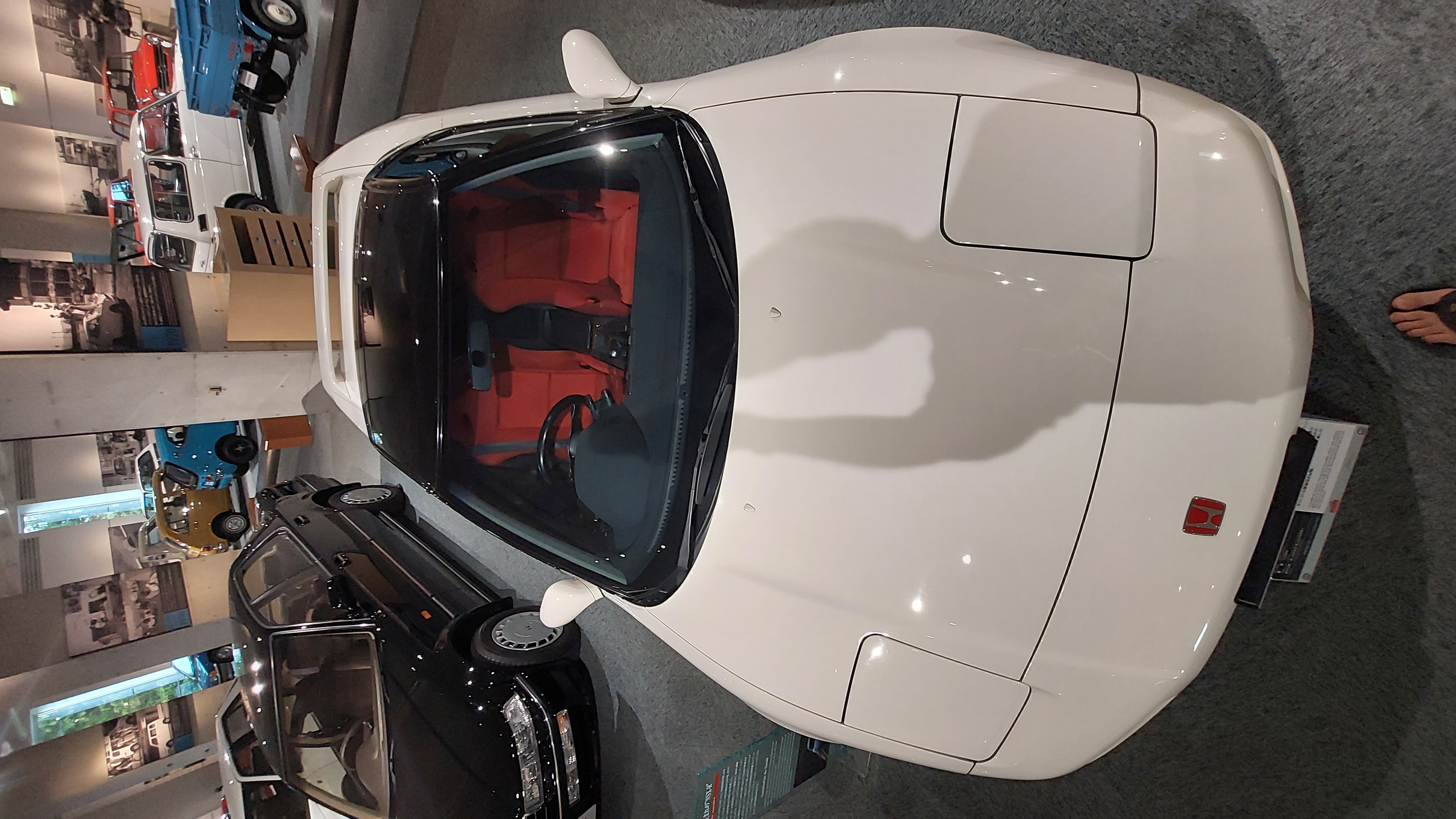
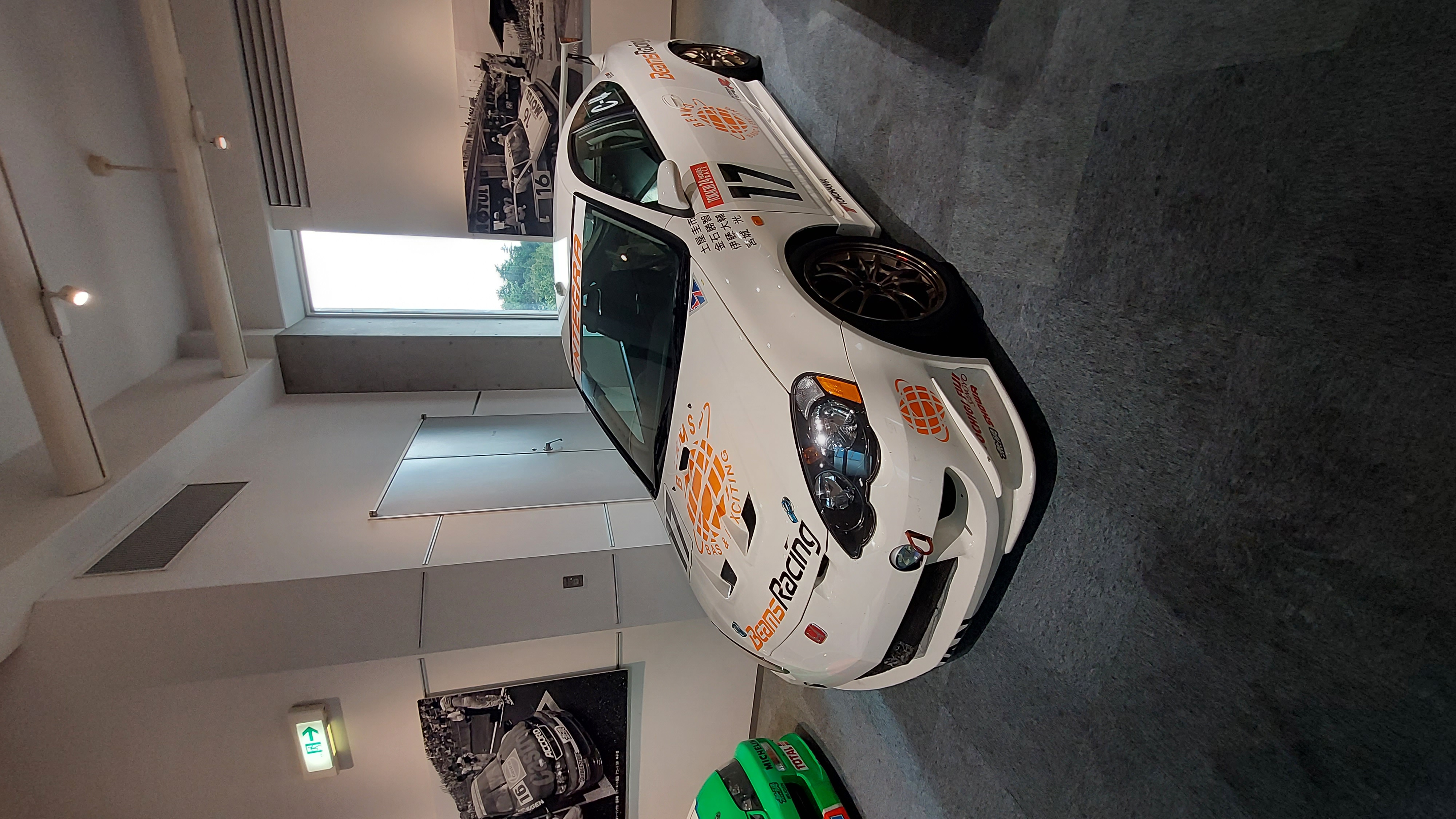
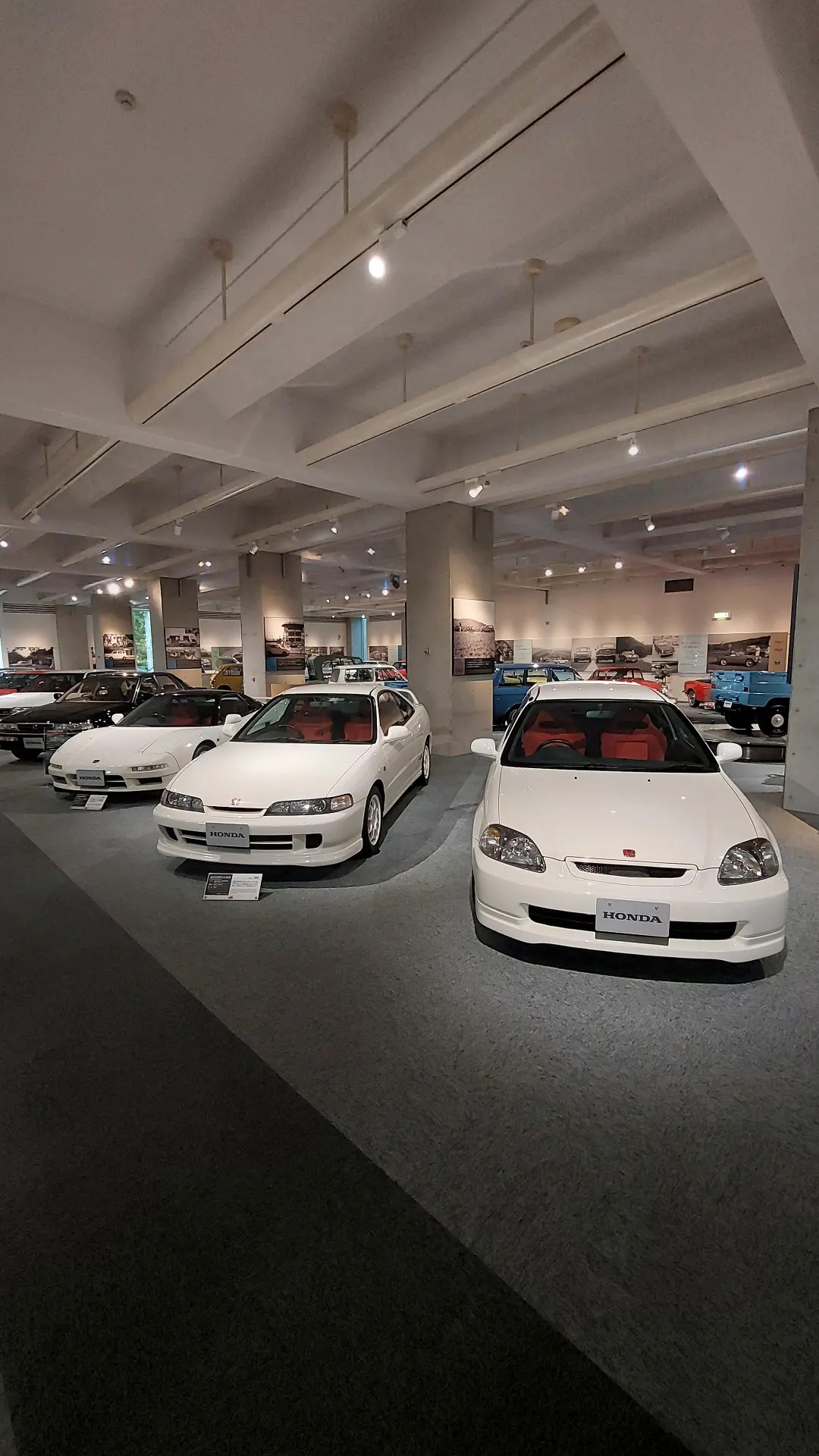
And then you turn a corner and there they are. Three white cars in a row, like a fist. The Integra Type R, the Civic Type R EK9, and the NSX, all in Championship White. If you grew up with Japanese car culture, if you played Gran Turismo, if you read any tuning magazine in the late 90s, this lineup is sacred ground.
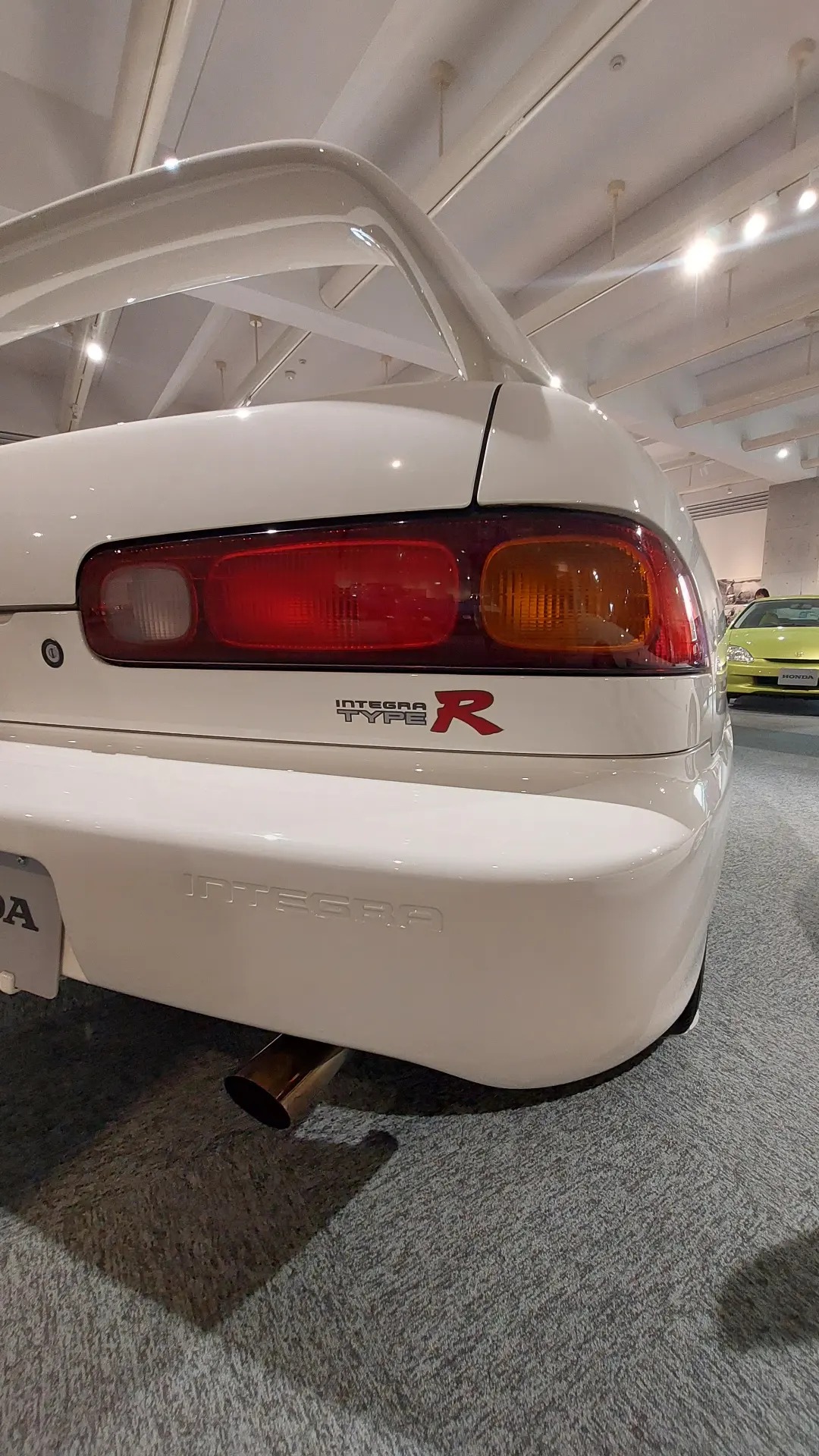
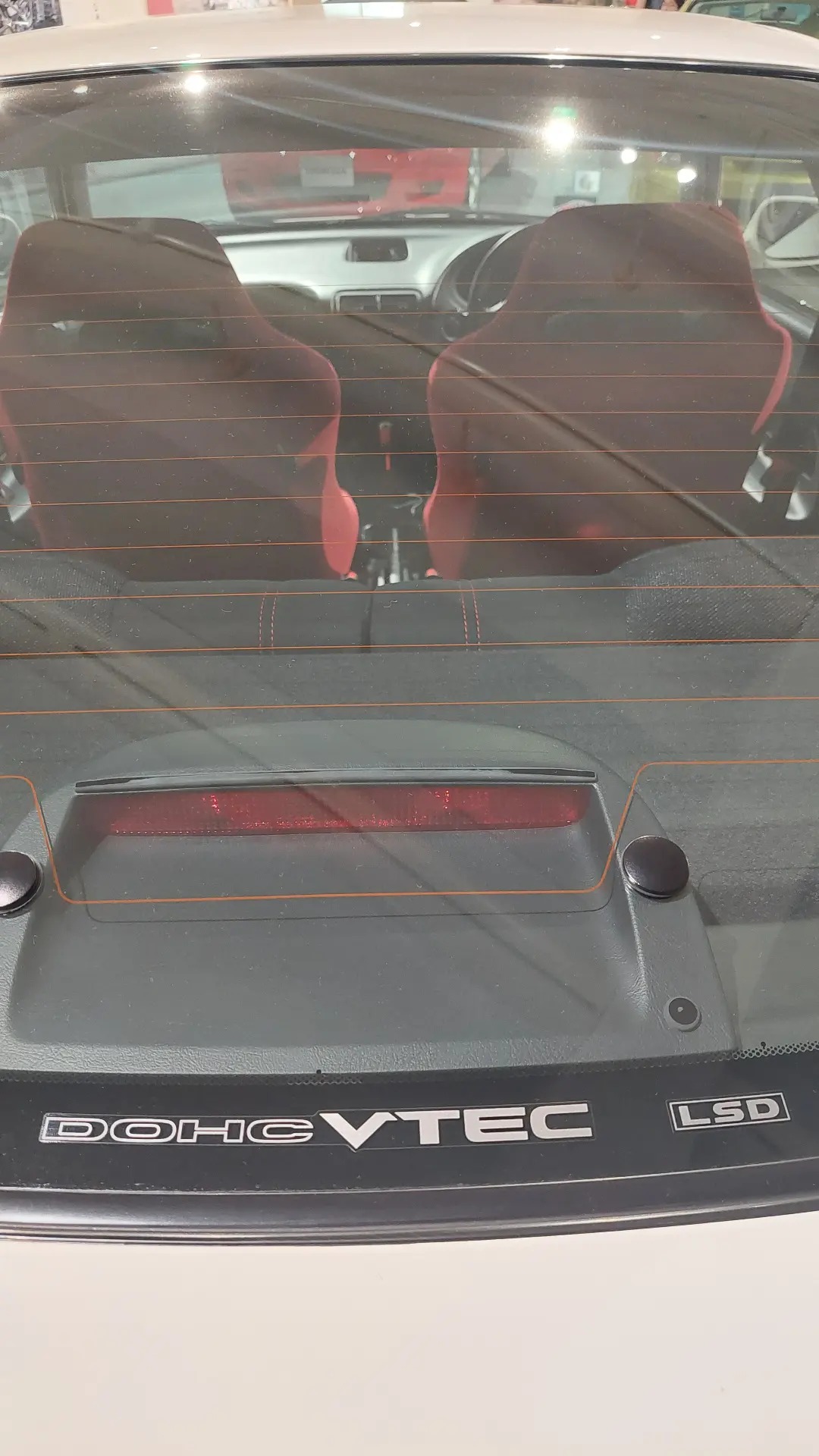
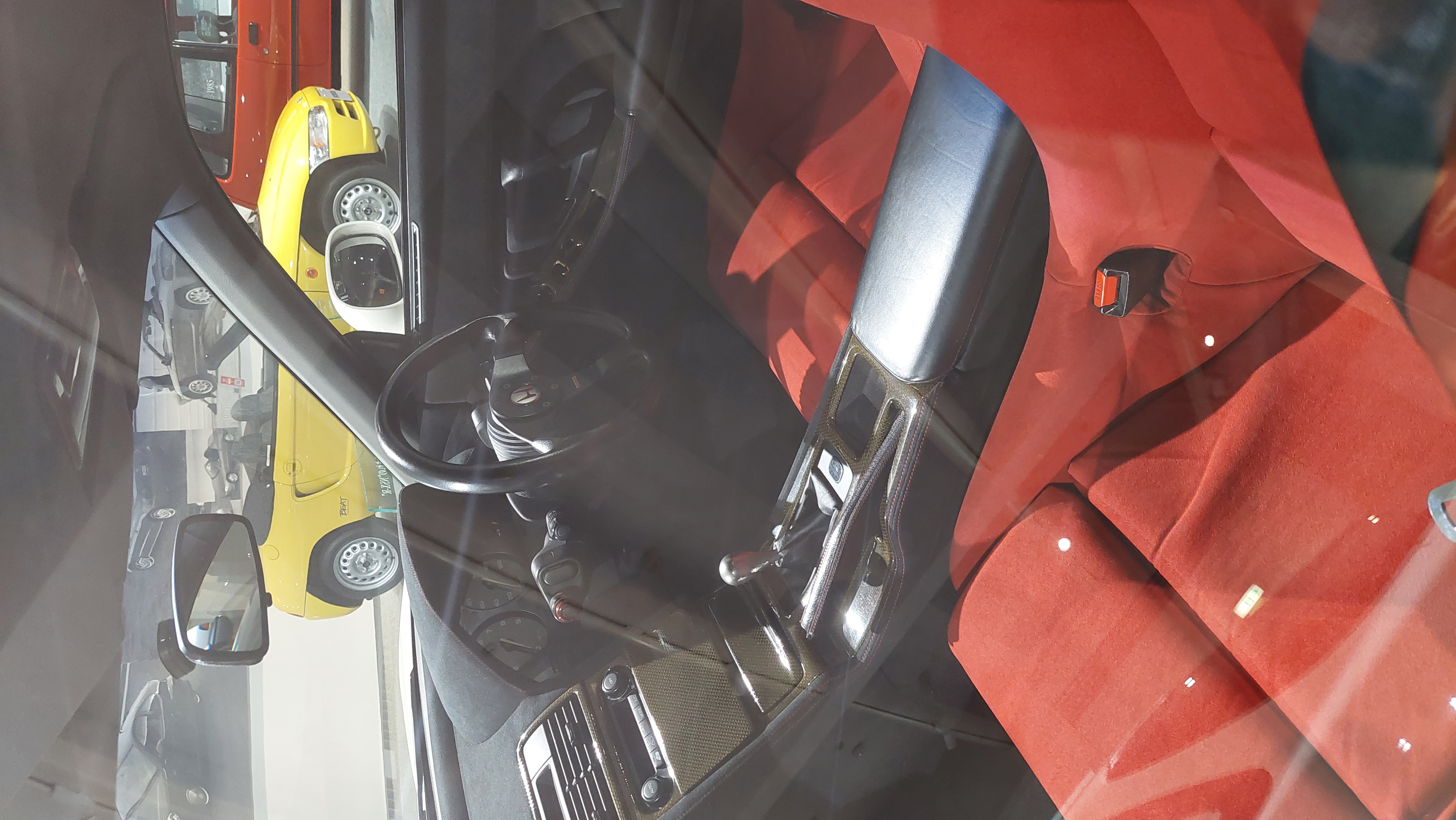
I spent a long time with the Integra Type R. The DC2 is one of those cars that's almost impossible to find today, and when you do, the prices are insane. But in the 90s, it was just a fast Honda. Here in the museum, you can get close enough to see the red Recaro seats through the rear window, the DOHC VTEC badge, the LSD emblem. Every detail that made this car special is preserved exactly as it left the factory. No aftermarket wheels, no lowered suspension, no modifications. Pure stock. Which is almost harder to find than the car itself.
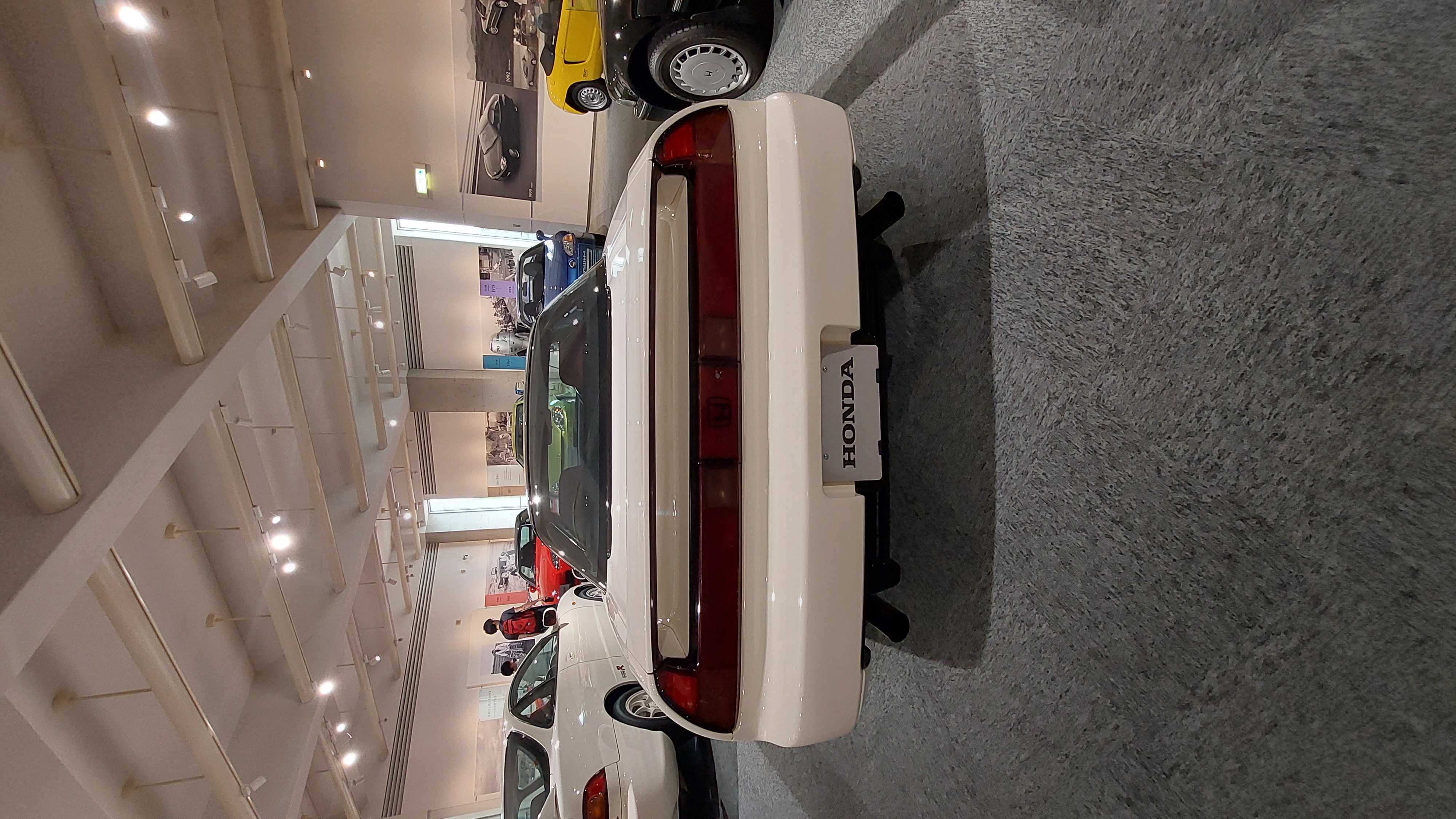
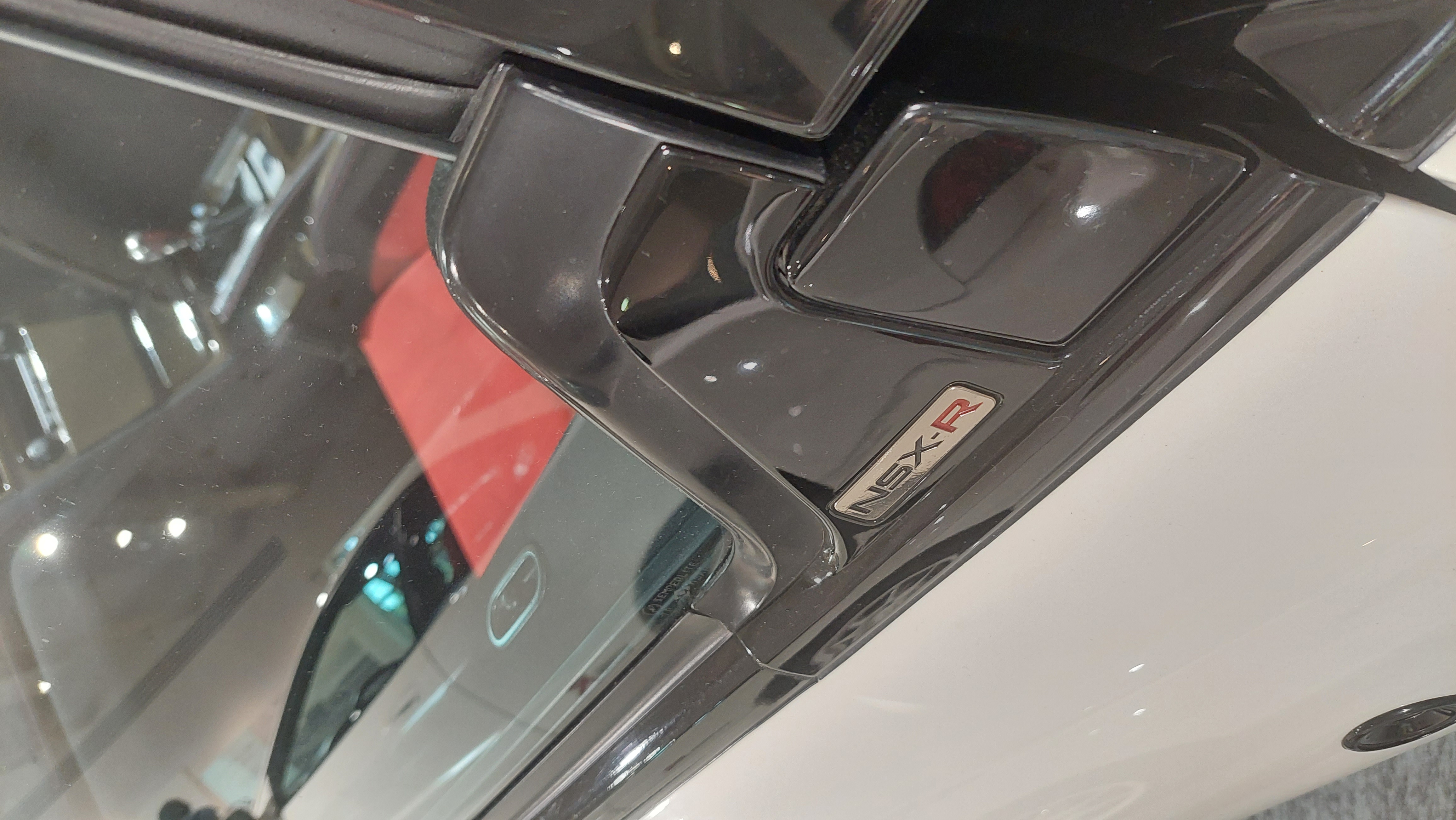
The NSX-R stood a few meters away, and I have a photo of just the badge on the B-pillar. That small "NSX-R" emblem, white car, black roof - you don't need to see the whole vehicle. If you know, you know. Ayrton Senna tested the original NSX prototype at Suzuka and gave Honda his feedback on the chassis. The R version stripped it further, made it lighter, sharper. Seeing it here, at Honda's own circuit, felt right. This is where it belongs.
Racing Heritage
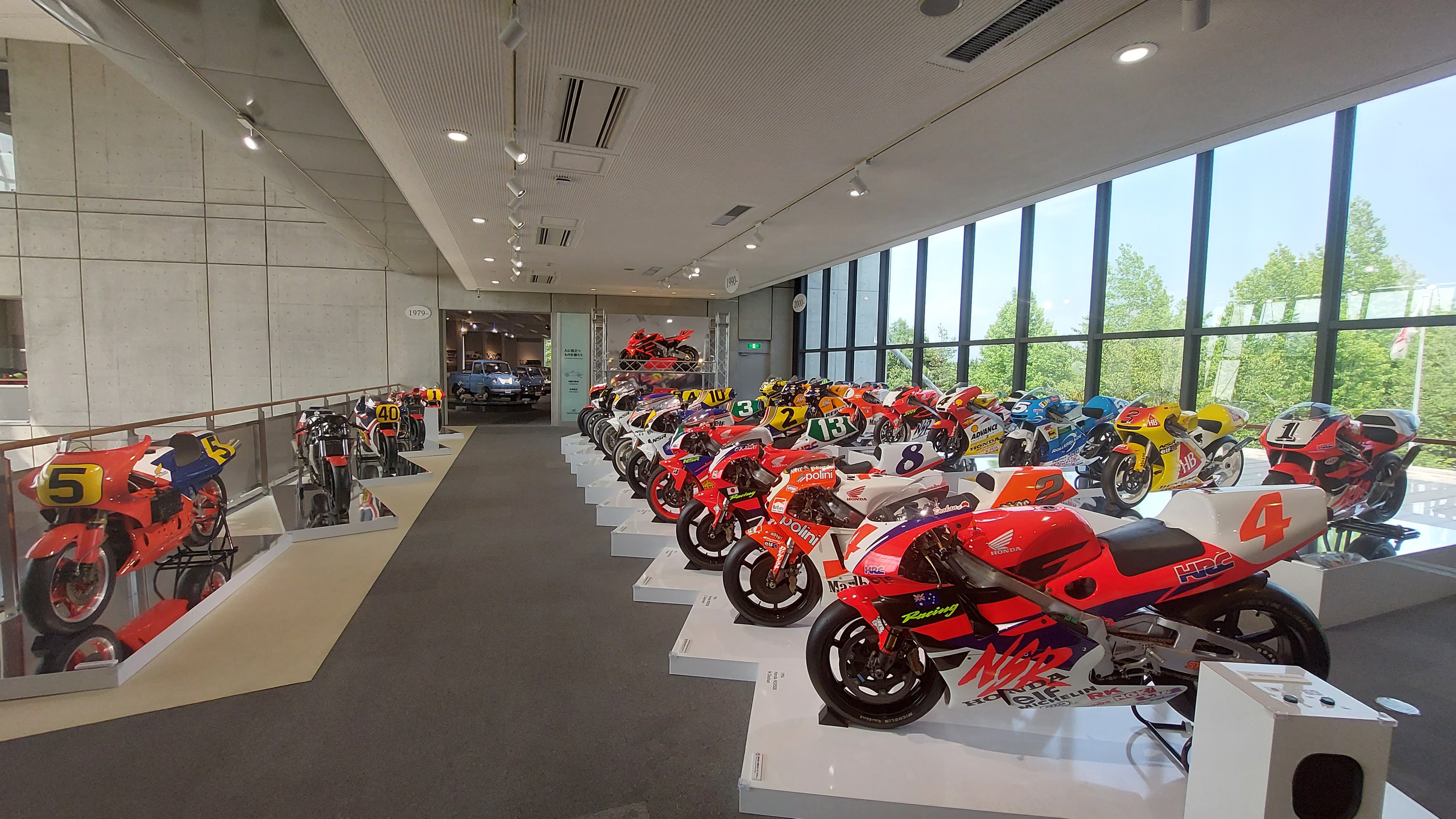
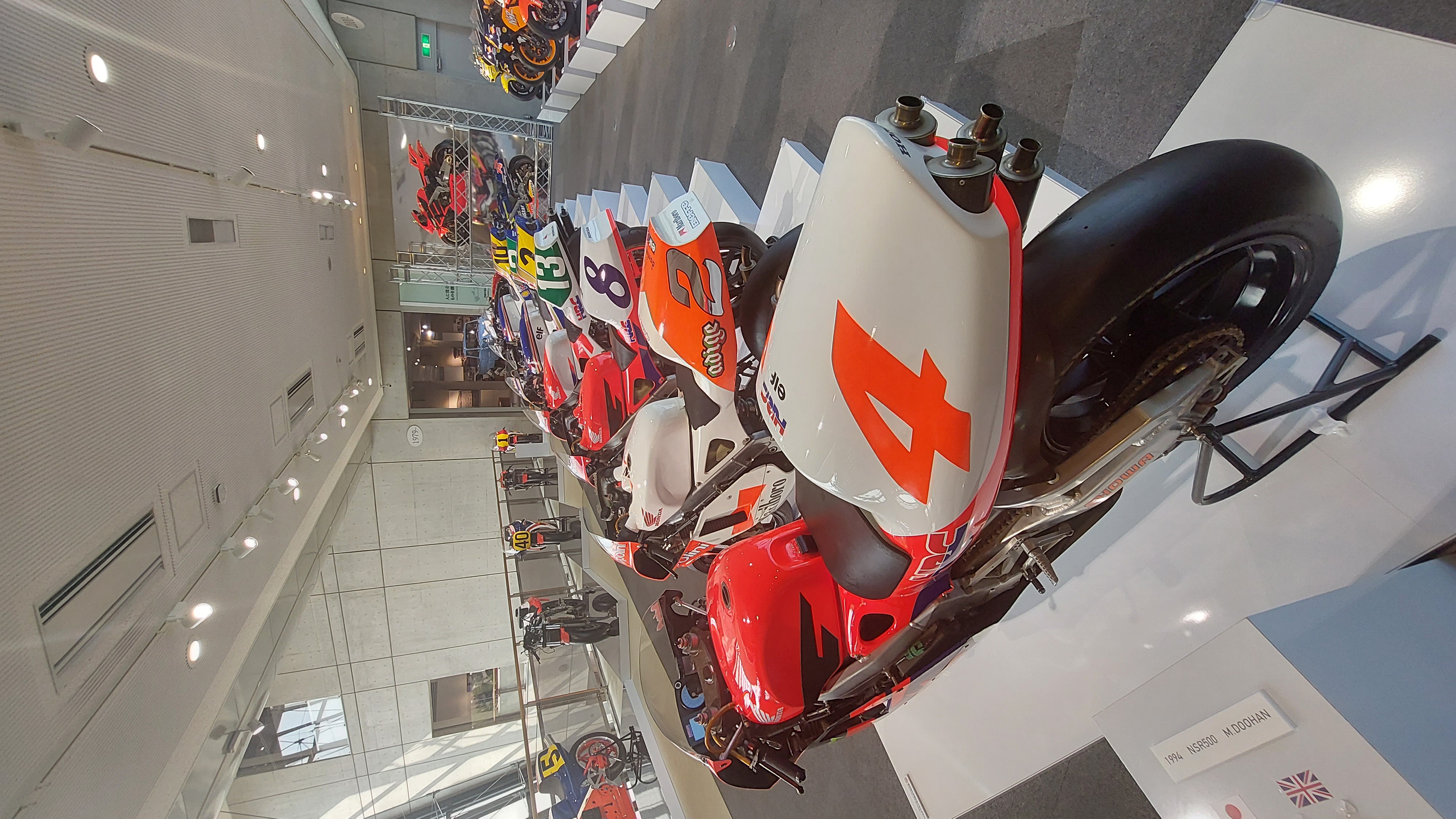
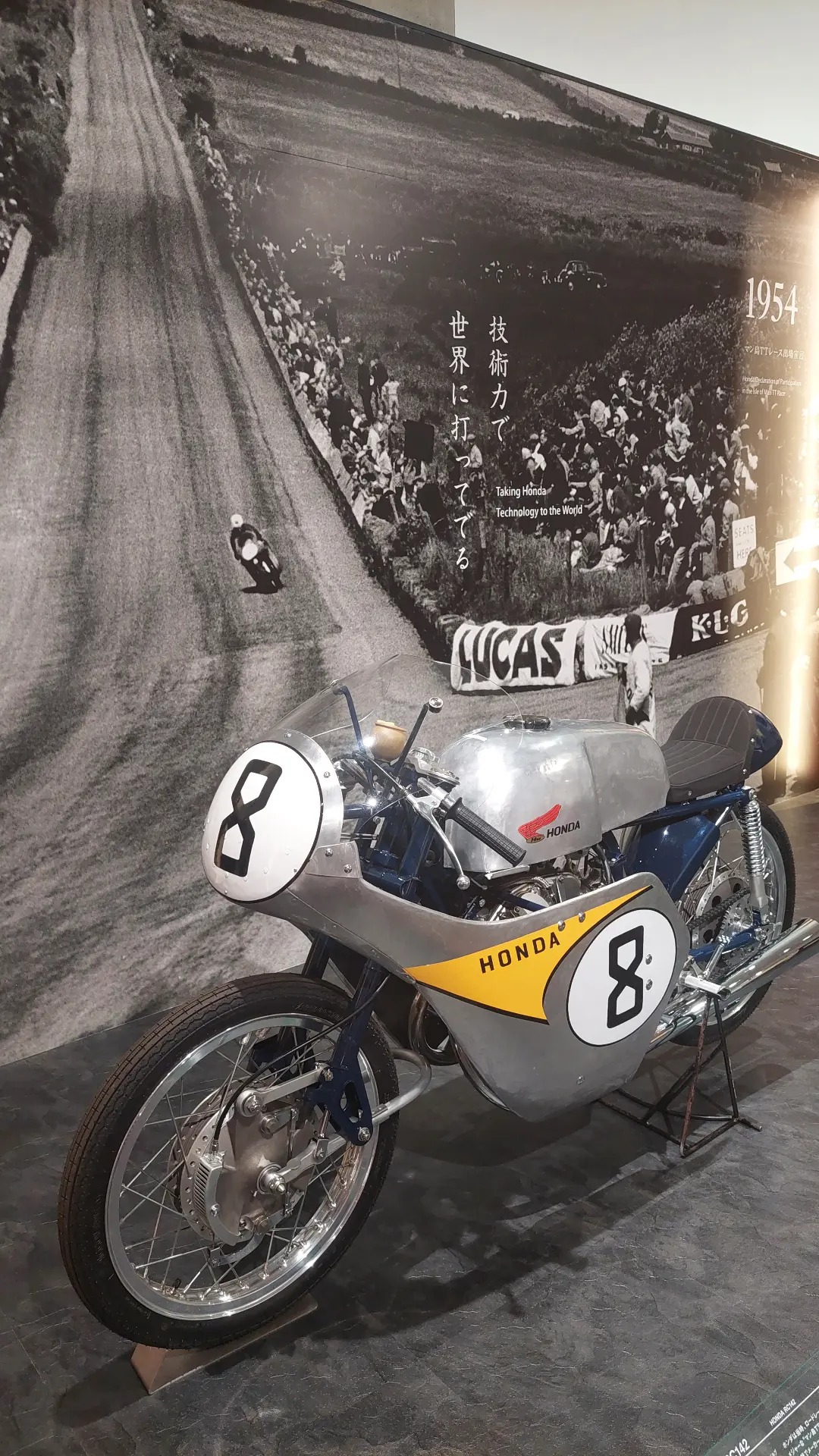
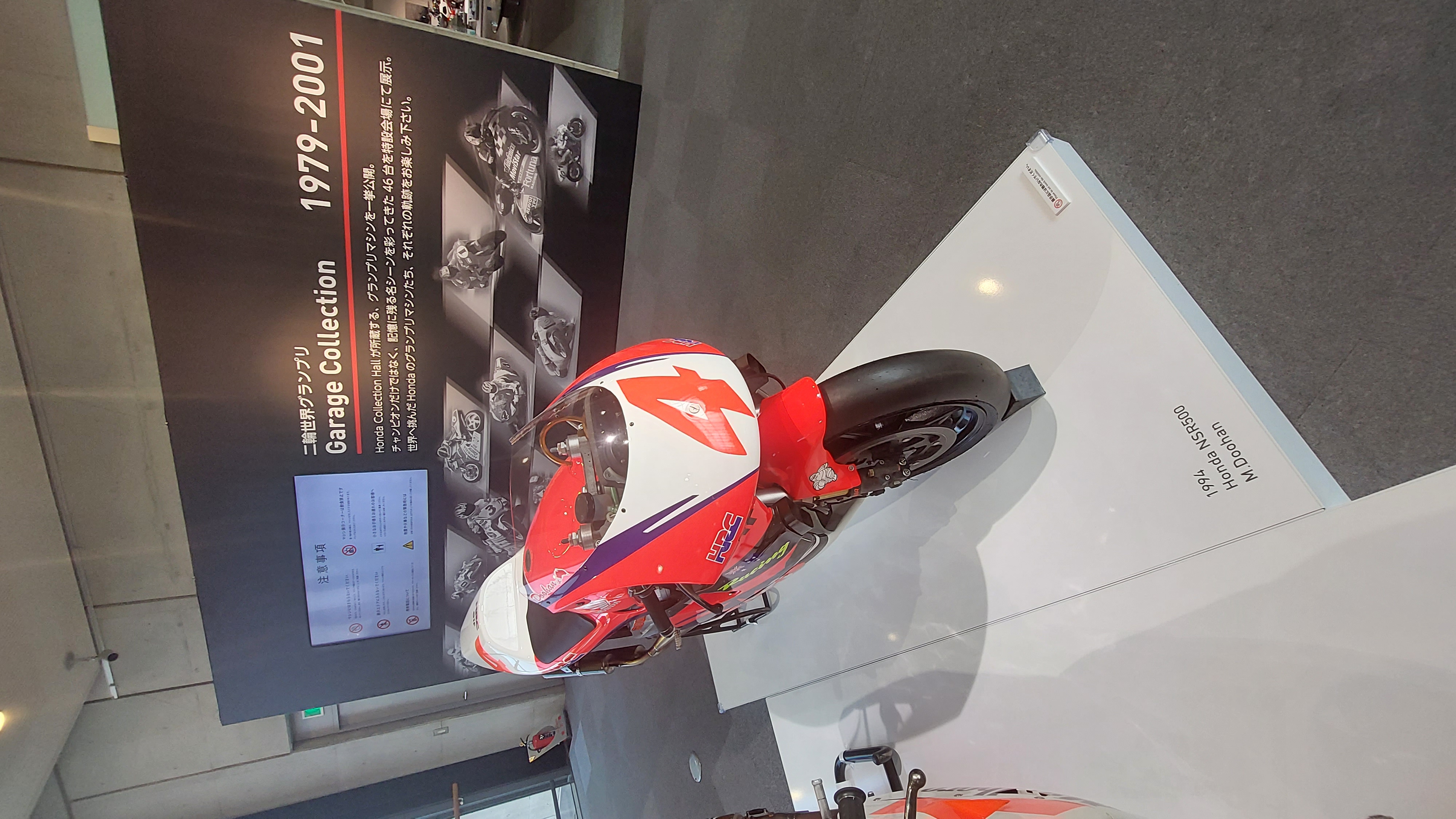
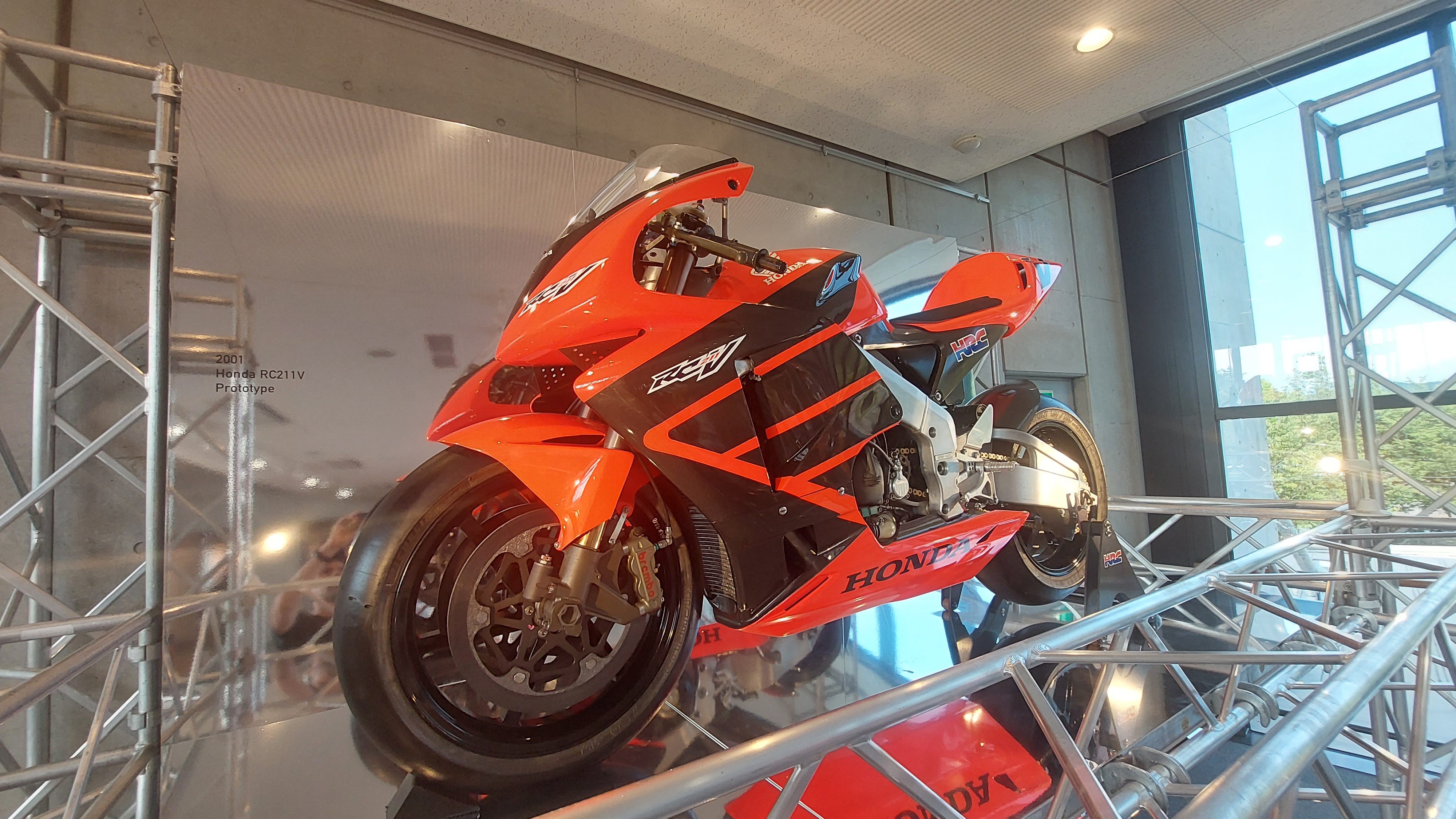
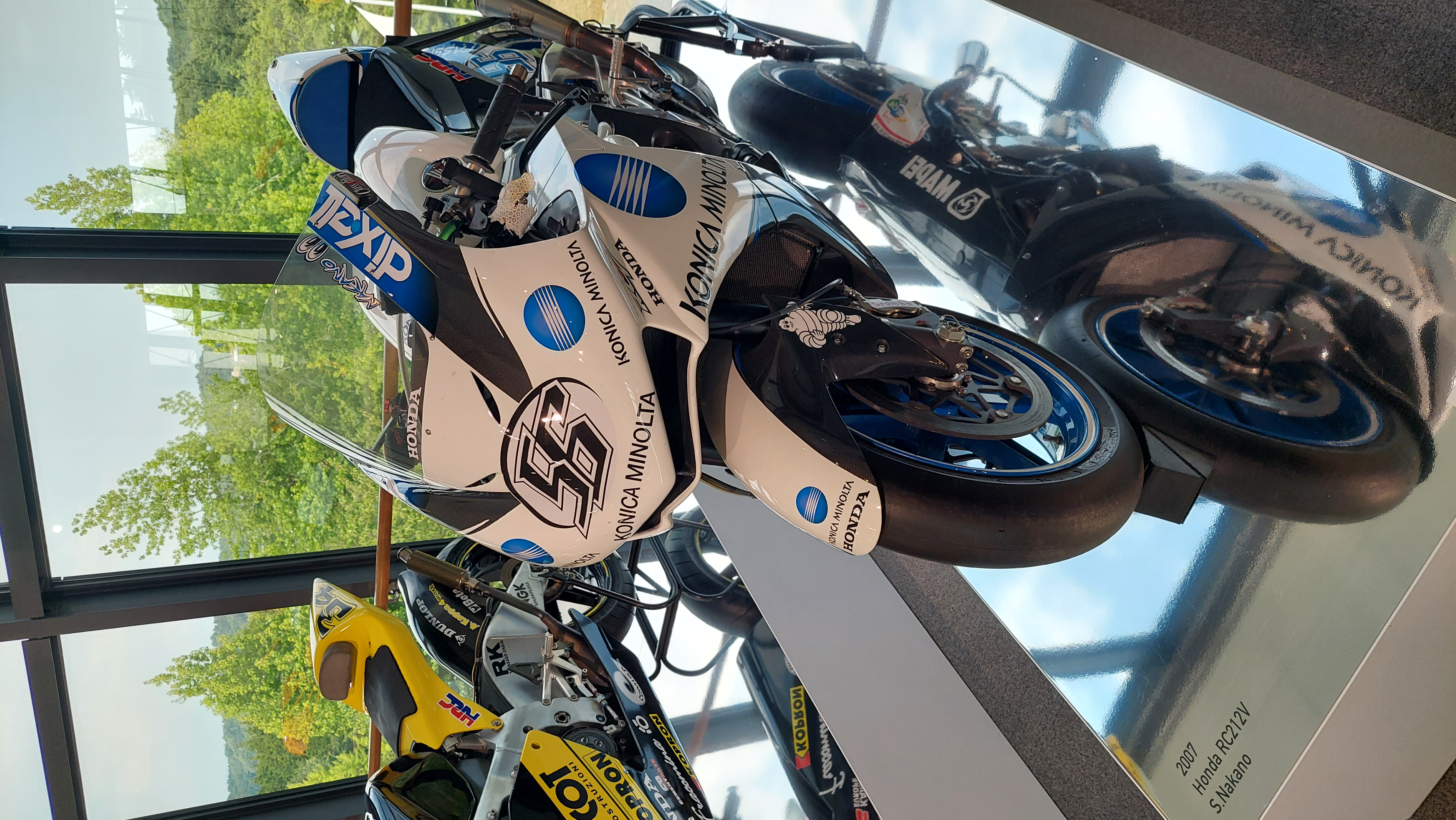
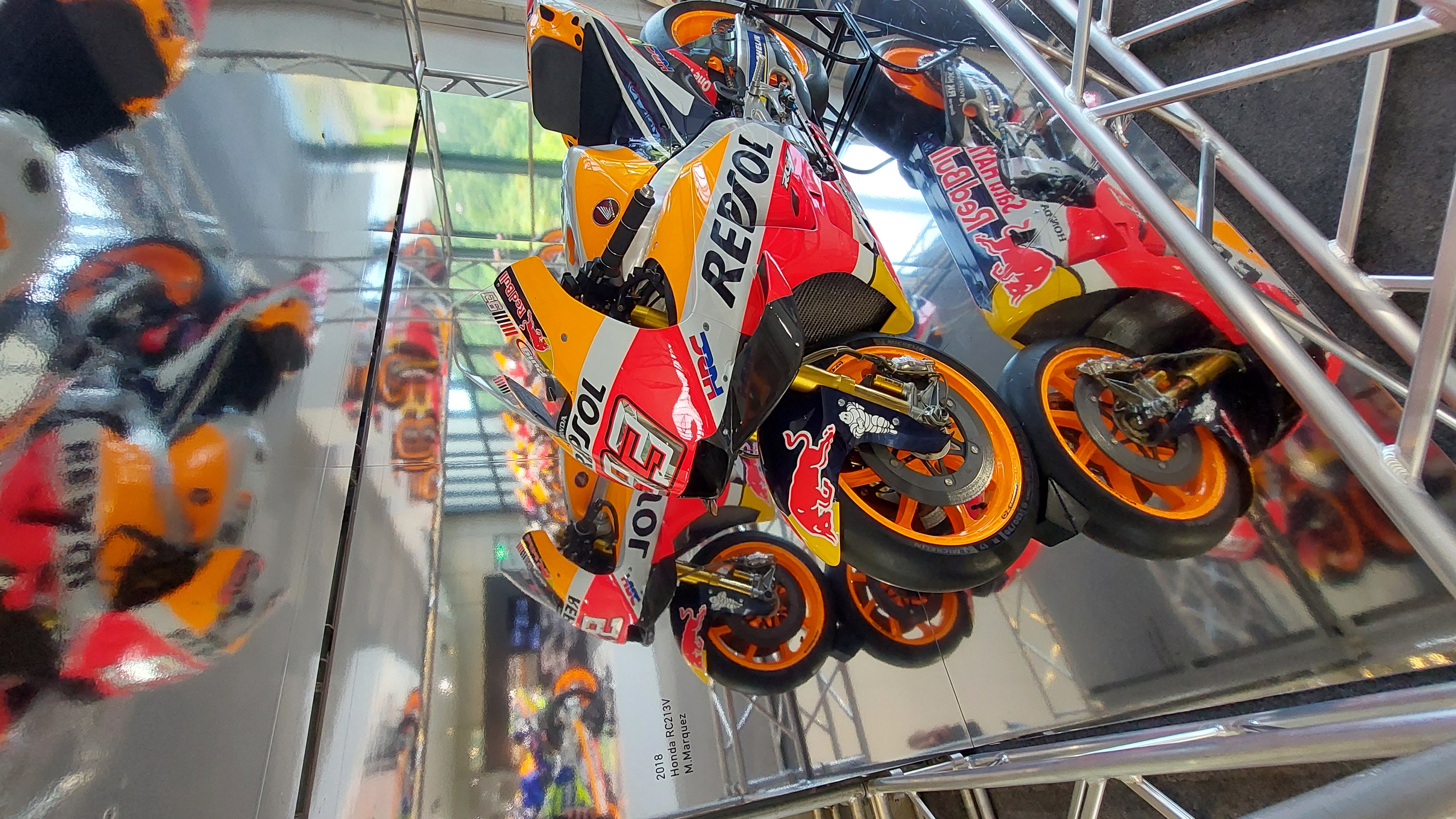
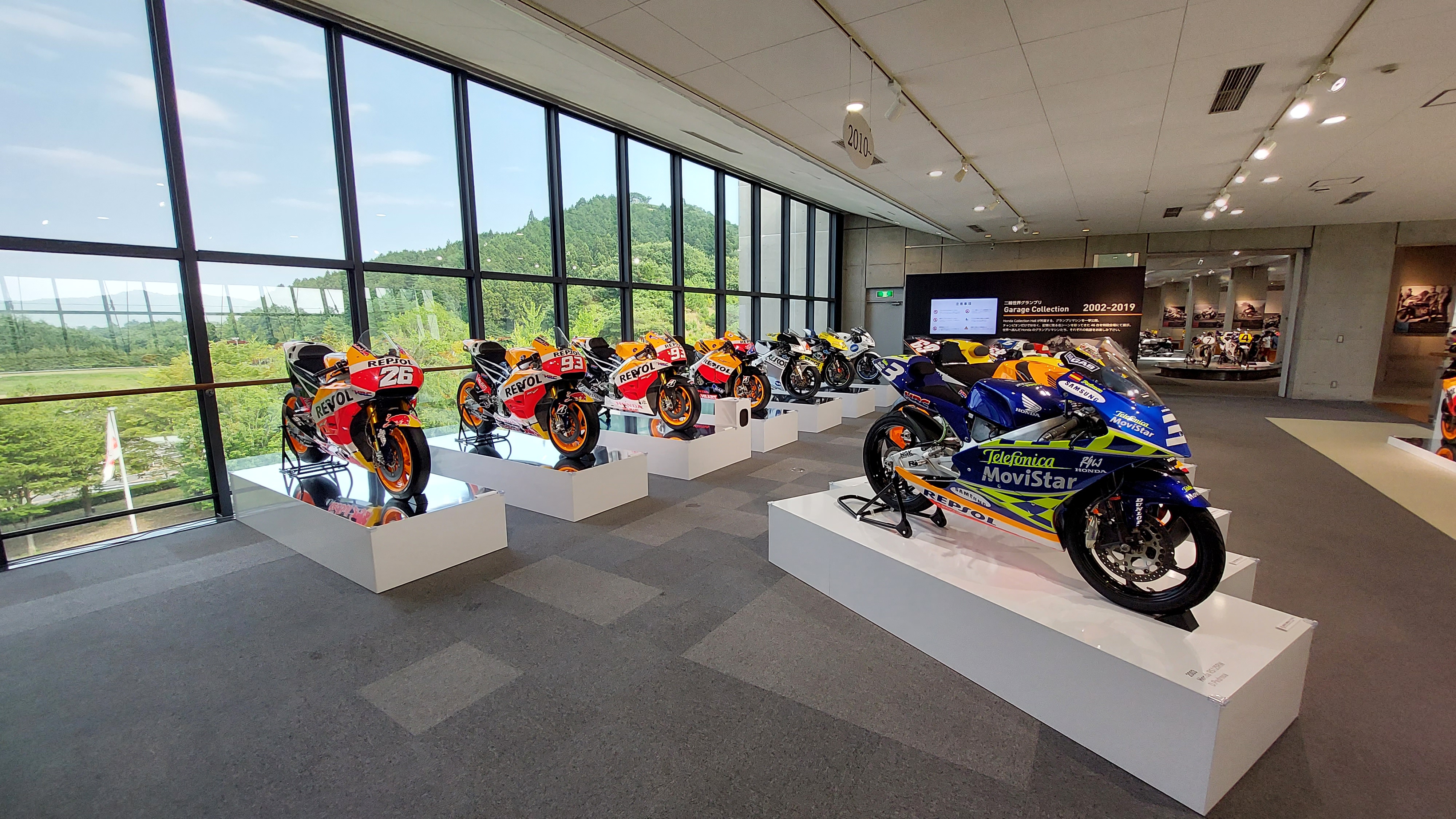
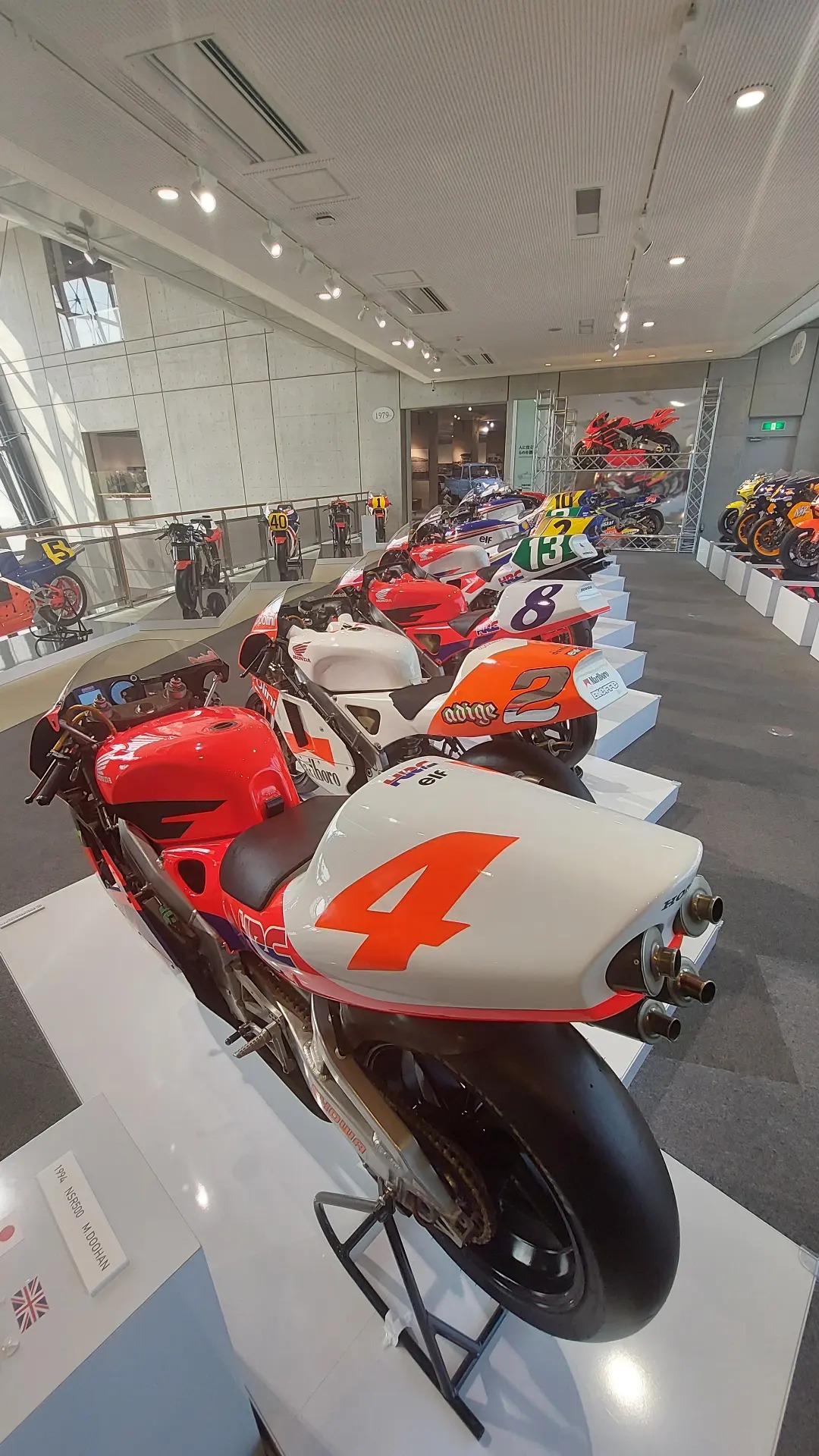
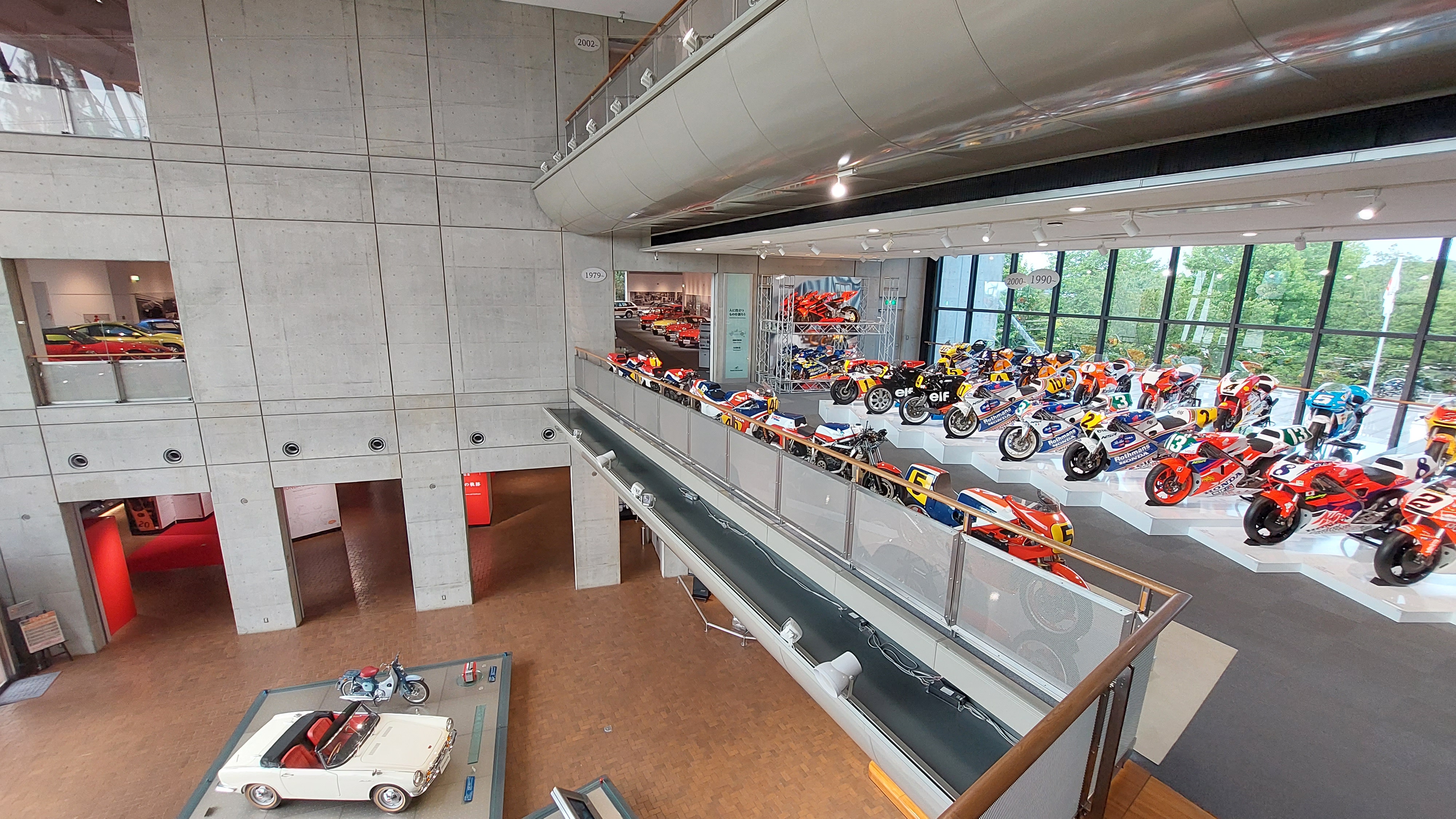
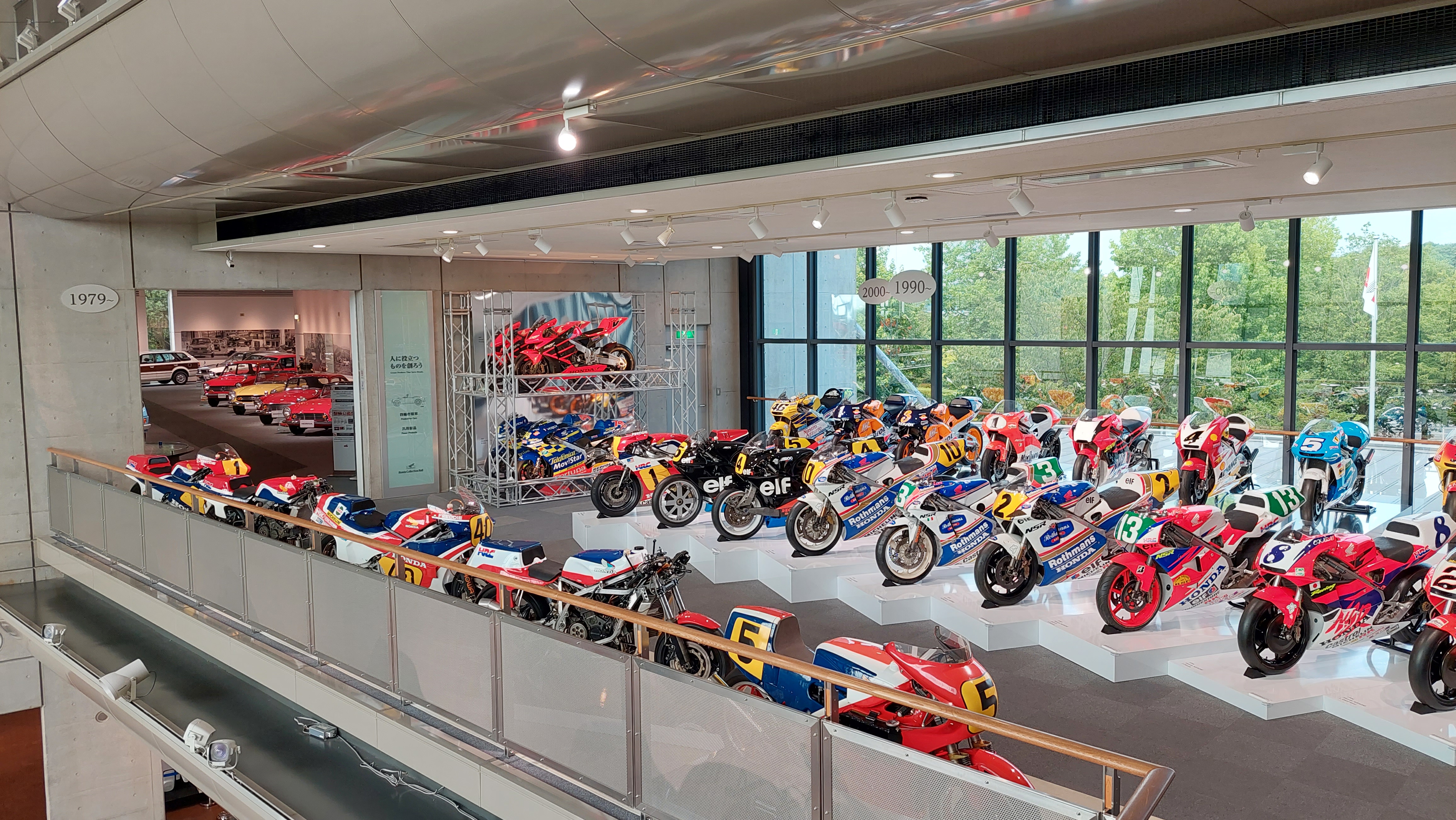
The second floor is motorcycles and racing, and it's almost overwhelming. An entire wall of MotoGP bikes, from the early Grand Prix machines to the modern NSR series, each on its own stand, each in race livery. The colors alone are extraordinary - red and white Repsol Hondas, yellow and blue Rothmans cars, silver and black machines from every decade of Grand Prix racing. It's like looking at a timeline of speed.
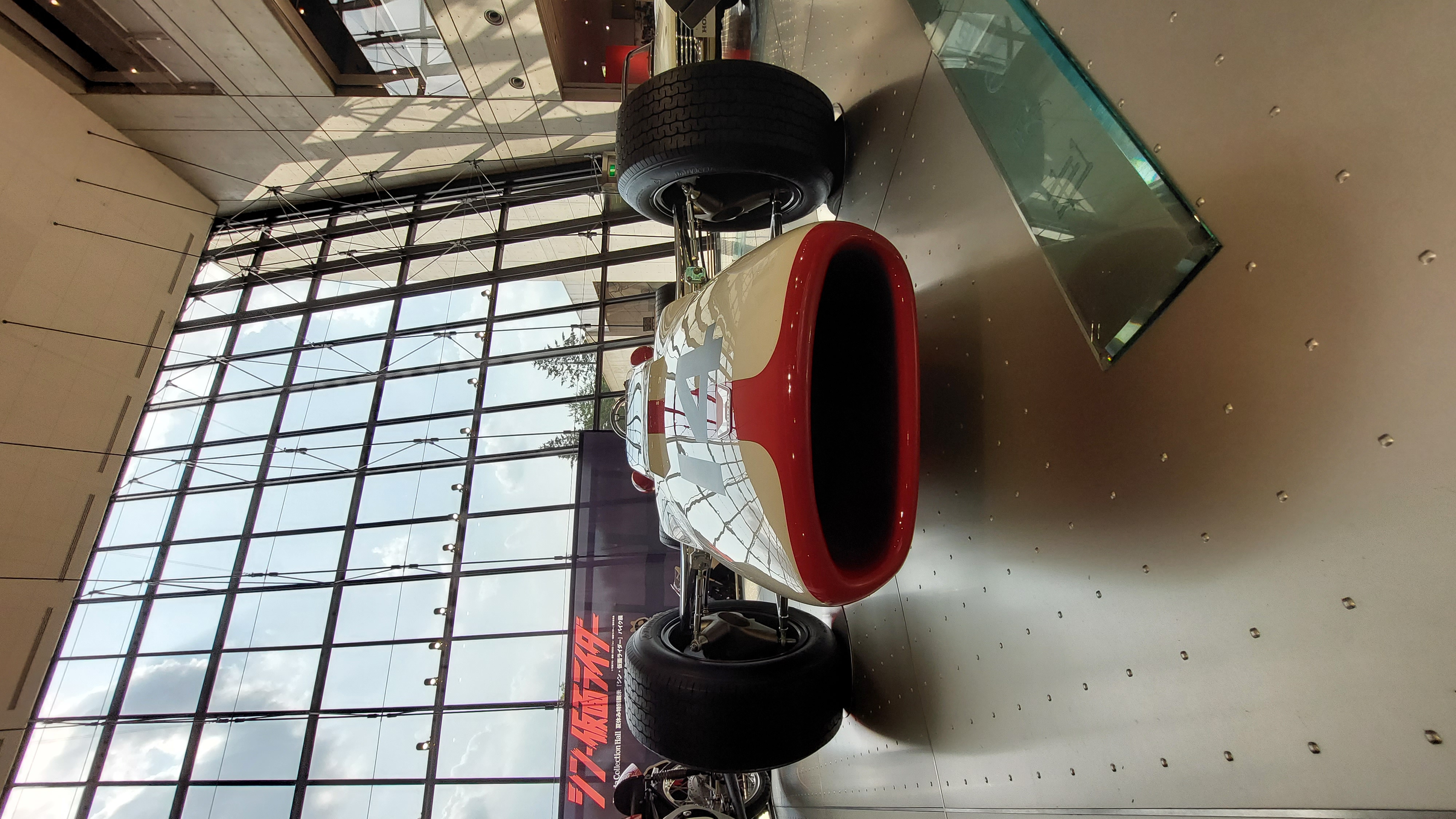
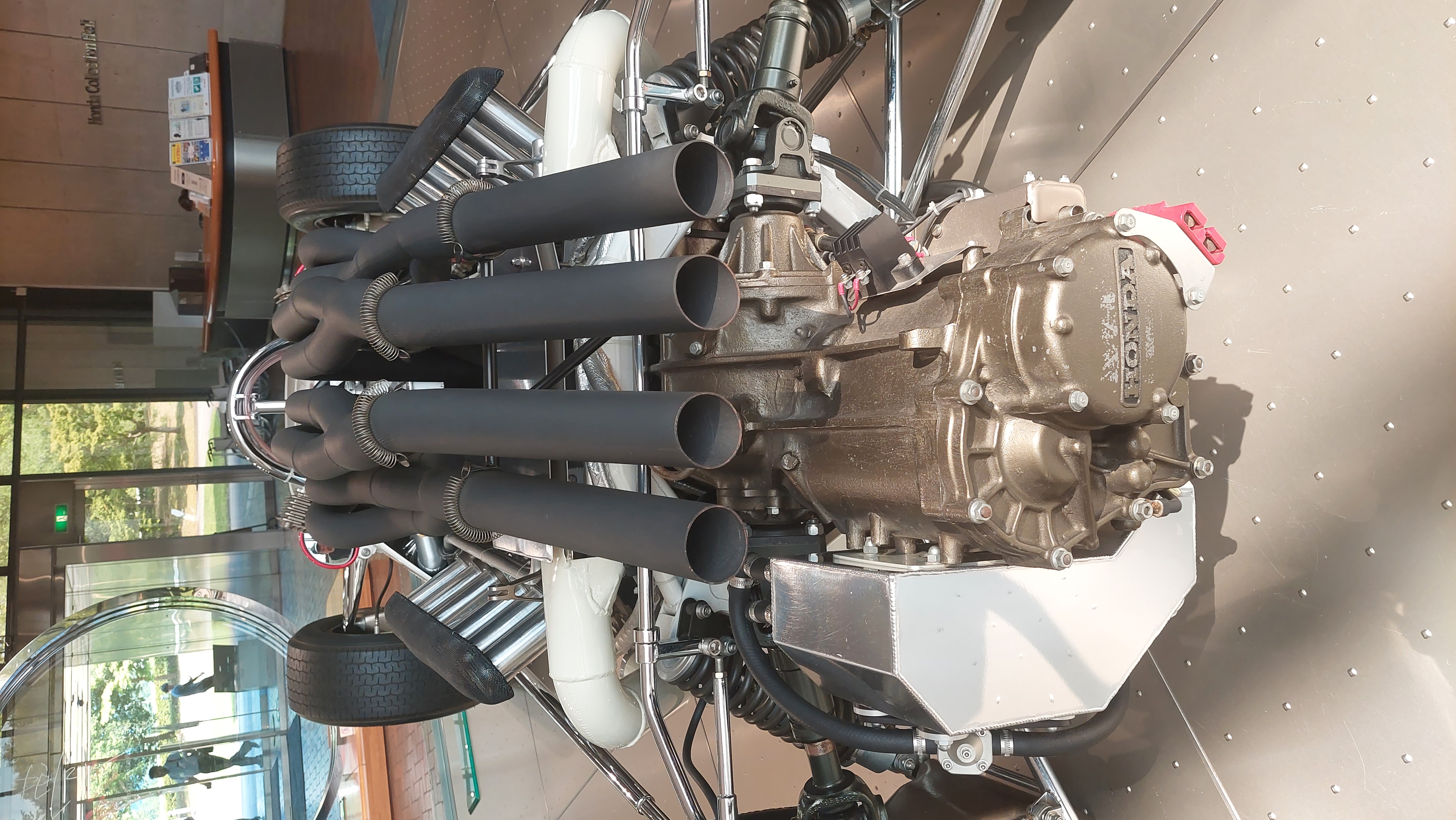
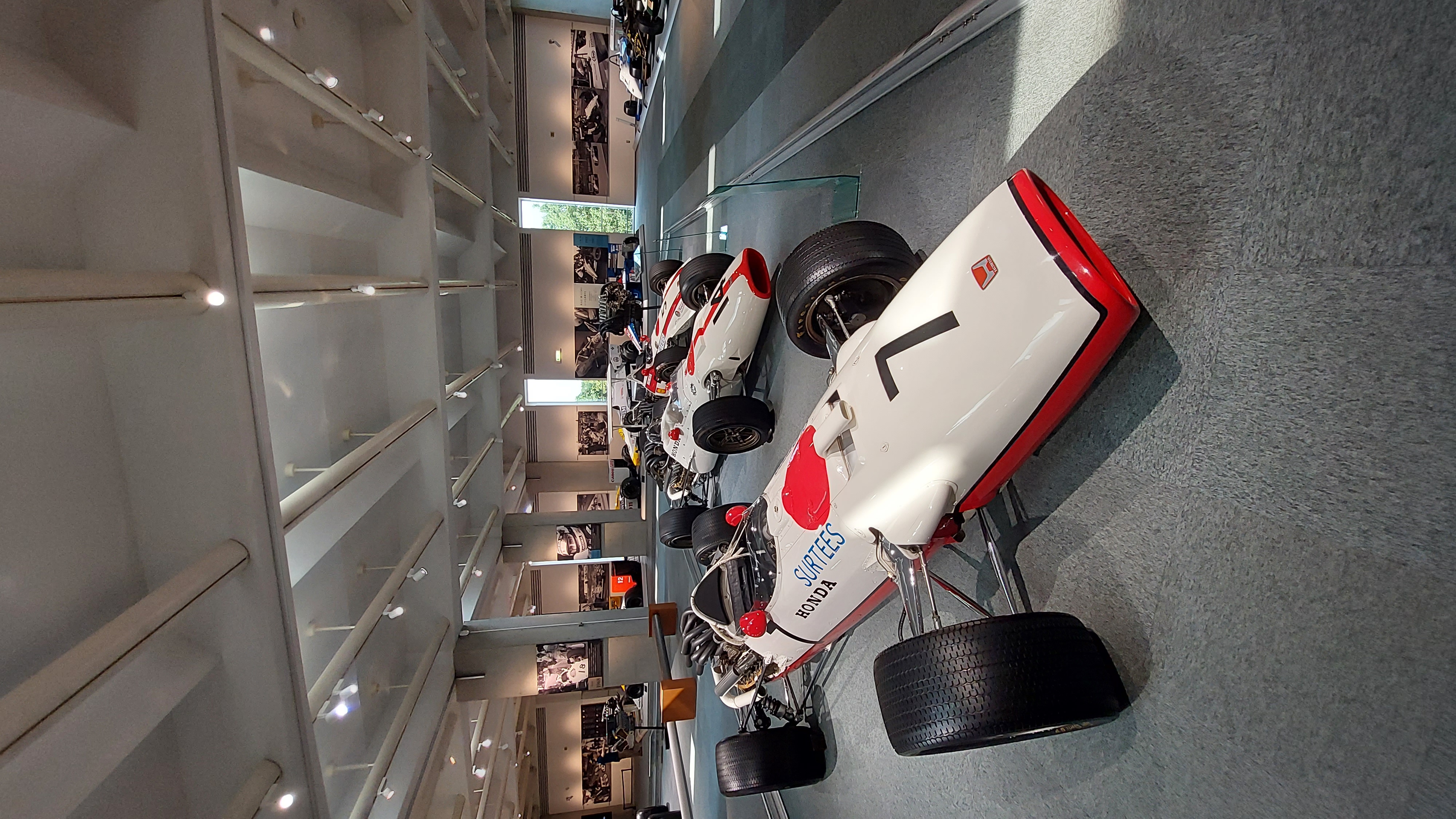
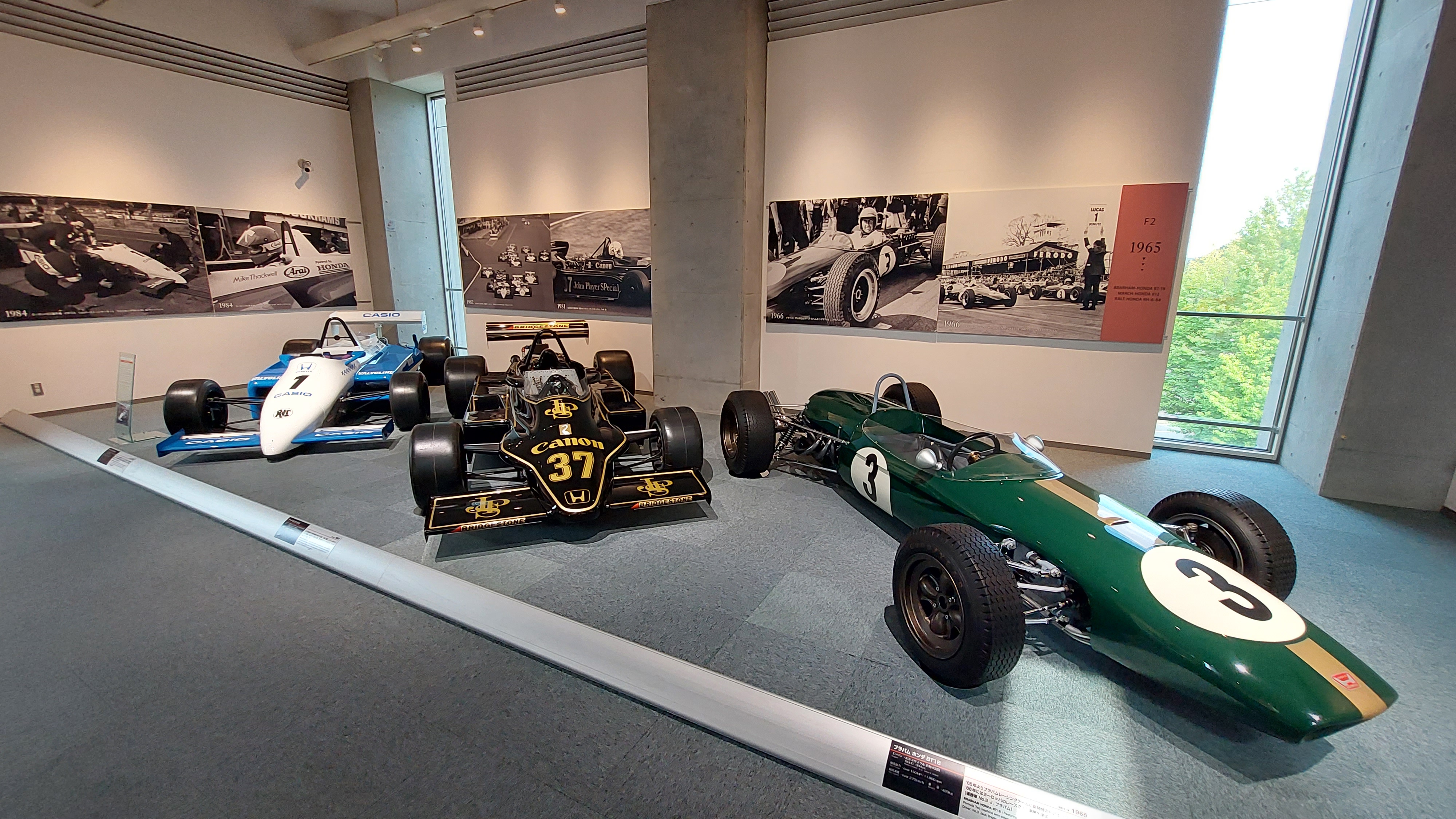
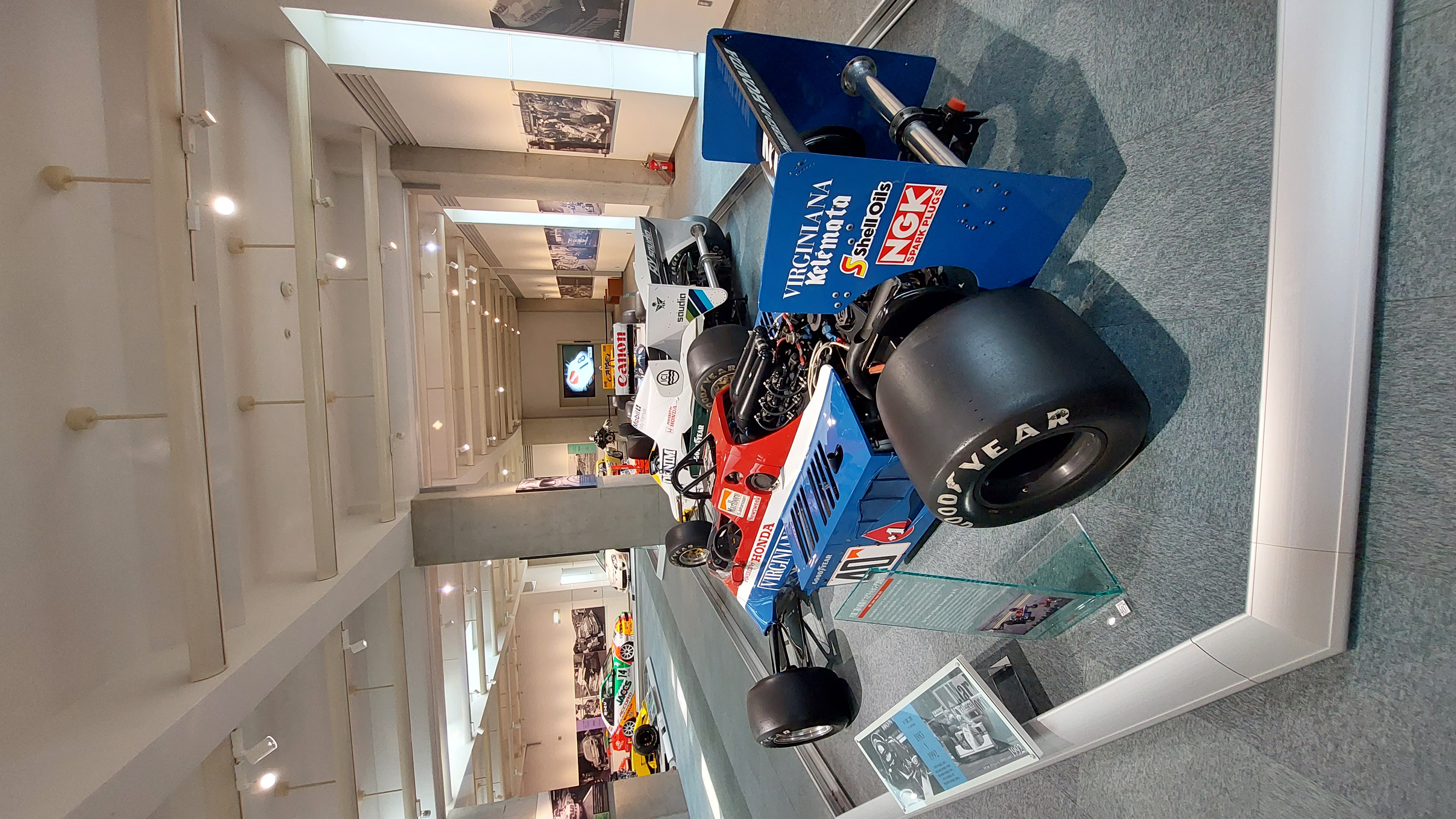
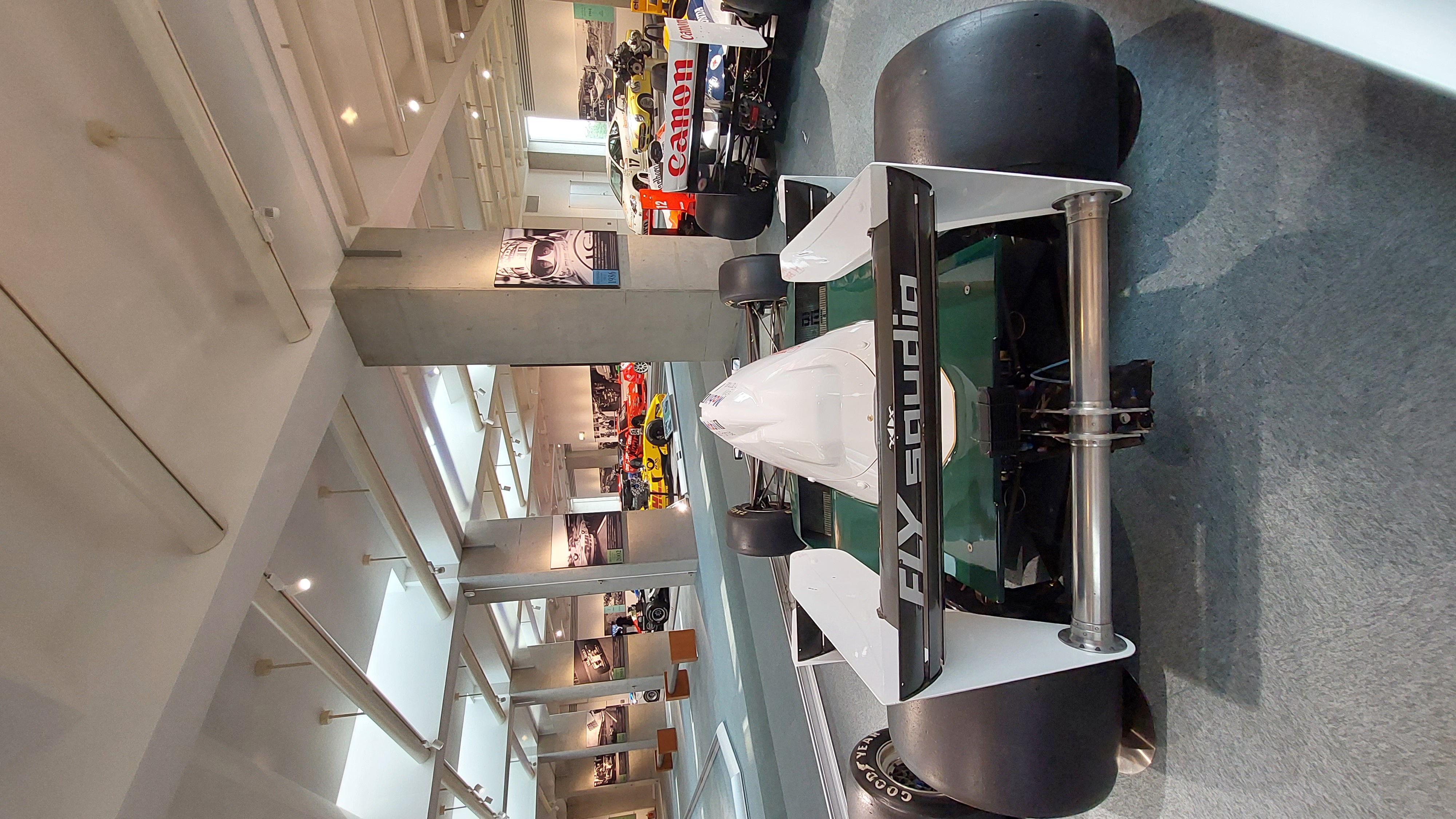
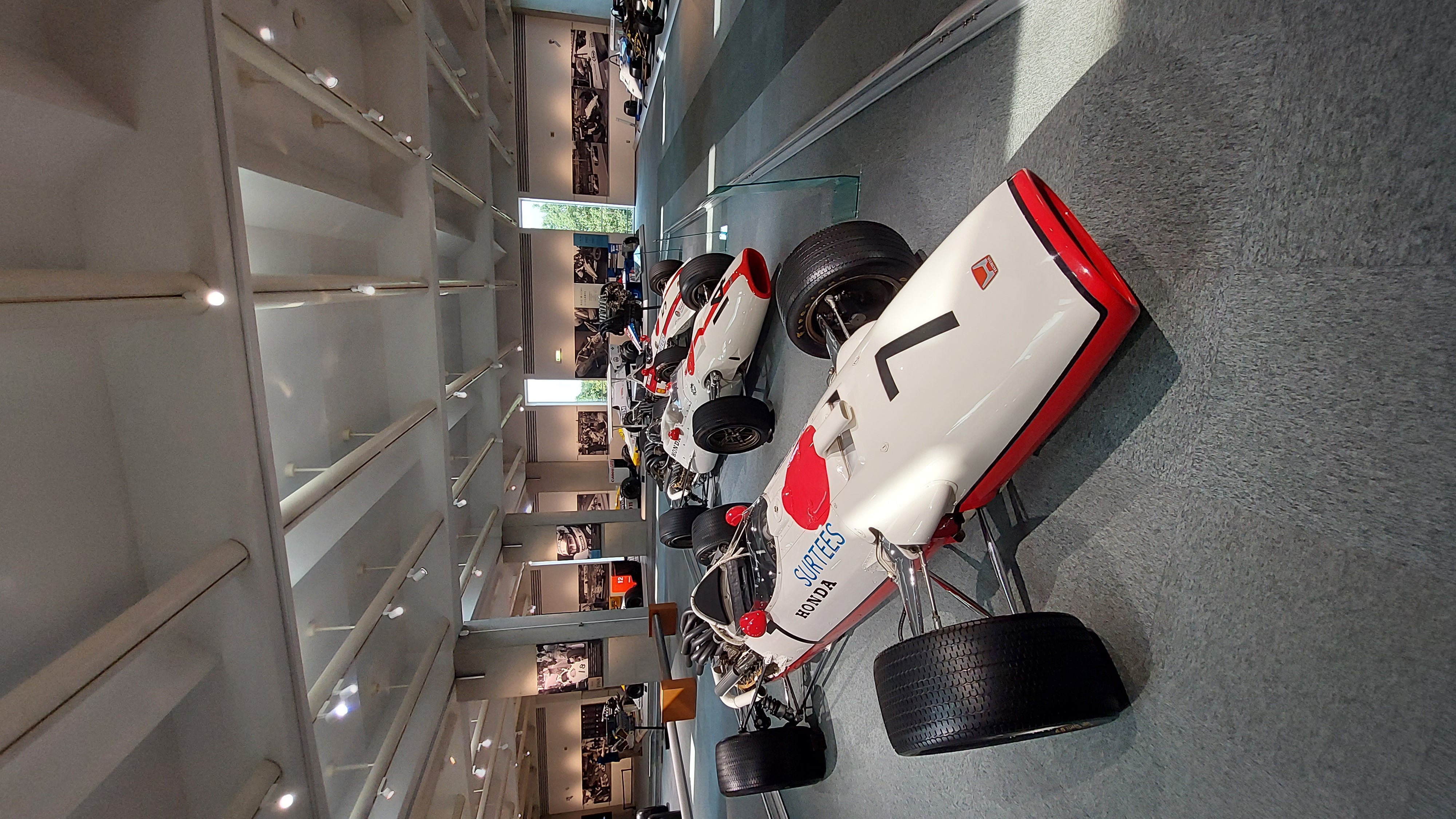
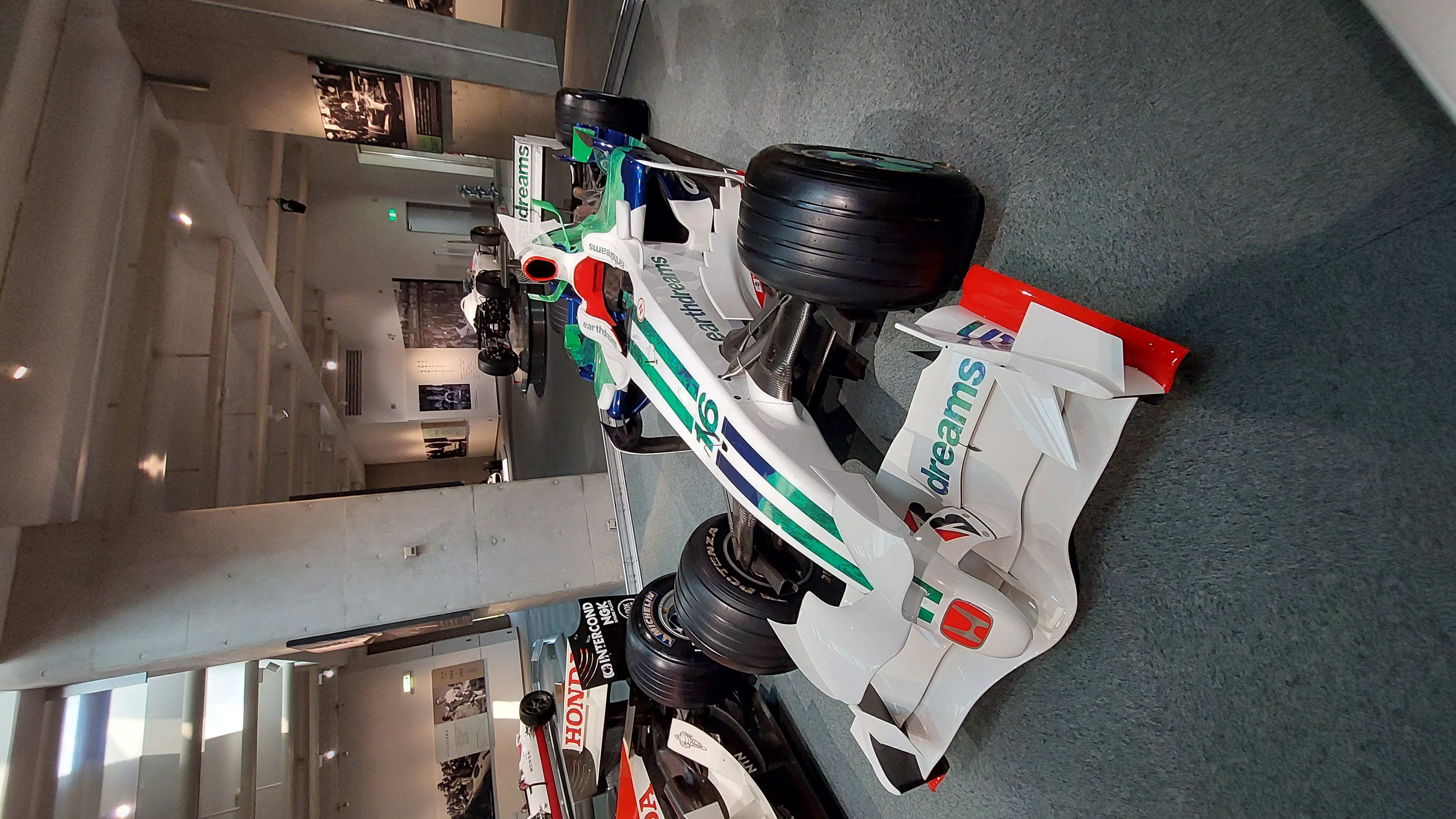
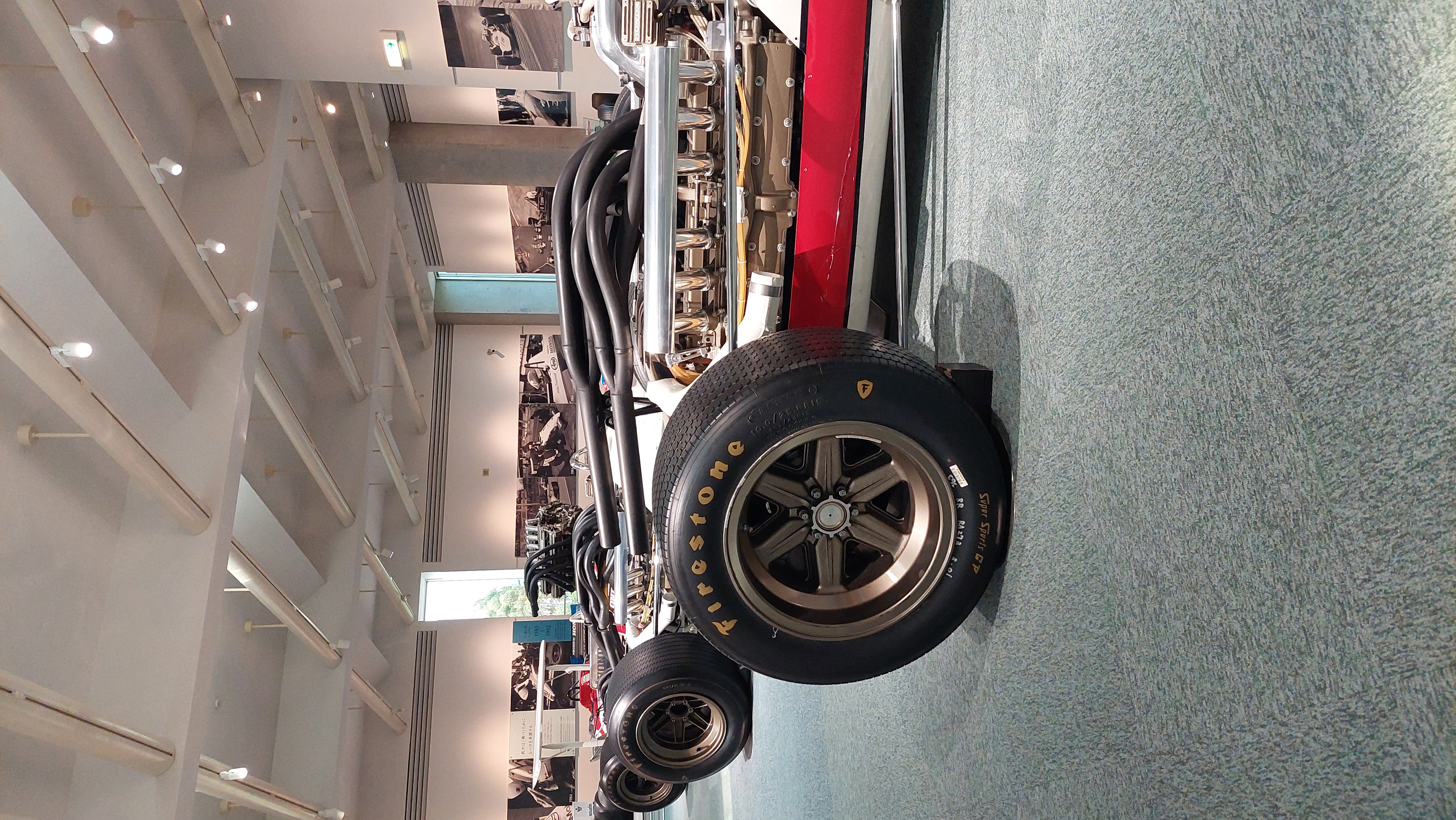
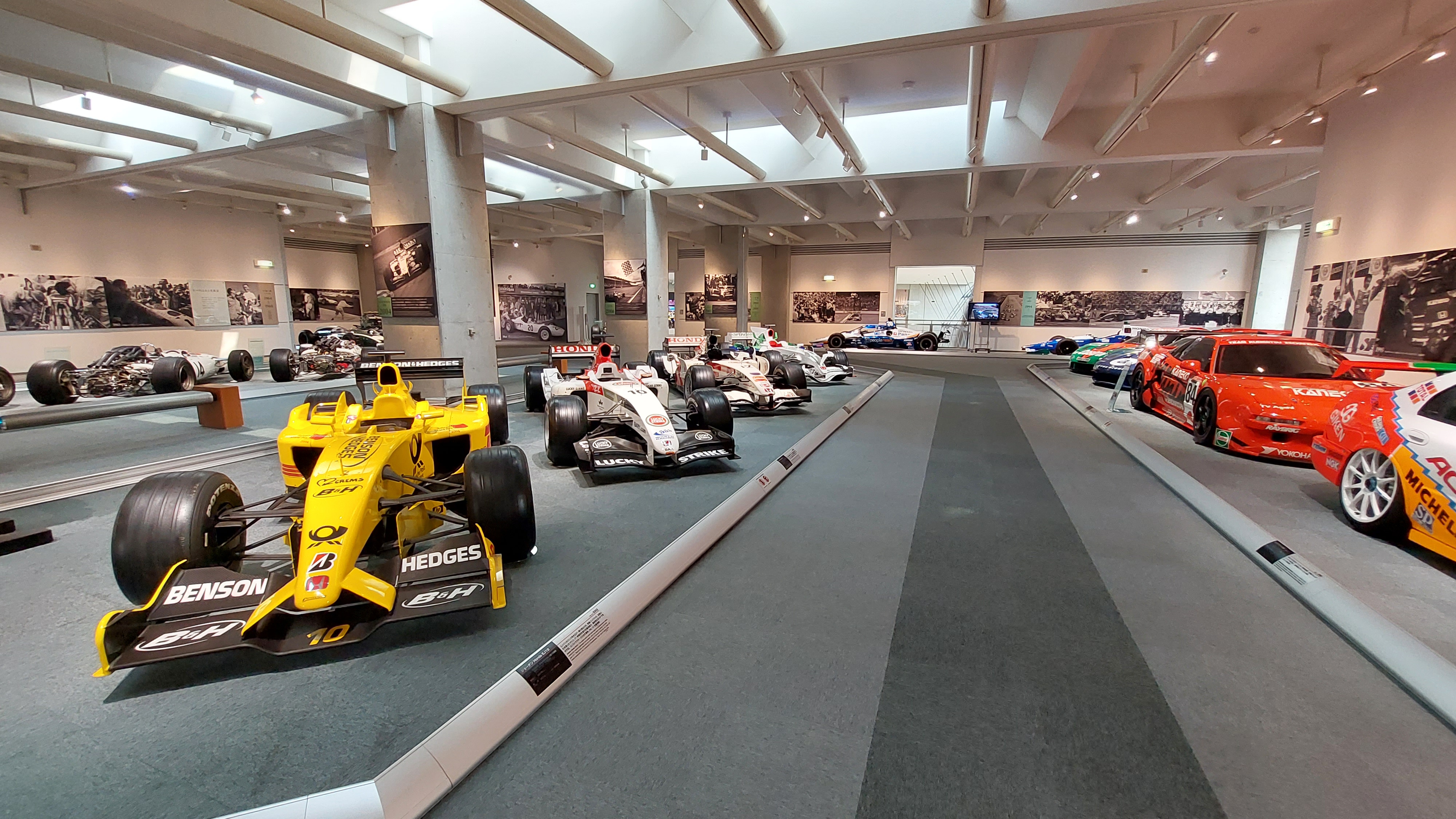
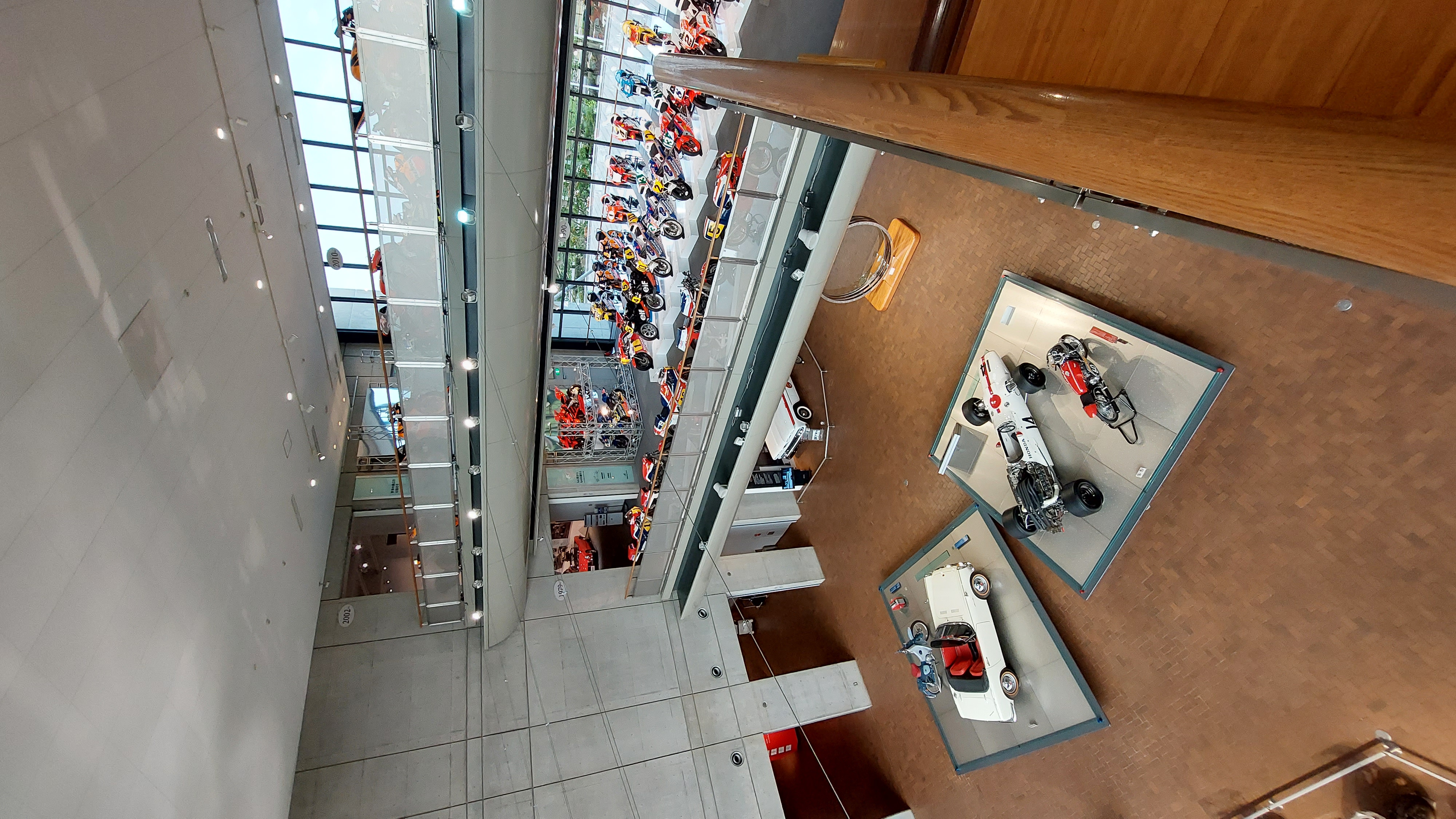
Downstairs, the Formula 1 cars. The RA272 that gave Honda its first F1 victory. The McLaren-Honda machines from the Senna-Prost era. And if you get close to the F1 car with the exposed engine, you can see the Firestone tires, the exhaust headers, the engineering on full display. No bodywork hiding anything. Just the raw machine.
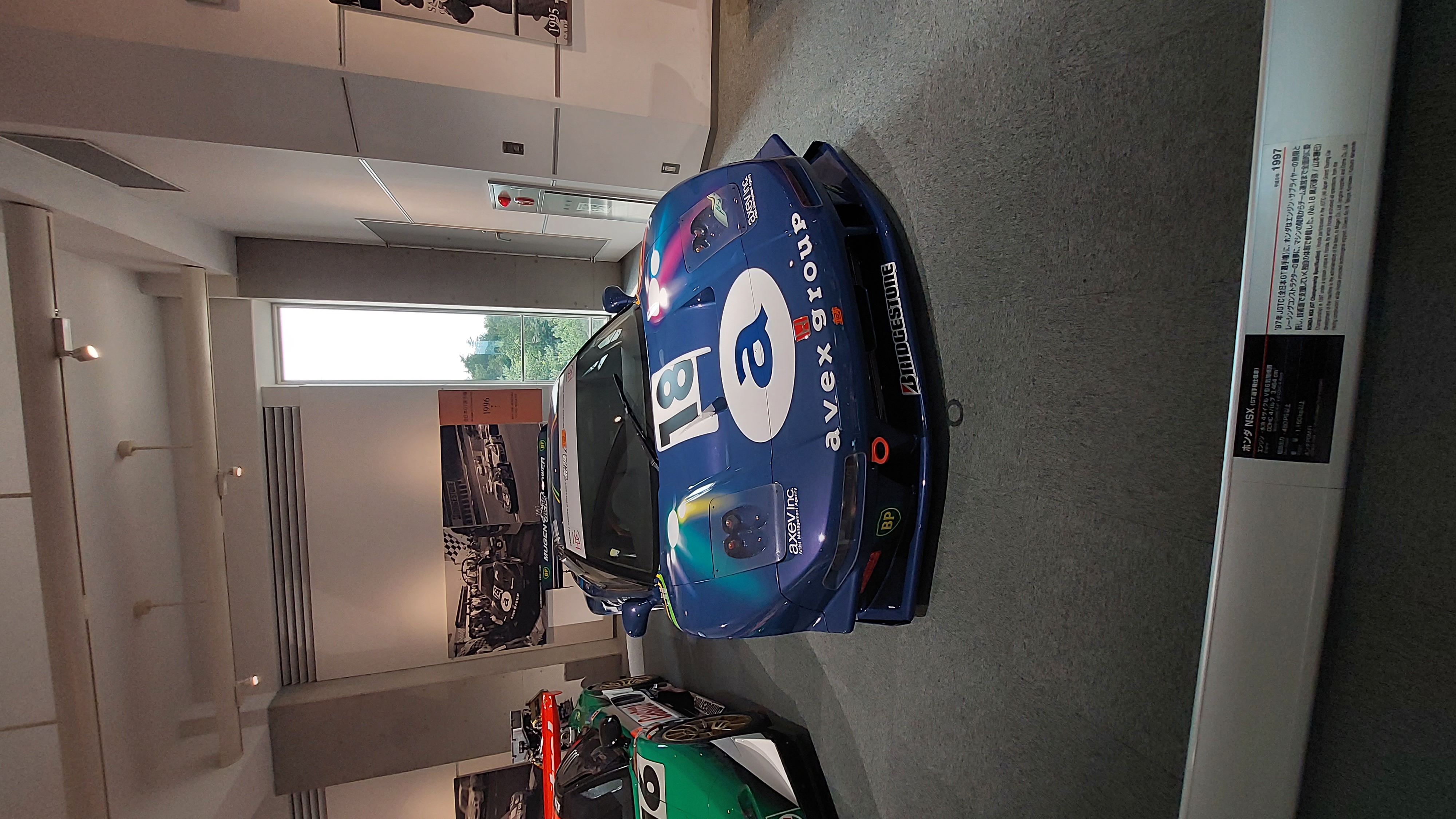
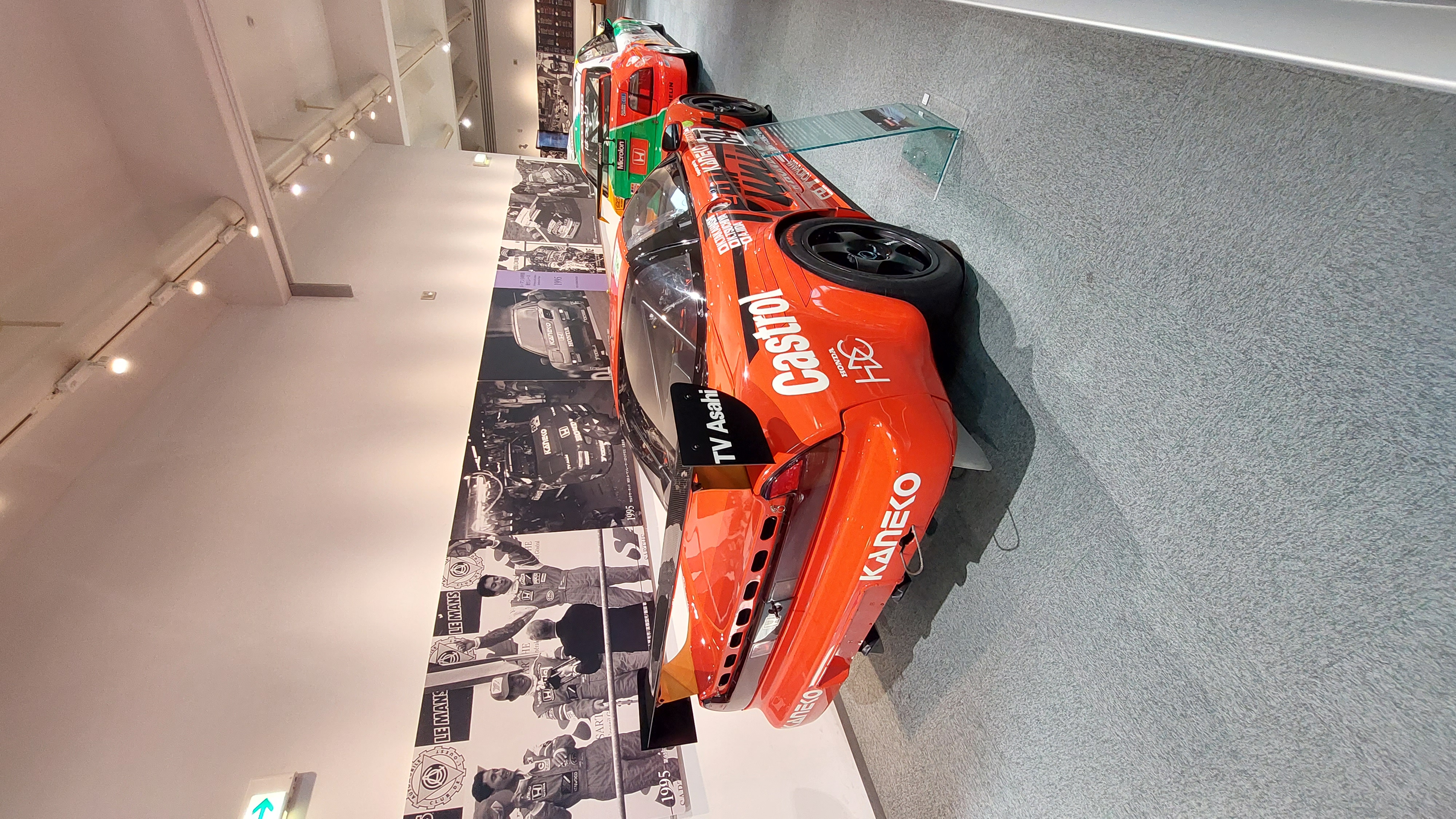
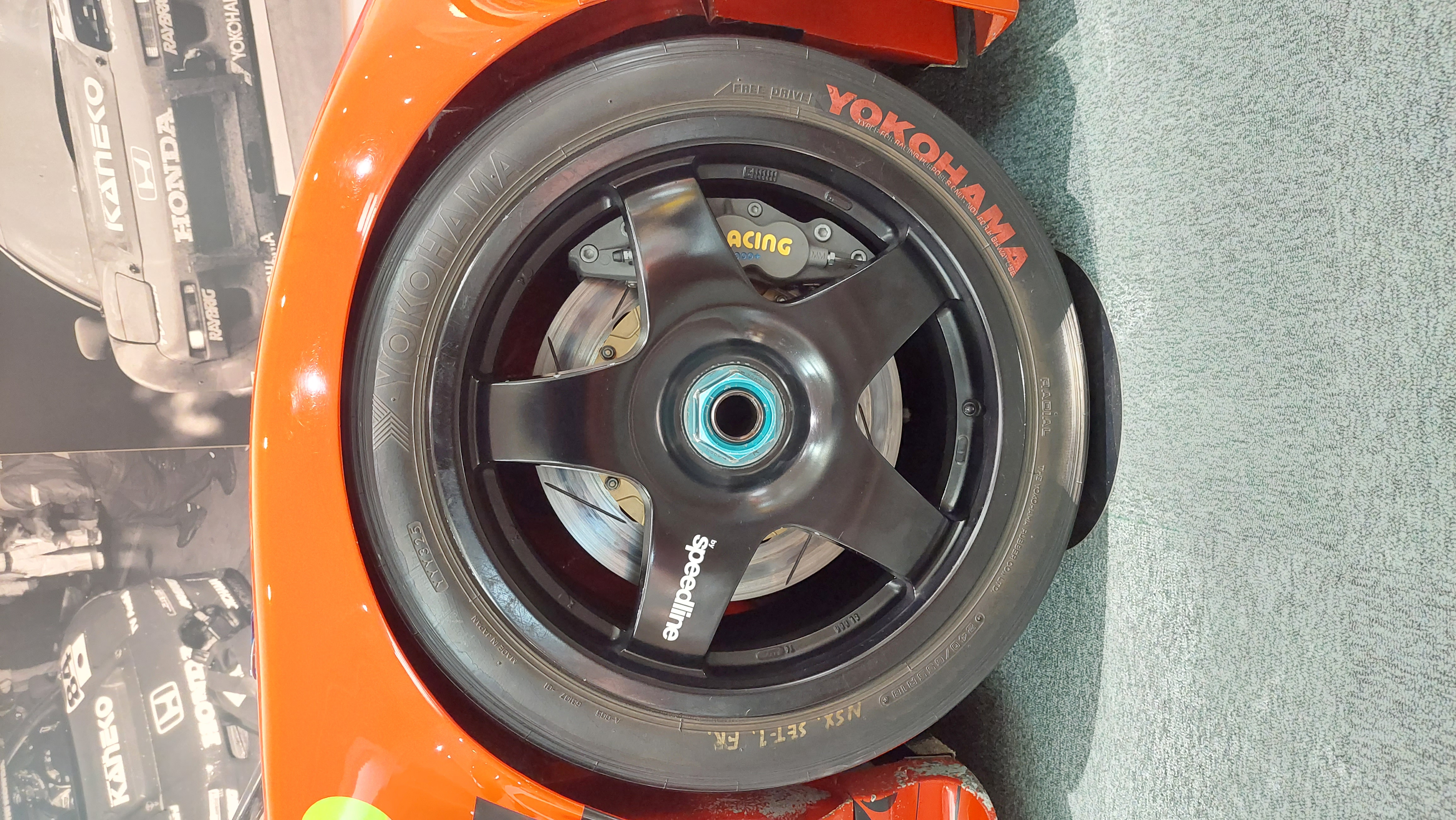
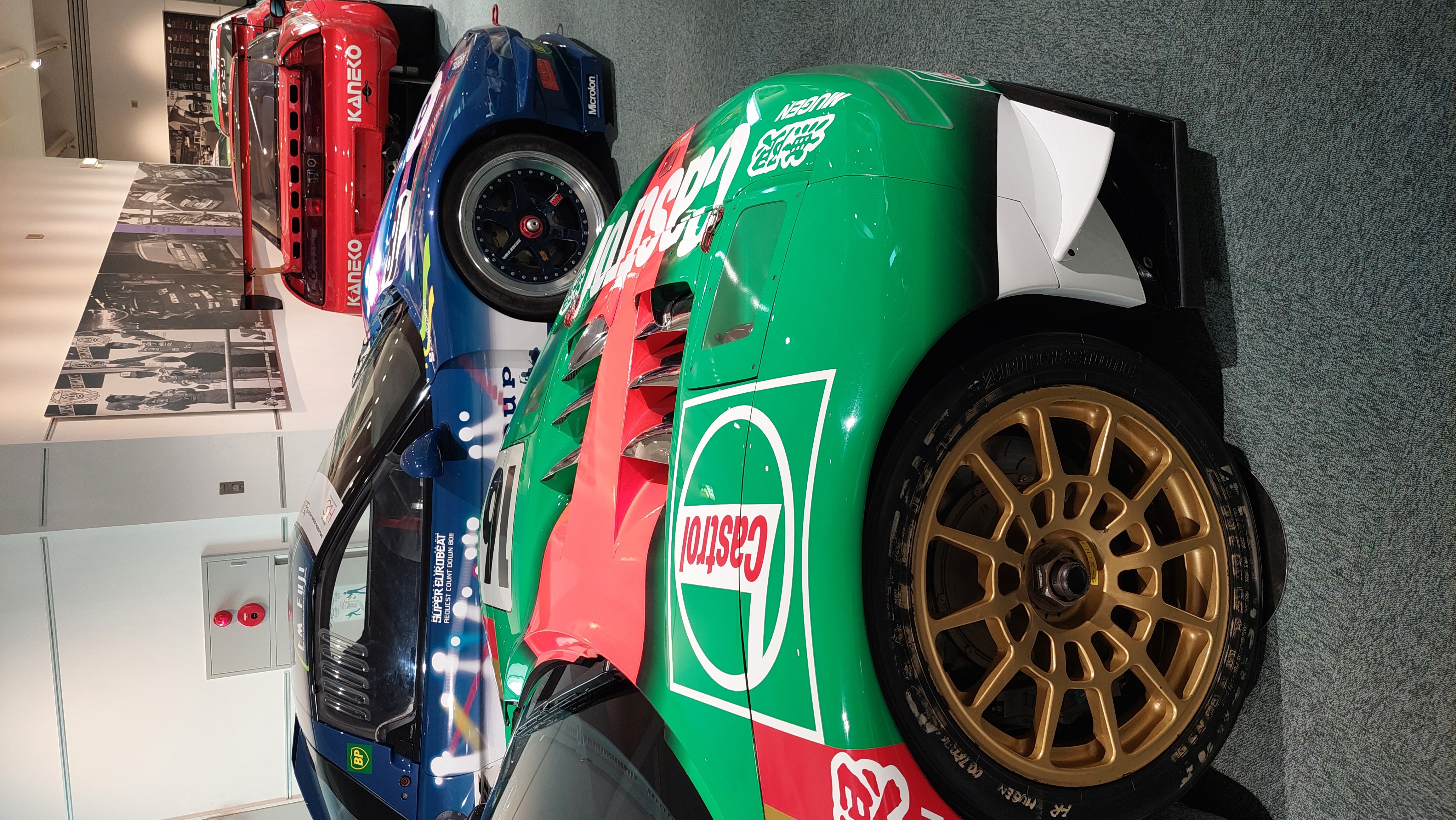
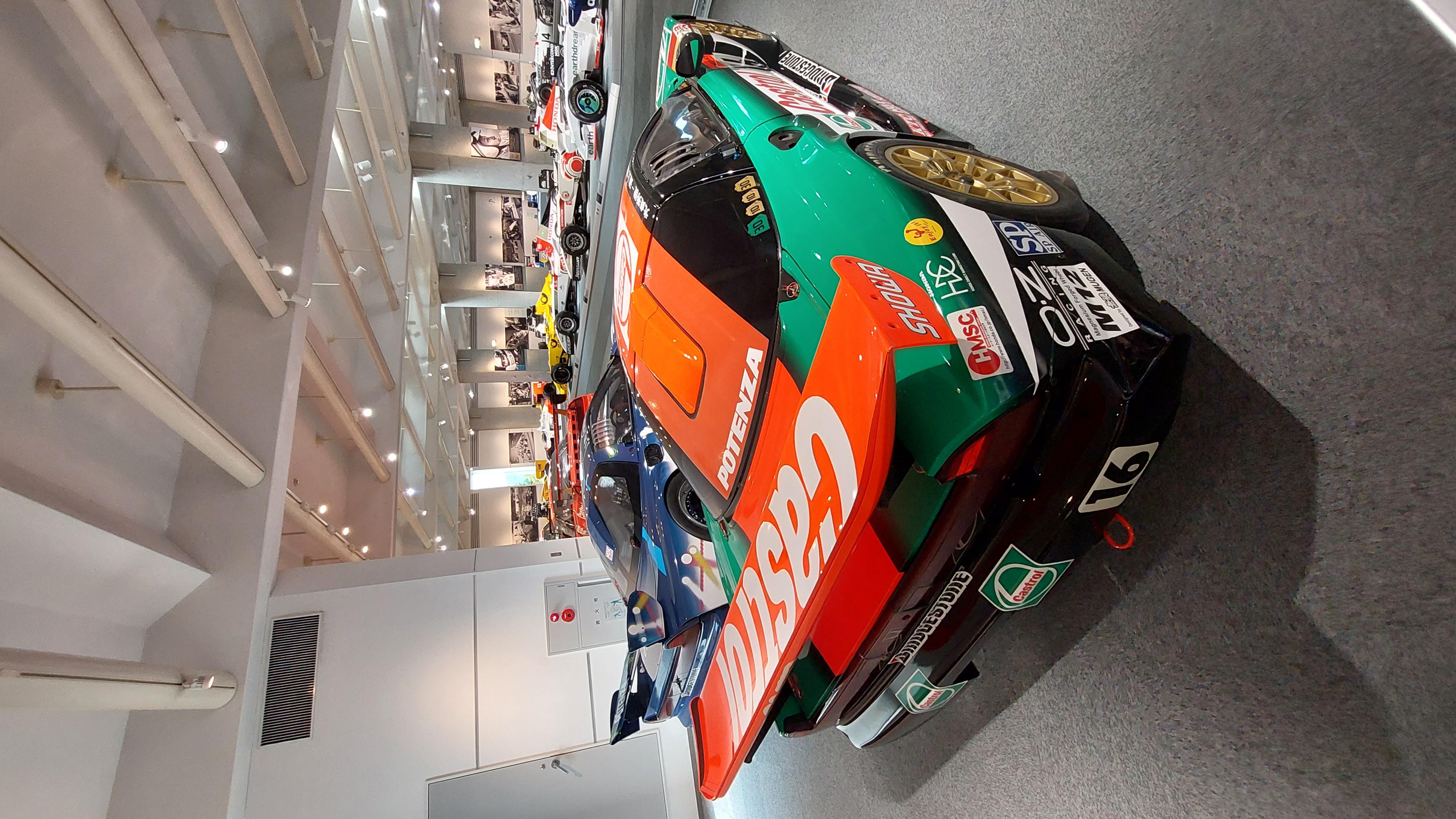
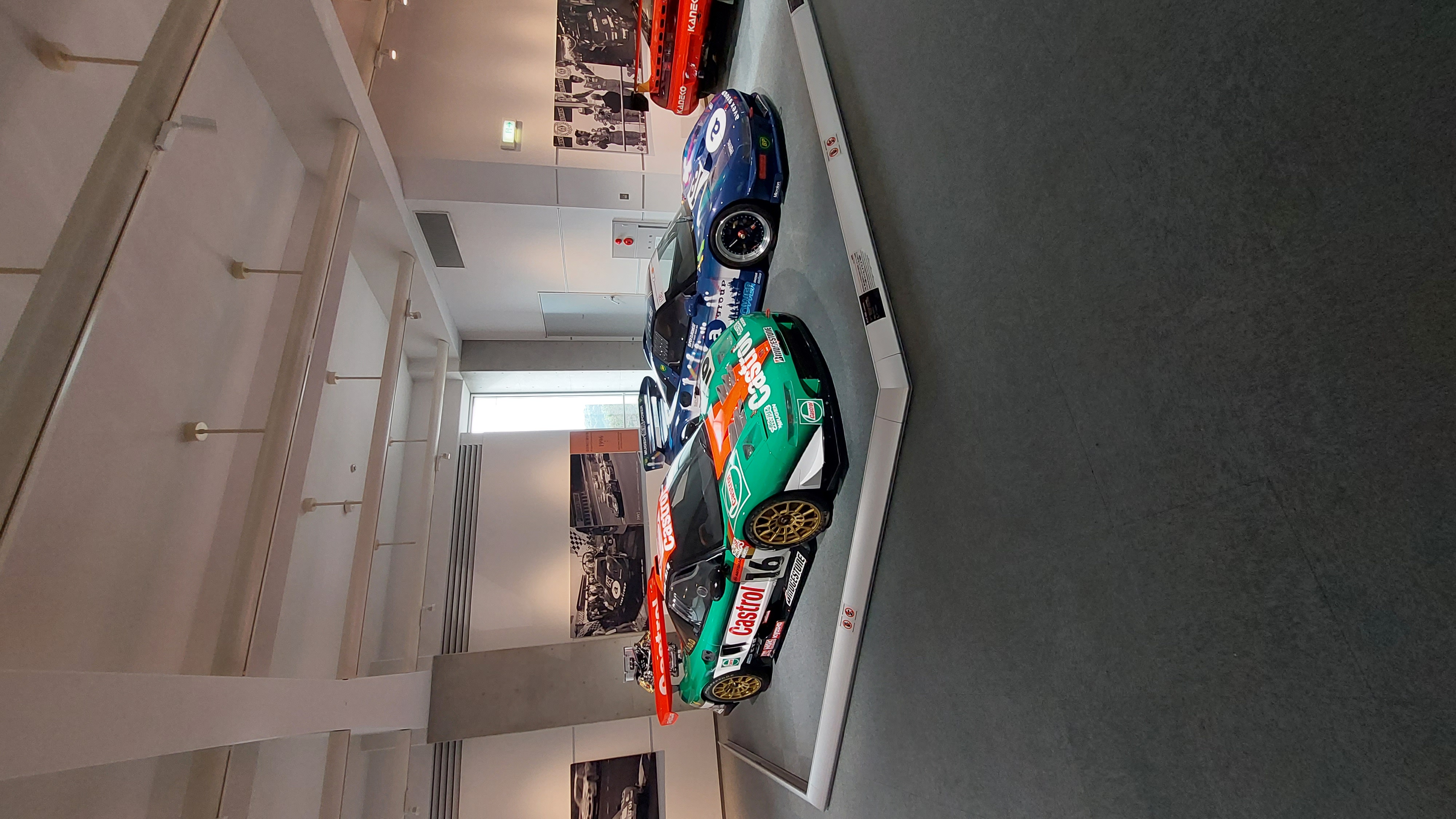
The racing car section also includes the GT cars - the Castrol-liveried NSX that raced in Super GT with its green and red paint scheme, and the Kaneko NSX in its distinctive red livery. These are the cars that proved Honda could compete on a racetrack against anyone. Next to them, a Honda Racing NSX GT3 in white, bringing the story into the modern era.
The Building Itself
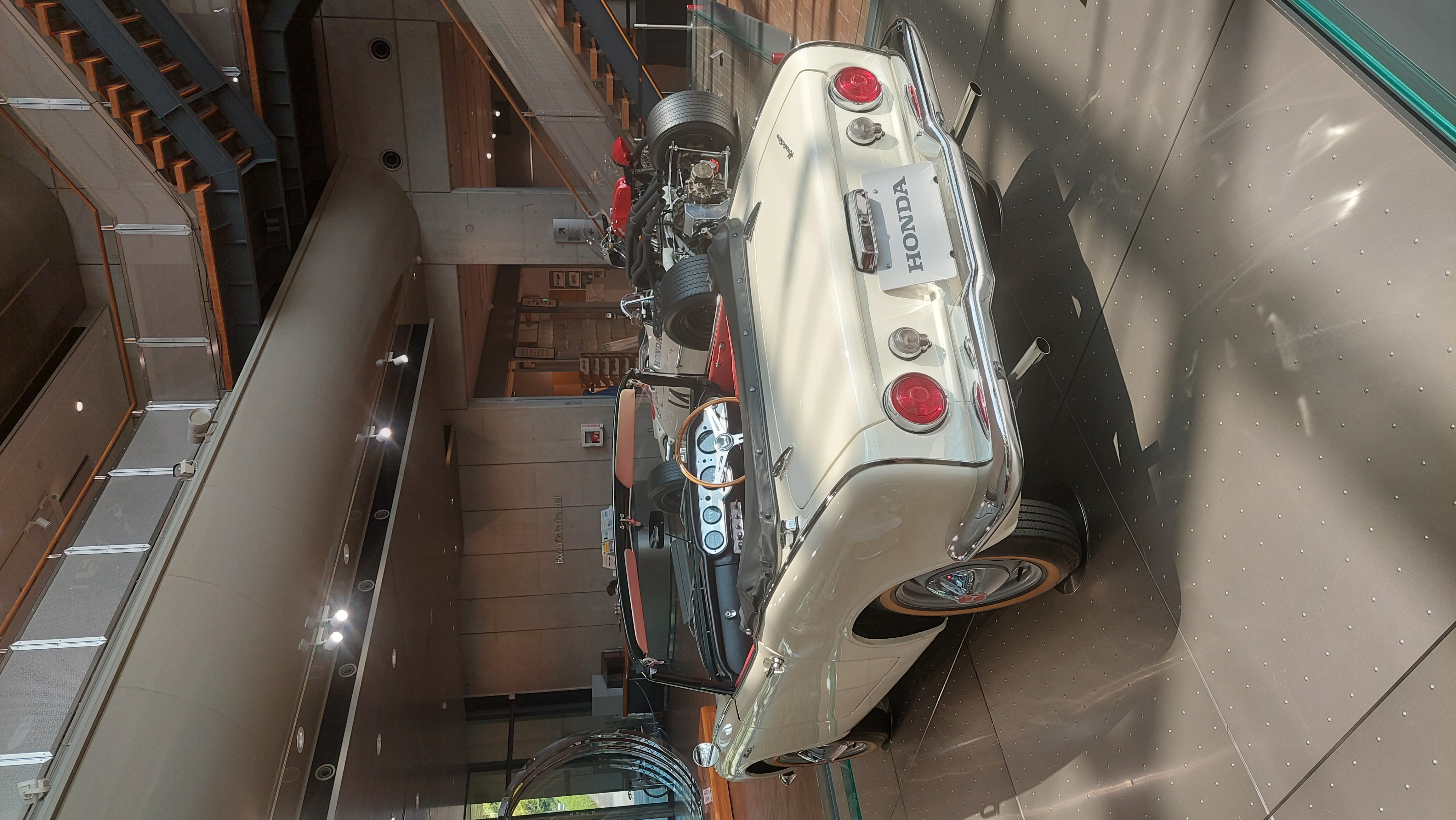
The Honda Collection Hall is a multi-level space with a massive atrium at the entrance. From the upper floor, you can look down and see the S600 and an early F1 car displayed below, with the entire motorcycle collection visible on the mezzanine level. The architecture isn't trying to compete with the exhibits - it's clean, industrial, well-lit. Natural light floods in through the windows next to the motorcycle gallery, and the concrete and steel feel appropriate for a place that's ultimately about engineering.
The day I visited, the place was nearly empty. A handful of Japanese car enthusiasts, a couple of families, no crowds. I could stand in front of any car for as long as I wanted, take photos from any angle, read every information card. That solitude is part of the experience. Most of Japan's best places reward the effort of getting there with the gift of having them almost to yourself.
The souvenir shop got me too. I walked out with a white Tomica NSX - because of course I did - and a miniature Honda and a keychain for a friend in Nairobi who's a massive Honda fan. There's something about buying a tiny version of a car you just spent an hour staring at in a museum on the other side of the world, to send to someone on a completely different continent who loves the same machines. Car culture doesn't care about geography.
The Drive
Getting to Motegi is straightforward - motorway through Tochigi, exit, and follow the signs. No mountain adventure, no hidden roads. But that's part of the point. Honda built their circuit out here in the Tochigi countryside, and it's in good company - Ebisu Circuit and Nikko Circuit are both in the region too. Tohoku has serious car culture, and Motegi is its anchor. The Collection Hall sits right at the edge of the track complex. On race weekends, the sound of engines carries across the parking lot. Even on a quiet weekday like my visit, you can feel the connection between the machines inside the museum and the track outside. Everything Honda builds is meant to move.
Practical Info
Location: Honda Collection Hall, Mobility Resort Motegi (formerly Twin Ring Motegi), Motegi, Haga District, Tochigi Prefecture. View on Google Maps
Website: mr-motegi.jp
What: Museum housing hundreds of Honda vehicles - cars, motorcycles, power products, and racing machines from 1948 to the present. Collection size varies with rotation; post-renovation display is around 150 items.
Admission: Free (parking fees for Mobility Resort may apply on event days)
Access: Car only. No practical public transport. About 2 hours from Tokyo by car, mostly motorway via the Tohoku Expressway.
Highlights: NSX-R, Integra Type R DC2, Civic Type R EK9, Honda T360, F1 cars (RA272, McLaren-Honda), complete MotoGP motorcycle collection, Castrol NSX GT car
Time needed: 1.5 to 3 hours depending on how deep you go
Note: The museum underwent a major renovation and reopened in March 2024. My visit was in July 2023, before the renewal. Expect an updated layout and new exhibits if you visit now.
Tip: Go on a weekday. You'll have the place nearly to yourself.