I've been to Hakusan Heisenji three times now - 2018, 2019 with Isi, and again in 2023 - and each time the place hits differently. Most people who know about Japan's moss temples think of Saihoji in Kyoto, where you need to book six days in advance and follow strict rules just to step inside. Hakusan Heisenji is bigger, quieter, free to enter, and you'll probably have the entire forest to yourself. The catch is that almost nobody knows it exists, and you need a car to get there.
A Buried City
What makes Hakusan Heisenji different from any other forest shrine in Japan is what's underneath it. Founded in 717 as a Buddhist temple for pilgrimages to Mount Hakusan, it grew over the centuries into a full-scale medieval city. By the 1500s, thousands of monks and warrior monks lived here, with streets, lodgings, and the infrastructure of a major religious settlement. Then in 1574, during the Ikko-ikki uprising, the entire complex was burned to the ground. Toyotomi Hideyoshi rebuilt it about a decade later, but at only a tenth of its original size.
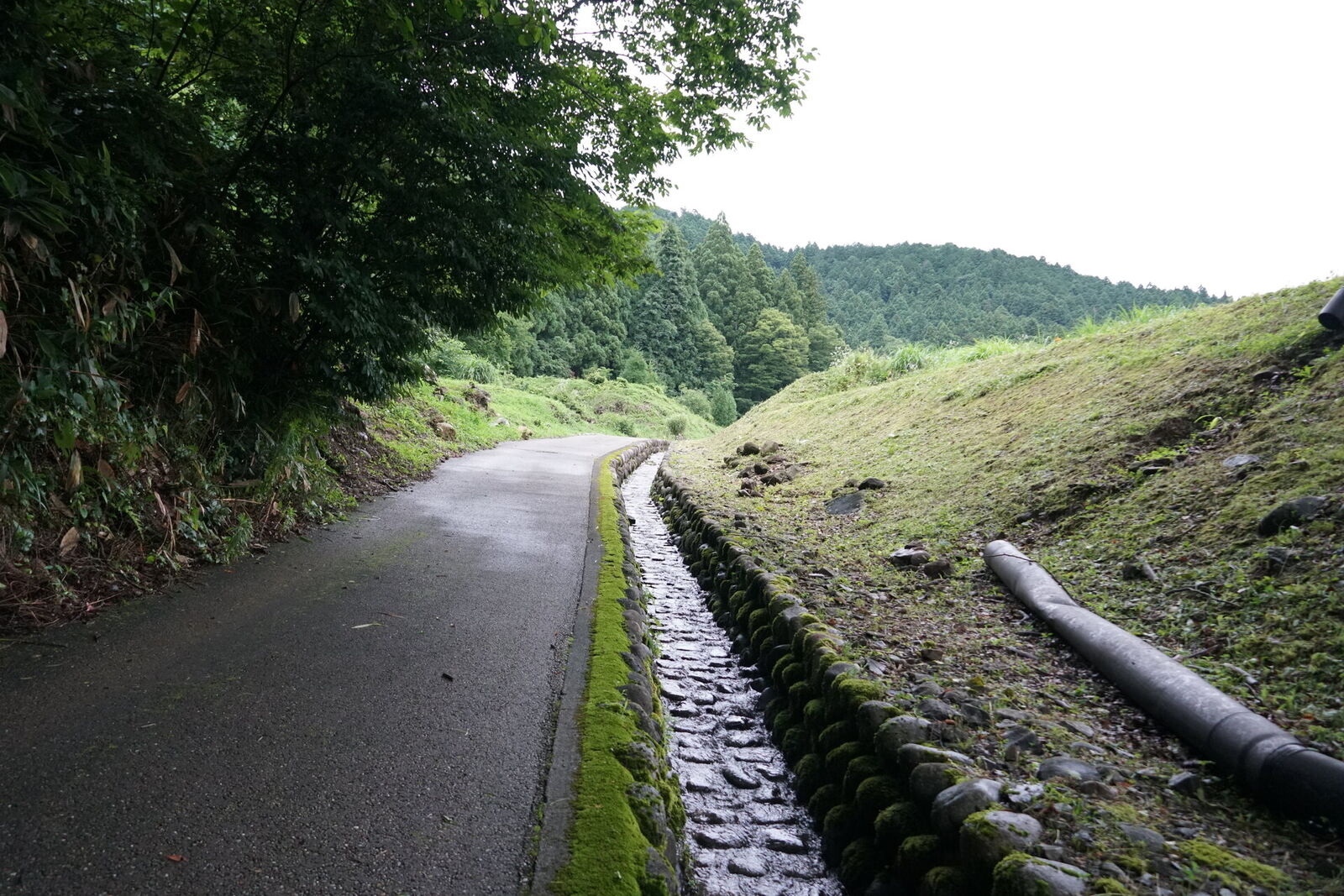
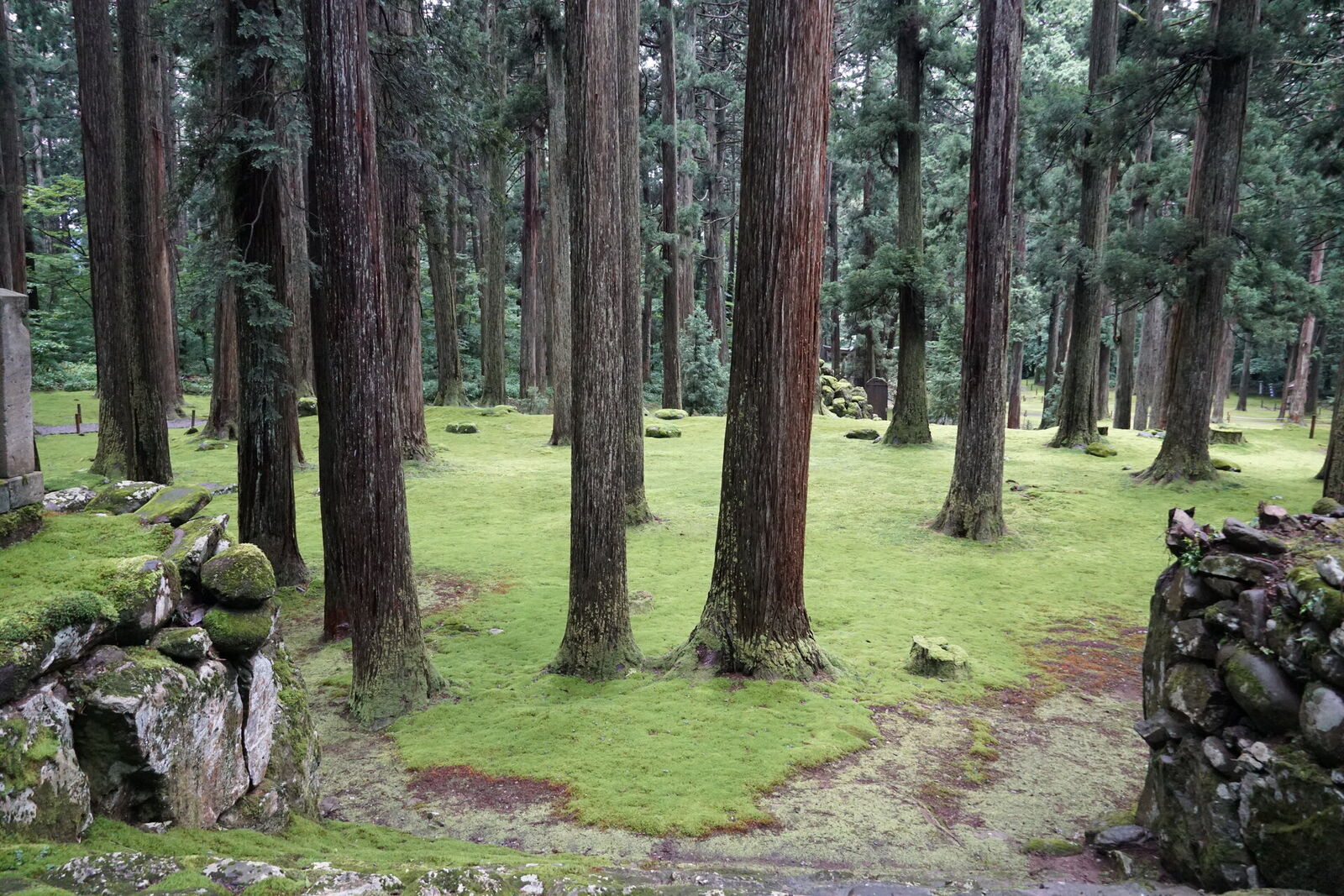
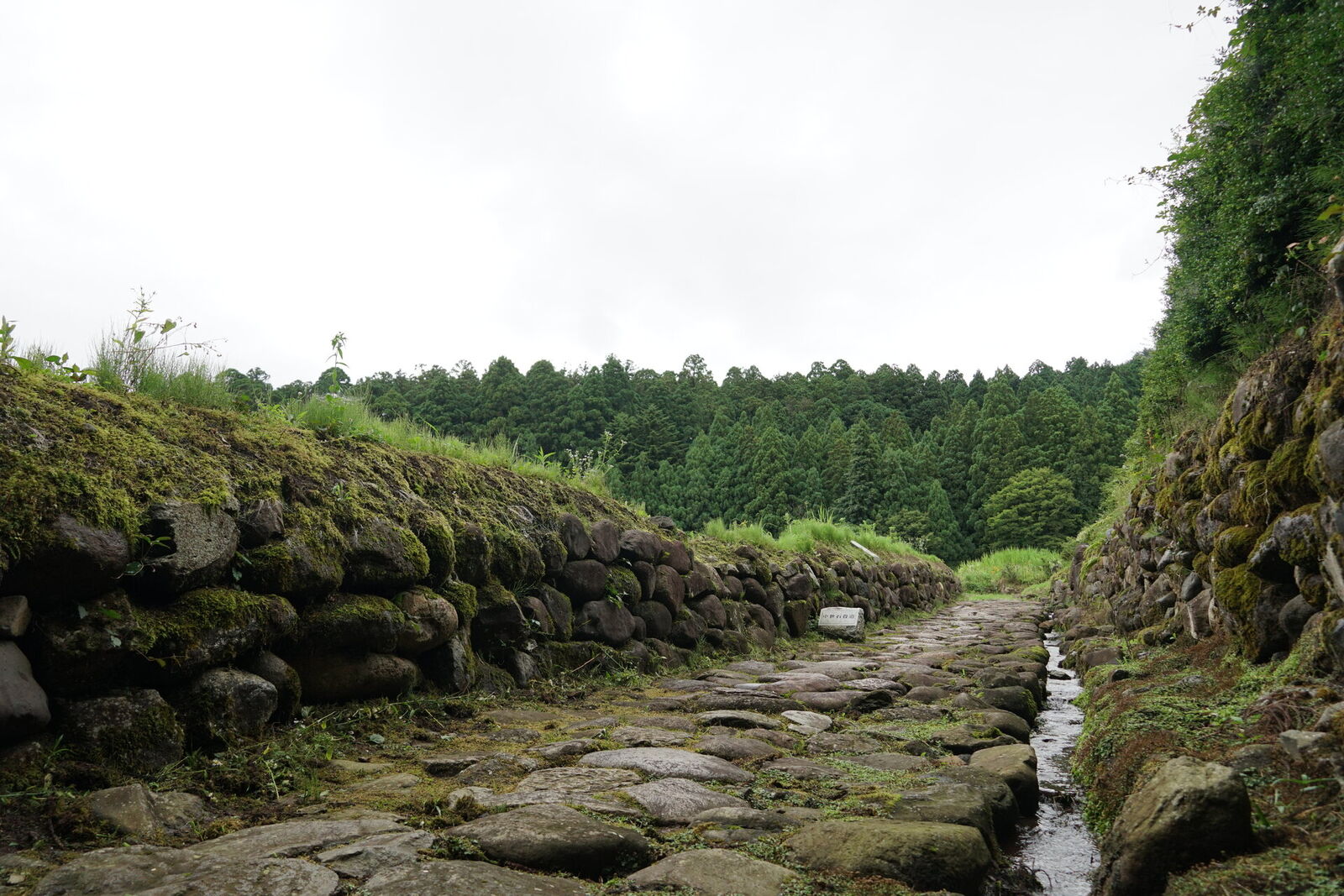
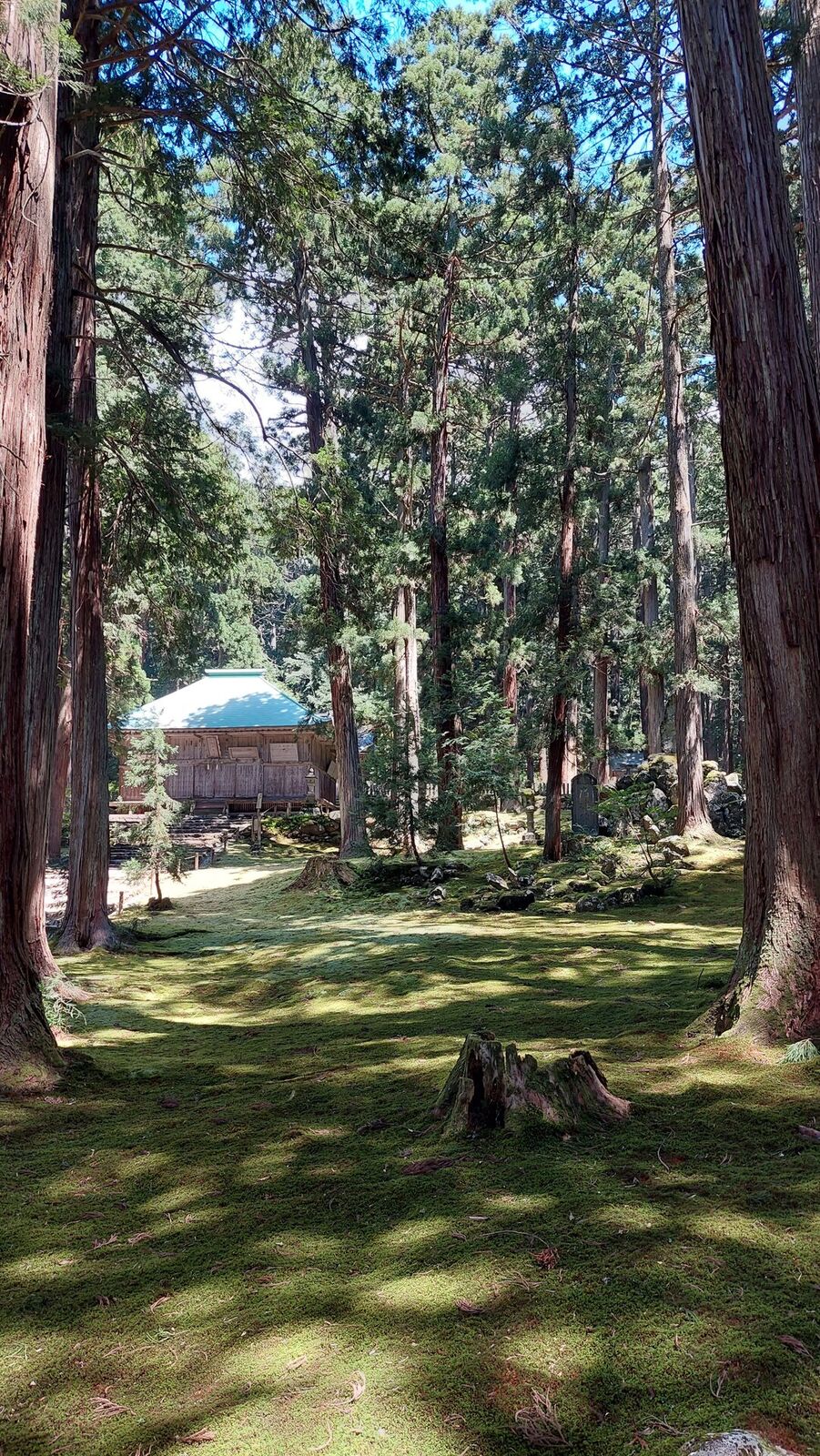
The ruins of that medieval city are still here, buried under the moss. Since 1989, archaeologists have been excavating sections of the site, uncovering stone-paved roads, foundation walls, drainage channels, Buddhist ritual objects, and even samurai armor. Walking through the shrine grounds, you pass white stone markers indicating where buildings once stood, and in some areas you can see the actual excavation trenches with exposed foundation walls and waterways. There are information boards with context, and if you take the time to read them, the green carpet under your feet transforms from pretty scenery into the roof of a lost city.
The Approach
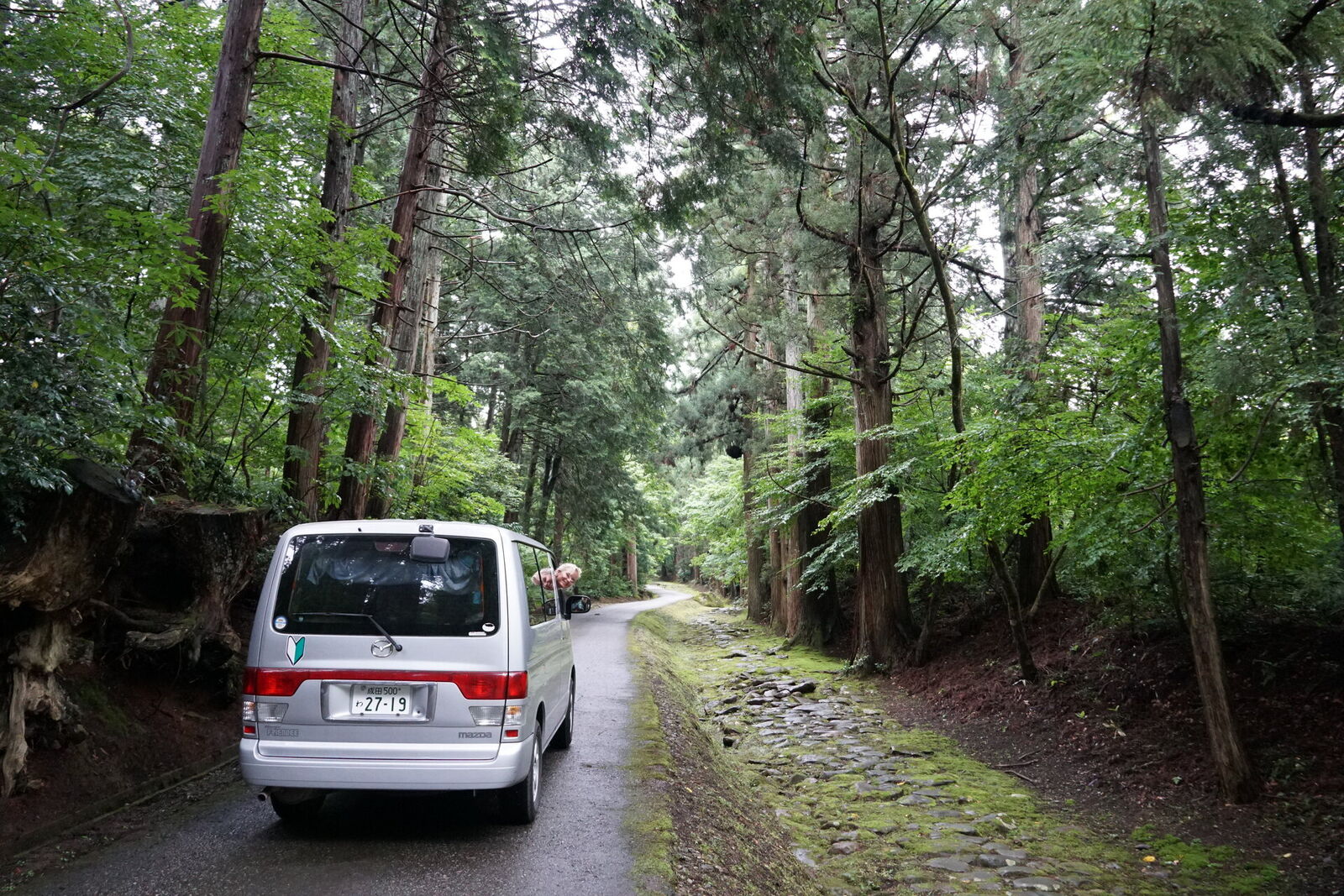
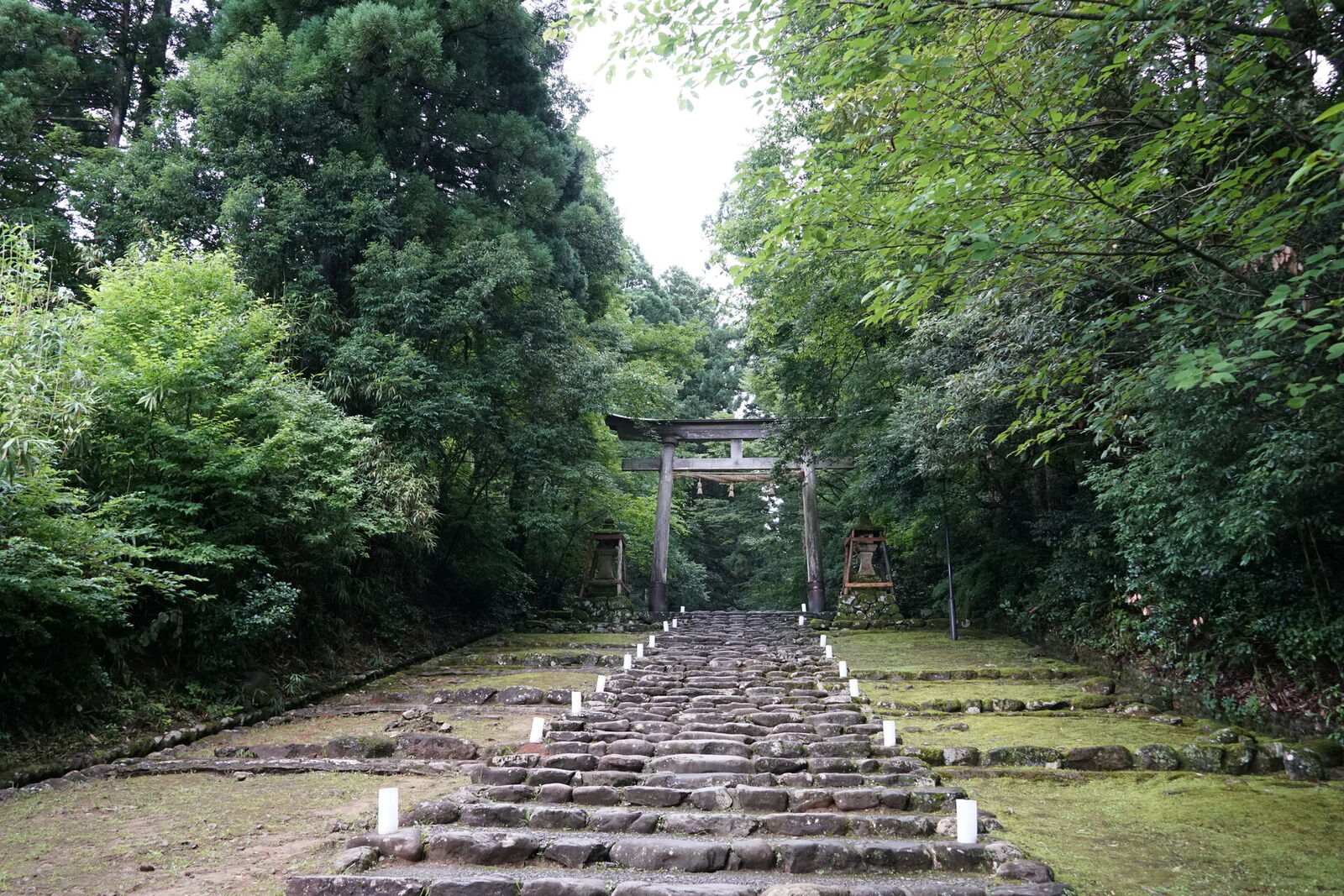
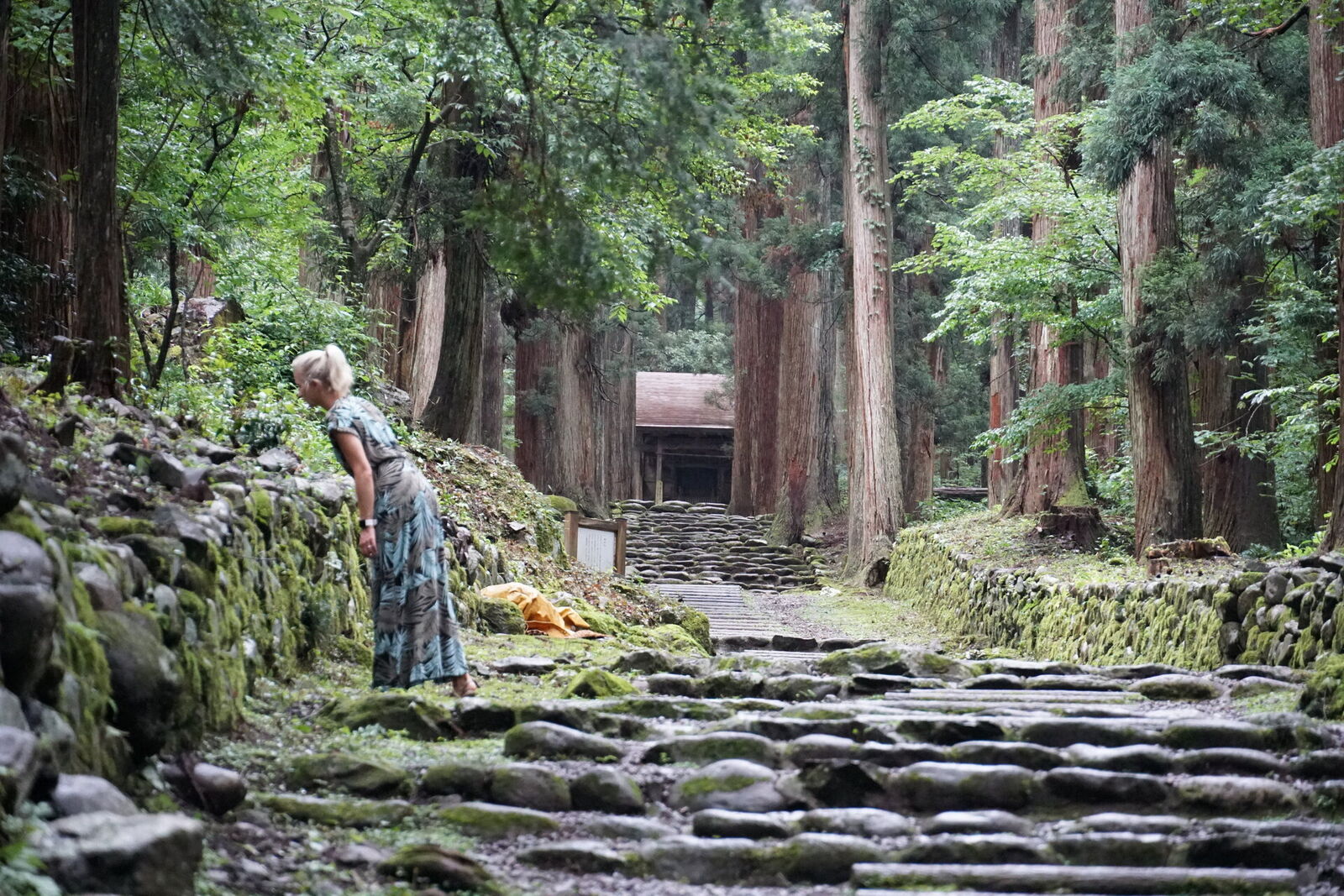
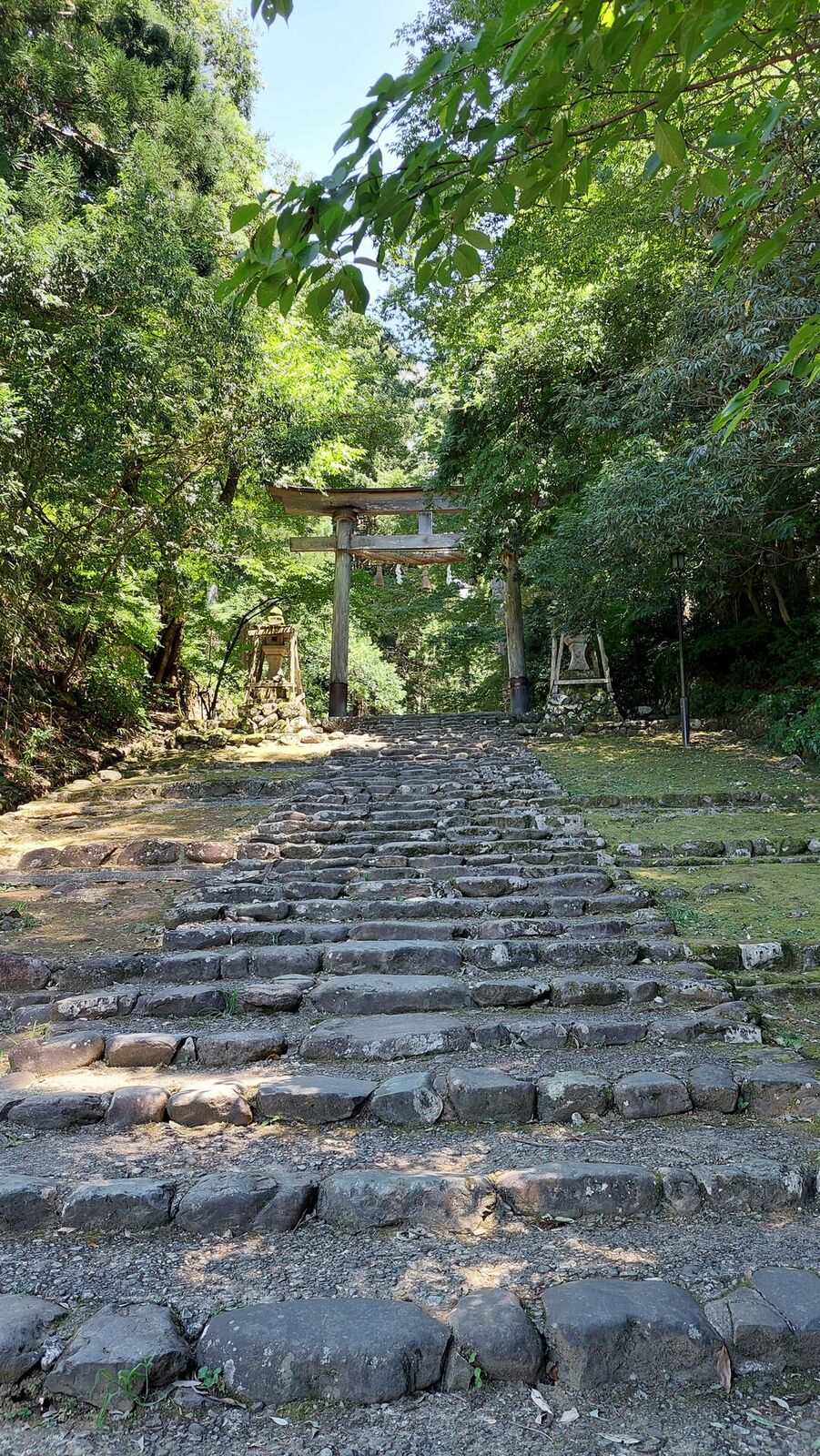
One of the first things you notice at the entrance is a detail that captures the whole spirit of the place: the modern one-lane asphalt road running right alongside the original stone-block access road from the medieval period. A thousand years of Japanese road-building separated by a meter of grass. The ancient stones are massive, worn smooth by centuries of foot traffic, and seeing them next to the asphalt makes the history tangible in a way that reading about it never does.
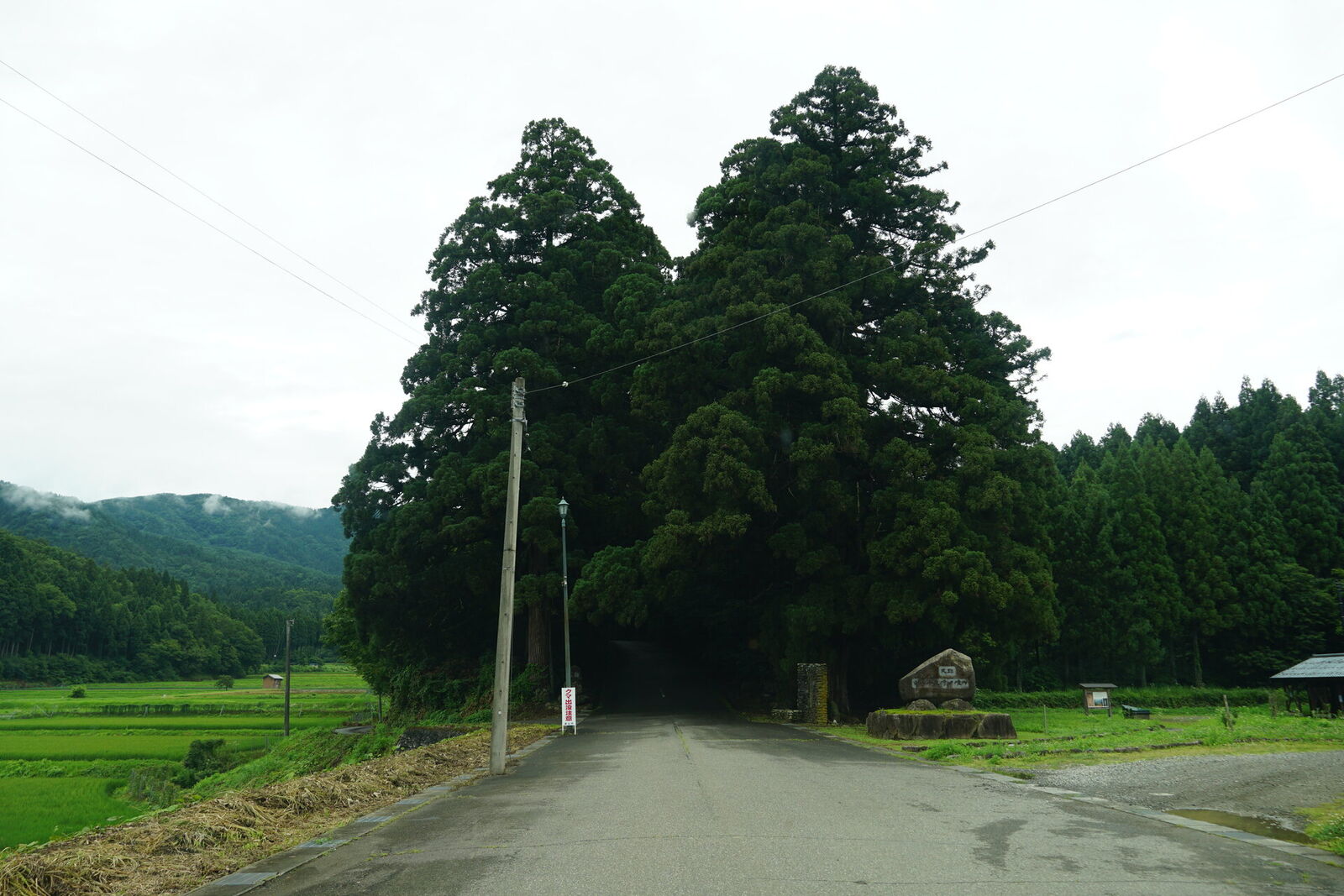
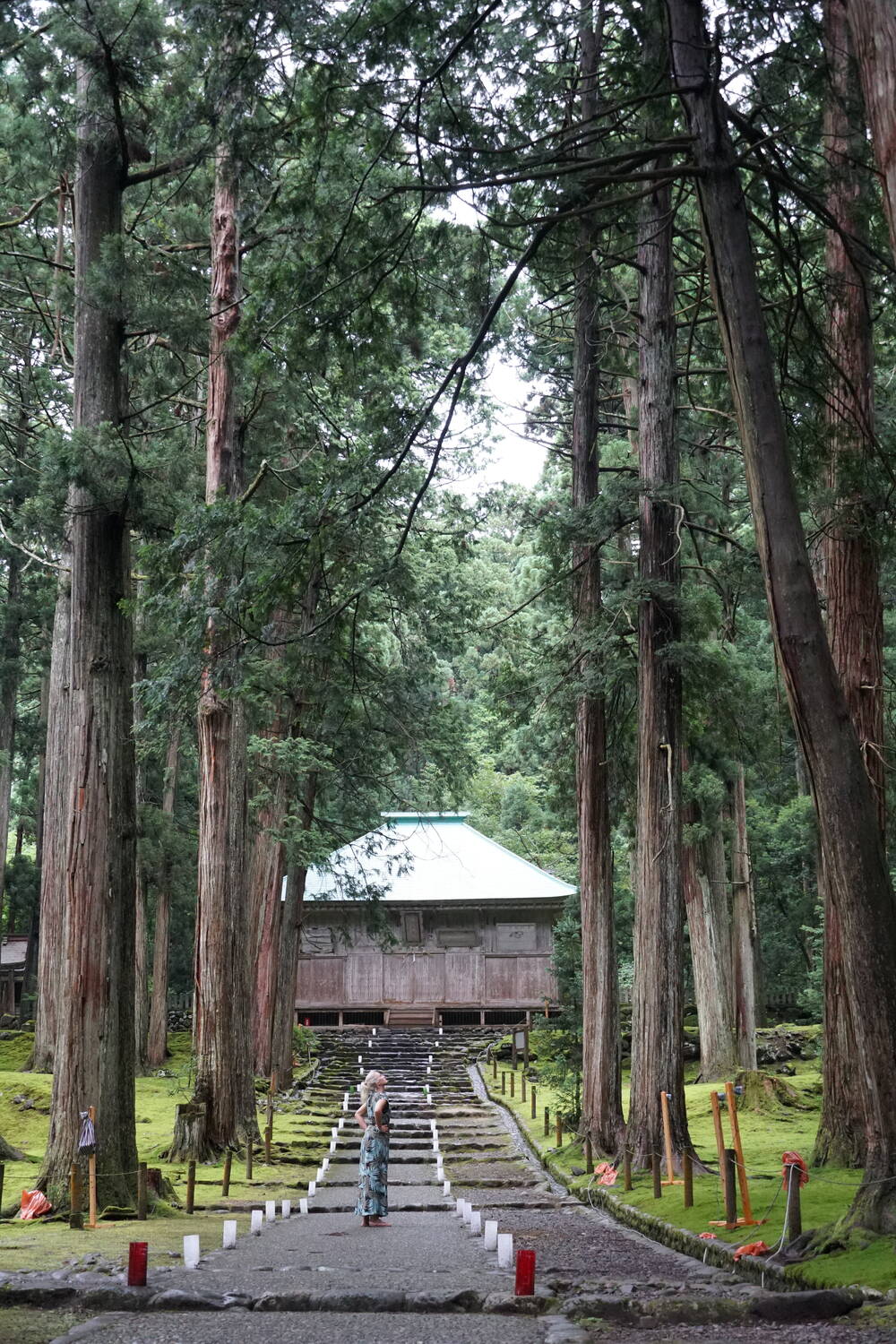
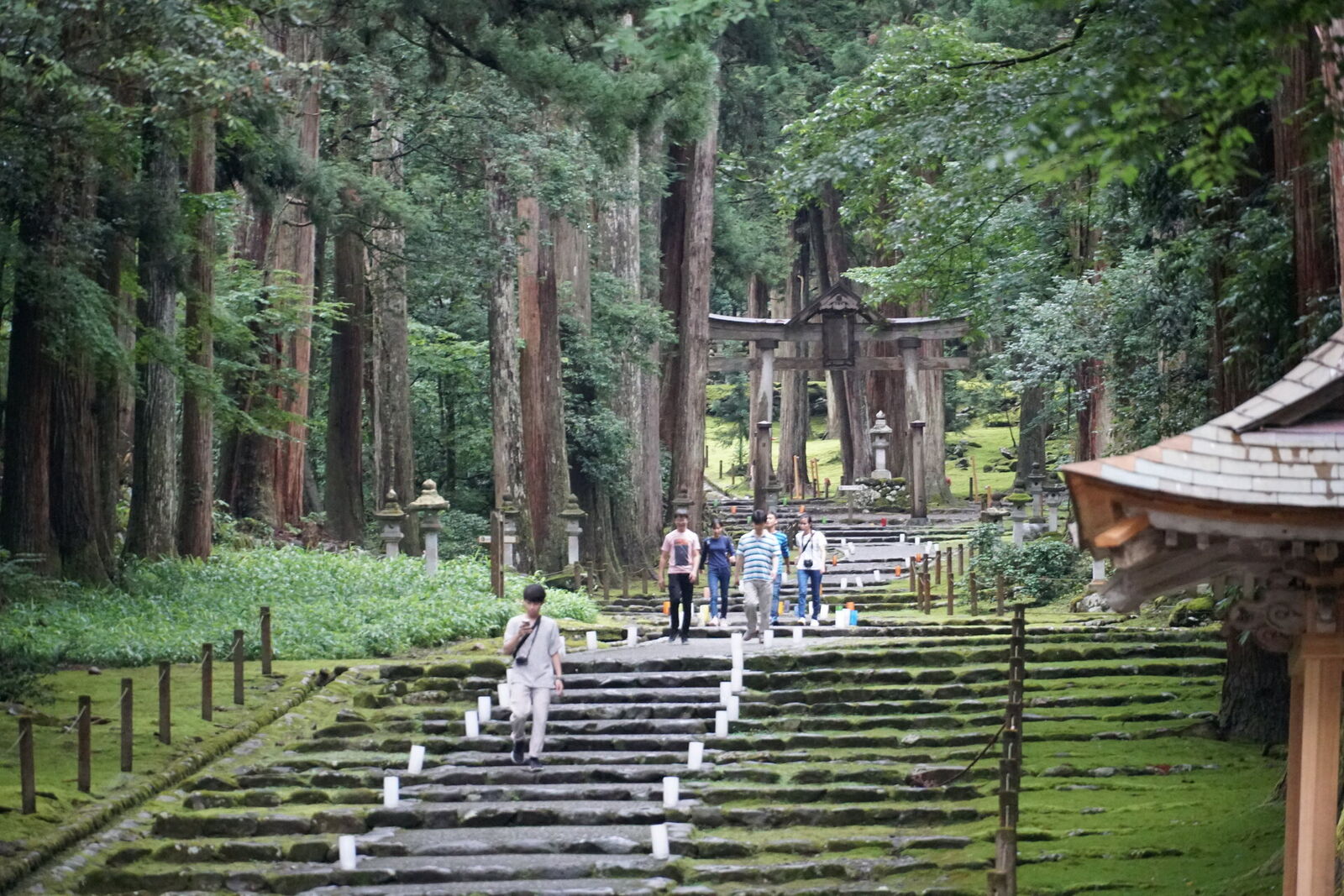
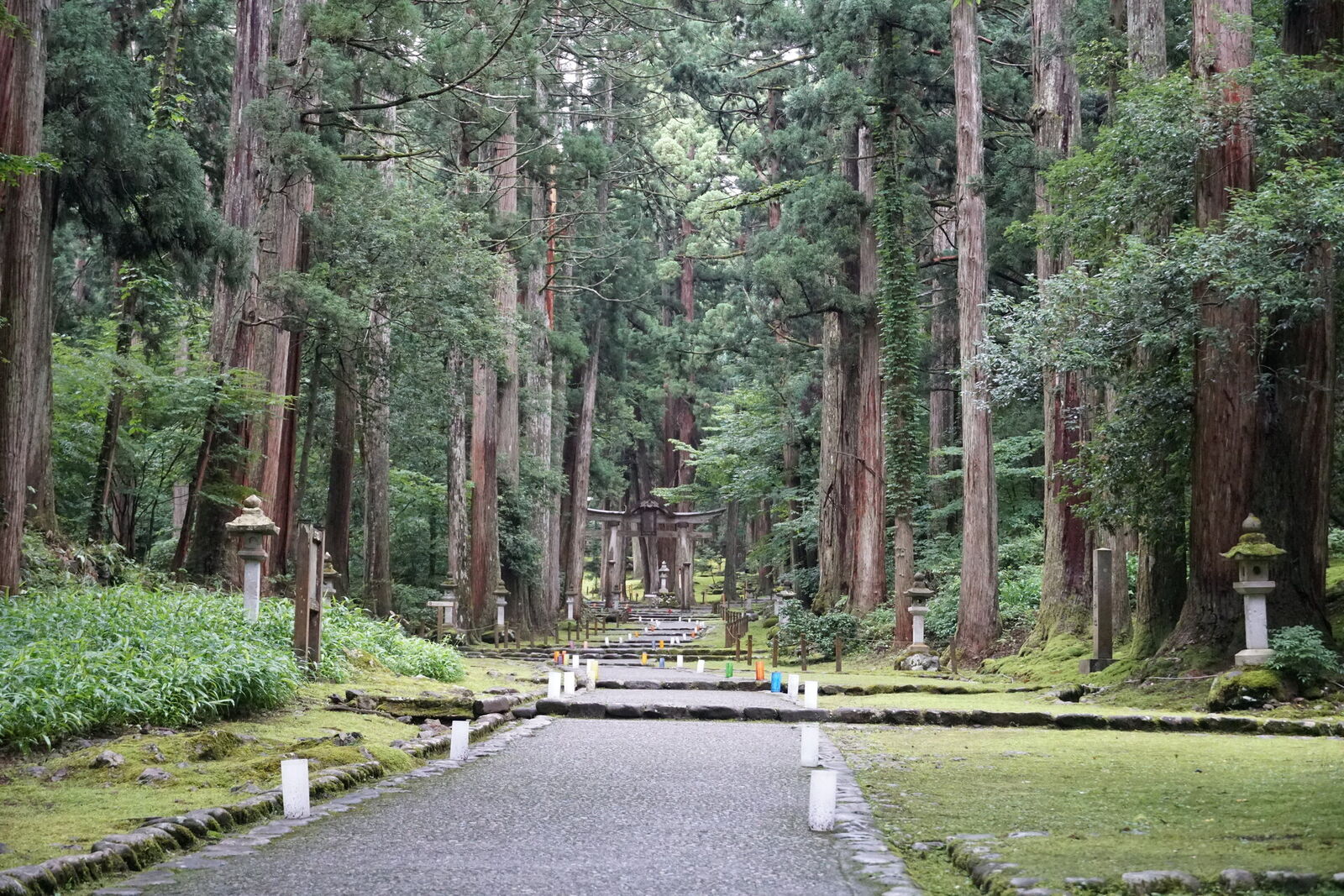
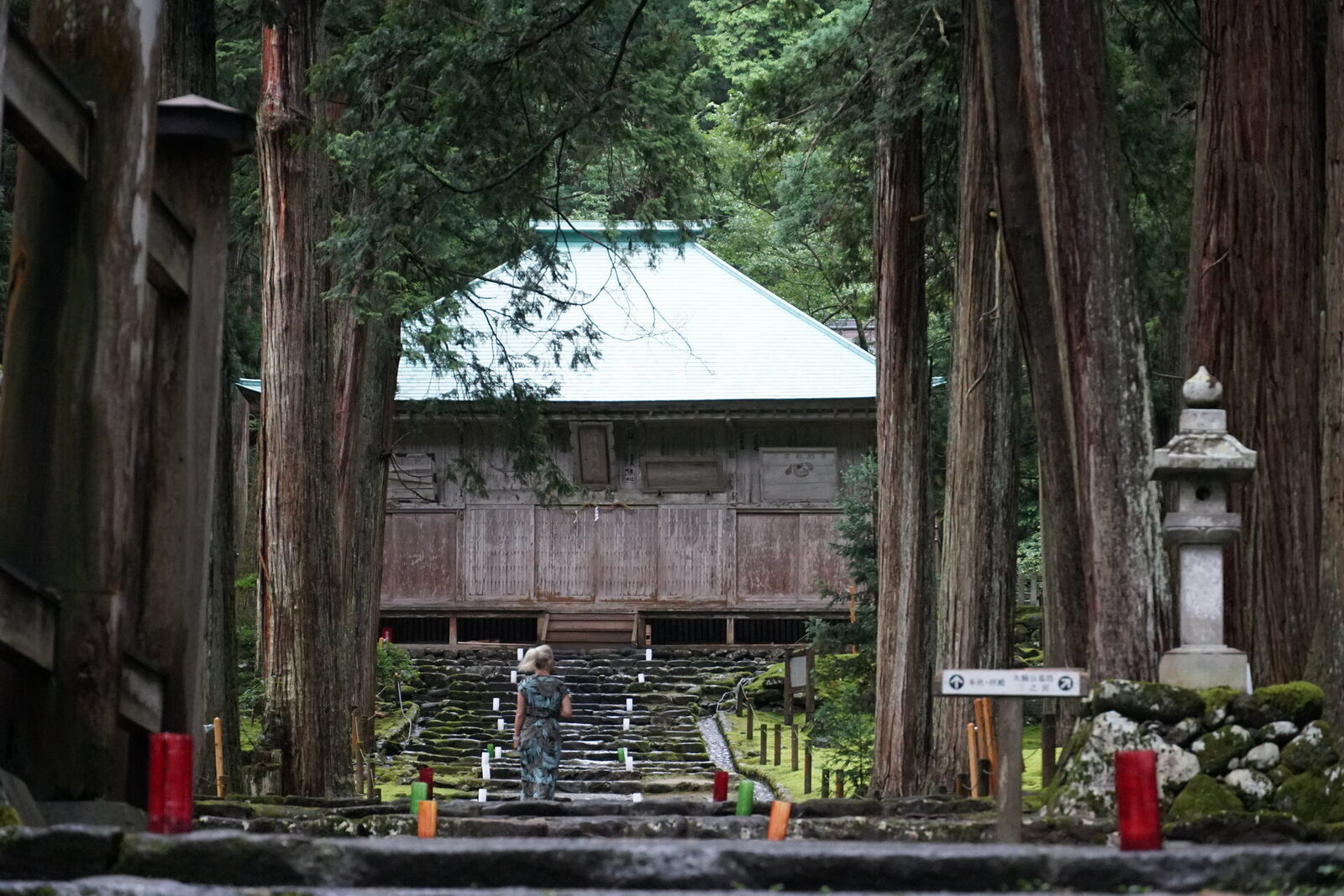
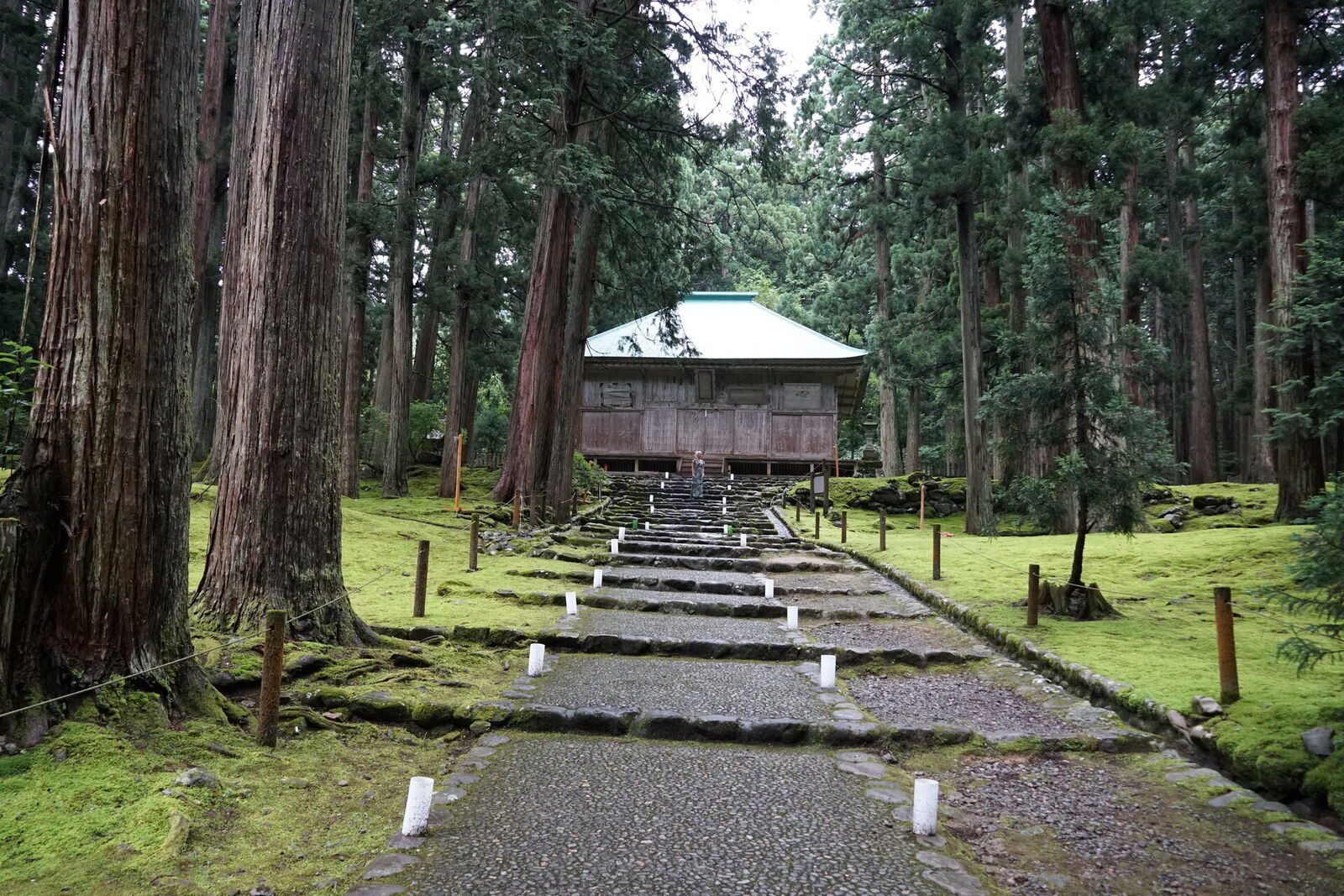
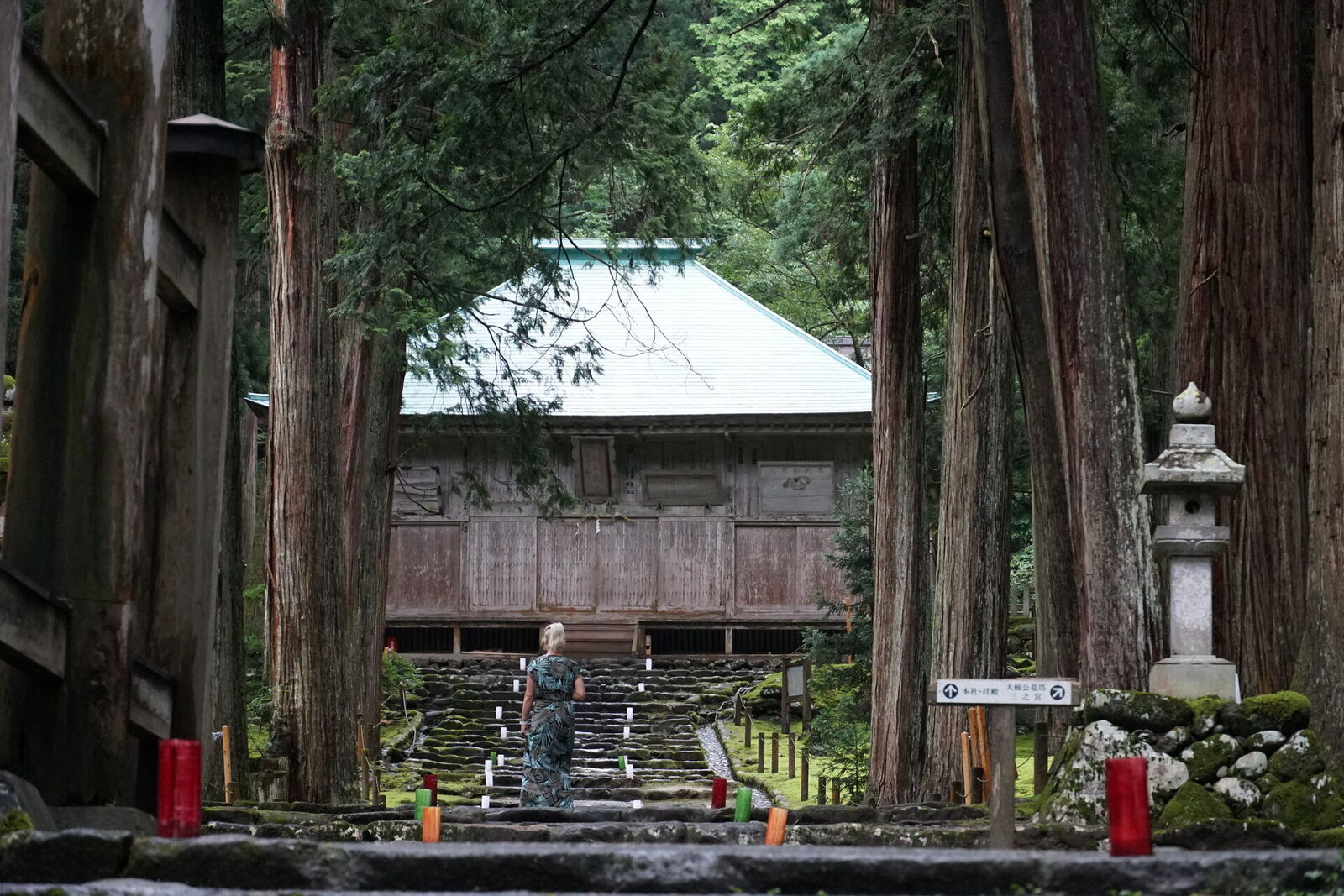
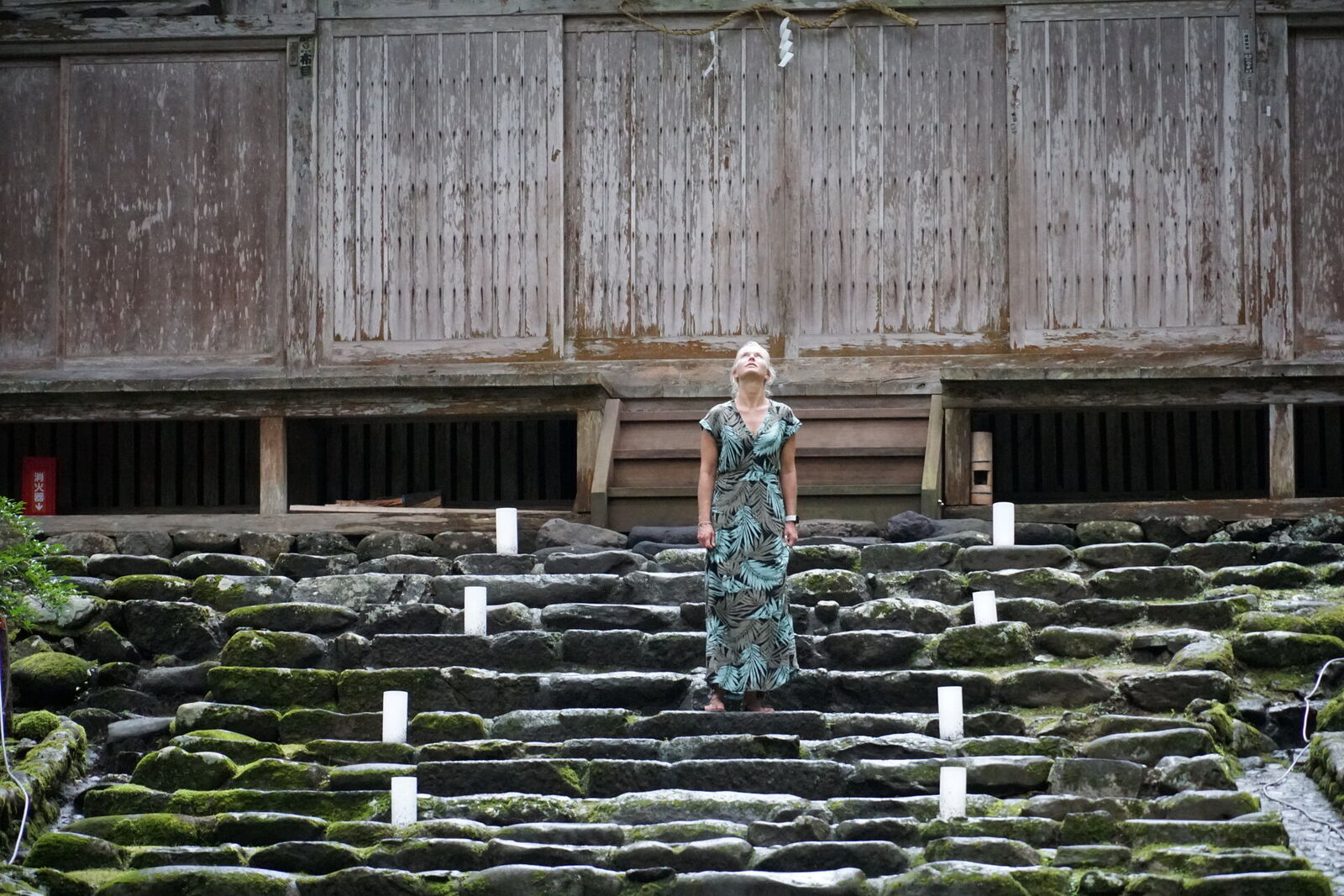
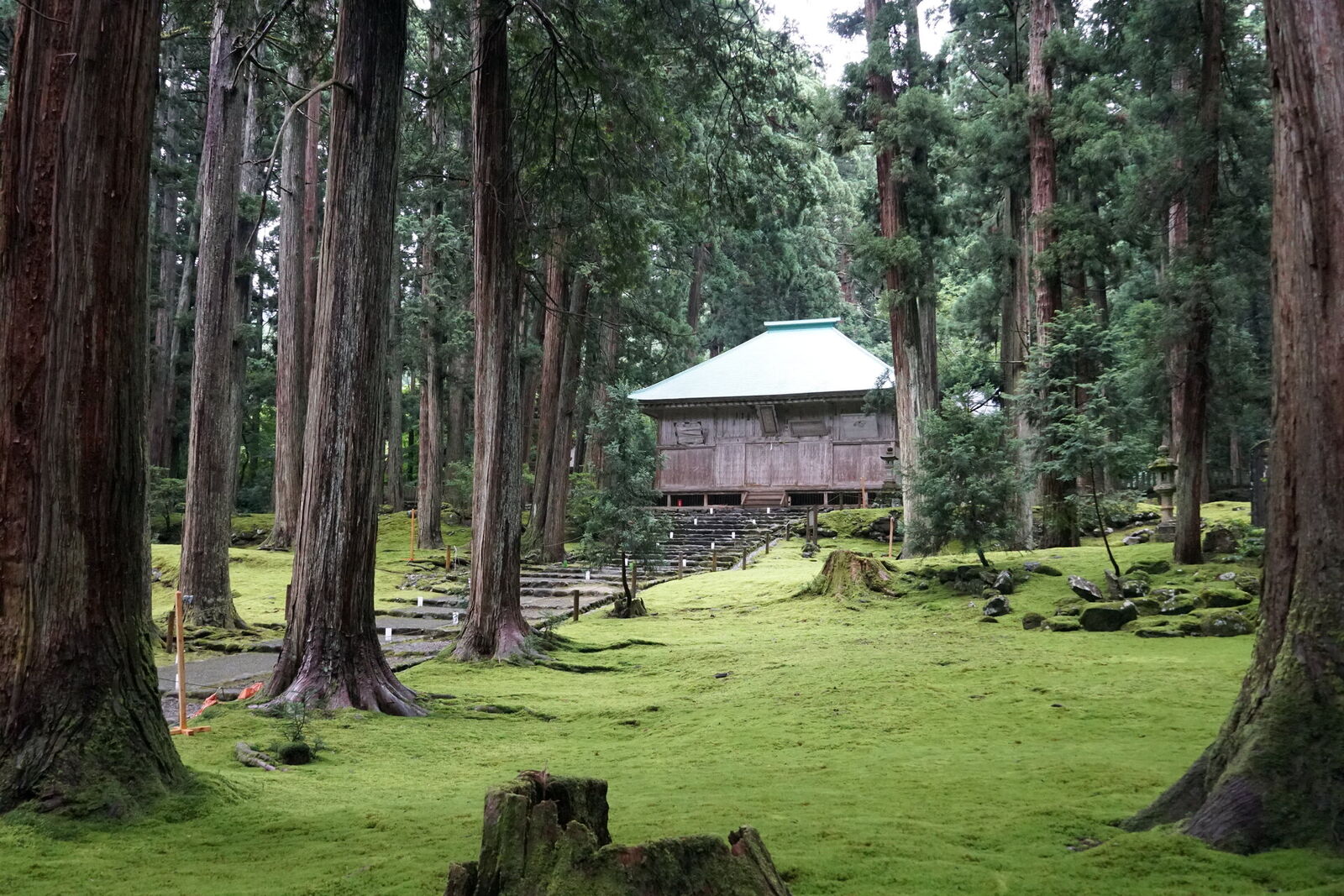
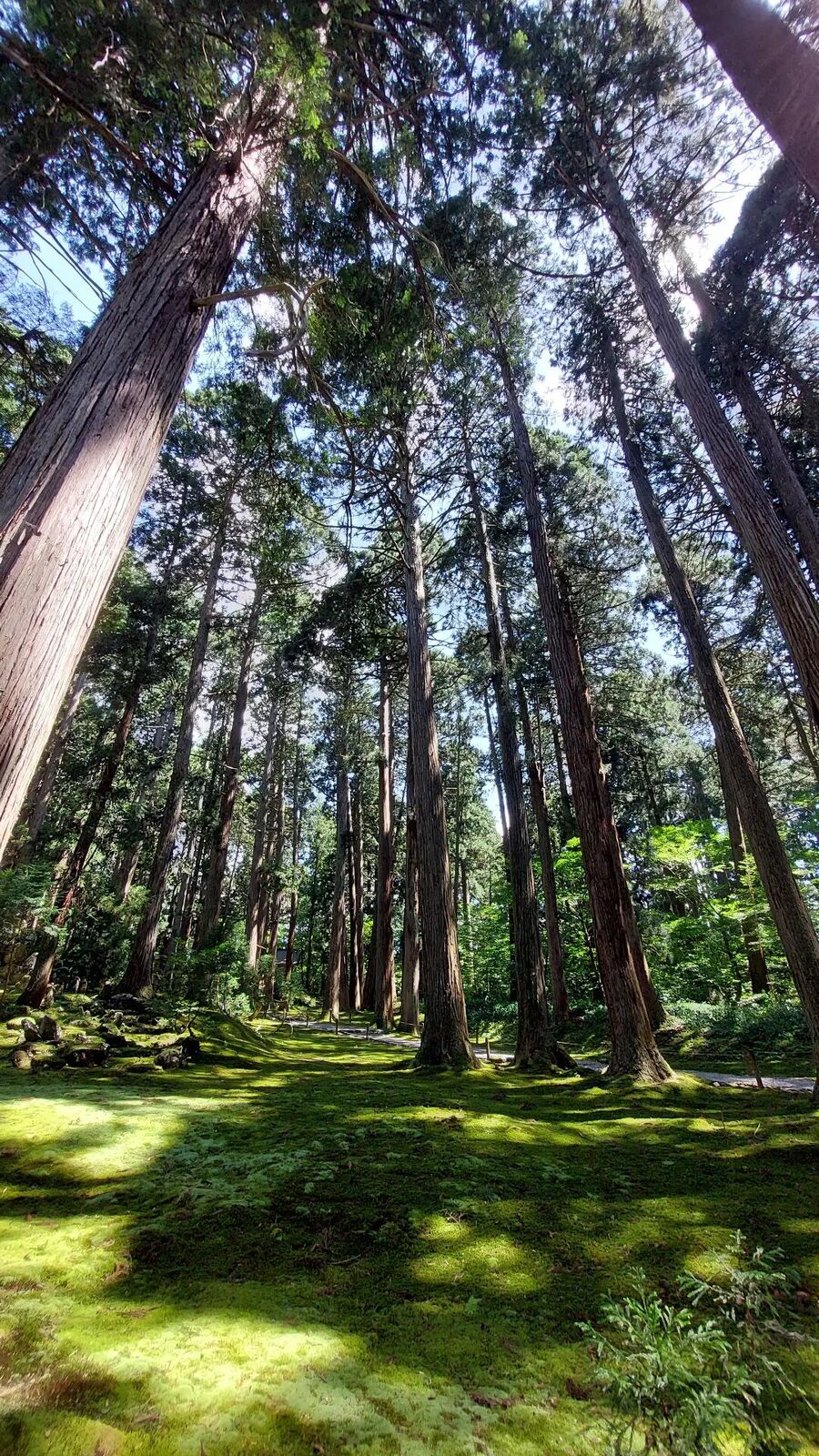
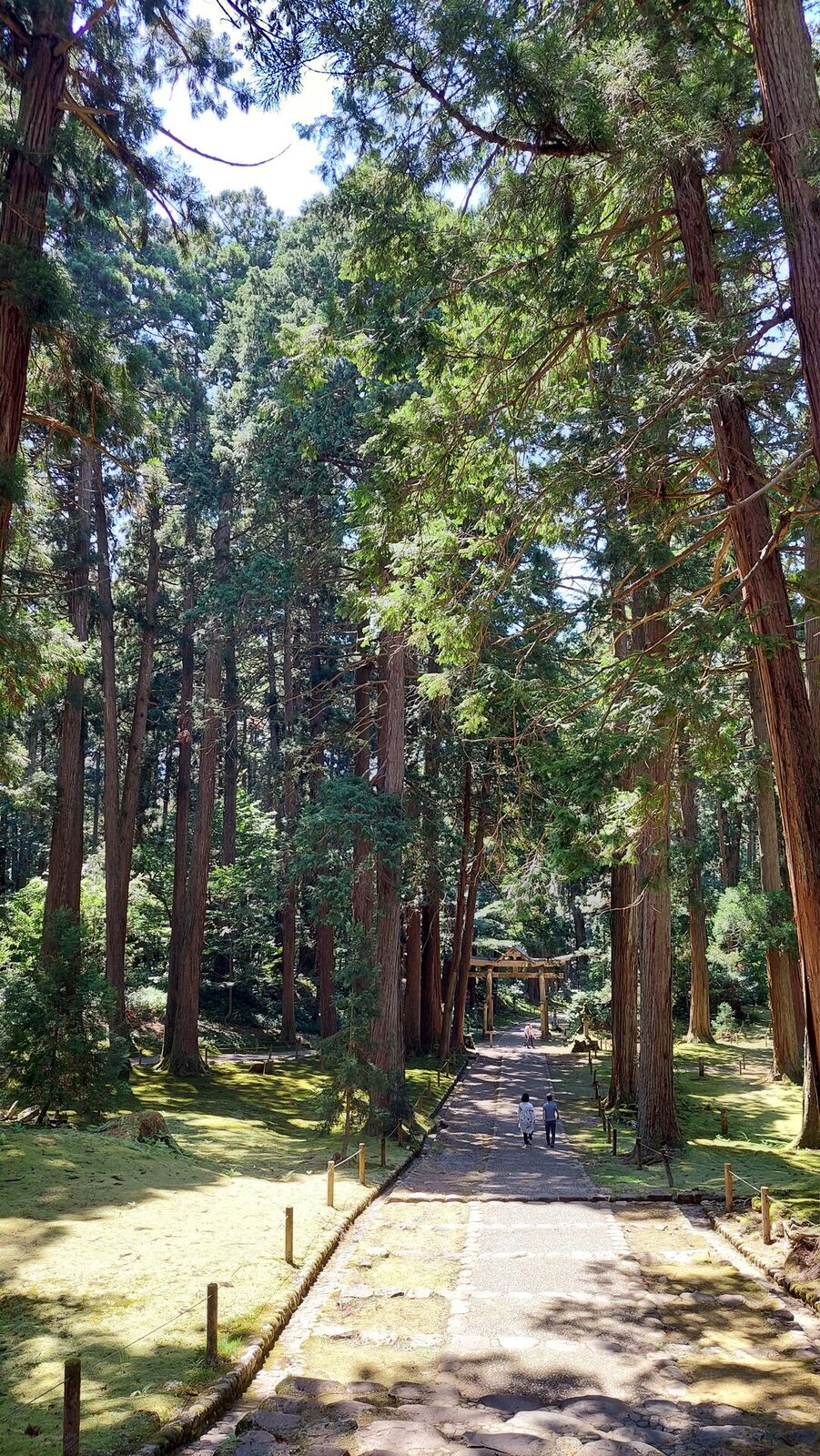
From there, the path leads up through towering Japanese cedars toward the main shrine. The stone steps are enormous blocks, and knowing that hundreds of thousands of people once walked these same steps to reach what was one of the most powerful religious centers in the region gives each one weight. The moss starts immediately - thick, green, covering every surface that isn't actively walked on. It's the kind of green that you only see in places where rain and shade have been working together for centuries.
The Main Shrine
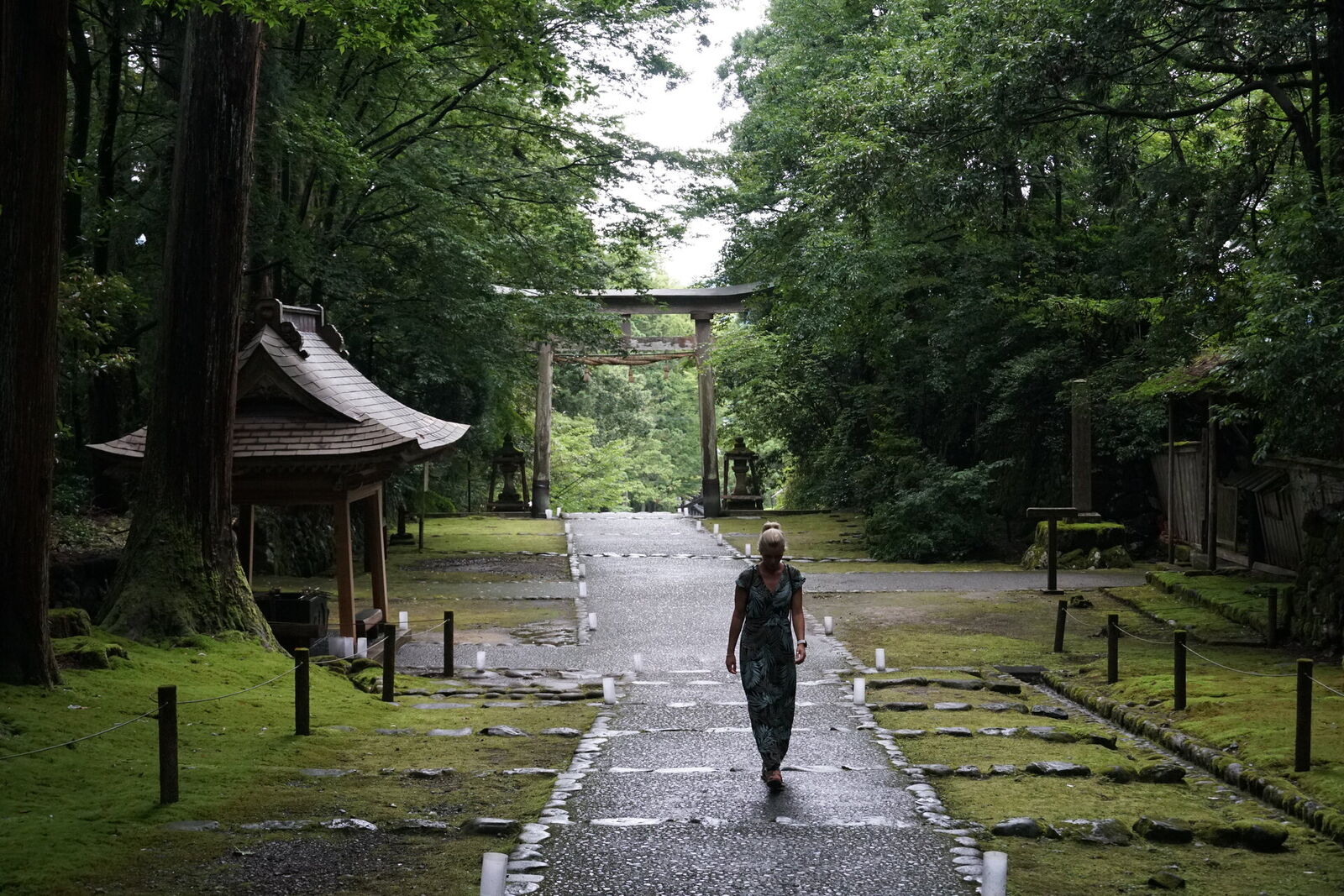
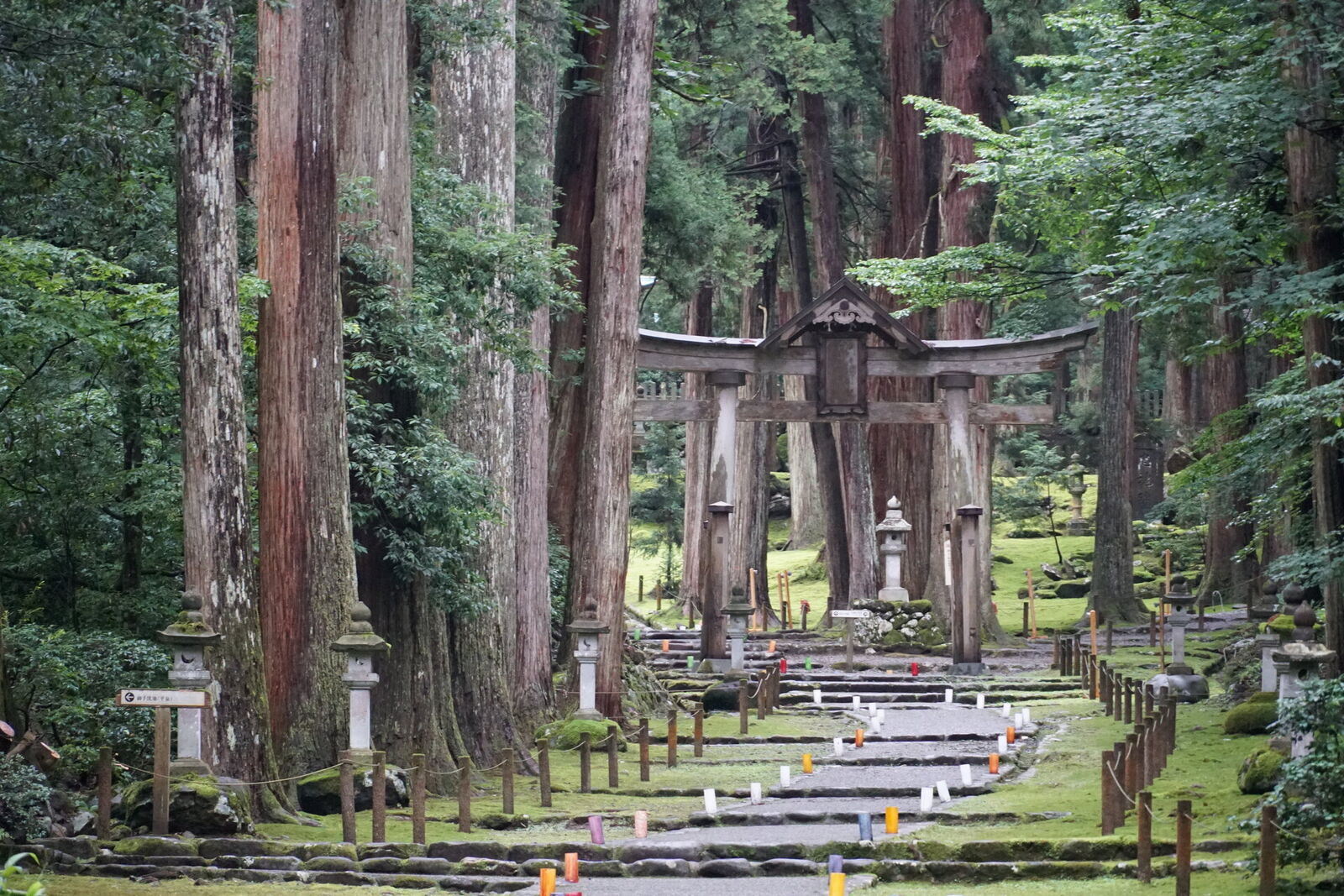
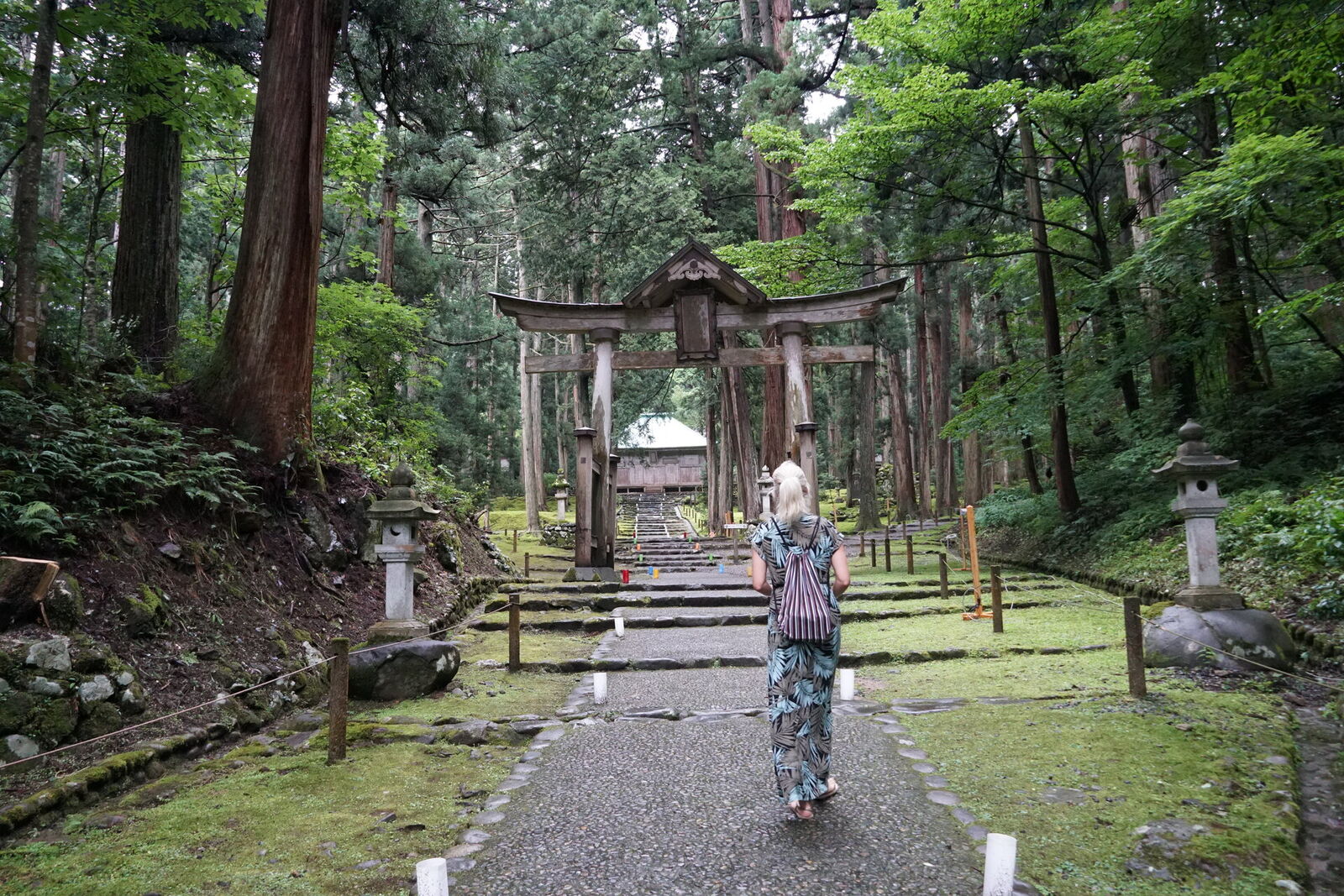
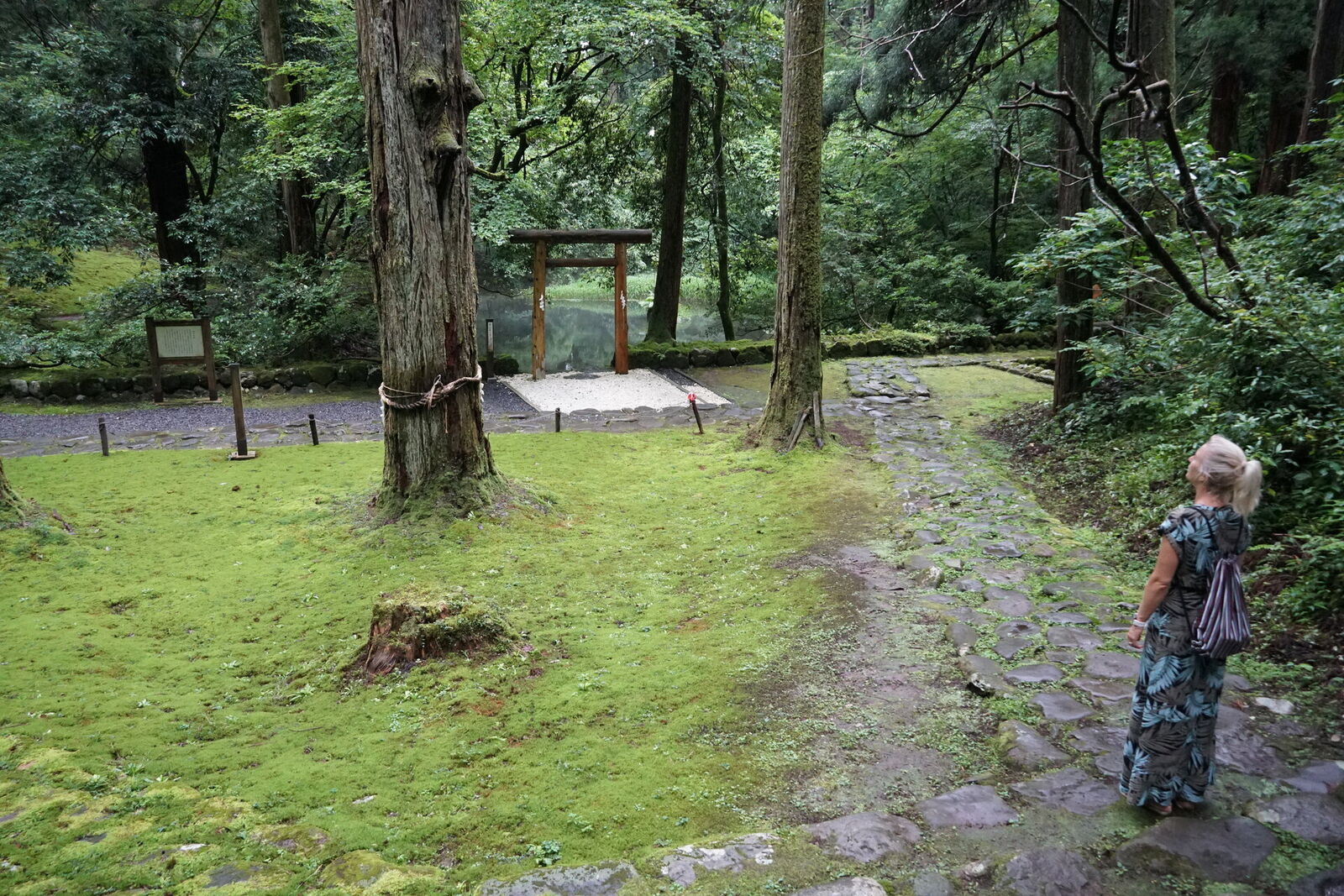
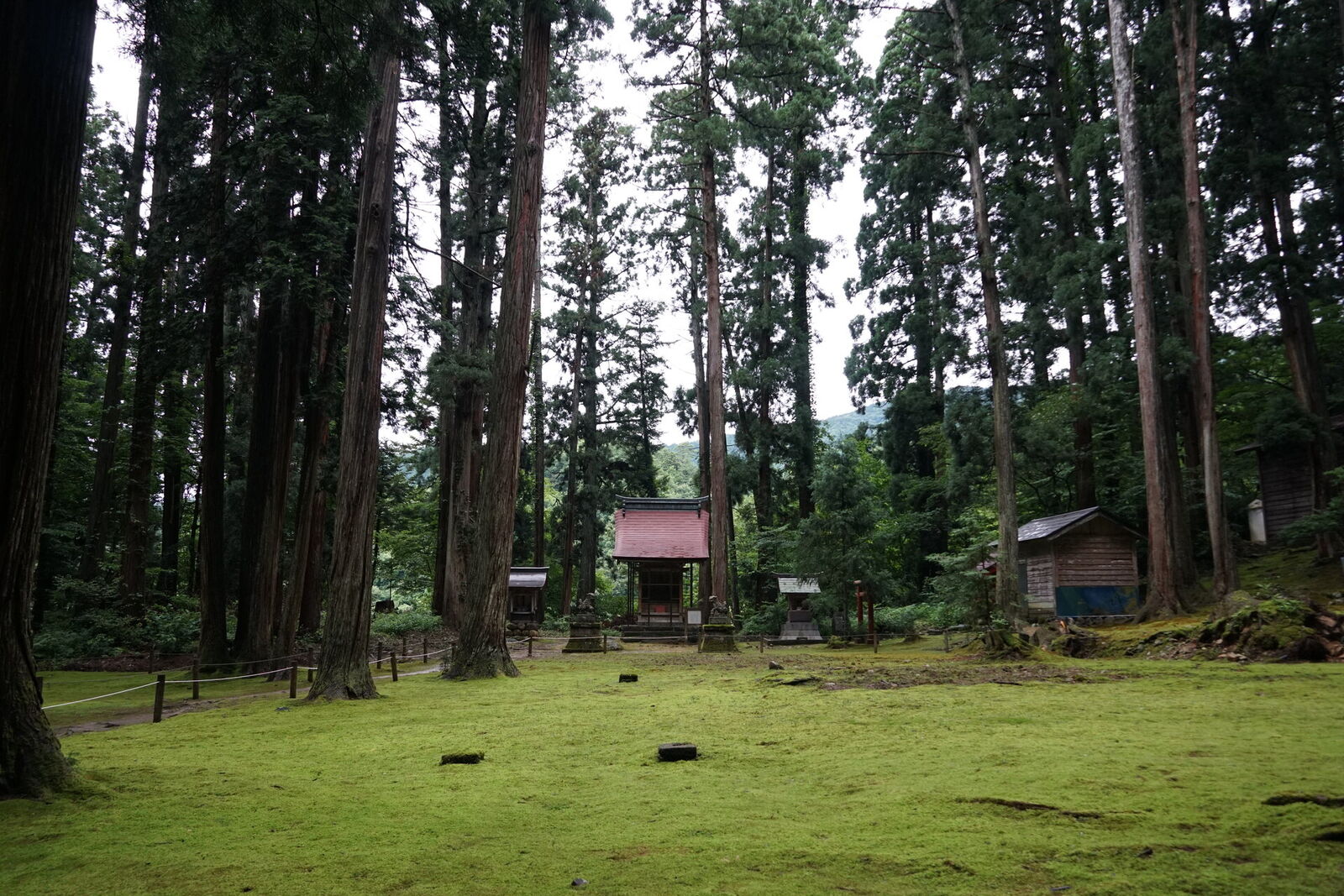
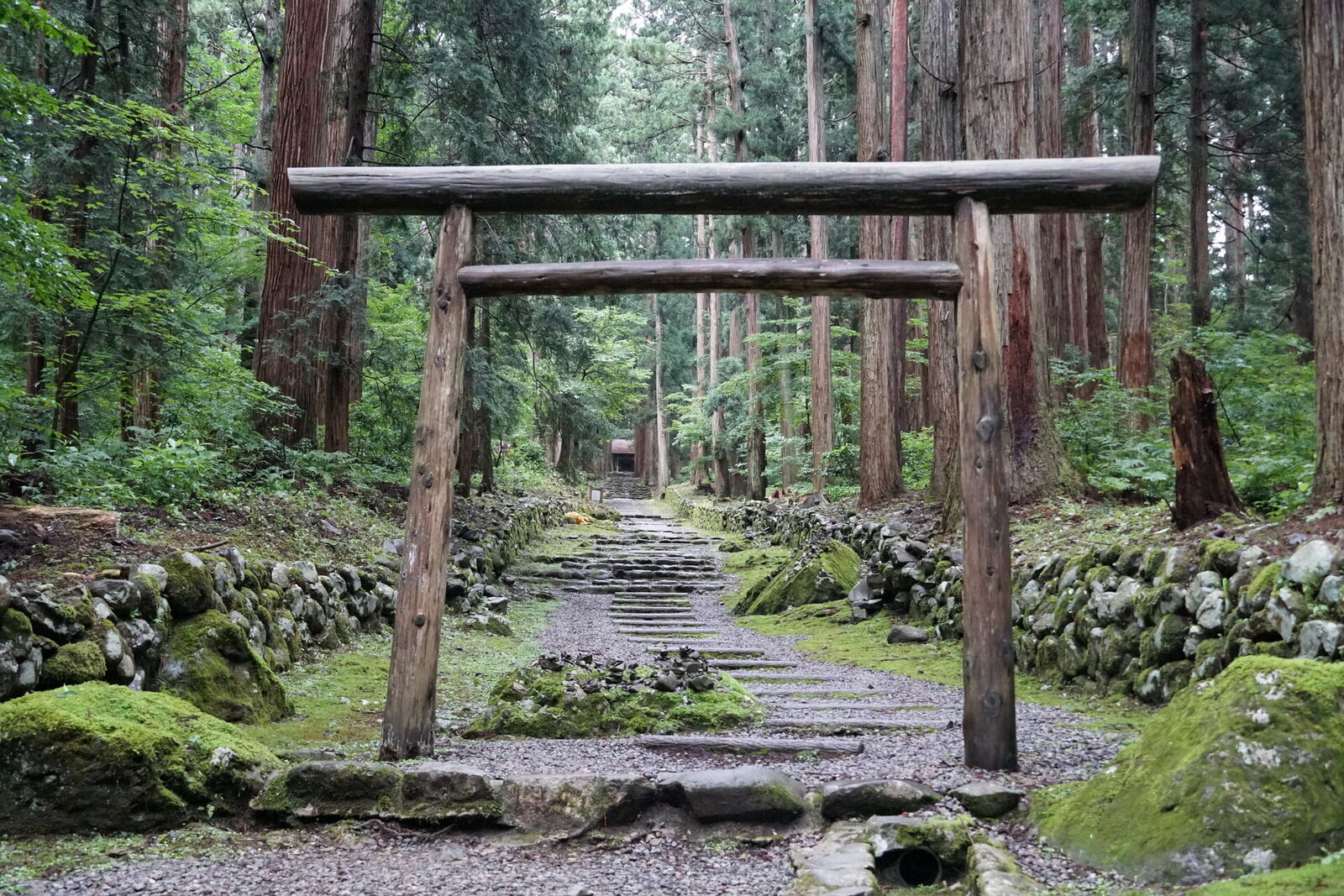
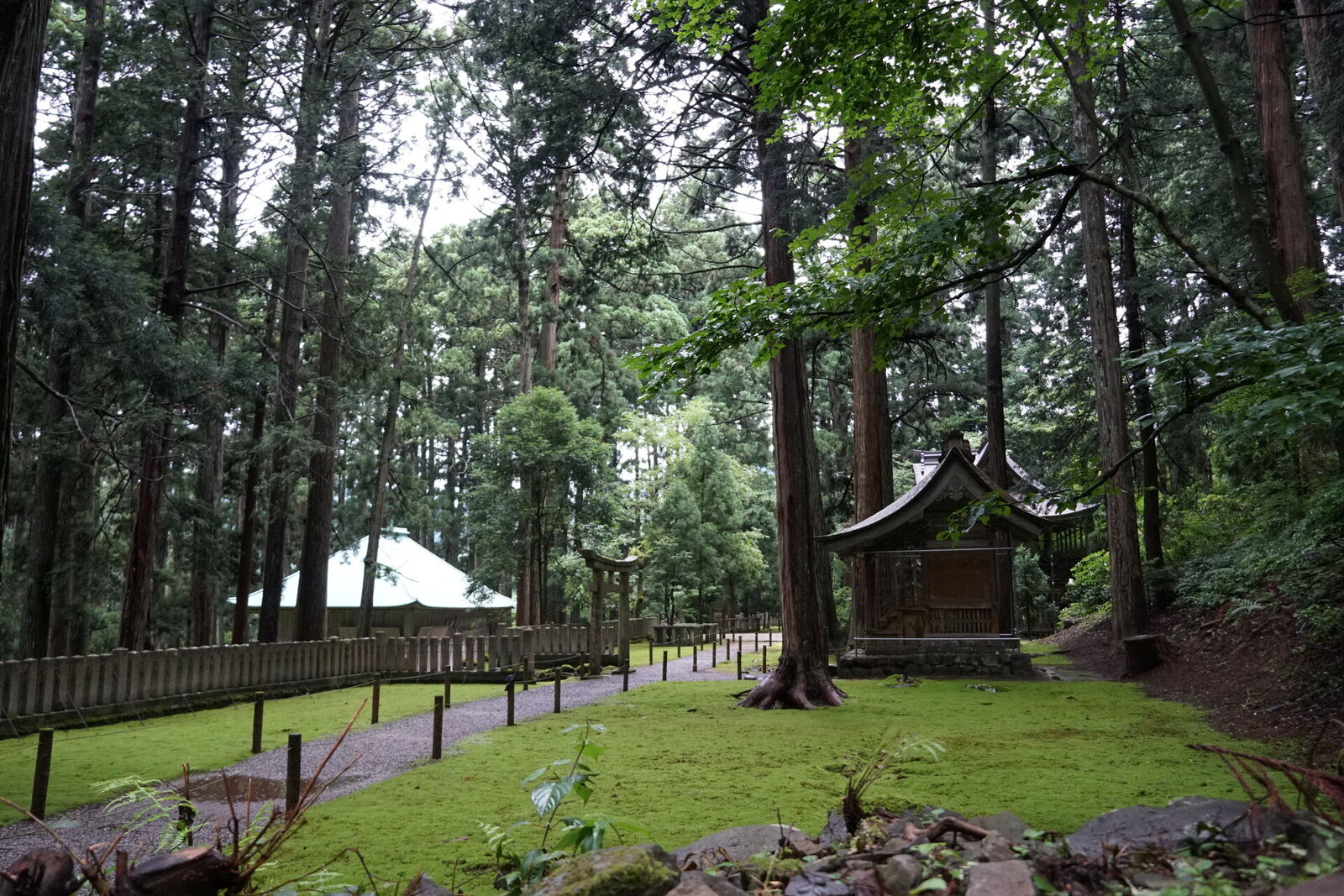
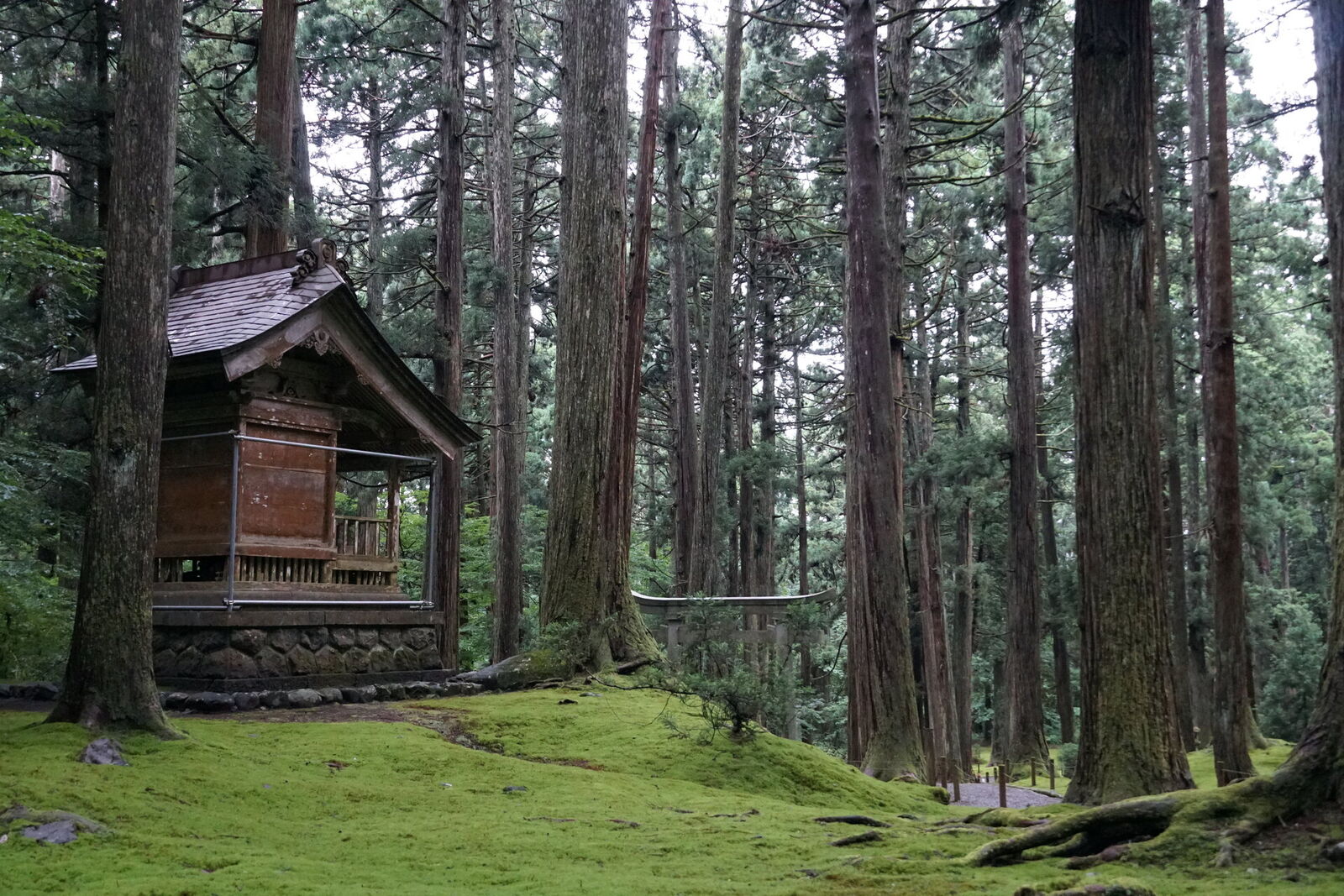
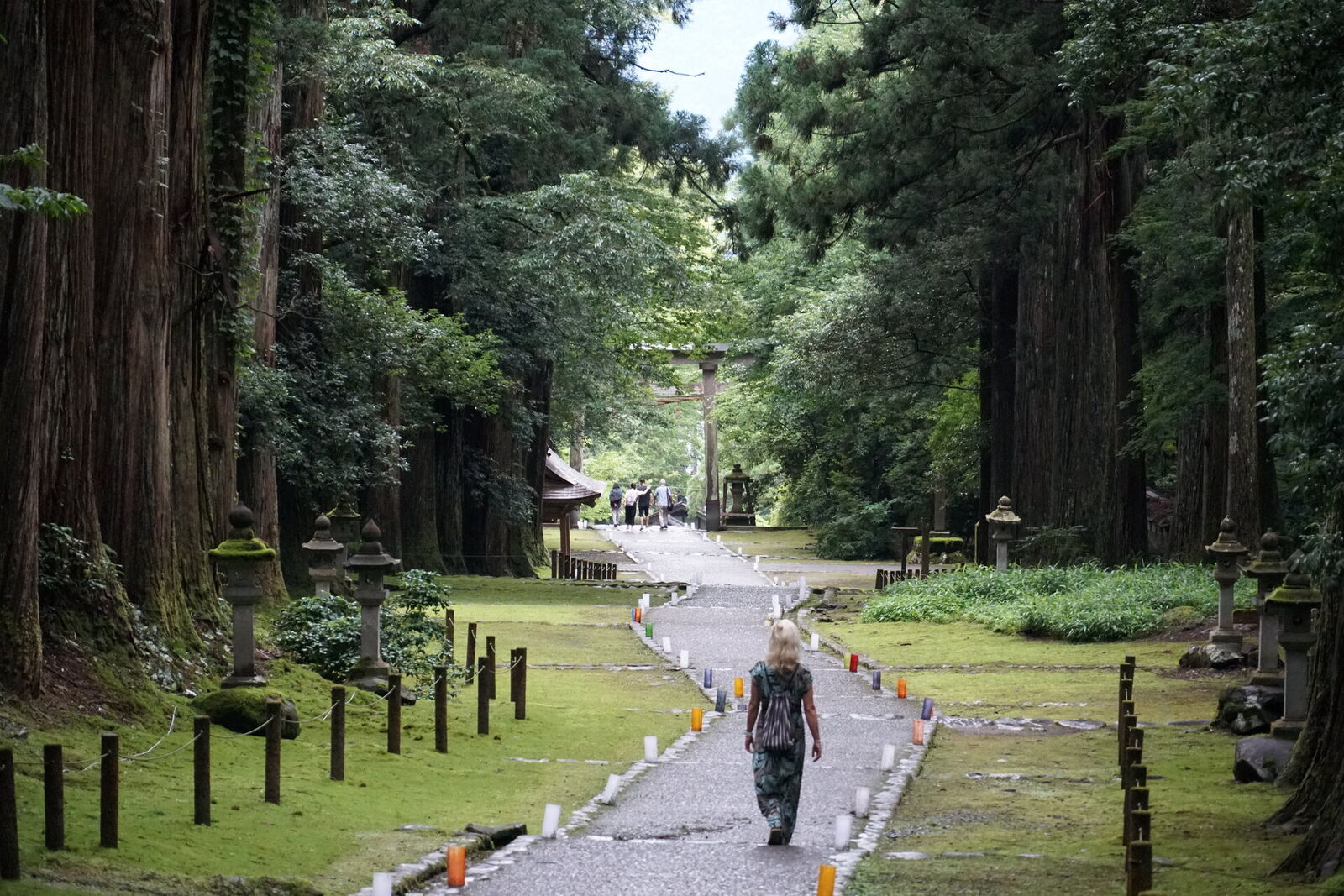
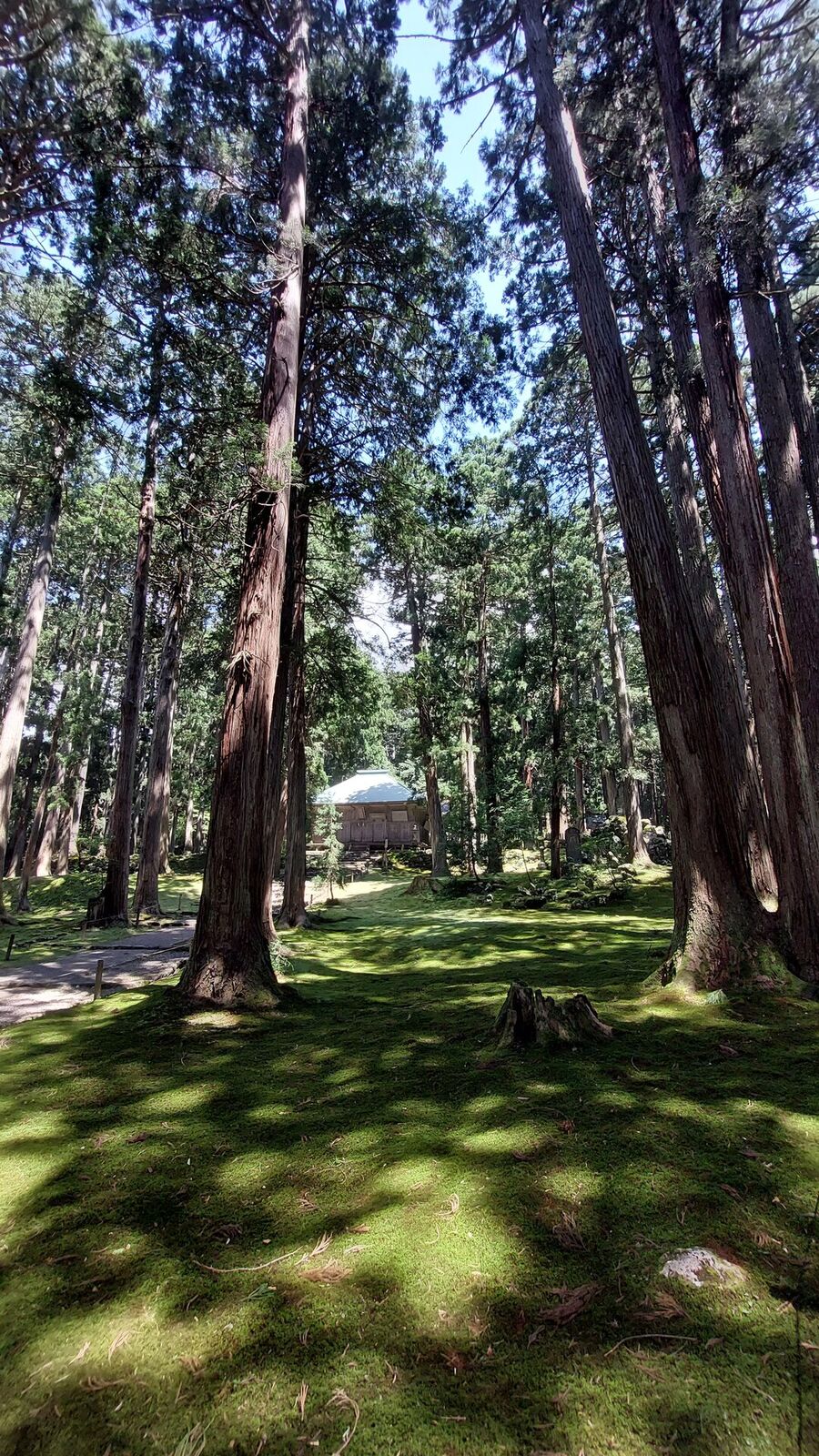
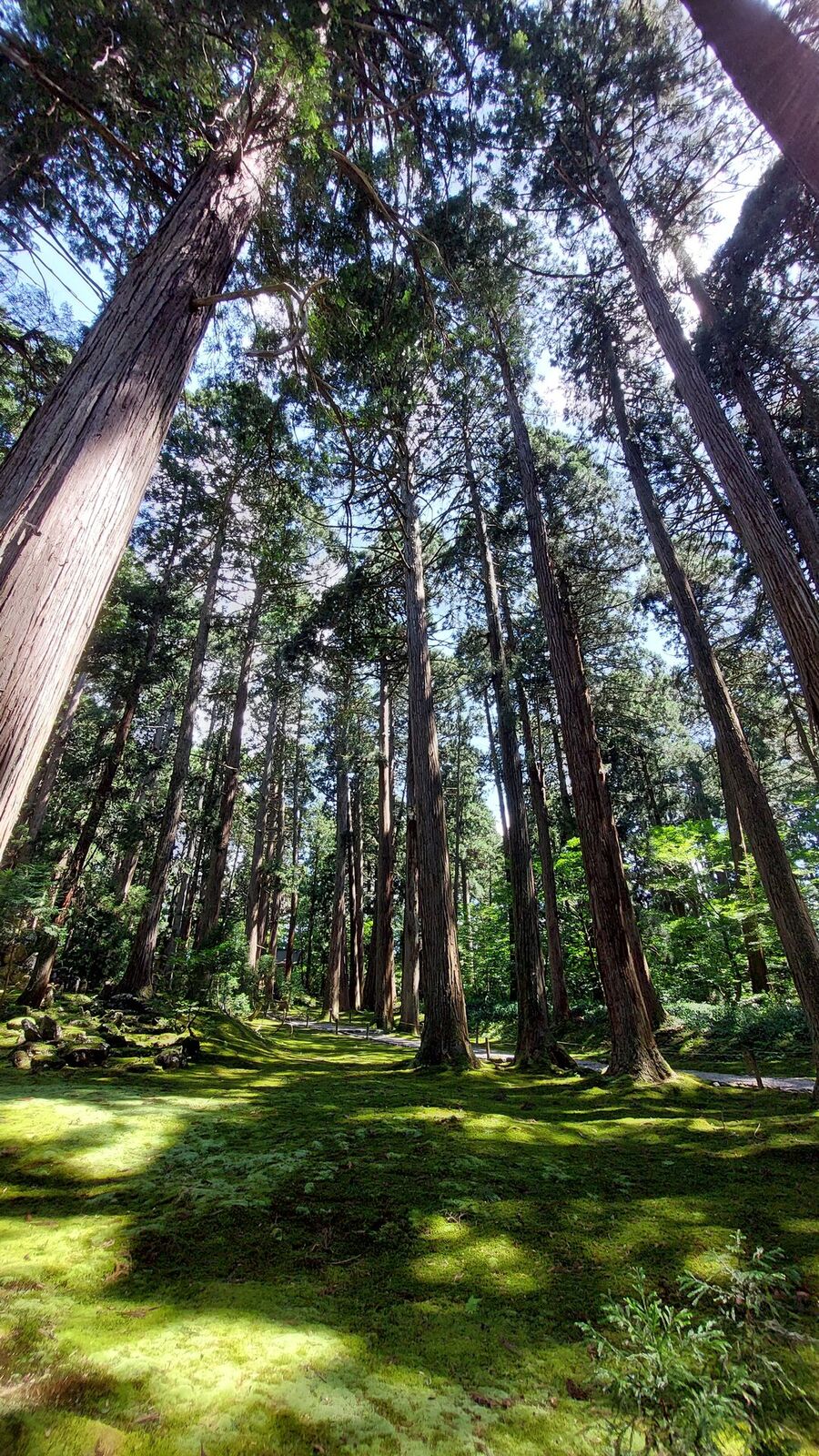
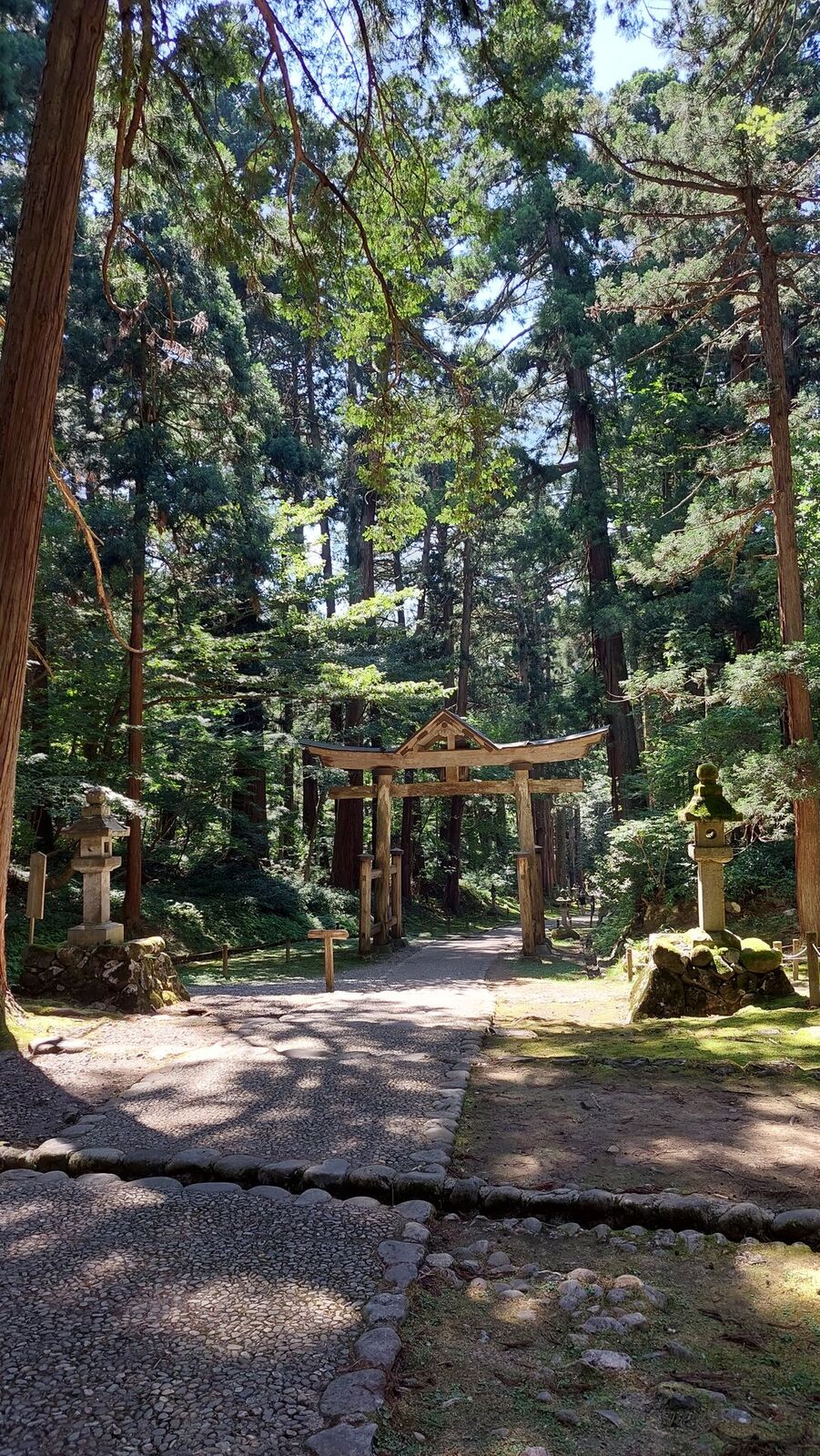
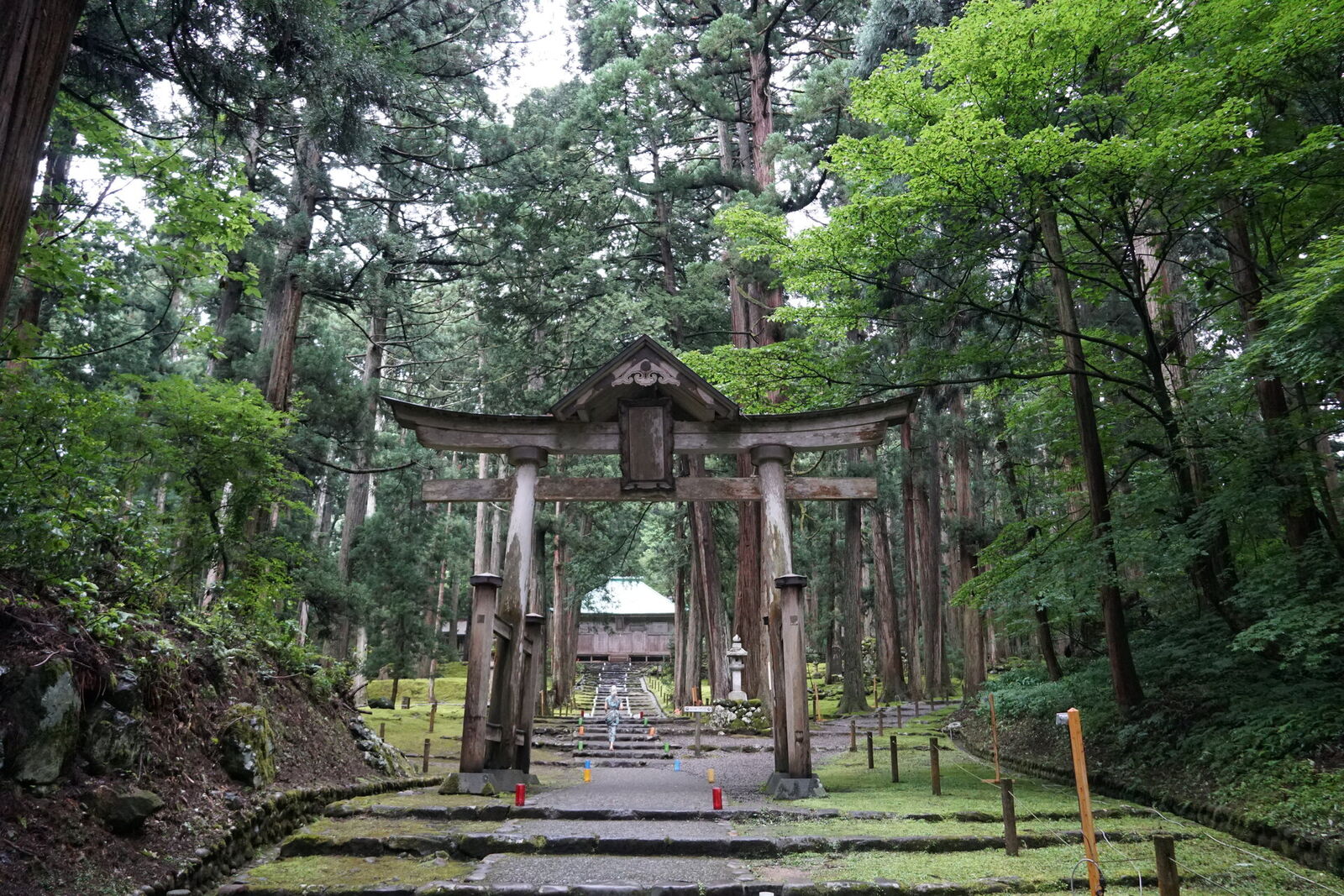
The main shrine area is its own world. The cedars are enormously tall, and their canopy creates a ceiling that filters the light into soft green-tinged shafts. The moss carpet stretches in every direction, broken only by stone lanterns, the occasional wooden railing, and the paths that lead deeper into the forest. A large wooden torii gate marks the entrance to the inner sanctuary, and walking through it feels like crossing a threshold into something older and quieter than the forest itself.
When I was here with Isi in 2019, we were essentially the only people in the entire complex. The silence was extraordinary - not the absence of sound, but a kind of active quiet where you become aware of individual birds, the creak of wood, the rustle of leaves far above. She walked ahead on the moss path toward the torii, and the image of a person moving through that green light between those massive trees is one of the strongest visual memories I have from Japan.
The Broken Tablets
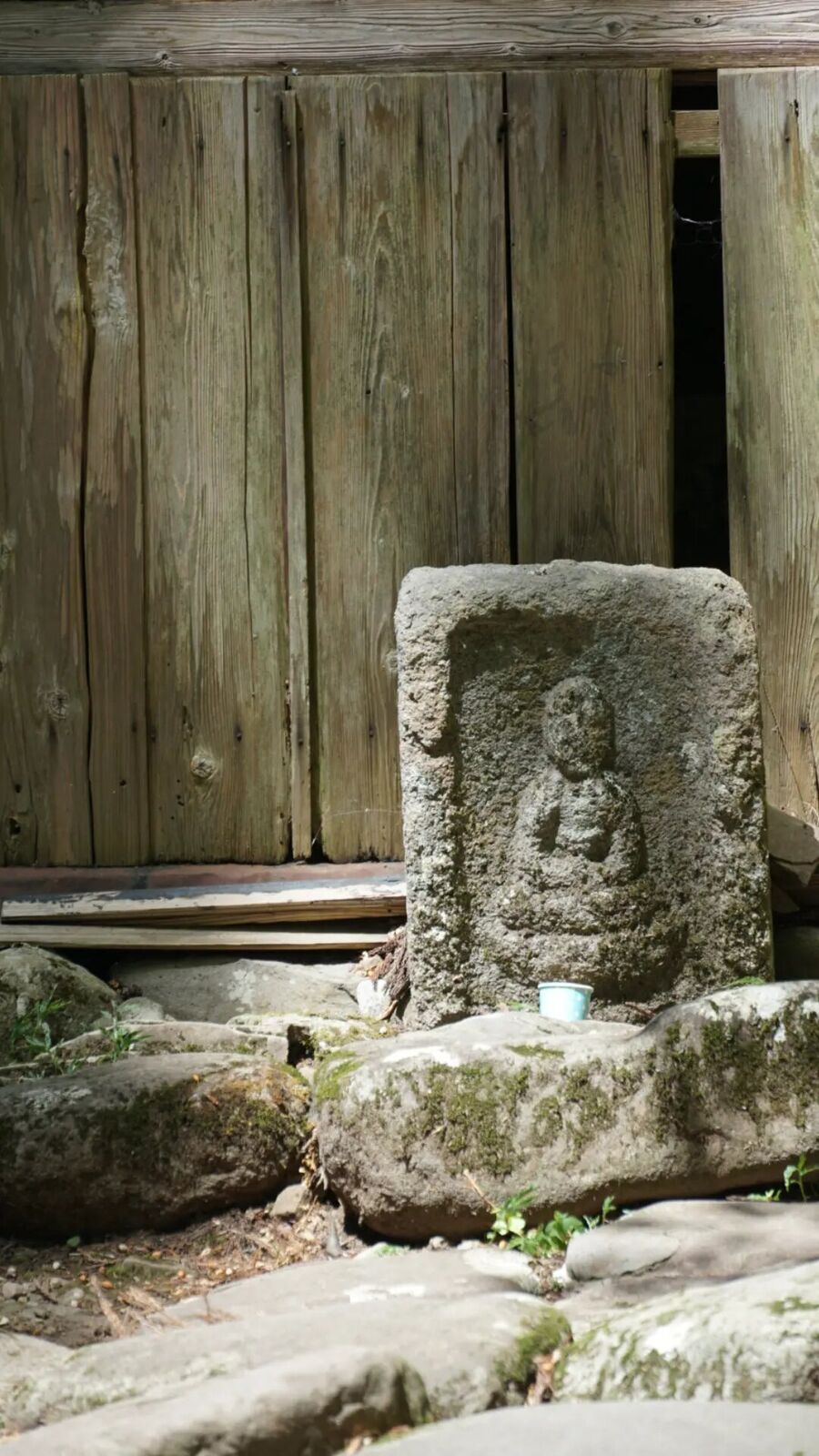
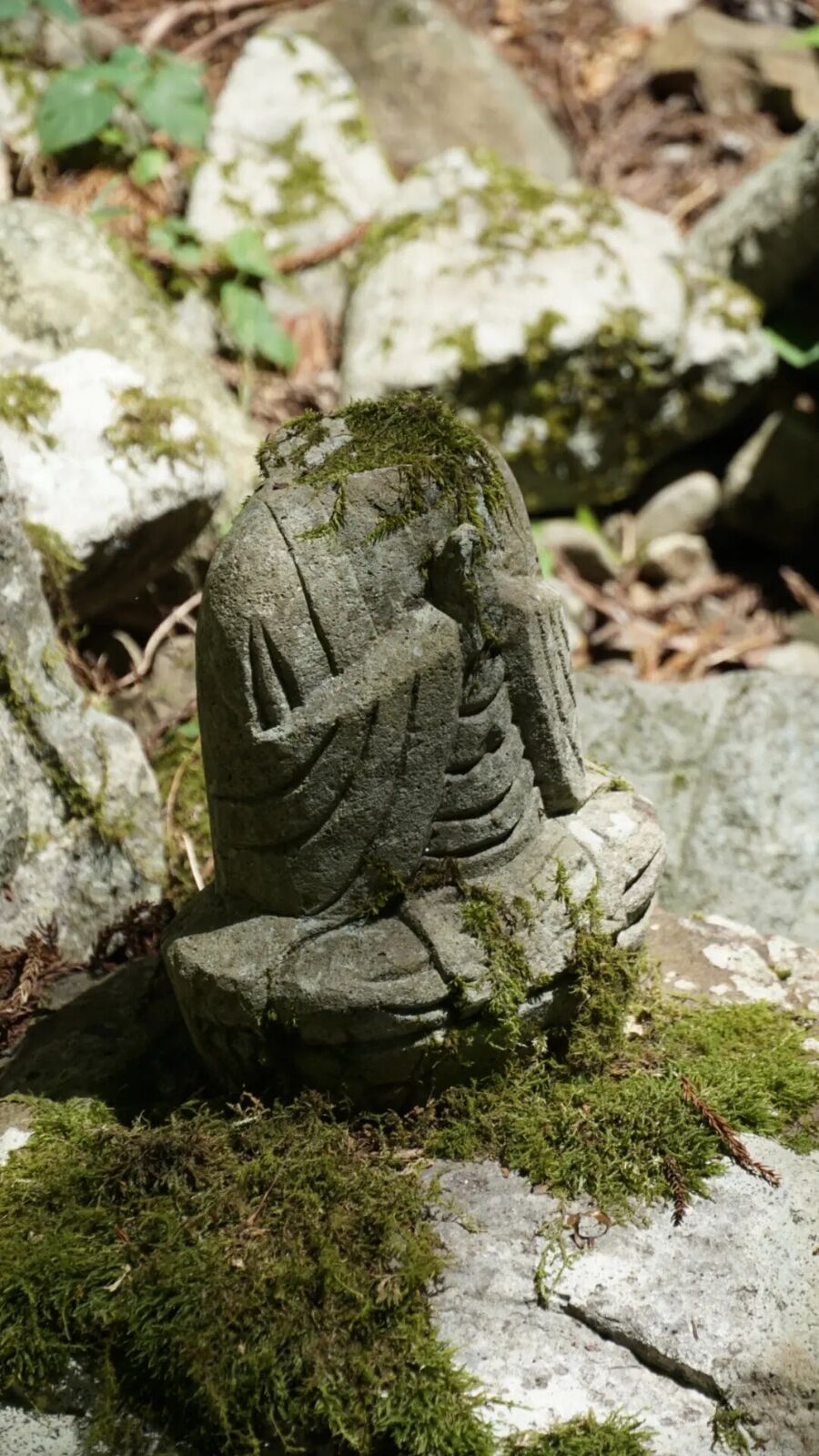
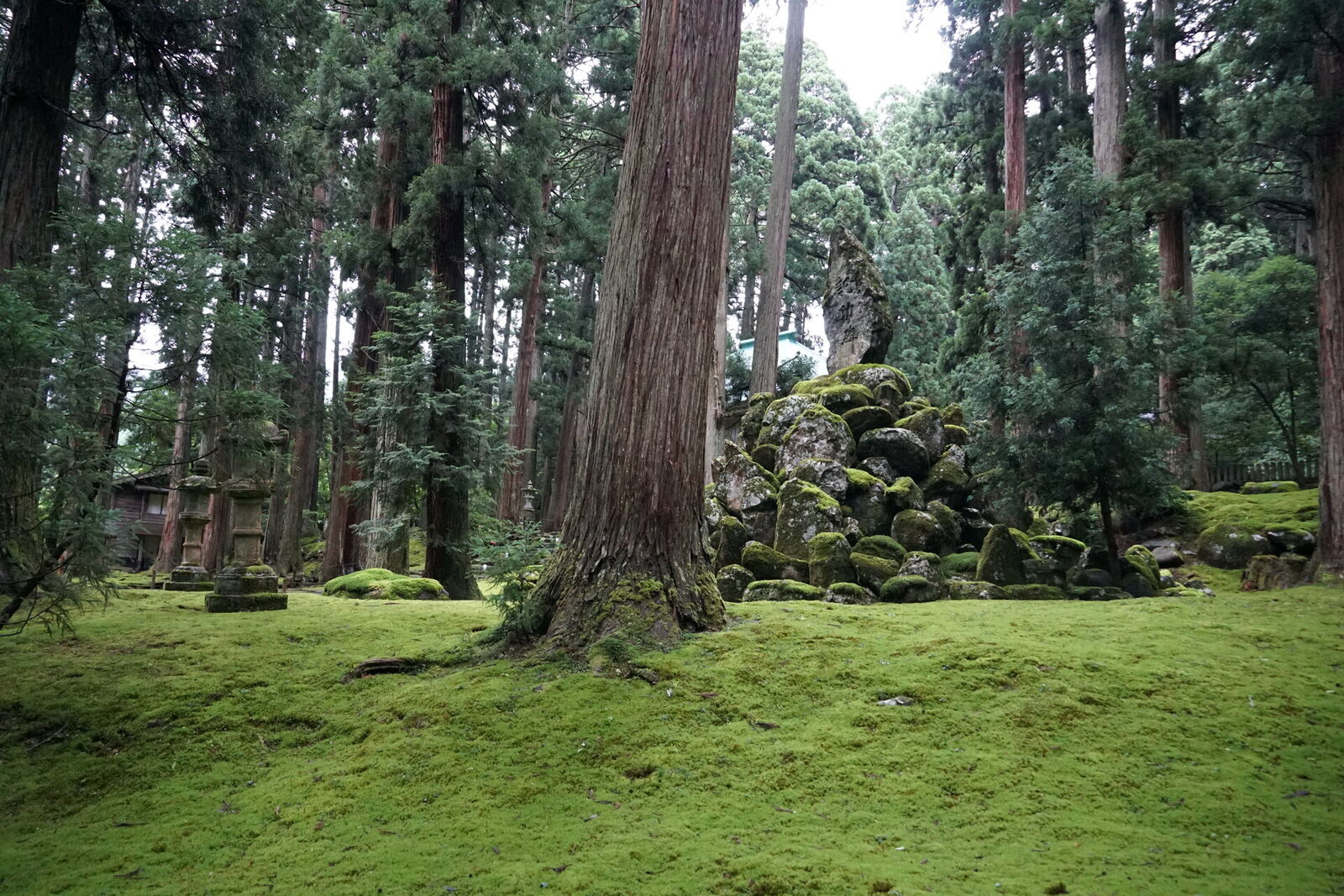
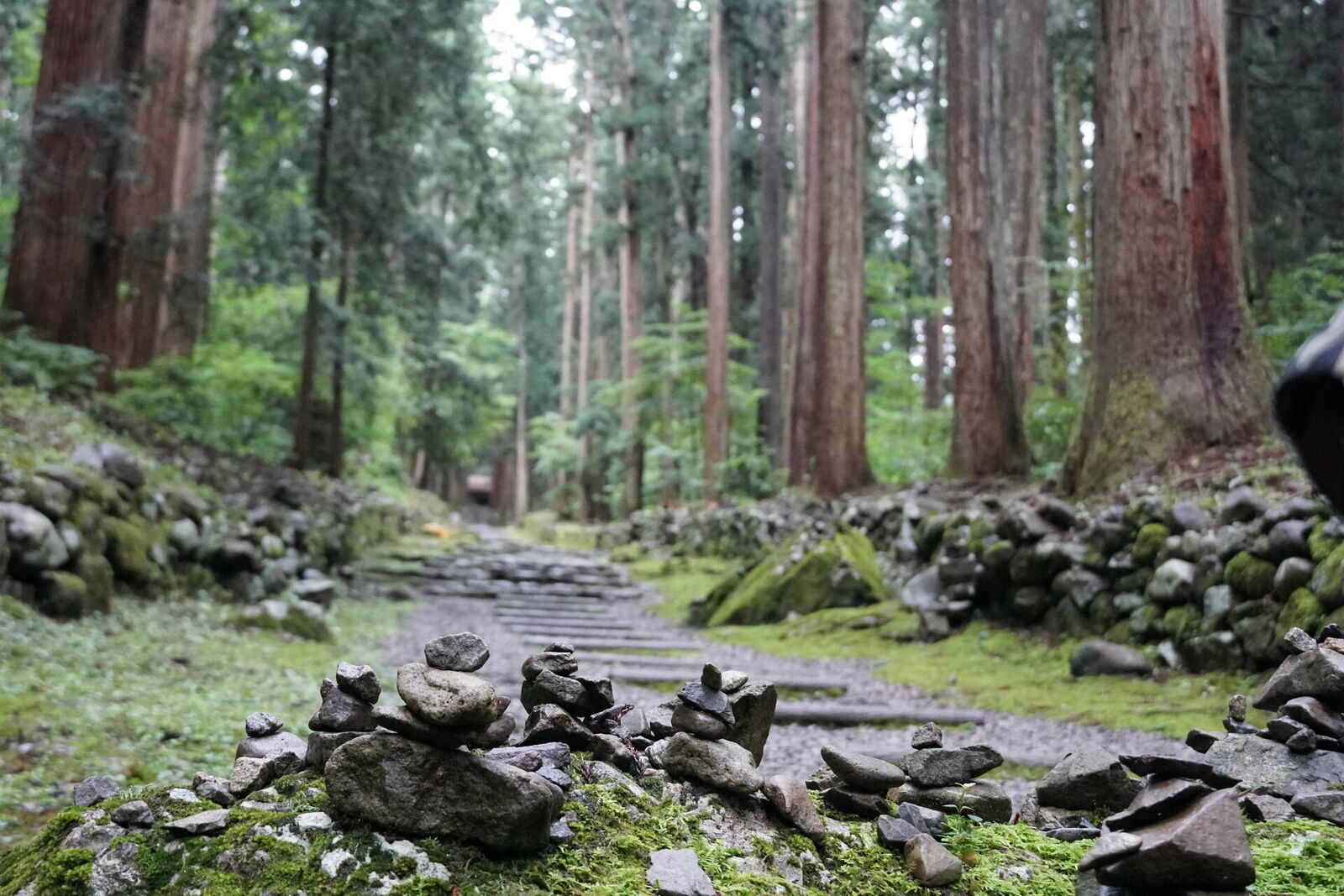
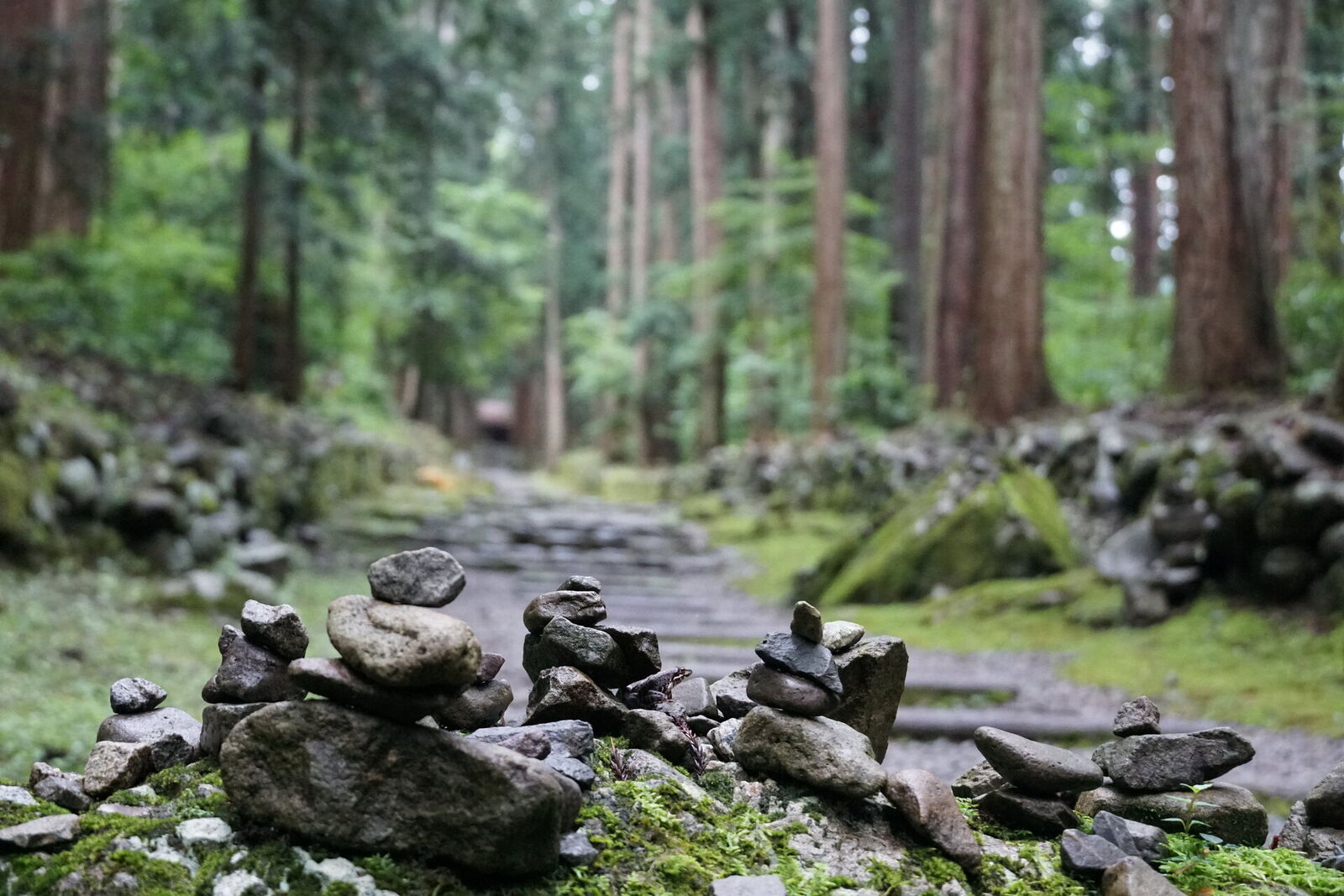
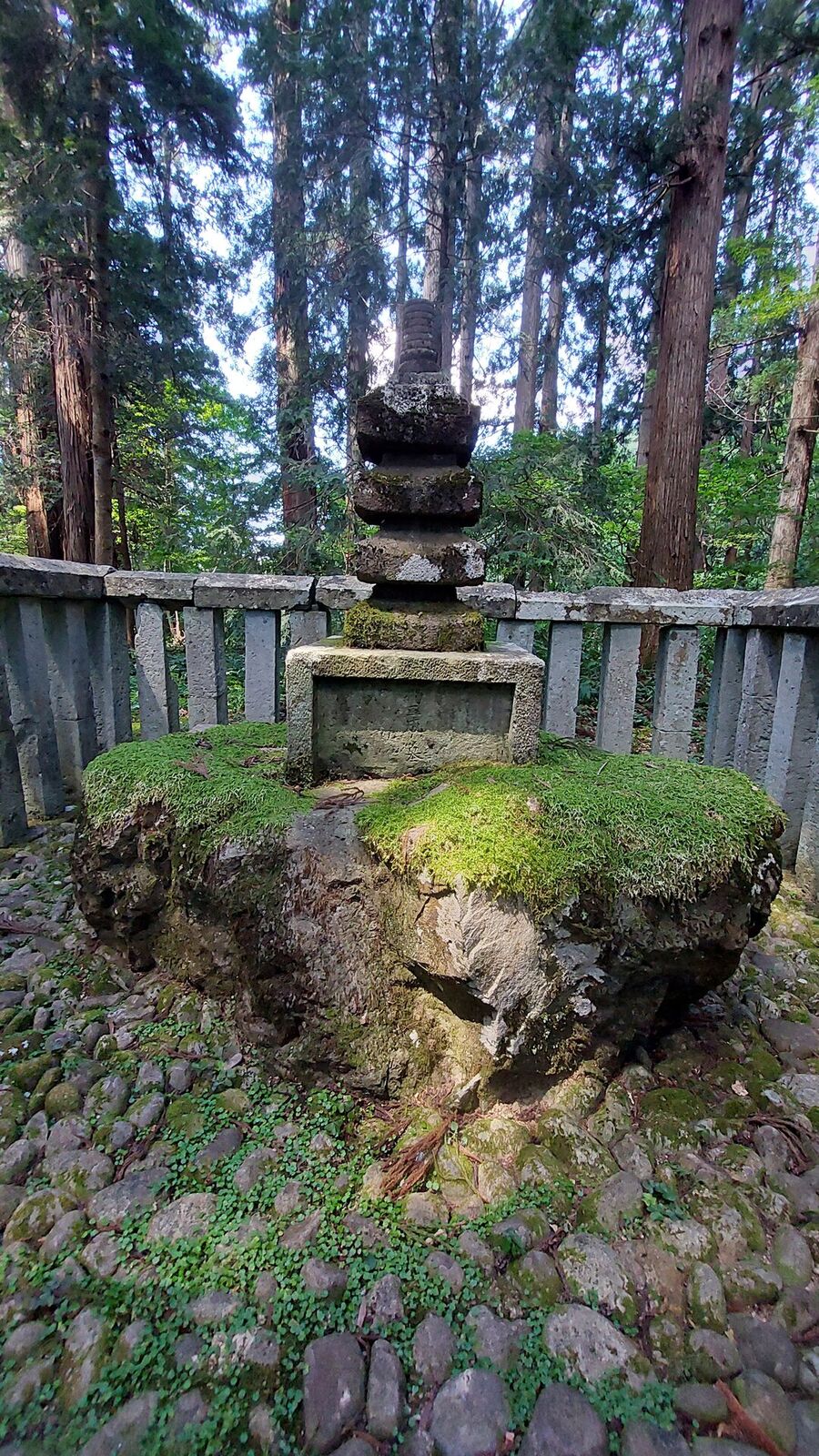
Off the main path, there's a small area with clusters of broken stone Buddhist tablets scattered on the moss. These are remnants of the forced separation of Shinto and Buddhism during the Meiji period, when the government ordered all Buddhist elements removed from Shinto shrines. Hakusan Heisenji had been a syncretic site for over a thousand years, blending both traditions, and the Meiji order meant the destruction of temple halls and the removal of Buddhist iconography. The broken tablets are what survived - fragments of carved stone lying in the moss, still legible in places, evidence of a religious purge that reshaped sacred sites across Japan.
Beyond the Main Shrine
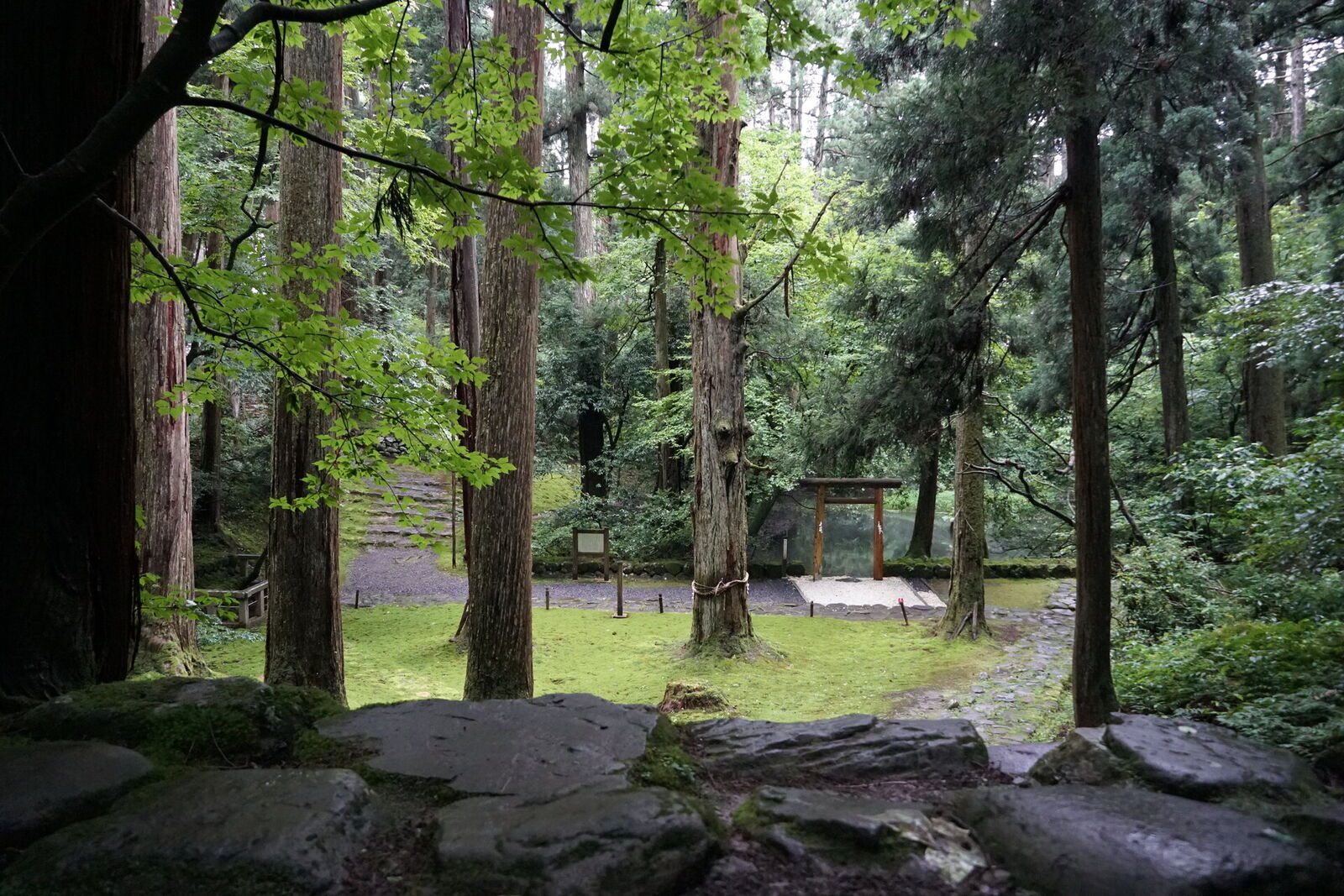
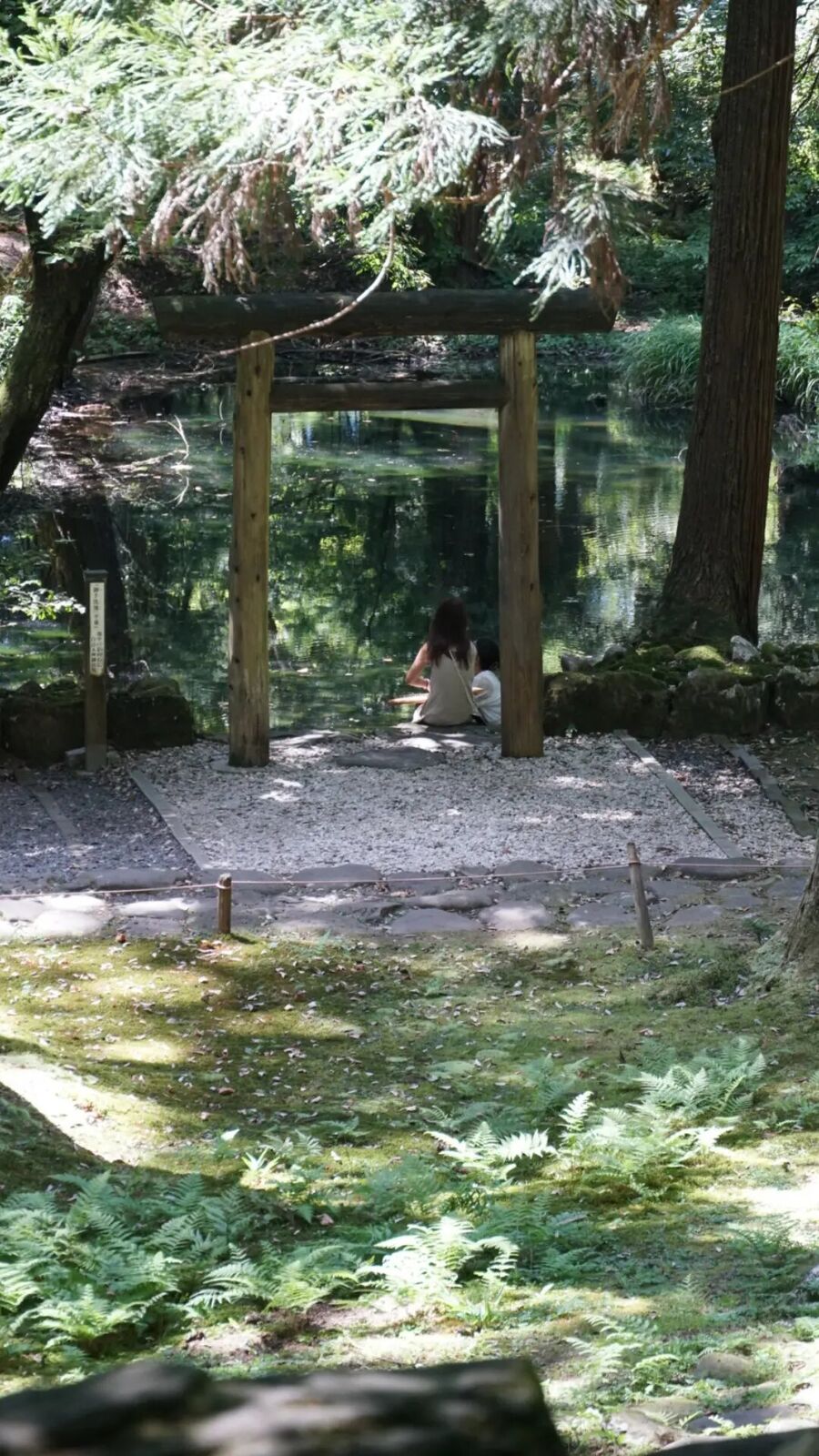
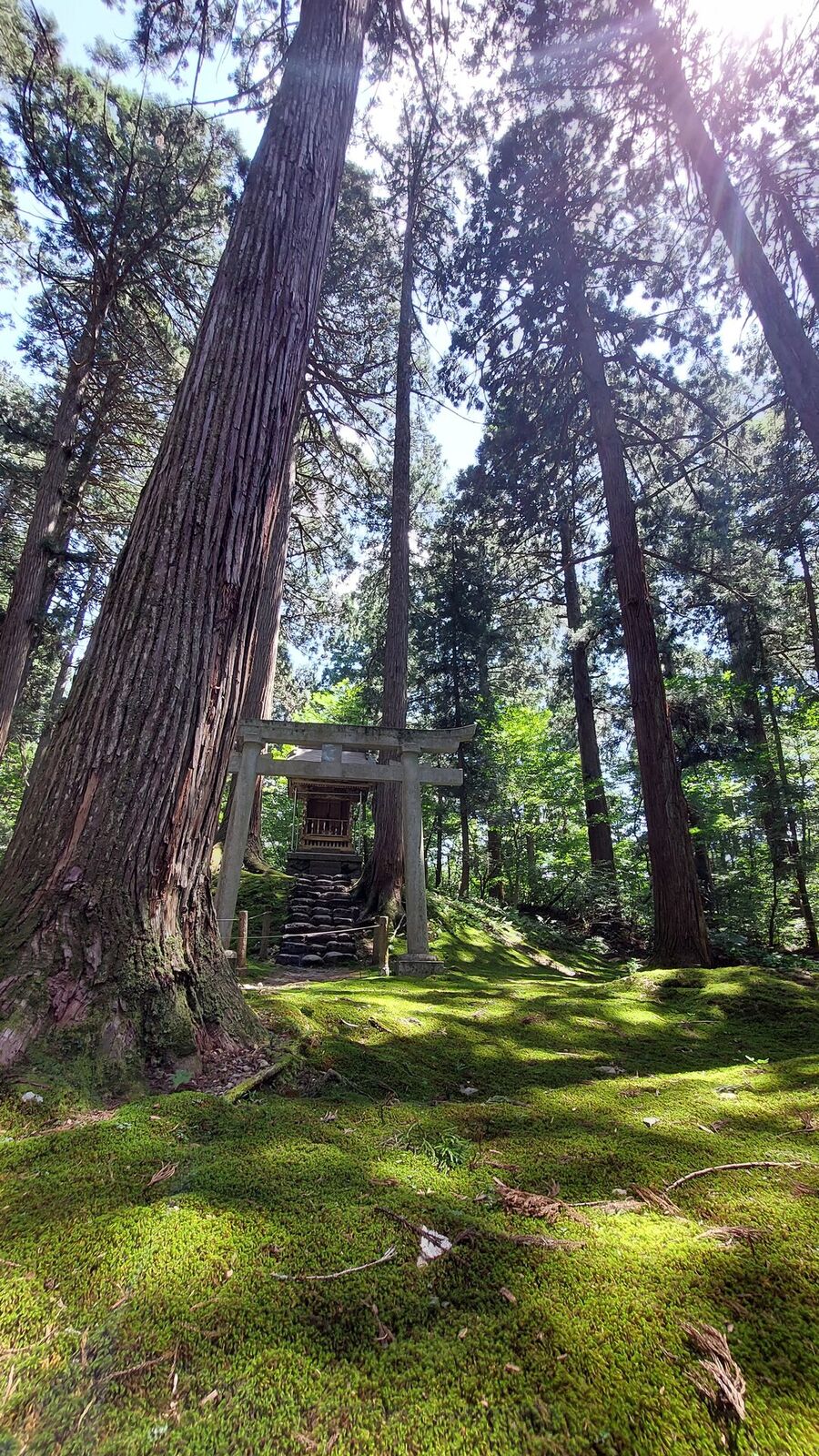
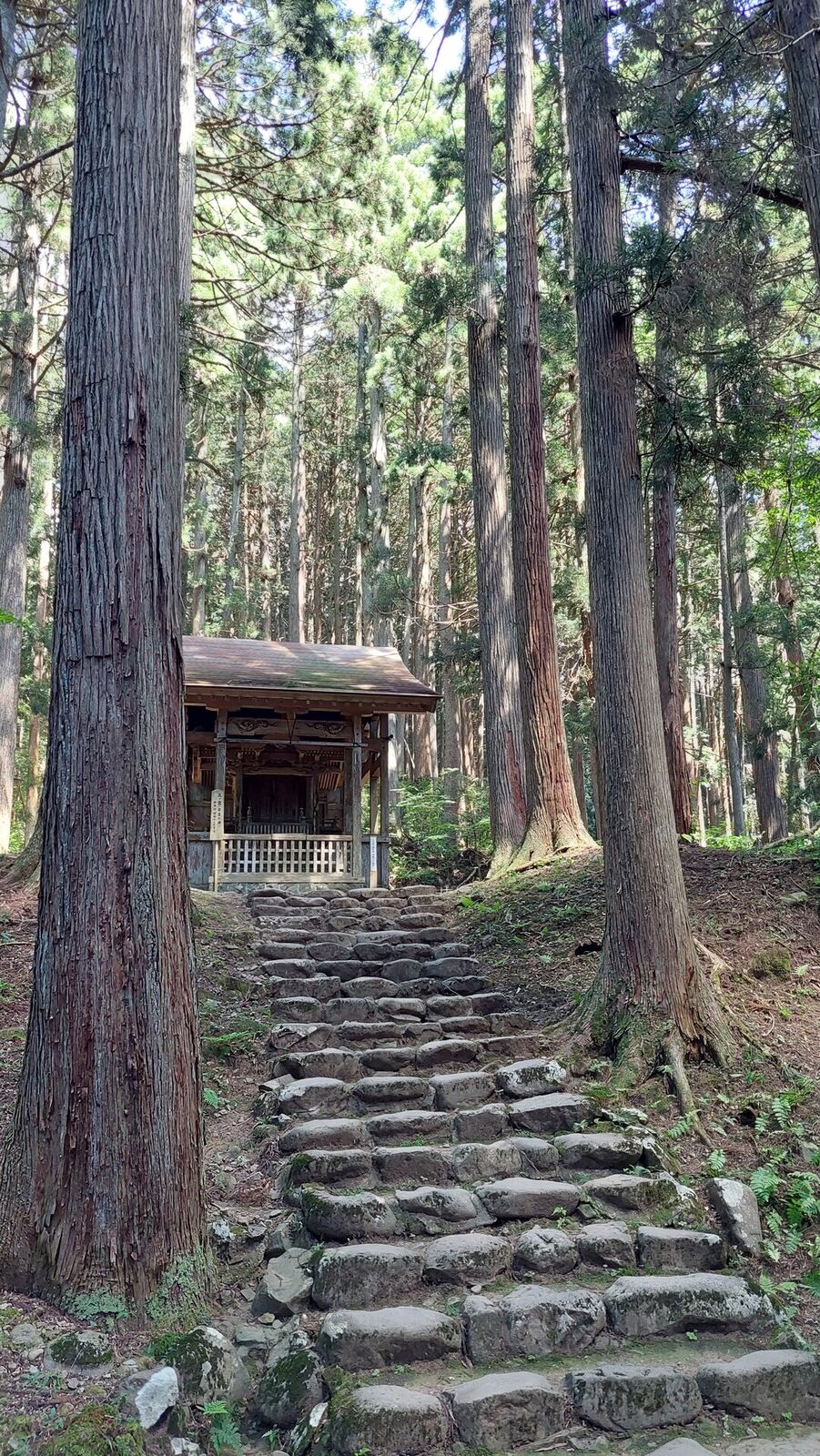
The complex extends much further than most visitors realize. There are side paths leading to a small sacred pond, to the excavation areas where the medieval foundations are exposed, and deeper into the forest where smaller shrines sit on mossy ledges among the trees. One path climbs higher through increasingly steep stone steps to a small shrine that feels genuinely remote, even though you're only a few hundred meters from the entrance. The further you go, the thicker the moss and the taller the trees, and the feeling of walking through something alive and ancient only intensifies.
Nearby: Maruoka Castle
About 20 minutes by car from Hakusan Heisenji is Maruoka Castle, one of the few remaining original castle keeps in Japan. It's small compared to Himeji or Matsumoto, but its age and authenticity make it a worthwhile stop if you're in the area. The steep wooden stairs inside are almost ladders, and the view from the top floor looks out over the Fukui plain.
Practical Info
Location: Katsuyama, Fukui Prefecture. About 30 minutes east of Fukui city by car. View on Google Maps
Access: Car only, realistically. There's no convenient public transport. Free parking at the entrance.
Cost: Free to enter. The museum/visitor center nearby has a small fee.
Time needed: 1-2 hours to explore the shrine grounds thoroughly, including the side paths and excavation areas. Most visitors spend 30 minutes, but you'll want more.
Campervan tip: Several Michi-no-Eki options in the Katsuyama/Fukui area. The dinosaur museum nearby is another reason to spend time in this region.
Illumination events: The shrine holds evening illumination events where the moss grounds and cedars are lit up. Worth planning a trip around if the dates align.
Best time: The moss is greenest after rain and in the humid summer months (June-September). Rainy days are actually ideal - the moss glows, and you'll have the place to yourself. Autumn foliage adds color. Winter is quieter but the moss is less vivid.
Tip: Compare this to Kyoto's Saihoji moss temple, which requires advance booking, a donation of 3,000+ yen, and a ritual calligraphy session before entry. Hakusan Heisenji is free, open, bigger, and possibly more beautiful. It just doesn't have the brand recognition.