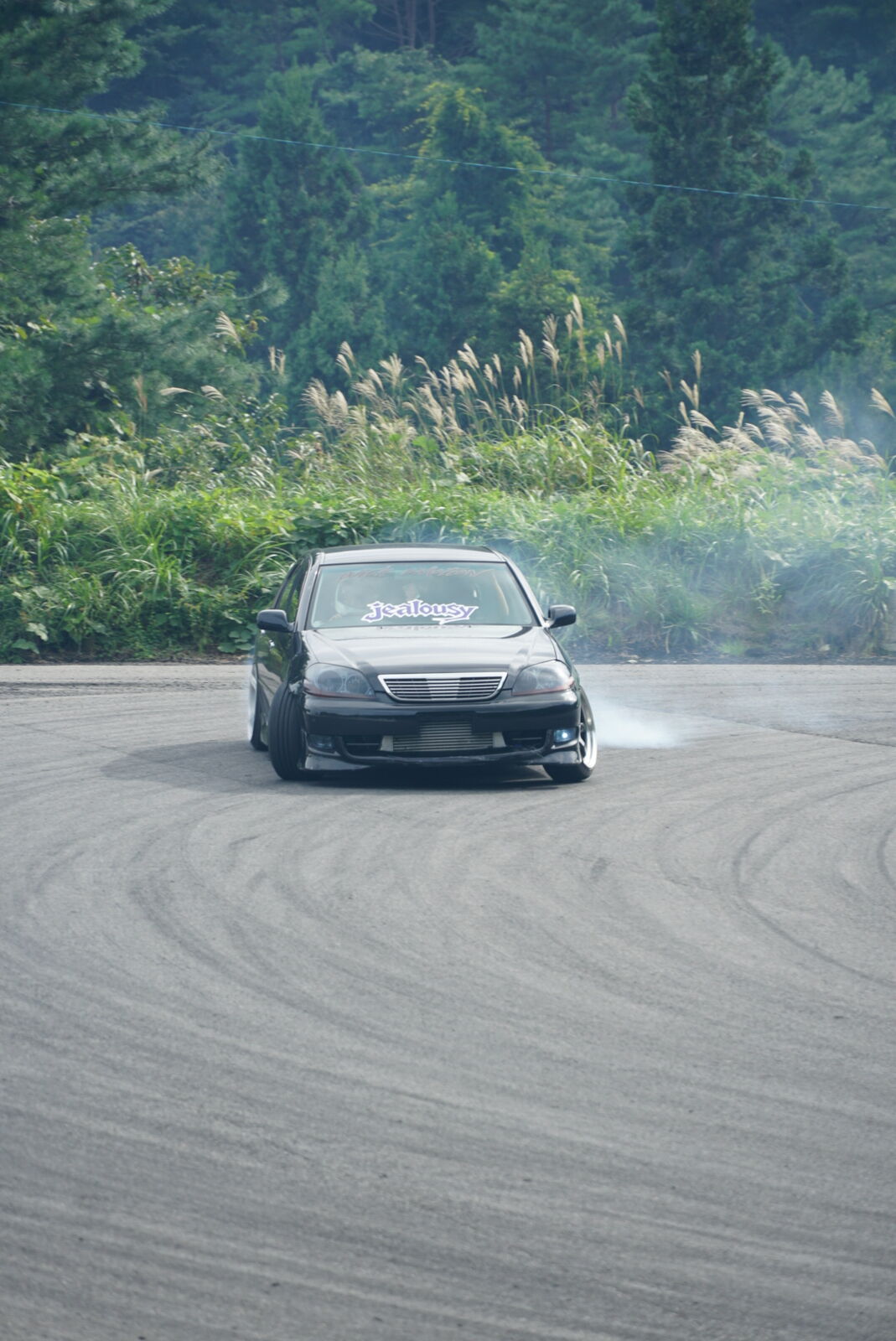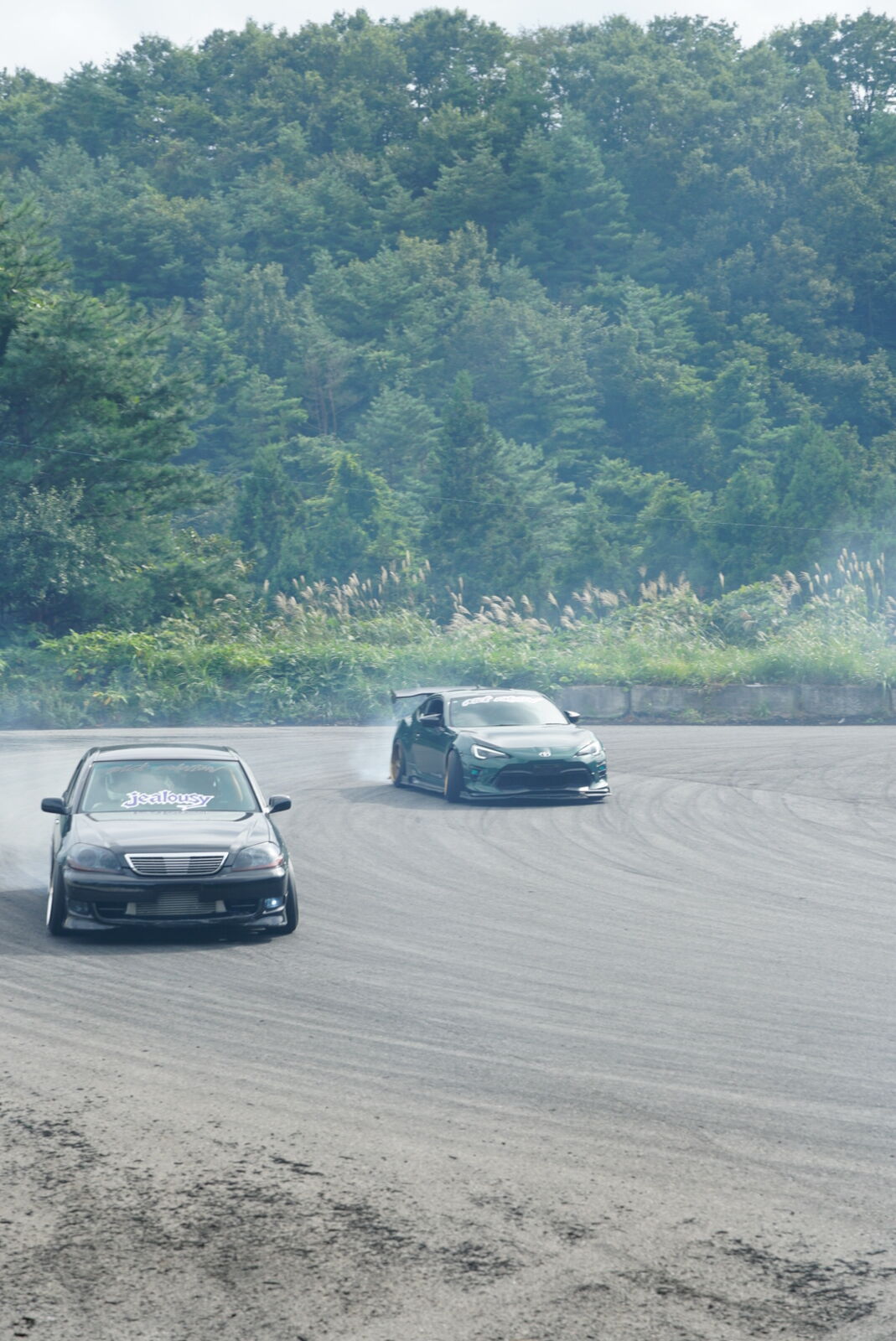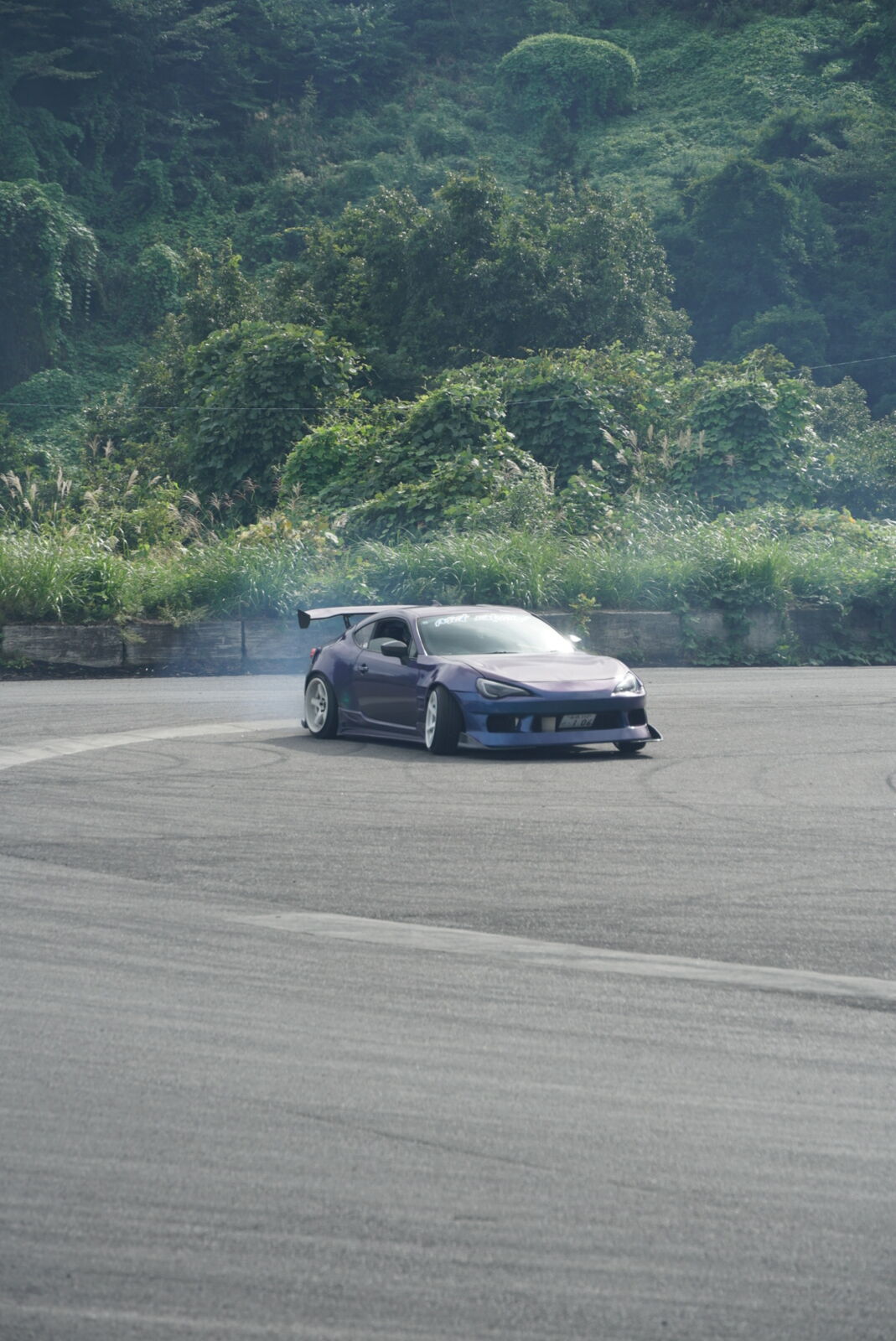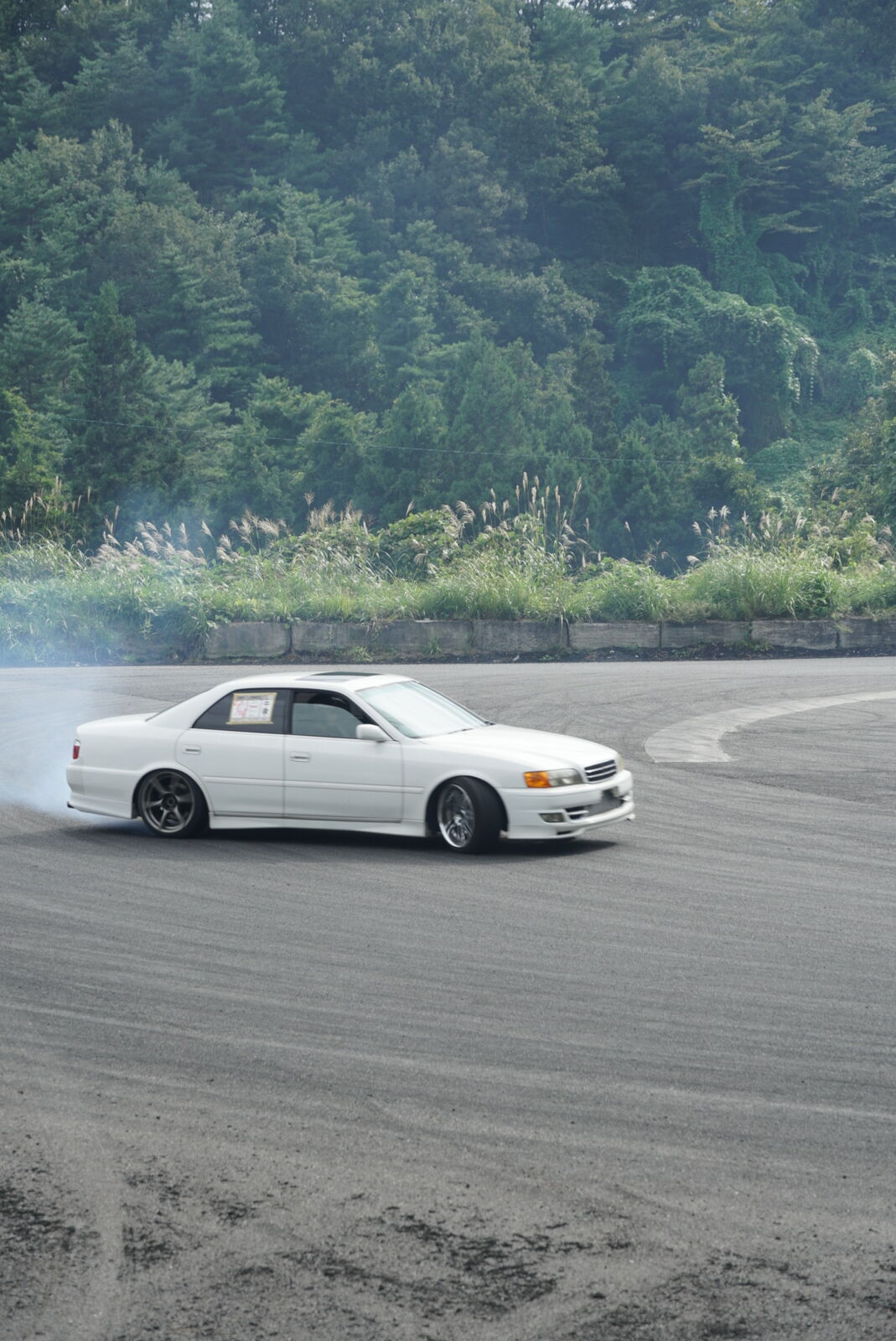
Ebisu Circuit was a planned stop on a route I'd mapped through Tohoku, hitting several of the region's well-known circuits. Ebisu and Nikko were the main targets. I knew Ebisu by reputation - Nobushige Kumakubo's creation, the spiritual home of drifting, the place where the Drift Matsuri happens three times a year. What I didn't expect was the sheer scale of it.
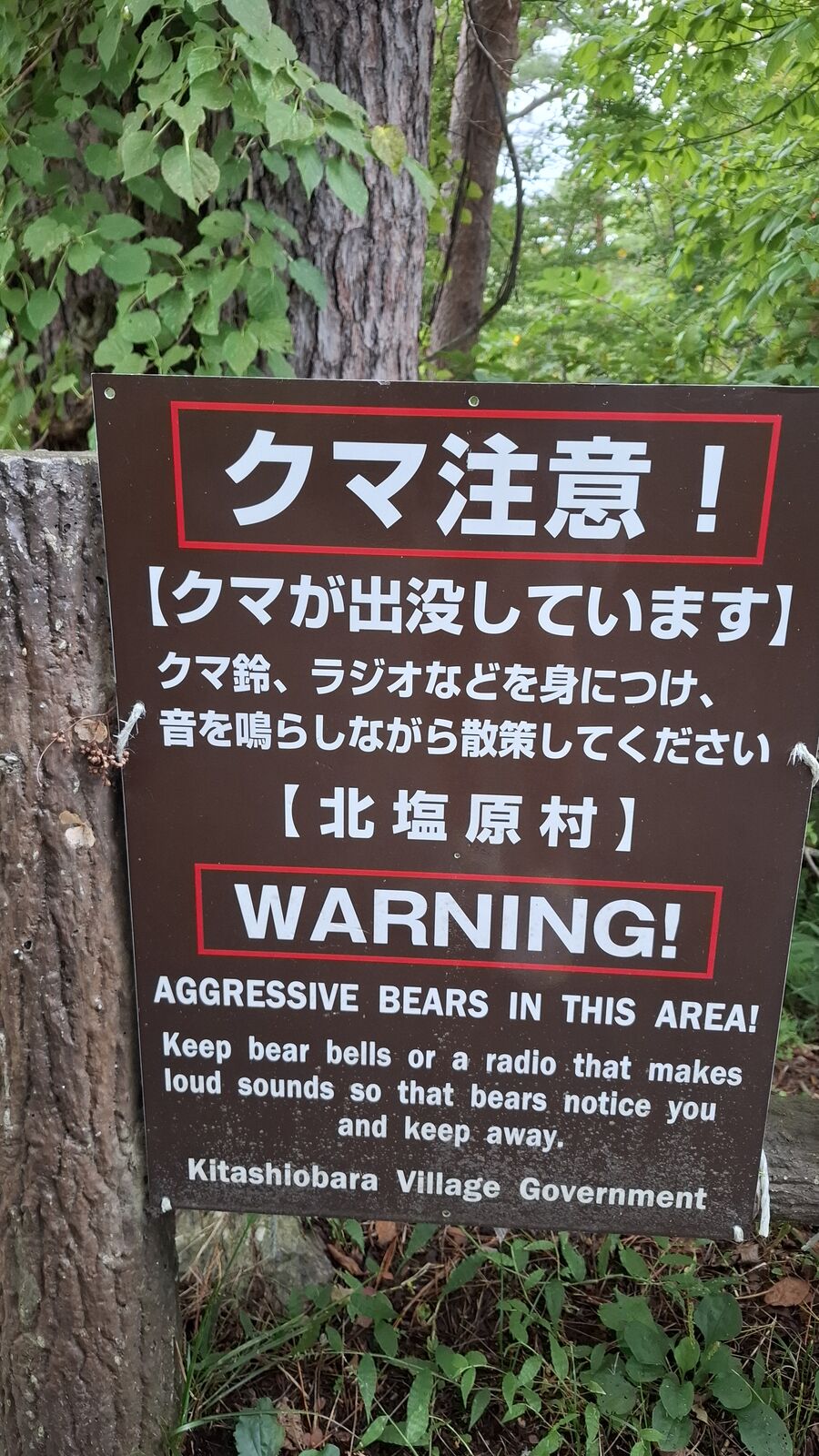
The complex sits in the highlands above Nihonmatsu, Fukushima Prefecture, about 250 kilometers north of Tokyo. The road up winds through forests and past bear warning signs. There's no public transport. You drive here because you want to be here, and the people who want to be here are car people.
Bigger Than Expected
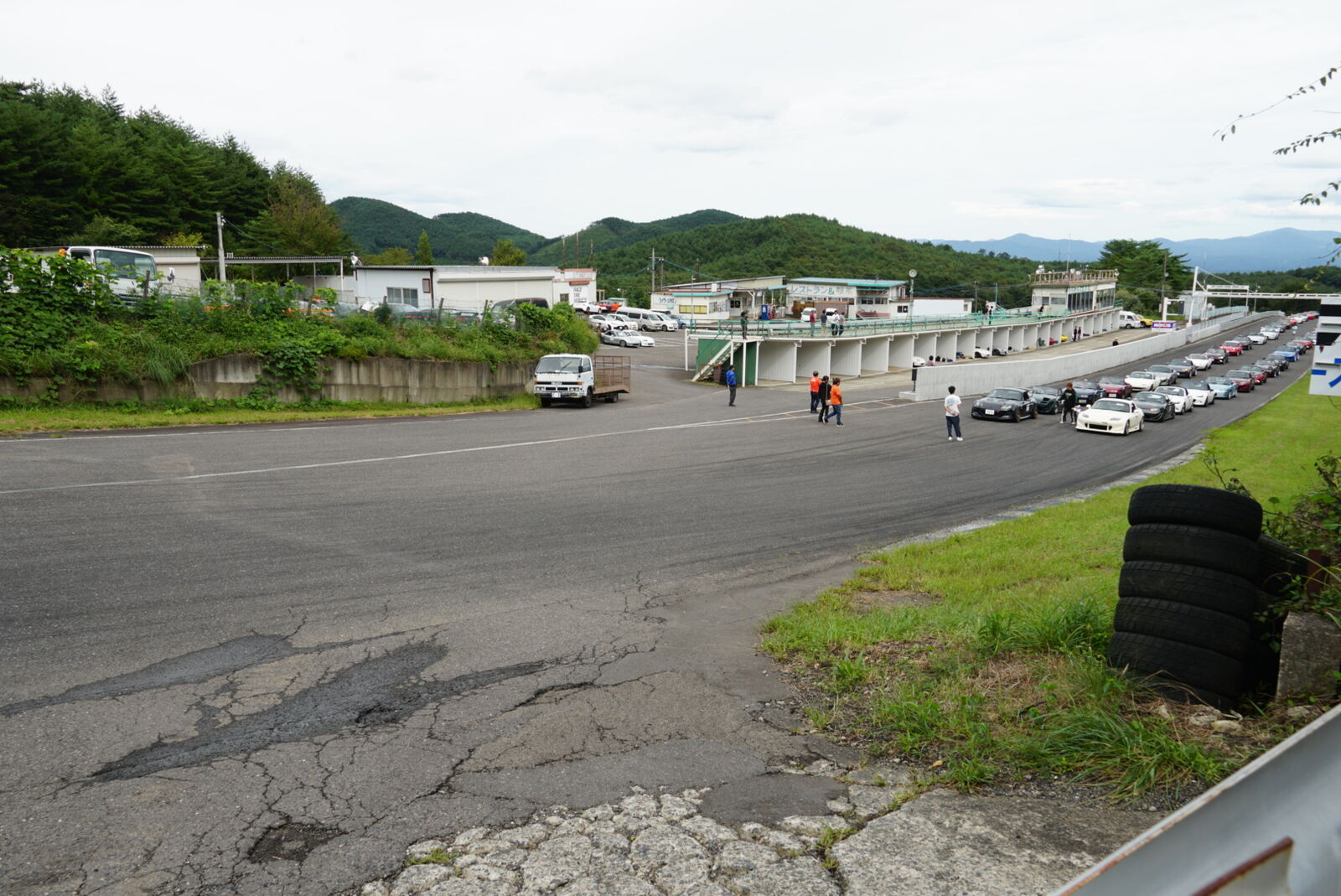
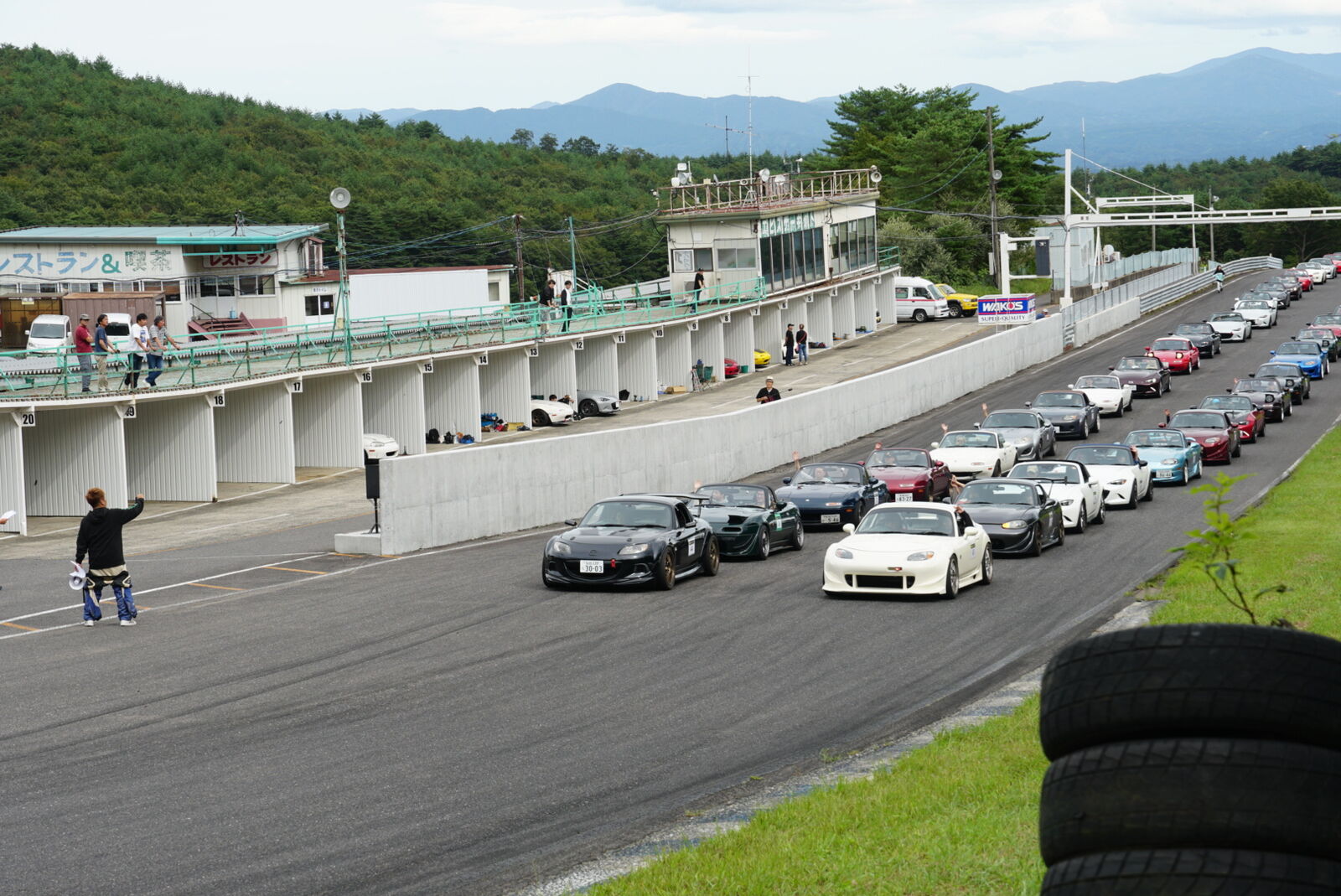
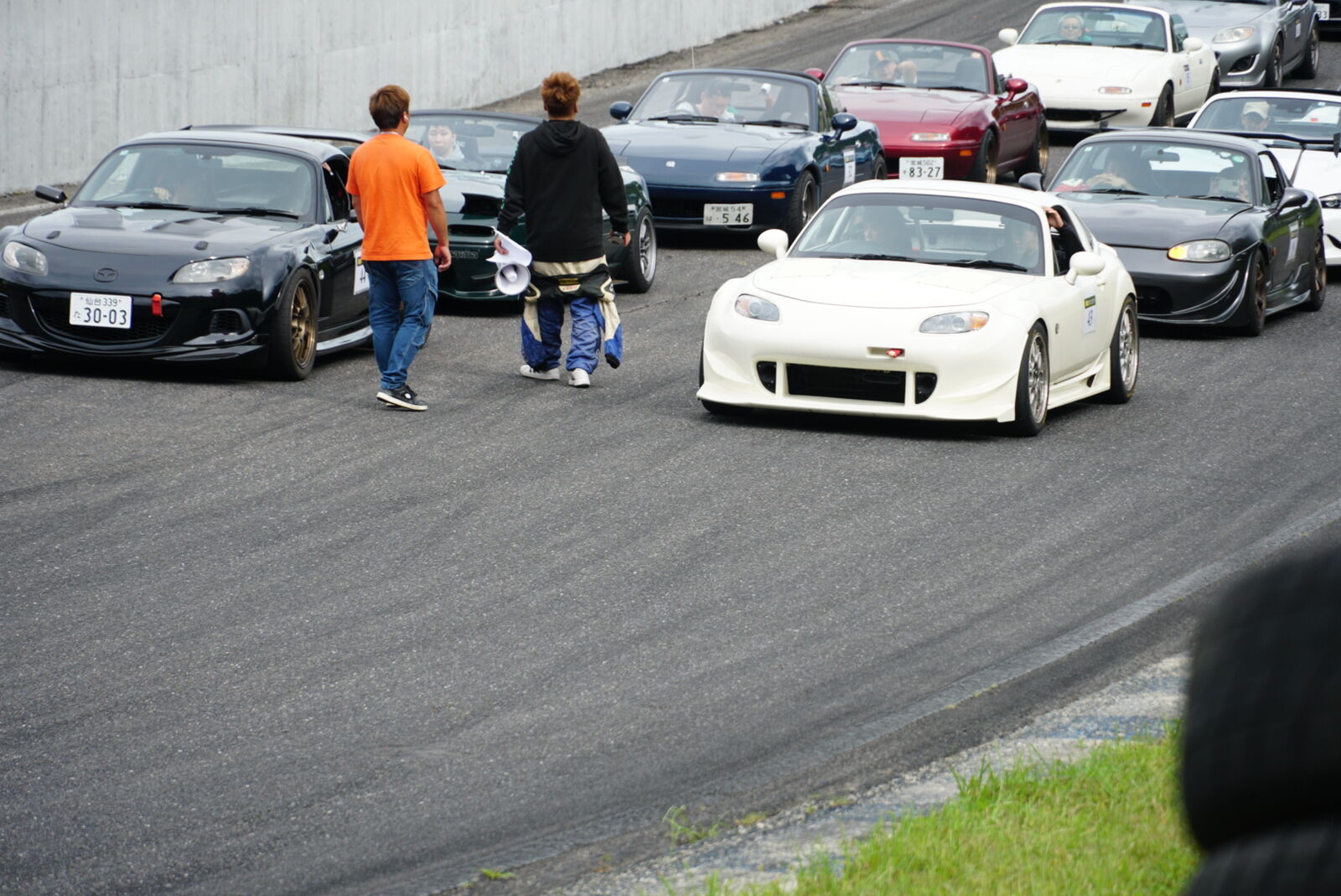
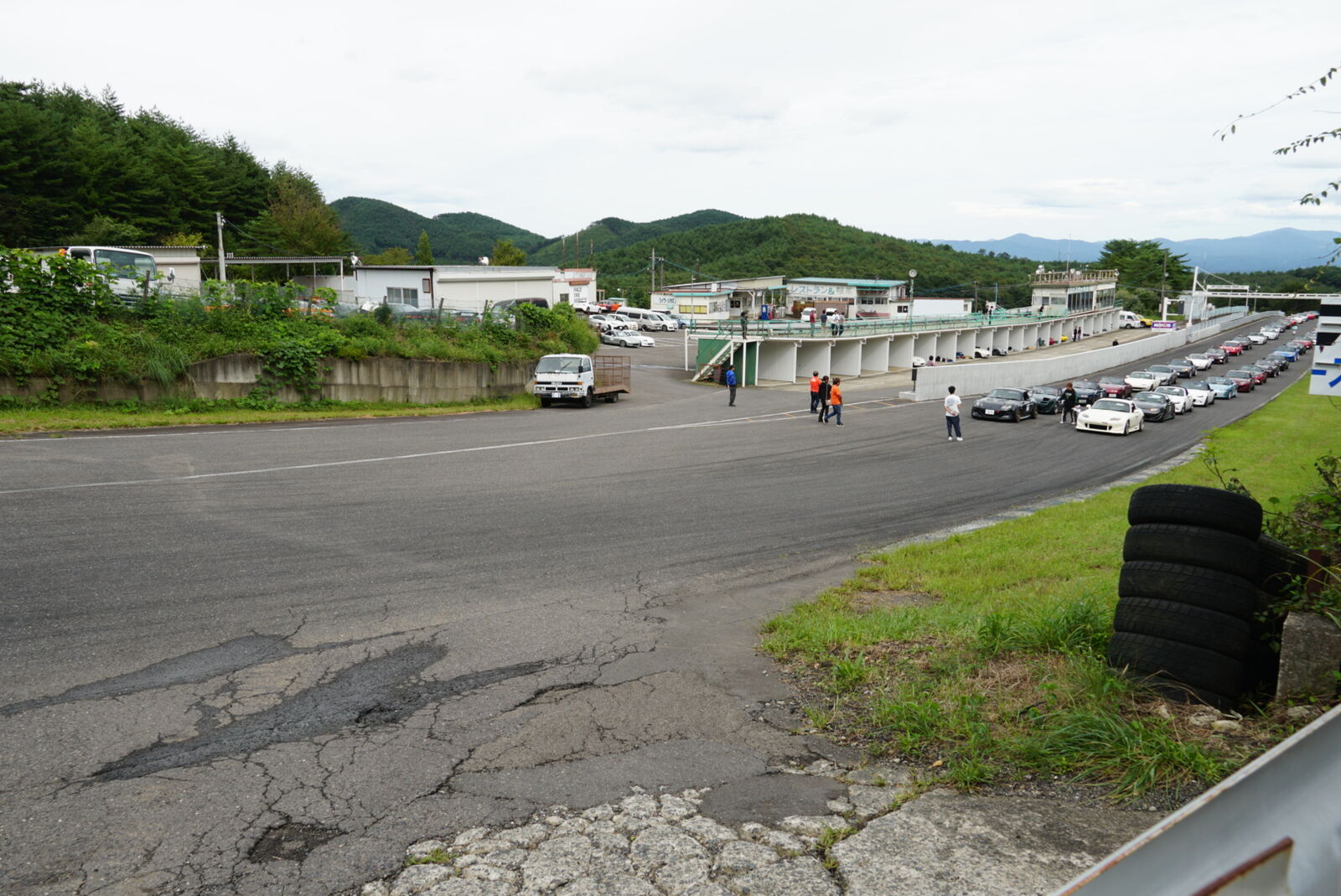
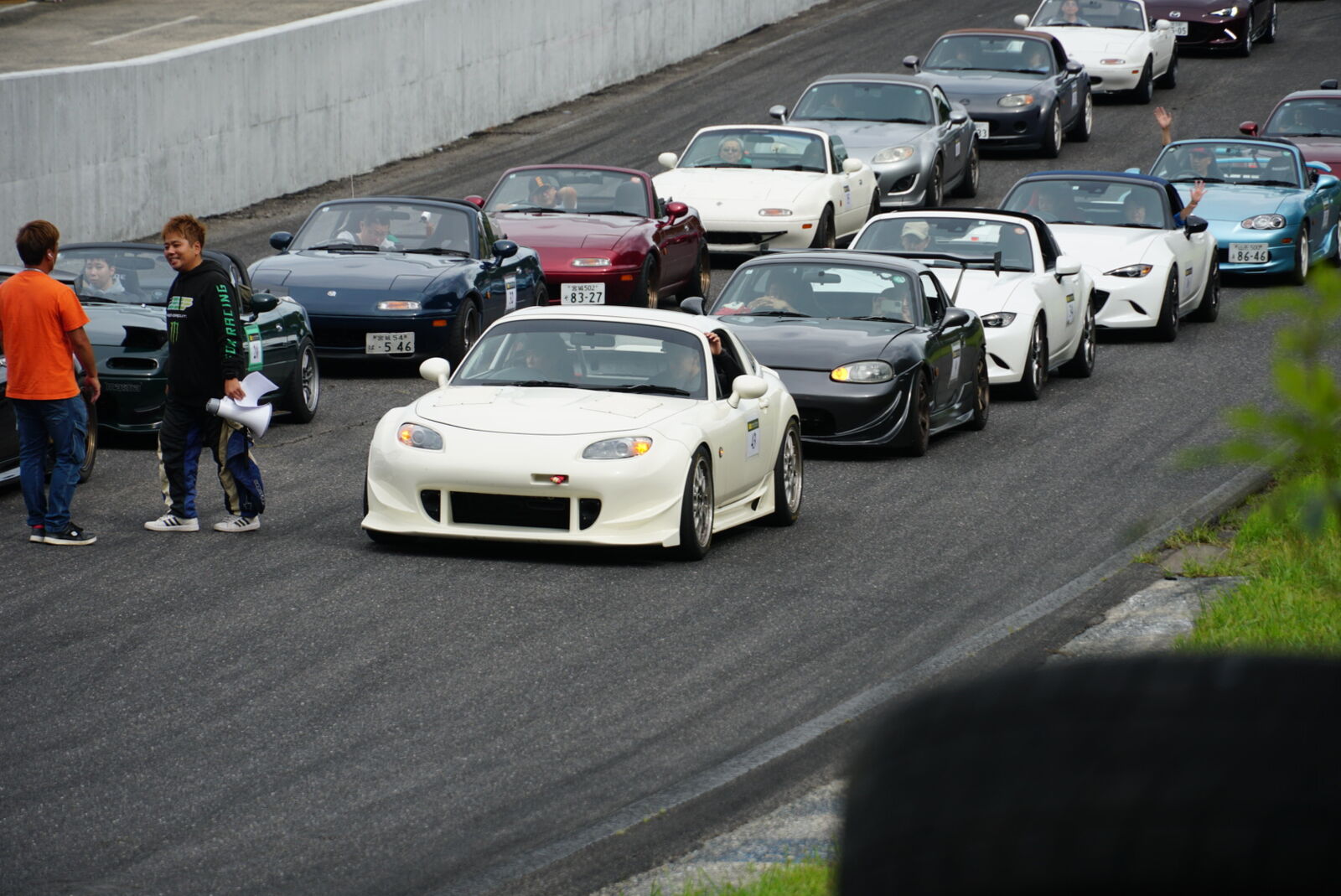
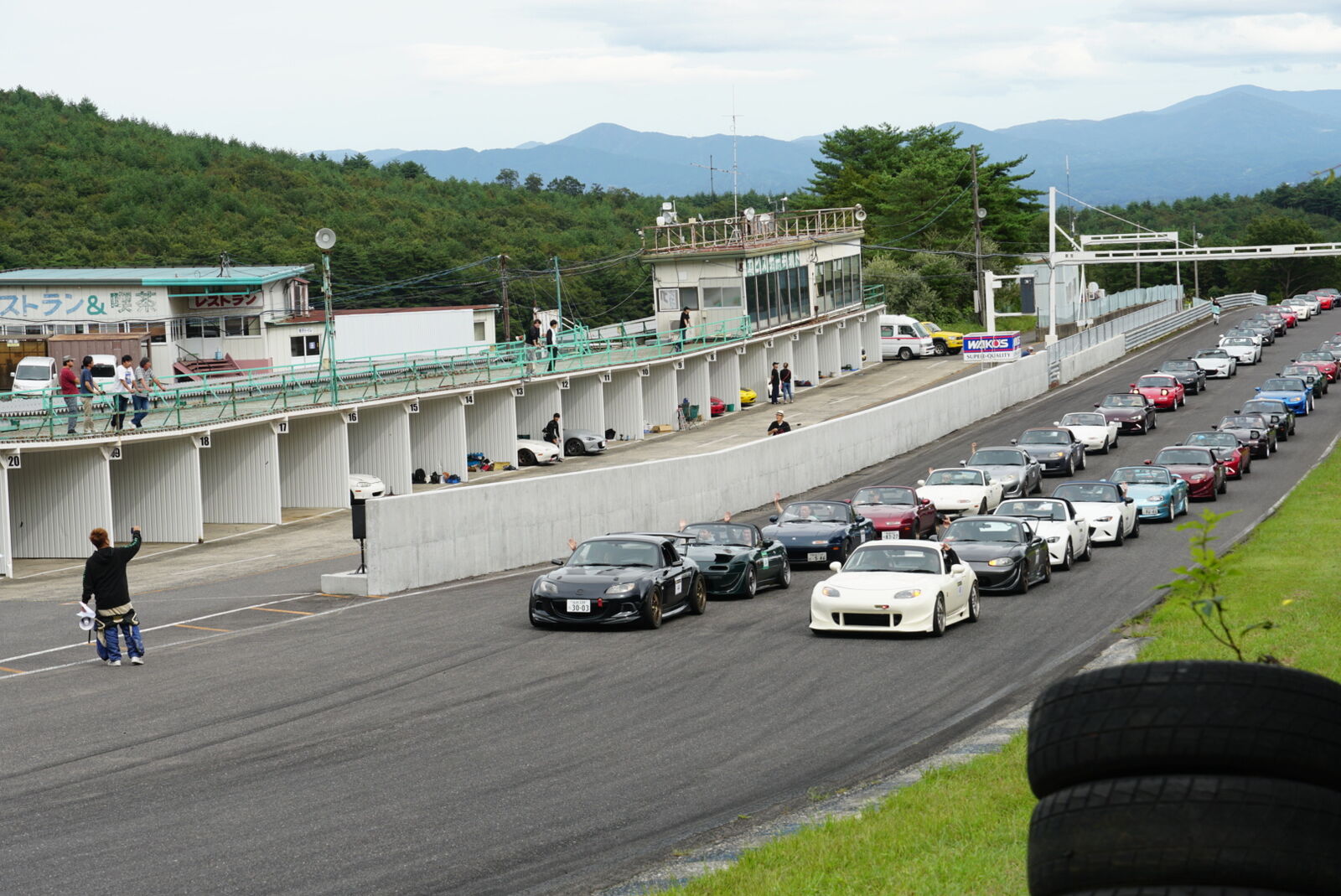
I had no idea how big this place is. Seven individual tracks and two skid pads, spread across a mountainside. On the day I visited, multiple events were running simultaneously on different courses: the Japanese classic Mini meeting on one track, a Japanese MX-5 gathering on another, a kart motorcycle race on a third, and the drift course was packed with its own crowd. The whole complex was buzzing.
I parked the camper on the main lot and explored on foot. That turned out to be the right call, because the distances between the tracks are real. You're walking uphill, downhill, through wooded areas, past buildings, and every turn opens up a new view. But walking is also how you discover things you'd miss from a car window.
The Sound Through the Trees
Somewhere up in the forest above the main facilities, there's another track. I found it eventually, but there's no pedestrian access. You can see the track from the road, but you can't walk up to it the way you can with the other courses. What you can do is hear it. The screech of tires echoing through the trees, disembodied, coming from somewhere in the woods above you. Just that sound - rubber on tarmac, again and again - drifting down through the canopy while you walk between the main tracks. It was one of those moments that stuck with me. A reminder that this place is larger than what you can see, and that someone up there in the forest is having the time of their life going sideways.
Classic Mini Racing
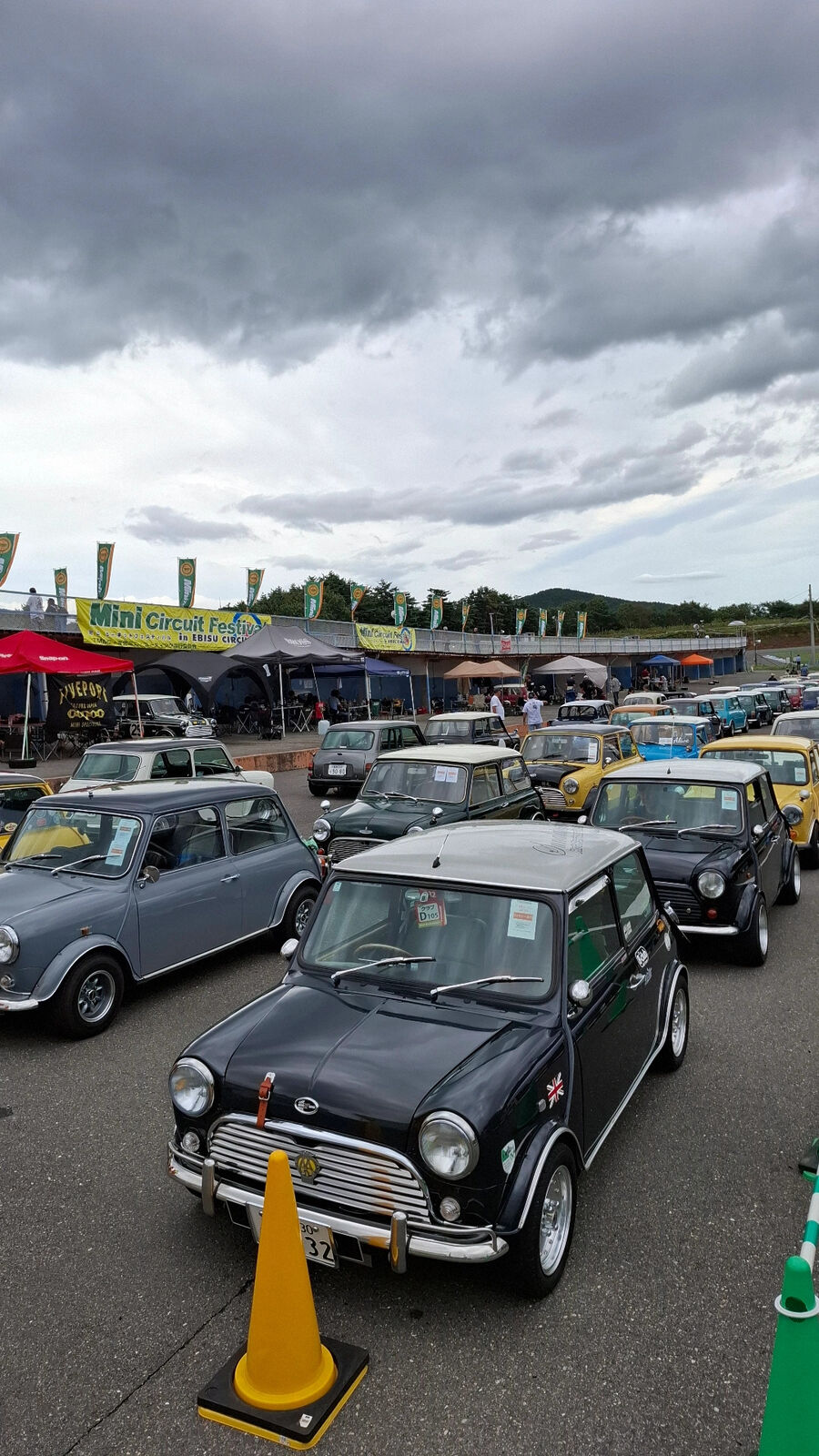
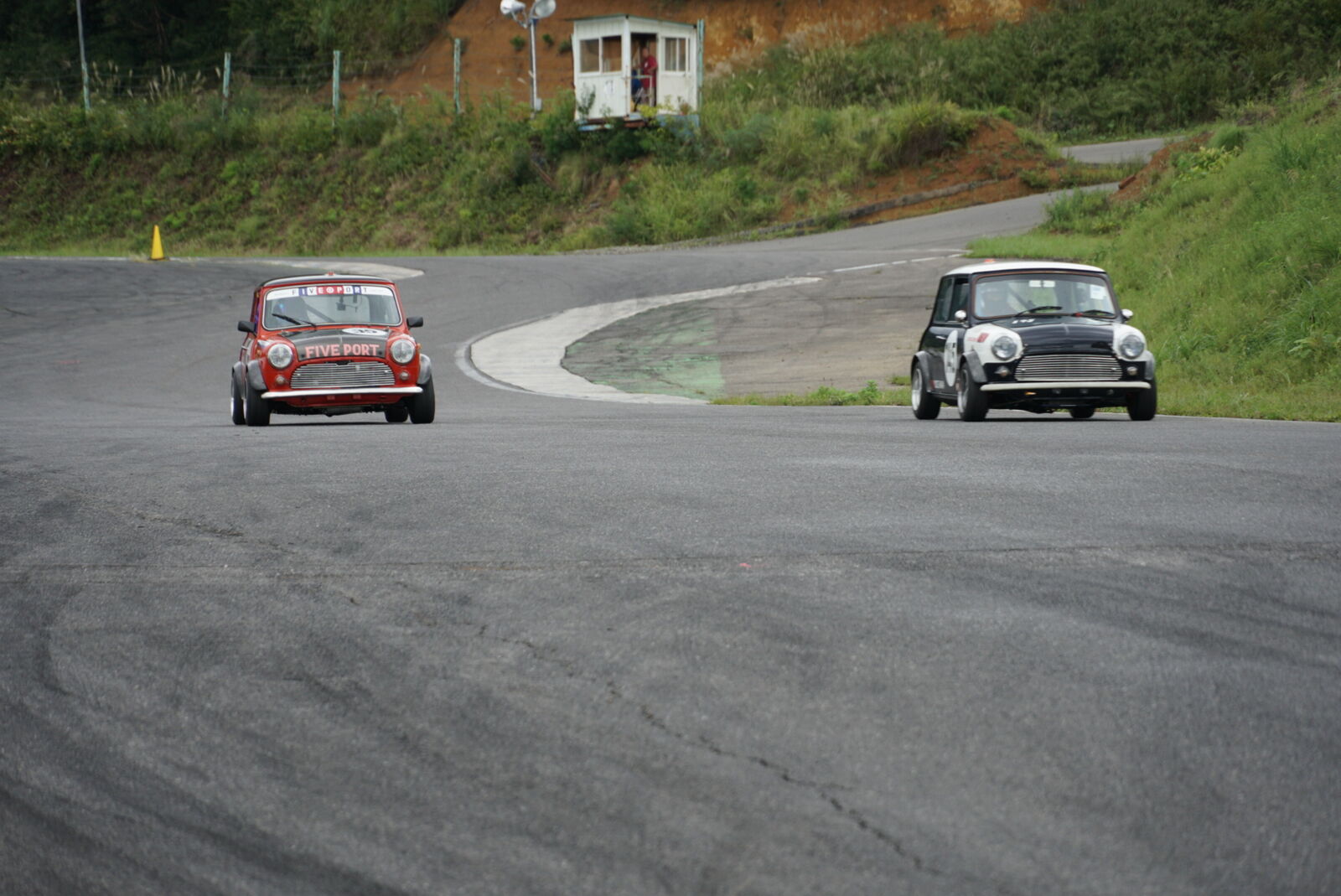
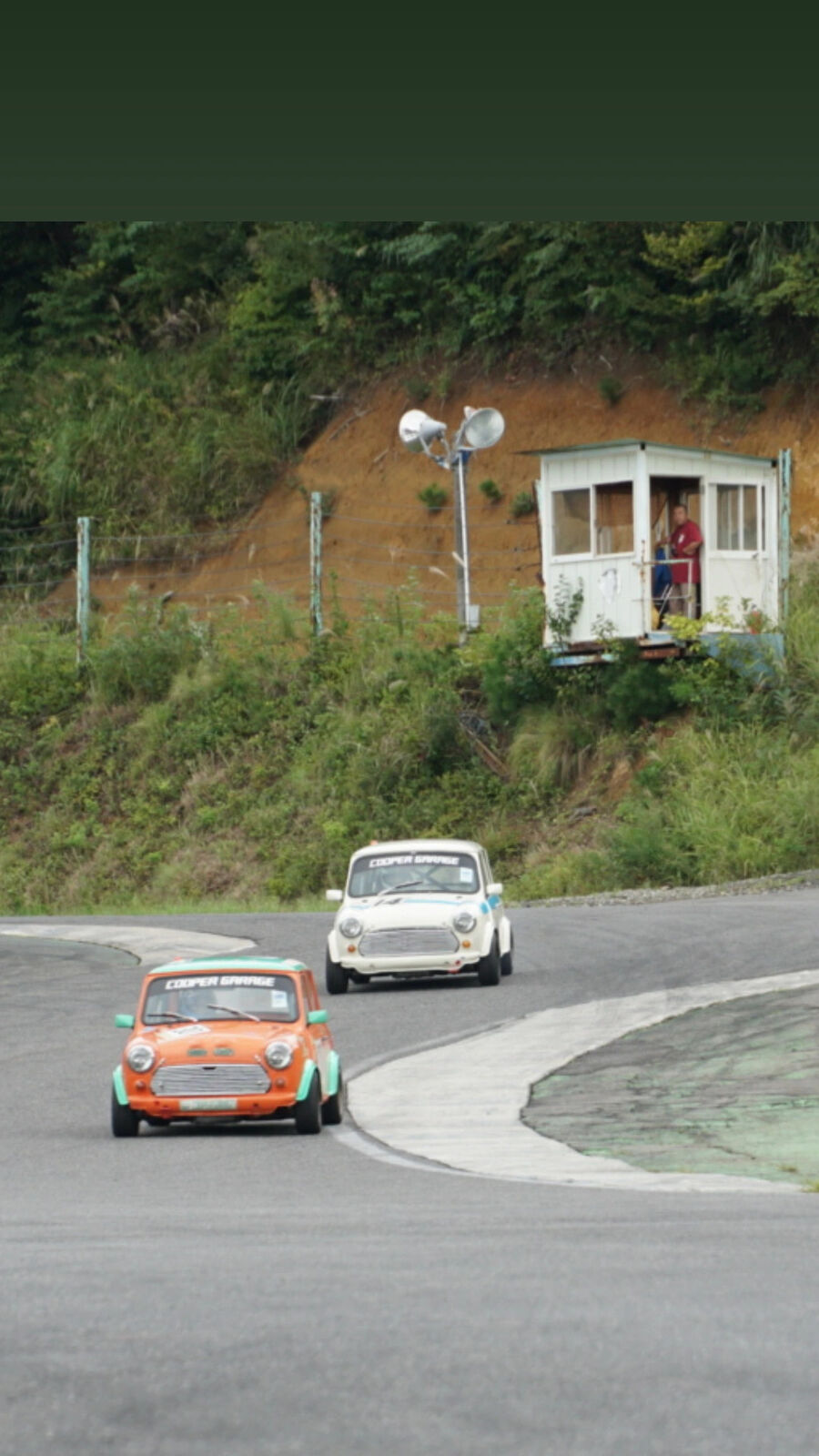
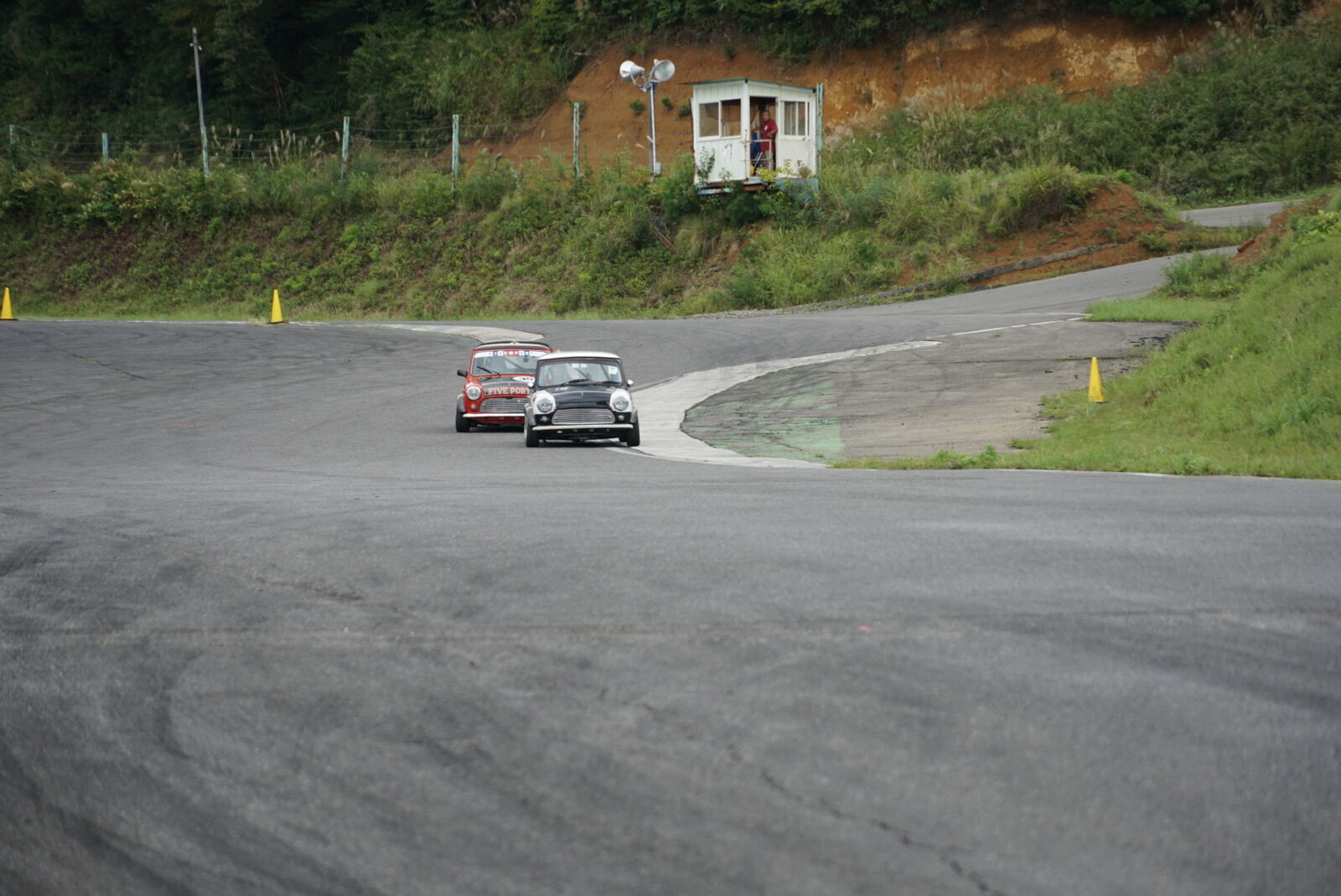
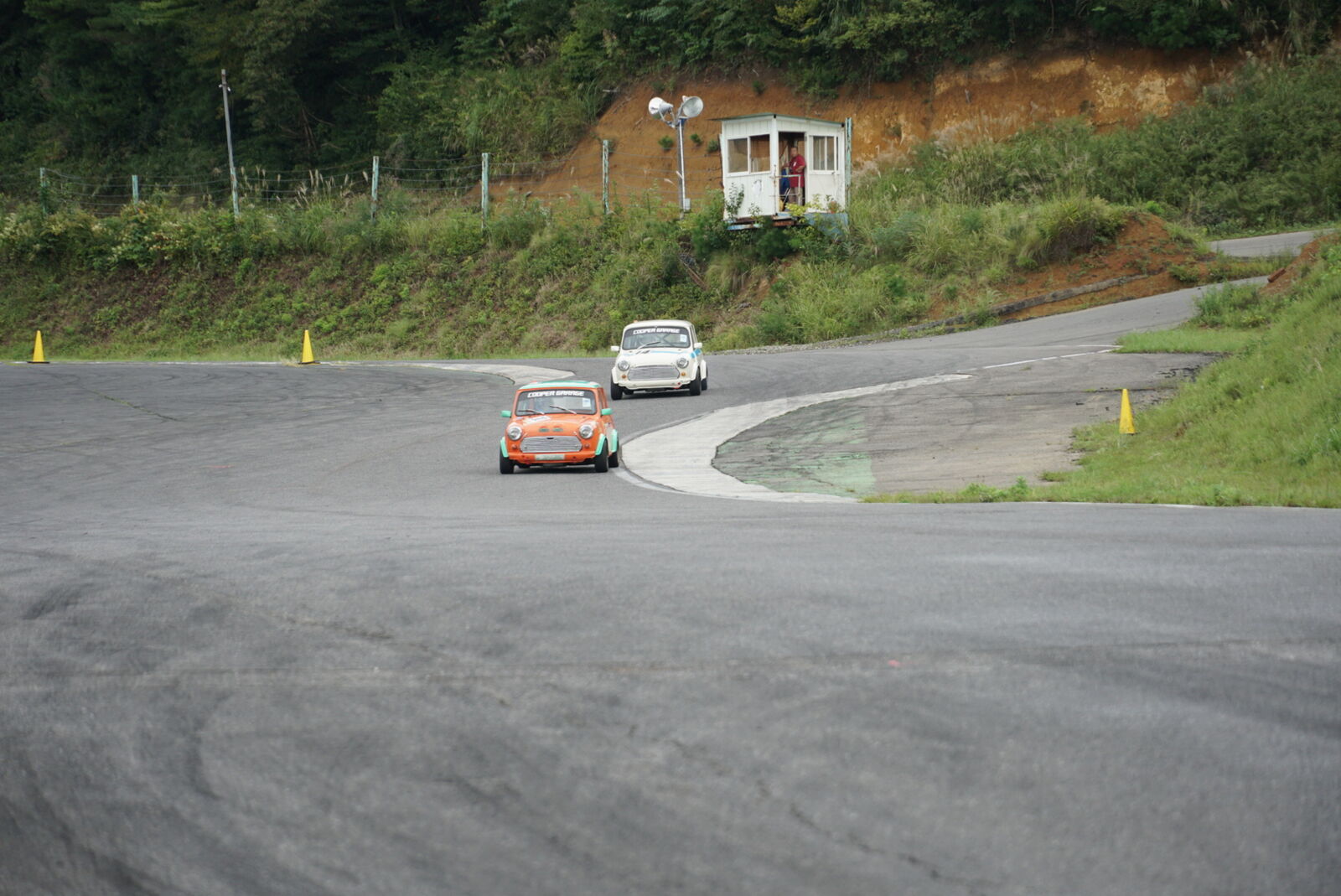
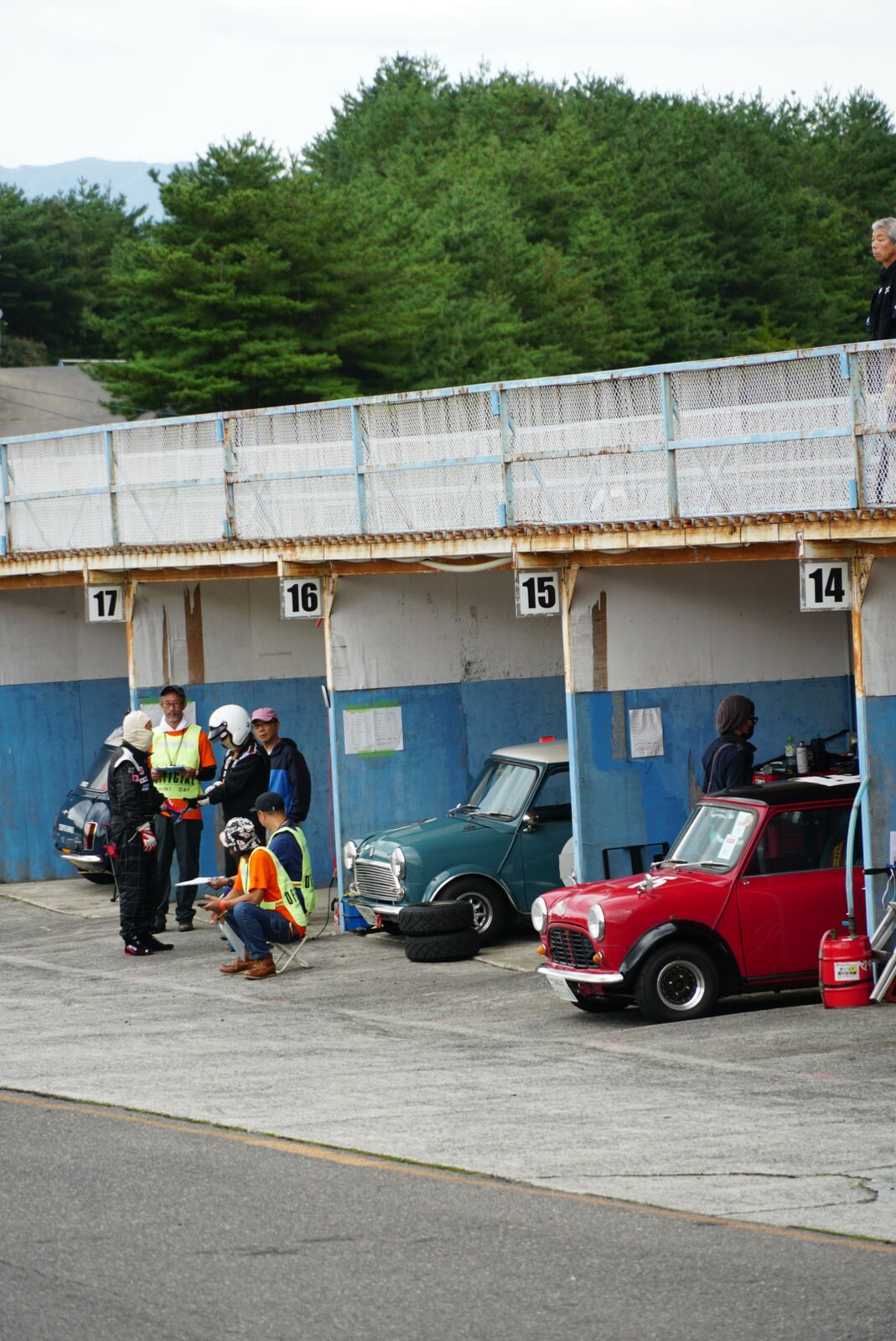
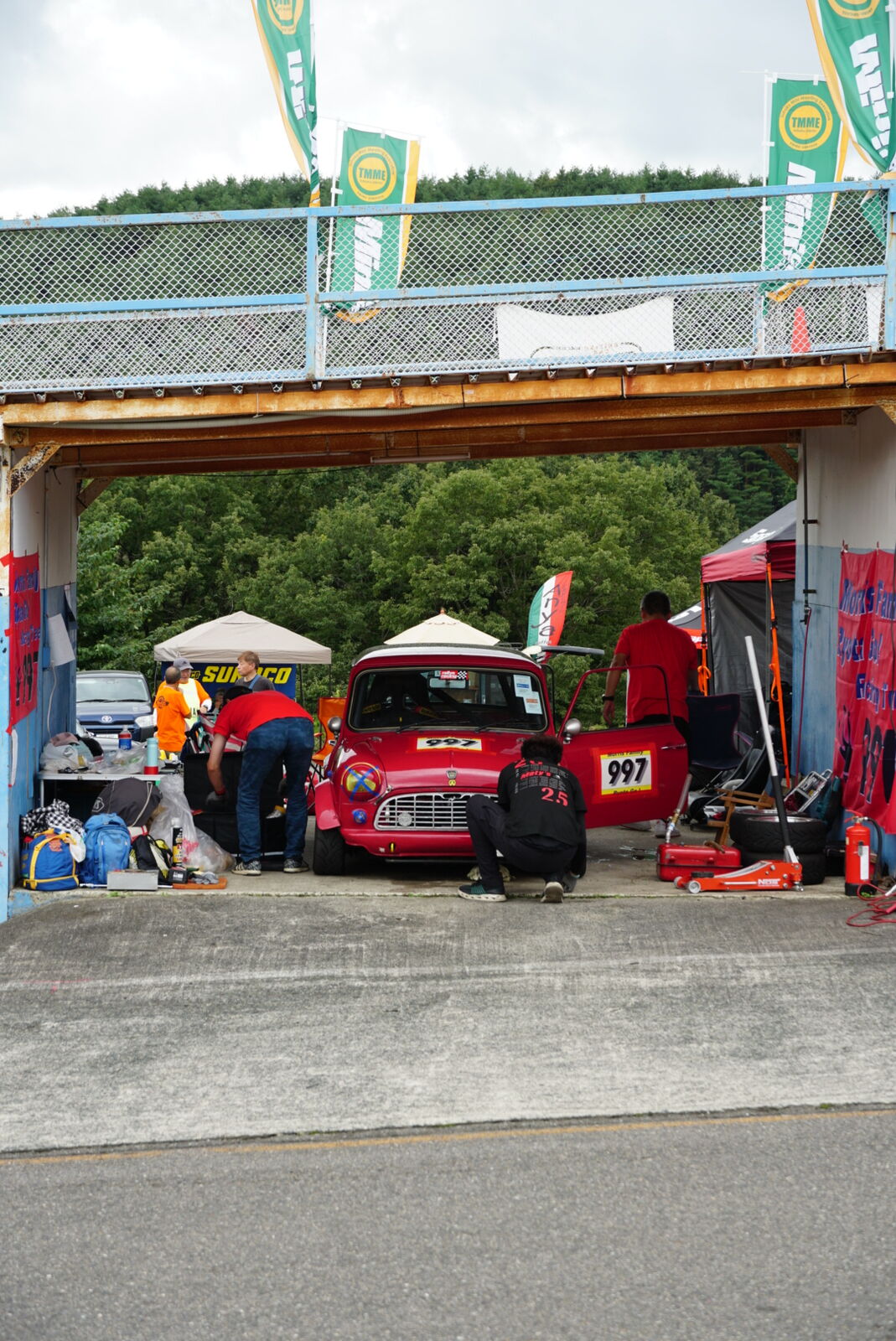
One of the tracks was hosting the Mini meeting. Proper old-school Minis, the original ones, not the BMW reboot. Red ones, silver ones, each with a racing number and a story. They were tearing around the banked curves of the hillside course, engines screaming at a pitch that shouldn't come out of something that small. A guard hut perched on the hill above the corner like it had been there since the track was carved out of the slope.
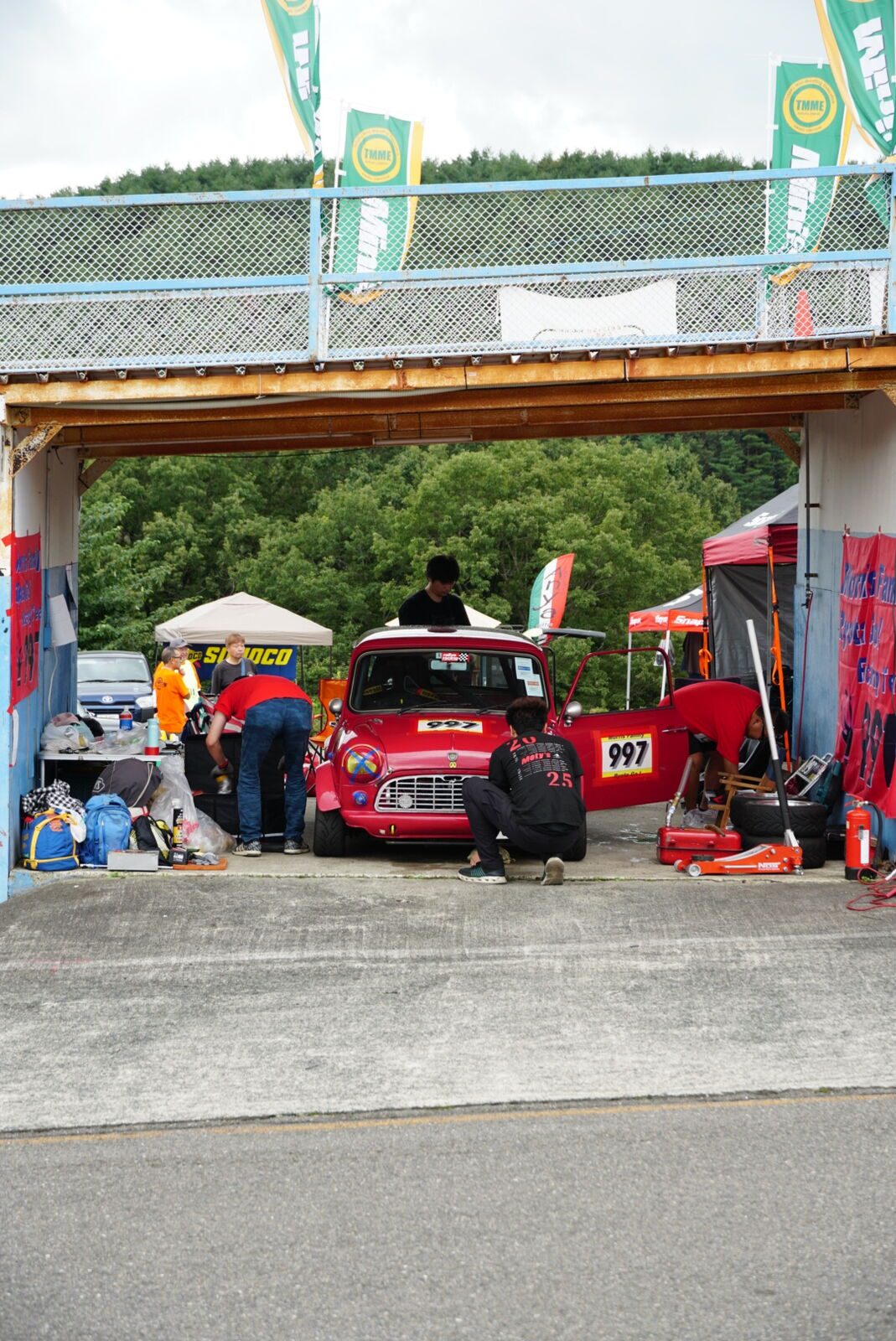
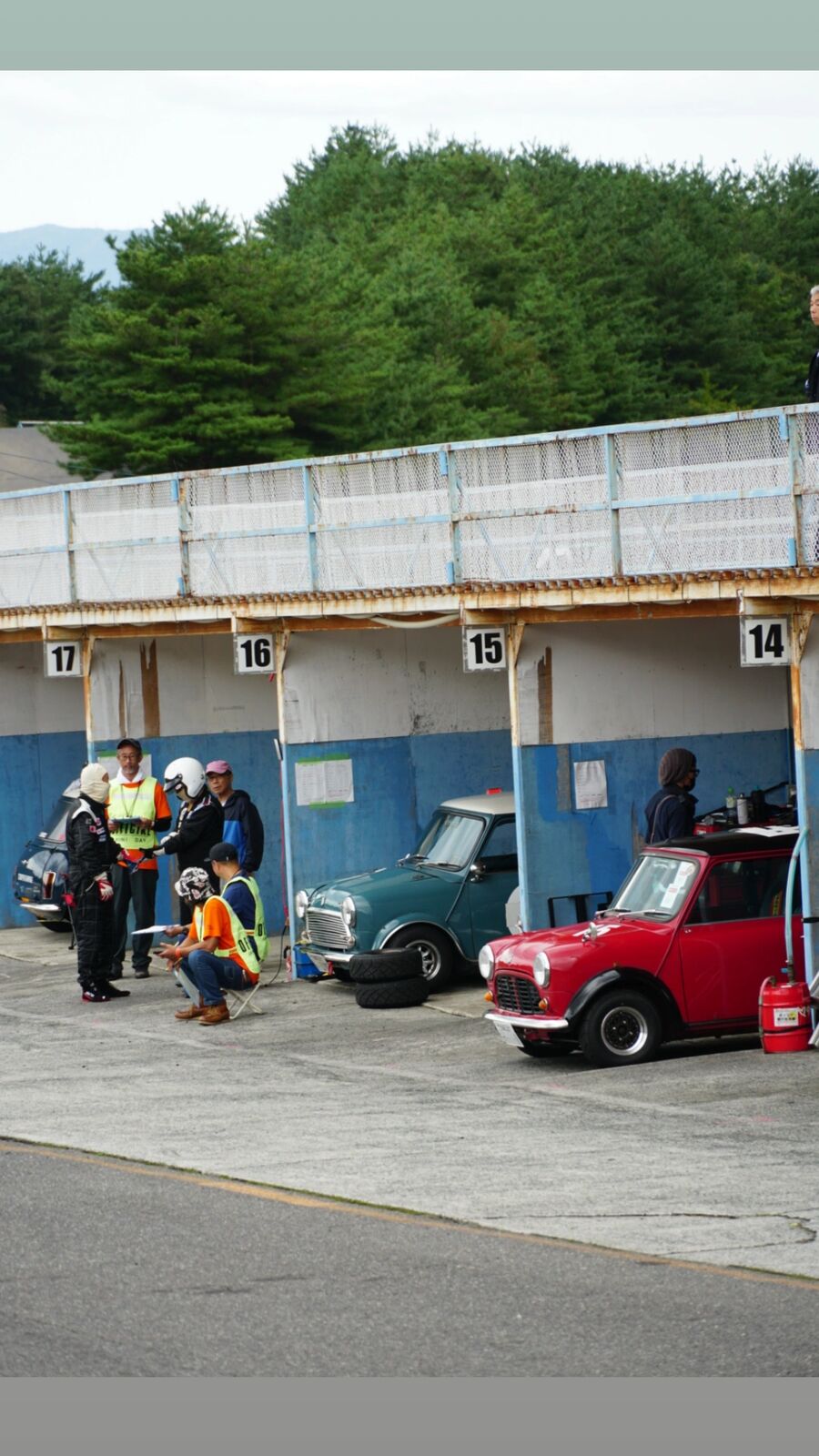
In the paddock, a red Mini with the number 66 sat surrounded by Italian flags and toolboxes. The international flavor was obvious. This wasn't a big-budget series. It was people who love these cars enough to race them on a mountain circuit in Fukushima on a September afternoon.
The Drift Course
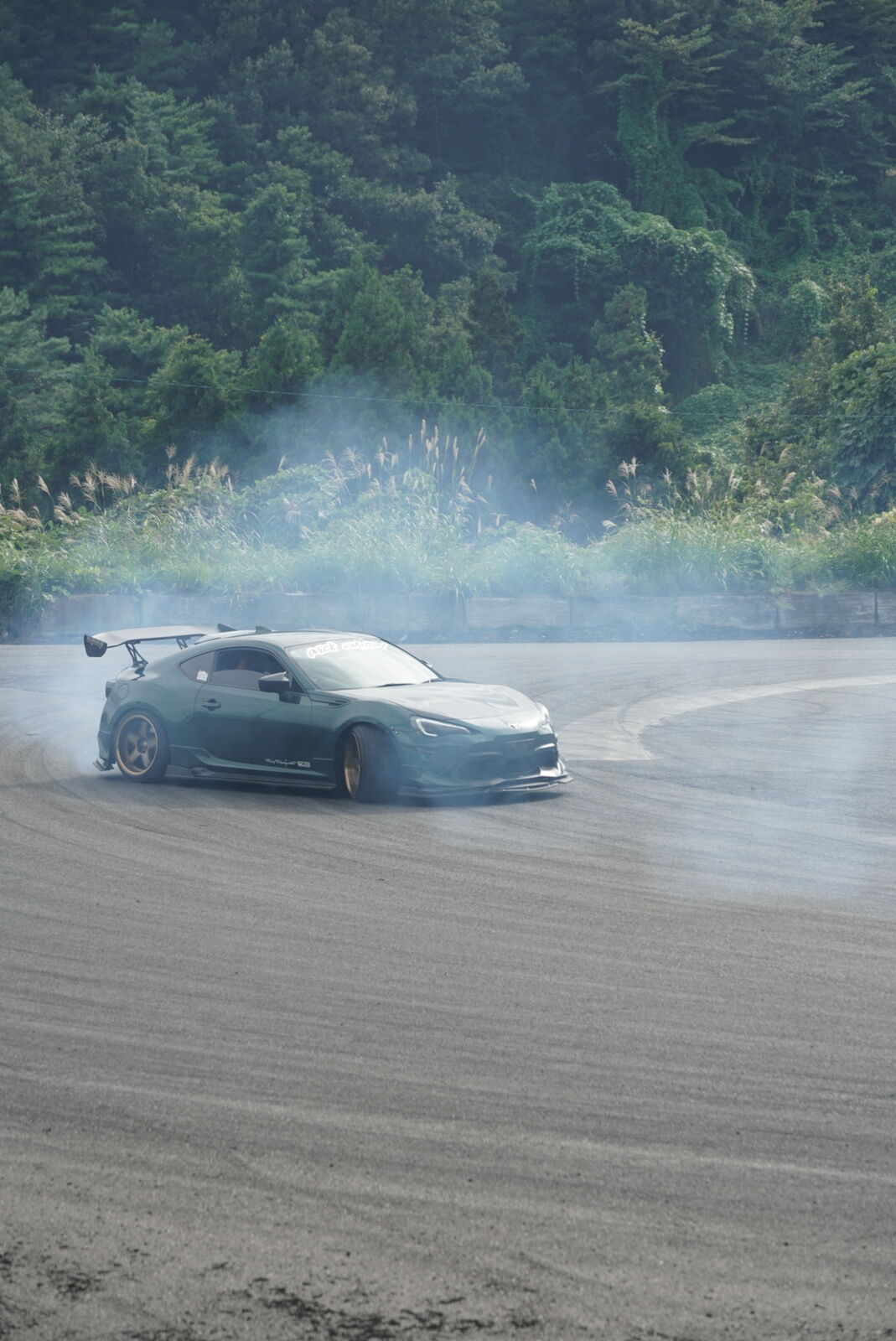
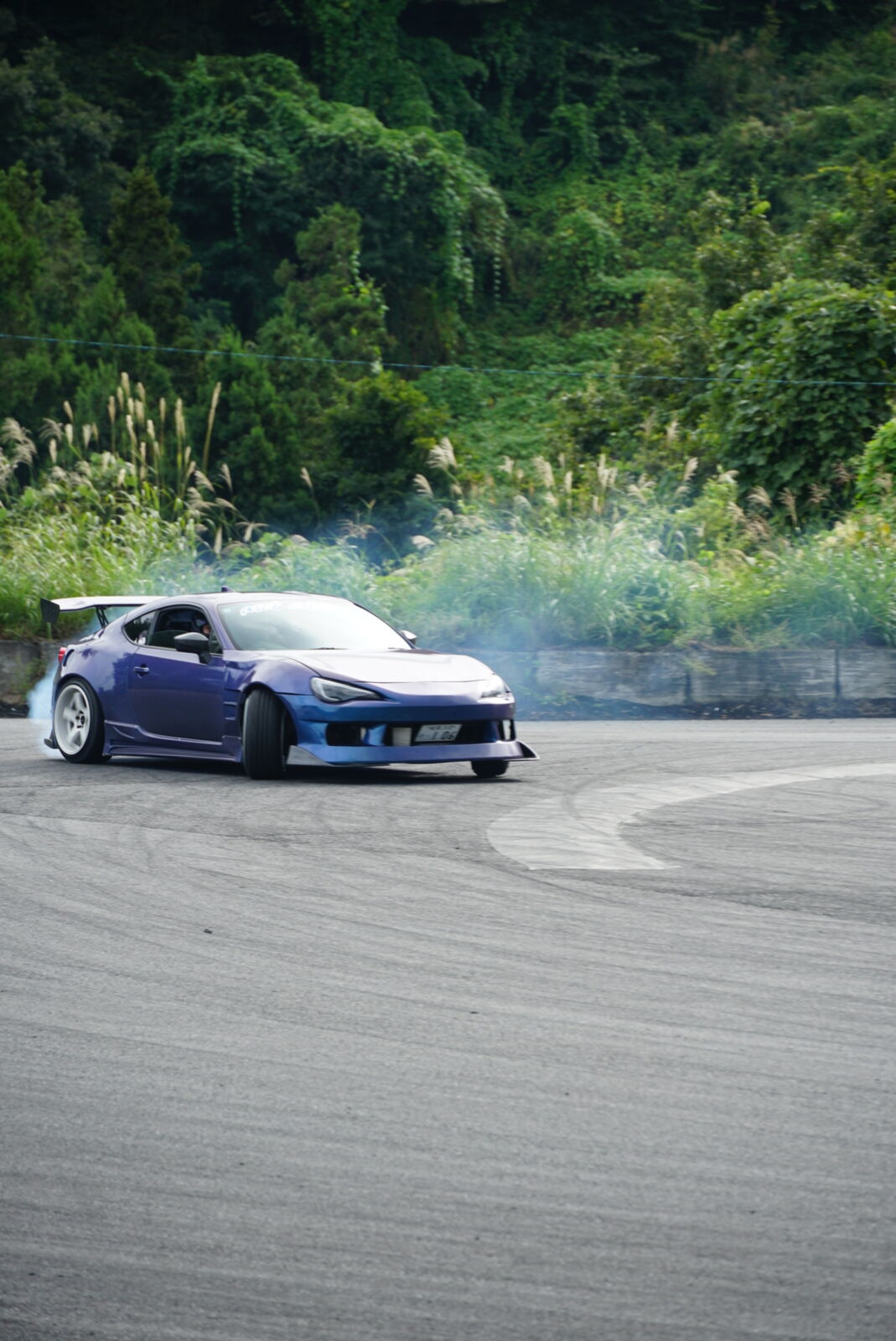
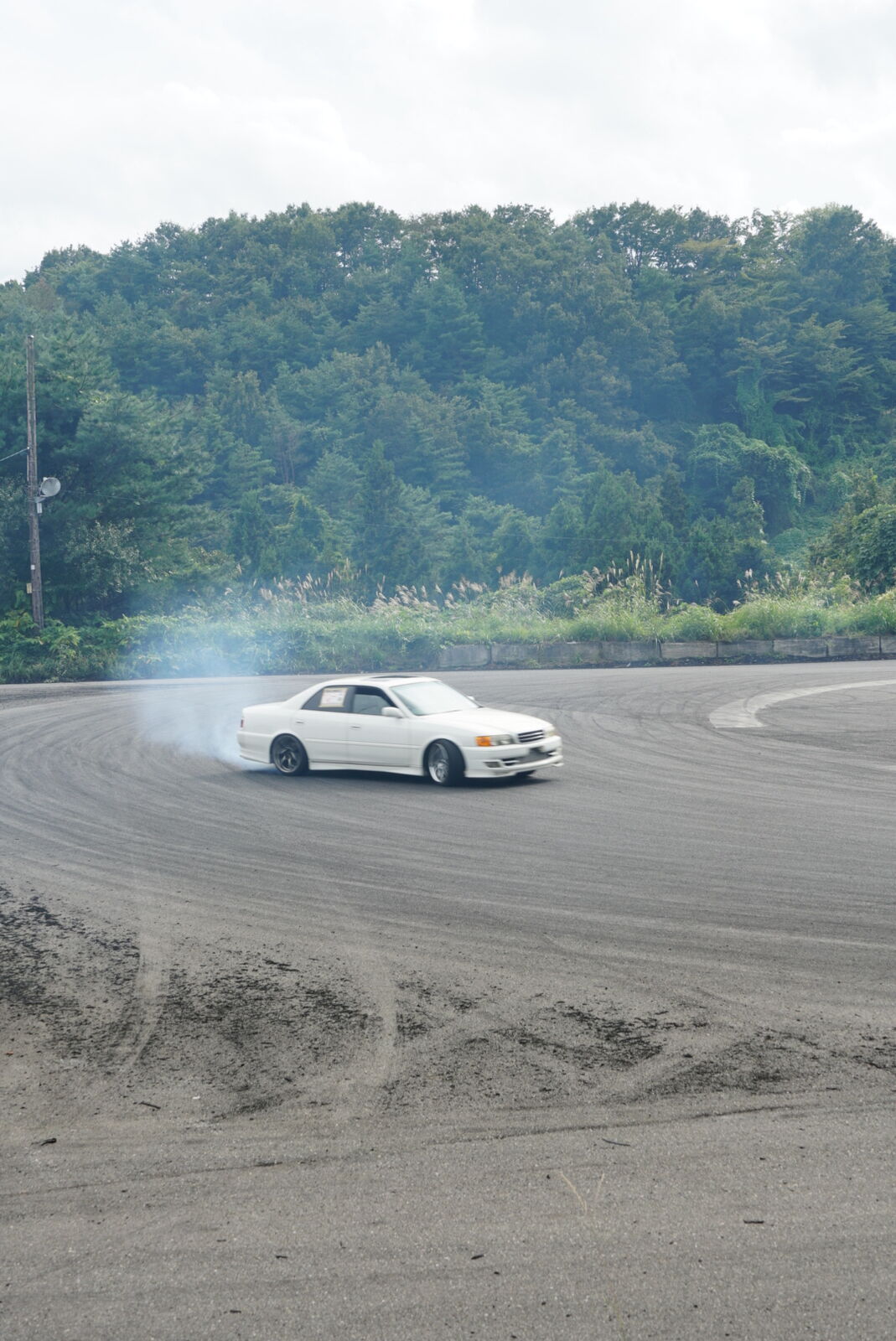
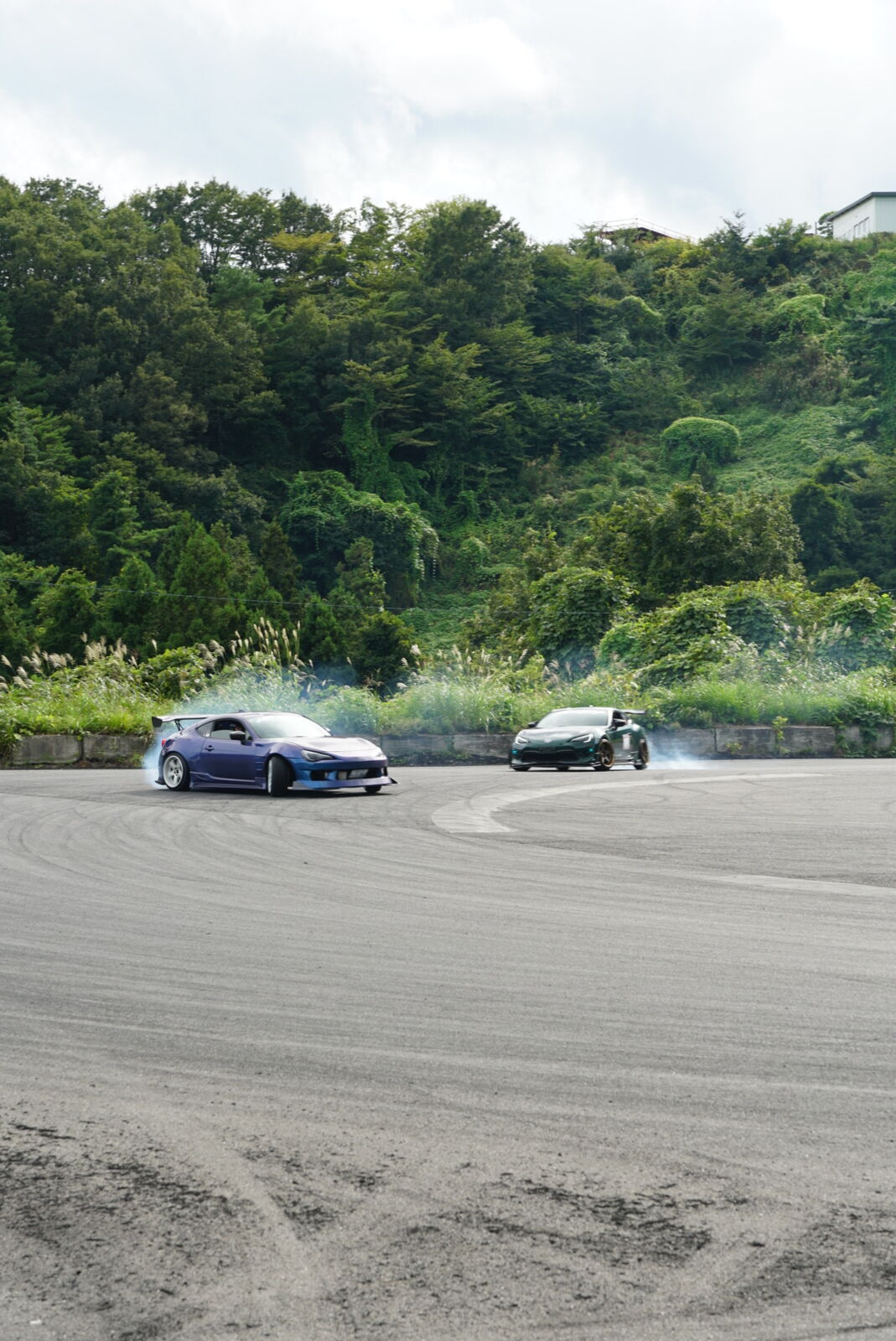
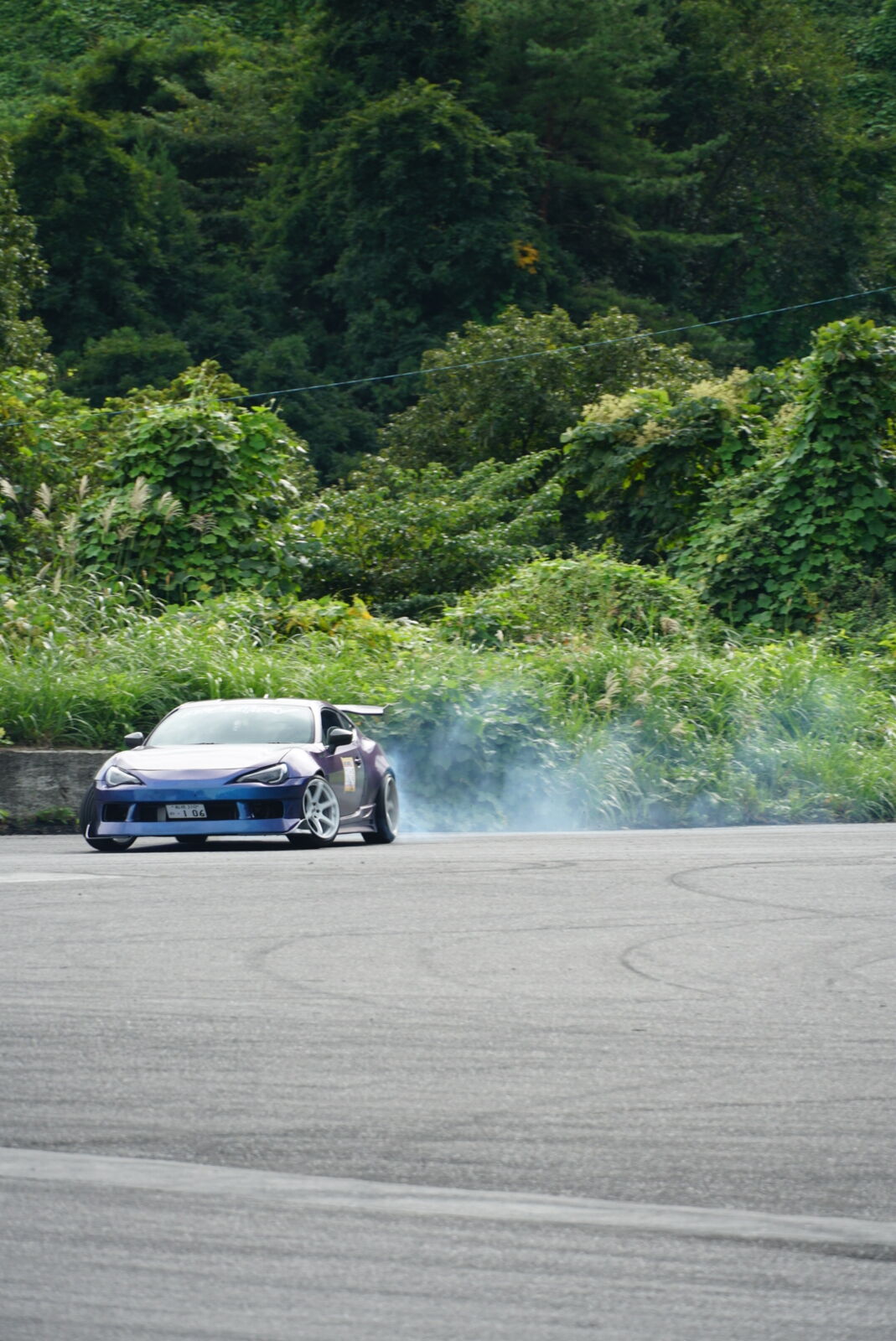
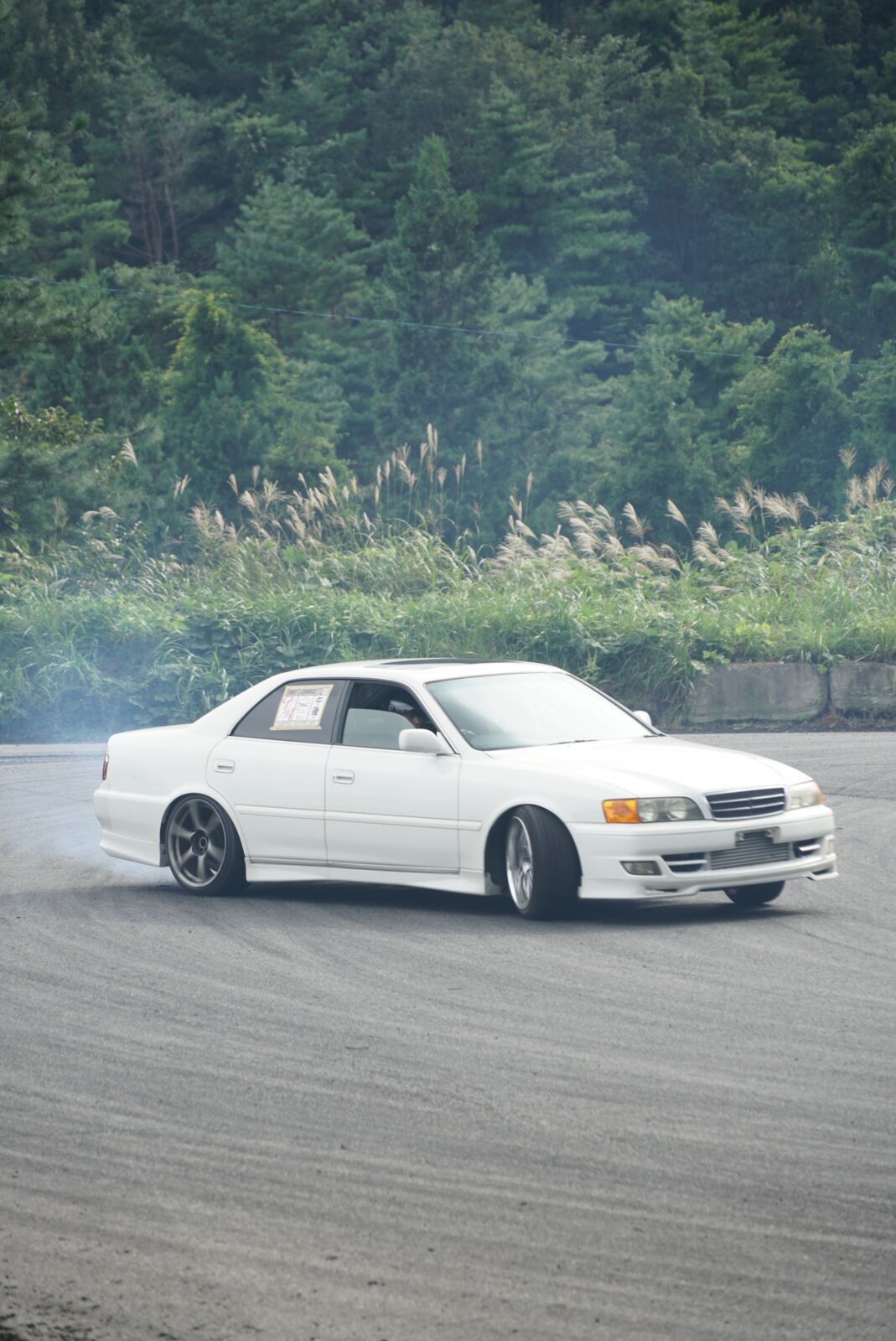
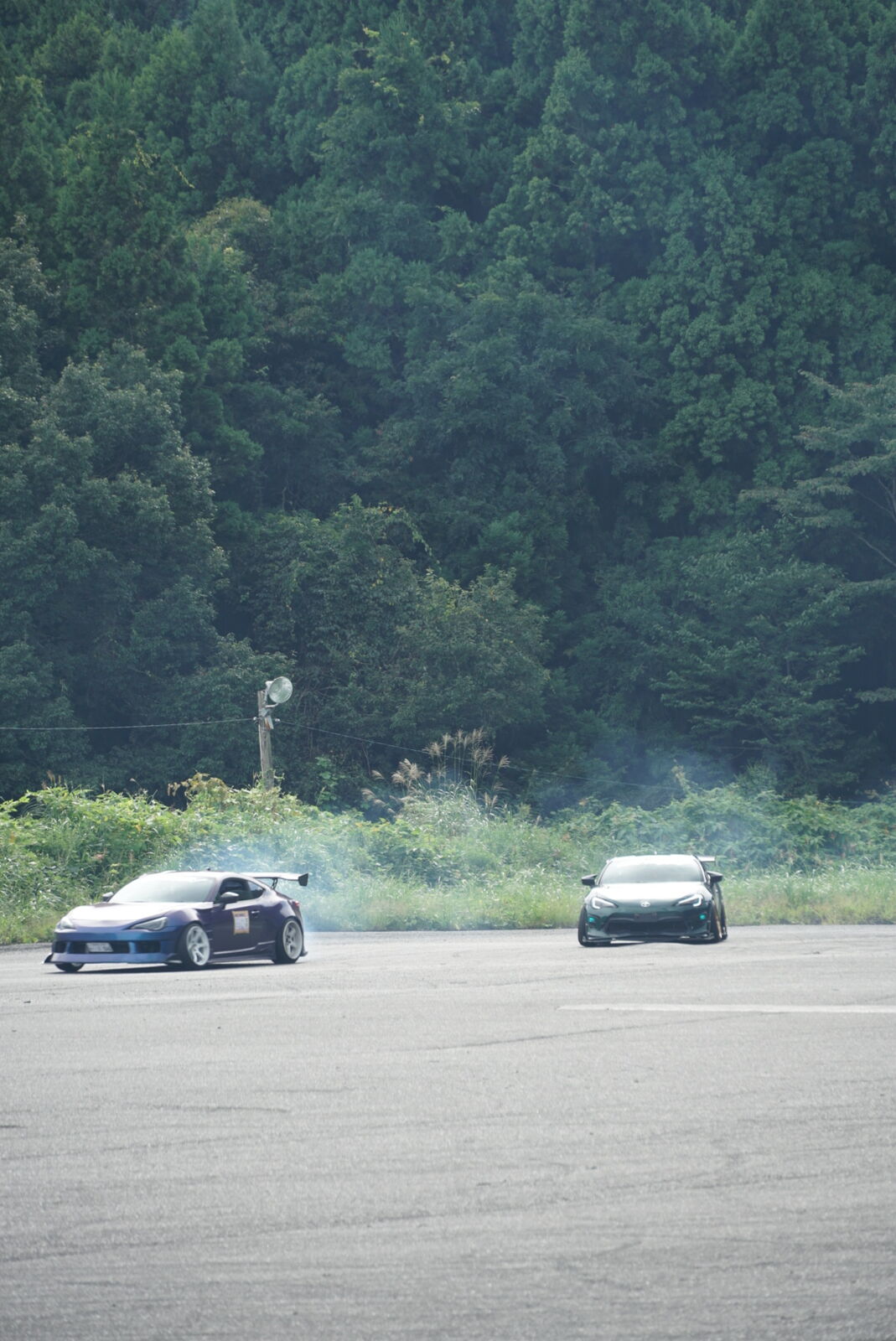
This is where I spent the most time, and it's what stayed with me most. The drift pad surface was covered in tire marks from edge to edge, a black abstract painting created by thousands of sideways passes. Cars were running in loose rotation: a white Silvia here, a dark 180SX there, occasionally two cars running together in tandem, smoke trailing behind them like contrails.
The tire smoke is what stays with you. Not just wisps, but thick clouds that hang in the air and drift across the entire pad, mixing with the overcast sky until you can't tell where the haze ends and the weather begins. The forested hillside behind the course turns into a green blur through the smoke.
You could watch from multiple angles. From track level, where the cars blast past close enough that you feel the heat. From above on the hillside, where the whole drift pad opens up below you and you can see the lines drivers are taking, the smoke patterns, the choreography of it. Each perspective told a different story.
JDM Culture, Live
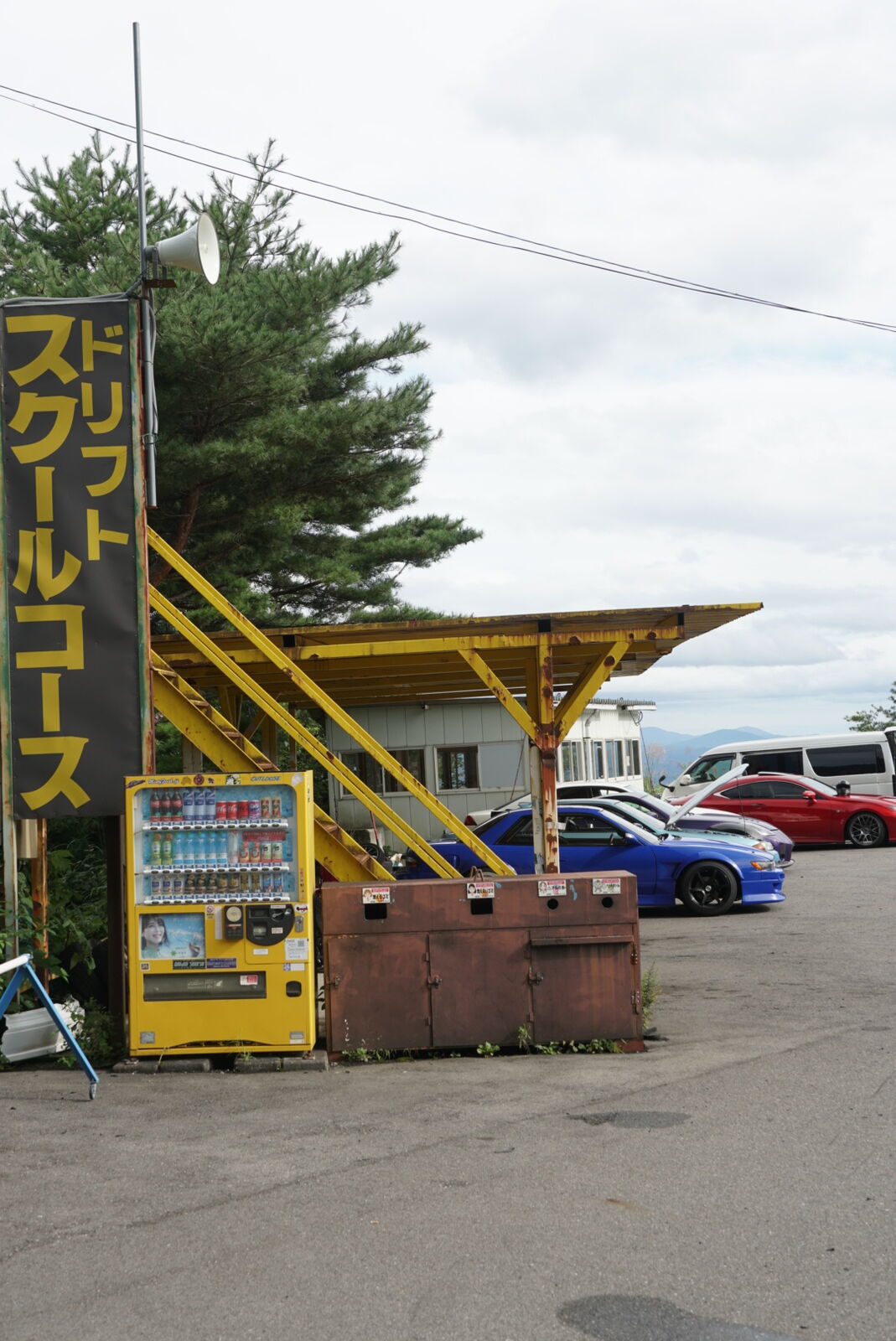
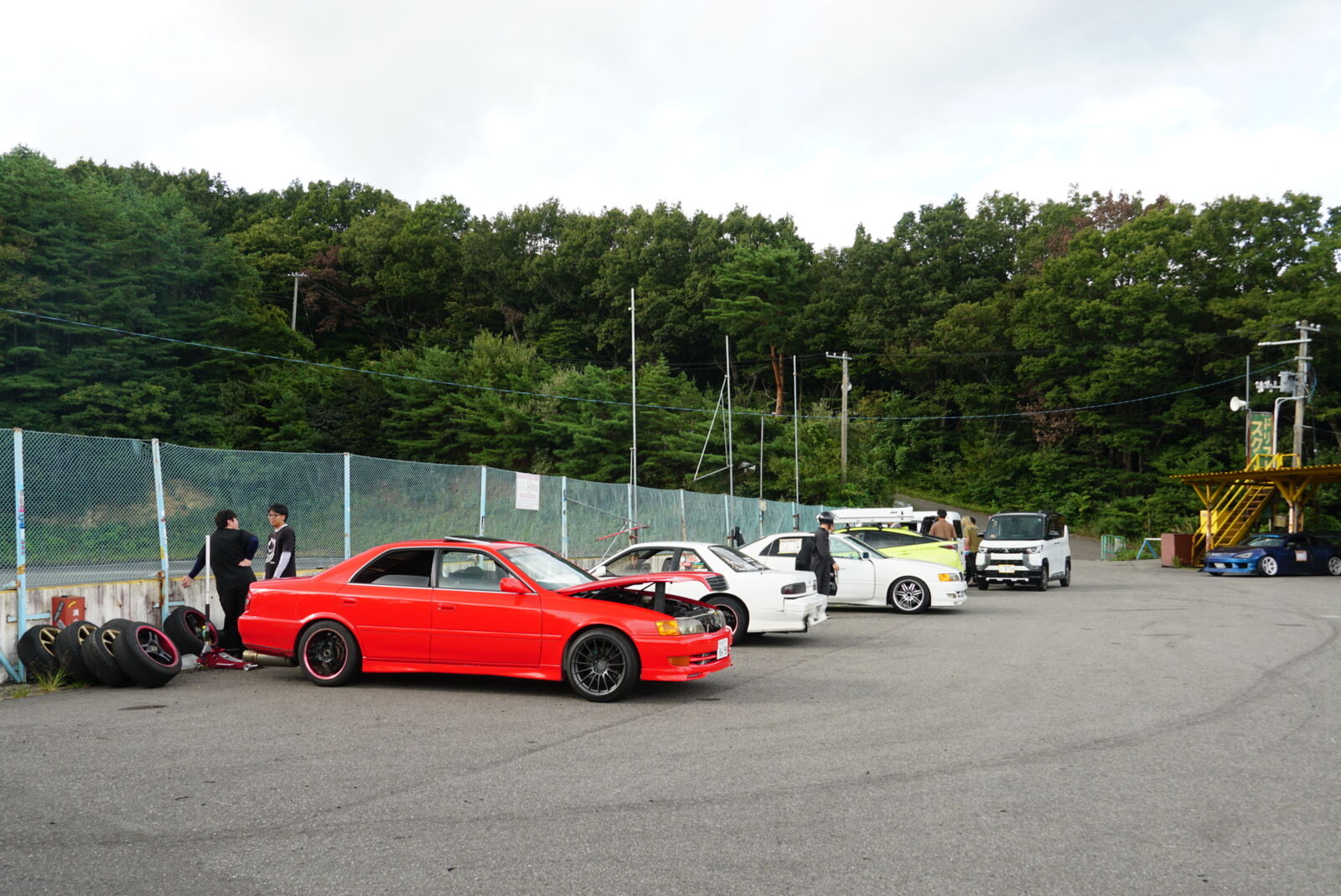
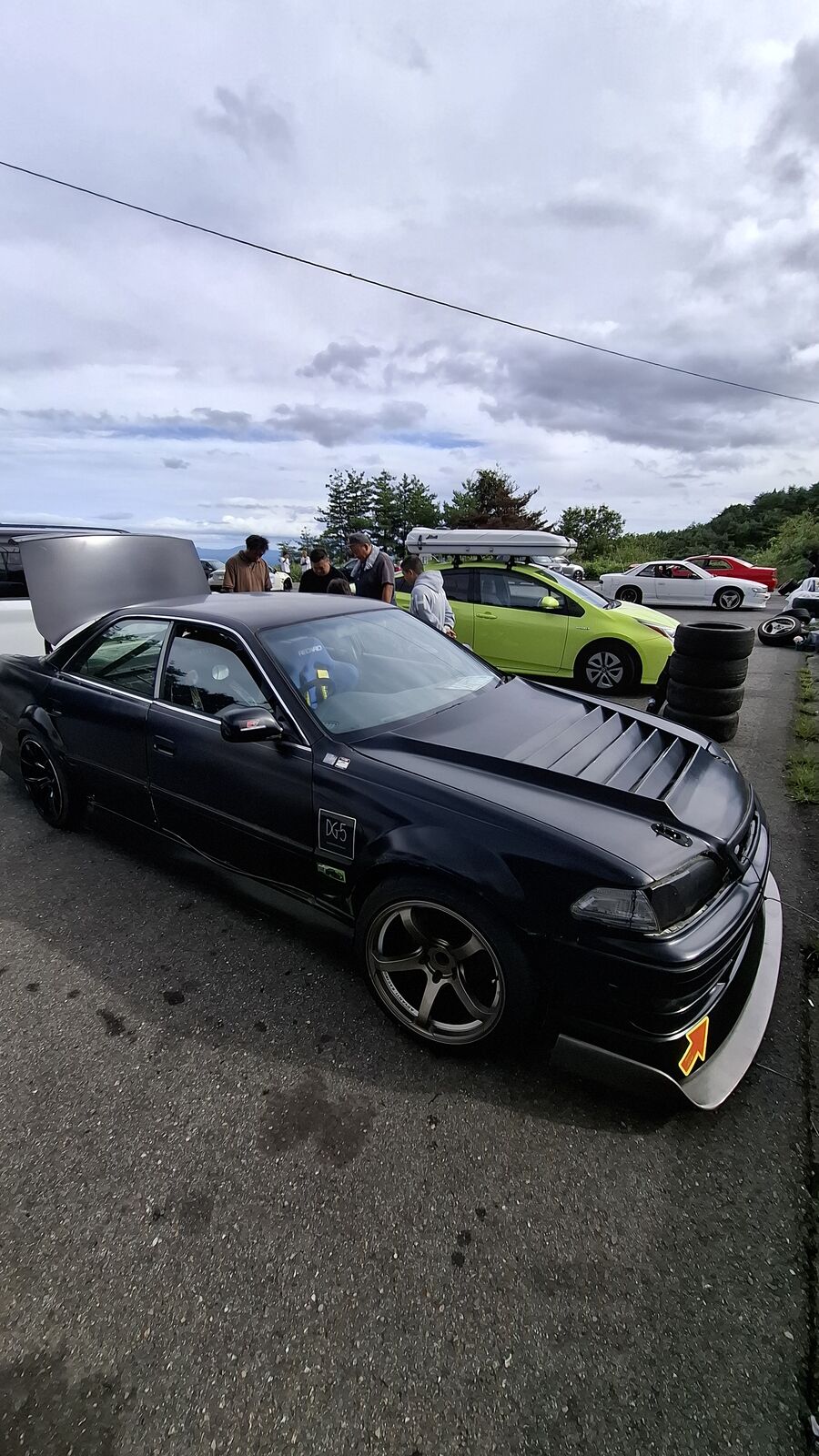
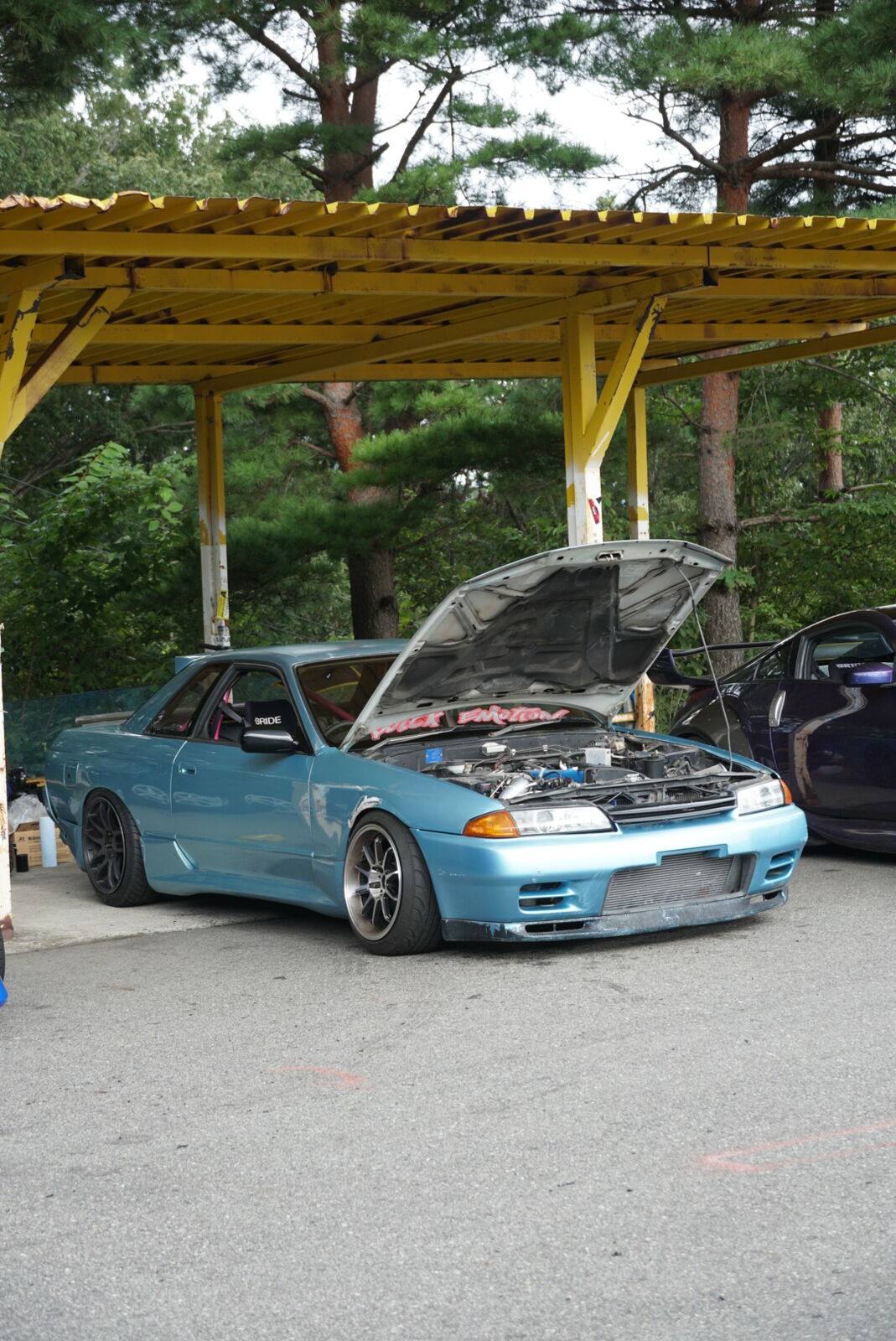
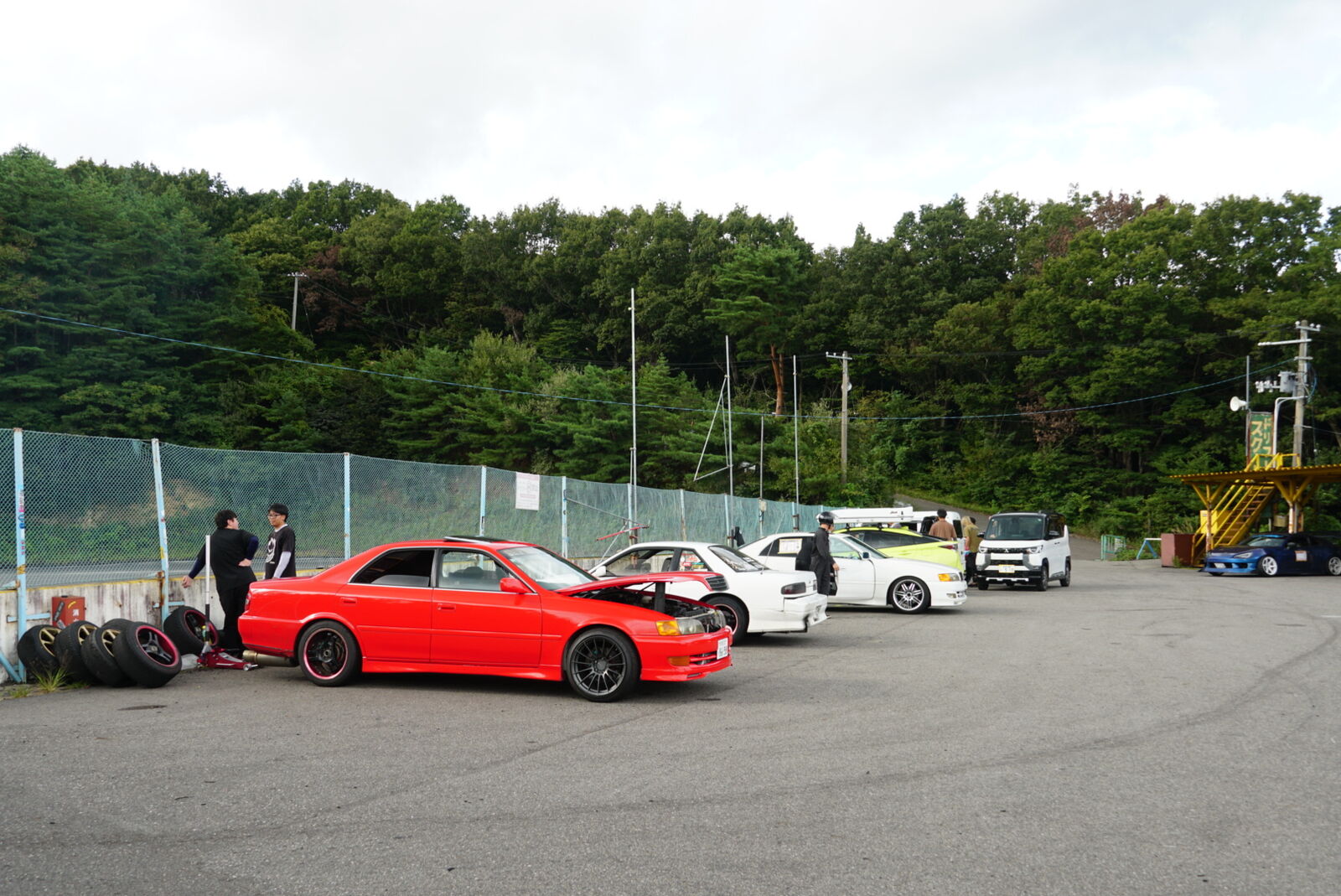
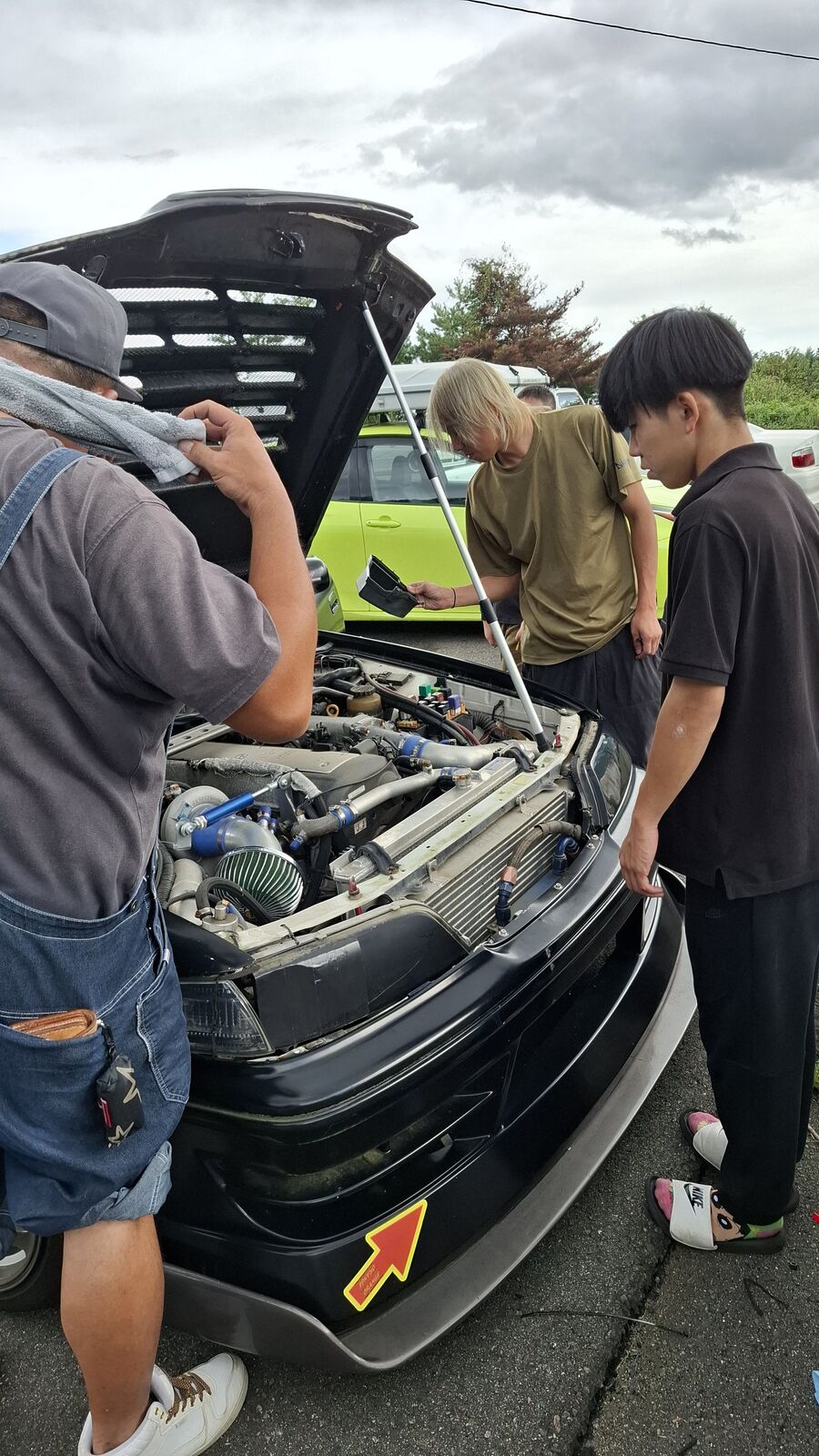
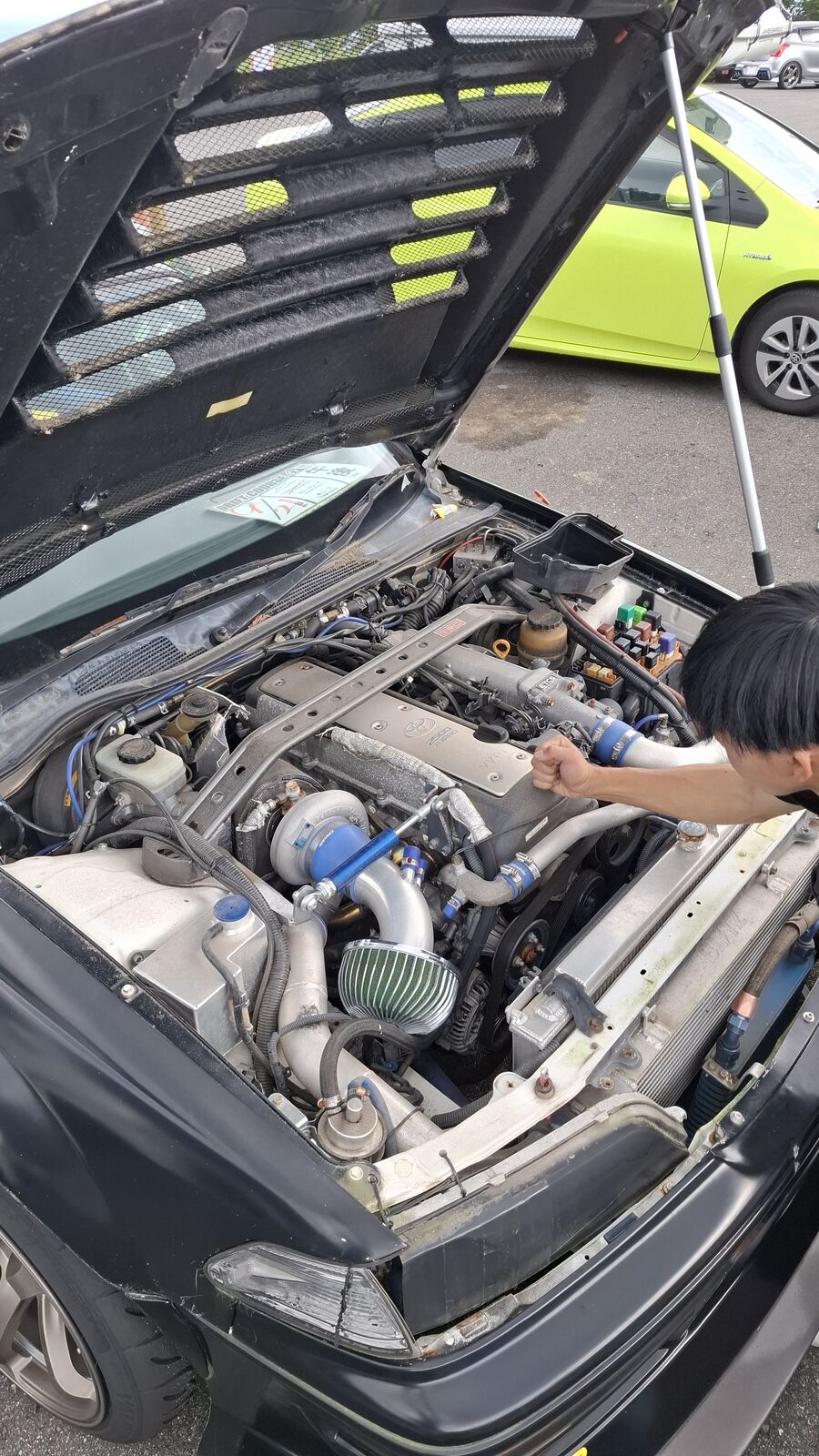
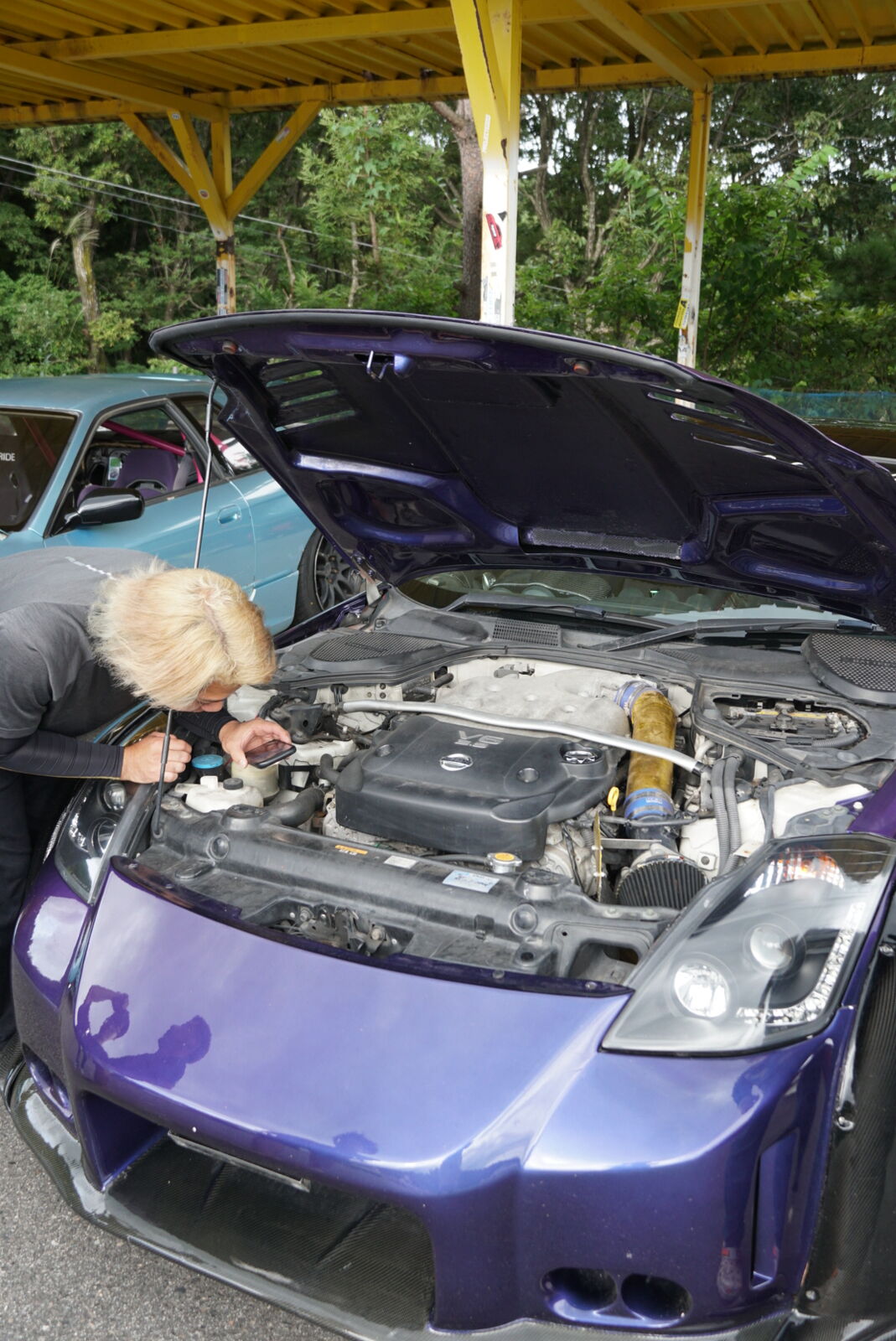
The drift course had its own pit area, and that's where the real show was. Not on the track, but in the pits. This is JDM culture lived in real time. People elbow-deep in engine bays, swapping burst tires between sessions, the whole community leaning over a car together to figure out what's wrong with the motor. No barriers between you and them. You could stand right there and watch a turbo setup being diagnosed, see the tools, hear the conversations.
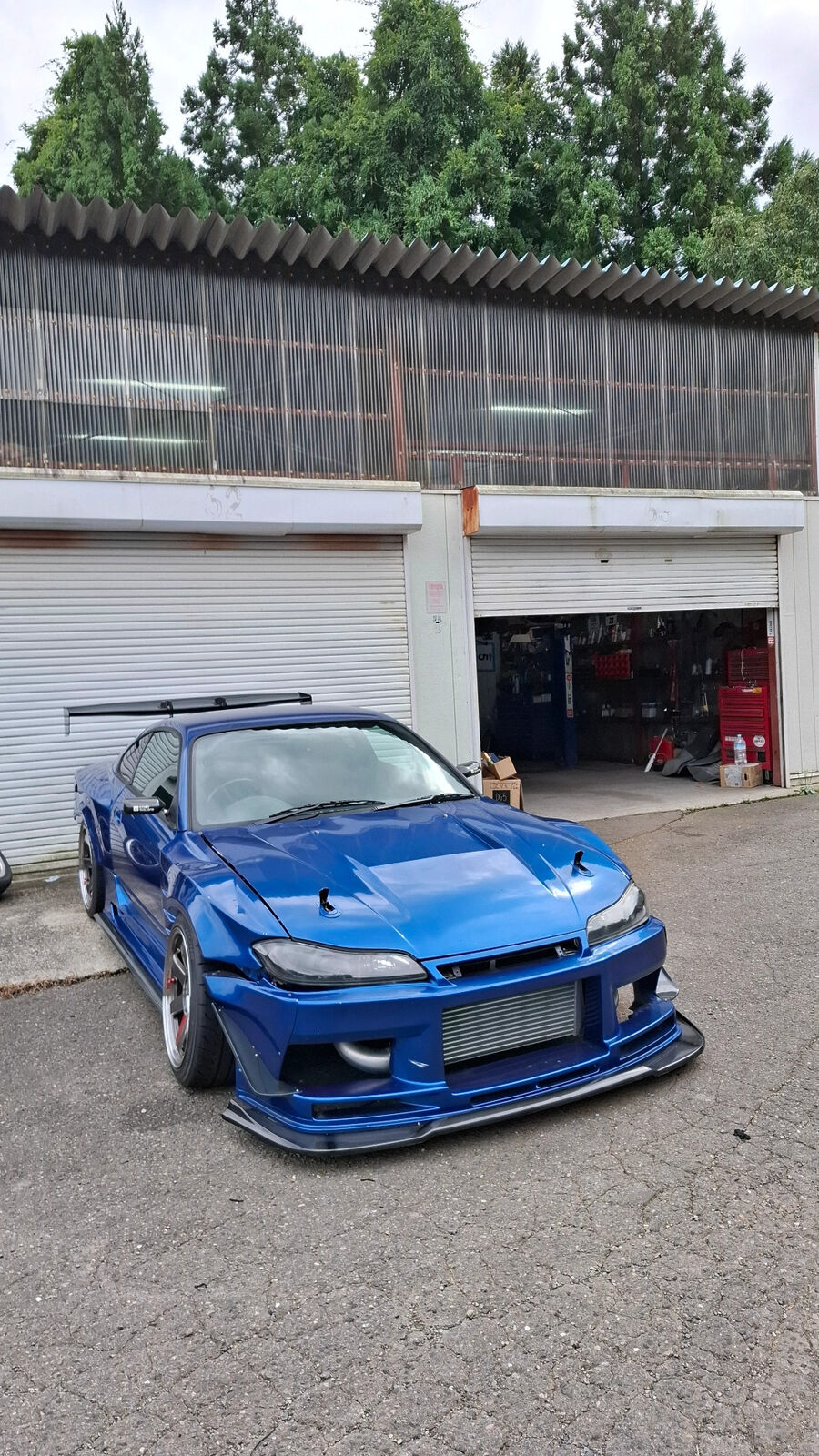
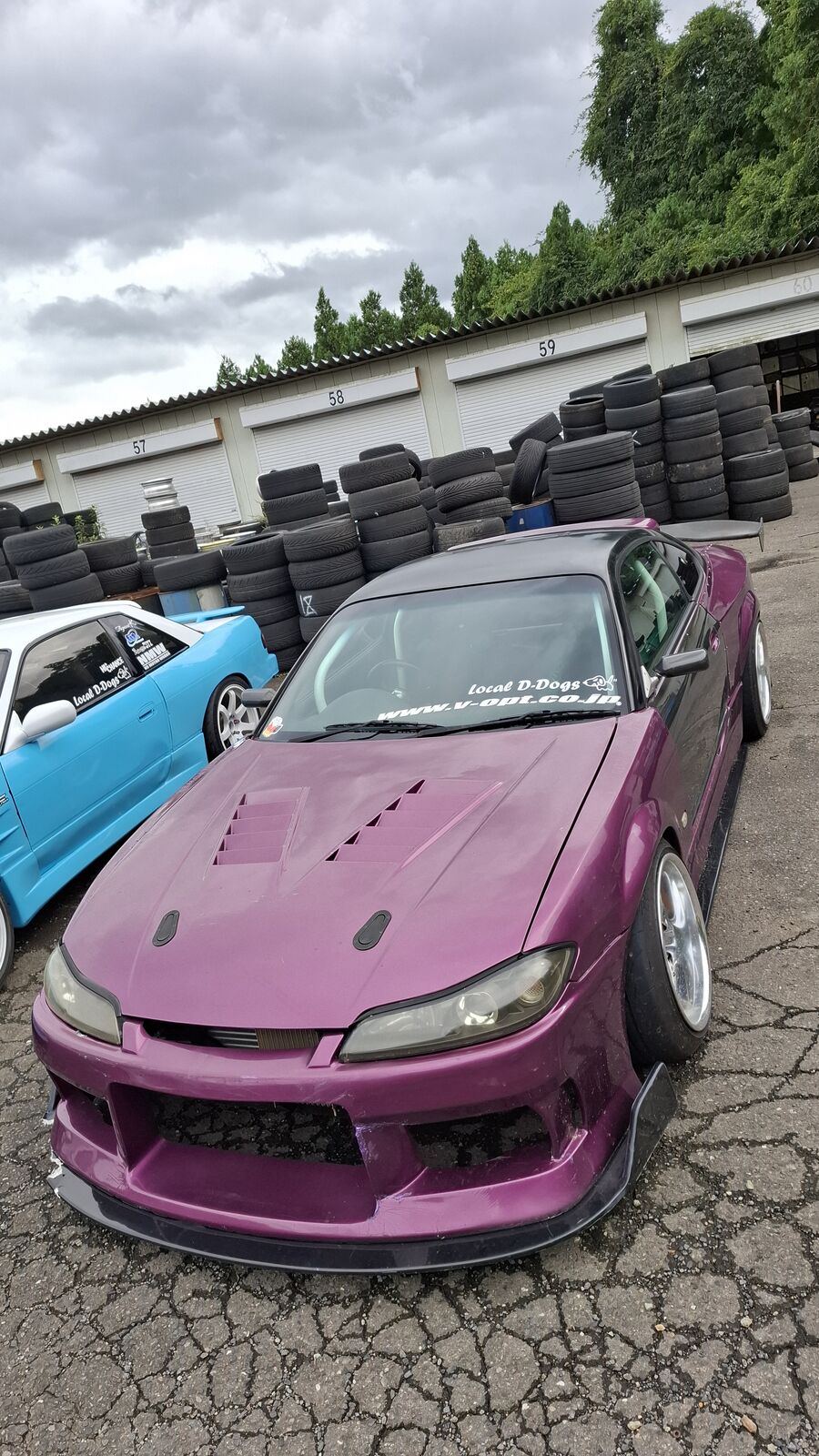
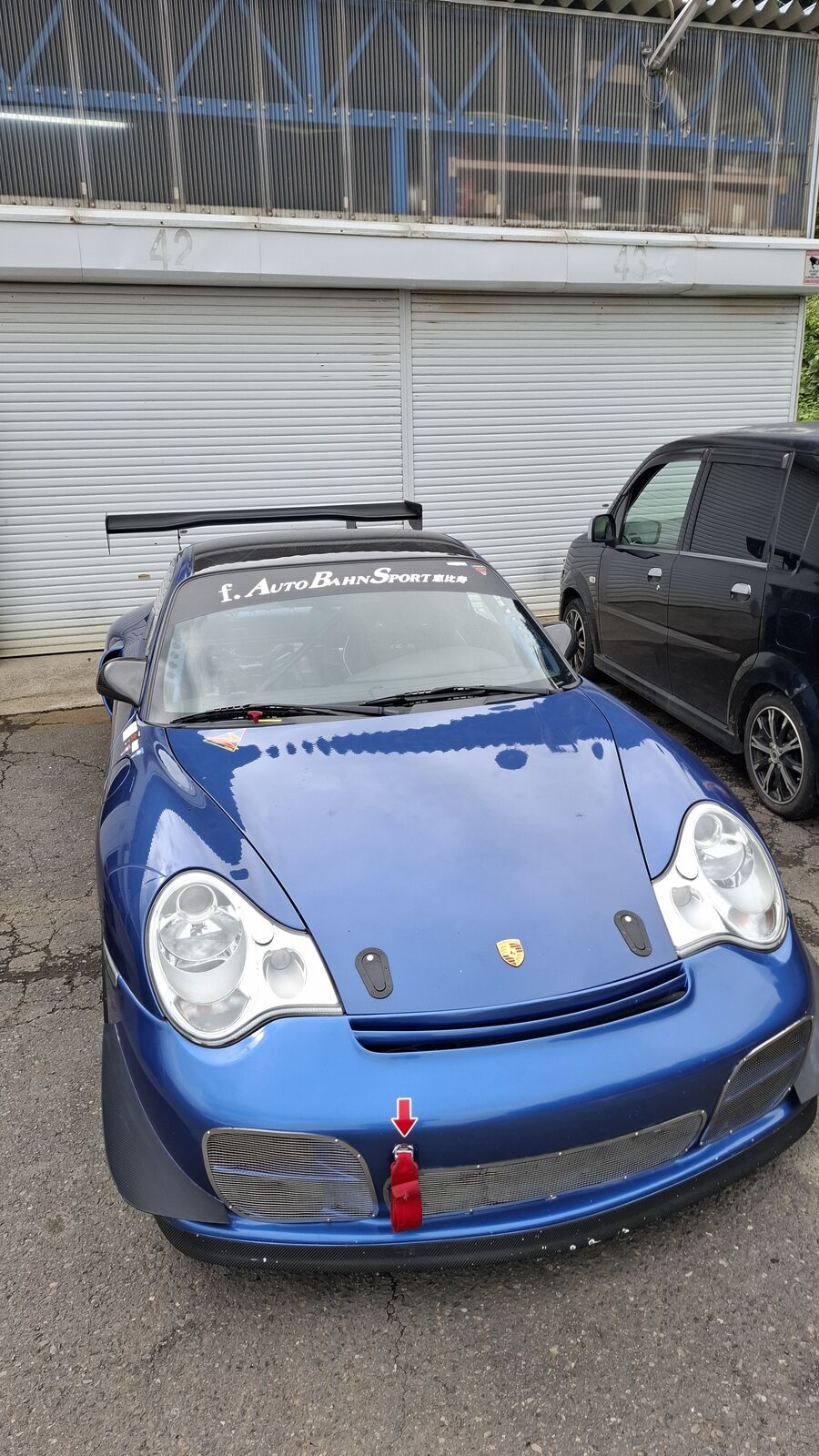
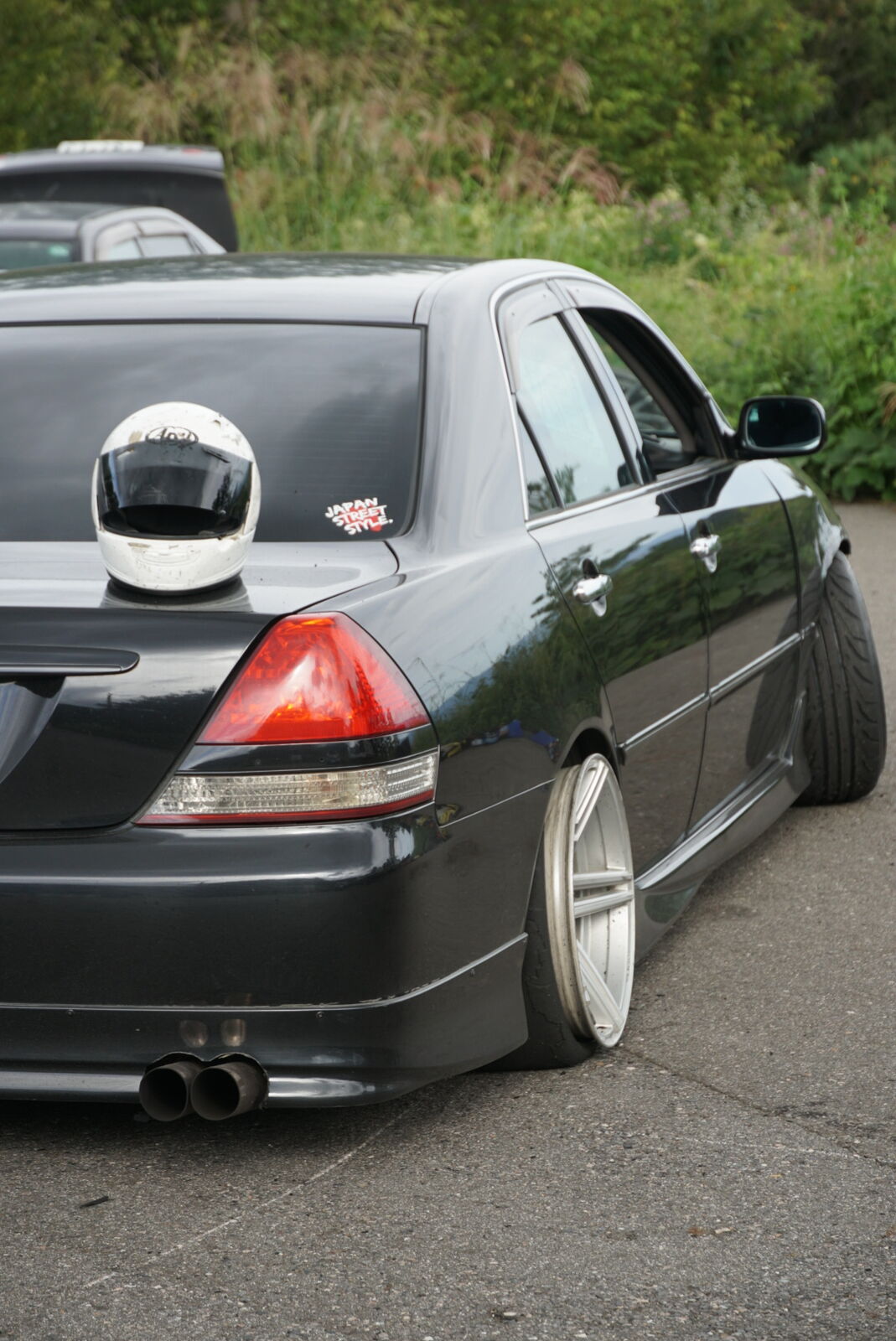
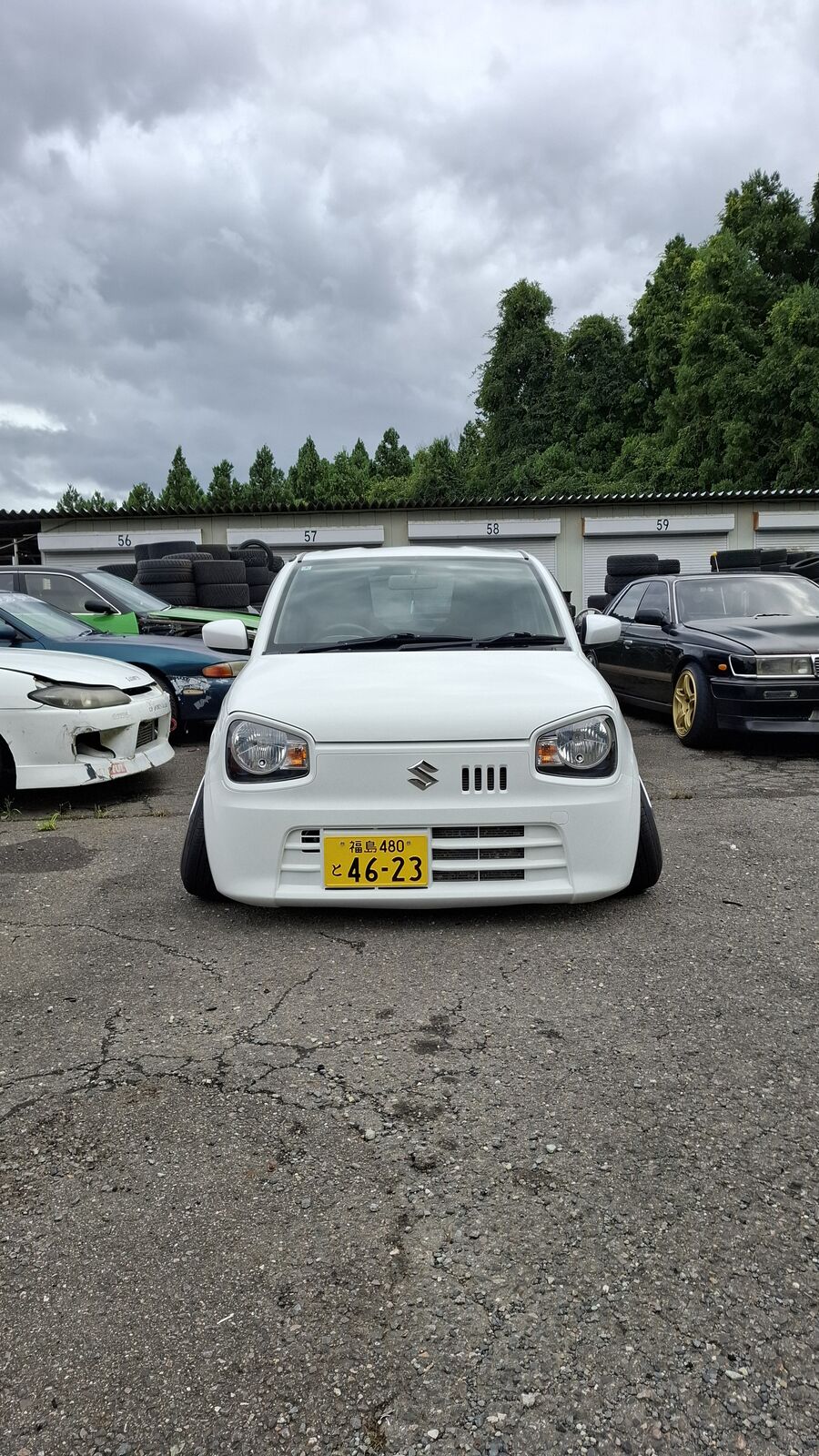
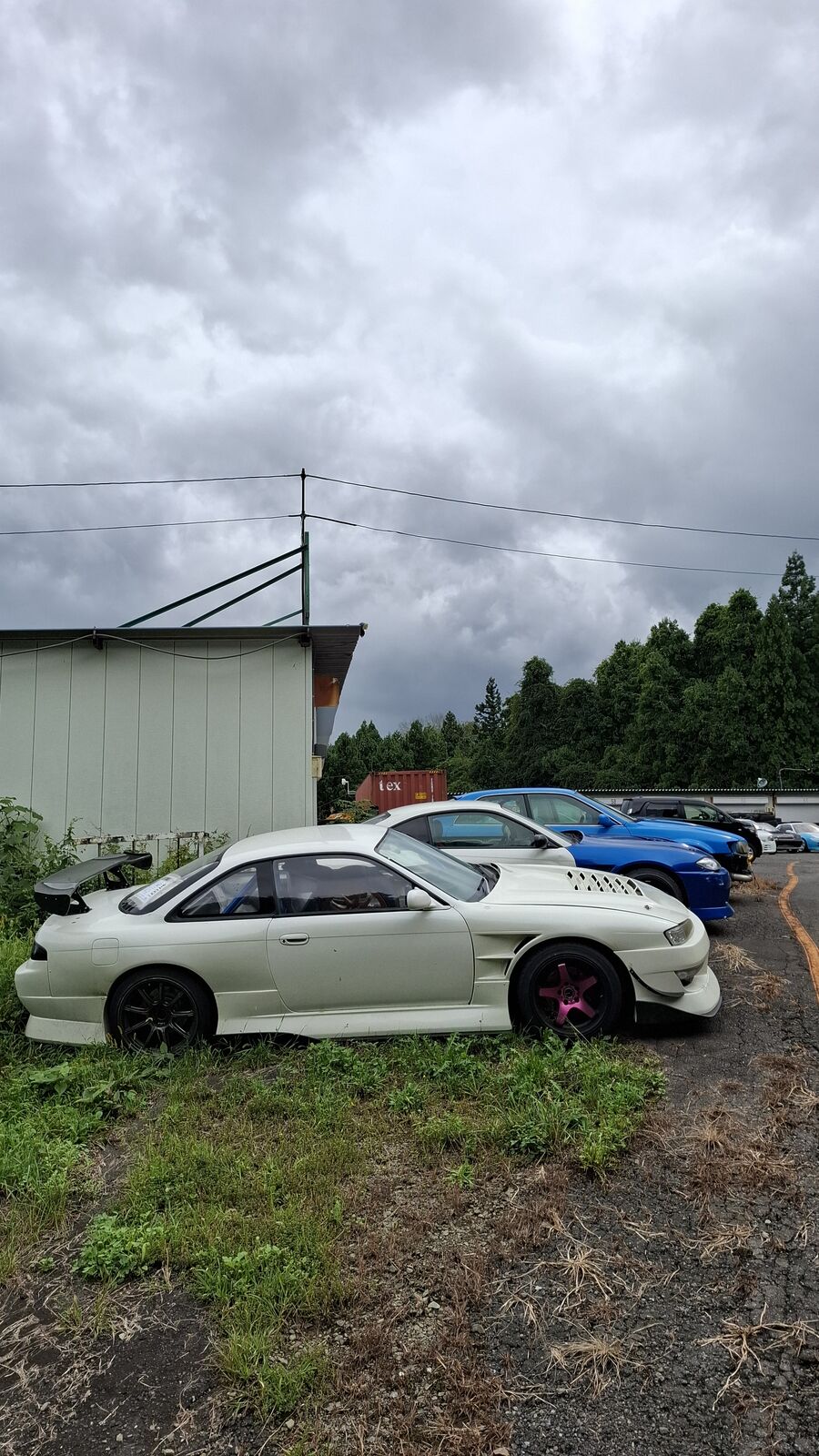
But the cars weren't just at the drift paddock. They were everywhere - parked outside workshops, tucked into garages, lined up in lots between the tracks. A blue Porsche 996 with "Auto Blue Sports" on the windshield sat outside one of the workshops. A gunmetal Nissan Skyline GT-R gleamed near the viewing tower, carbon fiber spoiler and aftermarket exhaust catching every angle. A light blue Nissan Figaro - the retro kei car that looks like it belongs in a 1960s French film - was parked next to a stripped-out purple S15 with someone deep in its engine bay. And somewhere in the middle of all that: my little campervan, looking deeply out of place among the GT-Rs and drift missiles.
Families with small children walked through the grounds alongside guys in racing suits. A white car with a beginner driver sticker sat next to hardened drift machines. The whole scene felt like a community gathering that happened to involve motorsport rather than a motorsport event that tolerated visitors.
The Graveyards
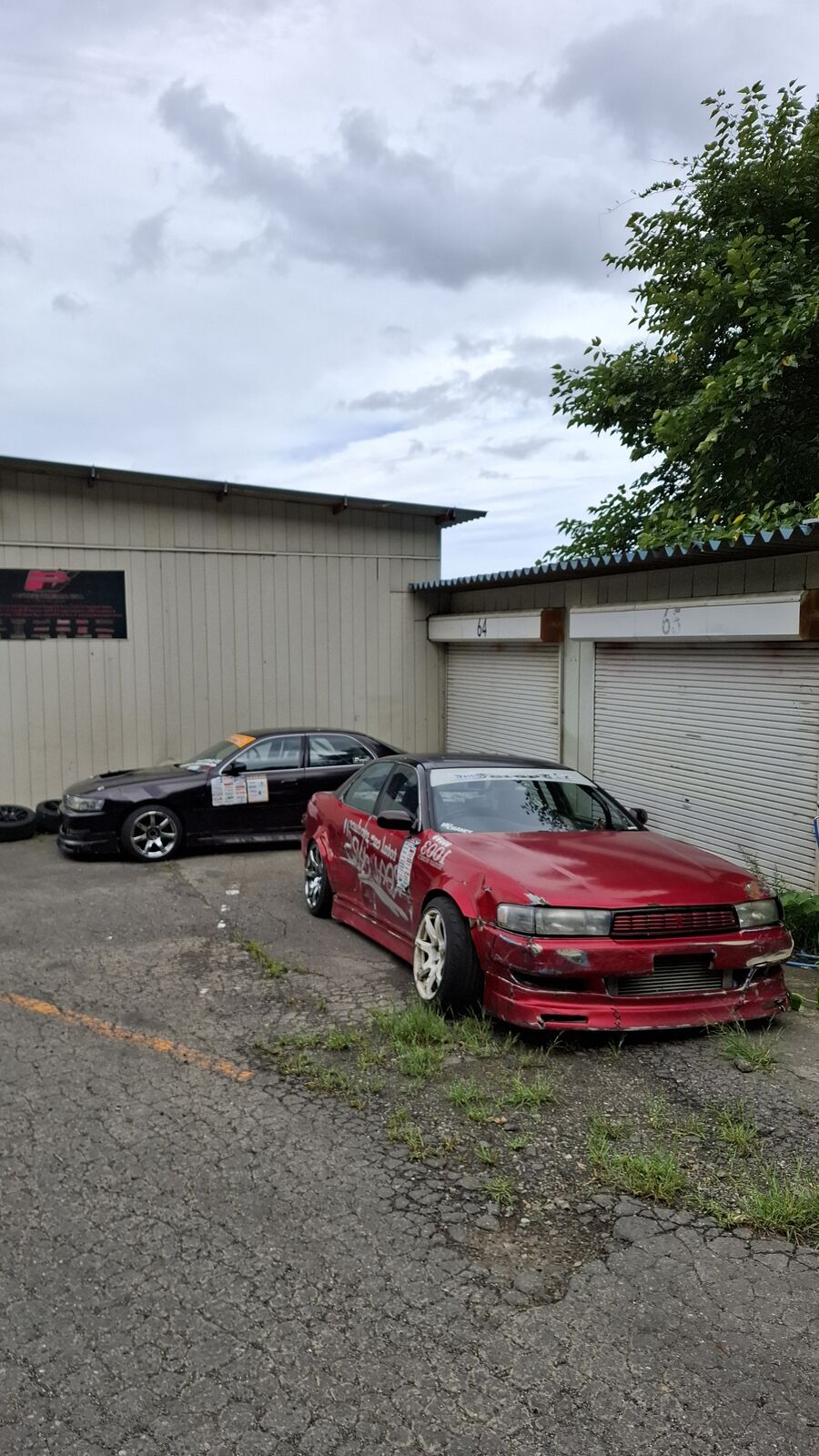
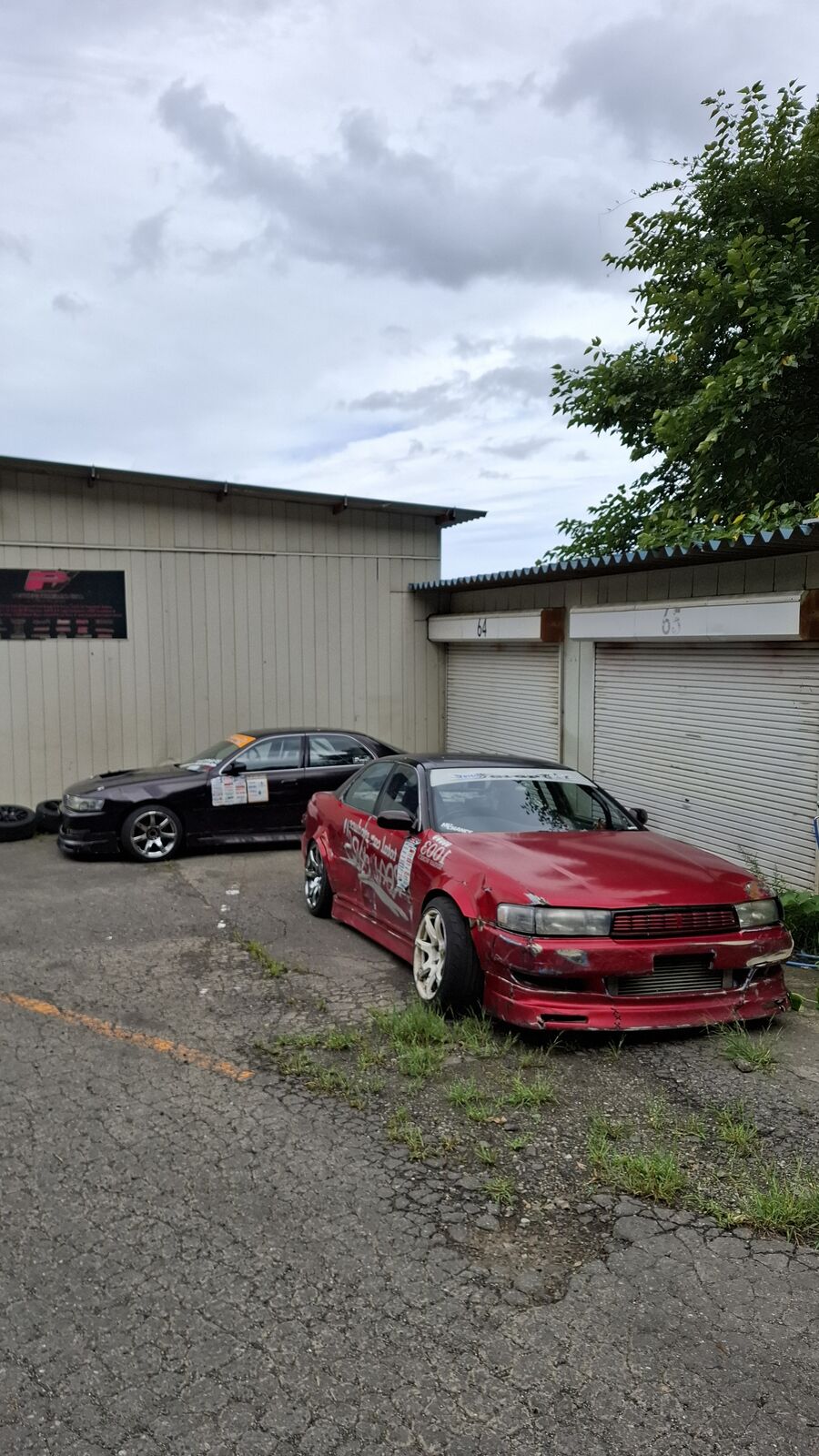
Walking between the tracks, I passed several areas where old drift cars and race cars sat in rows. Not in the paddock - these were scattered across the complex, tucked into garages and open lots between the courses. Cars that had seen their best days, retired from service, now sitting in the mountain air as parts donors or monuments to someone's past obsession. Faded liveries, flat tires, broken windshields, grass growing through the wheel arches. It felt like walking through a car enthusiast's version of a temple graveyard. Each one had been someone's project, someone's weekend, someone's reason to drive three hours from Tokyo. Now they sit here, slowly returning to the mountain.
And then there are the ones you don't see. If you dig into YouTube videos and blog posts about Ebisu, you'll find stories about wrecked cars from past accidents still sitting in the forest beside the tracks. Left where they ended up because the terrain was too difficult or the cost too high to recover them. I didn't find any myself, but knowing they're out there somewhere in those woods adds another layer to this place. Ebisu doesn't clean up its history. It just grows around it.
A Note on the Zoo
I need to mention this because it matters. Ebisu Circuit has a zoo on the premises. I stumbled across it while walking the grounds, and what I saw was deeply uncomfortable. The lion enclosures sit right next to the drift car parking area. Right next to it. The noise from the track is deafening even for humans, and these animals are living in it constantly. The conditions, at least by any standard I'd consider acceptable, are not adequate.
I'm someone who cares deeply about animal welfare, and discovering this cast a shadow over what was otherwise an incredible day. I'm still writing about Ebisu because the motorsport culture there is genuinely special, and I believe there are more effective forms of protest than silence. But if you're a fellow animal lover, you should know what's there. Whether that changes your decision to visit is entirely yours.
Why It Matters
Japan has famous circuits. Suzuka, Fuji Speedway, Motegi. Places where Formula 1 and Super GT run, where the facilities are world-class and the ticket prices match. Ebisu is not that. Ebisu is where Japanese car culture lives at ground level. It's where the guy who spent three years building his drift car in a shed can bring it and actually use it. Where you don't need a race license or a six-figure car to participate.
The Drift Matsuri events turn this place into a 24-hour party. Hundreds of cars, all-night drifting under floodlights, people sleeping in their cars between sessions. I wasn't there for a Matsuri, just a regular day when multiple events happened to coincide. And it was still one of the most memorable car experiences I've had in Japan. Not because of any single moment, but because of the scale, the atmosphere, and the complete absence of pretension.
If you're into cars and you come to Japan, you go to Daikoku PA for the spectacle. You go to Ebisu for the soul.
Practical Info
Location: 1 Sawamatsukura, Nihonmatsu, Fukushima 964-0088, Japan. View on Google Maps
Access: Car only. About 250 km north of Tokyo, roughly 3 hours via the Tohoku Expressway. Take the Nihonmatsu IC exit and follow signs into the highlands. No public transport to the circuit.
What: Motorsport complex with 7 tracks and 2 skid pads. Hosts drift events, grip racing, classic car meetings, motorcycle events, and the famous Drift Matsuri (3x per year).
Drift experiences: Drift Taxi rides and rental drift cars are available for visitors who want to try it themselves. Check the Ebisu Circuit website for the current schedule and pricing.
Cost: Open drift days typically around 8,000-15,000 JPY depending on the event and courses. Spectator access is usually free or minimal.
Getting around: The complex is spread across a mountainside. Bring comfortable shoes if you plan to explore on foot - the distances between tracks are significant. Alternatively, drive between areas.
Nearby: Nihonmatsu city for accommodation and food. Adatara mountain area and Dake Onsen are close by for a post-motorsport soak.
Note on the zoo: There is a zoo on the Ebisu Circuit premises. The animal enclosures are positioned immediately adjacent to the motorsport facilities. Visitors who care about animal welfare should be aware of this before planning their visit.
Wildlife: The road to Ebisu passes through bear country. You'll see warning signs. This is rural Fukushima, not Tokyo.