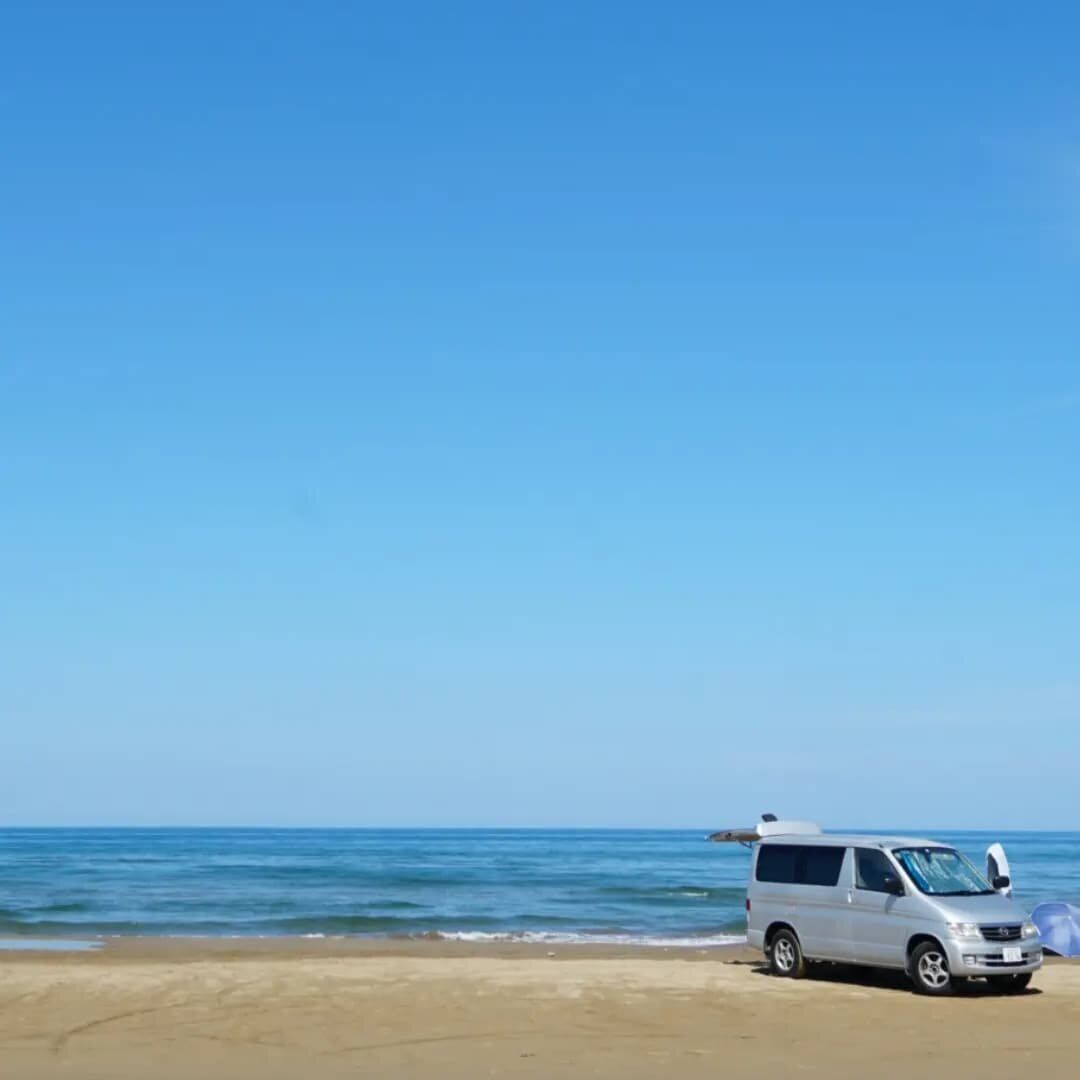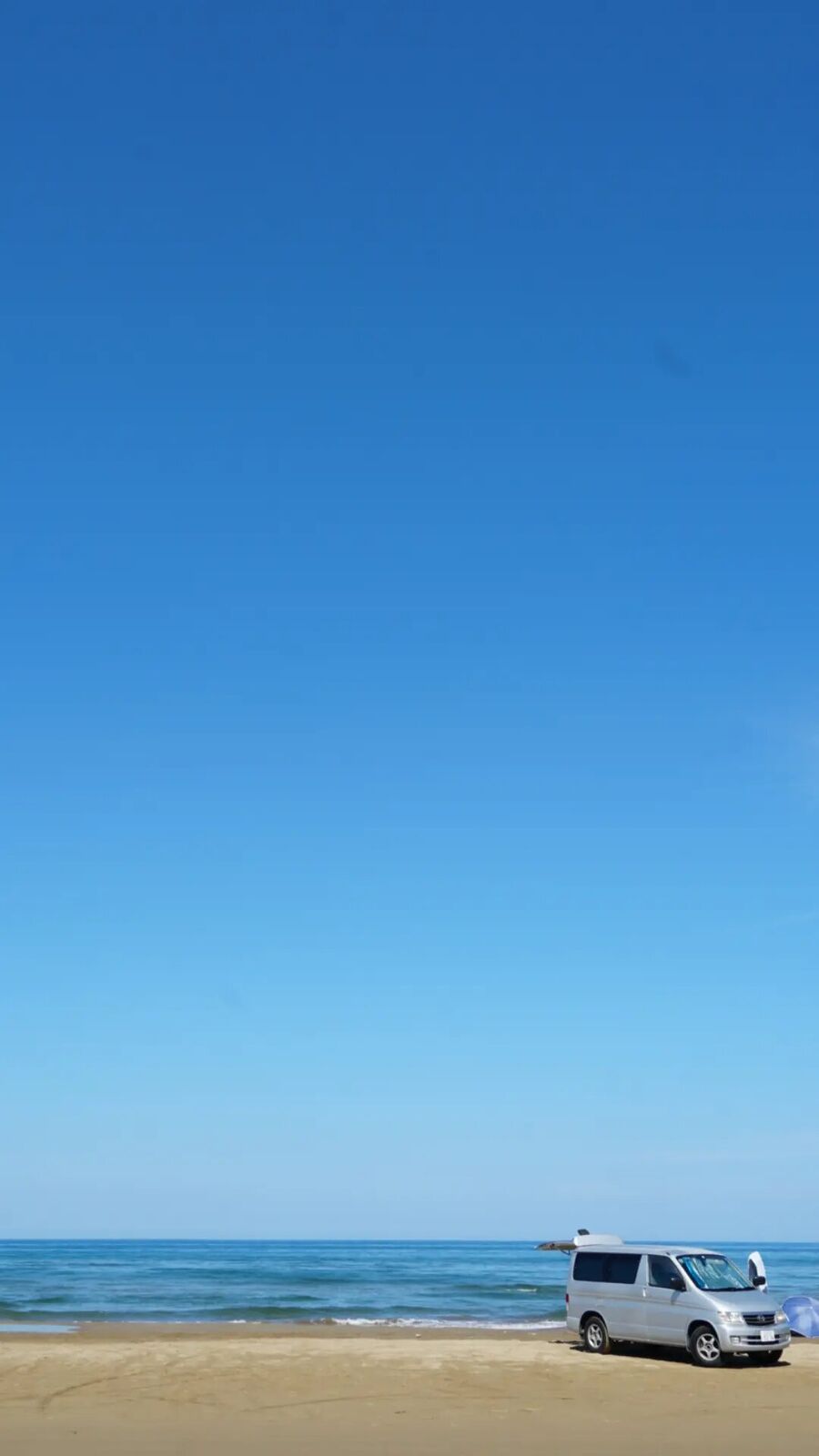
I first saw Chirihama when Sébastien at JapanTravel posted about hosting a video tour of the Noto Peninsula - a promotional shoot for the area. In the footage, they drove a campervan straight onto a beach, a long, wide, perfectly flat stretch of sand where cars and vans were just parked next to the sea. I watched that and thought: I need to go there. A few weeks later, I pulled the Bongo off Route 249 on the Noto Peninsula and drove straight onto 10 kilometers of flat, hard-packed sand along the Sea of Japan.
Morning on the Sand
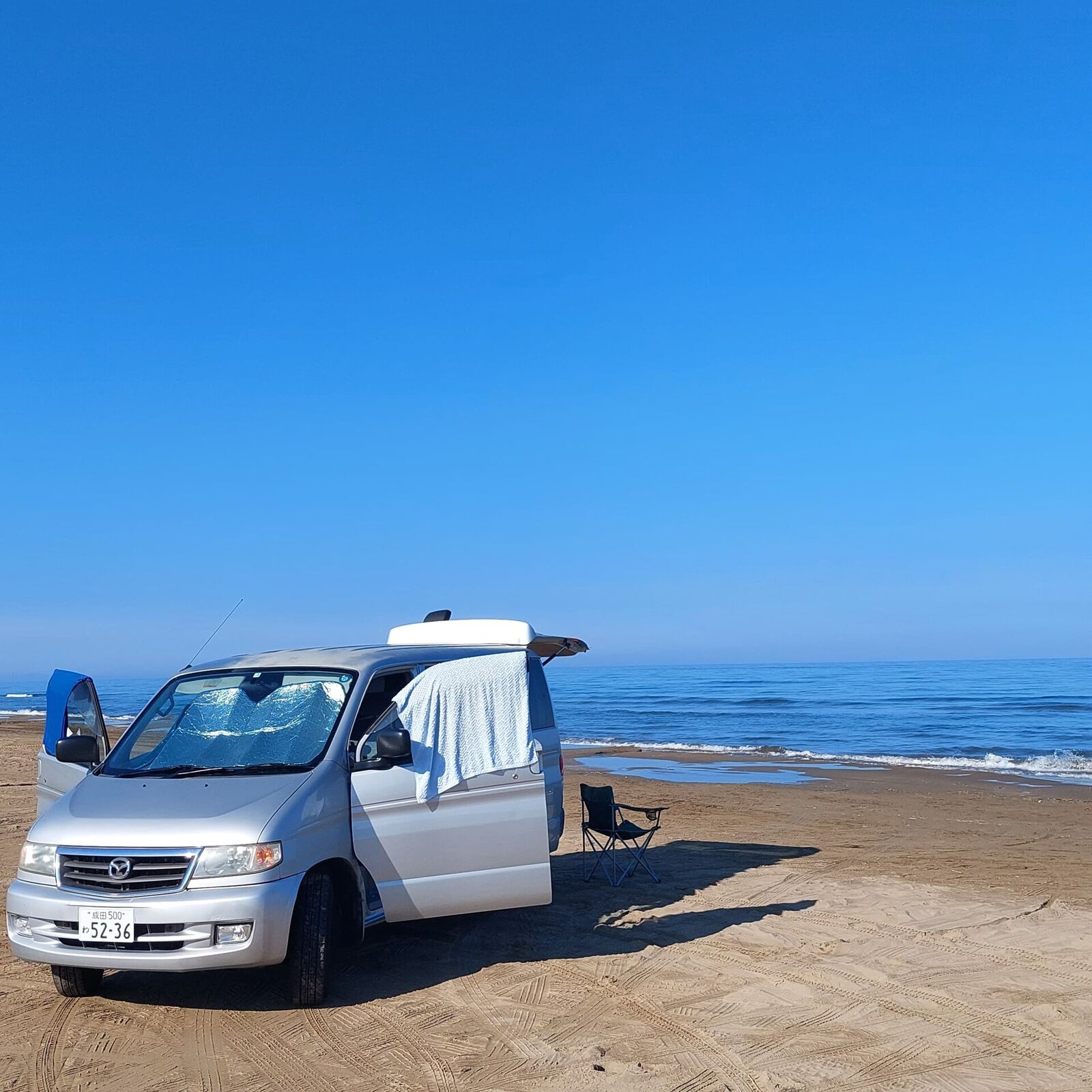
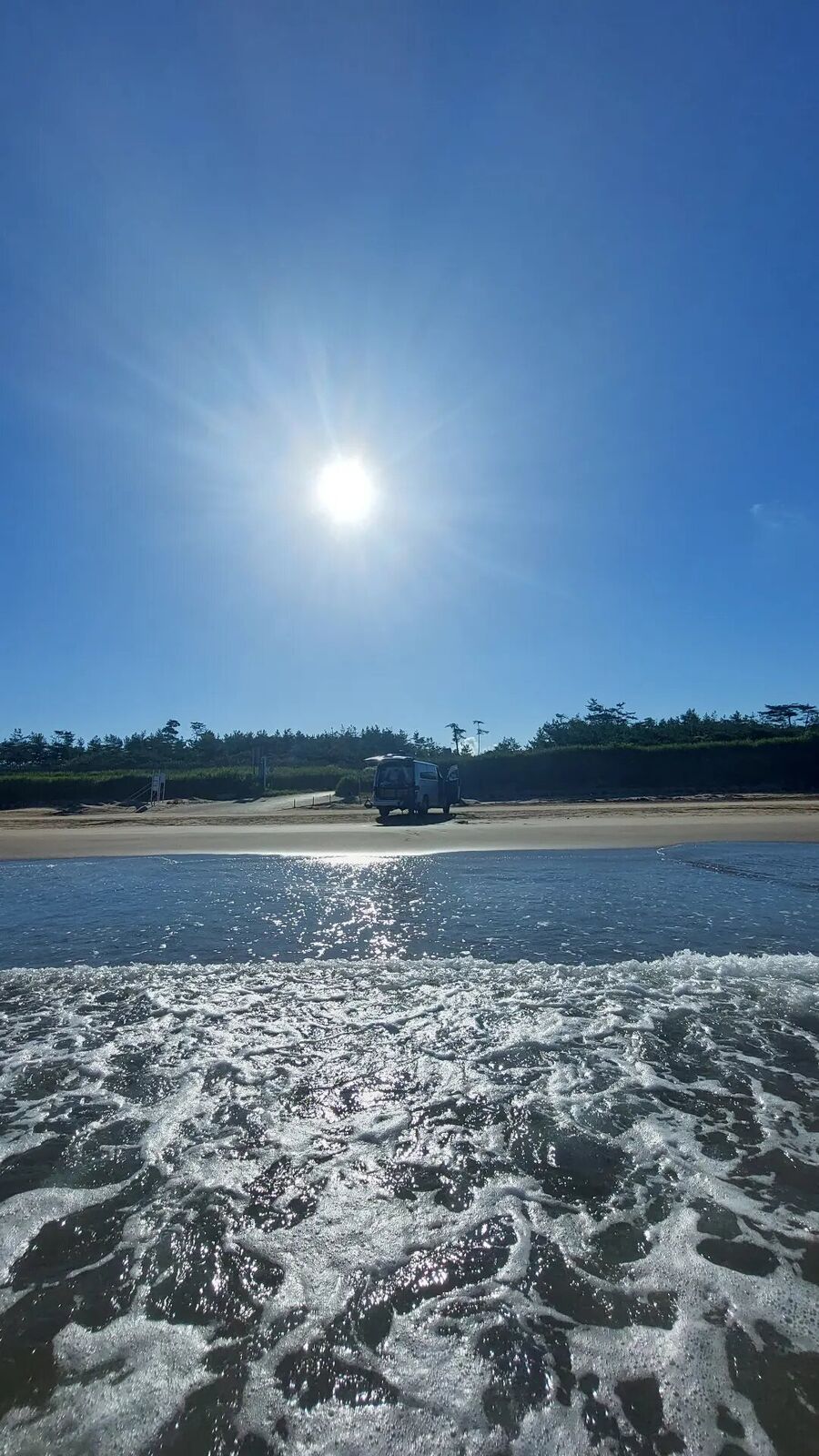
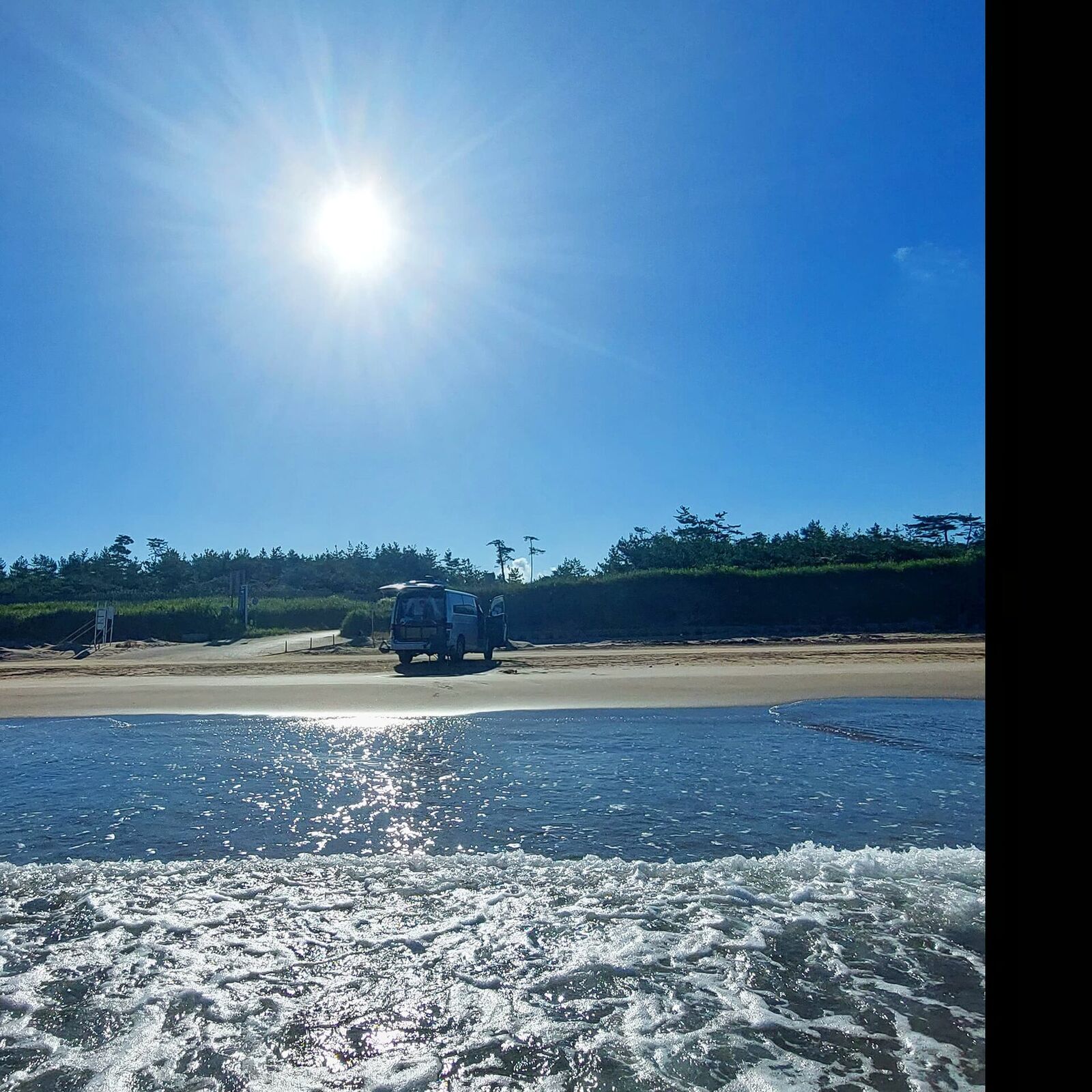
I got there early the first time, around 7 in the morning, and it was already 30 degrees. The beach was almost empty. I parked the van facing the water, slid open the side door, set up a camping chair, and sat there watching the waves roll in from the Sea of Japan while the sun climbed higher. The water was maybe five meters away, close enough that the bigger waves sent white foam almost to the tires. It was like having your own personal beach lounge, except the lounge was your entire home on wheels.
The sand at Chirihama is different from most Japanese beaches. It's fine-grained and so densely packed that regular cars can drive on it without any problems - no four-wheel drive needed. The beach slopes gently into the sea, the water is shallow for a long way out, and on a clear day you can see far across the Sea of Japan. It felt like one of the Baltic Sea beaches where Isi and I usually spend the summer, transplanted to the coast of Japan and turned up the temperature by 15 degrees.
Daytona Beach, Noto-Style
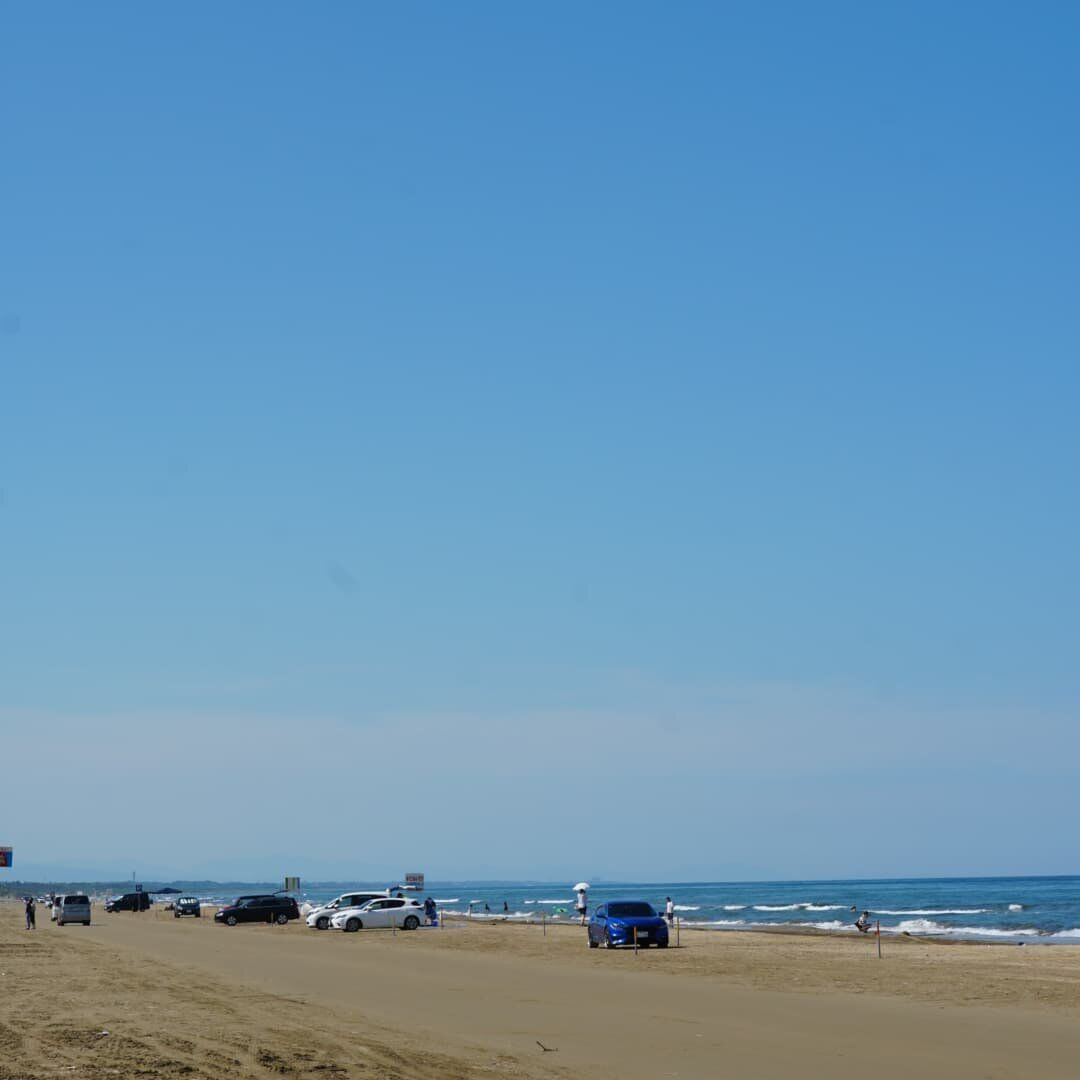
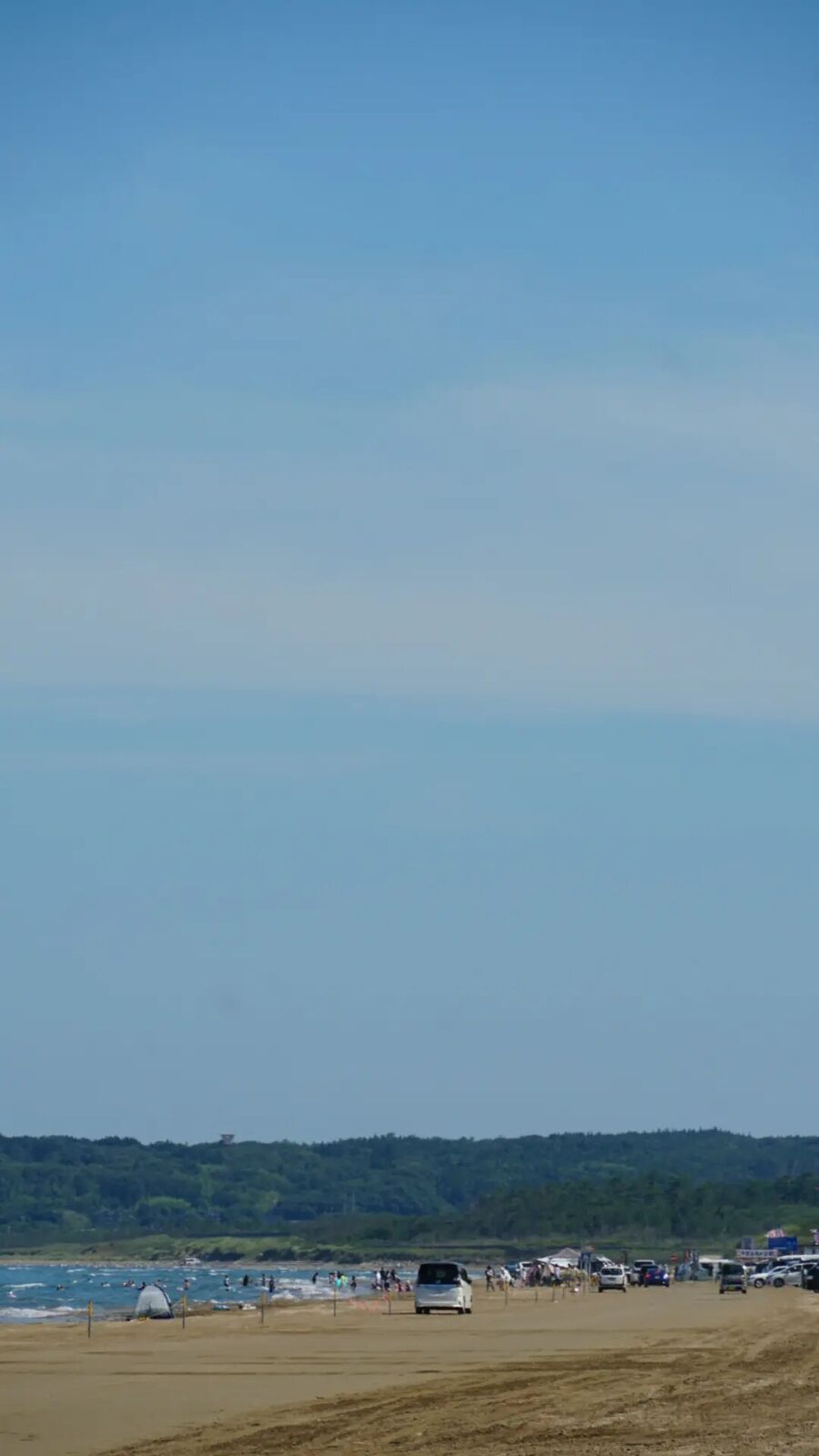
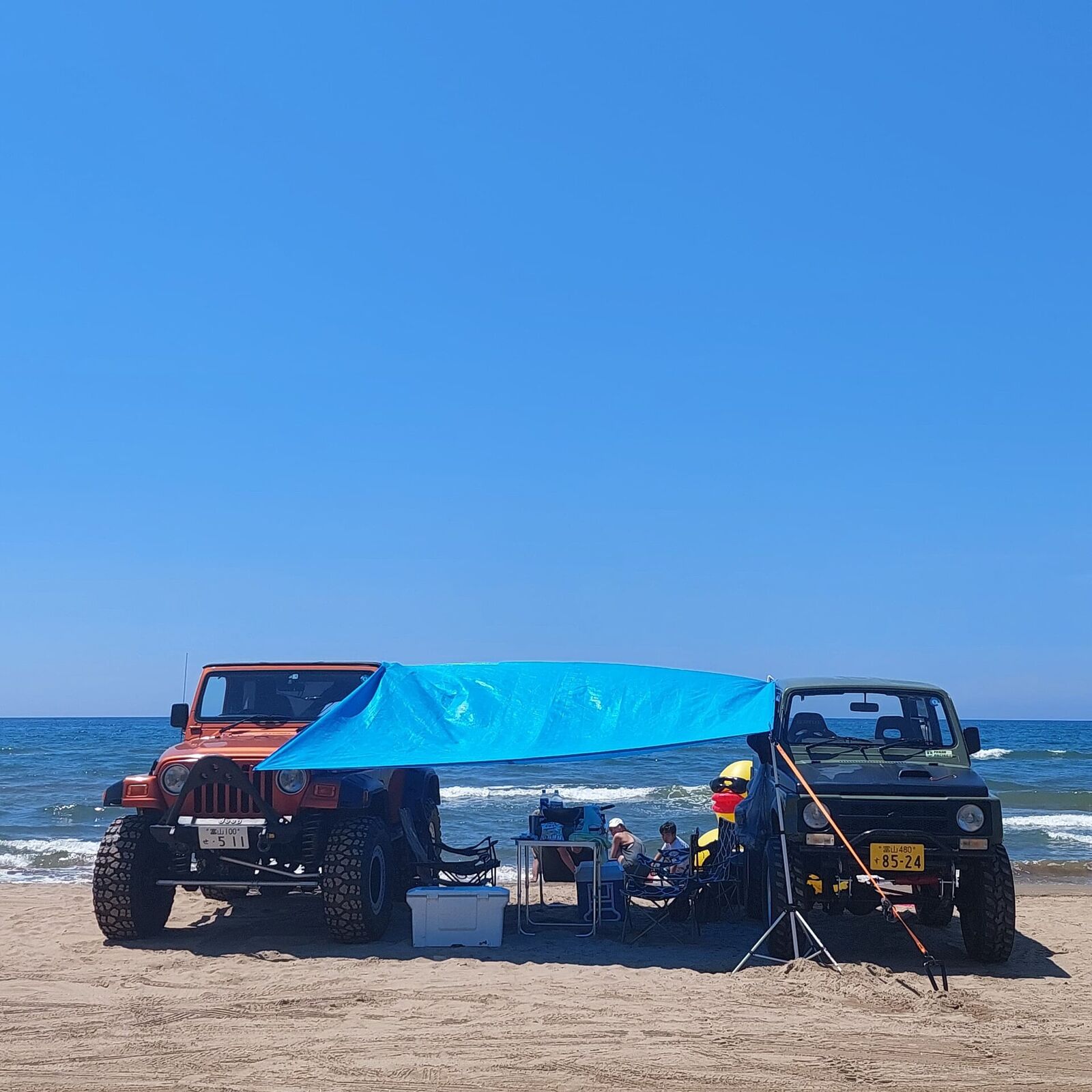
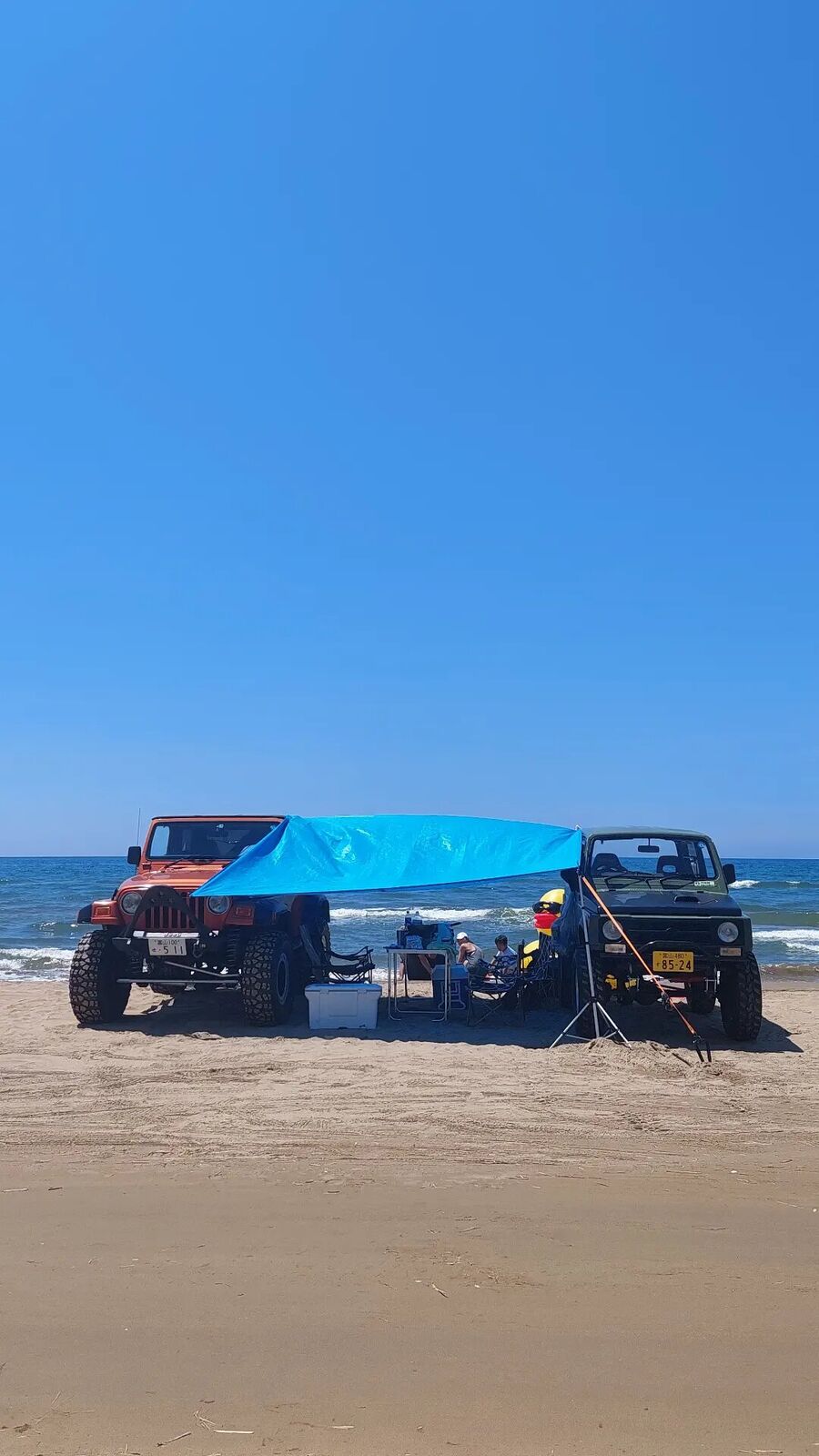
As the morning turned into afternoon, the beach filled up. Not gradually - more like someone opened the gates. By midday, the sand was covered for kilometers with cars, minivans, SUVs, tents, tarps, barbecues, and families. School groups arrived in buses. Couples set up beach chairs. A red Jeep Wrangler and a green Suzuki Jimny had parked nose to nose with a blue tarp stretched between them, creating a makeshift beach shelter that looked like something out of a camping magazine. The owners sat underneath in folding chairs, fishing rod propped up beside them, cooler box open, looking like they'd figured out the perfect way to spend a summer day.
That Daytona Beach feeling was real. You could cruise slowly along the sand and just watch the parade: families playing in the shallows, kids running between the cars, someone carrying an armful of something from one of the beach stalls that pop up in summer. There were food trucks, small cafes, and of course the ubiquitous convenience store a short drive off the beach where you could grab an iced latte and bring it back to your spot on the sand. The whole scene was relaxed and cheerful in a way that felt distinctly Japanese - organized chaos with good manners.
Coming Back
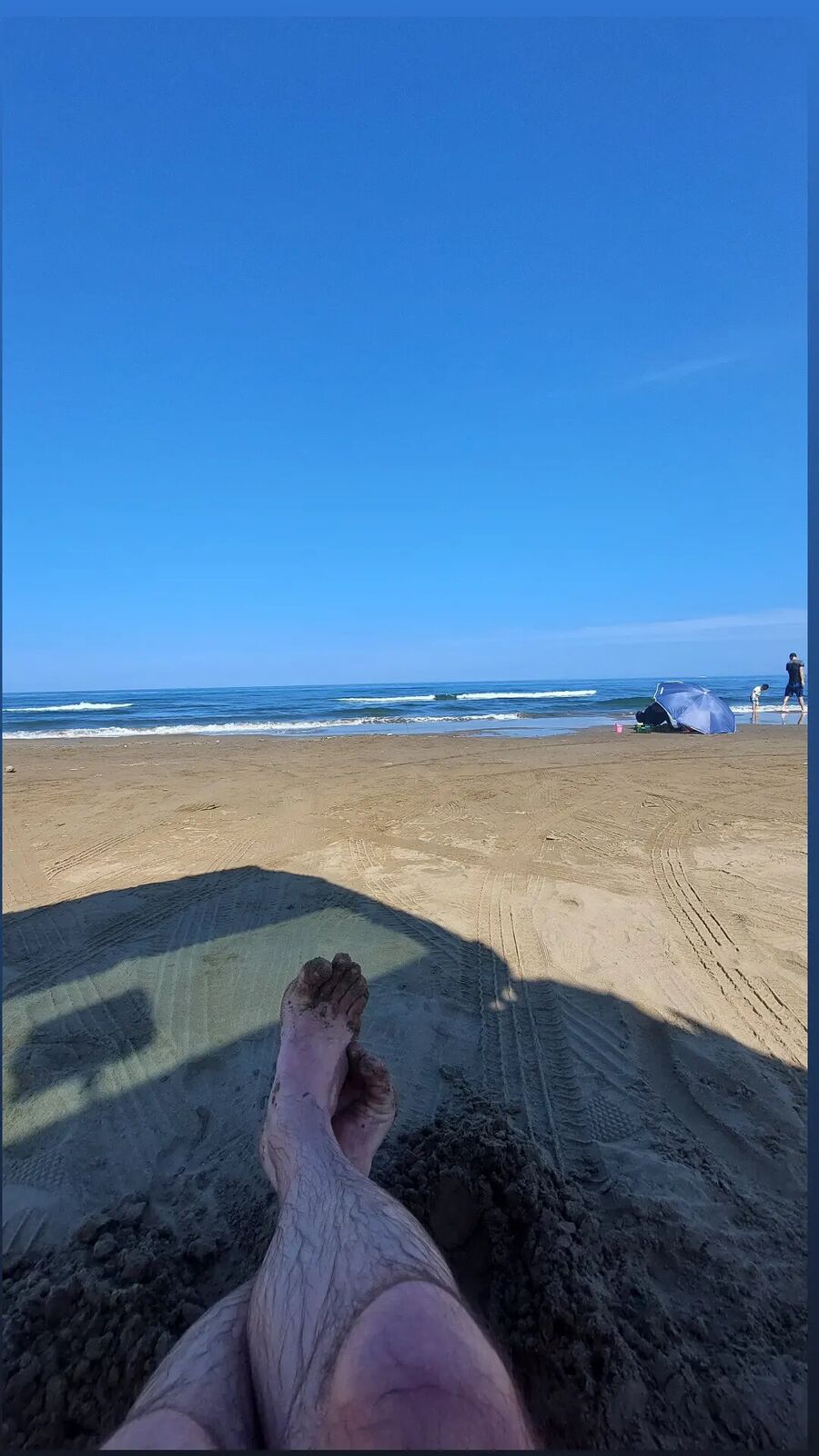
I liked it so much that I came back two weeks later. The second visit was even better because I knew what to expect. I arrived early again, made coffee in the van, and walked into the sea with an iced latte in my hand while the morning sun turned the shallow water into a mirror. There's something about standing knee-deep in the Sea of Japan at 7am with your coffee, your van parked on the sand behind you and the entire coastline stretching out in both directions, that makes the whole vanlife project feel worth every uncomfortable night on a too-short mattress.
Practical Info
Location: Chirihama Nagisa Driveway (千里浜なぎさドライブウェイ), Hakui, Ishikawa Prefecture. West coast of the Noto Peninsula on the Sea of Japan. View on Google Maps
Access: Free. Drive directly onto the beach from designated entry points along Route 249. No four-wheel drive needed - the sand is hard-packed enough for any car.
Length: About 8-10 km of driveable beach, depending on conditions.
Season: The driveway is open year-round but best in summer (July-September) for swimming and beach culture. The beach can be closed during storms or when the sand is too soft after heavy rain.
Campervan tip: Arrive early morning for the best experience. Park facing the sea, open the side door, and enjoy your own private beach spot before the crowds arrive. By midday in summer it gets very busy. There are toilets and facilities at the entry points.
What to bring: Sunscreen, water, a towel. Grab an iced coffee from the nearest convenience store on your way in. Beach stalls and food trucks are available in summer.
Warning: Don't park too close to the waterline - the tide changes and waves can reach further than you expect. Keep an eye on your van.