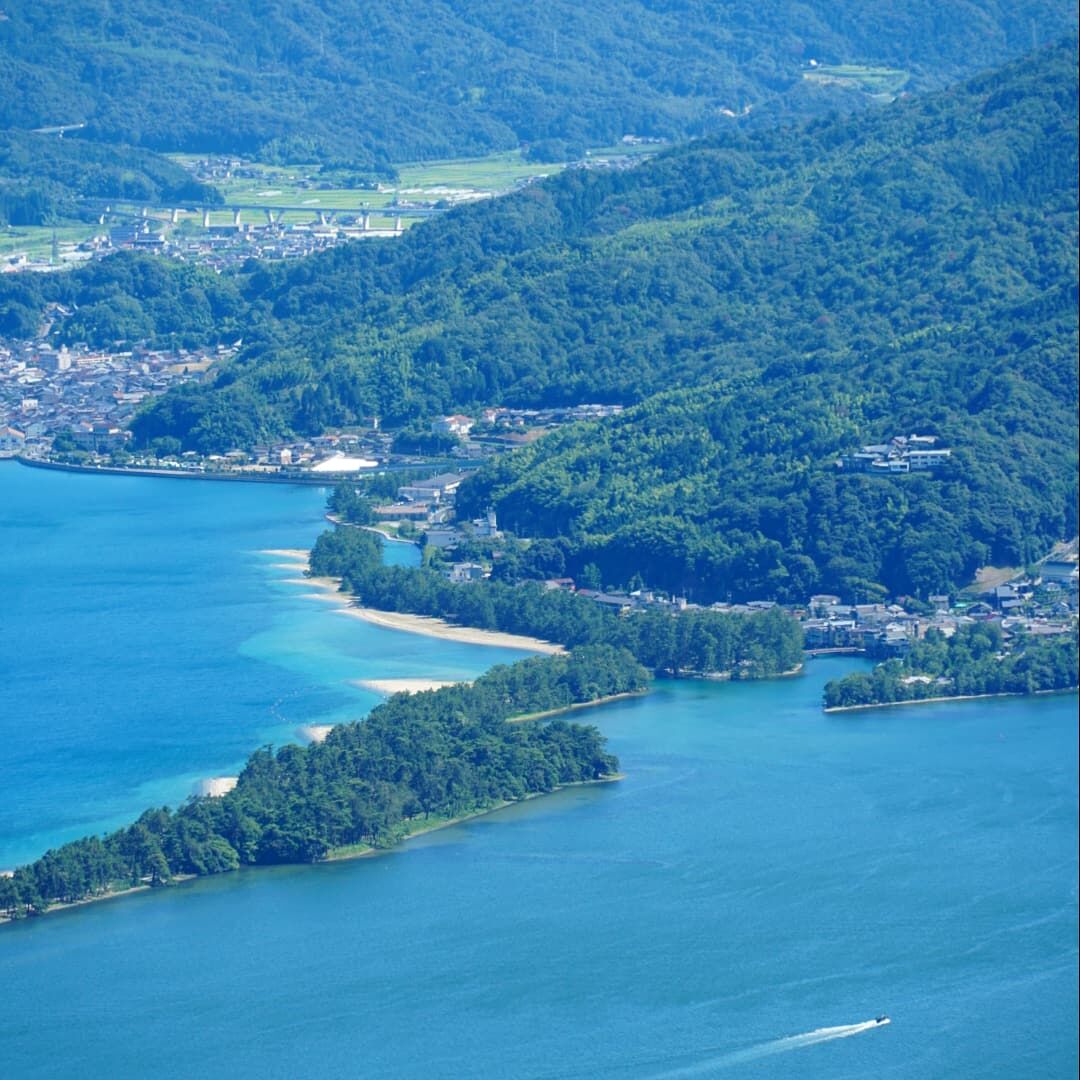
Amanohashidate is one of Japan's three most famous views. The other two are Matsushima in Miyagi and Miyajima near Hiroshima. Three places that the Japanese have been visiting and writing poems about for centuries. Most people experience Amanohashidate from above, from a viewpoint on one of the surrounding mountains, where you're supposed to bend over and look at the sandbar upside down through your legs. Seen that way, so the tradition goes, the pine-covered strip of land appears to float against the sky like a bridge ascending to heaven. That's where the name comes from: Ama no Hashidate, the bridge that the gods used to walk between earth and sky.
I've never done the upside-down thing. The viewpoint is on the far side, up at the amusement park, and I've never made it over there. What I did instead, twice, was something that most visitors skip: I walked the entire sandbar on foot. End to end, from the rotating bridge on the town side to whatever is at the other end, and back again. About 6.6 kilometers through a forest of nearly 8,000 pine trees, with water on both sides and nobody else around for most of it.
Shade to Shade
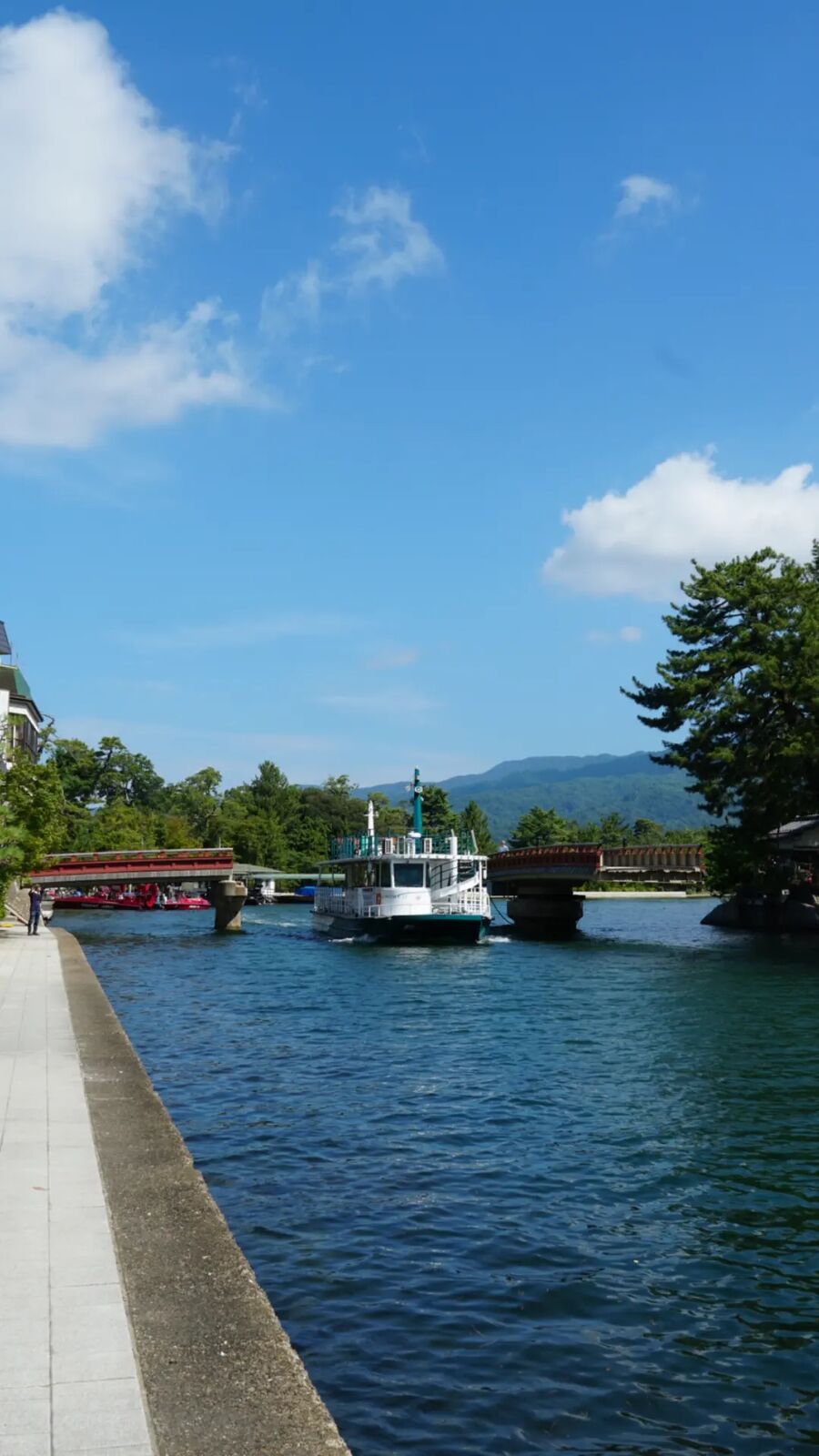
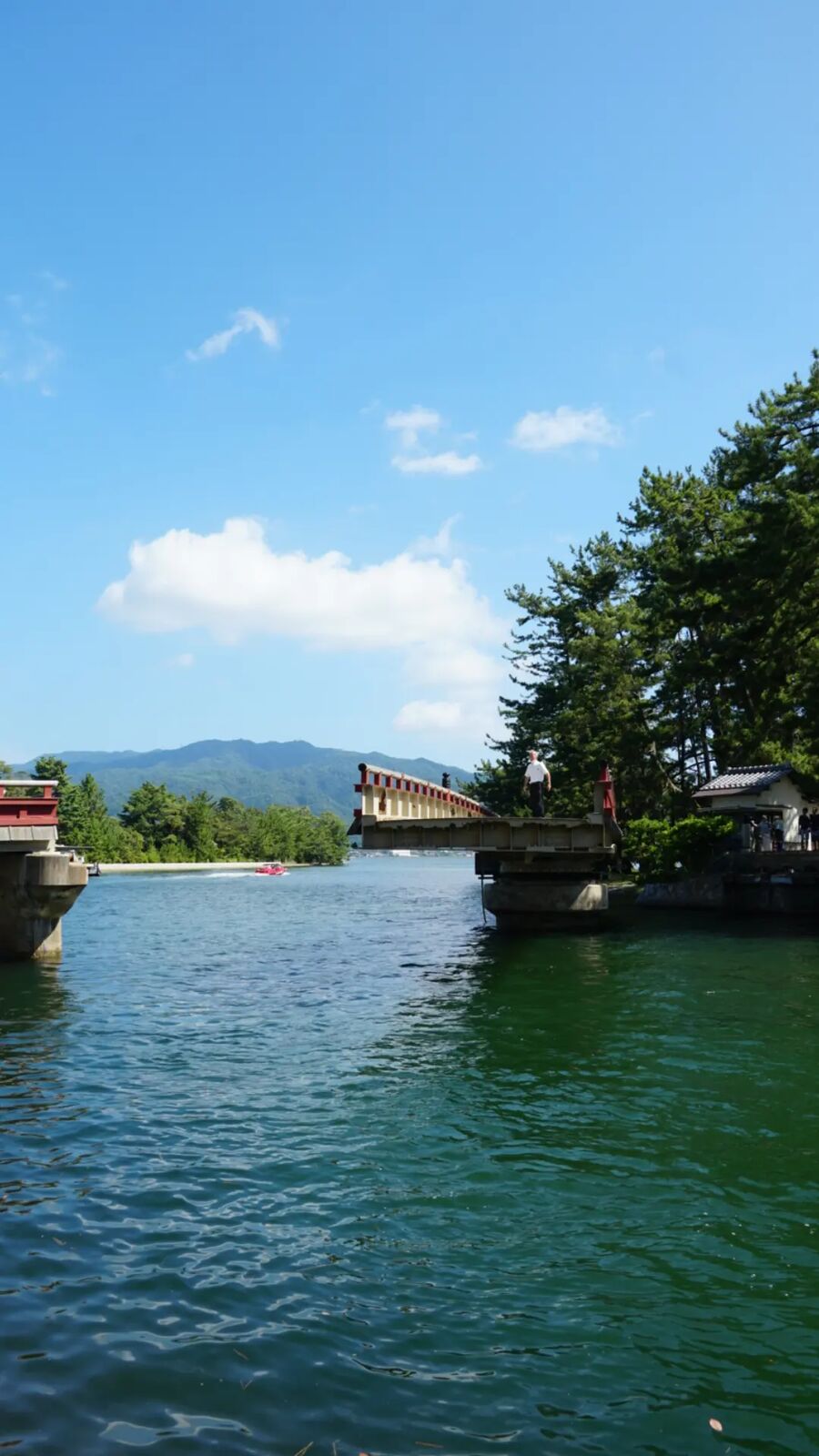
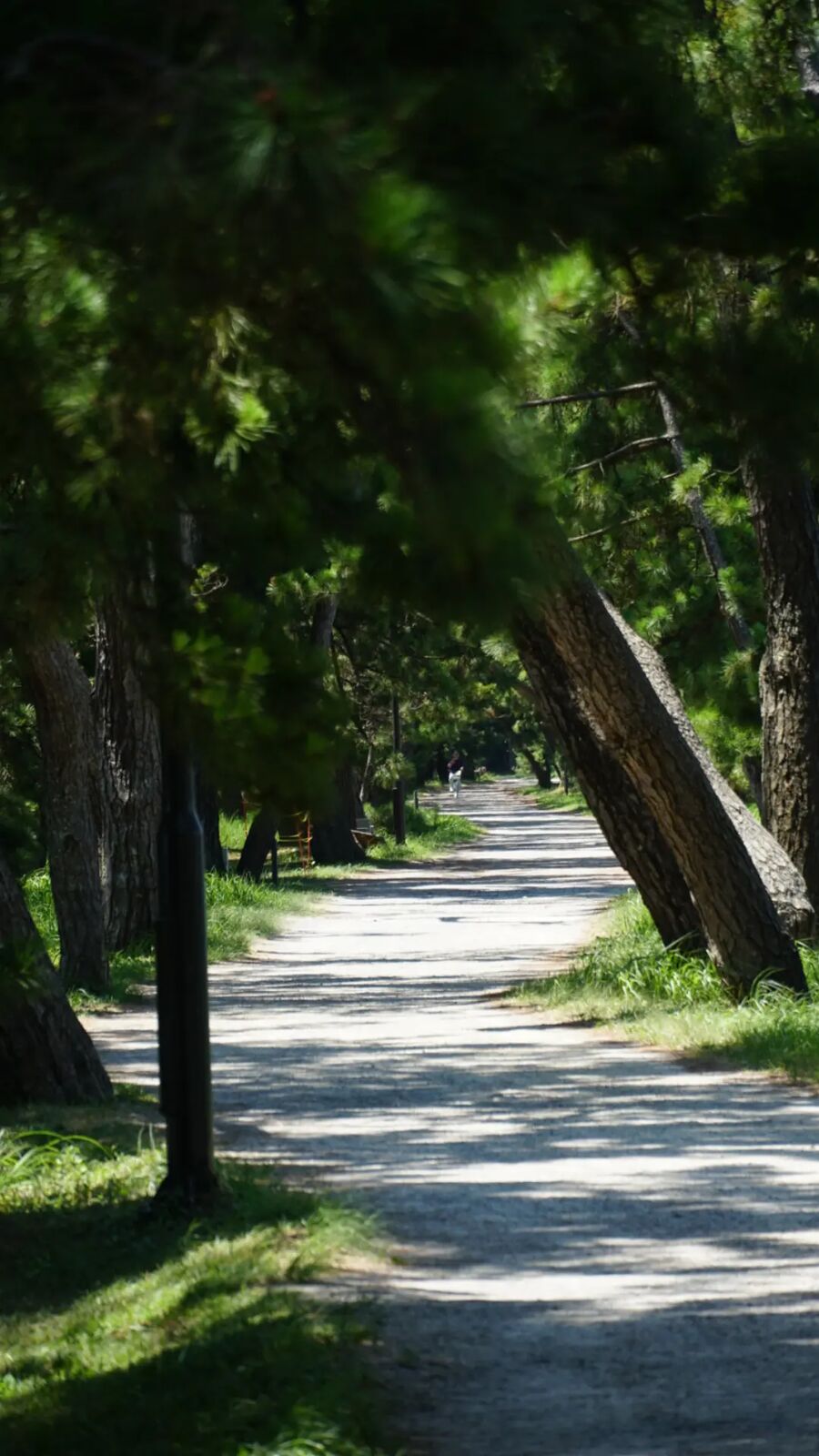
August 2023. Somewhere around 35 degrees and the air so thick you could chew on it. I started at the rotating bridge on the town side, the one that swings open to let boats through, and walked into the pine forest. The first stretch is the busiest. There's a beach on the sea-facing side and in summer it fills up with swimmers and families. People rent bikes from the shops near the bridge, and they zip past you on the sandy path. But once you get a few hundred meters in, they thin out. Most of them are heading for the viewpoint on the other side and don't stop.
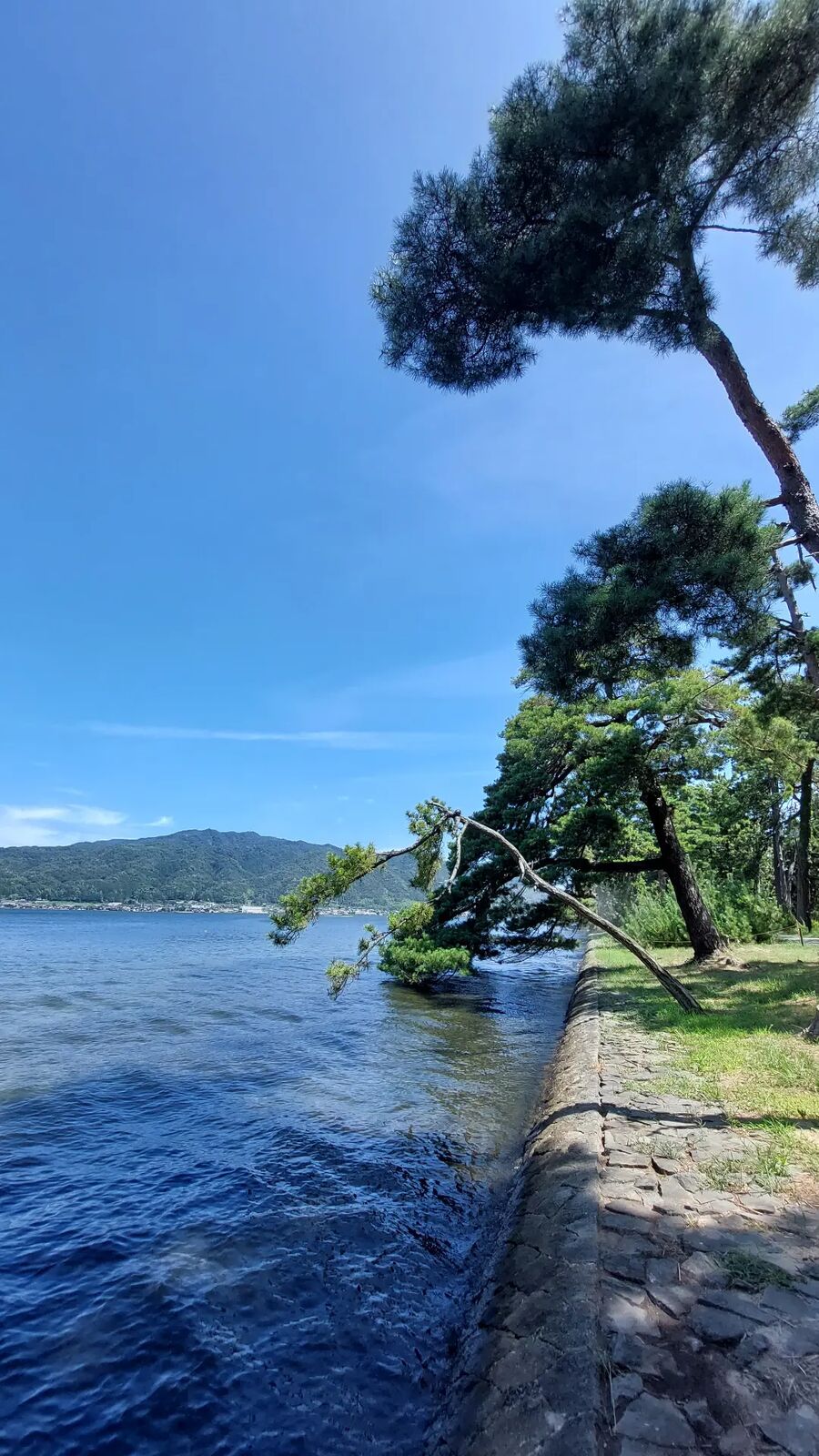
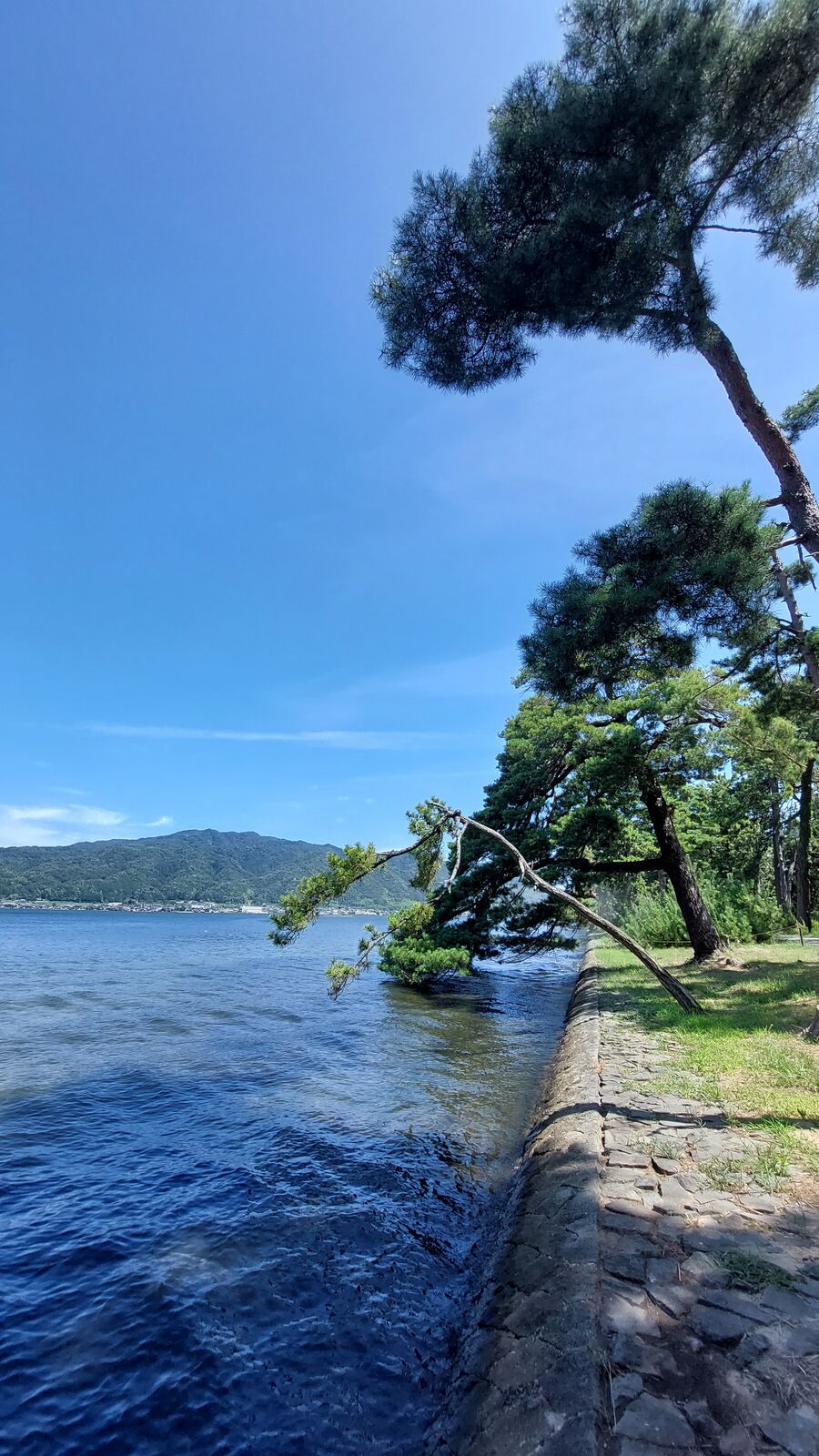
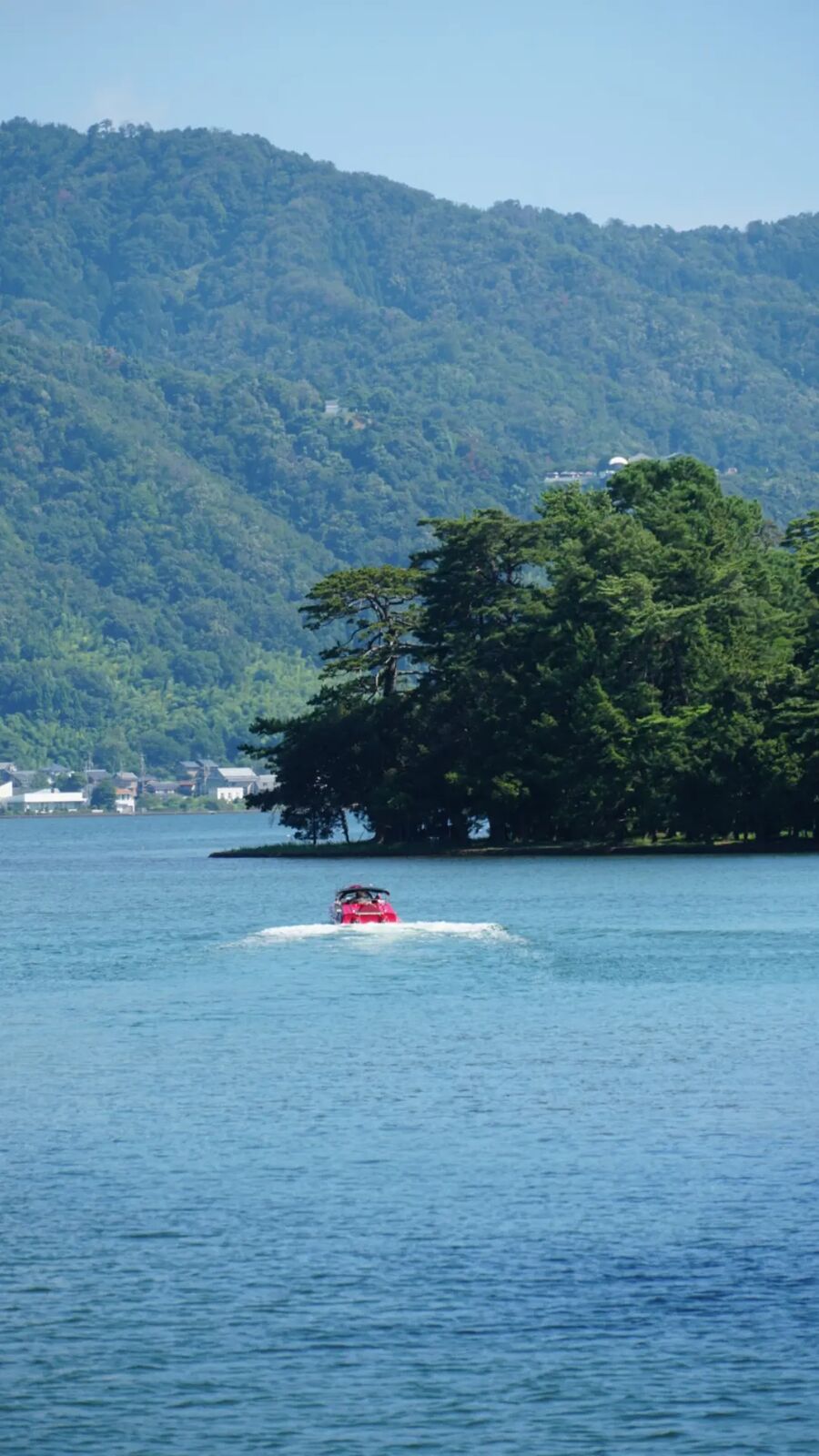
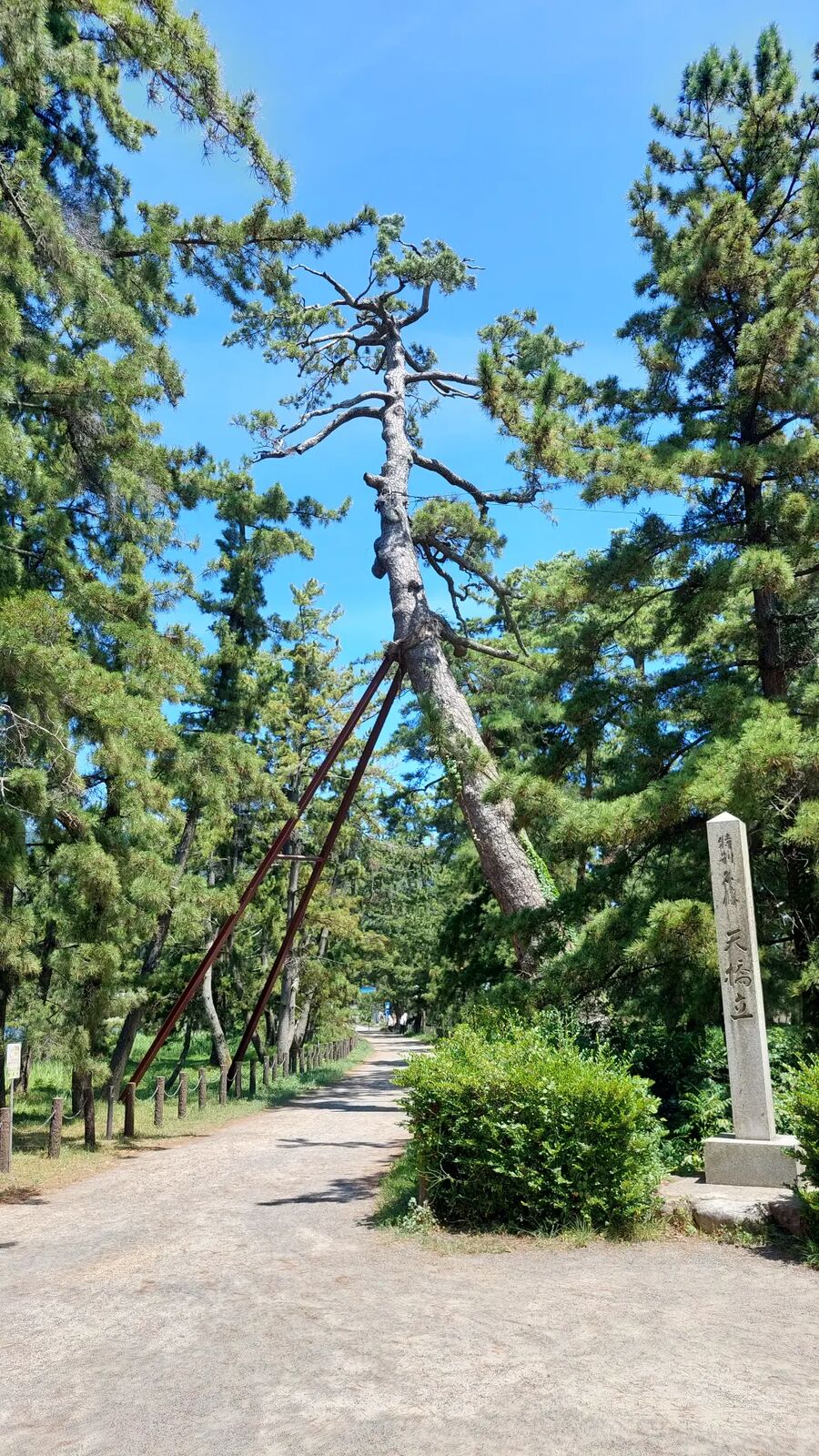
The bay side of the sandbar is a different world. A low stone wall runs along the shore as a wave break, and behind it the path is quiet, shaded, and surprisingly cool given the temperature. I moved from shade to shade, from one old pine to the next, the kind of walking you do when the heat forces you to be deliberate about every stretch of open ground. The pines here are old, some of them held up by wooden supports like crutches, their branches reaching across the path or leaning out over the water. The whole place feels maintained but not manicured. Somebody's been taking care of these trees for centuries, but they've let them grow crooked.
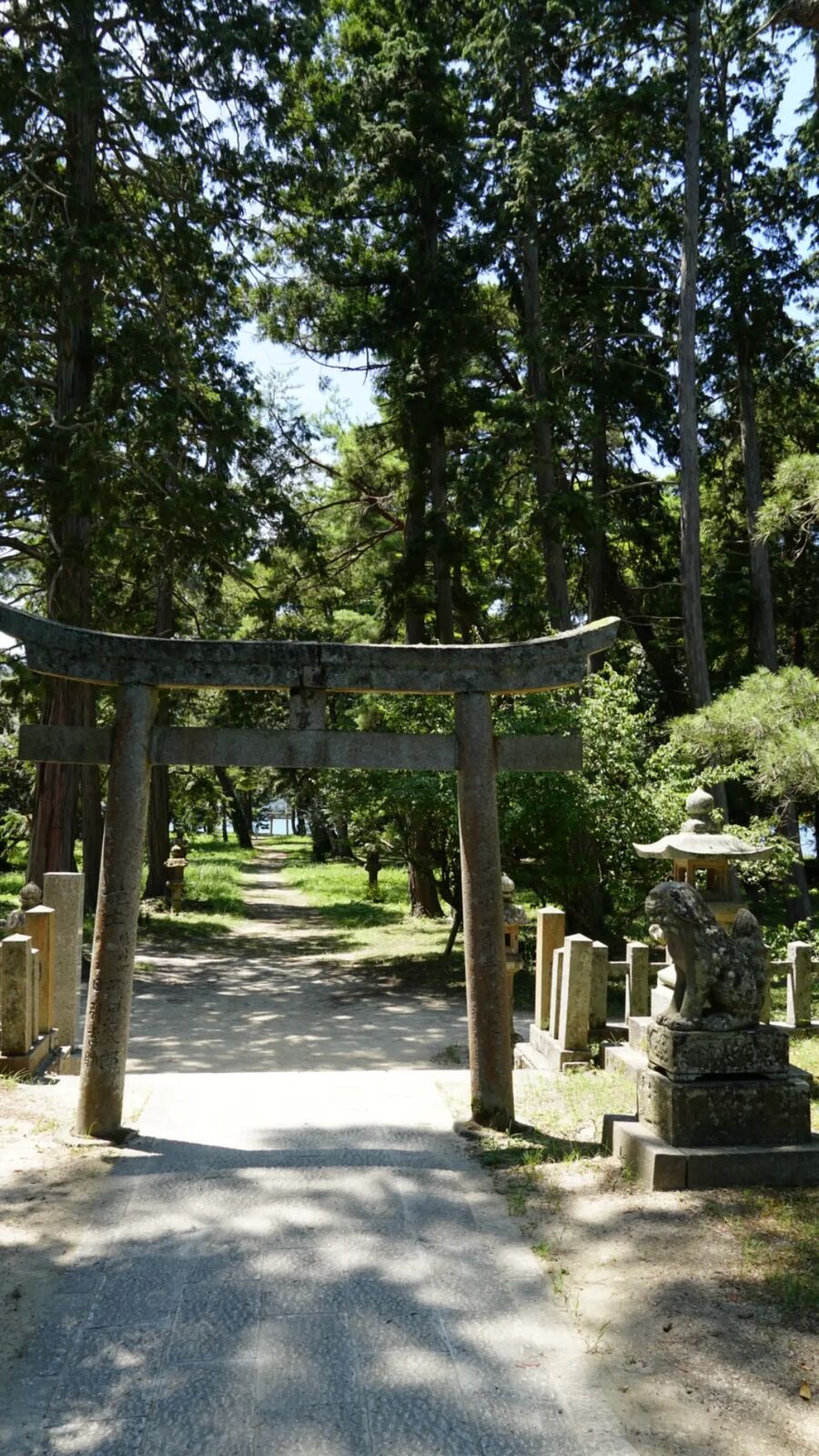
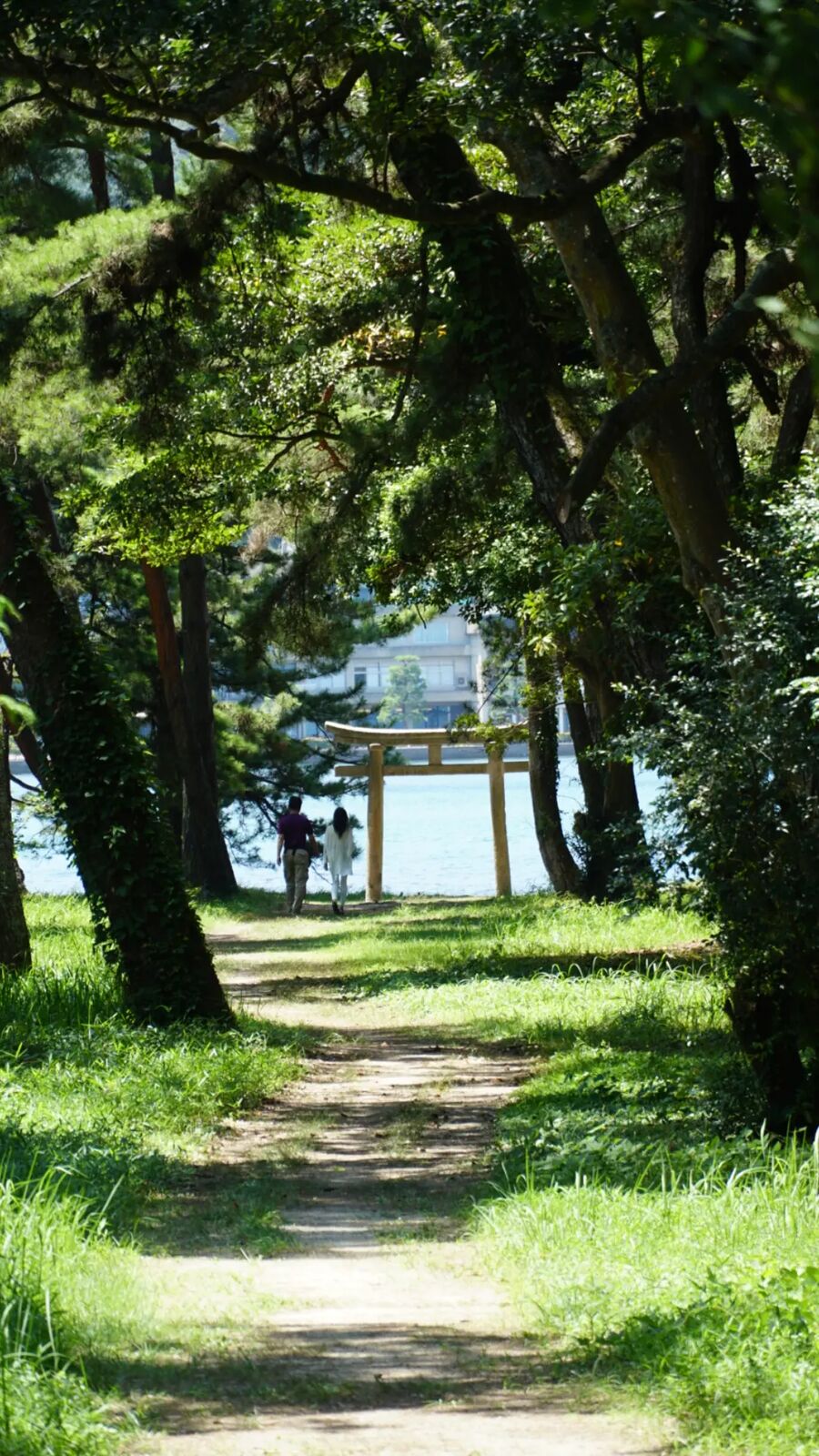
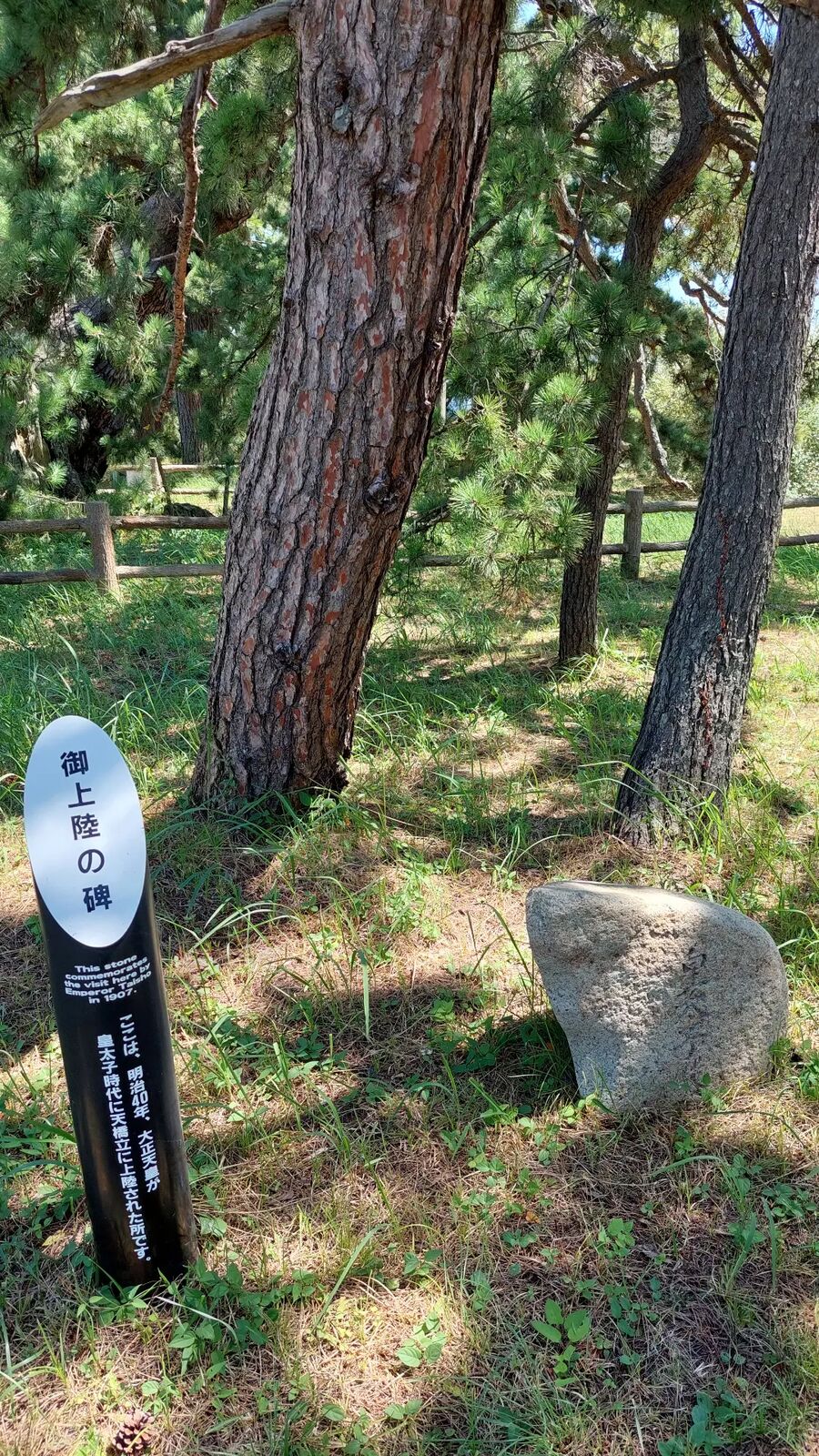
Along the way there are small shrines and info boards and monuments. A wooden torii gate between the pines, a moss-covered stone marker, a bench under a tree where somebody left a can of coffee that might have been there for a week. You can see the mountains on both sides of the bay, the water shifting between green and blue depending on where the sun hits it. Boats cross back and forth. It's the kind of walk where the destination doesn't matter. The walking is the point.
The Sword and the Stone
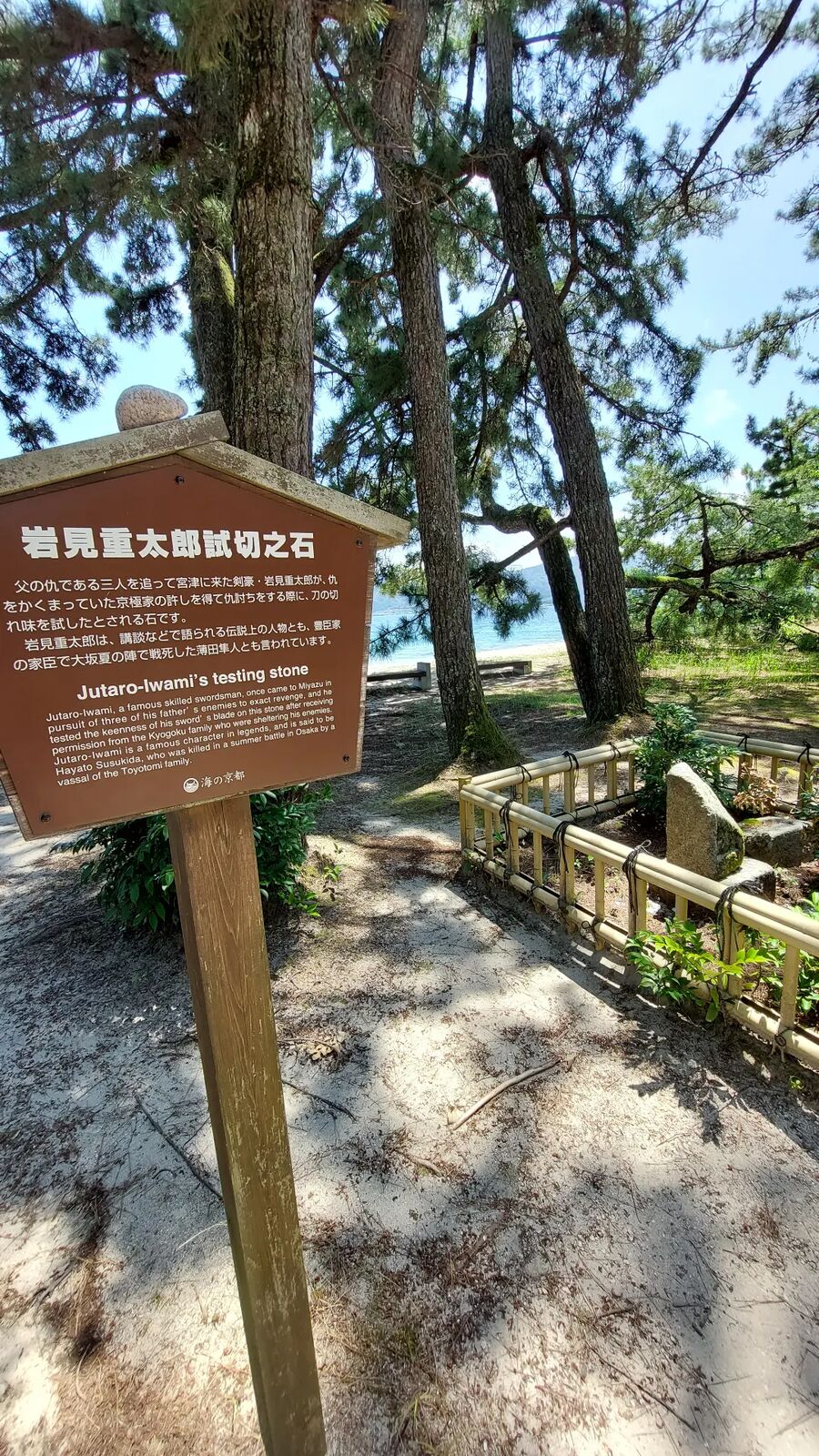
About halfway along the sandbar, a wooden sign in Japanese and English points to a large stone behind a low fence. This is the Iwami Jutaro Testing Stone. Iwami Jutaro was a swordsman from the Toyotomi era, real name Susukida Kanesuke, who distinguished himself in the Winter Siege of Osaka. The story goes that he tested the sharpness of his blade on this rock, and looking at the stone, you can see the split. Whether it was actually a sword that did this or a few centuries of weathering and a good story is beside the point. The stone sits under the pines, cracked cleanly down the middle, and the legend has become part of the landscape.
There's a second part to the Iwami Jutaro story. The guardian lion statues at one of the local shrines were said to come alive at night and terrorize travellers along the sandbar. Iwami tracked them down and killed them. A swordsman so skilled he could split rock and so brave he'd fight supernatural creatures. It's the kind of legend that grows around places like this, where a beautiful landscape needs characters to go with it.
Chionji and the Walk's End
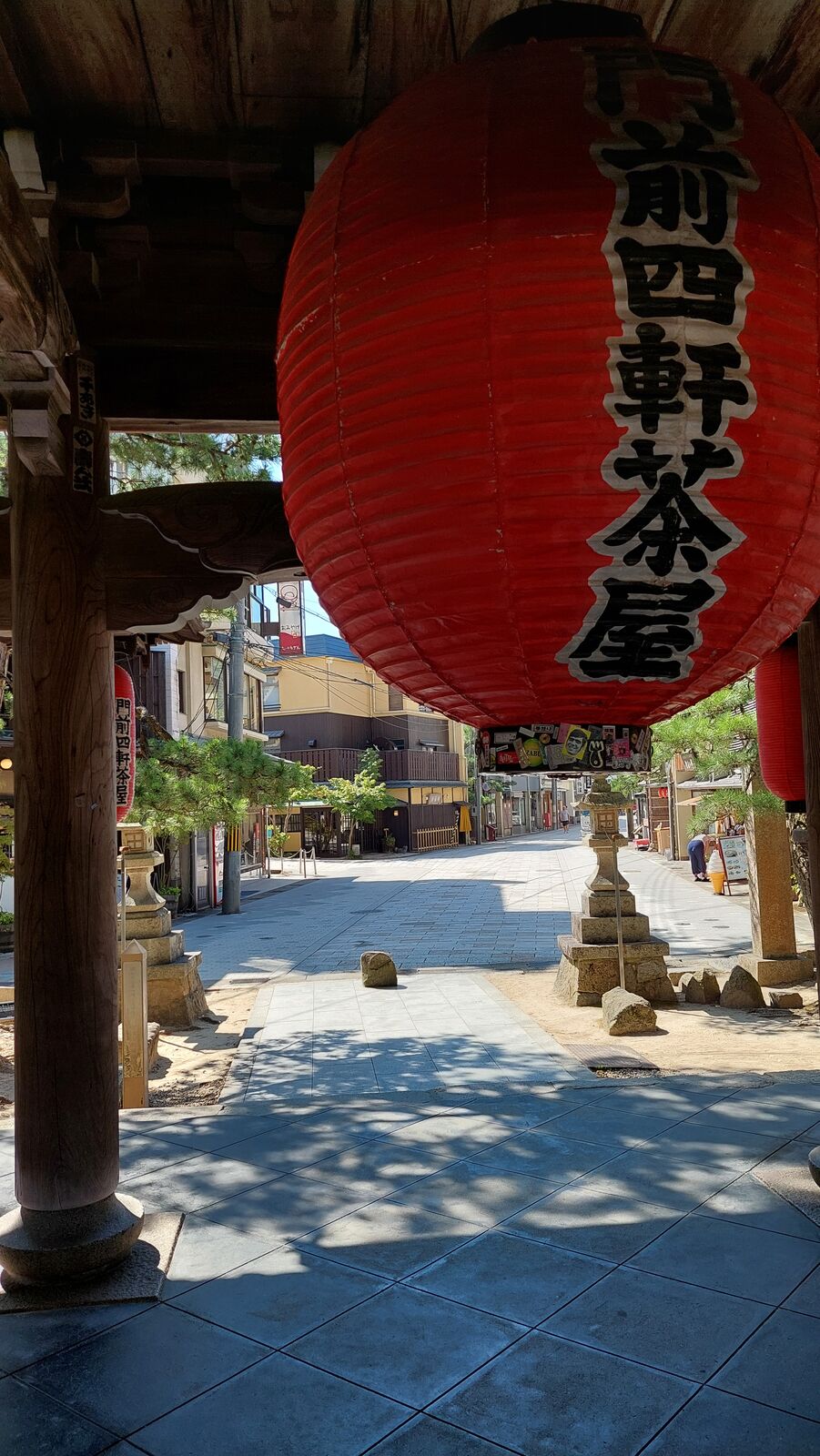
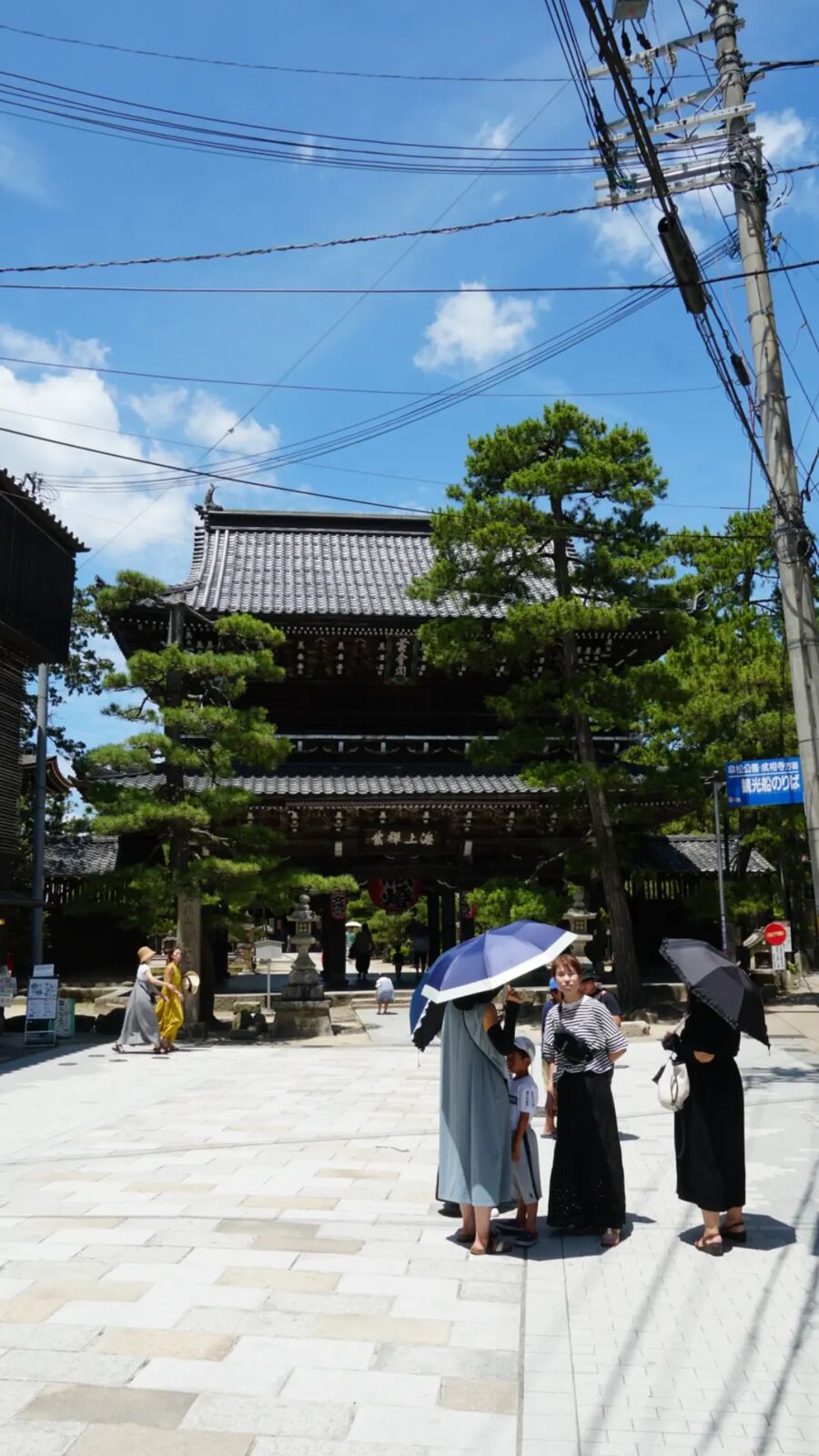
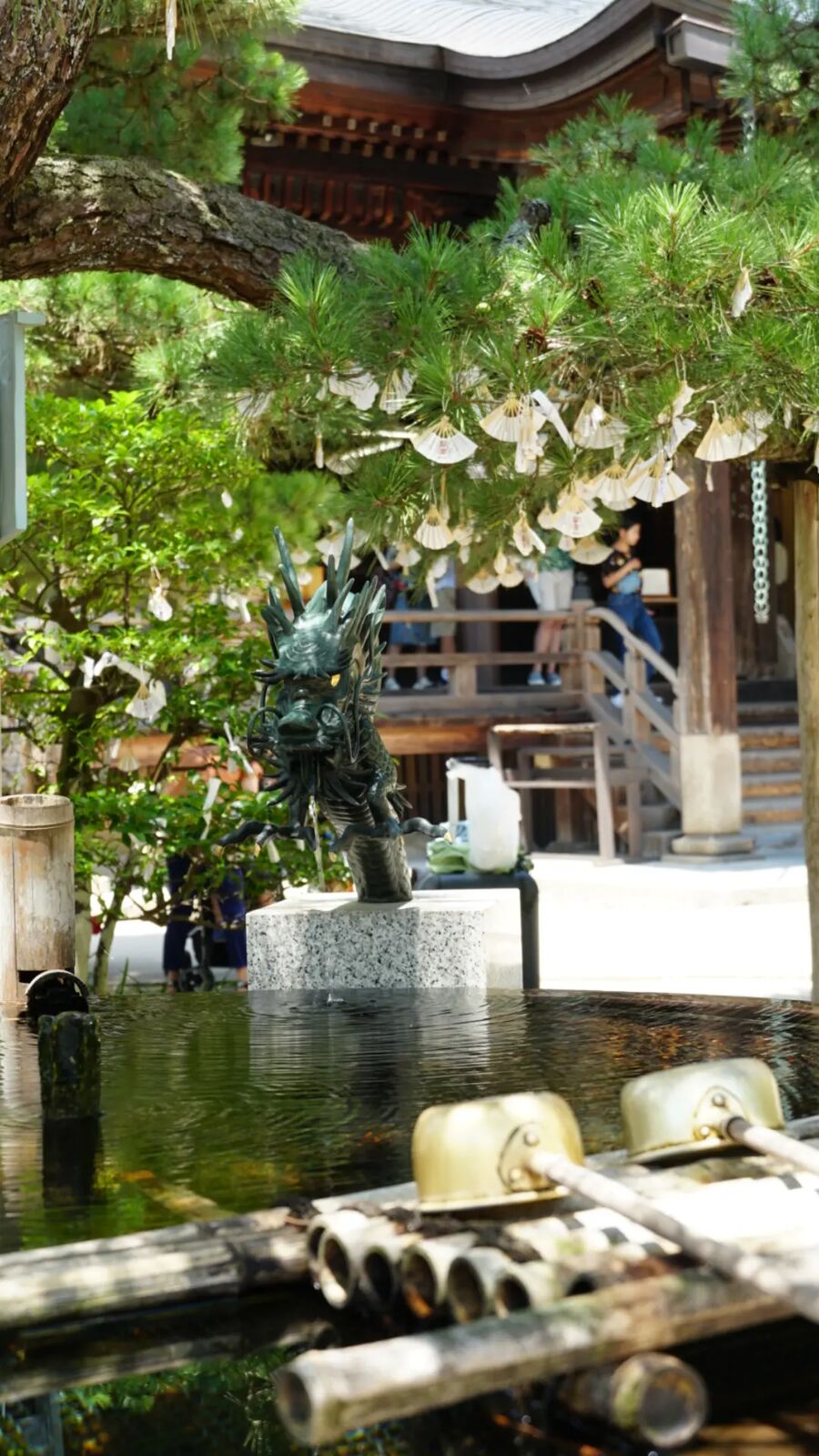
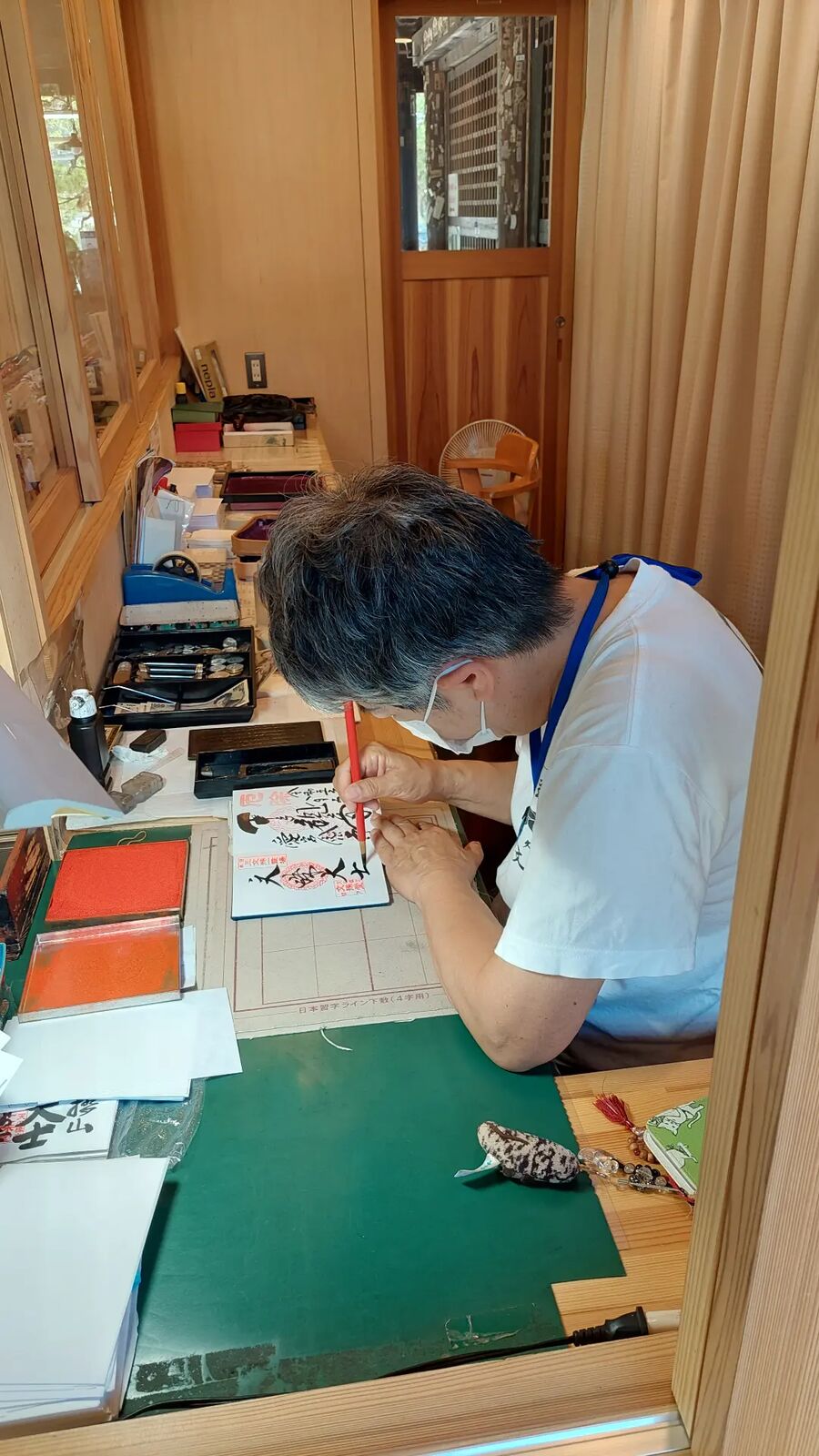
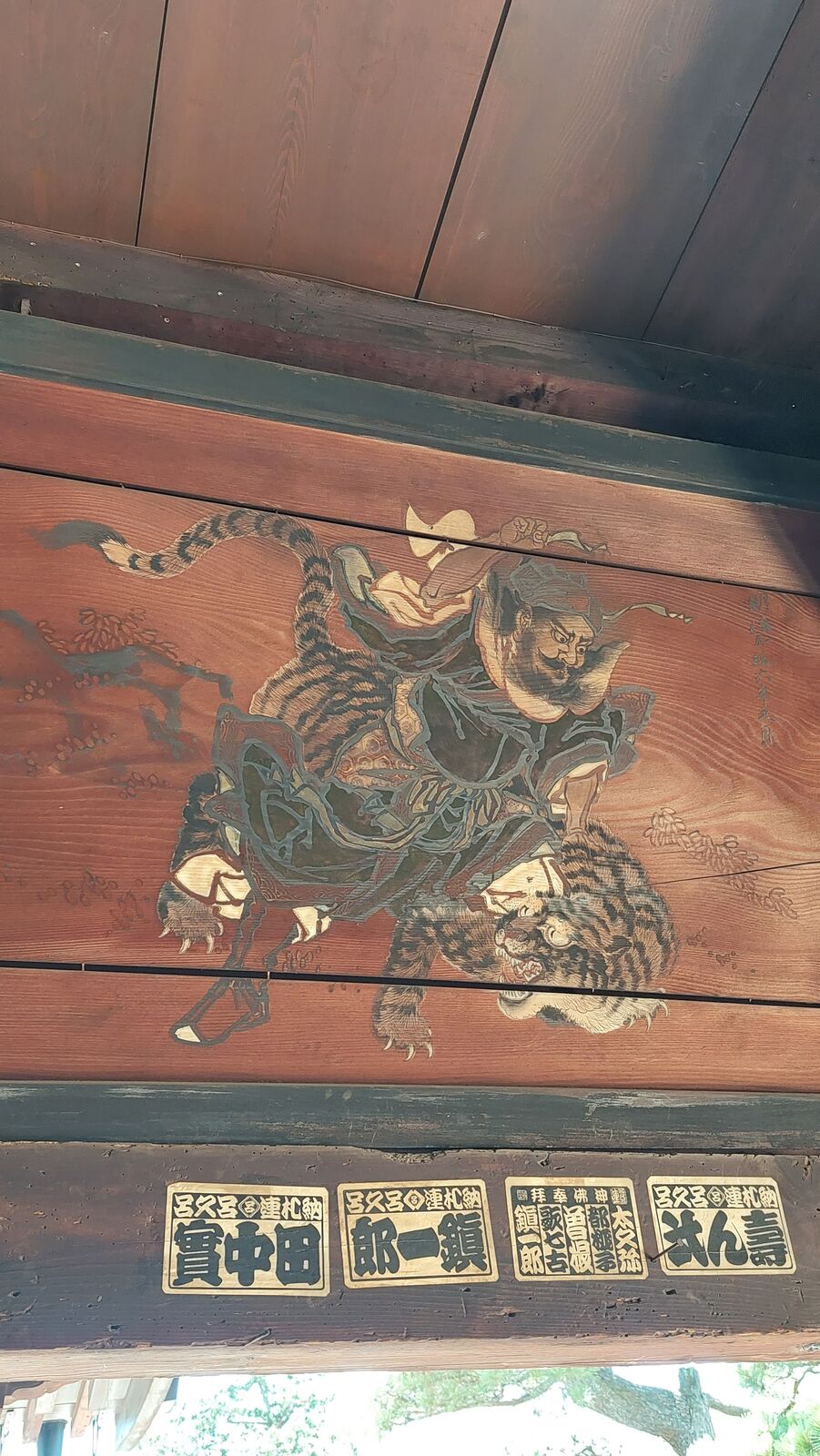
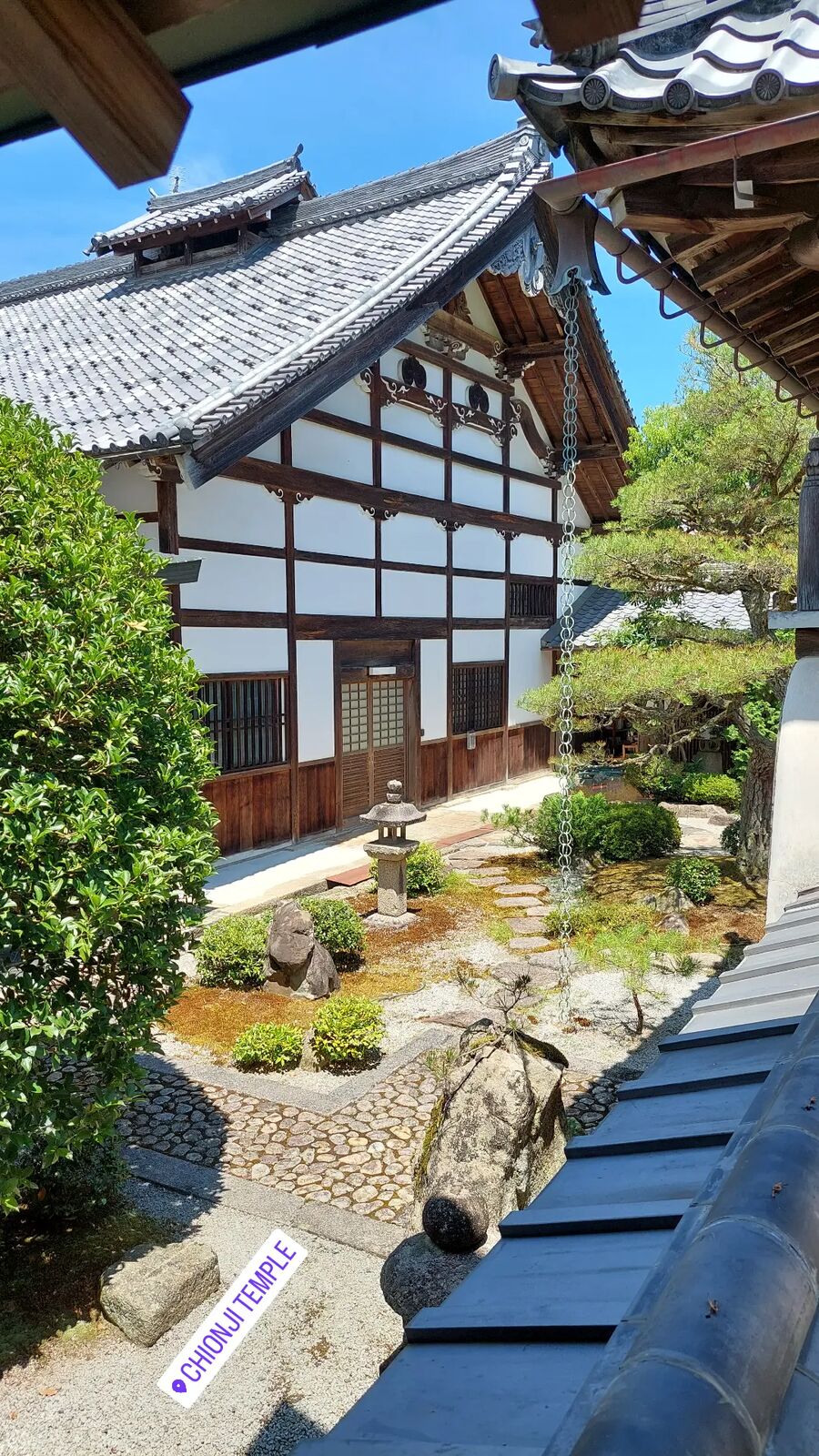
At the town-side end of the sandbar, where the rotating bridge connects the sand to the mainland, Chionji temple stands at the edge of the water. It's a substantial temple, bigger than you'd expect, with a gate framed by old pines and a temizuya where a bronze dragon watches over the purification basin. Women with parasols stand in the courtyard, a monk somewhere inside is chanting, and behind the temple a wooden ceiling panel shows a painted figure riding a tiger. There's a Goshuin station where an older man in a white shirt carefully writes calligraphy into visitors' stamp books. These are the details you don't get from the viewpoint. You have to walk down here for them.
Nariaiji
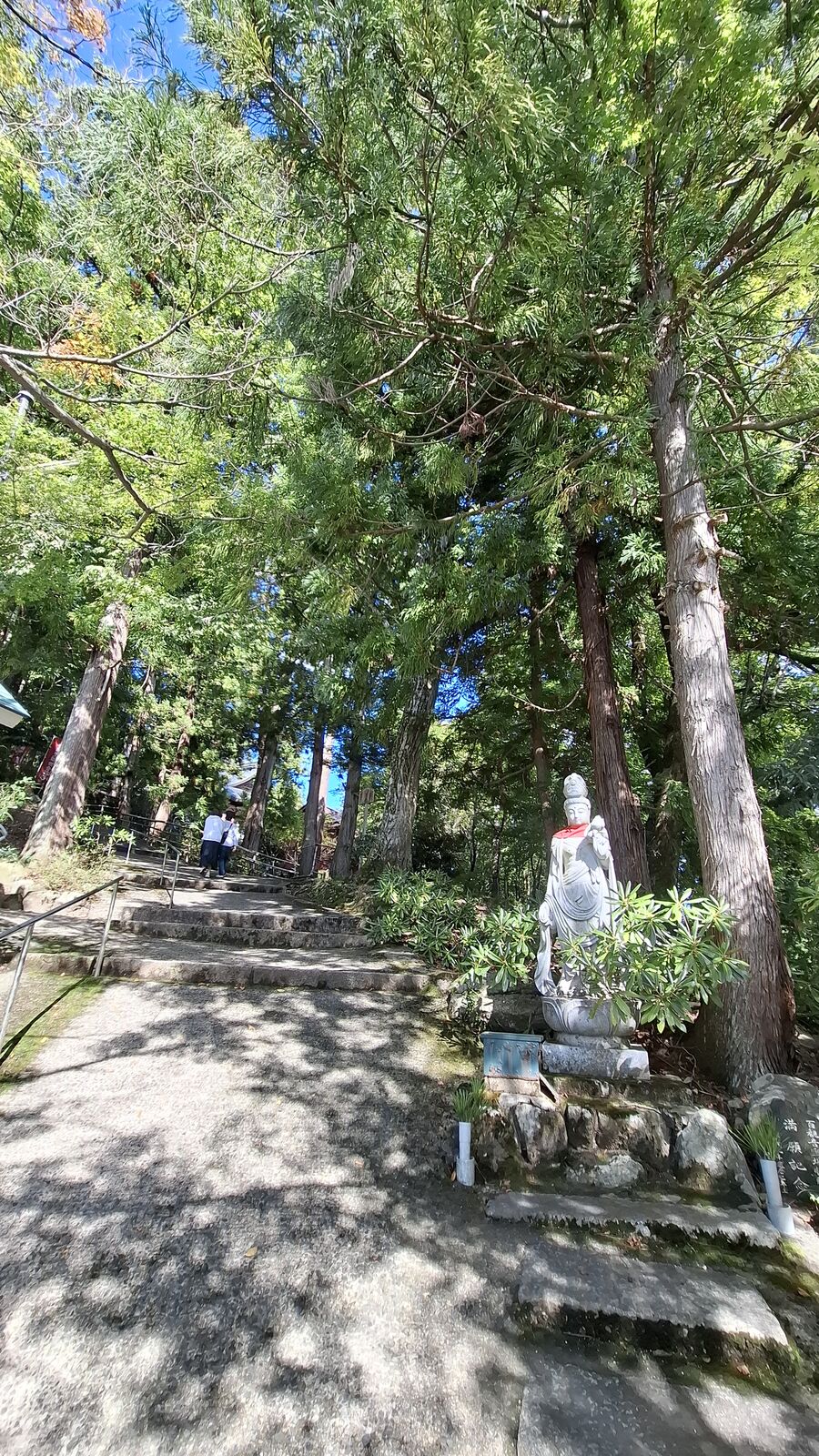
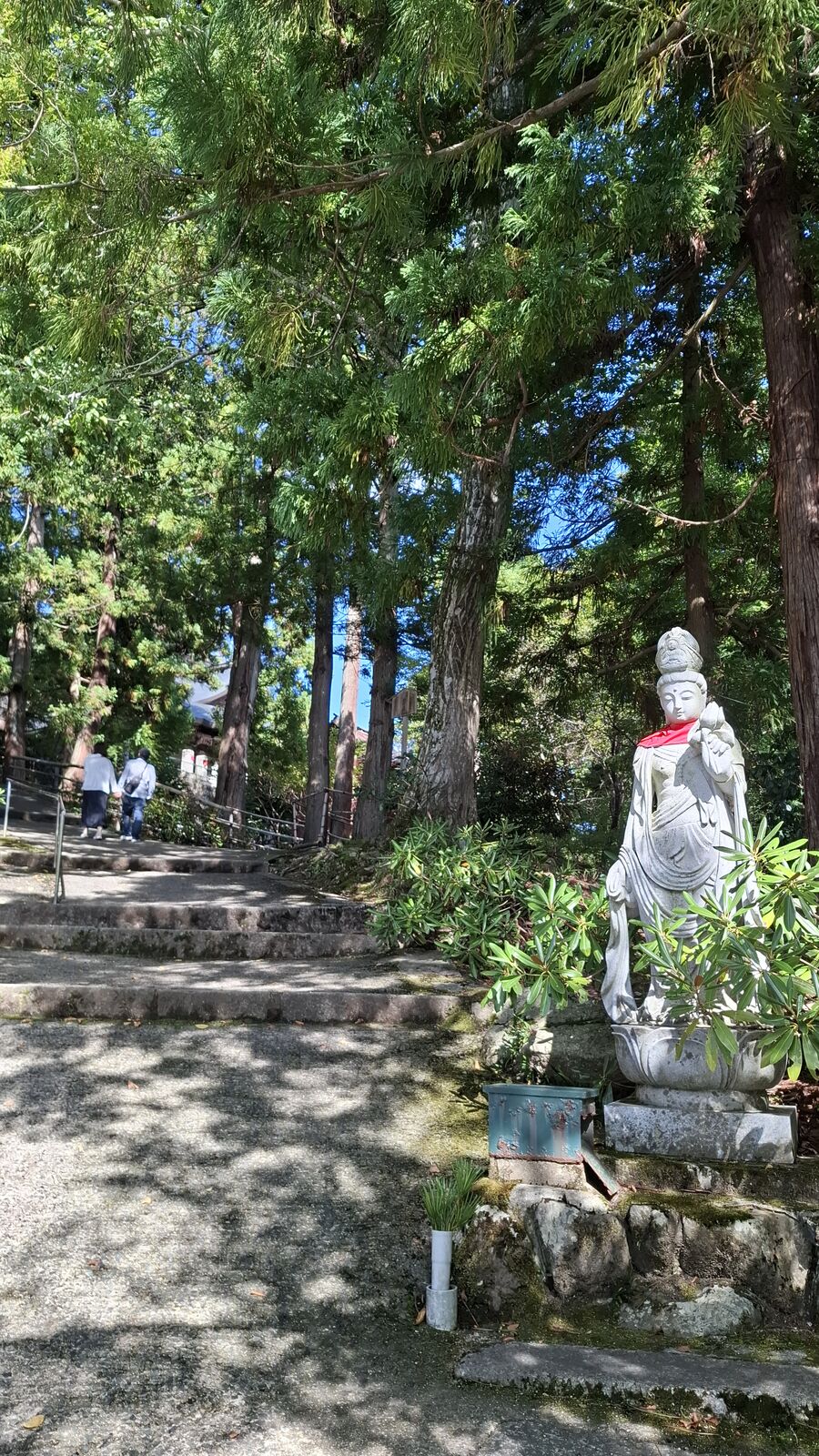
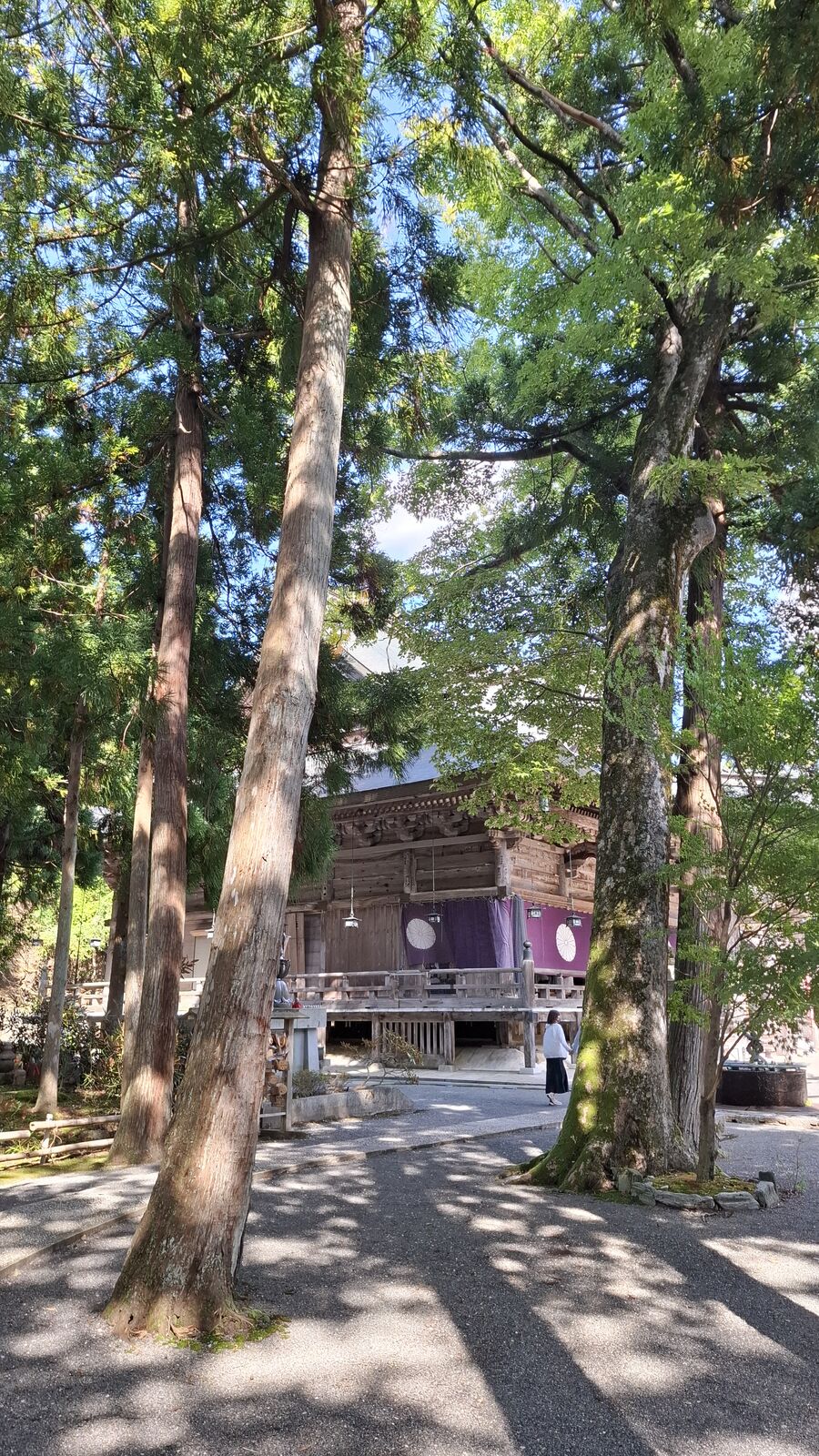
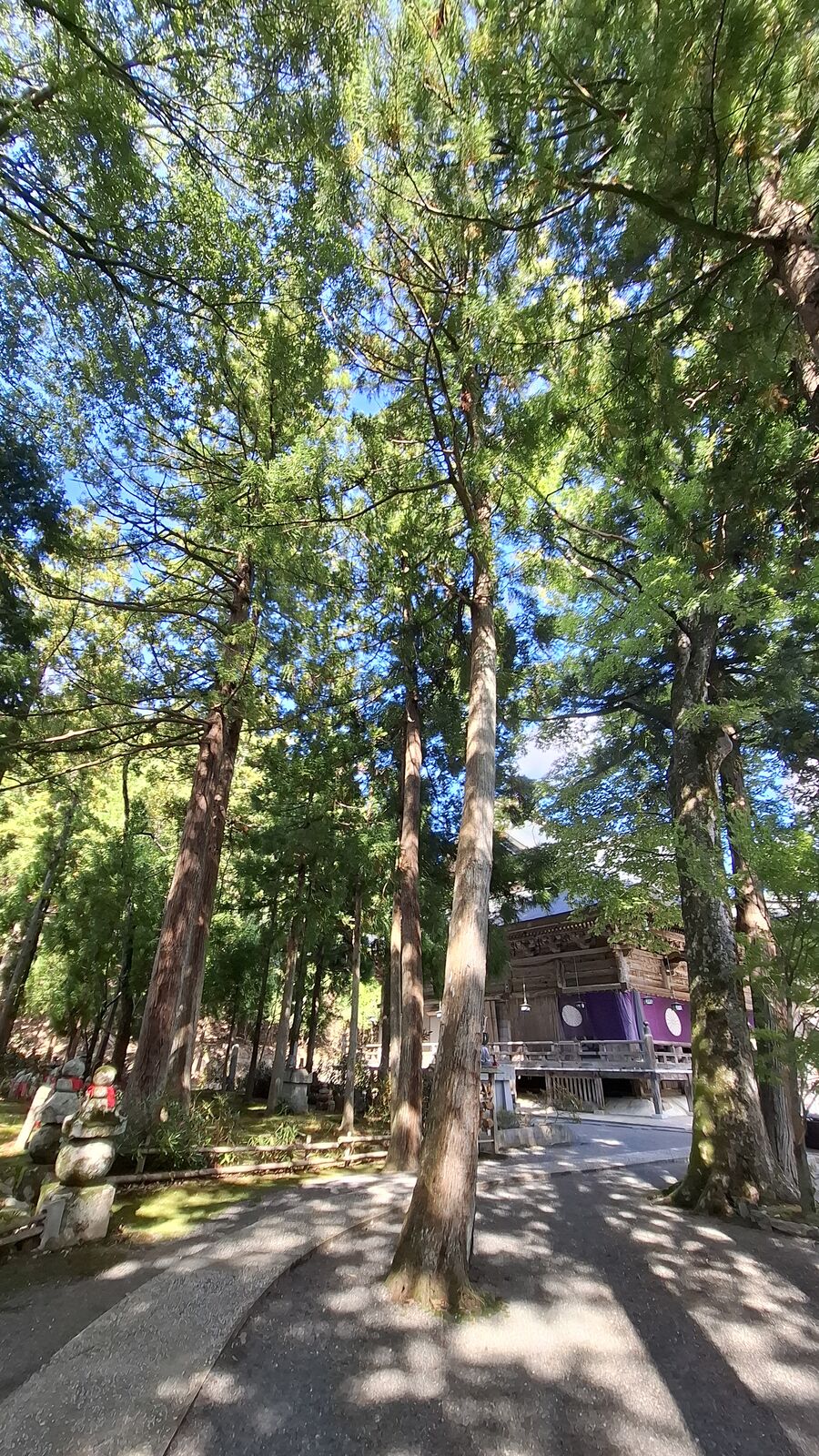
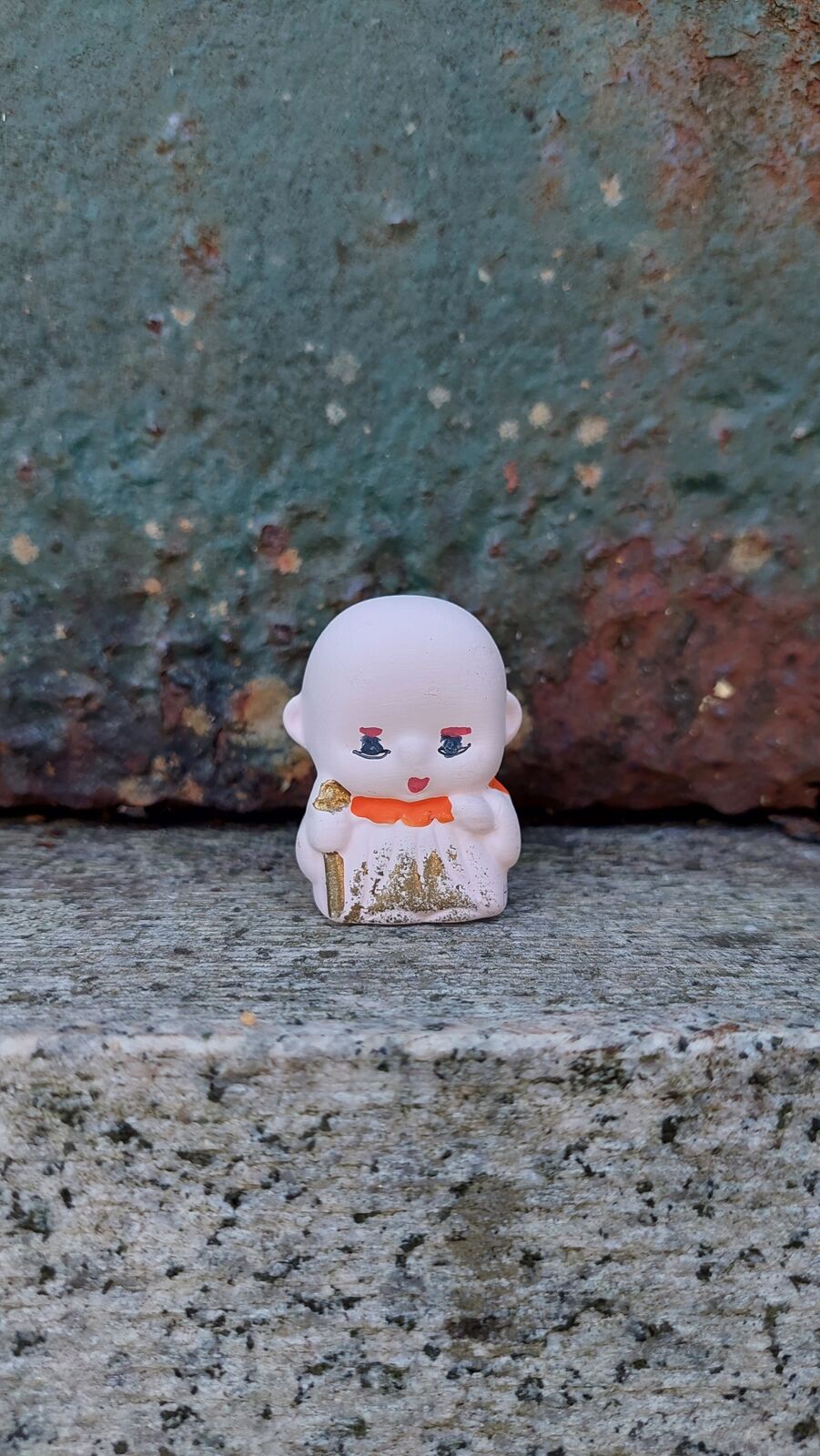
I came back in October 2025 and drove up the mountain to Nariaiji, the temple that sits above Amanohashidate on the western side. The approach is through a forest of tall cedars, stone statues lining the path, some with red bibs, some weathered down to featureless shapes. A Jizo figure stands at the base of a flight of stone steps, surrounded by green so dense it looks tropical.
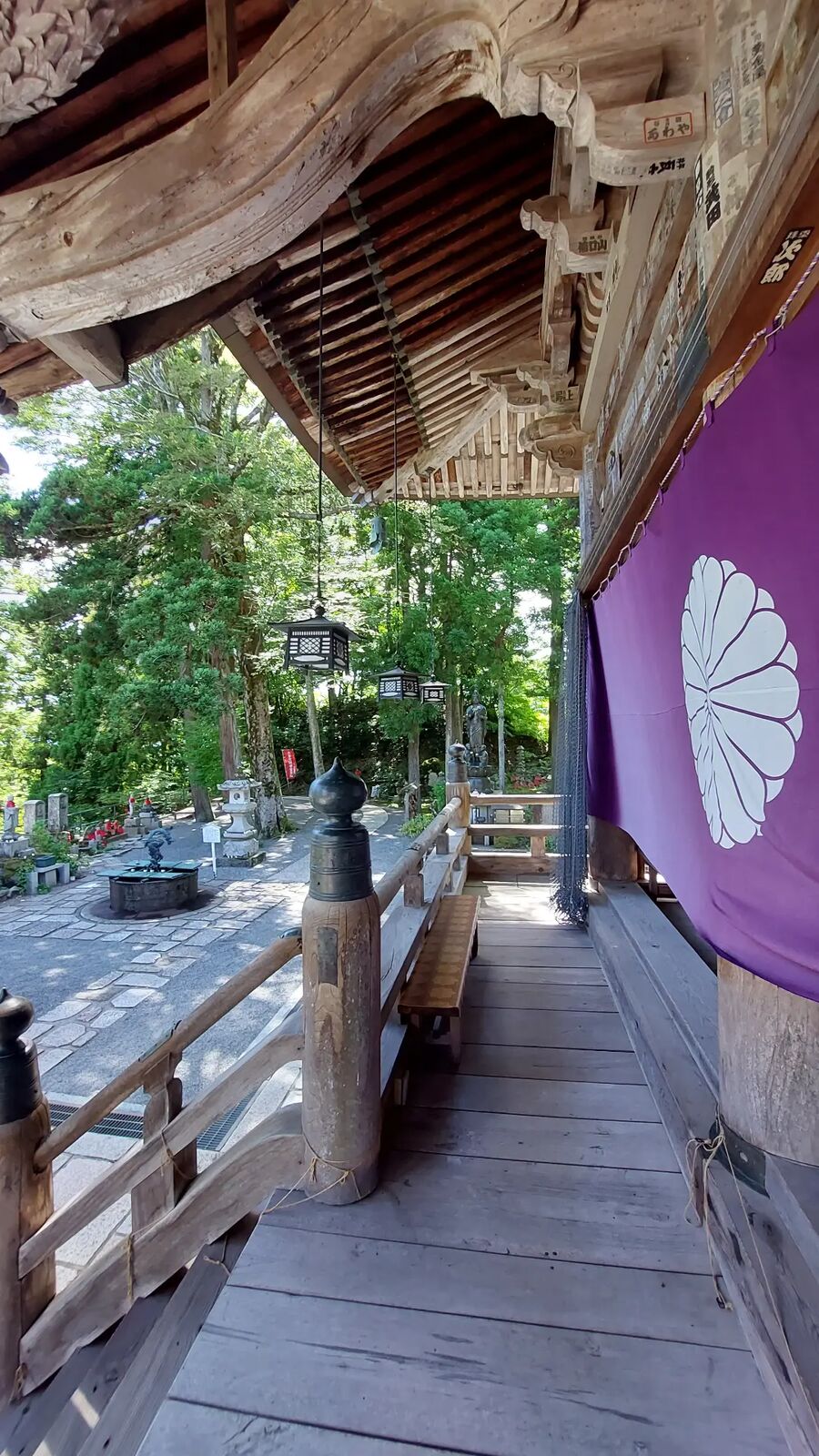
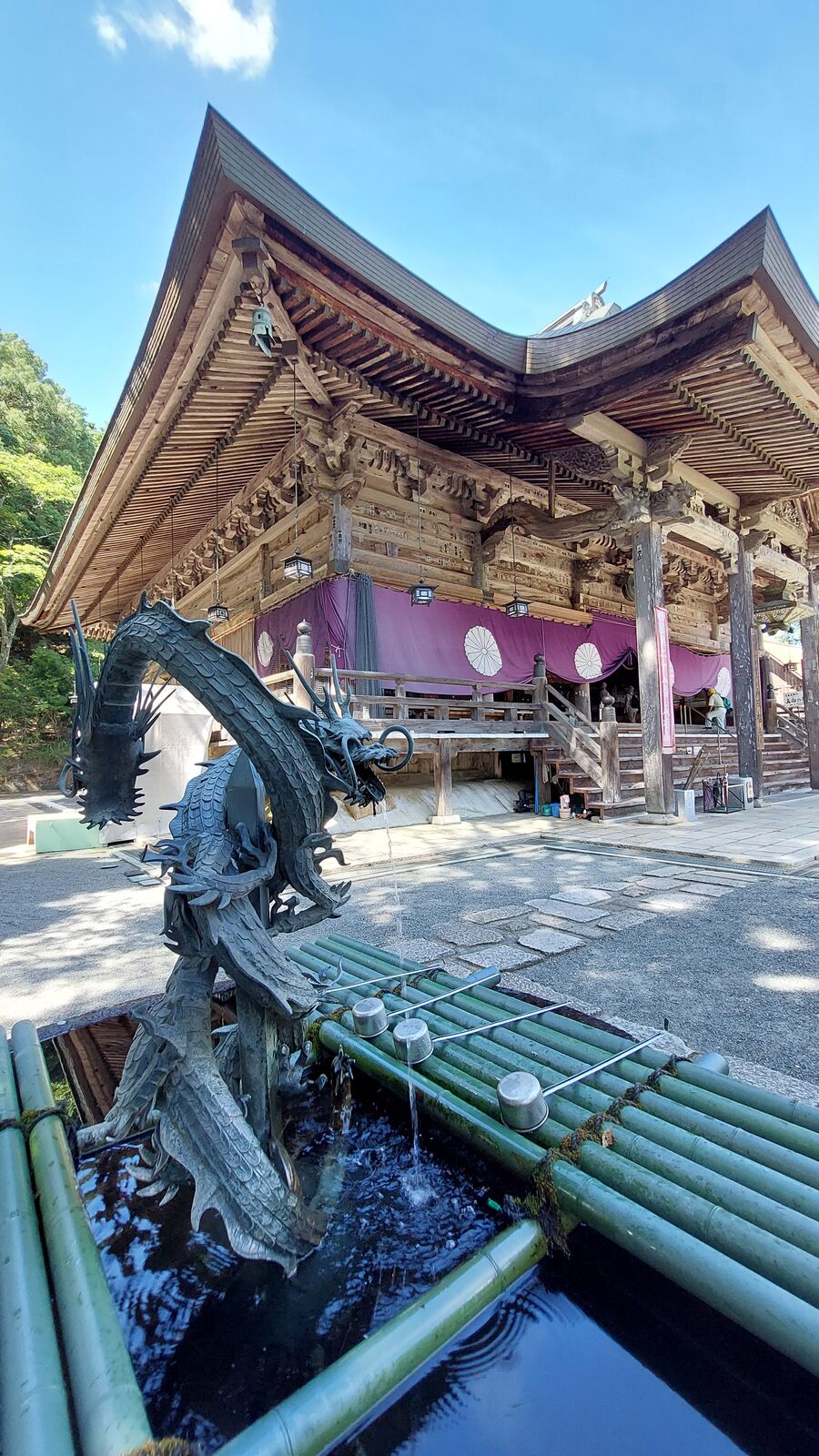
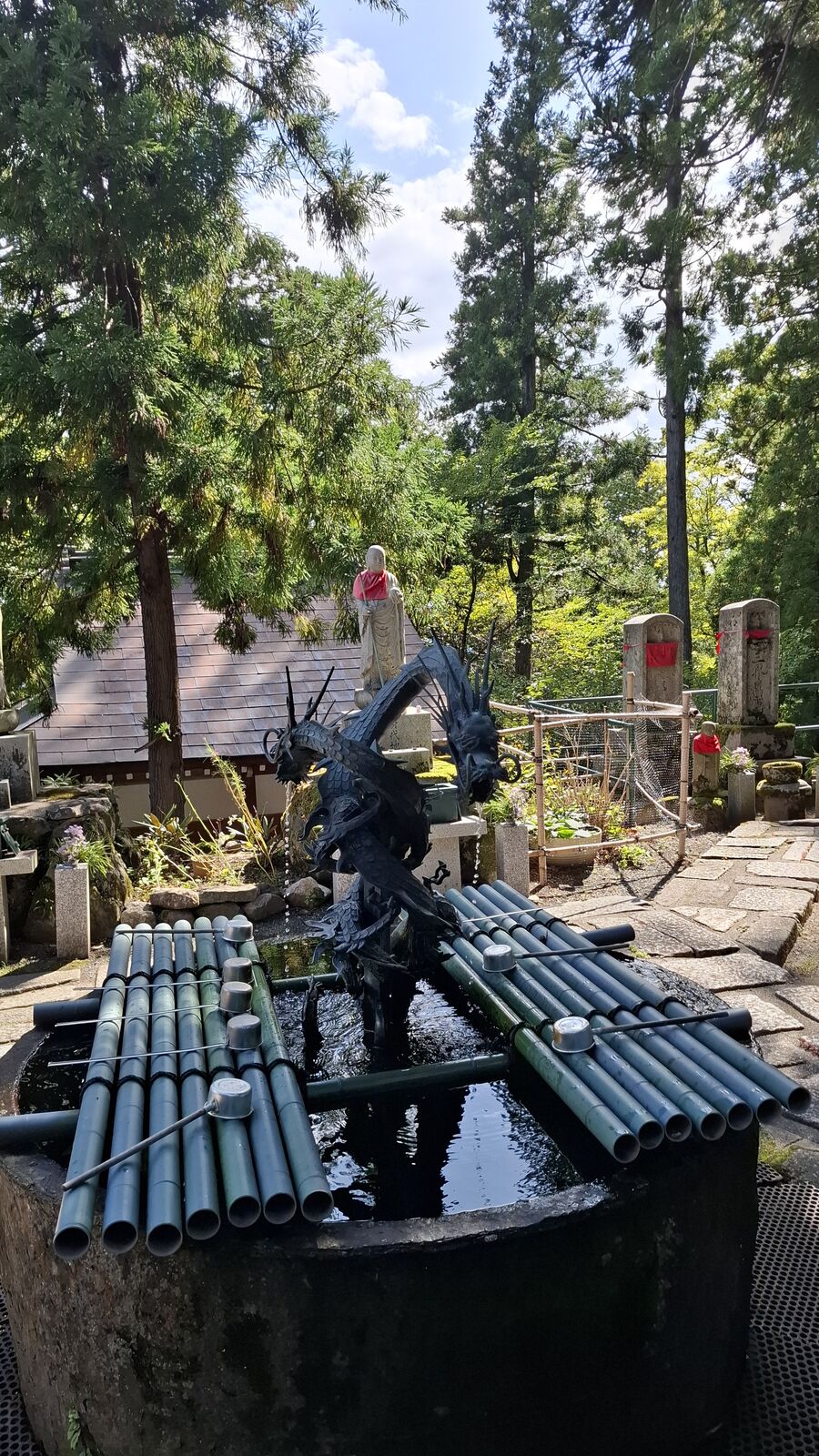
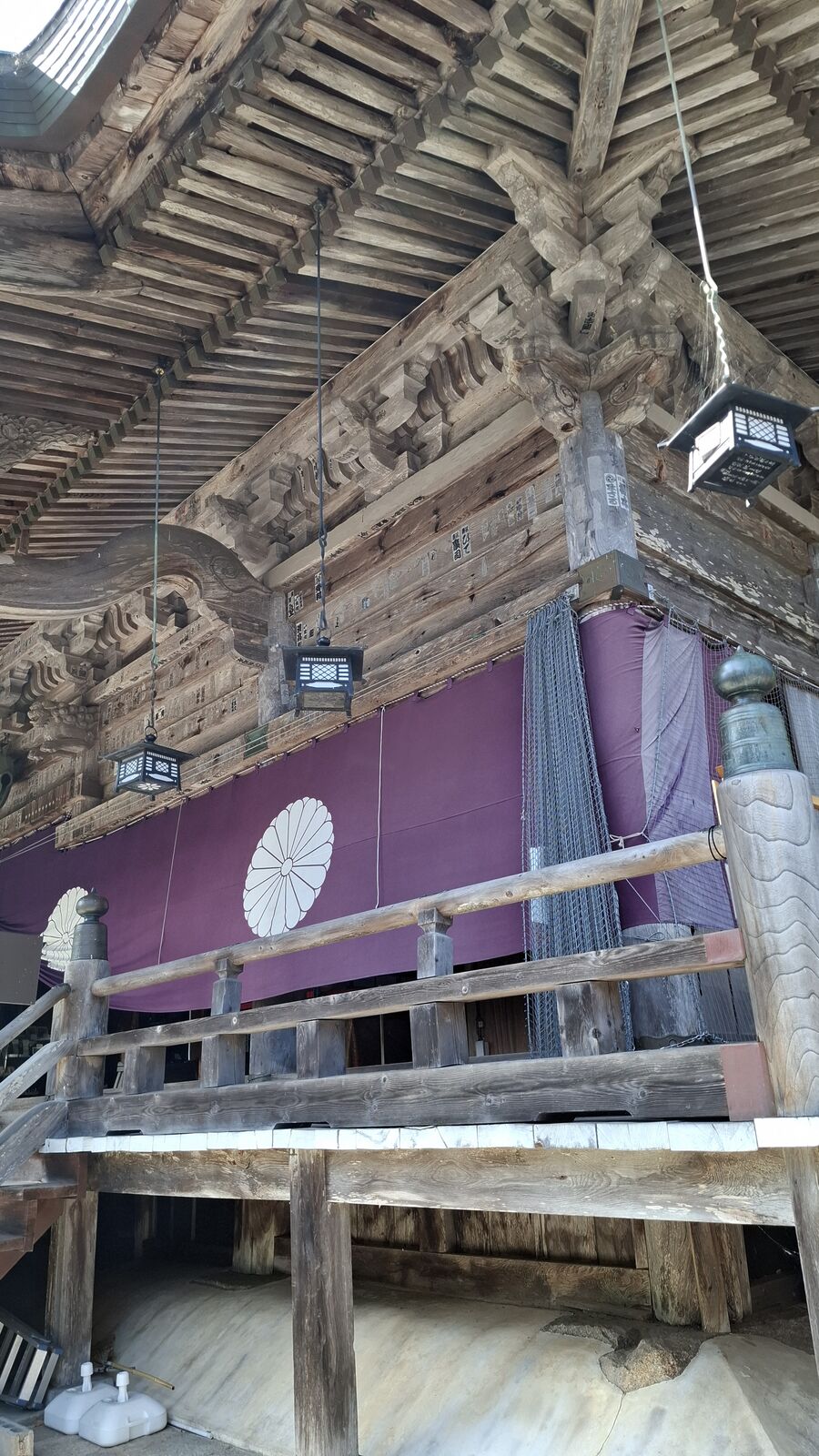
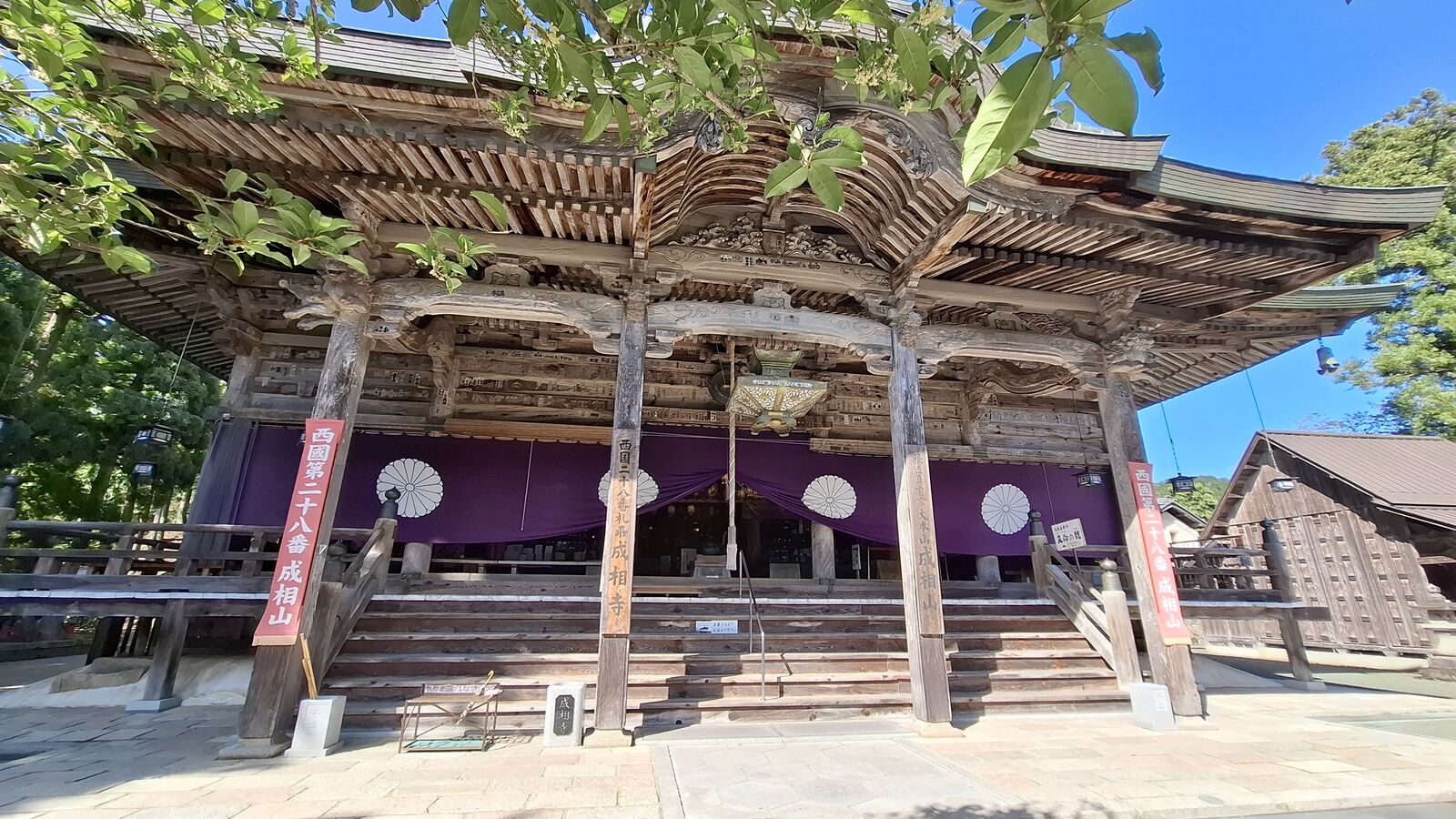
The temple itself is striking. Massive wooden columns, exposed joinery, the kind of craftsmanship where every beam joint is structural art. Purple ceremonial curtains hang across the facade, each bearing a white chrysanthemum crest. A dragon statue guards the entrance, surrounded by bamboo ladles and offerings. Inside, the ceiling disappears into darkness above the wooden brackets. It's a Saigoku pilgrimage temple, one of 33 stops dedicated to Kannon, and it has the weight and presence that comes from being a destination that people have walked to for centuries.
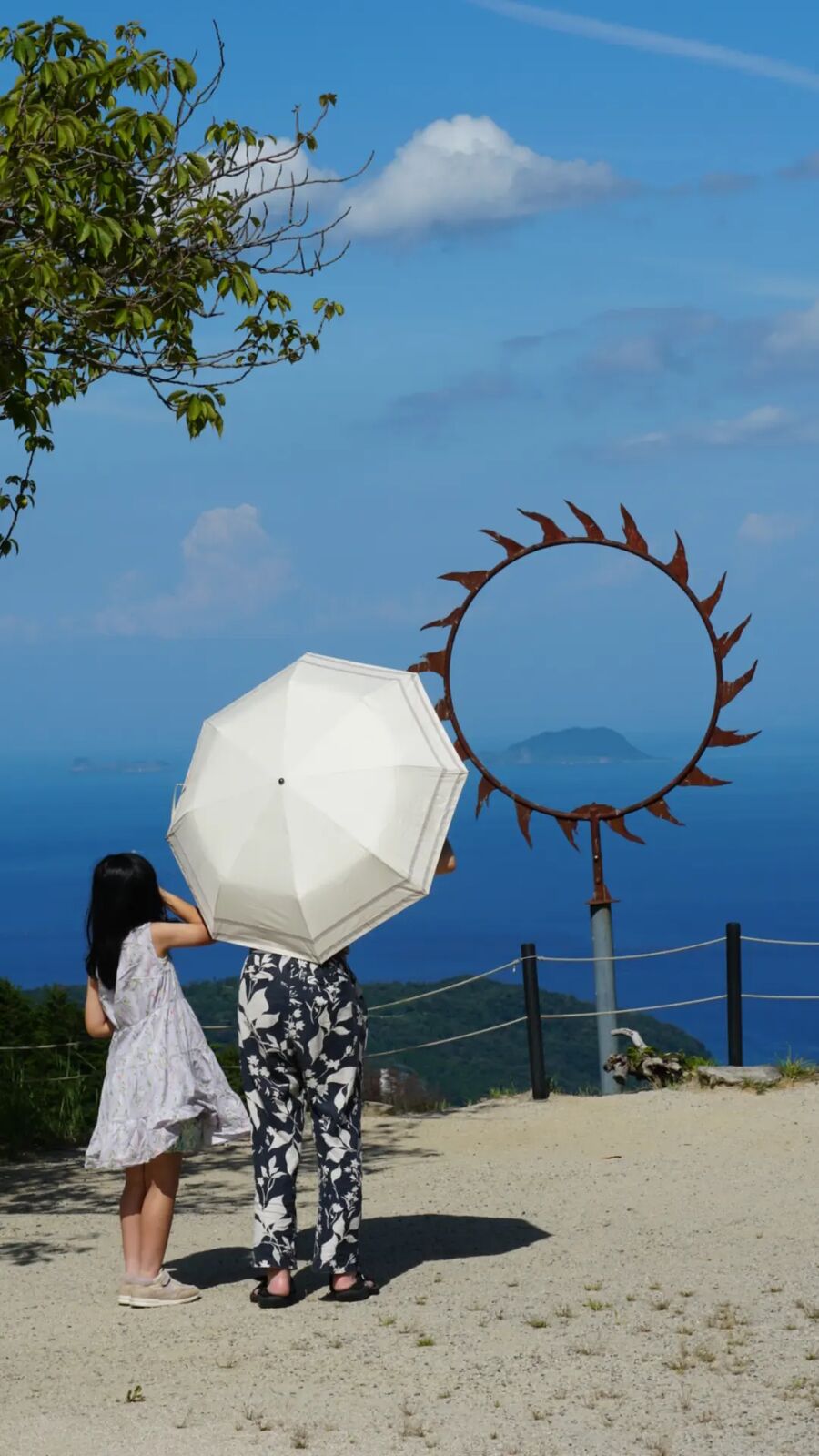
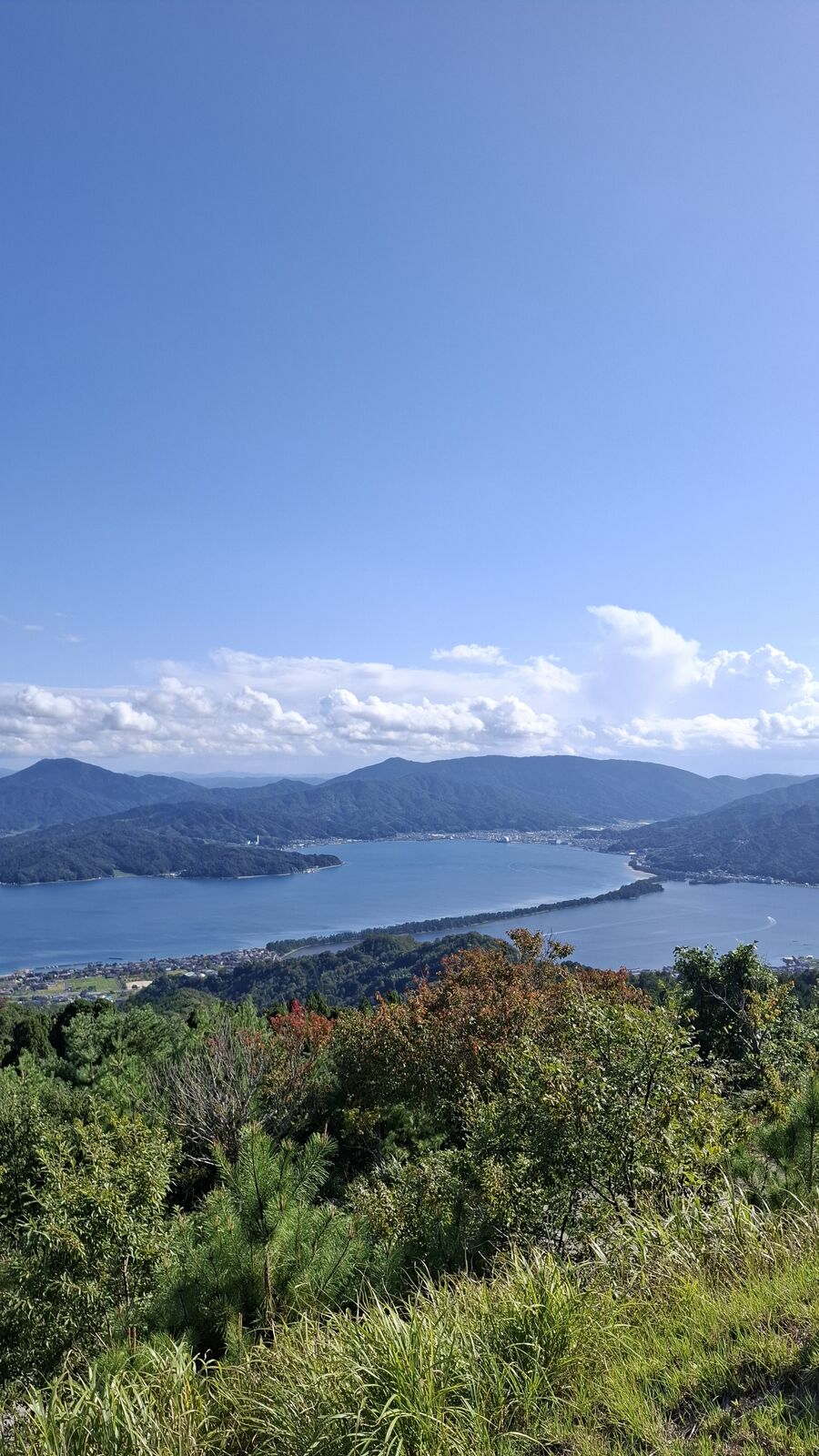
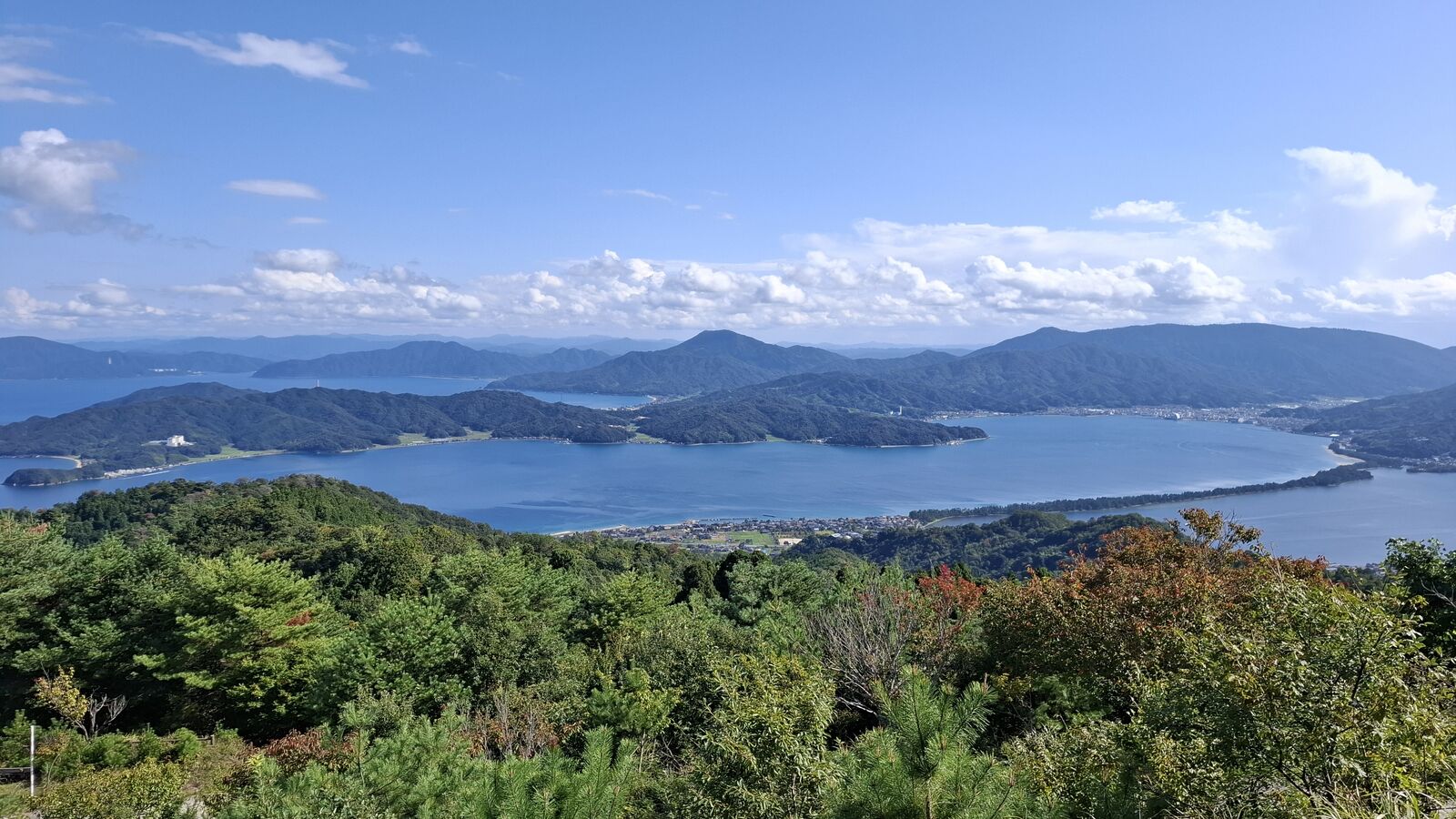
But the real reason to come up here is the view. From the mountaintop above the temple, a five-minute drive further up the road, you can see the entire bay, the sandbar stretching across the water like a green ribbon, the mountains on the far side layered in autumn colors. The viewpoint is still part of the temple grounds. You pass through the gate and pay a small fee to enter with a car, and then the road winds up through the trees to the top. On a clear day the view extends to the islands in the Sea of Japan. Standing up here, you understand why the name stuck. It does look like a bridge. Not to heaven exactly, but to somewhere you'd want to go.
Practical Info
Location: Amanohashidate (天橋立), Miyazu, Kyoto Prefecture. View on Google Maps
Access: By car from Kyoto about 2 hours via the San'in expressway. By train, take the Hashidate limited express from Kyoto Station to Amanohashidate Station (around 2 hours). The rotating bridge is a 5-minute walk from the station. For Nariaiji, you need a car or the cable car from the Fuchu side.
The Walk: The sandbar is 3.3 km long. Walking end to end takes about 45 minutes at a relaxed pace. Round trip is roughly 6.6 km and about 90 minutes. Bikes are available for rent near the rotating bridge if you prefer to ride. The path is flat, sandy in parts, and mostly shaded by the pines.
Heat: In summer, bring plenty of water. There are vending machines at a few rest points along the sandbar, but don't count on them. The pine shade helps, and the proximity to water keeps the air moving, but 35-degree days are still 35-degree days.
Nariaiji Temple: Open daily. The road up the mountain is narrow but manageable by van. There's a parking area near the temple. If you're coming from the sandbar side, you can take the cable car from the Fuchu area.
Combining with: Ine Town (fishing village with boat houses) is about 30 minutes north. Makes an excellent day combination.